2027 Online Technology Management Doctorate Program Costs: Tuition, Fees, Financial Aid, and Employer Reimbursement

Co-Founder and Chief Data Scientist
An online Technology Management doctorate can be a smart leadership investment, but the cost is easy to underestimate. Federal Student Aid continues to report a federal student loan portfolio above $1.6 trillion, making total cost planning essential before enrolling.
This guide is for working professionals comparing online doctoral programs in technology leadership, IT management, engineering management, or applied technology fields. You will learn how tuition is priced, which fees and out-of-pocket costs to expect, how aid and employer reimbursement work, and how to judge whether the degree fits your career and financial goals.
Key Things to Know About Online Technology Management Doctorate Program Costs
- There is no single federal average for online Technology Management doctorates; the safest estimate is total credits multiplied by the school's per-credit tuition, plus dissertation, technology, residency, and graduation fees.
- Graduate borrowers may use up to $20,500 per academic year in federal Direct Unsubsidized Loans, while Grad PLUS Loans can cover remaining certified cost of attendance after other aid, subject to approval.
- Employer education assistance can be especially valuable because up to $5,250 per year may be excluded from taxable income under current IRS educational assistance rules when the employer plan qualifies.
What is the average tuition cost of an online Technology Management doctorate program?
The average tuition cost of an online Technology Management doctorate depends on how the university classifies the program. Some schools place it in technology management, information technology, engineering management, organizational leadership, business administration, or applied computing, so federal datasets do not publish a separate national average for this exact degree category.
A practical way to compare programs is to calculate the full tuition obligation rather than relying on annual tuition alone. The latest NCES graduate tuition tables published in the Digest of Education Statistics show that average annual graduate tuition and required fees remain much lower at public institutions than at private nonprofit institutions, but online doctoral students should still verify whether the program uses campus residency pricing, a flat online rate, or a special cohort rate.
The table below shows how different tuition models change the final bill. These are budgeting examples, not promises of what any specific school will charge, but they show why total required credits matter as much as the advertised per-credit rate.
| Tuition model | How it is usually billed | Example tuition calculation | What to verify before enrolling |
| Per-credit online rate | Students pay for each enrolled credit hour. | 60 credits at $800 per credit equals $48,000 before fees. | Whether dissertation continuation credits use the same rate. |
| Flat-rate cohort pricing | All online students pay the same rate regardless of state residency. | A fixed program charge may simplify budgeting if the timeline is predictable. | Whether the quoted amount includes fees, residencies, and course materials. |
| Public university residency pricing | In-state and out-of-state students may be charged different rates. | The cost gap can be large if online students are not given a special online rate. | Whether online doctoral students qualify for in-state, out-of-state, or e-tuition pricing. |
| Dissertation-stage pricing | Students pay for research, continuation, or dissertation credits after coursework. | Extra terms can increase cost even after required classes are complete. | The minimum enrollment requirement while writing the dissertation. |
Students comparing technology doctorates often look at adjacent fields to understand market pricing. For example, a professional who is still deciding between management and technical depth may compare an accelerated computer science degree online before committing to a longer doctoral pathway.
Are online Technology Management doctorate programs subject to distance learning or technology fees?
Yes, many online Technology Management doctorate programs charge distance learning, technology, online course, platform, proctoring, or administrative fees. These charges may look small compared with tuition, but they can materially increase the total cost of attendance over a multi-year doctoral program.
The most important detail is whether fees are charged per credit, per course, per term, or per program. A per-term technology fee can become more expensive for part-time students who stretch enrollment across more semesters.
The table below summarizes common fee types and why each one matters when you compare online doctoral programs.
| Fee type | How it may appear on a bill | Why it matters | Question to ask |
| Technology or online learning fee | Per course, per credit, or per semester | It supports learning platforms, systems access, and online services. | Is this included in the advertised tuition rate? |
| Dissertation or research fee | Per dissertation credit or continuation term | It can continue after coursework is finished. | How many dissertation credits are required, and what happens if I need extra terms? |
| Residency or intensive fee | Per required campus visit or virtual residency | It may not include travel, lodging, or meals. | Are any in-person residencies mandatory? |
| Graduation and administrative fees | One-time or final-term charges | They are easy to miss in early budgeting. | What one-time fees are charged from admission through graduation? |
| Exam proctoring or assessment fee | Per exam, course, or milestone | Some programs use proctored exams or research assessments. | Are proctoring costs paid to the school or a third-party vendor? |
A useful red flag is a program page that advertises only base tuition without publishing a complete fee schedule. Before applying, ask the bursar or graduate financial aid office for an itemized cost estimate covering the full expected timeline, including dissertation enrollment.
What out-of-pocket expenses should online Technology Management doctorate students anticipate?
Online students avoid some campus costs, but they do not study for free outside tuition. Technology Management doctorates often involve research software, professional conferences, dissertation editing, data tools, and occasional travel for residencies, defenses, or networking events.
The table below separates predictable expenses from costs that depend heavily on the student's dissertation topic and program format.
| Expense category | Typical reason it appears | How to control the cost |
| Computer and internet upgrades | Doctoral coursework may require reliable video conferencing, analytics tools, and secure file storage. | Confirm minimum hardware and software requirements before the first term. |
| Books, cases, and digital materials | Courses may use textbooks, business cases, standards documents, or subscription resources. | Ask whether materials are bundled into tuition or billed separately. |
| Research software | Dissertations may require qualitative analysis, statistical tools, survey platforms, or citation managers. | Use university-licensed software when available. |
| Residency travel | Some online doctorates require short campus visits, research seminars, or oral defense attendance. | Budget airfare, hotel, meals, parking, and time away from work. |
| Dissertation support | Students may pay for transcription, editing, data collection, or publication fees. | Clarify what support is included through the library, writing center, or doctoral office. |
Common mistakes usually happen because students build a budget around tuition only. Before you commit, use this checklist to pressure-test your total cost estimate.
- Ask whether all required software is covered by institutional licenses.
- Confirm whether the program has mandatory in-person residencies, even if courses are online.
- Review dissertation enrollment rules so you know what happens if research takes longer than expected.
- Check whether transfer credits or prior graduate coursework can reduce the number of credits you must pay for.
- Set aside a contingency amount for research costs that may not be clear until your dissertation proposal is approved.
If your long-term goal is technical leadership in security operations, risk, or infrastructure protection, it may also be worth comparing the cost of a cybersecurity degree online before choosing a broader Technology Management doctorate.
Does in-state versus out-of-state residency status impact online Technology Management doctorate tuition?
Residency status can affect online Technology Management doctorate tuition, but it depends on the institution's pricing model. Some public universities still charge different rates for in-state and out-of-state students, while others use a separate online tuition rate that applies to all distance learners.
This distinction matters because the lowest advertised rate may apply only to residents, military-affiliated students, employees of partner organizations, or students enrolled in a specific online cohort. Private nonprofit universities may use flat tuition, but private status alone does not make a program more or less valuable.
The table below shows how residency pricing can change the cost comparison.
| Pricing structure | Who benefits most | Potential drawback | Best next step |
| In-state public tuition | Students who live in the state and meet residency rules | Eligibility rules can be strict and may not change after enrollment. | Ask the registrar how residency is determined for online doctoral students. |
| Out-of-state public tuition | Students who prioritize a specific faculty, research area, or institutional reputation | It can cost more than comparable flat-rate online programs. | Compare total program cost, not just academic fit. |
| Flat online tuition | Out-of-state students who want price predictability | Flat online rates may still exclude fees and residencies. | Request a full cost-of-attendance worksheet. |
| Partner or employer-discounted tuition | Employees of approved companies, agencies, or school partners | Discounts may end if employment changes. | Get the discount terms in writing before relying on them. |
The best choice depends on your situation. In-state public tuition may be the most affordable if you qualify and the program fits your research goals. A flat-rate online program may be better if you live out of state, need predictable billing, or plan to study part time while working.
How do total costs for an online Technology Management doctorate compare to traditional on-campus programs?
Online Technology Management doctorates are often less expensive to attend than on-campus programs when living costs, commuting, relocation, and lost work time are included. However, online tuition is not automatically lower. Some universities charge online doctoral students the same graduate rate as campus students, while others add online learning fees.
The table below compares the major cost differences that matter for working professionals.
| Cost factor | Online doctorate | On-campus doctorate | Decision impact |
| Tuition | May be flat-rate, per-credit, or residency-based | Often tied to campus graduate tuition rules | Compare total required credits and fees, not format alone. |
| Housing and relocation | Usually no relocation required | May require moving near campus | Online study can preserve household stability. |
| Work income | Often designed for working professionals | May require reduced work hours or full-time study | Maintaining income can improve affordability. |
| Campus access | Remote advising, library, and research support vary by school | Direct access to labs, faculty, and seminars | Campus programs may be stronger for lab-heavy research. |
| Residency expenses | Possible short visits or virtual intensives | Regular campus presence expected | Online students should still budget for any required travel. |
Online study makes the most financial sense when the student can keep earning full-time income, avoid relocation, and complete dissertation milestones without repeated paid extensions. On-campus study may be worth the extra cost if the student needs intensive lab access, funded research employment, or a faculty network that is not available online.
Can graduate assistantships and fellowships reduce online Technology Management doctorate costs?
Graduate assistantships and fellowships can reduce doctoral costs, but online Technology Management students should not assume they are automatically eligible. Many assistantships require teaching, research, lab support, or administrative work that is easier to assign to campus-based students.
That said, some online doctoral students may still find partial tuition waivers, research stipends, project-based assistantships, faculty grants, or departmental scholarships. Eligibility often depends on enrollment intensity, residency status, faculty funding, and whether the program is research-oriented or professionally oriented.
Use the following questions when speaking with the doctoral program director or graduate funding office.
- Are online doctoral students eligible for the same assistantships as campus students?
- Do assistantships include tuition remission, a stipend, health insurance support, or only hourly pay?
- Is full-time enrollment required to receive funding?
- Can a working professional hold an assistantship while employed full time?
- Are fellowships available for dissertation research, conference travel, or publication support?
- Does accepting employer reimbursement affect eligibility for university-funded awards?
Assistantships make the most sense for students who can commit time to teaching or research and who want academic or research-intensive careers. They may be less realistic for executives, IT managers, consultants, or military-affiliated students whose schedules already limit availability.
What financial aid options are available for students enrolled in an online Technology Management doctorate?
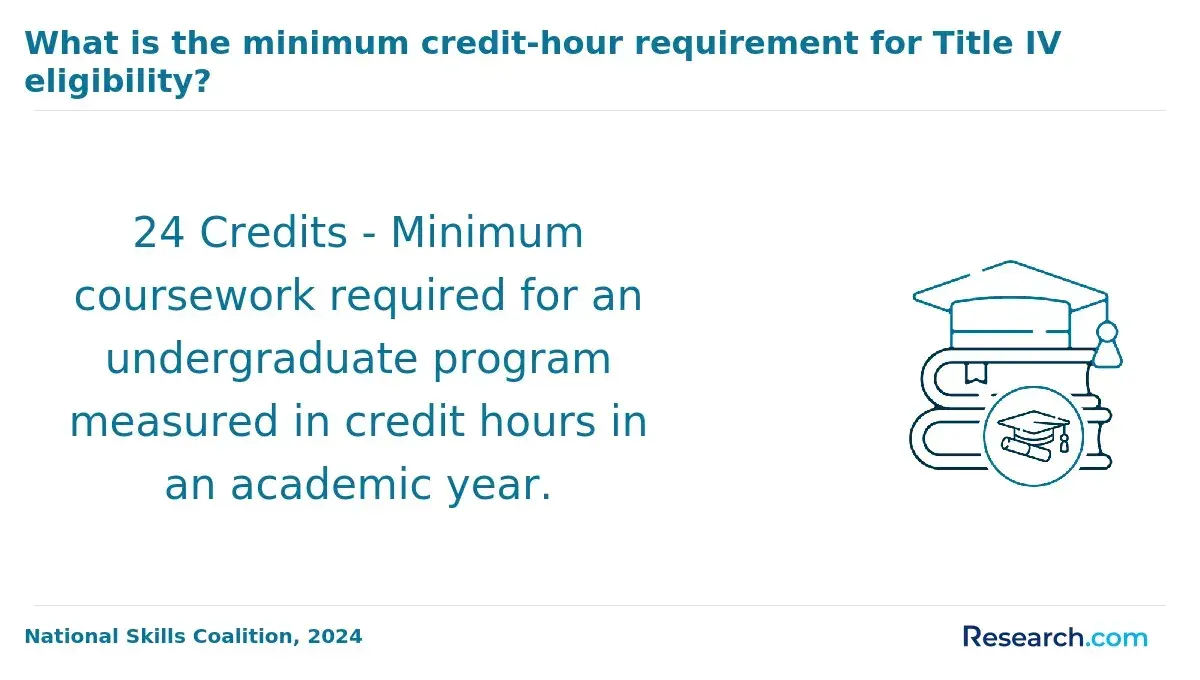
Online Technology Management doctorate students may qualify for several financial aid options if the school is properly accredited and the program is eligible for federal aid. The first step is usually completing the FAFSA and confirming that the program participates in Title IV federal student aid.
Federal graduate loan limits are especially important for doctoral budgeting. For eligible graduate and professional students, the Direct Unsubsidized Loan annual limit is $20,500, and Grad PLUS Loans may cover remaining certified cost of attendance after other aid, subject to credit requirements and school certification.
The table below compares common funding sources and what each one is best suited to cover.
| Funding option | Potential value | Best use | Main limitation |
| Federal Direct Unsubsidized Loan | Up to $20,500 per academic year for eligible graduate students | Core tuition and required fees | Interest accrues, and annual limits may not cover the full program cost. |
| Federal Grad PLUS Loan | Up to the school-certified cost of attendance after other aid | Remaining tuition, fees, and approved living or study costs | Requires credit approval and usually carries a higher interest rate than Direct Unsubsidized Loans. |
| Institutional scholarships | Varies by school and department | Reducing tuition without additional work obligations | Often competitive and may not renew automatically. |
| Assistantships or fellowships | May include tuition support, stipend, or research funding | Research-focused students and future faculty candidates | Online students may have limited eligibility. |
| Employer tuition assistance | Often annual and policy-based | Working professionals whose degree supports business needs | May require grades, service commitments, or repayment if the employee leaves. |
| Private scholarships or professional association awards | Usually smaller than loans or employer sponsorship | Conference travel, dissertation research, or partial tuition | Application cycles may not align with tuition deadlines. |
Borrowing should be the last part of the plan, not the whole plan. Before accepting loans, compare scholarships, employer funding, transfer credits, payment plans, and lower-cost adjacent programs such as an online masters in data science if your goal can be met with a less expensive credential.
Does employer tuition reimbursement cover an online Technology Management doctorate?
Employer tuition reimbursement can cover an online Technology Management doctorate when the degree aligns with the employee's role, promotion path, or the organization's technology strategy. Coverage varies widely: some employers reimburse a fixed annual amount, some pay a percentage of tuition, and others sponsor the full degree for high-priority leadership candidates.
Current IRS rules allow up to $5,250 in qualifying employer educational assistance to be excluded from taxable income each year. That amount may not cover a full doctoral bill, but it can meaningfully reduce borrowing if used consistently over several years.
Employer policies usually define what is reimbursable. Before assuming coverage, review the plan document for these conditions.
- Whether doctoral programs are eligible or only certificates, bachelor's degrees, and master's degrees are covered.
- Whether the program must be job-related or tied to an approved development plan.
- Whether the school must be regionally accredited or otherwise approved by the employer.
- Whether reimbursement is paid upfront or only after grades are posted.
- Whether there is a grade minimum, annual cap, lifetime cap, or service commitment.
- Whether fees, books, residencies, and dissertation costs are covered in addition to tuition.
Employer reimbursement is most valuable for students who plan to stay with their organization long enough to meet any retention requirement. It is less attractive if the policy requires repayment after departure and the student expects to change jobs soon.
How can working professionals negotiate employer sponsorship for an online Technology Management doctorate?
Working professionals can improve their chances of employer sponsorship by presenting the doctorate as a business investment, not a personal education request. The proposal should connect the program to measurable organizational needs such as digital transformation, cybersecurity governance, product innovation, enterprise systems, AI adoption, or technology workforce development.
A strong sponsorship request is specific, budget-aware, and low-risk for the employer. Use this sequence before approaching your manager or HR team.
- Identify the business problem the degree will help you solve, such as technology strategy, systems modernization, risk management, or innovation leadership.
- Map specific courses, research methods, or dissertation plans to current company priorities.
- Prepare a full cost estimate that separates tuition, fees, books, residencies, and expected annual reimbursement.
- Offer a retention arrangement, knowledge-sharing plan, internal training series, or capstone project that gives the employer a clear return.
- Ask whether the company can pay the school directly, increase the reimbursement cap, or combine reimbursement with professional development funds.
- Get the agreement in writing, including covered costs, grade requirements, tax treatment, and repayment conditions if you leave the organization.
The biggest mistake is asking only for tuition money. A better approach is to ask for a structured sponsorship package that may include schedule flexibility, dissertation data access, conference travel, mentoring, and partial fee coverage.
What ROI can graduates expect from an online Technology Management doctorate?
The ROI of an online Technology Management doctorate depends on the student's starting salary, employer support, debt level, career target, and whether the doctorate is required or merely preferred. The degree is more likely to make financial sense for experienced professionals moving into executive technology leadership, applied research leadership, higher education, consulting, or senior innovation roles.
BLS reports a 2024 median pay of $171,200 for computer and information systems managers, a role family that overlaps with many technology leadership career paths. This figure is not doctorate-specific, but it provides a useful benchmark: if the doctorate helps a professional compete for roles at or above this level without taking on excessive debt, the ROI case becomes stronger.
The table below shows how to think about ROI by career outcome rather than assuming one universal payoff.
| Career goal | When the doctorate may be worth it | When a lower-cost option may be better | ROI factor to test |
| Senior technology executive | The credential supports promotion into enterprise strategy, governance, or innovation leadership. | Experience, certifications, or an MBA already meet the employer's requirements. | Will the degree improve access to roles you could not reasonably reach otherwise? |
| Higher education or teaching | A doctorate is required or strongly preferred for full-time faculty or doctoral teaching roles. | You only want occasional adjunct teaching, where a master's may be sufficient. | Does the program support research, publication, and teaching experience? |
| Consulting or advisory work | The doctorate strengthens credibility in technology strategy, transformation, or governance. | Your clients value certifications, case results, or niche technical expertise more. | Can you translate the dissertation into marketable advisory expertise? |
| Technical specialization | The program includes rigorous applied research in a high-value technology domain. | A focused technical degree is faster and cheaper for your goal. | Would the cheapest online computer science degree, graduate certificate, or master's provide enough skill depth? |
Students should avoid the degree if they are mainly seeking an automatic salary increase, are unsure of their career target, or would need to borrow heavily without employer support or a clear advancement path. A doctorate can create long-term professional leverage, but it should be evaluated like any other major investment: total cost, opportunity cost, debt risk, and realistic career use all matter.
Other Things You Should Know About Technology Management
Many students complete an online doctorate in about three to five years, but the timeline depends on transfer credits, enrollment pace, dissertation progress, and whether the program uses a cohort model. Part-time study may be easier for working professionals but can increase total fees if the school charges by term.
Many do, especially PhD programs, but some professional doctorates may use an applied dissertation, doctoral project, or capstone. Students should confirm the final research requirement because dissertation-stage enrollment can affect both timeline and cost.
At minimum, students should verify that the institution is accredited by an agency recognized by the U.S. Department of Education. Depending on the program's focus, additional business, engineering, computing, or technology-related accreditation may also be relevant, but requirements vary by school and career goal.
Sometimes. Some programs allow a limited number of post-master's or doctoral-level transfer credits, while others require all doctoral credits to be completed in residence. Students should ask for a written transfer evaluation before using transfer credits in a cost estimate.
References
- Types of Financial Aid for Online Colleges https://www.umassglobal.edu/blog-news/types-financial-aid-online-colleges
- Employer Tuition Assistance Program / Employee Tuition Reimbursement - Finance | Learn & Work Ecosystem Library https://learnworkecosystemlibrary.com/topics/employer-tuition-assistance-program-employee-tuition-reimbursement-finance/
- Get Your PhD in Technology Management Online https://www.phds.me/online-programs/phds-doctorates-in-management/technology/
- Master's vs PhD/Doctorate Degrees - Key Differences - Wordvice https://wordvice.com/blog/masters-vs-phd-doctorate-degrees-key-differences/
- Getting Your Employer to Pay for Your Online Masters https://www.onlinemastersdegrees.org/financial-aid/employer-tuition-assistance/
- Can You Get Financial Aid for Doctoral Programs? - Graduate Programs for Educators https://www.graduateprogram.org/blog/can-you-get-financial-aid-for-doctoral-programs/
- Tuition Reimbursement Programs [A Guide for HR and Employers] https://compt.io/blog/employee-tuition-reimbursement/
- Educational Funding https://phdproject.org/educational-funding/
- How Much Does a PhD Cost https://aituedu.org/how-much-does-a-phd-cost/