2027 Easiest Online Technology Management Doctorate Programs to Get Into: Admission Requirements, GPA, and Workarounds

Co-Founder and Chief Data Scientist
Online Technology Management doctorates are becoming a practical route for experienced professionals who need doctoral credibility without pausing their careers. The timing is strong: BLS data using 2024 wage and employment projections shows computer and IT occupations are expected to add about 317,700 openings per year through 2034. This guide is for applicants worried about low GPAs, competitive admissions, missing prerequisites, or testing rules. You will learn which online doctorate formats tend to be more accessible, what admission workarounds are realistic, and how to choose a program that fits your career goals and risk level.
Key Things About the Easiest Online Technology Management Doctorate Programs
- Most accessible online Technology Management doctorates are not "easy" academically; they are easier to enter because they use holistic review, professional experience, test waivers, conditional admission, or applied doctorate formats instead of highly selective faculty-matched PhD admissions.
- A 3.0 graduate GPA is the most common practical cutoff, but applicants below that level may still have options through probationary admission, a GPA addendum, recent graduate coursework, upper-division GPA review, or strong evidence of leadership in technology-driven roles.
- GRE/GMAT requirements are increasingly avoidable in professional doctorates; many online programs waive tests for applicants with a completed master's degree, substantial work experience, professional certifications, or prior graduate-level quantitative coursework.
Are online Technology Management doctorate programs competitive?
Online Technology Management doctorate programs are usually moderately competitive, not open-admission. The easiest programs to get into still evaluate whether applicants can handle doctoral research, applied analytics, organizational strategy, and technology leadership coursework. The main difference is that many online professional doctorates are built for working adults, so they often weigh experience, career fit, and writing ability alongside GPA.
Acceptance-rate data is limited because many universities do not publish admission rates for individual online doctoral programs. That matters because a schoolwide acceptance rate can mislead applicants: a university may admit many undergraduates while maintaining tight doctoral cohorts, or it may be selective overall but flexible in a professional doctorate designed for experienced managers.
The most useful way to judge competitiveness is to compare the admissions model rather than relying only on a published percentage. This table summarizes how different doctorate formats tend to affect access.
| Program type | Typical competitiveness | Why it may be easier or harder | Best fit |
| Online applied doctorate in Technology Management | Moderate | Often uses holistic review, professional experience, and applied research fit | Working technology managers seeking leadership or consulting roles |
| Online PhD in Technology Management | Moderate to high | May require stronger research alignment, quantitative readiness, and dissertation capacity | Applicants targeting research, teaching, or evidence-based strategy roles |
| On-campus research PhD | Often high | Faculty supervision capacity, assistantship funding, and cohort size can restrict admission | Applicants seeking academic research careers or funded doctoral study |
| Related online DBA, DIT, or Doctor of Technology | Moderate | May accept broader business, IT, engineering, or management backgrounds | Professionals whose goals overlap with technology leadership rather than pure technology research |
For readers comparing related pathways, an online masters in data science may be a better first step if the main barrier is quantitative preparation rather than doctoral admission itself.
What are the easiest online Technology Management doctorate programs to get into?
The easiest online Technology Management doctorate programs to get into are typically those that combine regional accreditation, flexible online delivery, professional admissions review, no required GRE/GMAT, and a pathway for applicants from adjacent fields such as IT, engineering, business analytics, operations, cybersecurity, or project management.
Because program names and policies change, applicants should verify the current catalog before applying. The following categories are often lower-barrier than traditional campus-based research doctorates.
| Accessible option | Common degree names | Admission features that reduce barriers | Main trade-off |
| Applied technology leadership doctorate | Doctor of Technology, Doctor of Management in Technology Management, DIT | Professional experience may carry significant weight; research is usually applied to workplace problems | May be less suitable for tenure-track research faculty roles than a PhD |
| Online PhD with professional orientation | PhD in Technology Management, PhD in Information Technology Management | May waive standardized testing and accept applicants with relevant master's degrees | Dissertation expectations can still be demanding |
| DBA with technology, analytics, or information systems concentration | DBA in Information Systems, DBA in Technology Management, DBA in Business Intelligence | Often accepts business and technology professionals with leadership experience | Degree title may be business-focused rather than technology-specific |
| Interdisciplinary doctorate | Organizational leadership, engineering management, innovation management | May accept applicants whose technology background comes from work rather than prior major | Curriculum may be broader and less technical |
Lower-barrier does not mean low-quality. A strong "easy to get into" program should still require graduate-level writing, applied research readiness, and a clear professional purpose. For applicants comparing technology pathways before committing to a doctorate, a cybersecurity degree online can also build domain depth that strengthens a later doctoral application.
Use this screening sequence before calling any program "easy." It helps separate legitimate accessible doctorates from risky options.
- Confirm institutional accreditation through a recognized U.S. accreditor listed by the U.S. Department of Education or the Council for Higher Education Accreditation.
- Check whether the degree title, concentration, and curriculum match your intended outcome, such as executive technology leadership, consulting, teaching, or applied research.
- Ask whether the program publishes minimum GPA rules, conditional admission options, test-waiver criteria, and dissertation or capstone requirements.
- Review completion format, including residency requirements, synchronous class times, cohort pace, dissertation support, and maximum time to degree.
- Compare total tuition, fees, transfer-credit rules, and employer tuition assistance eligibility before prioritizing admission ease.
What is the minimum GPA requirement for online Technology Management doctorate programs?
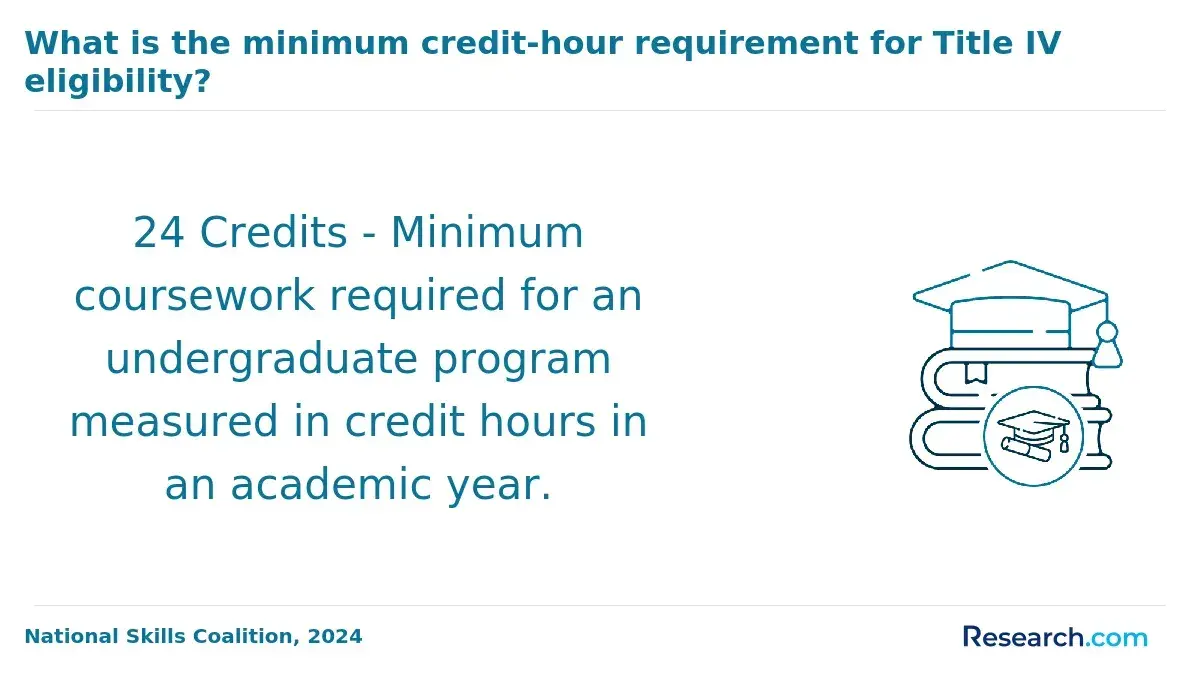
The most common minimum GPA requirement for online Technology Management doctorate programs is a 3.0 on a 4.0 scale, especially for applicants entering with a master's degree. Some programs expect higher GPAs for PhD admission, while others allow conditional review below 3.0 when the applicant has strong professional achievements or recent graduate coursework.
GPA rules are not always applied in the same way. Some universities calculate the final 60 credits, graduate-only GPA, major GPA, or upper-division GPA instead of relying only on the cumulative undergraduate number. This distinction can help applicants whose early college record is weaker than their later academic or professional performance.
The table below explains how GPA thresholds usually function in online Technology Management doctoral admissions and what each level means for strategy.
| GPA level | Likely admission interpretation | Applicant strategy |
| 3.5 or higher | Academically strong for most professional doctorates and competitive for many PhD reviews | Focus on research fit, writing sample, and career goals |
| 3.0 to 3.49 | Meets the common baseline for many online doctoral programs | Strengthen application with leadership examples and focused recommendations |
| 2.75 to 2.99 | May fall below standard admission but still be reviewable at flexible programs | Use a GPA addendum, recent coursework, and proof of current readiness |
| Below 2.75 | Higher risk unless the program offers probationary admission or significant holistic review | Consider post-baccalaureate or graduate certificates before applying broadly |
Applicants should not assume that a low undergraduate GPA controls the entire decision. If you completed a master's degree with strong grades, admissions committees may place more weight on that newer record because it better reflects doctoral readiness.
Can you get accepted into an online Technology Management doctorate program with a low GPA?
Some applicants can get accepted into an online Technology Management doctorate program with a low GPA, but they need to reduce the admissions committee's uncertainty. A low GPA is usually a risk signal about persistence, writing ability, quantitative readiness, or time management. Your application must show that the old transcript no longer reflects your current capacity.
The best workaround depends on how low the GPA is and how long ago the weak grades occurred. These options are most useful for applicants below the normal 3.0 threshold.
- Write a focused GPA addendum: Explain the specific reason for past academic weakness, show what changed, and connect recent career or academic success to doctoral readiness.
- Complete recent graduate coursework: A certificate in analytics, project management, information systems, cybersecurity, or research methods can create newer evidence of academic performance.
- Ask about last-60-credit or graduate GPA review: This can help if your later grades are stronger than your cumulative GPA.
- Use professional evidence: Promotions, budget ownership, systems implementation, patents, publications, major technology projects, or executive responsibilities can offset weaker historical grades.
- Apply to conditional-admission programs: Some schools allow students to prove themselves by earning required grades in the first doctoral courses.
A strong GPA addendum should be brief and accountable. Avoid blaming professors or overexplaining personal history. The most persuasive version says what happened, what changed, and why the applicant is now prepared for doctoral-level research and writing.
Applicants who need a lower-cost academic reset before doctoral study may also consider the cheapest online computer science degree options if they lack technical foundations and want a stronger transcript before applying.
Do online Technology Management doctorate programs require GRE or GMAT scores?
Many online Technology Management doctorate programs do not require GRE or GMAT scores, especially applied doctorates and professional doctorates designed for experienced adults. Research-focused PhD programs are more likely to ask for test scores, but even there, waivers may be available.
There is no reliable national dataset that reports the exact GRE/GMAT waiver rate specifically for U.S. online Technology Management doctorates. The practical trend, however, is clear from admissions policies: many programs now use test-optional or waiver-based review to avoid excluding experienced professionals whose strongest evidence is work performance rather than standardized testing.
The following table shows common waiver criteria and what they signal to admissions teams.
| Waiver basis | What it demonstrates | Typical documentation |
| Completed master's degree | Graduate-level academic readiness | Official transcript showing degree completion and GPA |
| Professional experience | Applied leadership and problem-solving ability | Resume, employment verification, leadership portfolio |
| Professional certification or license | Validated technical or managerial competence | Certification record, license number, continuing education proof |
| Prior quantitative coursework | Readiness for research methods, analytics, or statistics | Transcript with relevant courses and grades |
| Strong prior graduate GPA | Lower academic risk | Graduate transcript and recommendation letters |
If a program lists the GRE or GMAT as optional, do not submit weak scores just to "complete" the file. Strong scores can help applicants with low GPAs, but weak scores can reinforce concerns. Ask admissions whether your application will be stronger with a waiver, a score, or additional coursework.
Is prior professional experience required for Technology Management doctorate programs?
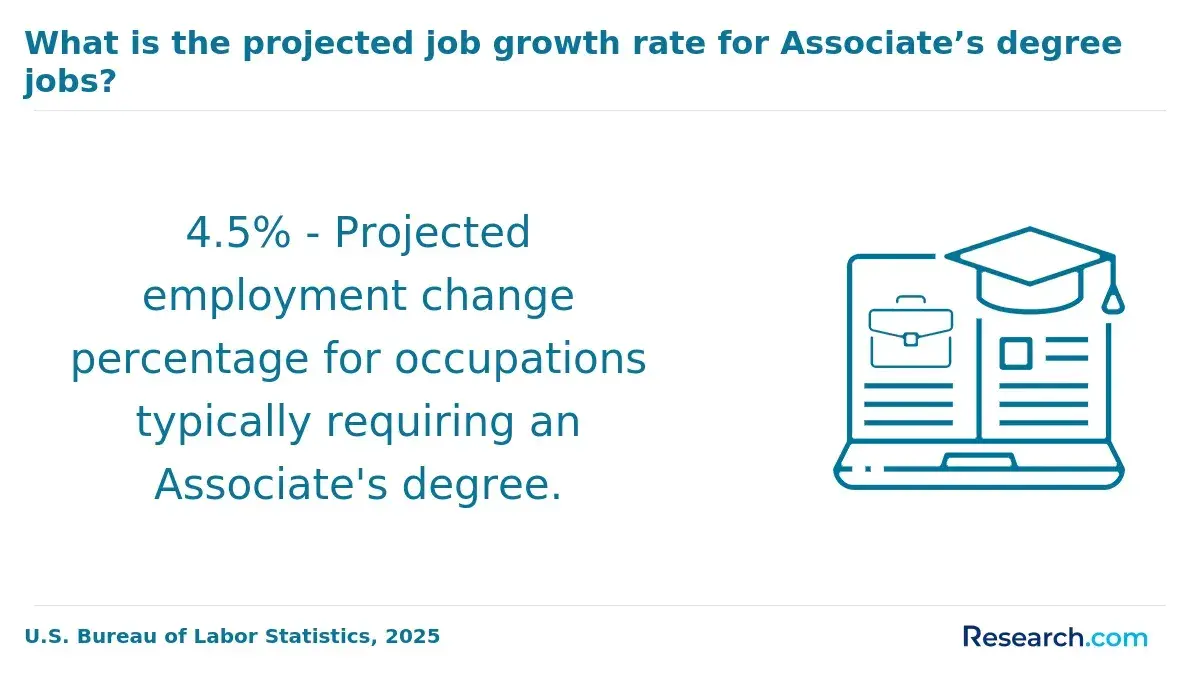
Prior professional experience is often expected, and in many online Technology Management doctorate programs it is one of the strongest admissions assets. Programs aimed at working professionals usually want applicants who can connect doctoral research to real technology, operations, innovation, cybersecurity, analytics, systems, or organizational problems.
This does not always mean that a formal number of years is required. Some schools specify a minimum, while others evaluate experience holistically. In either case, applicants should translate job duties into doctoral-relevant evidence.
The table below shows how different forms of experience can support an application.
| Experience type | Why it matters for admission | How to present it |
| Technology management or IT leadership | Shows direct alignment with the degree | Highlight teams led, systems managed, budgets, and measurable outcomes |
| Engineering, operations, or product management | Shows applied problem-solving in technical environments | Connect projects to innovation, process improvement, or technology adoption |
| Cybersecurity, data, or cloud roles | Shows specialized technical depth | Emphasize governance, risk, architecture, analytics, or enterprise impact |
| Teaching, training, or consulting | Shows communication and knowledge-transfer ability | Include curriculum design, client outcomes, workshops, or publications |
The BLS reported a May 2024 median annual wage of $171,200 for computer and information systems managers. That figure does not mean a doctorate produces that salary, but it shows why many professionals view advanced technology leadership credentials as part of a long-term advancement strategy.
Can non-Technology Management majors qualify for a doctorate in the discipline?
Non-Technology Management majors can qualify for a doctorate in the discipline when they show enough preparation in technology, management, research, or a closely related applied field. Many applicants come from computer science, information systems, engineering, business administration, project management, analytics, cybersecurity, operations, or organizational leadership.
The key question is not whether your diploma says "Technology Management." The key question is whether you can succeed in doctoral coursework that may include research design, statistics, technology strategy, innovation systems, organizational change, and applied technology governance.
Applicants with a degree mismatch usually have three practical routes. Each one works best in a different situation.
- Leveling courses: Choose this route if you lack prerequisites in statistics, research methods, information systems, or management theory and need formal academic preparation.
- Bridge certificate: Choose this route if you want a transcript-backed way to prove readiness before applying or during conditional admission.
- Prior Learning Assessment portfolio: Choose this route only if the university formally accepts PLA for graduate prerequisites or transfer evaluation and your work experience is well documented.
A Prior Learning Assessment portfolio should include job descriptions, project summaries, technical documentation, presentations, certifications, training records, performance reviews, and evidence of leadership outcomes. It should not be a loose resume; it should map experience directly to course objectives or prerequisite competencies.
If your background is technical but not managerial, an accelerated computer science degree online may help you build formal academic evidence before moving into doctoral-level technology management study.
Are online Technology Management doctorate programs less competitive than on-campus programs?
Online Technology Management doctorate programs can be less competitive than on-campus programs, but only in specific ways. They may have more flexible scheduling, broader geographic reach, more professional-degree seats, and fewer faculty-lab constraints. However, they still require doctoral-level writing, research discipline, and independent project completion.
On-campus research PhD programs may be harder to enter when funding, faculty supervision, lab capacity, or assistantships limit cohort size. Online professional doctorates often avoid some of those bottlenecks because students are usually self-funded, employer-funded, or using financial aid rather than competing for a small number of funded research positions.
This comparison can help applicants decide whether "easier to get into" also means "better for me."
| Factor | Online Technology Management doctorate | On-campus Technology Management doctorate |
| Admission emphasis | Professional experience, academic readiness, goal fit | Research fit, faculty match, academic record, funding fit |
| Flexibility | Higher for working adults | Lower if residency, daytime seminars, or assistantships are required |
| Networking model | Virtual cohort, workplace-based projects, remote faculty contact | Campus labs, seminars, research groups, in-person mentoring |
| Best for | Managers, consultants, executives, applied researchers | Academic researchers, full-time doctoral students, funded PhD candidates |
| Main risk | Isolation and self-direction demands | Relocation, opportunity cost, and tighter admission capacity |
The trade-off is important. A higher-access online doctorate can be a smart investment if your goal is advancement in industry, consulting, teaching at practice-oriented institutions, or applied research. A more competitive on-campus PhD may be better if your goal is a tenure-track research career, funded study, or deep specialization under a specific scholar.
Are there online Technology Management doctorate programs that do not require a traditional dissertation?
Some online Technology Management-related doctorates use an applied capstone, doctoral project, portfolio, or practice-based research project instead of a traditional dissertation. These options can be easier to complete for working professionals because the final project is often tied to a real organizational problem.
A nontraditional completion model does not mean the degree lacks rigor. It usually means the research product is designed for application rather than theory-building. Students may still need to complete literature reviews, methodology sections, data analysis, ethics review, and formal defense requirements.
The table below compares common doctoral completion models so applicants can match the format to their goals.
| Completion model | Typical final product | Best fit | Potential limitation |
| Traditional dissertation | Original research study with formal defense | Applicants seeking research, academic, or theory-focused roles | Can take longer and require stronger methodological support |
| Applied dissertation | Research study focused on a workplace or industry problem | Technology leaders solving practical organizational challenges | May be less theoretical than a traditional PhD dissertation |
| Doctoral capstone | Practice-based project, implementation plan, or evaluated intervention | Working professionals seeking direct career application | Not all employers or academic departments view it the same as a dissertation |
| Portfolio-based doctorate | Integrated body of applied work with reflection and assessment | Experienced professionals with substantial documented projects | Availability varies widely by institution |
Applicants should ask whether the capstone is acceptable for their target outcome. If you want to teach full-time at a research university, a dissertation-based PhD may carry more weight. If you want to lead technology transformation, consult, or move into executive roles, an applied capstone may be more relevant.
How can students increase their chances of getting into a Technology Management doctorate program?
The fastest way to increase your admission chances is to apply like a prepared doctoral candidate, not just a busy professional with an impressive resume. Admissions committees want to see that you understand the workload, can write at a scholarly level, and have a focused reason for pursuing Technology Management.
Use the following steps to build a stronger application, especially if you are relying on workarounds for GPA, testing, or prerequisites.
- Shortlist only accredited programs that match your intended outcome, such as applied technology leadership, teaching, consulting, executive advancement, or research.
- Email admissions before applying and ask whether your GPA, degree background, test status, and experience profile are competitive for the current cycle.
- Create a one-page research or problem statement that identifies a technology management issue you want to study, why it matters, and how it connects to the program.
- Choose recommenders who can discuss analytical ability, leadership, writing, persistence, and ethical judgment rather than only job title or personality.
- If your GPA is weak, submit a concise addendum and include evidence of recent academic or professional success.
- If tests are optional, ask whether a waiver or score submission would strengthen your specific profile.
- Compare dissertation, applied dissertation, and capstone support before enrolling, because completion support matters as much as admission ease.
Applicants should also avoid common mistakes that make accessible programs riskier than they appear.
- Applying without verifying regional or institutional accreditation recognized by U.S. higher education authorities.
- Choosing a program based only on high acceptance or flexible admission without checking completion rates, faculty support, and total cost.
- Assuming an online doctorate is automatically easier academically than an on-campus doctorate.
- Failing to explain a low GPA when the application gives you a chance to provide context.
- Ignoring transfer credit, Prior Learning Assessment, or employer tuition policies that could reduce cost and time.
- Selecting a degree title that does not align with the career path you actually want.
Before committing, ask admissions advisors direct questions about conditional admission, maximum transfer credits, dissertation-chair assignment, expected weekly workload, residency rules, and total program cost.
These answers are often more useful than a generic ranking because they reveal whether the program is truly accessible for your situation.
Other Things You Should Know About Technology Management
They can be worth it if the program is accredited, affordable for your budget, aligned with your career goal, and designed for the type of research or leadership work you want to do. They are less ideal if you mainly want a funded academic research pathway or a tenure-track role at a research-intensive university.
Many online doctorates take about three to five years, depending on transfer credit, dissertation or capstone pace, course load, and whether the student stops out. The coursework phase is usually more predictable than the final research phase.
Ask about minimum GPA flexibility, GRE/GMAT waivers, conditional admission, prerequisite review, transfer credits, dissertation or capstone support, residency requirements, total tuition, fees, and whether the degree fits your intended career outcome.
Not automatically. Choose the program with the best fit, support, accreditation, cost structure, and career alignment. A more selective program may offer stronger research mentoring or reputation, while an easier-entry program may offer better flexibility and access for working professionals.
References
- Master’s vs. Ph.D. in IT: Which Degree Should You Pursue? https://www.ucumberlands.edu/blog/masters-vs-phd-it-which-degree-to-pursue
- Online Doctorate in Engineering Management: 2026 Guide to Programs and Careers https://engineeringmanagement.org/phd-in-engineering-management-online/
- How Students Are Reaching Top Colleges Without Traditional Admission https://www.scholaro.com/db/News/top-colleges-without-traditional-admission-377
- A Doctorate Degree in Management - Strategic Innovation and Change https://www.tuw.edu/school-news/doctorate-degree-management-strategic-innovation-and-change/
- Get Your PhD in Technology Management Online https://www.phds.me/online-programs/phds-doctorates-in-management/technology/
- Alternate Offers of Admission Part 1 — JRA Educational Consulting https://www.jraeducationalconsulting.com/blog/alternate-offers-of-admission-part-1
- Technology Management, Ph.D. https://www.ucmo.edu/academics/programs/cooperative-doctoral-degree/technology-management-phd/
- Online PhD Programs in Management: Scope and Best Career Options 2026 - GTR Blogs | Career Guidance Articles https://gtracademy.org/blog/online-phd-programs-in-management/
- 50 Easiest Grad Schools to Get into by Acceptance Rate https://www.onlinemastersdegrees.org/features/grad-schools-acceptance-rates/
- Online Doctorate Degree Programs https://www.coloradotech.edu/degrees/doctorates