2027 Online Software Engineering Degree Programs With University Scholarships: Awards, Eligibility, and Net Cost

Co-Founder and Chief Data Scientist
An online software engineering degree can look affordable until fees, enrollment rules, and scholarship limits change the calculation. This guide is for prospective, transfer, adult, and military-connected students comparing university-funded aid. College Board reported average published 2024-25 tuition and fees of $11,610 at public four-year in-state institutions and $43,350 at private nonprofit institutions. Learn how to compare awards, eligibility, renewal terms, and estimated out-of-pocket cost - not tuition or a headline scholarship alone.
Key Things You Should Know
- University scholarships for online software engineering students vary widely: some are merit-based, need-based, transfer-specific, or military-focused, and many require separate applications or full-time enrollment.
- A scholarship's value depends on the complete cost equation: tuition, mandatory fees, transfer credits, federal and state grants, and whether the award renews. A $5,000 award at a lower-cost school can outperform a larger award at a high-cost school.
- Use the award letter and program cost sheet to calculate annual net cost; published 2024-25 average tuition and fees were $11,610 at public four-year in-state colleges and $43,350 at private nonprofit colleges, before aid and program-specific charges.
Which Online Software Engineering Degree Programs Offer University Scholarships?
University scholarships are institution-funded grants that generally do not have to be repaid. They differ from federal grants, private scholarships, and employer tuition benefits. Online eligibility is not automatic: a university may make scholarships available to all degree-seeking students, restrict some awards to campus students, or use separate rules for its online division.
Start with regionally accredited institutions offering a clearly identified software engineering, software development, computer science, or closely related bachelor's degree. Examples of formats worth reviewing include public-university online bachelor's programs, private nonprofit online programs, and competency-based programs. Each may administer institutional aid differently.
The comparison below shows where meaningful university-funded aid is most commonly found and what to verify before treating it as available for an online software engineering major.
| Program setting | Common institutional-aid approach | What online students should verify |
| Public university online program | Merit awards, transfer awards, donor scholarships, and need-based institutional grants | Residency treatment, online-program eligibility, credit-load minimum, and whether awards cover distance-learning fees |
| Private nonprofit online program | Institutional grants, merit scholarships, employer partnerships, and alumni-funded awards | Whether the award is applied per term or per year, whether it is renewable, and the total program charge |
| Competency-based online university | Limited institutional scholarships, often with fixed award periods or eligibility windows | Term pricing, satisfactory academic progress rules, and whether scholarship funds reduce a flat-rate term charge |
| Transfer-oriented online completion program | Transfer, Phi Theta Kappa, adult-learner, or pathway scholarships | Minimum transferable credits, incoming GPA requirement, and the deadline after admission |
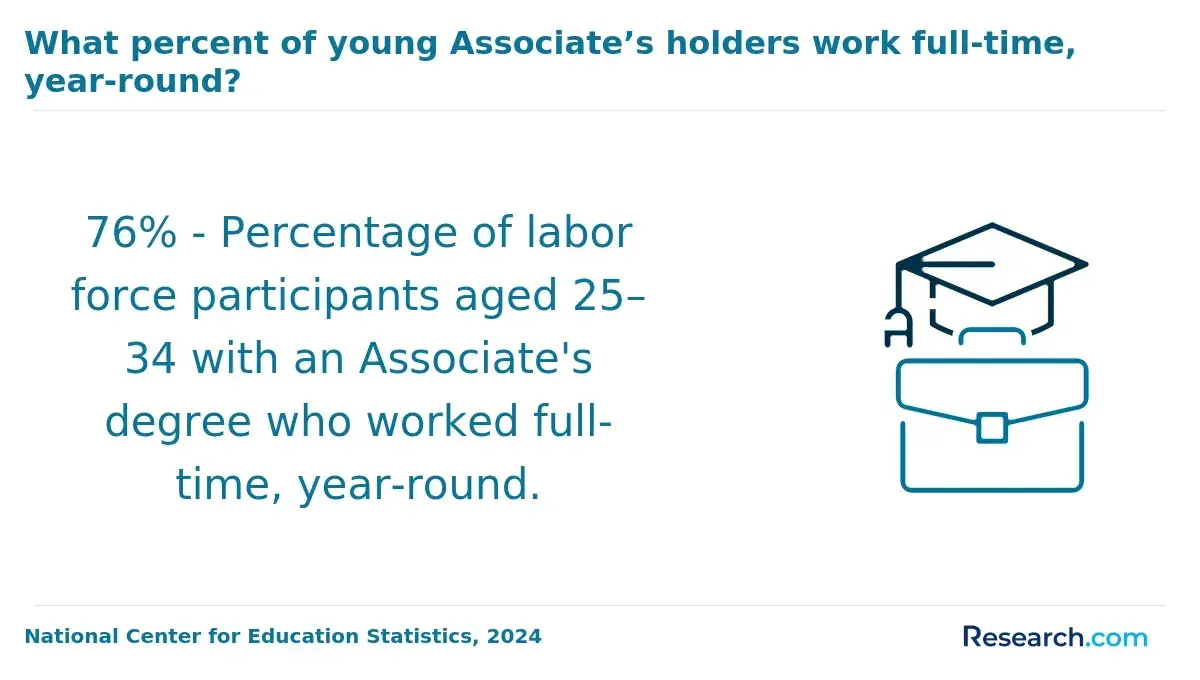
Software engineering is often housed within a computing department, so also check whether general university scholarships accept students in the major rather than searching only for awards labeled "software engineering." Students who want a shorter and lower-commitment entry route can also compare 2 year online degrees that pay well before deciding whether a four-year degree is their best first investment.
Do not assume that a school advertising scholarships offers them to every online learner. Ask the financial-aid office for the scholarship name, eligibility language, typical award range if it publishes one, and confirmation that your exact online degree and start term qualify.
How Much Scholarship Money Can Online Software Engineering Degree Students Receive?
There is no standard institutional scholarship amount for online software engineering students. Awards can range from modest one-time amounts to larger renewable tuition reductions, but the amount depends on the university, student profile, available funding, enrollment intensity, and whether the student is newly admitted or continuing.
Instead of using an advertised maximum award as a budgeting figure, separate scholarship value into three practical categories.
| Award pattern | How it is commonly presented | Budgeting implication |
| One-time scholarship | A fixed amount for the first term or first year | Subtract it once; do not spread it across the entire degree unless renewal is written into the offer |
| Annual renewable scholarship | An amount renewed each academic year if conditions are met | Use it in a multi-year estimate only after confirming GPA, credit-load, and renewal limits |
| Per-credit or tuition-discount award | A reduction tied to enrolled credits or a qualifying affiliation | Its annual value changes with enrollment and may not reduce fees, books, or course materials |
| Need-based institutional grant | A grant based partly on financial need and available institutional resources | It can change after FAFSA data, household circumstances, or other aid changes |
For labor-market context, the U.S. Bureau of Labor Statistics reported a 2024 median annual wage of $133,080 for software developers, quality assurance analysts, and testers, while projecting 17% employment growth from 2023 to 2033. This does not establish the value of any individual degree or scholarship, but it supports comparing program cost against realistic completion plans and career goals.
Request an itemized estimate for your first academic year. It should show tuition, mandatory fees, expected credits, scholarship amount, grant aid, and any remaining amount you would need to pay, borrow, or cover through work or employer benefits.
What Are the Eligibility Requirements for Online Software Engineering Degree Scholarships?
Eligibility requirements determine whether an advertised scholarship is truly available to you. Institutional rules can differ by academic level, residency, delivery format, start date, citizenship or eligible noncitizen status, financial need, academic record, and transfer history.
These are the conditions most likely to affect an online software engineering applicant's eligibility.
- Admission status: Many awards require formal admission to a degree program rather than nondegree, certificate-only, or provisional enrollment.
- Academic record: Merit awards may use high school GPA, prior college GPA, completed credits, test scores where considered, portfolio evidence, or a combination of factors.
- Enrollment intensity: A scholarship may require full-time study, a minimum number of credits each term, or continuous enrollment; part-time online students should get this rule in writing.
- Program and modality: Some awards apply to all undergraduates, while others exclude fully online, accelerated, second-degree, or competency-based programs.
- Financial-need documentation: Need-based institutional grants commonly require the FAFSA and may require verification documents.
- Deadline and application materials: A separate scholarship form, essay, recommendation, or earlier admission deadline may apply.
Prospective students with strong quantitative preparation may be especially competitive for STEM-focused funds, but eligibility still depends on each school's terms. Exploring online math degree programs can also help students compare adjacent fields when mathematics coursework, career goals, or available institutional aid points toward a different academic path.
A red flag is vague language such as "scholarships available" without a stated online-student policy. Treat this as an invitation to investigate, not confirmation of funding.
How Do You Apply for University Scholarships for an Online Software Engineering Degree?
Apply early because institutional scholarship deadlines can arrive before regular admission deadlines or before the term begins. The strongest process combines admissions, financial-aid, and departmental steps rather than assuming one application covers everything.
Use the following sequence to reduce the chance of missing an award for which you qualify.
- Confirm that the school offers your intended online degree, not only a similar campus program or certificate.
- Submit the admission application early enough to receive a student identification number and scholarship-portal access.
- File the FAFSA when eligible and list the institution's federal school code; this is often required for need-based university aid.
- Complete the university's scholarship application or donor-scholarship portal, including essays and recommendations when requested.
- Send official transcripts promptly so the university can evaluate GPA, transfer credits, and academic eligibility.
- Read the award notice for amount, covered period, enrollment requirement, renewal terms, and conditions that could reduce the award.
- Ask for a revised estimate if your transfer evaluation, housing choice, course load, or other aid changes.
Keep copies of confirmations and screenshots of submitted materials. Students considering a faster lower-division route should verify whether an accelerated associate degree will transfer into the intended bachelor's program before using it as a scholarship strategy; accelerated credits do not automatically meet every receiving institution's requirements.
Common mistake: applying only through the general admissions portal. Better approach: ask whether admission creates automatic consideration, then separately complete every institutional scholarship process that applies to online students.
Are Scholarships for Online Software Engineering Degree Programs Renewable Every Year?
Some scholarships renew, but renewal is never something to assume. Renewable aid generally means a university may continue the award for additional academic years or terms if the student meets specified conditions and institutional funding remains available under the award agreement.
Renewal terms commonly include a minimum cumulative GPA, satisfactory academic progress, a required number of completed credits, continuous enrollment, a maximum number of semesters, and compliance with conduct or program rules. A student taking fewer online courses because of work or caregiving responsibilities may lose an award that requires full-time enrollment even while remaining academically successful.
The table identifies the wording that matters most when evaluating a renewable offer.
| Term to locate in the offer | Why it matters | Question to ask |
| Renewable through | Sets the maximum duration or number of terms | Does the limit include summers, leaves, or transferred semesters? |
| Minimum GPA | Defines the academic threshold for continuation | Is GPA checked every term, annually, or after probation? |
| Minimum enrollment | May require full-time or a set credit count | What happens if I enroll part time for one term? |
| Satisfactory academic progress | Usually combines GPA and pace of completion | Is the scholarship rule different from the federal-aid rule? |
| Subject to funding | Signals that renewal may not be fully guaranteed | Under what circumstances can the amount change? |
Get the answer in an email or written award terms. If an award is first-year only, calculate later years without it rather than assuming the university will replace it.
Can You Combine an Online Software Engineering Scholarship With FAFSA and Other Financial Aid?
Usually, yes. Filing the FAFSA can unlock federal grants, federal student loans, work-study consideration, state programs, and need-based institutional grants. A university scholarship may be combined with these resources, but the school must ensure that total aid does not exceed the student's cost of attendance or violate the terms of a particular program.
"Stacking" means combining multiple aid sources. It can lower the amount you need to borrow, but an outside scholarship or employer benefit can lead the financial-aid office to adjust another aid category. This is not necessarily a loss of the university scholarship; it depends on the school's packaging policy and the types of aid involved.
Before accepting an offer, ask financial aid to explain how the following resources interact with the institutional scholarship.
- Federal Pell Grant and other federal grants, if eligible
- Federal Direct Loans
- State grants and tuition-assistance programs
- Employer tuition assistance or reimbursement
- Veterans education benefits and military tuition assistance
- Private and community scholarships
Submit outside-scholarship information when the school requires it. Failing to report an award can cause an aid revision later, creating an unexpected balance. Students who may eventually pursue management can compare the timing and cost of accelerated MBA programs, but should avoid borrowing for a future credential before establishing an affordable undergraduate completion plan.
How Much Does an Online Software Engineering Degree Cost After Scholarships and Financial Aid?
Net cost is the amount remaining after grants and scholarships are subtracted from the school's cost of attendance or direct billed charges. It is more useful than tuition alone, but students should distinguish between direct costs billed by the university and indirect costs such as books, technology, transportation, and living expenses.
A transparent estimate uses this basic calculation: annual tuition and required fees, plus reasonable education-related expenses, minus scholarships and grants. Loans reduce the bill now but are not a discount because they generally must be repaid.
This example is hypothetical and illustrates the comparison method rather than a published price or aid guarantee.
| Annual estimate item | Program A | Program B |
| Tuition and required fees | $16,000 | $24,000 |
| University scholarship | -$3,000 | -$8,000 |
| Federal, state, and other grants | -$4,000 | -$4,000 |
| Estimated direct net cost | $9,000 | $12,000 |
| Key conclusion | Smaller scholarship, lower direct net cost | Larger scholarship, higher direct net cost |
Online delivery can reduce commuting or relocation costs, but it does not mean every expense disappears. Budget for a reliable computer, software or proctoring requirements, internet access, books, course materials, and any required campus visits. Compare credit pricing and total credits remaining after transfer evaluation, because an apparently low per-credit price can still produce a high total if few prior credits transfer.
Use the school's official net-price resources as a starting point, then request a program-specific estimate. The most useful document identifies which awards are confirmed, which are estimated, and what conditions apply after the first year.
Are There Scholarships for Transfer, Adult, Military, and Other Online Software Engineering Students?
Yes, many institutions reserve or prioritize some funding for nontraditional populations, although the availability and online eligibility of those awards vary. Transfer students may find awards based on prior college GPA or completed credits; adult learners may find scholarships through continuing-education divisions; military-connected students may qualify for institutional discounts or dedicated support.
These applicant groups should ask about the categories below rather than relying on a general scholarship search page.
| Student group | Possible institutional-aid category | Important verification point |
| Transfer student | Transfer merit, pathway, or community-college partner scholarship | Minimum transfer GPA, accepted-credit threshold, and whether all prior credits must be evaluated first |
| Adult learner | Returning-student, degree-completion, or workforce scholarship | Age or time-away-from-school definition, enrollment requirement, and online eligibility |
| Active-duty service member or veteran | Military tuition discount, veteran scholarship, or institutional matching program | Interaction with Tuition Assistance, GI Bill benefits, and certification of enrollment |
| Employer-sponsored learner | Corporate partner discount or reimbursement arrangement | Eligible employer list, minimum grade, repayment obligation, and tax treatment |
| Second-degree student | Limited merit or departmental support | Whether prior bachelor's degree status excludes need-based institutional funding |
Transfer credit is a major affordability lever. A scholarship may reduce tuition, but a favorable credit evaluation can reduce the number of courses you need to buy. Review course equivalencies, upper-division residency requirements, and whether software engineering prerequisites must be completed at the receiving university.
For learners who later want to move into organizational or technology leadership, a PhD in organizational leadership is a separate long-term decision with different admissions and funding patterns; it should not be assumed to receive the same institutional aid as an undergraduate online program.
What Is the Difference Between Merit-Based and Need-Based Scholarships for Online Software Engineering Degrees?
Merit-based scholarships are primarily awarded for academic achievement, leadership, technical accomplishment, or another accomplishment defined by the university. Need-based scholarships and grants consider demonstrated financial need, often using FAFSA information and the school's aid methodology. Some institutional awards use both merit and need.
Neither type is automatically better. Merit aid can be more predictable when its academic renewal standard is clear, while need-based aid can provide greater help for students with limited financial resources. Both can change when enrollment, academic standing, funding, or financial circumstances change.
| Feature | Merit-based scholarship | Need-based scholarship or grant |
| Primary basis | Academic or other documented achievement | Demonstrated financial need and institutional policy |
| FAFSA role | May be optional, but filing can still uncover additional aid | Commonly required for eligible students |
| Typical renewal focus | GPA, completed credits, enrollment, and conduct | Continued need, FAFSA renewal, satisfactory progress, and available funds |
| Best comparison method | Check guaranteed term length and academic thresholds | Check expected annual amount and how household changes affect it |
Students should apply for both categories whenever eligible. Do not skip the FAFSA simply because you expect a merit scholarship: it may be required for some university awards and provides access to federal aid options.
How Should You Compare Scholarship Offers From Online Software Engineering Degree Programs?
Compare offers side by side using the same assumptions: number of credits per year, transfer credits accepted, residency status, required fees, scholarship duration, and expected living situation. The best scholarship value is the offer that produces the most manageable total path to graduation, not necessarily the biggest award shown on an admissions page.
Use this decision checklist after receiving written offers.
- Verify that each award applies to your exact online software engineering degree, start term, and student status.
- Calculate direct annual net cost by subtracting only confirmed scholarships and grants from tuition and mandatory fees.
- Calculate total remaining degree cost using the school's transfer-credit evaluation and the award's maximum renewal period.
- Separate grants and scholarships from loans, payment plans, and employer reimbursement; these are financially different resources.
- Read every renewal condition, including GPA, credit completion, full-time status, continuous enrollment, and maximum terms.
- Compare curriculum quality, accreditation status, student support, scheduling, required technology, and career outcomes alongside price.
- Ask each school to explain in writing what could change the award after the first year.
Watch for two common mistakes. First, comparing only annual tuition ignores how many credits will transfer and how many billed terms remain. Second, treating an estimated financial-aid package as guaranteed can lead to borrowing more than planned. A written, itemized offer and a transfer evaluation provide a much stronger basis for enrollment.
A practical final question for every university is: "What will I likely pay directly to the school this year, what aid is renewable, and what would my cost be if the scholarship does not renew?" The answer makes trade-offs visible before you commit.
Other Things You Should Know About Software Engineering
Software engineering usually emphasizes designing, building, testing, maintaining, and managing software systems. Computer science can be broader and may place more emphasis on theory, algorithms, computation, and mathematics. Program titles vary, so compare required courses, project work, programming languages, and career support rather than relying on the name alone.
Requirements vary by university. Many online programs use virtual labs, team projects, and remote proctoring, while some may require an internship, practicum, synchronous sessions, or limited campus attendance. Confirm these requirements before enrolling, especially if work, location, or caregiving limits travel.
First, verify institutional accreditation through the university's recognized accreditor. Then review programmatic accreditation where relevant, such as ABET accreditation for qualifying computing or engineering programs. Programmatic accreditation is not required for every software role, but it can matter for curriculum expectations, transfer planning, and employer or graduate-school preferences.
A solid program should build programming, data structures, algorithms, databases, software testing, version control, system design, cybersecurity awareness, and collaborative development skills. Look for substantial projects and feedback on code, because a portfolio and demonstrable technical ability can complement the degree when applying for internships and entry-level roles.
References
- Net Price: The Real Story https://www.collegedata.com/resources/pay-your-way/net-price-the-real-story
- Discover Scholarships for Computer Science Majors https://www.computerscience.org/scholarships-overview/
- Different types of scholarship opportunities https://www.citizensbank.com/student/articles/different-types-scholarship-opportunities.aspx
- Student Aid Index Vs Net Cost https://www.themathergroup.com/insights/student-aid-index-vs-net-cost
- Pursue Your Engineering Dream with SWE Scholarships for Women https://swe.org/scholarships-overview/
- A Guide to Merit Scholarships + List of 25 Great Merit-based Scholarships https://www.collegeessayguy.com/blog/merit-scholarships
- Scholarships for Software Engineering Majors https://www.smartscholar.com/scholarships/software-engineering-major-scholarships/
- Accredited Online Software Engineering Degree Programs https://www.onlineengineeringprograms.com/computer/software
- How the Scholarship Application Process Works | Scholarship America https://scholarshipamerica.org/students/resources/how-do-scholarships-work/
- Explore the Best Software Engineering Degree Programs https://www.cyberdegrees.org/listings/software-engineering/best-programs/