2027 Best Online Software Engineering Degree Programs at Nonprofit Universities

Co-Founder and Chief Data Scientist
Choosing an online software engineering degree means balancing legitimate accreditation, project-based technical training, affordability, and a schedule you can sustain. This decision matters because the U.S. Bureau of Labor Statistics projects 17% growth in software developer, quality assurance analyst, and tester jobs from 2023 to 2033.
This guide helps prospective students compare nonprofit programs, understand degree levels and formats, estimate costs, verify quality, and build a shortlist that fits their career and financial goals.
Key Things You Should Know
- Nonprofit status can signal an education-focused governance model, but it does not prove that a program is affordable, accredited, transfer-friendly, or strong in software engineering; verify each program individually.
- A bachelor's degree is the standard entry credential for many software developer roles, while the Bureau of Labor Statistics reports a $133,080 median annual wage for software developers in May 2024; wages vary substantially by location, experience, industry, and role.
- The best option is usually the program that combines recognized institutional accreditation, a current coding-and-project curriculum, transparent total costs, workable scheduling, and career support—not simply the lowest advertised tuition.
What Makes an Online Software Engineering Degree Program at a Nonprofit University Different?
An online software engineering degree is an academic program that teaches students to design, build, test, deploy, and maintain software systems. Coursework commonly includes programming, data structures, algorithms, databases, software architecture, testing, cybersecurity, cloud computing, and team-based development. A nonprofit university may be public or private; both types can reinvest revenue into educational operations rather than distributing profits to owners.
That governance structure is not a quality guarantee. Public nonprofit universities may offer lower in-state tuition but charge more for nonresidents. Private nonprofit universities may have higher published tuition but provide institutional scholarships or adult-focused online services. Compare the actual program, not the institution's label.
Students deciding between degree levels should match the credential to their starting point and target role. The comparison below shows the usual use of each path:
| Program type | Typical purpose | Best fit | Important limitation |
| Associate degree | Introduces programming and computing fundamentals | Career changers testing the field or students planning to transfer | May not meet bachelor's preferences for many developer openings |
| Bachelor's degree | Provides broad software engineering preparation and general education | Students seeking entry-level developer, QA, or systems roles | Usually requires about 120 credits before transfer credit |
| Master's degree | Builds advanced technical, management, or specialization knowledge | Applicants with a relevant bachelor's degree or professional experience | May require programming and mathematics prerequisites |
| Doctoral degree | Emphasizes research, advanced theory, or academic careers | Future researchers, faculty members, or specialized technical leaders | Rarely necessary for standard software development roles |
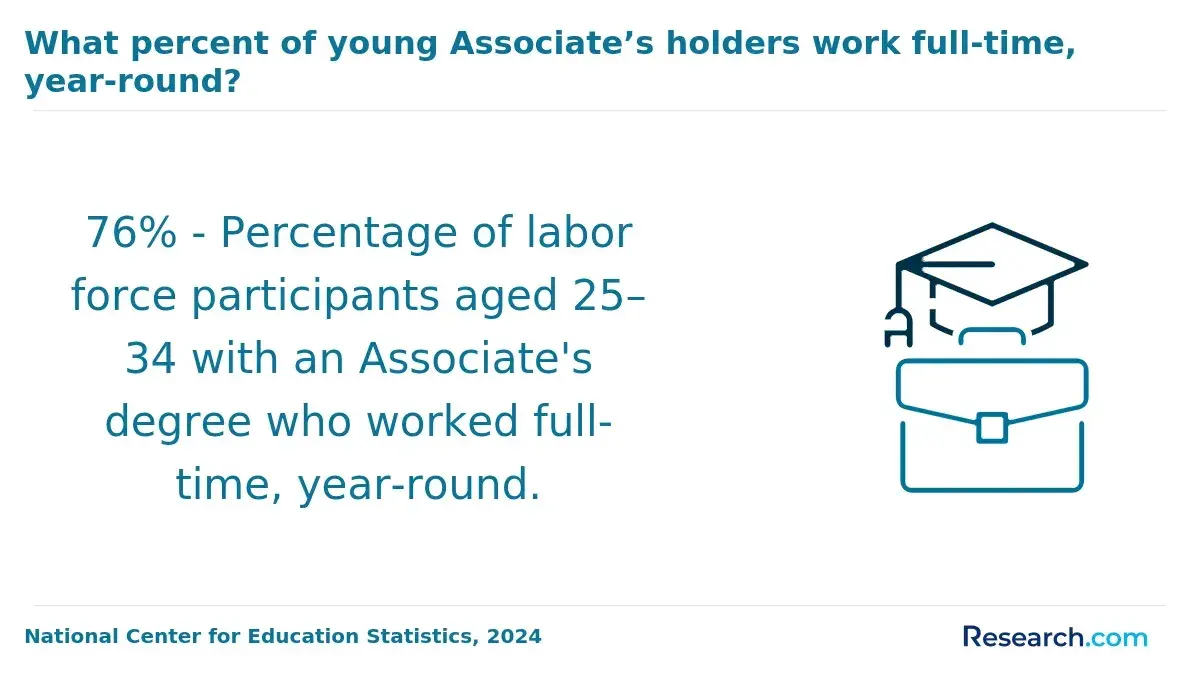
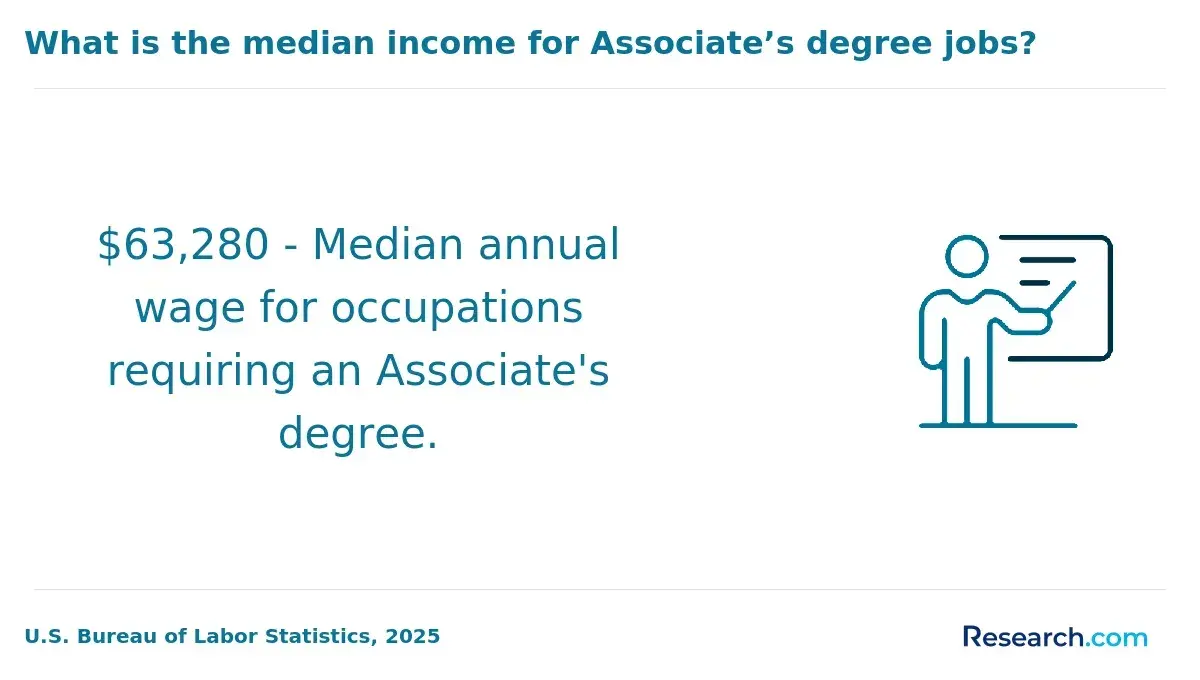
A two-year route can be a sensible lower-risk starting point when it has a clear transfer agreement or leads to a defined technical role. Students considering shorter credentials can also compare 2 year online degrees that pay well before committing to a four-year program.
How Can Students Verify Accreditation for an Online Software Engineering Degree at a Nonprofit University?
Accreditation is the first legitimacy check. Institutional accreditation evaluates the university as a whole and is particularly important for federal financial aid, credit transfer, employer confidence, and graduate-school admission. Programmatic accreditation evaluates a specific academic program against field standards.
For software engineering, ABET accreditation can be a meaningful additional signal, especially for students who want a curriculum aligned with established computing and engineering criteria. However, not every strong online program holds ABET accreditation, and it is generally not a legal requirement to work as a software developer. Do not confuse an institution's accreditation with accreditation of its software engineering major.
Use this verification sequence before paying an application fee. It helps distinguish a documented credential from a marketing claim.
- Find the university in the U.S. Department of Education's Database of Accredited Postsecondary Institutions and Programs.
- Confirm that the listed institutional accreditor is recognized and that the accreditation status is current.
- Check the university catalog, not just a promotional page, for the exact online degree name and award level.
- If ABET status matters to you, search ABET's program listings using the campus and program name.
- Ask admissions whether online students earn the same transcript designation and credential as campus students.
Red flags include vague claims of "international accreditation," no catalog entry for the degree, pressure to enroll before costs are disclosed, and an inability to state whether the program is institutionally accredited. Accreditation also does not replace a curriculum review: a recognized university can still offer a program that is poorly matched to your technical goals.
How Rigorous Are Online Software Engineering Degree Programs at Nonprofit Universities?
Rigorous online software engineering programs require sustained practice, not just watching lectures. Students should expect programming assignments, code reviews, debugging, technical writing, collaborative projects, exams, and cumulative projects. Strong programs assess whether students can explain trade-offs, test software, use version control, and produce maintainable code - not merely whether code runs once.
Online rigor can equal campus rigor when the same learning outcomes, faculty oversight, assessment standards, and project expectations apply. The practical difference is that online students need more self-management and must communicate deliberately with instructors and teammates. A course described as asynchronous may still include firm weekly deadlines, group meetings, proctored assessments, or live presentations.
Review the published curriculum for evidence that the degree covers both computer science foundations and engineering practice. Useful signs include the following:
- Programming in more than one language, with attention to object-oriented and modern development practices
- Data structures, algorithms, discrete mathematics, databases, operating systems, and networking foundations
- Software requirements, architecture, testing, quality assurance, security, and deployment workflows
- A capstone, client project, internship option, or portfolio requirement with faculty feedback
Mathematics readiness affects rigor and completion time. Applicants who need preparation in algebra, precalculus, calculus, statistics, or discrete math may benefit from reviewing online math degree programs and prerequisite options before selecting an accelerated technical schedule. A program is not automatically better because it is accelerated; faster pacing can make it harder to absorb foundational concepts while working full time.
The cost of an online software engineering degree depends on residency rules, transfer credits, required credits, technology fees, textbooks, proctoring, course repeats, and whether tuition is charged per credit or per term. Compare a written estimate for the entire degree rather than relying on a single per-credit figure.
For context, College Board reported average published tuition and fees of $11,610 for in-state students at public four-year institutions and $43,350 at private nonprofit four-year institutions for 2024-25. Those broad averages are not online software engineering prices, and they exclude living costs, aid, and school-specific online pricing. They are useful mainly for understanding why public versus private status alone cannot identify the best value.
This comparison highlights the cost questions that matter more than a headline tuition rate:
| Cost factor | Why it changes total cost | What to request |
| Transfer evaluation | Accepted credits can reduce the number of courses you must take | A preliminary credit review and maximum transferable-credit policy |
| Tuition model | Per-credit pricing and flat-rate term pricing reward different enrollment patterns | Pricing for part-time, full-time, and accelerated enrollment |
| Required technology | Laptops, software, remote labs, and proctoring can add expenses | A current student technology and fee schedule |
| Course sequencing | Limited offerings can extend enrollment and increase total charges | A term-by-term degree map for online students |
| Residency or immersion | Some programs include optional or required in-person elements | Written confirmation of travel and attendance requirements |
Low-cost programs can offer excellent value when they have strong advising, current coursework, and predictable course availability. Higher-priced programs may be worth considering when they provide substantial grants, generous transfer policies, smaller technical classes, specialized concentrations, or career networks that fit your goals. Neither result should be assumed; calculate the net price after aid and the likely time to completion.
Eligible students at accredited nonprofit universities can generally pursue federal student aid by submitting the Free Application for Federal Student Aid. Aid may include grants, work-study eligibility, and federal loans, subject to individual eligibility rules, enrollment intensity, satisfactory academic progress, and annual or aggregate borrowing limits.
Start with grants and scholarships before borrowing. A financial aid offer should identify gift aid separately from loans, show whether awards renew, and explain the academic or enrollment conditions attached to renewal. Employer tuition assistance can be valuable for working adults, but students should check repayment obligations if they leave the employer.
When comparing aid offers, use the same questions for every school so the packages are comparable:
- What is the estimated annual net price after grants and scholarships?
- Which awards are guaranteed, competitive, need-based, or renewable?
- Does part-time enrollment reduce institutional aid eligibility?
- Are there scholarships for transfer students, adult learners, veterans, or online learners?
- What loan amount is included, and can it be reduced or declined?
Do not use private loans as the first comparison point or assume an award letter makes a program affordable. Review borrowing totals against your anticipated completion timeline, existing debt, emergency savings needs, and realistic entry-level earnings in your location. A school's financial aid office can explain its policies, but it cannot predict your future employment outcome.
Online programs vary widely in flexibility. Fully asynchronous programs allow students to complete lectures and discussions on their own schedule within weekly deadlines. Synchronous programs require live online sessions. Hybrid programs may combine online coursework with campus labs, residencies, or scheduled assessments. Working students often benefit from asynchronous delivery, while students who want real-time interaction may prefer scheduled classes.
Flexibility also depends on course availability. A program can be asynchronous but still take longer than expected if required courses are offered only once each year. Term length, prerequisite chains, team-project schedules, and internship requirements all affect the pace.
Students with prior college credit may reduce time to completion through a transfer-friendly pathway. An accelerated associate degree can sometimes provide an efficient foundation, but confirm that its credits will transfer into the intended bachelor's program before enrolling. Transfer acceptance is determined by the receiving university, not the sending school's marketing materials.
Ask for an actual course sequence based on your transcript and intended start term. The most useful questions are whether attendance is required at fixed times, whether group work crosses time zones, how many hours per week each course typically requires, and what happens if you need to pause enrollment for work or family reasons.
Effective support matters because online software engineering students often need help beyond general academic advising. The strongest programs make services accessible remotely and provide clear response-time expectations rather than assuming students can visit a campus office.
Evaluate services that directly support technical progress and completion. The following features are especially useful for students learning complex programming concepts at a distance.
- Program-specific academic advising that can map prerequisites, transfer credits, and graduation requirements
- Online tutoring, writing support, library access, and disability accommodations
- Technical help for learning platforms, virtual labs, source-control tools, and remote testing
- Faculty office hours, peer communities, coding clubs, and opportunities to collaborate with classmates
- Career coaching for résumés, GitHub portfolios, technical interviews, internships, and employer networking
Ask whether services are included in tuition, available in evenings or weekends, and used by online students rather than only advertised broadly. A program with excellent recorded lectures but limited access to faculty or tutors may be a poor fit for beginners. Experienced developers seeking a credential may place more value on flexible pacing and advanced electives than on introductory tutoring.
Yes, an online degree can prepare students for in-demand software careers when it delivers recognized academic preparation plus demonstrable technical work. Common entry points include junior software developer, web developer, software test engineer, quality assurance analyst, systems analyst, application support specialist, and DevOps-oriented roles. Job titles and degree expectations vary by employer.
The labor market remains favorable but competitive. The Bureau of Labor Statistics projects 17% employment growth for software developers, quality assurance analysts, and testers from 2023 to 2033, faster than the average for all occupations. That projection describes the occupation nationally, not a guaranteed result for any graduate. Employers still evaluate programming ability, communication, portfolios, internships, and relevant experience.
AI-assisted coding is changing workflows rather than removing the need for engineering judgment. Students should look for programs that teach requirements analysis, testing, security, code review, data ethics, version control, and responsible use of development tools. These skills help graduates evaluate generated code instead of treating output as automatically correct.
Career-focused students should build evidence of ability before graduation: complete a capstone, maintain a polished project repository, document design decisions, and practice explaining trade-offs. Students who may later move into product, operations, or management can compare accelerated MBA programs after gaining technical and professional experience; an MBA is not a substitute for core programming preparation.
A properly accredited online bachelor's degree can prepare students for graduate school if it includes the prerequisites required by the target program. Master's admissions commonly consider undergraduate GPA, programming and mathematics preparation, letters of recommendation, statement of purpose, and sometimes professional experience. Requirements differ by institution and specialization.
A software engineering master's degree makes the most sense for professionals seeking deeper expertise in areas such as distributed systems, cybersecurity, cloud architecture, machine learning engineering, data-intensive systems, or technical leadership. A generalist master's can suit students who need broader advanced preparation, while a specialized program is better when it clearly supports a defined career direction.
Doctoral study is primarily a research pathway, not a standard requirement for software engineering employment. Students whose long-term goal is organizational leadership rather than computing research may find a PhD in organizational leadership more aligned with that objective, although admissions prerequisites and career uses differ from a computer science doctorate.
Before choosing a bachelor's program, preserve graduate-school options by taking calculus, discrete mathematics, statistics, algorithms, and research or technical writing courses where available. Save syllabi and project work, because graduate admissions teams may need context for online coursework, transfer credits, or prerequisites.
How Should Students Compare the Best Online Software Engineering Degree Programs at Nonprofit Universities?
There is no single best online software engineering degree for every student. A strong overall-value choice is one that meets your accreditation needs, accepts useful transfer credit, offers a realistic schedule, teaches current engineering practices, and produces a manageable net cost. Public universities often make sense for residents seeking lower tuition; private nonprofit universities may make sense when their grants, transfer policies, and adult-student support reduce the practical cost or improve completion prospects.
Use a short, evidence-based shortlist rather than relying only on rankings. These examples illustrate different nonprofit program profiles students may encounter; confirm current availability, costs, and format directly with each university.
| Program example | Credential focus | Potential strength | Best question to ask |
| Arizona State University | Online bachelor's in software engineering | Large public-university online infrastructure and engineering-focused curriculum | Which courses have scheduled live requirements or team-project expectations? |
| Western Governors University | Online bachelor's in software engineering | Competency-based pacing that may suit self-directed adult learners | How does the term-based model affect aid, pace, and access to faculty support? |
| University of Arizona | Online bachelor's in software engineering | Traditional university structure with online course delivery | Which transfer courses satisfy mathematics and programming prerequisites? |
| Penn State World Campus | Online graduate software engineering study | Graduate-level option for students with appropriate technical preparation | What undergraduate prerequisites are required for admission? |
Make a final decision only after collecting the same documentation from each finalist. This approach exposes differences that marketing pages often leave unclear.
- Verify institutional accreditation and any claimed programmatic accreditation.
- Request a transfer-credit evaluation and a personalized course-by-course completion plan.
- Calculate total estimated tuition, mandatory fees, technology costs, and likely aid for the full program.
- Compare required courses, electives, capstone expectations, and evidence of current tools and practices.
- Confirm synchronous sessions, residency requirements, course availability, and withdrawal or leave policies.
- Ask for online-student retention, graduation, internship, and career-service information where available.
- Choose the program whose requirements fit your budget, preparation, schedule, and target role—not the one with the most persuasive label.
Common mistakes include assuming a nonprofit institution automatically has superior outcomes, selecting the cheapest tuition without checking fees and completion time, overlooking required live meetings, and treating a generic computer-related degree as interchangeable with software engineering. The right investment is the credential you can complete while building the skills and portfolio your intended employers or graduate programs actually value.
Other Things You Should Know About Software Engineering
No. The fields overlap substantially, but software engineering usually emphasizes the organized design, testing, delivery, maintenance, and management of software systems. Computer science often places more emphasis on theory, computation, algorithms, and the foundations of computing. Either degree can support software careers when the curriculum includes strong programming and project work.
Many employers consider online degrees from recognized institutions, particularly when applicants can demonstrate relevant skills through projects, internships, work history, and technical interviews. Employers may care more about the institution's recognition, curriculum, and your demonstrated ability than whether lectures were delivered online.
There is no single required language. A useful program teaches transferable concepts through one or more widely used languages and covers data structures, object-oriented design, databases, testing, version control, and software development workflows. Review the current course catalog because language choices change over time.
Many online programs are designed for working adults, but feasibility depends on course load, prior preparation, family responsibilities, and required live sessions. Start with a manageable course load, especially if you are new to programming or returning to college after time away.
- Outcomes Reporting - Tech Elevator https://www.techelevator.com/outcomes/
- Paying for a Computer Science Degree | Scholarships, Grants, Loans https://www.computerscience.org/resources/how-to-pay-for-a-degree/
- 2020 Coding Bootcamp Alumni Outcomes & Demographics Report https://www.coursereport.com/reports/2020-coding-bootcamp-alumni-outcomes-demographics-report-during-covid-19
- Accredited Online Software Engineering Degree Programs https://www.onlineengineeringprograms.com/computer/software
- Explore the Best Software Engineering Degree Programs https://www.cyberdegrees.org/listings/software-engineering/best-programs/
- Can Online Colleges Offer Competitive Career Outcomes? https://www.onlineu.com/magazine/popular-online-schools-career-outcomes
- Graduate Outcomes https://www.codeplatoon.org/outcomes