
2027 Online Reading & Literacy Degree Programs With University Scholarships: Awards, Eligibility, and Net Cost

Co-Founder and Chief Data Scientist
An online Reading & Literacy degree can support work in reading intervention, literacy coaching, curriculum, and, where state rules allow, reading-specialist roles - but tuition alone does not show what you will pay. For context, average published tuition and fees at public four-year colleges were $11,610 for in-state students in the 2024-25 academic year, according to College Board. This guide helps prospective online students compare university-funded scholarships, eligibility rules, renewal terms, and out-of-pocket cost so they can judge the value of an offer rather than its headline amount.
Key Things You Should Know
- University scholarships for online Reading & Literacy students are not standardized: award amounts, online-program eligibility, and whether graduate students qualify can vary substantially by institution and enrollment status.
- The maximum Federal Pell Grant for the 2024-25 award year was $7,395, but Pell eligibility is need-based and does not replace the need to verify whether a university scholarship applies to an online literacy program.
- Your best offer is the one with the lowest realistic net cost after grants, scholarships, required fees, and any borrowing - not necessarily the program advertising the largest tuition discount.
Which Online Reading & Literacy Degree Programs Offer University Scholarships?
Online Reading & Literacy programs are commonly offered as Master of Education, Master of Arts in Reading, literacy education, reading specialist, or curriculum-and-instruction degrees with a literacy concentration. Some universities extend their general institutional scholarships to online students, while others limit awards to campus-based, undergraduate, full-time, or first-degree students.
Instead of assuming that a program has scholarship support because it is offered online, compare the institution's financial-aid policy with the exact degree format. The following categories show where university-funded aid is most likely to appear and what must be confirmed.
| Program type | Typical student | Institutional scholarship likelihood | What to verify |
| Online bachelor's degree in education or literacy-related studies | First-time or transfer undergraduate | May include merit, need-based, transfer, or adult-learner awards | Whether fully online students and part-time students are eligible |
| Online M. Ed. or M.A. in Reading/Literacy | Licensed teachers and working educators | Often more limited than undergraduate aid; may include graduate scholarships or department funds | Whether awards apply to graduate, online, and nondegree licensure students |
| Online reading specialist or literacy intervention concentration | Educators pursuing advanced practice or licensure | May be tied to education-school funds, employer partnerships, or external awards | State practicum requirements, program fees, and scholarship coverage of fieldwork costs |
| Graduate certificate in literacy or dyslexia intervention | Educators seeking a shorter credential | Frequently excluded from degree-seeking scholarship pools | Certificate eligibility and whether credits later apply to a degree |
For undergraduate applicants, begin with institutions that clearly state that online degree-seeking students can be considered for institutional aid. A comparison of affordable online colleges can also help you identify low-tuition options before scholarship awards are applied.
Ask each school for written confirmation of four points: whether your exact online program qualifies, whether the award is institutional or external, whether it applies to tuition only or tuition and fees, and whether it is available to new students, continuing students, or both.
How Much Scholarship Money Can Online Reading & Literacy Degree Students Receive?
There is no single university scholarship amount for online Reading & Literacy students. A school may offer a fixed annual award, a per-credit tuition reduction, a tuition-only scholarship, or a competitive award whose amount changes with available funding. Graduate literacy programs may also offer smaller departmental awards than undergraduate programs because graduate institutional aid is often more limited.
When an institution quotes an award, convert it into a total-program figure. This comparison separates an attractive-looking scholarship from the financial impact it can actually have.
| Award format | How it affects cost | Key question to ask |
| Fixed annual scholarship | Reduces charges by a stated amount each eligible academic year | Is the full amount available if you enroll part time or take summer courses? |
| Per-credit tuition discount | Reduces the price of each eligible credit | Does the discount apply to all required credits, including practicum courses? |
| Tuition-only scholarship | May leave technology, graduation, books, assessment, and field-placement costs unpaid | Which mandatory charges remain your responsibility? |
| Competitive department scholarship | May reduce cost substantially but is not guaranteed to every admitted student | How many awards were made in the most recent cycle? |
A useful rule is to treat any advertised maximum award as a possibility, not an entitlement. Ask for your individualized financial-aid offer and identify whether the stated amount is per term, per year, or for the entire degree. Also ask whether the amount can fall if you receive other institutional assistance.
For graduate students, compare the scholarship against the number of credits remaining after transfer-credit evaluation. A smaller award at a program that accepts more eligible transfer credits can sometimes produce a lower total cost than a larger award at a program that requires more credits.
What Are the Eligibility Requirements for Online Reading & Literacy Degree Scholarships?
Eligibility requirements are the rules a student must meet to receive an award. They can apply at admission, before each academic year, and during enrollment. Online status is especially important because a scholarship open to "all students" may still exclude students in online, graduate, certificate, or reduced-course-load programs.
The most common requirements below should be reviewed before you pay an enrollment deposit or rely on an award in a budget.
- Admission status: many institutional awards require degree-seeking admission rather than provisional, nondegree, certificate-only, or visiting-student status.
- Academic record: merit scholarships may use undergraduate GPA, transfer GPA, test scores where applicable, professional achievement, or an admissions review.
- Financial need: need-based awards may require a completed FAFSA and may use the school's financial-need calculation.
- Enrollment level: awards can require full-time enrollment, a minimum number of credits, or continuous enrollment each term.
- Program and residency rules: some funds are limited to particular majors, state residents, campus students, or students in educator-preparation pathways.
- Professional qualifications: literacy or reading specialist programs may require a teaching license, classroom experience, background clearance, or state-specific prerequisites.
Accreditation and state alignment matter alongside scholarship eligibility. If your goal is reading specialist certification or endorsement, confirm that the online curriculum, practicum, and supervised hours meet the rules of the state where you plan to work. A lower-cost program is not good value if it does not support your intended credential.
How Do You Apply for University Scholarships for an Online Reading & Literacy Degree?
University scholarships may be automatic, meaning the admissions or financial-aid office reviews eligible applicants without a separate form, or competitive, meaning you must submit an additional application. Do not assume admission automatically includes scholarship consideration.
Use this sequence to avoid missing awards or submitting materials after the funding deadline.
- Identify the exact online Reading & Literacy degree, concentration, and intended start term.
- Read the institution's scholarship page and ask whether online, graduate, transfer, and part-time students are included.
- Submit the admission application early enough for scholarship review, including official transcripts and any required teaching credentials.
- Complete the FAFSA if you are eligible to file it, even when pursuing merit aid, because some university awards require it.
- Submit separate scholarship materials by the stated deadline, which may include an essay, résumé, recommendation, teaching statement, or proof of service.
- Save the award notice and confirm its amount, duration, renewal conditions, and whether accepting it affects other aid.
Working educators comparing related graduate pathways may also find useful context in online SLP masters programs, where tuition structure, clinical requirements, and program-specific funding can similarly change the final cost.
Common mistake: applying only after admission and discovering that the scholarship deadline passed months earlier. Better approach: make a deadline tracker for admission, FAFSA, scholarship applications, verification documents, and tuition-deposit dates.
Are Scholarships for Online Reading & Literacy Degree Programs Renewable Every Year?
Some scholarships are renewable, which means they can continue beyond the first term if the student meets stated conditions. Others are one-time awards, limited to the first year, or re-evaluated annually based on financial need and available institutional funding. "Renewable" does not always mean the amount is guaranteed unchanged.
Before accepting an award, review these renewal terms in the written offer or scholarship agreement.
| Renewal condition | Why it matters | What to confirm |
| Minimum GPA | A lower grade in a demanding graduate course can affect continued aid | The GPA threshold, review timing, and probation or appeal option |
| Enrollment requirement | Working adults may need to reduce course load during a busy school term | Minimum credits per term and whether summer enrollment counts |
| Satisfactory academic progress | Federal and institutional aid may require completed credits and acceptable academic progress | The completion-rate and maximum-timeframe rules used by the school |
| Annual application or FAFSA | Need-based funding often requires current information each award year | Whether you must reapply and the deadline for renewal review |
| Funding availability | Some department awards depend on an annual budget | Whether renewal is guaranteed, competitive, or subject to available funds |
Ask for the projected award by academic year, not merely the first-term amount. If the degree can be completed in fewer than two years, verify whether the scholarship covers summer terms; if it will take longer, verify the maximum number of semesters or credits covered.
Can You Combine an Online Reading & Literacy Scholarship With FAFSA and Other Financial Aid?
Often, yes. FAFSA is the application used to determine eligibility for federal student aid and may also be used by universities for need-based institutional aid. A university scholarship can frequently be combined with federal grants, federal loans, employer tuition assistance, state aid, and outside scholarships, but the school controls its packaging rules.
Aid stacking means combining more than one source of assistance. The key limit is generally your cost of attendance and, for need-based aid, your calculated financial need. When outside aid arrives, a school may reduce loans first, but it can sometimes adjust other aid instead.
Review the following items with the financial-aid office before accepting an outside award or employer benefit.
- Whether your institutional scholarship can be combined with Pell Grant, state grants, and federal Direct Loans.
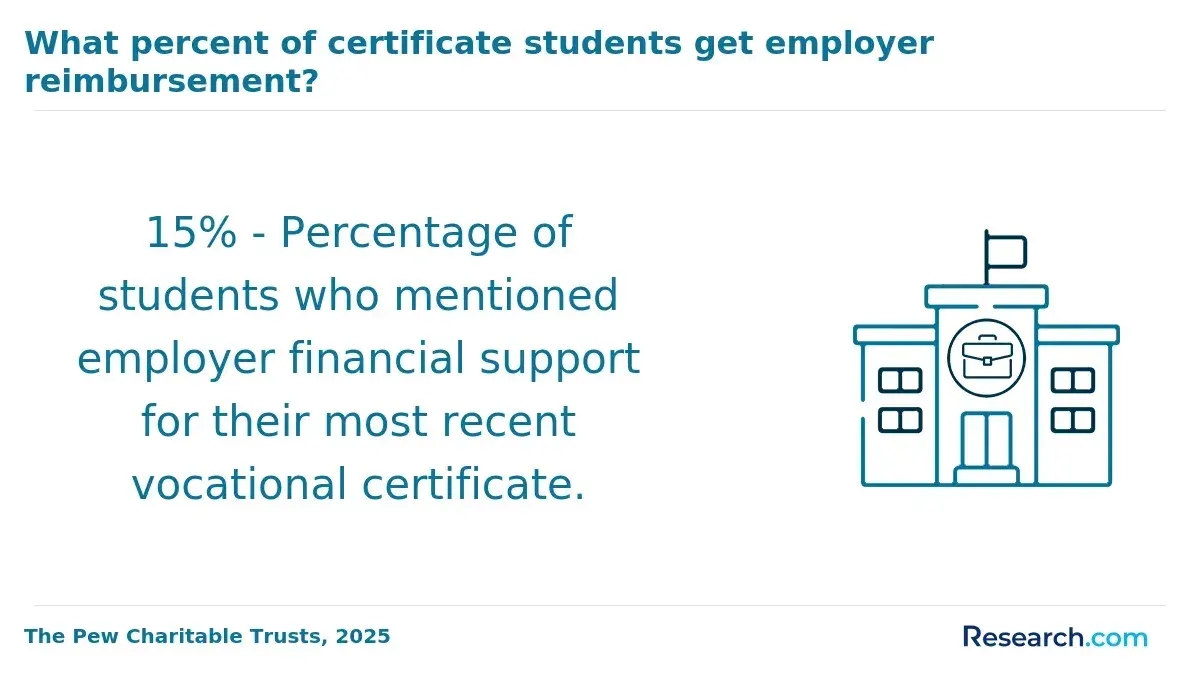
- Whether employer tuition reimbursement reduces university grant aid or is treated separately after course completion.
- Whether outside scholarships must be reported and which portion of the aid package would be adjusted.
- Whether the school includes indirect costs such as books, transportation, professional exams, and technology in its cost-of-attendance budget.
- Whether a scholarship applies before or after tuition benefits paid by a school district or employer.
Do not decline federal aid automatically because you received a scholarship. First compare the revised aid package and decide whether you need loans for remaining direct and indirect education costs. Loans must be repaid; grants and scholarships generally do not, provided you continue to meet their terms.
How Much Does an Online Reading & Literacy Degree Cost After Scholarships and Financial Aid?
Net cost is the amount remaining after grants and scholarships are subtracted from the school's total student budget. It is more useful than published tuition because online students may face separate technology, course-material, practicum, licensure, background-check, or proctoring costs. Federal loans can cover some remaining expenses, but they are borrowed money rather than a reduction in cost.
College Board reported average published tuition and fees of $43,350 at private nonprofit four-year colleges for 2024-25. That figure is not the price of every online literacy degree, but it illustrates why comparing an individualized offer is more reliable than comparing institution type alone.
Use this simple framework to compare each school on the same basis.
| Net-cost calculation item | Include | Do not treat as a discount |
| Total direct charges | Tuition, required university fees, program fees, and mandatory online-course charges | Optional estimates that are not billed by the school |
| Minus gift aid | Institutional scholarships, grants, Pell Grant, state grants, and confirmed outside scholarships | Loans, payment plans, or expected future employer reimbursement |
| Plus required indirect costs | Books, required technology, licensure tests, travel, and practicum-related expenses where applicable | Expenses the program confirms are not required |
| Result | Your estimated out-of-pocket cost and any amount you may need to finance | A guaranteed final bill before registration and aid disbursement |
Request a program-specific estimate for every term, especially if your curriculum includes a supervised practicum. If you are considering broader low-cost online study options before committing to a specialized education credential, compare the structure of an online MBA under 30k with care: low total tuition in one field does not establish the cost of a licensure-oriented literacy program.
Common mistake: subtracting a scholarship from tuition while ignoring mandatory fees and the possibility that the award applies only during fall and spring. Better approach: calculate term-by-term cost through completion and mark which amounts are confirmed versus estimated.
Are There Scholarships for Transfer, Adult, Military, and Other Online Reading & Literacy Students?
Yes, but eligibility is highly specific. Transfer, adult, military-connected, veteran, educator, and first-generation students may find institutional awards designed for their status, yet the same award may exclude graduate students or fully online enrollment. Students should not rely on a category label alone; they should verify the rules for their degree level and instructional format.
These student groups often need additional comparisons because their prior learning, employment benefits, and scheduling needs can change the actual cost of attendance.
| Student group | Potential institutional aid route | Important verification point |
| Transfer students | Transfer merit awards or transfer-specific scholarships | Minimum transferable credits, GPA calculation, and whether online entrants qualify |
| Adult or returning students | Completion grants, adult-learner scholarships, or employer-partner discounts | Part-time eligibility and whether breaks in enrollment end the award |
| Military-connected students | Military tuition rates, institutional military scholarships, and veterans' support | How benefits coordinate with federal and institutional aid |
| Licensed educators | School-district partnership pricing or education-department awards | Employment verification, service commitments, and reimbursement timing |
| Certificate-to-degree students | Continuing-student or pathway awards | Whether certificate credits transfer and whether scholarship eligibility resets |
Transfer students should obtain a written credit evaluation before comparing scholarship offers. Fewer required credits can reduce tuition, fees, and time away from work. For students beginning their planning at the associate level, this overview of barbados community college may provide a separate reference point for evaluating shorter postsecondary pathways, though it is not a substitute for checking U.S. reading-licensure requirements.
Military and veteran students should also contact the school's military or veterans services office. That office can explain benefit certification timelines, enrollment verification, and whether a change in course load affects aid.
What Is the Difference Between Merit-Based and Need-Based Scholarships for Online Reading & Literacy Degrees?
Merit-based scholarships are awarded primarily for achievements or characteristics such as academic performance, leadership, teaching experience, professional accomplishments, or a strong application. Need-based scholarships are awarded based on financial circumstances, often using FAFSA information and the school's aid formula. Some institutional awards use both merit and need.
Neither type is automatically better. Merit aid can be valuable for applicants with strong academic or professional records regardless of financial need, while need-based aid can be especially important for students whose household finances make tuition difficult to cover. The better option is the award that you are likely to receive and keep while lowering your remaining cost.
| Feature | Merit-based scholarship | Need-based scholarship |
| Primary basis | Academic, professional, leadership, or other achievement criteria | Demonstrated financial need under the institution's process |
| Common documentation | Transcripts, résumé, essay, recommendations, portfolio, or admission record | FAFSA and possible verification documents |
| Typical renewal focus | GPA, academic progress, and enrollment level | Continued financial need plus satisfactory academic progress |
| Best comparison method | Compare award duration and GPA conditions | Compare estimated aid after annual FAFSA renewal |
Students can be considered for both types at some universities. Submit FAFSA information when eligible, maintain copies of transcripts and professional credentials, and ask whether a scholarship is awarded once at admission or reviewed again each year.
How Should You Compare Scholarship Offers From Online Reading & Literacy Degree Programs?
Compare offers using the same completion timeline, course load, and assumptions about transfer credit. The goal is to identify the lowest credible cost for a program that fits your career plan, state requirements, schedule, and preferred learning format. A scholarship with a larger headline value can be less valuable if the program has higher tuition, more fees, fewer transferable credits, or strict renewal conditions.
Use the following questions when you receive a scholarship offer or talk with an admissions representative.
- What is my total estimated direct cost from first term through graduation, based on my evaluated transfer credits?
- Which scholarships and grants are confirmed, and which are estimated or competitive?
- Does each award apply to online courses, summer courses, practicum credits, and required program fees?
- What GPA, credit load, completion rate, and deadlines must I meet to renew each award?
- Can the award be combined with FAFSA-based aid, employer assistance, veterans' benefits, and outside scholarships?
- Does the degree meet the academic requirements for the reading, literacy, or educator credential I intend to pursue in my state?
- What costs are excluded from the scholarship, including books, background checks, testing, travel, and licensure expenses?
Create a one-page comparison for each school with total credits, per-credit tuition, mandatory fees, confirmed gift aid, estimated indirect costs, and renewal rules. If you are weighing adjacent people-serving fields as alternatives, a human services degree online comparison can help clarify differences in program length and career direction, but it should not replace a literacy-program credential review.
The strongest scholarship value is personal: it depends on your admission profile, financial need, employment benefits, state credential goal, and likelihood of meeting renewal requirements. Obtain all material terms in writing before making a final enrollment decision.
Other Things You Should Know About Reading & Literacy
It depends on the degree and your goal. Many reading specialist and literacy leadership programs expect applicants to hold a teaching license and may require classroom experience. Broader literacy education degrees may admit students without a license, but they may not lead to state reading-specialist certification.
Completion time depends on degree level, transfer credits, enrollment pace, and practicum requirements. A graduate certificate may require less time than a master's degree, while a reading specialist pathway can take longer if supervised fieldwork must be completed during school terms.
Online delivery alone does not determine acceptance. You must verify that the program's coursework, supervised practicum, faculty qualifications, and assessment requirements align with the licensing or endorsement rules in the state where you intend to work.
Depending on your prior credentials and state rules, the degree may support roles such as reading interventionist, literacy coach, curriculum specialist, classroom teacher with literacy expertise, instructional coordinator, or reading specialist. Some roles require a teaching license, graduate degree, additional examinations, or district-specific qualifications.
References
- Types of Financial Aid https://www.hhloans.com/types-of-financial-aid/
- Guide to Financial Aid for Online Students https://www.onlineu.com/resources/financial-planning/financial-aid
- Explore Scholarships for Online Education https://www.oedb.org/online-scholarship/
- Online Master of Science in Literacy | Keuka College https://programs.keuka.edu/literacy/
- Other Types of Aid - Finaid https://finaid.org/otheraid/
- Types of student financial aid | USAGov https://www.usa.gov/student-aid
- Financial Aid Is for Everyone: Top 5 Resources for All Students in 2025 https://curisfinancial.org/financial-aid-resources-for-students/
- Find Free Scholarships for College (July 2026) | Bold.org https://bold.org/scholarships/
- How Do Online Degree Scholarships Differ from Traditional Scholarships? https://lakewood.edu/online-degree-scholarships-differences/
- Financial Aid for Adult Learners: Grants, Scholarships & How to Pay for College (2026 Guide) https://www.straighterline.com/blog/financial-aid-resources-adults


