
2027 Online Reading & Literacy Degree Programs With Monthly Tuition Payment Plans

Co-Founder and Chief Data Scientist
Paying several thousand dollars at the start of a term can prevent otherwise qualified teachers from pursuing an online Reading & Literacy degree. Monthly tuition payment plans divide a school's billed balance into scheduled installments, usually within one term or academic year. For context, the maximum Federal Pell Grant for the 2024-25 award year was $7,395, but graduate Reading & Literacy students generally are not eligible for Pell Grants.
This guide helps current and prospective educators compare payment schedules, total costs, financial aid interactions, and program terms before they commit.
Key Things to Know About Reading & Literacy Programs with Monthly Tuition Payments
- Online Reading & Literacy programs may offer monthly payments through a school-wide tuition plan, but availability, enrollment deadlines, and installment counts can differ by program and term.
- A payment plan can improve cash flow without reducing tuition; published graduate-program prices commonly range from roughly $9,000 to more than $20,000 total, depending on credits, residency, and institution.
- Financial aid is usually applied to the student account before installments are calculated, while setup fees, deposits, books, licensure costs, and late charges may remain separate expenses.
Which online Reading & Literacy degree programs have monthly tuition payment plans?
Monthly payment options are usually administered at the institutional level rather than advertised as a feature of one Reading & Literacy degree. That means a university may offer an online M. Ed., reading specialist, literacy leadership, or reading intervention program and separately provide a term-based installment plan to eligible students.
The programs below are examples of online literacy-focused graduate options at institutions that commonly publish tuition-payment-plan information. Plan availability can change by campus, session, academic level, account balance, and enrollment date, so applicants should obtain written confirmation from the bursar or student accounts office before relying on any plan.
| Institution and online program type | Common credential focus | What to confirm about monthly payments |
| American College of Education | M. Ed. in Literacy | Whether the selected program uses monthly installments, the required first payment, and whether course materials are included. |
| University of Florida | Online M. Ed. in Curriculum and Instruction, Reading and Literacy | Whether distance-learning graduate charges can be placed on the university payment plan and how many installments are available. |
| Grand Canyon University | M. Ed. in Reading with Elementary Education emphasis | Whether billing is course-by-course or term-based, and whether a payment arrangement must be made before classes begin. |
| University of the Cumberlands | M.A. in Reading and Writing Specialist | Whether graduate online students may use an installment agreement and what happens if a course runs in an accelerated session. |
Do not assume that an online format automatically means monthly billing. Some accelerated programs bill one course at a time, which can feel like monthly payment even when no formal installment plan exists. Others bill the full semester balance and divide it into several scheduled withdrawals.
Educators considering related communication-disorders careers can also compare online SLP masters programs, although speech-language pathology programs have different clinical-placement, accreditation, and state-licensure requirements.
Before applying, ask the program office whether the degree supports the reading specialist, dyslexia intervention, or literacy endorsement you need in your state. A payment plan changes how tuition is paid; it does not establish eligibility for a credential or license.
How much do online Reading & Literacy degree programs typically cost?
Total cost depends primarily on credit requirements and the school's graduate tuition rate. Many M. Ed. and reading specialist programs require about 30 to 36 credits, while a graduate certificate may require fewer credits and may not meet every state's reading specialist requirements. Residency rules, mandatory fees, and supervised fieldwork can also materially change the final bill.
College Board's 2024 Trends in College Pricing reported average published tuition and fees of $11,300 for public four-year graduate study and $21,730 for private nonprofit four-year graduate study for the 2024-25 academic year. Those broad averages are not specific to online literacy degrees, but they provide a useful benchmark: compare a program's complete published price, not only its per-credit tuition.
This cost framework shows how a monthly bill may be calculated. The figures are examples for budgeting, not quotes from a particular institution.
| Program billing example | Tuition balance | Payment schedule | Approximate installment before plan fee |
| One 3-credit course at $500 per credit | $1,500 | 3 monthly payments | $500 |
| Six-credit summer session at $500 per credit | $3,000 | 3 monthly payments | $1,000 |
| 12-credit semester at $500 per credit | $6,000 | 4 monthly payments | $1,500 |
| 36-credit degree at $500 per credit | $18,000 | Paid across 6 standard semesters | Depends on each semester's balance |
A plan that spreads a single semester across three or four payments does not normally turn an $18,000 degree into a $500-per-month obligation. Students should calculate the balance for each billing period, then divide by the actual number of installments offered. Accelerated programs can have higher monthly payments because their terms are shorter.
If lower published tuition is your first priority, compare the degree's transfer-credit policy, completion requirements, and total mandatory charges alongside lists of affordable online colleges. A lower headline rate is only useful if the credential fits your professional goal.
How common are monthly tuition payment plans among Reading & Literacy programs?
Monthly payment plans are common across U.S. colleges, but schools do not use a single standard model. A plan may be available to all enrolled students with a qualifying balance, limited to students who enroll before a deadline, or unavailable for very short sessions. For Reading & Literacy students, the relevant question is whether the plan applies to the exact online graduate program and academic term.
Many institutions use third-party payment-plan administrators or their own student-account systems. Typical structures divide a remaining term balance into two to five installments. A fall-semester plan may open during summer and require the final payment before the term ends; a summer plan may allow fewer installments because the session is shorter.
The increased use of shorter online sessions can make payment-plan comparisons more important. A seven- or eight-week course may have the same tuition rate as a longer course but fewer billing dates, resulting in a larger required monthly payment. Ask for the payment calendar before you register, especially if you plan to take consecutive accelerated courses.
Availability is not a measure of program quality. Accreditation, state authorization, field-experience support, faculty expertise, and alignment with local reading endorsement rules should remain central to the decision.
Can monthly tuition plans make paying for Reading & Literacy degrees more attainable?
Yes, a monthly plan can make an eligible program more attainable for students who have reliable monthly income but cannot pay an entire term's balance at once. It is most useful when the school lets students spread a manageable remaining balance over several interest-free installments after grants, scholarships, employer benefits, and other aid are applied.
It is generally a better fit for working teachers, paraprofessionals, and career changers with predictable cash flow. It may be a poor fit for students whose income varies substantially, whose plan payment would compete with essential living costs, or whose remaining balance still exceeds what they can realistically pay during the term.
The main trade-offs are easier to see when payment plans are compared with other funding routes.
| Option | Best use case | Main advantage | Main limitation |
| School monthly payment plan | Short-term balance with dependable income | Usually avoids interest when all installments are paid on time | Balance is commonly due within the term and may include setup or late fees |
| Federal Direct Unsubsidized or Graduate PLUS Loan | Students who need financing beyond one term | Can cover eligible education costs over a longer repayment period | Interest and borrowing costs can increase total repayment |
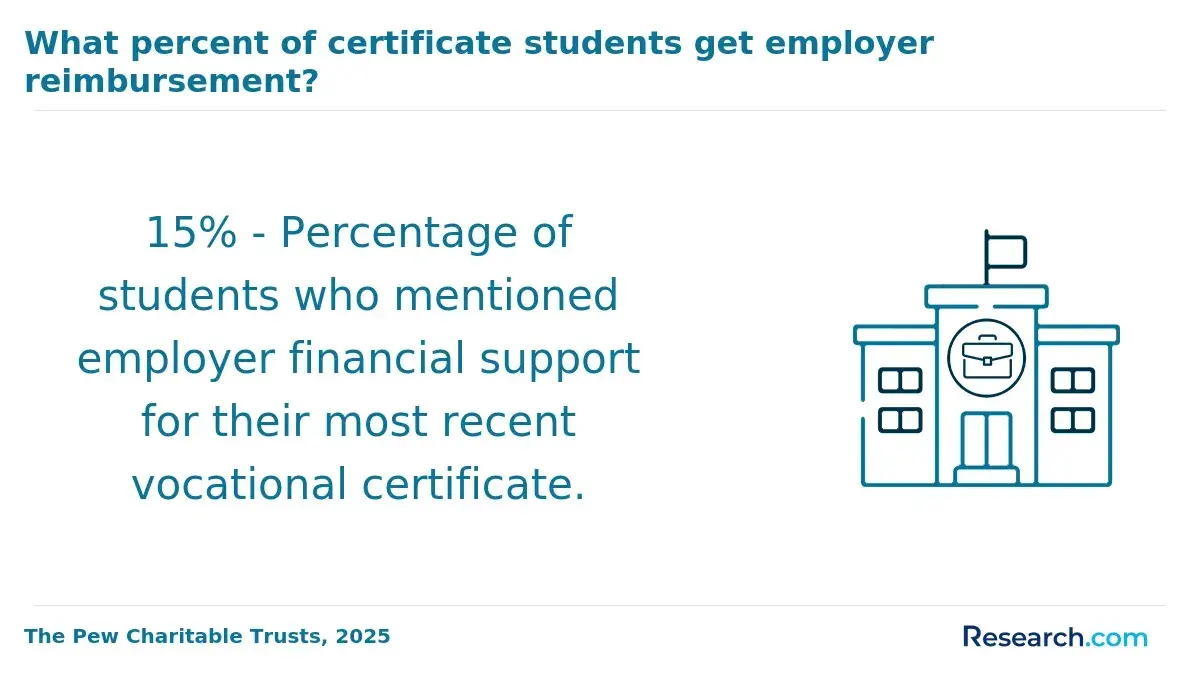
| Employer tuition assistance or reimbursement | Educators whose employer provides a qualifying benefit | Can reduce out-of-pocket tuition | May require upfront payment, grade thresholds, service commitments, or delayed reimbursement |
| Paying tuition upfront | Students with sufficient savings and no better use for those funds | Eliminates installment deadlines and possible plan fees | Creates a larger immediate cash expense |
Start by subtracting confirmed aid and employer funding from the term bill. Then divide the remaining amount by the exact installment count and leave room for books, testing, and emergencies. If that number is not sustainable, reduce the course load, delay enrollment, seek additional aid, or consider a less expensive program rather than accepting a plan that is likely to fail.
A literacy degree is not the only route for people interested in student support services. Those exploring a broader helping profession can review a human services degree online option, but it does not substitute for a state-required reading credential.
Does monthly payment plans have an effect on the overall cost of Reading & Literacy degrees?
A monthly payment plan usually does not change the published tuition rate or the number of credits required for a Reading & Literacy degree. It can, however, increase the amount paid if the school charges a nonrefundable enrollment fee, returned-payment fee, late fee, or finance charge. Some school plans are interest-free, while other arrangements may involve financing terms that deserve closer review.
Compare the total amount due under each choice, not just the advertised monthly figure. This comparison identifies where a payment plan may add costs.
| Cost component | Paying in full | Institutional monthly plan | Borrowing through a loan |
| Published tuition and mandatory academic fees | Usually the same | Usually the same | Usually the same |
| Plan enrollment or setup fee | Usually none | May apply | Not applicable |
| Interest | None | Often none, but verify the agreement | Typically accrues under loan terms |
| Late or returned-payment charges | Possible if payment is late | Possible and may trigger plan cancellation | Loan repayment consequences occur after disbursement and repayment rules apply |
A short, interest-free plan with a modest setup fee may cost less overall than borrowing for the same term, but only if the payments are made on time. Conversely, stretching payments through private financing can be more expensive than a school's internal plan even when the first monthly bill appears lower.
Read the agreement for language about interest, annual percentage rate, deferred-payment charges, collection costs, and consequences of cancellation. If a school calls an option a "payment plan," confirm whether it is an internal installment arrangement or a credit product offered by a separate lender.
Do monthly payment plans affect your financial aid eligibility for Reading & Literacy programs?
Enrolling in a monthly payment plan does not ordinarily reduce eligibility for federal financial aid. Eligibility is determined by factors such as the Free Application for Federal Student Aid, enrollment status, satisfactory academic progress, annual and aggregate borrowing limits, and the school's cost of attendance. However, payment-plan timing can affect when you must pay any balance that remains after aid is disbursed.
For graduate Reading & Literacy students, federal aid may include Direct Unsubsidized Loans and, for eligible borrowers, Direct PLUS Loans. Graduate students generally do not qualify for Federal Pell Grants, which are limited to eligible undergraduate students who have not earned a bachelor's or professional degree. Scholarships, assistantships, district support, and state aid each have separate rules.
Use these steps before signing up for installments:
- Submit required financial aid documents early and review the school's aid offer.
- Ask when grants, scholarships, and loans are expected to disburse to your student account.
- Request the payment-plan amount after anticipated aid is applied, not before.
- Confirm whether a delayed disbursement, dropped course, withdrawal, or reduced enrollment will recalculate the installments.
A payment plan can be especially risky when it is based on aid that has not yet been approved. If expected aid is delayed or reduced, the student remains responsible for the billed balance. Keep copies of the aid offer, plan agreement, and account statement.
Is there a deposit required before starting Reading & Literacy monthly payment plans?
Often, yes. Schools may require a first installment at enrollment, a fixed plan-enrollment fee, or both. The first payment can function like a deposit because it is due before the remaining installments begin, although the school may not label it as a deposit. Some institutions also require all prior balances to be paid before students can join a new plan.
The upfront amount varies significantly. A plan opened early may require a smaller first installment because more payment dates remain. A student who enrolls near the start of a term may owe a larger down payment because the same balance must be paid over fewer months.
Before accepting a spot, request an itemized answer to these questions:
- What amount is due on the day I enroll in the plan?
- Is the setup fee refundable if I drop a course or withdraw?
- How many payments remain after the first payment?
- Can pending financial aid reduce the initial payment requirement?
- Will an unpaid prior-term balance prevent enrollment?
A low advertised monthly amount can be misleading if the first payment is large. Build the initial payment, program application fee, enrollment deposit, technology charges, and course materials into the pre-enrollment budget.
Are there fees not covered by monthly tuition payment plans for Reading & Literacy programs?
Yes. A payment plan generally covers the eligible balance on the student account, not every expense connected to earning a Reading & Literacy credential. The exact exclusions depend on the institution, the program, and whether a fee is billed directly by the school or by an outside provider.
The table separates common billed charges from costs students may need to pay independently.
| Expense | Often included in the installment balance? | Why students should verify |
| Tuition | Usually | Some plans exclude balances below a minimum amount. |
| Mandatory university fees | Often | Technology, distance-learning, and student-service fees vary by institution. |
| Books and course materials | Sometimes | Items purchased through a bookstore or publisher may be billed separately. |
| Background checks and fingerprinting | Often no | Fieldwork and school-placement requirements may use external vendors. |
| State licensure, endorsement, or examination fees | Usually no | These charges are commonly paid to a state agency or testing organization. |
| Late, returned-payment, or plan-enrollment fees | No; they are additional charges | They can increase the total cost of using the plan. |
Students pursuing reading specialist certification should also budget for possible practicum travel, classroom materials, and testing requirements. These costs can be modest or substantial depending on the state and placement arrangement, and they may not appear in a program's tuition calculator.
What should you look for in payment plan terms for Reading & Literacy programs?
Payment-plan terms should be reviewed with the same care as the academic curriculum. A plan is affordable only when the due dates, required first payment, fees, and consequences of a missed payment match the student's actual budget and paycheck schedule.
Use the following checklist when comparing written terms from two or more schools:
- Identify whether the agreement is interest-free institutional billing or financing through a third party.
- Calculate the total of every installment, the first payment, and each disclosed setup or service fee.
- Match each due date to expected income, aid disbursement, and employer reimbursement dates.
- Check the late-payment grace period, returned-payment charge, and whether missed payments cancel enrollment or place an account hold.
- Review refund and withdrawal rules, including how dropped courses change a payment schedule.
- Confirm whether automatic bank withdrawals or card charges are required and how to update payment information.
- Ask whether the plan renews automatically for the next term or requires a new agreement.
One frequent mistake is comparing only monthly payments. A shorter, accelerated term may produce a higher installment even when its per-credit price is lower. Another is relying on verbal assurances from admissions staff rather than reviewing the student-account agreement and official tuition schedule.
For a broader example of comparing a program against a firm budget ceiling, prospective students can examine an online MBA under 30k guide. The subject differs, but the budgeting principle is the same: compare total required cost, not marketing language alone.
How do you know if online Reading & Literacy degrees with monthly payments are right for you?
A monthly payment plan is right for you when the degree is academically appropriate, the term balance fits a documented monthly budget, and you can pay each installment without relying on uncertain income. It should support a sound education decision, not make an unsuitable or unaffordable program appear affordable.
A plan may be a strong option if you are a working educator with steady pay, can use employer assistance, and need only short-term flexibility between billing dates. Paying upfront may be simpler if you have adequate savings and the plan charges a meaningful fee. Federal loans may be more practical when the remaining balance cannot reasonably be cleared during the term, though borrowers should understand interest and repayment obligations before borrowing.
Take these practical steps before deciding:
- Verify that the online degree meets your state's requirements for the role you want, especially if you need a reading specialist license or endorsement.
- Obtain the complete program cost, including credits, fees, books, fieldwork expenses, and anticipated licensure costs.
- Subtract confirmed grants, scholarships, tuition benefits, and savings from the first term's bill.
- Compare the remaining balance with the school's exact installment calendar and your monthly cash flow.
- Read the payment agreement and withdrawal policy before authorizing automatic payments.
Students who are still exploring lower-cost entry points may look at options such as Barbados community college resources, but an associate-level pathway does not replace the graduate education or state-specific preparation commonly required for reading specialist roles in the United States.
Choose a program because it fits your credential goal, academic schedule, and total budget. Choose the payment plan only after confirming it is a manageable way to pay for that program.
Other Things You Should Know About Reading & Literacy
Often, yes, if the course creates a balance that meets the school's minimum plan requirement. Some institutions bill one course at a time, while others require students to enroll in a plan for the full semester balance.
Many schools allow students to update a bank account or card through the student billing portal before the next scheduled installment. Check the deadline and confirm whether a failed automatic payment creates a fee.
An unpaid balance can lead to registration, diploma, transcript, or account holds under school policy. Read the consequences of a missed payment and contact student accounts promptly if a payment problem arises.
Many programs that prepare students for reading specialist certification or endorsement include supervised field experiences. Requirements vary by state and institution, so ask whether your school placement must be arranged locally and whether related costs are included in tuition.
References
- Online College Costs: A Breakdown of Tuition and Fees | OnlineColleges.net https://www.onlinecolleges.net/for-students/online-college-costs/
- Most Affordable Online Master's in Education for 2025 https://www.onlinemastersdegrees.org/most-affordable/education-programs/
- Types of Financial Aid https://www.hhloans.com/types-of-financial-aid/
- Master's in Reading Education Degrees | Teaching Degrees https://www.teachingdegrees.com/programs/masters/reading
- Average Cost of College [2025]: Yearly Tuition + Expenses https://educationdata.org/average-cost-of-college
- M. Ed. in Literacy | ACE https://ace.edu/degree-programs/masters-degrees/masters-education/master-of-education-in-literacy/
- NC ESA+ Reading Curriculum | Approved PRIDE Vendor https://pridereadingprogram.com/pride-reading-program-ncseaa/
- Online MS in Reading and Literacy Instruction | IWU https://www.indwes.edu/program/ms-science-of-reading-and-literacy-instruction/
- Reading Specialist Graduate Programs (Online) | Georgian Court University | Lakewood, New Jersey https://georgian.edu/academics/graduate-programs/education/reading-specialist-graduate-programs-online/
- Master's in Literacy Education https://online.cudenver.edu/programs/graduate/online-masters-literacy-education


