2027 Online Program Management Doctorate Program Costs: Tuition, Fees, Financial Aid, and Employer Reimbursement

Co-Founder and Chief Data Scientist
An online Program Management doctorate can cost as much as a major career investment, so the real question is not just tuition but affordability, debt, and payoff. Federal Student Aid data shows the U. S. student loan portfolio remains above $1.6 trillion, making careful graduate borrowing essential. This guide is for working project, program, operations, and PMO leaders comparing doctoral options. You will learn how tuition, fees, residency rules, aid, employer reimbursement, and ROI fit together so you can estimate total cost before enrolling.
Key Things to Know About Online Program Management Doctorate Program Costs
- There is no single national tuition average for online Program Management doctorates, but most students should model total tuition from credit load, per-credit rate, and dissertation enrollment rather than relying on advertised annual tuition.
- Federal graduate borrowing can cover approved cost of attendance: Direct Unsubsidized Loans are capped at $20,500 per academic year, while Grad PLUS Loans may cover remaining school-certified costs after other aid.
- Employer educational assistance can be valuable because qualifying plans may provide up to $5,250 per calendar year in tax-free benefits, but reimbursement rules often depend on grades, job relevance, tenure, and repayment clauses.
What is the average tuition cost of an online Program Management doctorate program?
There is no federal database that reports a standalone national average for online Program Management doctorate tuition. Programs may be housed under project management, organizational leadership, technology management, business administration, systems engineering, or strategic management, so the most accurate estimate starts with the school's credit requirement and doctoral tuition rate.
For context, the National Center for Education Statistics' graduate tuition data published in 2024 reported average graduate tuition and required fees of $12,596 at public institutions and $29,931 at private nonprofit institutions for the 2022-23 academic year. That benchmark is useful, but doctorate students should treat it as a broad graduate-level reference, not a program-specific price quote.
A practical cost comparison should separate tuition structure from total program length. If you are still comparing earlier credentials before a doctorate, an affordable project management degree online may help you build the academic foundation before taking on doctoral-level tuition.
The table below shows how common tuition pricing models affect the budget conversation. Use it to identify which number you should ask admissions or student accounts to confirm before applying.
| Cost item | What it means | Why it matters |
| Per-credit tuition | The rate charged for each doctoral credit | Small rate differences become significant in programs requiring many credits |
| Total credit requirement | The number of credits needed after transfer review | A lower rate is not always cheaper if the program requires more credits |
| Dissertation or capstone continuation | Charges for enrollment after coursework while completing research | Extended completion time can raise total cost even after classes are finished |
| Required residencies | In-person or virtual intensive sessions tied to doctoral milestones | Residency travel, lodging, and time away from work may not appear in base tuition |
To estimate the average cost for your shortlist, calculate each school separately and then compare the totals side by side. The basic formula is: required credits after transfer multiplied by tuition per credit, plus mandatory fees, residency costs, books, software, and estimated dissertation continuation costs.
Are online Program Management doctorate programs subject to distance learning or technology fees?
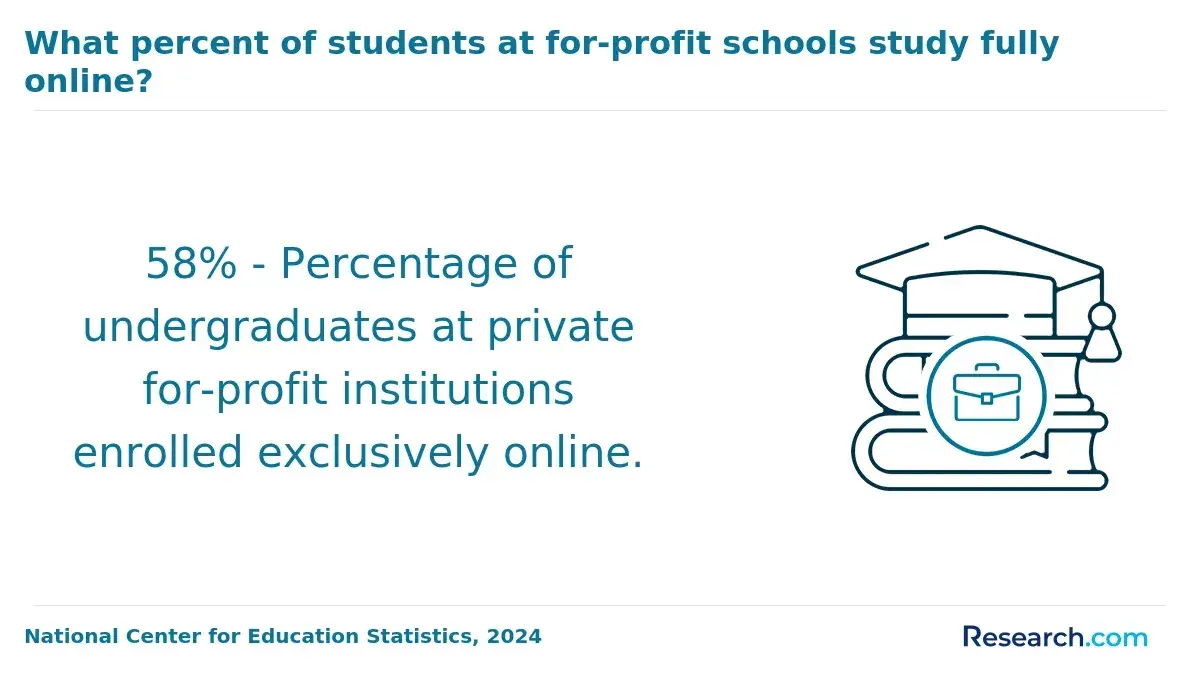
Yes. Many online Program Management doctorate programs charge distance learning, technology, library, student services, graduation, or proctoring fees. These costs may be charged per credit, per course, per term, or as one-time program fees, and they are easy to miss if you only compare tuition.
The key decision point is whether a school advertises an "all-inclusive" online rate or separates tuition from fees. An all-inclusive rate is easier to budget, while a separated fee model may look cheaper at first but cost more after required charges are added.
Ask each school for a written cost of attendance estimate, not just a tuition page. Before you accept admission, confirm these fee categories directly:
- Online learning, technology, or platform access fees
- Doctoral research, dissertation, or capstone fees
- Proctoring, assessment, portfolio, or comprehensive exam fees
- Graduation, transcript, and credential evaluation fees
- Residency, seminar, or intensive session fees that are not included in tuition
A common mistake is assuming that "online" means all required digital services are included. If a program uses specialized project portfolio tools, statistical software, research databases, or virtual residency platforms, those costs may be billed separately or left for the student to purchase.
What out-of-pocket expenses should online Program Management doctorate students anticipate?
Online students often save on commuting and relocation, but they still face real out-of-pocket costs. These expenses matter because some are not automatically covered by scholarships or employer reimbursement, even when they are included in the school's official cost of attendance.
The table below summarizes common non-tuition expenses. Use it as a checklist when asking schools for a complete budget.
| Expense category | What to verify | Budget risk |
| Books and digital materials | Whether courses use purchased texts, open resources, or subscription platforms | Costs may vary by course and research method sequence |
| Research software | Whether statistical, qualitative analysis, citation, or survey tools are provided | Doctoral research may require tools beyond standard office software |
| Residency travel | Whether attendance is mandatory and how often it occurs | Airfare, lodging, meals, parking, and missed work can add materially to total cost |
| Computer and internet upgrades | Minimum hardware, webcam, bandwidth, and security requirements | Older equipment can create unplanned replacement costs |
| Professional memberships and conferences | Whether the program expects conference participation or presentation | Useful for networking but not always covered by aid or reimbursement |
The safest approach is to create a "cash cost" column next to your tuition estimate. Include any amount you expect to pay before reimbursement arrives, because employer benefits and scholarships often reimburse after grades post rather than before the term begins.
Several cost mistakes show up repeatedly among doctoral students. Avoiding them can protect your budget before you sign an enrollment agreement:
- Budgeting from base tuition only and ignoring mandatory online, dissertation, and graduation fees
- Assuming all master's credits will transfer before receiving a formal transfer evaluation
- Ignoring the cost of extended dissertation enrollment if the research phase takes longer than planned
- Assuming required residencies are optional because the program is primarily online
- Using loan eligibility as an affordability test instead of comparing monthly repayment scenarios
Does in-state versus out-of-state residency status impact online Program Management doctorate tuition?
Residency status can affect online Program Management doctorate tuition, but the impact varies widely by institution. Some public universities charge lower in-state graduate tuition, some charge separate online rates, and many private nonprofit universities use the same tuition rate regardless of state residency.
The table below explains the most common pricing models. It can help you identify whether a public university's online program is actually cheaper for your situation.
| Pricing model | How it usually works | Best fit |
| Public in-state tuition | State residents may receive a lower graduate tuition rate | Students who live in the state and qualify under residency rules |
| Public out-of-state tuition | Nonresidents may pay a higher rate unless an online exception applies | Students who value a specific public university enough to absorb the premium |
| Flat-rate online tuition | Online students pay the same rate regardless of residency | Out-of-state students comparing public and private online programs |
| Private institutional tuition | Rates are commonly based on program and degree level, not state residency | Students comparing convenience, transfer policy, faculty fit, and total cost |
The most important step is to ask whether the online doctorate follows campus graduate tuition, a separate e-tuition schedule, or a program-specific rate. Do not assume that a public university is the lowest-cost option until you compare the full price after fees, transfer credits, and residency requirements.
How do total costs for an online Program Management doctorate compare to traditional on-campus programs?
Online Program Management doctorates are often more affordable for working adults because they reduce relocation, commuting, parking, and some campus-based living costs. However, they are not automatically cheaper on tuition. Some online doctoral programs use premium per-credit rates to cover instructional design, advising, and technology infrastructure.
The table below compares the cost categories that usually differ between online and on-campus formats. It is most useful when you already have two or three specific programs in mind.
| Cost factor | Online doctorate | On-campus doctorate |
| Tuition | May be flat-rate, program-specific, or residency-neutral | May vary by in-state or out-of-state status |
| Housing and relocation | Usually avoidable for fully online students | May be significant if the student must move near campus |
| Work continuity | Often allows continued full-time employment | May require schedule changes, reduced hours, or relocation |
| Campus fees | May be replaced by online learning or technology fees | May include facility, activity, transportation, or campus service fees |
| Networking costs | May require intentional travel to conferences or residencies | Campus access can make faculty and peer networking easier |
Online usually makes the most financial sense when you can keep your job, avoid relocation, and complete the degree without extending the dissertation phase. On-campus may make sense if the program offers funded assistantships, stronger research mentoring, or a lower in-state tuition structure.
Students who mainly want to shorten time to a management credential should compare whether an accelerated project management degree meets their career goal before committing to a doctorate. A doctoral program is best suited for goals that require advanced research, executive-level credibility, consulting authority, or higher education teaching pathways.
Can graduate assistantships and fellowships reduce online Program Management doctorate costs?
Graduate assistantships and fellowships can reduce doctorate costs, but online doctoral students may have fewer opportunities than residential PhD students. Funding is often tied to teaching, research, lab support, or campus-based service, so eligibility depends on the department's budget and whether remote service is allowed.
Assistantships are most realistic when the online doctorate is attached to a research-active department and the student has skills faculty need, such as data analysis, curriculum support, grant writing, or industry project management experience. Fellowships may be available through the university, professional associations, foundations, or doctoral research initiatives.
Ask targeted questions before assuming funding is unavailable. The following questions will help you identify real opportunities rather than general scholarship language:
- Are online doctoral students eligible for teaching, research, or administrative assistantships?
- Can assistantship work be completed remotely, or does it require campus presence?
- Does funding cover tuition, fees, a stipend, or only selected credits?
- Are dissertation-stage students eligible for completion fellowships or research grants?
- Are awards renewable, and what academic progress requirements apply?
Be cautious if a school promotes doctoral funding broadly but cannot confirm whether online Program Management students have received it recently. Funding that technically exists but rarely applies to online students should not be counted as guaranteed cost reduction.
What financial aid options are available for students enrolled in an online Program Management doctorate?
Online Program Management doctorate students at accredited U.S. institutions may be eligible for federal loans, institutional scholarships, external grants, military education benefits, and payment plans. Eligibility depends on accreditation, enrollment status, citizenship or eligible noncitizen status, satisfactory academic progress, and the school's participation in federal aid programs.
Federal loan terms are especially important because many doctoral students are working adults who borrow after already completing prior degrees. For loans first disbursed during the 2025-26 federal aid year, graduate Direct Unsubsidized Loans carry a fixed 7.94% interest rate, while Grad PLUS Loans carry a fixed 8.94% interest rate. Those rates make borrowing strategy a major part of ROI planning.
The table below compares common funding options and how they typically affect the amount a student pays out of pocket.
| Funding option | How it can help | Important limitation |
| Direct Unsubsidized Loan | Provides federal graduate borrowing up to the annual limit | Interest accrues, and the annual limit may not cover the full program cost |
| Grad PLUS Loan | Can cover remaining school-certified cost of attendance after other aid | Requires credit review and typically carries a higher interest rate |
| Institutional scholarships | May reduce tuition without repayment | Often limited, competitive, or tied to enrollment level |
| External fellowships and grants | Can support research, dissertation work, or professional development | Applications may require a research proposal or faculty endorsement |
| Military and veteran benefits | May cover tuition, fees, housing allowances, or related costs depending on benefit type | Rules vary by benefit, school approval, and remaining entitlement |
| Monthly payment plan | Spreads term charges over installments | Does not reduce cost and may require cash flow before reimbursement arrives |
Before borrowing, complete the FAFSA, request a school-certified cost of attendance, and ask financial aid to show how much would be loans versus grants or scholarships. The lower-risk funding order is usually gift aid first, employer support second, cash payment if feasible, and loans only for the remaining amount you can justify through career goals.
Does employer tuition reimbursement cover an online Program Management doctorate?
Employer tuition reimbursement can cover an online Program Management doctorate when the degree is job-related and the employer's policy allows doctoral study. Coverage is not automatic. Some plans cap benefits per year, exclude dissertation fees, require minimum grades, or require employees to stay with the company for a period after reimbursement.
IRS rules allow qualifying employer educational assistance benefits up to $5,250 per calendar year to be excluded from taxable income. For doctorate students, that amount may not cover a full year of tuition, but it can reduce borrowing if used consistently across a multi-year program.
Employer reimbursement is most likely when the doctorate connects clearly to business outcomes. If your organization previously supported a project manager bachelor degree or graduate certificate, use that precedent to show how advanced Program Management study aligns with workforce development.
Review your employer's written policy before enrolling. Pay close attention to these conditions because they determine whether reimbursement will actually lower your cost:
- Annual reimbursement cap and lifetime education benefit cap
- Eligible institution, accreditation, and program requirements
- Minimum grade or satisfactory completion requirements
- Whether fees, books, residencies, and dissertation enrollment are covered
- Payment timing, including whether the employer pays upfront or reimburses after completion
- Repayment obligations if you leave the company after receiving benefits
The biggest risk is cash flow. Even generous reimbursement may arrive after the term ends, so students should confirm whether they must pay tuition upfront and whether the school offers payment plans that align with employer processing timelines.
How can working professionals negotiate employer sponsorship for an online Program Management doctorate?
Working professionals can negotiate employer sponsorship more effectively by presenting the doctorate as a business investment, not a personal credential. The goal is to connect tuition support to measurable organizational needs such as portfolio governance, strategic execution, risk control, transformation leadership, or PMO maturity.
Use a structured proposal rather than a casual request. The steps below help you build a case that is specific enough for a manager, HR team, or executive sponsor to evaluate.
- Identify the business problem the doctorate will help you solve, such as improving program delivery, reducing project failure risk, or strengthening enterprise portfolio governance.
- Map specific courses, research topics, or dissertation plans to current company priorities.
- Calculate the requested support by term and show what you will contribute through personal payment, scholarships, or federal aid.
- Offer a retention agreement, knowledge-sharing plan, internal workshop, or applied research deliverable in exchange for sponsorship.
- Ask whether the company can pay the school directly, reimburse faster, cover fees, or increase the annual cap for strategic roles.
- Get all terms in writing, including repayment conditions, tax treatment, eligible expenses, and what happens if your role changes.
A strong sponsorship request should also show that you have compared programs responsibly. Employers are more likely to support a doctorate when you can explain why the selected program is accredited, flexible enough to preserve work performance, and relevant to the organization's strategic priorities.
What ROI can graduates expect from an online Program Management doctorate?
The ROI of an online Program Management doctorate depends on the gap between total cost and the career outcome you are targeting. It is usually strongest for professionals who already have management experience and want to move into PMO leadership, enterprise transformation, consulting, executive roles, applied research, or higher education teaching.
Labor market data supports cautious optimism but not guaranteed outcomes. The Bureau of Labor Statistics reported a 2024 median annual wage of $100,750 for project management specialists and projects 7% employment growth for the occupation from 2024 to 2034. That does not mean the doctorate itself produces that salary; it means program management skills remain relevant in a labor market where advanced leadership credentials may help some professionals compete for senior roles.
The table below frames ROI by career goal rather than by institution type. This is a better way to evaluate value because a doctorate only pays off if it supports a specific next step.
| Career goal | Doctorate ROI signal | Cost caution |
| PMO or enterprise program leadership | Stronger if the degree supports promotion into broader strategy, governance, or transformation responsibility | May not be necessary if experience and certifications already meet employer requirements |
| Consulting or advisory practice | Can strengthen credibility for complex organizational change and portfolio management work | ROI depends heavily on client acquisition and industry reputation |
| Higher education teaching | May help qualify for adjunct, practitioner-scholar, or some faculty roles depending on institution requirements | Academic hiring is competitive, and a professional doctorate may not substitute for a research PhD in all settings |
| Research-driven leadership role | Useful if the dissertation builds expertise in evidence-based program governance, risk, or organizational performance | Value depends on whether the employer rewards research capability |
| Career change without management experience | Usually weaker because employers often prioritize hands-on program delivery history | A lower-cost master's, certificate, or experience-building pathway may be more practical first |
Who should invest? The degree is most appropriate for experienced professionals with a clear leadership, consulting, academic, or research objective and a funding plan that avoids excessive high-interest borrowing. Who should avoid it? Students seeking an entry-level project management role, a quick salary increase, or a credential that employers in their field do not request should consider less expensive alternatives.
If your main goal is operational leadership rather than doctoral research, an MBA operations management online may offer a more direct and lower-risk pathway. The best investment is the credential that matches the job requirements, timeline, and financing structure you can realistically manage.
Other Things You Should Know About Program Management
Many working adults complete an online doctorate over several years, but the exact timeline depends on transfer credits, enrollment pace, research requirements, and dissertation progress. Ask each school for median time-to-completion data for online doctoral students, not just the minimum advertised timeline.
Yes. Accreditation affects federal aid eligibility, employer reimbursement approval, credit transfer, and how other institutions or employers view the degree. Verify institutional accreditation and, when relevant, programmatic or business-school accreditation before enrolling.
They can, but only if the program accepts prior graduate credits toward doctoral requirements. Request a formal transfer evaluation before committing, because unofficial estimates may not reduce the final credit requirement.
Part-time study can improve cash flow and help students keep working, but it is not always cheaper overall. If the program charges recurring term fees or dissertation continuation fees, taking longer may increase total cost.
References
- What Is the Cheapest Way to Get a PhD Online? - Swiss School of Business Research https://ssbr-edu.ch/what-is-the-cheapest-way-to-get-a-phd-online/
- U.S. Graduate Program Financial Aid Information for International Students - The Open Notebook https://www.theopennotebook.com/u-s-graduate-program-financial-aid-information-for-international-students/
- Getting Your Employer to Pay for Your Online Masters https://www.onlinemastersdegrees.org/financial-aid/employer-tuition-assistance/
- Online vs Traditional PhD Programs: 2026 Comparison Guide https://streamlinedai.app/blog/online-schools-phd
- Pebble Hills University Launches Affordable Online PhD Program - Pebble Hills University https://pebblehills.edu.pl/pebble-hills-university-launches-affordable-online-phd-program/
- Educational Funding https://phdproject.org/educational-funding/
- Employer Tuition Assistance Program / Employee Tuition Reimbursement - Finance | Learn & Work Ecosystem Library https://learnworkecosystemlibrary.com/topics/employer-tuition-assistance-program-employee-tuition-reimbursement-finance/
- Average Cost of a Doctorate Degree [2026]: Ph.D., Psy.D. & More https://educationdata.org/average-cost-of-a-doctorate-degree
- Hidden Costs in Online Degrees: What You Should Know Before Enrolling https://www.onlinecu.in/blog/cu/hidden-costs-to-consider-in-online-degrees
- Funding your Degree https://gradsense.org/funding-your-degree/