2027 Online Program Management Doctorate Accreditation Guide: Institutional, Programmatic, and Licensure Considerations

Co-Founder and Chief Data Scientist
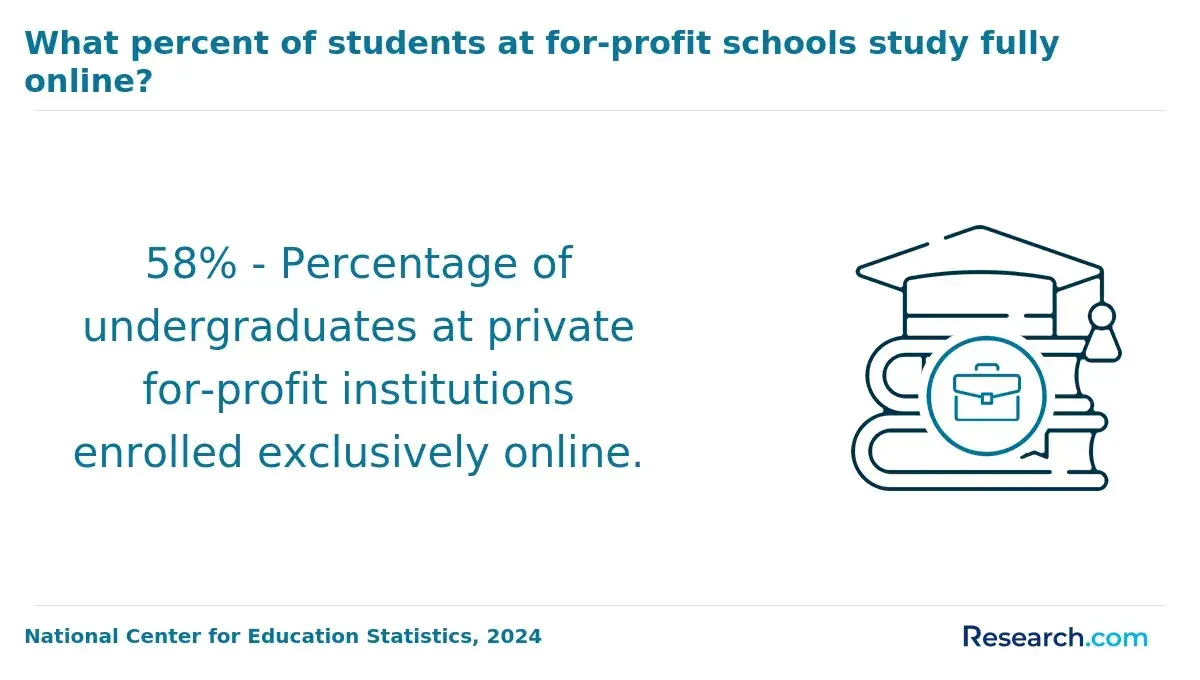
Choosing an online Program Management doctorate is not just about curriculum or tuition; it is about whether the degree will be recognized. NC-SARA's 2024 enrollment reporting shows more than 2 million students studying exclusively online through participating institutions, making accreditation and state compliance a mainstream enrollment issue.
This guide is for prospective doctoral students comparing online programs, planning certification or licensure pathways, or avoiding unrecognized schools. You will learn how institutional accreditation, programmatic accreditation, state authorization, and professional licensure rules interact before you commit.
Key Things You Should Know
- Start with institutional accreditation: an online Program Management doctorate should be offered by a school accredited by an agency recognized by the U.S. Department of Education or, when relevant, CHEA; otherwise, federal aid, transfer credit, employer recognition, and doctoral credibility may be at risk.
- Programmatic accreditation is not always required for program management roles, but it can matter in specialized pathways; examples include PMI Global Accreditation Center recognition for project, program, and portfolio management programs or business accreditation such as AACSB, ACBSP, or IACBE for DBA-style programs.
- Licensure is state-specific and profession-specific: program management itself is usually not a licensed occupation, but doctoral students using the degree for education administration, engineering, healthcare, counseling-adjacent leadership, or public-sector roles must verify state board rules before enrolling.
Is an Online Program Management Doctorate Accredited Differently From an On-Campus Program?
No. Accreditation evaluates the institution or program against the accreditor's standards, not simply whether the instruction is online or on campus. A properly accredited online Program Management doctorate should be included within the institution's approved scope, and the school should be authorized to offer distance education in the states where it enrolls students.
The online format can still create extra verification steps. You need to confirm that the doctoral program is covered by the school's accreditation, that the school is approved to deliver distance education, and that any in-person residency, internship, or fieldwork requirement is feasible in your state.
The table below separates what should be the same across formats from what online students need to check more carefully. This distinction matters because a school can be institutionally accredited while still having state authorization limits or professional-practice restrictions for certain students.
| Issue | Online Doctorate | On-Campus Doctorate | Why It Matters |
| Institutional accreditation | Should be granted to the institution by a recognized accreditor | Should be granted to the institution by a recognized accreditor | Determines baseline degree legitimacy, federal aid eligibility, and transfer recognition |
| Programmatic accreditation | May apply if the specific program is reviewed by a field accreditor | May apply if the specific program is reviewed by a field accreditor | Can affect employer preference, certification eligibility, or licensure pathways in specialized fields |
| State authorization | Must allow the school to enroll students in the student's state | Usually less complex if the student studies in the school's home state | Affects whether the school can legally offer the online program to you |
| Licensure disclosures | Must be reviewed for the student's state when the program leads to a licensed occupation | Usually focused on the state where the campus operates | Prevents assuming a degree meets another state's professional requirements |
A common mistake is assuming that "online" means "less accredited" or that a campus-based version is automatically safer. The better question is whether the exact program, delivery format, and student location are all covered by the school's approvals.
What Is the Difference Between Institutional and Programmatic Accreditation for an Online Program Management Doctorate?
Institutional accreditation reviews the school as a whole. It looks at governance, finances, faculty qualifications, student support, academic quality, and continuous improvement. For an online doctorate, this is the first accreditation checkpoint because it affects federal financial aid eligibility, credit transfer, and whether employers or other universities are likely to recognize the degree.
Programmatic accreditation reviews a specific degree, department, or professional area. In Program Management, this may involve project management-focused accreditation, business accreditation for a DBA or management doctorate, or a discipline-specific accreditor if the degree is embedded in engineering, healthcare administration, information systems, or education leadership.
The comparison below shows how each type of accreditation works in practice. Use it to avoid one of the most expensive mistakes doctoral applicants make: treating institutional and programmatic accreditation as interchangeable.
| Accreditation Type | What It Reviews | Examples Relevant to Program Management | Student Impact |
| Institutional accreditation | The entire college or university | Accreditors recognized by the U.S. Department of Education, such as regional institutional accrediting commissions | Usually essential for federal aid, transfer credit, employer recognition, and admission to later academic programs |
| Programmatic accreditation | A specific program, school, or department | PMI Global Accreditation Center for project, program, and portfolio management programs; AACSB, ACBSP, or IACBE for business schools | May strengthen market recognition and may be required or preferred for some professional pathways |
| Professional approval | A state board or professional body's approval for licensure preparation | State education, engineering, healthcare, or public administration requirements when applicable | Can determine whether the degree supports a regulated role in a specific state |
If you are still earlier in the education path, reviewing an accredited project management degree online can help you see how accreditation expectations begin before the doctoral level. At the doctorate level, however, you should verify both the school and the exact doctoral program, especially if the degree title is DBA, PhD, DPM, DM, or EdD with a program management concentration.
How Can You Verify That an Online Program Management Doctorate and Its Accreditor Are Legitimate?
The safest approach is to verify accreditation from the outside in: first confirm the school, then the accreditor, then the specific program, then any state or professional requirements. Do not rely only on a badge on a school website, a recruiter's statement, or a downloadable brochure.
Use this sequence before you submit an application or pay a deposit. It is designed to catch both diploma-mill warning signs and legitimate-but-limited approvals that may not match your goals.
- Search the U.S. Department of Education's Database of Accredited Postsecondary Institutions and Programs for the institution's name, accreditation status, accreditor, and accreditation dates.
- Check the accreditor's own directory to confirm that the institution is currently accredited and not merely listed because of a past or pending action.
- Review the school's accreditation page and catalog to confirm that the online doctoral program is included in the institution's approved offerings.
- If the school claims programmatic accreditation, search the programmatic accreditor's public directory for the exact program name, degree level, and campus or online modality if listed.
- Confirm whether the program is approved to enroll students in your state through state authorization, SARA participation, or direct state approval.
- If your goal involves licensure, ask the relevant state licensing board whether the degree meets educational requirements before you enroll.
Red flags deserve special attention because doctoral programs require a major investment of time and money. Be cautious if a school advertises "fully accredited" without naming a recognized accreditor, claims guaranteed licensure in every state, offers unusually short doctoral completion with little research or applied project work, or pressures you to enroll before you can verify accreditation independently.
The U.S. Department of Education's 2024 negotiated-rulemaking activity and continuing emphasis on distance education oversight reflect a broader regulatory trend: online programs are facing closer scrutiny around disclosures, student location, and professional outcomes. For applicants, that means verification is no longer an optional administrative task; it is part of responsible program selection.
Not always. For many program management, project leadership, operations, consulting, technology management, and organizational strategy roles, institutional accreditation is the minimum credential-quality standard employers expect. Programmatic accreditation becomes more important when the degree is tied to a specific professional framework, regulated occupation, or employer preference.
Programmatic accreditation can be valuable because it signals that the curriculum has been reviewed against field-specific standards. In Program Management, the most relevant examples often include PMI Global Accreditation Center recognition for project, program, and portfolio management education, or business-school accreditations when the doctorate is housed in a college of business.
The table below shows when programmatic accreditation is likely to matter most. This is not a universal rule, but it can help you decide how much weight to give program-level recognition when comparing doctoral options.
| Your Goal | Programmatic Accreditation Importance | What to Verify |
| Corporate program management leadership | Helpful but often not mandatory | Institutional accreditation, curriculum alignment with portfolio management, analytics, governance, and strategic execution |
| Academic teaching or research | Varies by institution | Institutional accreditation, dissertation expectations, faculty research credentials, and whether the degree supports future academic hiring |
| Project, program, or portfolio management specialization | Potentially valuable | Whether the exact degree is listed by a field-specific accreditor such as PMI GAC |
| Business-school leadership pathway | May be preferred by some employers or universities | AACSB, ACBSP, or IACBE status if the doctorate is offered through a business school |
| Licensed professional pathway | May be required depending on the profession | State board rules, supervised experience requirements, and whether program accreditation is named in regulation |
Students comparing faster master's-to-doctorate or prior-learning pathways should be especially careful. An accelerated project management degree may be legitimate at earlier levels, but speed should never substitute for recognized accreditation, doctoral rigor, or licensure alignment when the credential is intended for advanced professional use.
Program management itself is generally not licensed by states in the way nursing, teaching, psychology, engineering, counseling, or school administration can be. However, many doctoral students use program management expertise inside licensed or regulated fields. In those cases, the licensing board's rules matter more than the school's marketing language.
Certification is different from licensure. A certification such as a project management credential is usually granted by a professional association and may focus on experience, education hours, and exams. Licensure is a legal authorization from a state to practice a regulated occupation. A doctorate can support either path, but it does not automatically satisfy either one.
Use the following distinctions when evaluating whether accreditation affects your professional goal. The key is to identify the authority that controls eligibility, not just the credential name on the diploma.
- For state licensure, verify the exact state board's education rules, including whether the board requires a degree from an institutionally accredited school, a programmatically accredited program, supervised practice, exams, or state-specific coursework.
- For professional certification, check the certifying organization's candidate handbook for degree, experience, training-hour, and exam requirements; do not assume a doctorate waives them.
- For employer-required credentials, ask whether the employer recognizes institutional accreditation only or gives preference to field-specific programmatic accreditation.
- For academic careers, review faculty job postings in your target field to see whether employers prefer a PhD, DBA, EdD, or another doctorate type from a research-oriented or professionally accredited school.
Education level also matters. Someone beginning with a project manager bachelor degree may be focused on entry into the field, while a doctoral applicant may be targeting executive leadership, applied research, university teaching, or regulated-sector administration. The higher the stakes of the role, the more important it becomes to verify accreditation and eligibility before enrolling.
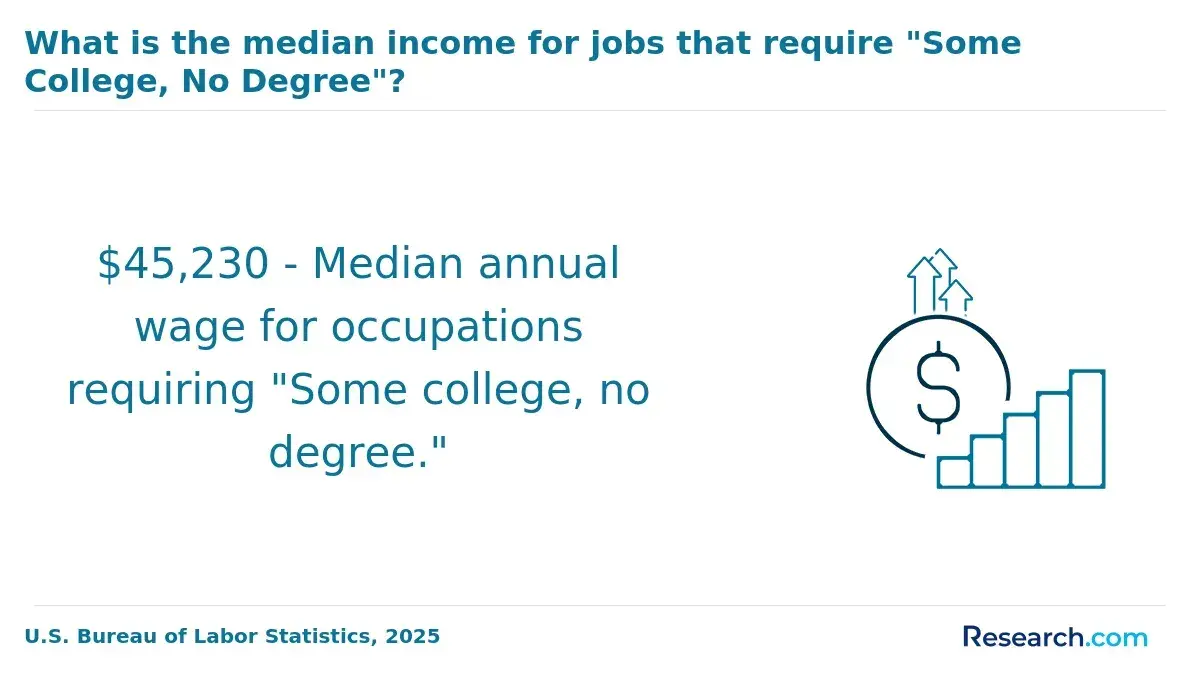
For labor-market context, the Bureau of Labor Statistics reported a May 2024 median annual wage of $100,750 for project management specialists in the U.S. This figure is not a promise for doctorate holders, but it shows why credential quality matters: employers paying for senior planning, risk, budget, and execution skills are likely to scrutinize whether the degree came from a recognized institution.
It depends on your state, your profession, and the exact role you plan to pursue. A doctorate in Program Management may be excellent preparation for leadership, but state licensure boards decide whether a program satisfies regulated professional requirements. Institutional accreditation alone does not automatically make a degree license-qualifying in all states.
The most important practical step is to compare the program's disclosures with your state board's rules. Federal professional licensure disclosure requirements have become more important for online students because institutions must tell students whether certain programs meet, do not meet, or have not been determined to meet educational requirements for licensure in specific states.
Before enrolling, use this checklist to reduce the risk of completing a doctorate that does not match your state's requirements. It is especially important if your program management role is connected to education, public administration, engineering management, healthcare, behavioral health administration, or another regulated environment.
- Identify the exact license, endorsement, or certification you may need in your state, not just the job title you want.
- Find the state board's current education requirements and note whether it names institutional accreditation, programmatic accreditation, supervised hours, exams, or specific coursework.
- Ask the university for its written professional licensure disclosure for your state and your program.
- Confirm whether the school classifies your state as "meets," "does not meet," or "has not made a determination" for the relevant license.
- Contact the state board directly if the school's disclosure is unclear or if your career path crosses disciplines.
- Save emails, catalog pages, board responses, and disclosure documents in case requirements change during your enrollment.
A common mistake is checking only the state where the university is located. Online students should check the state where they live, the state where they plan to complete fieldwork or residency, and the state where they plan to work after graduation.
Yes, when the doctorate is tied to a regulated professional pathway or a field requiring supervised experience. Many Program Management doctorates are research-based or applied-leadership programs and may not require clinical practice. Others may include residencies, consulting projects, organizational fieldwork, internships, or discipline-specific practica.
These requirements matter because state boards may specify where supervised experiences must occur, who may supervise them, how hours must be documented, and whether remote placements are acceptable. A school may be authorized to teach you online but unable to place you in a compliant field site in your state.
Ask these questions before enrolling if your doctorate includes any in-person, supervised, or workplace-based component. They will help you determine whether the experience is academically useful and legally usable for your goals.
- Is the residency, practicum, internship, clinical, or field project required for graduation, licensure eligibility, or both?
- Can the requirement be completed in my state, and does the school already have approved placement procedures there?
- Who approves supervisors, and must they hold a specific license, credential, academic rank, or employer role?
- Are remote, hybrid, workplace-based, or employer-sponsored placements allowed by the program and by the relevant state board?
- How are hours, competencies, evaluations, and site agreements documented if the state later audits my application?
- What happens if I move states during the program or cannot secure an approved placement?
Do not assume that an executive residency or applied capstone automatically counts toward professional supervised experience. Licensing boards often distinguish between academic projects and board-approved supervised practice.
Accreditation can affect nearly every practical outcome of a doctoral degree. It influences whether students can use federal financial aid, whether other universities may accept transfer or doctoral credits, whether employers recognize the credential, and whether graduates can pursue postdoctoral, teaching, or certification opportunities.
Federal financial aid is one of the clearest examples. For the 2024-25 award year, graduate and professional students may borrow up to $20,500 annually in Direct Unsubsidized Loans, but federal aid generally requires attendance at an eligible institution. If a doctorate is offered by an unaccredited or non-eligible school, students may have fewer consumer protections and more limited financing options.
The table below summarizes where accreditation can affect the value and usability of the degree. Use it to think beyond admission and compare long-term consequences.
| Area | Why Accreditation Matters | What to Check |
| Federal financial aid | Institutional eligibility is tied to recognized accreditation and federal participation | School eligibility, cost of attendance, loan limits, and satisfactory academic progress rules |
| Transfer credits | Receiving institutions often prefer or require credits from accredited schools | Transfer policy, doctoral residency rules, and maximum transferable credits |
| Employer recognition | Employers may screen for recognized accreditation, especially for leadership or tuition reimbursement | HR education policies, tuition assistance rules, and job-posting requirements |
| Further study | Postdoctoral, certificate, or second-doctorate programs may require prior accredited study | Admissions standards of future programs and faculty qualification rules |
| Licensure or certification | Boards and certifying bodies may require recognized institutional or programmatic accreditation | State board rules and certification handbooks |
Accreditation also affects opportunity cost. A student choosing between a Program Management doctorate, a DBA, or an MBA operations management online should compare not only curriculum and cost, but also whether the credential is recognized for the roles they actually want. A shorter or cheaper program can become expensive if it limits transfer, licensure, reimbursement, or employer acceptance.
What Happens if an Online Program Management Doctorate Loses Accreditation or Is Only in Candidacy?
Accreditation status can change. A school may be placed on warning or probation, lose accreditation, close a program, or hold only candidacy or pre-accreditation status with a programmatic accreditor. These statuses are not the same, and they can have different consequences for students.
Candidacy usually means a school or program is being reviewed and may be progressing toward accreditation, but it is not the same as full accreditation unless the accreditor and applicable rules say otherwise. For doctoral students, the risk is timing: you may enroll before full accreditation is granted, and licensure boards, employers, or transfer institutions may evaluate your degree based on the status at admission, completion, or application.
The table below explains common accreditation statuses and their practical meaning. Always verify the current status with the accreditor, not only with the school.
| Status | What It Usually Means | Student Risk | Best Response |
| Full accreditation | The institution or program currently meets the accreditor's standards | Risk is lower but not zero because accreditation can still change | Save the accreditor listing and continue monitoring notices |
| Candidacy or pre-accreditation | The institution or program is in review but may not yet have full accredited status | Employers, boards, or schools may not treat it as equivalent to full accreditation | Ask how candidacy affects financial aid, licensure, transfer, and graduation timing |
| Probation, warning, or show-cause | The accreditor has identified significant concerns | Potential disruption, reputational concerns, or teach-out risk | Read the accreditor's action letter and ask for a written student-impact plan |
| Loss of accreditation | The accreditor no longer recognizes the institution or program | Federal aid, transfer, employment, and licensure consequences may be serious | Ask about teach-out agreements, refund policies, transfer options, and transcript notation |
If a program's status is uncertain, do not rely on verbal reassurance. Ask for written answers to these questions before enrolling or continuing.
- What is the exact accreditation status today, and where can I verify it independently?
- If the program is in candidacy, when is the next accreditation decision expected?
- Will my degree be considered accredited if I graduate before full accreditation is granted?
- Are there teach-out agreements if accreditation is withdrawn or the program closes?
- How will the school notify students of accreditation changes during enrollment?
The safest decision is not always to reject a candidacy-status program automatically. Some candidates become fully accredited. The key is to understand the risk, confirm whether your goals require full accreditation now, and avoid making licensure or employment plans based on accreditation that has not yet been granted.
Other Things You Should Know About Program Management
Not necessarily. A PhD is usually more research-focused and may be preferred for academic research roles, while a professional doctorate often emphasizes applied leadership, portfolio governance, organizational change, and executive decision-making. Accreditation should be verified for the institution and, when relevant, the specific program regardless of degree title.
Many employers focus more on recognized accreditation, relevant experience, leadership results, and the reputation of the institution than on delivery format alone. However, some employers have tuition reimbursement or hiring policies that require degrees from accredited institutions, so check employer rules before enrolling.
It may provide personal learning, but it carries significant risk for employment screening, academic transfer, federal aid, professional recognition, and licensure-related uses. If you need the doctorate for career advancement, teaching, reimbursement, or regulated work, recognized accreditation is usually essential.
Choose based on your target outcome. A DBA may fit business and executive leadership, an EdD may fit education or organizational learning environments, a PhD may fit research or university roles, and a project or program management doctorate may fit applied governance and delivery leadership. In all cases, verify accreditation, curriculum fit, faculty expertise, and state-specific requirements.
- Understanding Academic Accreditation for Online Universities https://www.qahe.org/article/understanding-academic-accreditation-for-online-universities/
- Why Online Doctorate? | OUS Academy of Economics and Technology in Switzerland https://www.academy.zuerich/why-online-doctorate
- Best Online Ph.D. and Doctoral Programs | OEDb https://www.oedb.org/rankings/online-phd-programs/
- Top 15 Best Online PhD Cybersecurity Programs (2025) - Programs.com https://programs.com/programs/online-phd-programs/
- Types of accreditation in higher education | January 2026 https://accreditationxpert.com/types-of-accreditation-higher-education/
- Standards for Accreditation - New England Commission Higher Education https://www.neche.org/standards-for-accreditation/
- Recognized Institutions https://transcriptresearch.com/pages/recognized-institutions
- Home Accreditation Canada | Safer Care, a Healthier World https://accreditation.ca/
- World Higher Education Database (WHED) — International Association of Universities https://iau.global/whed
- Accreditation & Your Online Degree: Know Before You Go https://www.baypath.edu/news/bay-path-university-blogs/post/accreditation-your-online-degree-know-before-you-go/