2027 Online Ministry Leadership Doctorate Program Costs: Tuition, Fees, Financial Aid, and Employer Reimbursement

Co-Founder and Chief Data Scientist
An online Ministry Leadership doctorate can strengthen executive church, nonprofit, chaplaincy, or faith-based leadership credentials, but the cost deserves careful planning. Federal Student Aid data show the U.S. student loan portfolio remains above $1.6 trillion, and graduate borrowers often face higher interest rates than undergraduates.
This guide is for pastors, ministry executives, educators, chaplains, and nonprofit leaders comparing doctoral options. You will learn how tuition, fees, aid, employer reimbursement, and career value work together so you can decide whether the degree fits your budget and goals.
Key Things to Know About Online Ministry Leadership Doctorate Program Costs
- Most online Ministry Leadership doctorates publish tuition by credit; because programs often require 30 to 60 credits, a realistic tuition planning range is commonly about $18,000 to more than $55,000 before fees, travel, books, and dissertation costs.
- For federal loans first disbursed during the 2025-26 aid year, graduate Direct Unsubsidized Loans carry a 7.94% interest rate and are capped at $20,500 per year, while Grad PLUS Loans may cover remaining cost of attendance but at a higher 8.94% rate.
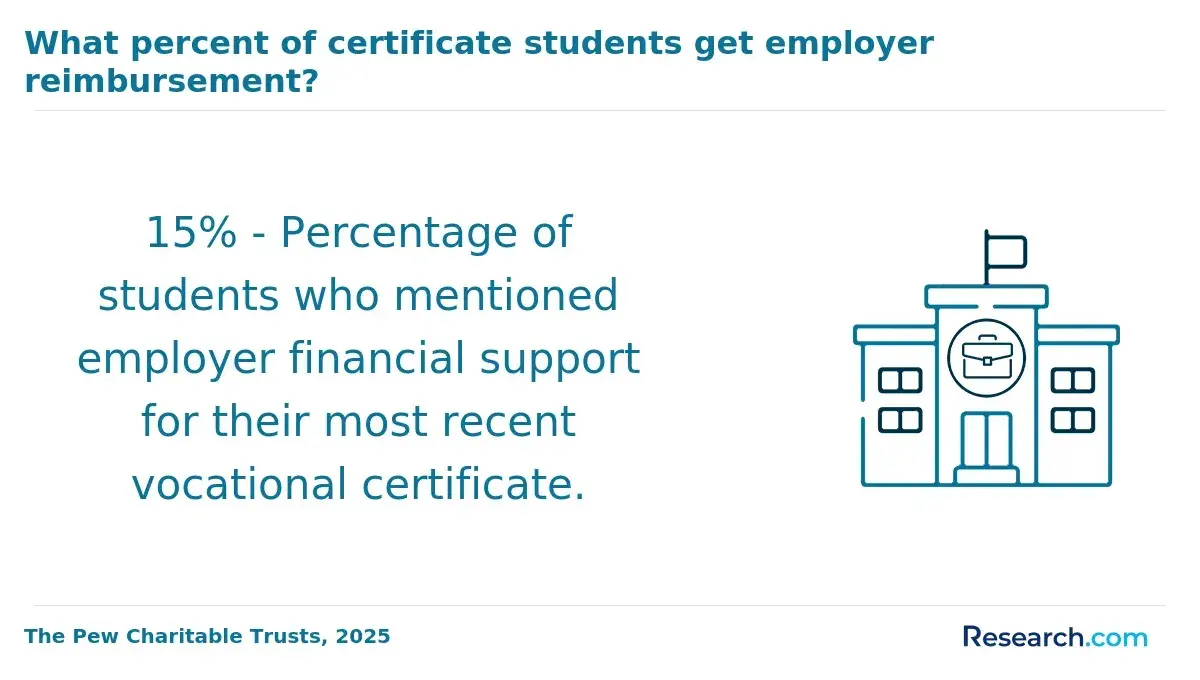
- Employer reimbursement can materially reduce net cost, but many employers require job relevance, minimum grades, continued employment after payment, and annual caps; students should get written approval before enrolling.
What is the average tuition cost of an online Ministry Leadership doctorate program?
There is no single federal average for online Ministry Leadership doctorate tuition because programs may be titled Doctor of Ministry, Doctor of Strategic Leadership with ministry concentration, Doctor of Educational Ministry, or PhD/EdD-style leadership doctorates with religious leadership tracks.
The most reliable way to compare programs is to multiply the required credits by the per-credit rate, then add mandatory fees and any residency costs.
For planning purposes, many online Ministry Leadership doctorate students should expect tuition to fall into a broad middle range rather than a single fixed number. The table below shows how common credit structures translate into tuition exposure before non-tuition costs:
| Program pricing model | Typical structure | Estimated tuition before fees | Best fit |
| Lower-credit professional doctorate | About 30 to 36 credits at a moderate per-credit rate | About $18,000 to $35,000 | Experienced ministry leaders who already hold a relevant master's degree and want practice-based doctoral training |
| Mid-range online doctorate | About 36 to 48 credits with standard graduate tuition | About $30,000 to $45,000 | Students seeking a balance of leadership coursework, ministry research, and applied project work |
| Higher-credit or premium private program | About 48 to 60 credits or higher per-credit pricing | More than $45,000 and sometimes above $55,000 | Students prioritizing a specific seminary, denominational network, faculty mentor, or doctoral specialization |
A lower tuition figure is not automatically the better value. A program with stronger advising, fewer continuation fees, a shorter dissertation phase, or better alignment with your ministry role may cost less over time than a cheaper program that takes longer to complete.
Before comparing price, confirm whether the degree is a professional doctorate or research doctorate. A Doctor of Ministry typically focuses on applied ministry leadership, while a PhD-style program usually emphasizes original research and may be better suited for academic teaching or scholarship.
Are online Ministry Leadership doctorate programs subject to distance learning or technology fees?
Yes, online doctoral students may be charged distance learning, technology, student services, library, graduation, dissertation, or course-specific fees. These charges are easy to miss because schools often advertise tuition separately from the full cost of attendance.
The most important fee question is whether the school uses an "all-inclusive" online rate or adds mandatory charges per credit, per term, or per course. The table below summarizes common fee categories and why they matter:
| Fee type | How it is commonly charged | Why it matters |
| Technology or online learning fee | Per credit, per course, or per term | Can add hundreds of dollars per year even when students never come to campus |
| Student services fee | Usually per term | May support advising, library access, enrollment systems, or student support operations |
| Dissertation or project continuation fee | Per term after coursework | Can become costly if the doctoral project takes longer than expected |
| Residency or intensive fee | Per required event | May not include travel, lodging, meals, or local transportation |
| Graduation and transcript fees | Near program completion | Small compared with tuition but still part of the final budget |
A common mistake is comparing only tuition per credit. If one school charges $650 per credit with no major online fee and another charges $600 per credit plus a required technology fee every term, the cheaper-looking option may not remain cheaper after three to four years.
Ask the bursar or student accounts office for a written estimate by academic year. The estimate should show tuition, mandatory fees, expected dissertation charges, residency costs, and whether fees can increase while you are enrolled.
What out-of-pocket expenses should online Ministry Leadership doctorate students anticipate?
Online study reduces commuting and relocation costs, but it does not eliminate out-of-pocket expenses. Ministry Leadership doctoral students often pay for books, software, research tools, conference travel, professional memberships, and occasional in-person intensives.
The expenses below are especially important because they may not be included in advertised tuition. Include them in your budget before deciding how much to borrow:
- Books and digital resources: Doctoral courses may require theology, leadership, research methods, and organizational change texts, with costs varying by course and whether used or digital copies are allowed.
- Computer, webcam, and internet upgrades: Online doctoral work requires reliable video participation, document storage, and research access.
- Residency travel and lodging: Some online ministry doctorates require short campus visits, cohort intensives, or dissertation defenses.
- Research and project costs: Applied ministry projects may require survey tools, transcription, local site permissions, or data analysis software.
- Professional development: Conferences, denominational gatherings, or ministry leadership events may support doctoral work but still add cost.
- Continuation enrollment: Students who finish coursework but need more time for the dissertation or ministry project may pay ongoing registration fees.
If your ministry goals overlap with pastoral care, chaplaincy, or counseling-adjacent work, verify whether the doctorate will meet your actual credential needs. Readers comparing ministry and counseling pathways may benefit from reviewing the different types of counseling degrees before committing to a doctoral budget.
The biggest red flag is assuming "online" means "no travel." Even one annual residency can add significant cost when airfare, hotel stays, meals, childcare, and missed work are included.
Does in-state versus out-of-state residency status impact online Ministry Leadership doctorate tuition?
Residency status can affect tuition, but the impact depends on the institution. Public universities may charge different in-state and out-of-state rates, while many private seminaries and online-focused institutions use one flat graduate tuition rate for all online students.
The table below shows how pricing models change the affordability calculation. This matters because the lowest advertised tuition may depend on where you live:
| Tuition model | How it works | When it may be cost-effective | What to verify |
| Public in-state graduate tuition | Lower rate for state residents | Best for students who qualify for residency and do not face high program fees | Residency rules, online surcharges, and whether the doctoral program uses special tuition |
| Public out-of-state graduate tuition | Higher rate for nonresidents | May still be worthwhile if the program is uniquely aligned with your research or ministry context | Total tuition across all credits and whether online students can receive a reduced rate |
| Flat-rate online tuition | Same tuition regardless of state | Often attractive for out-of-state students comparing private or online-friendly programs | Whether the flat rate includes technology, student services, and residency fees |
| Private nonprofit seminary tuition | Usually one rate for all students, sometimes with denominational discounts | Strong fit when theological tradition, faculty mentoring, or ministry network matters | Scholarship availability, accreditation, and continuation fees |
Do not assume public equals cheaper or private equals more expensive. Institution type matters less than the total cost for your residency status, credit requirement, fees, scholarships, and time to completion.
Ask admissions whether tuition is locked for your cohort. If it is not, request recent tuition increase history so you can understand the risk of annual cost changes.
How do total costs for an online Ministry Leadership doctorate compare to traditional on-campus programs?
Online Ministry Leadership doctorates can be less expensive than on-campus programs when they let students keep working, avoid relocation, and reduce commuting. However, online programs are not automatically cheaper because tuition may be similar and residencies can add travel costs.
The comparison below focuses on cost categories rather than academic quality. Use it to estimate your real cost of attendance and opportunity cost:
| Cost category | Online doctorate | On-campus doctorate | Decision impact |
| Tuition | May be flat-rate online or similar to campus tuition | May vary by residency status and institutional aid | Compare total program tuition, not just per-credit price |
| Housing and relocation | Usually avoidable | May be substantial if the student must move | Online often helps working adults preserve income and family stability |
| Travel | Occasional residency or intensive travel may apply | Regular commuting or campus presence required | Online is usually cheaper unless residencies are frequent or far away |
| Work schedule | Often designed for part-time professionals | May require more fixed daytime availability | Lost income can outweigh tuition differences |
| Assistantship access | May be limited for online students | More common for campus-based doctoral students | Campus options may be cheaper if they include tuition remission or stipends |
Online study makes the most financial sense when you can continue earning income, complete the degree without prolonged dissertation enrollment, and avoid large travel costs. Campus study may be more affordable if it includes a funded assistantship, housing support, or a tuition waiver that online students cannot access.
A practical rule is to compare net cost, not format. Net cost includes tuition, fees, travel, books, lost income, employer support, scholarships, and interest if you borrow.
Can graduate assistantships and fellowships reduce online Ministry Leadership doctorate costs?
Graduate assistantships and fellowships can reduce doctoral cost, but online Ministry Leadership students should not assume they will be available. Many assistantships require campus-based teaching, research, chapel programming, admissions support, or administrative work that may not fit a fully online format.
Still, students should ask because even a partial tuition discount or small fellowship can reduce borrowing. The table below explains common funding types and their limitations:
| Funding type | Potential value | Common limitation for online students |
| Graduate assistantship | Tuition remission, stipend, or hourly pay | May require on-campus work or full-time enrollment |
| Doctoral fellowship | Scholarship or research support | Often competitive and tied to academic research priorities |
| Denominational scholarship | Partial tuition support for ministers in a tradition or network | May require ordination status, church endorsement, or service commitment |
| Institutional ministry grant | Discount for pastors, missionaries, chaplains, or nonprofit leaders | May not stack with other discounts |
| Project-based grant | Support for a ministry research project or community initiative | Usually limited to specific themes or populations |
To avoid missing aid, contact the program director and financial aid office before applying. Ask whether online doctoral students have received assistantships in the past, whether awards are renewable, and whether part-time students qualify.
Be cautious with awards that require enrollment intensity you cannot sustain. A scholarship that forces you into a course load that harms your work, ministry, or family responsibilities may create more financial pressure than it solves.
What financial aid options are available for students enrolled in an online Ministry Leadership doctorate?
Online Ministry Leadership doctorate students may have several funding options, but eligibility varies by school accreditation, enrollment status, citizenship or residency status, satisfactory academic progress, and program classification. The first step is confirming that the institution participates in federal student aid and that the doctorate is aid-eligible.
The table below summarizes common funding sources and how they typically affect out-of-pocket cost:
| Funding option | How it can help | Important caution |
| Federal Direct Unsubsidized Loan | Graduate students may borrow up to $20,500 per year if eligible | Interest accrues while enrolled, and borrowing should be limited to necessary costs |
| Federal Grad PLUS Loan | Can cover remaining cost of attendance after other aid | For 2025-26, the interest rate is higher than the graduate unsubsidized rate |
| Institutional scholarships | Can directly reduce tuition | May be limited, competitive, or restricted to certain ministry backgrounds |
| Private scholarships | May support faith-based leadership, chaplaincy, nonprofit work, or theological education | Deadlines may arrive before admission decisions |
| Payment plans | Spread tuition over a term without taking additional loans | Usually do not reduce total cost and may include setup fees |
| Veterans benefits | May cover tuition and approved fees for eligible students | Benefit rules depend on individual entitlement and school participation |
Some students discover that a master's-level credential better matches their near-term licensure or career goals before they pursue doctoral ministry leadership. If that is your situation, comparing online masters programs for counseling can help you evaluate a different funding path.
Before borrowing, complete a simple aid checklist. This keeps you from relying too heavily on high-interest debt when lower-cost resources may be available:
- Confirm institutional and programmatic accreditation where applicable.
- Ask whether the doctorate is eligible for federal aid and employer reimbursement.
- File the FAFSA early if you plan to use federal loans.
- Apply for school-based scholarships before accepting the full loan amount.
- Estimate interest and repayment under conservative salary assumptions.
- Revisit your budget each term instead of borrowing the maximum automatically.
The most expensive mistake is treating the financial aid award as free money. Loans can make enrollment possible, but they increase the degree's required payoff threshold after graduation.
Does employer tuition reimbursement cover an online Ministry Leadership doctorate?
Employer tuition reimbursement may cover an online Ministry Leadership doctorate if the employer considers the degree relevant to your current or future role. Churches, denominations, schools, hospitals, military or healthcare chaplaincy employers, universities, and faith-based nonprofits may have different rules.
Coverage is usually partial rather than unlimited. Employers may reimburse only after grades are posted, require continued employment, exclude fees or books, or cap annual payments.
Employer policies often favor programs that improve leadership, organizational effectiveness, teaching, pastoral care, or executive administration. If your employer is more focused on broad leadership development than ministry-specific training, it may also be useful to compare the best organizational development master's programs online before requesting doctoral sponsorship.
Ask these questions before you enroll, not after the first bill arrives:
- Is a doctorate eligible, or does the policy only cover certificates, bachelor's degrees, or master's degrees?
- Does reimbursement apply to tuition only, or also fees, books, residencies, and travel?
- Is payment made upfront, by reimbursement after completion, or directly to the school?
- What grade, completion, or satisfactory progress standard must be met?
- Is there an annual or lifetime cap?
- Will you owe repayment if you leave the employer within a certain period?
- Can the degree be tied to a promotion pathway, leadership succession plan, or expanded job duties?
Get the approval in writing and keep copies of the policy, supervisor approval, course descriptions, invoices, grades, and proof of payment. If the employer changes leadership or budget priorities, written documentation can protect you.
How can working professionals negotiate employer sponsorship for an online Ministry Leadership doctorate?
Working professionals can improve their odds of employer sponsorship by presenting the doctorate as a business, ministry, or organizational investment rather than a personal academic goal.
The strongest request connects coursework and the doctoral project to measurable needs, such as leadership development, staff retention, community outreach, chaplaincy expansion, conflict resolution, fundraising, or program evaluation.
A clear proposal helps a supervisor say yes because it reduces uncertainty. Use the following sequence to build your case:
- Identify the employer's problem: Name the leadership, training, pastoral care, growth, governance, or community impact challenge the degree will help address.
- Map the curriculum to that problem: Show relevant courses, dissertation or project options, and faculty expertise.
- Estimate the cost: Separate tuition, fees, residency travel, books, and the amount you are asking the employer to cover.
- Offer a return plan: Explain how you will share learning through workshops, policy improvements, staff coaching, sermons, strategic planning, or program evaluation.
- Reduce employer risk: Propose grade requirements, reimbursement after completion, a service commitment, or a capped annual amount.
- Ask early: Submit the request before admission deadlines and budget cycles close.
The request should be realistic. Asking for full sponsorship may work in some executive ministry settings, but many professionals have better success requesting partial tuition support, paid residency time, conference funding, or flexible scheduling.
Avoid framing the degree only as a path to higher pay. Employers are more likely to support education when they can see how the organization benefits during the program, not only after graduation.
What ROI can graduates expect from an online Ministry Leadership doctorate?
The ROI of an online Ministry Leadership doctorate depends heavily on your current role, debt level, employer support, career path, and whether the credential is required for your next step. This degree is most likely to make financial sense for professionals already working in ministry, education, chaplaincy, nonprofit administration, or faith-based leadership who can apply doctoral learning immediately.
Recent federal labor data show why ROI should be evaluated by target role, not degree title alone. The table below uses broad U.S. occupational categories that may overlap with ministry leadership careers, though specific outcomes vary widely by organization and denomination:
| Career direction | Relevant labor-market context | How to interpret ROI |
| Senior pastor or ministry executive | BLS 2024 wage data place clergy median pay in the low-$60,000 range | ROI may be strongest when the doctorate supports promotion, larger organizational responsibility, or funded professional development |
| Faith-based nonprofit leader | Leadership compensation varies by budget size, location, and funding model | ROI depends on whether the degree improves access to executive roles, grants, governance work, or strategic leadership responsibilities |
| Postsecondary teaching or seminary education | BLS reports postsecondary teachers had a median annual wage of $83,980 in 2024 | A doctorate can support teaching eligibility, but hiring depends on discipline, publication record, institutional needs, and accreditation expectations |
| Higher education administration | BLS reports postsecondary education administrators had a median annual wage of $103,960 in 2024 | ROI may be stronger for students moving into dean, student life, chaplaincy administration, or program leadership roles |
| Licensed counseling or therapy | Licensure usually depends on a qualifying counseling, psychology, social work, or MFT pathway rather than a ministry leadership doctorate alone | If clinical practice is the goal, a licensure-focused degree may be more financially aligned |
If your goal is to become a licensed therapist rather than a ministry executive or pastoral leader, compare licensure-oriented options such as the best online MFT programs before choosing a ministry doctorate.
To judge ROI, build a conservative payback estimate. Compare your total net cost against realistic changes in compensation, role access, consulting opportunities, teaching eligibility, employer sponsorship, and nonfinancial value such as calling, credibility, or denominational leadership.
An online Ministry Leadership doctorate may be worth it when it supports a clearly defined leadership path, comes from an accredited and respected institution, can be completed without excessive borrowing, and strengthens work you are already doing. It may not be worth it if you need licensure the degree does not provide, if you would rely entirely on high-interest loans without a payback plan, or if the program's dissertation phase has unclear costs.
Other Things You Should Know About Ministry Leadership
Many professional ministry doctorates take about three to five years, depending on credit load, project pace, residency requirements, and whether the student studies part time. The dissertation or applied ministry project is often the stage most likely to extend the timeline and increase cost.
Most require a relevant master's degree, often in divinity, theology, ministry, leadership, education, counseling, or a related field. Some programs may require ministry experience, pastoral endorsement, writing samples, interviews, or evidence of current ministry involvement.
Possibly, but doctoral transfer credit is often limited. Schools may restrict the number of credits accepted, require recent graduate work, or exclude credits used for a completed master's degree. Ask for a written transfer evaluation before assuming savings.
Yes. Accreditation can affect federal aid eligibility, employer reimbursement, credit transfer, teaching opportunities, and institutional credibility. Students should verify institutional accreditation and, when relevant, seminary or theological accreditation before enrolling.
References
- 2025 Most Affordable Online Doctorates in Education https://www.onlineu.com/most-affordable-colleges/education-doctoral-degrees
- Doctor of Ministry (D.Min.) Degree - South Florida Bible College & Theological Seminary https://sfbc.edu/doctor-of-ministry-d-min-degree-2/
- All Doctor of Ministry (DMin) Programs - TheologyDegree.org https://www.theologydegree.org/programs/doctor-of-ministry/
- How To Pay For Seminary — TheosSeminary https://www.theosseminary.com/blog/pay-for-seminary
- How Does Tuition Reimbursement Work? (And How to Ask for It) https://www.wallstreetprep.com/knowledge/how-does-tuition-reimbursement-work-and-how-to-ask-for-it/
- Top 60 Christian Scholarships to Apply for in December 2025 https://bold.org/scholarships/by-type/christian-scholarships/
- Online Doctor of Ministry (D.Min.) Program | Northeastern Seminary https://www.nes.edu/doctorofministry
- How Much Does a Theology Degree Cost? | CTS https://calvinseminary.edu/blog/how-much-theology-degree-cost/
- Scholarships & Financial Aid https://www.garrett.edu/admissions/scholarships-financial-aids/
- Getting Your Employer to Pay for Your Online Masters https://www.onlinemastersdegrees.org/financial-aid/employer-tuition-assistance/