2027 Online Mental Health Counseling Degree Programs With Monthly Tuition Payment Plans

Co-Founder and Chief Data Scientist
Paying for an online mental health counseling degree can be difficult when tuition is billed by term rather than paycheck. Monthly tuition payment plans divide an eligible balance into scheduled installments, usually within one semester or session. This guide is for prospective counseling students comparing affordability, financial aid, and program fit. The U.S. Bureau of Labor Statistics projects 17% employment growth for substance abuse, behavioral disorder, and mental health counselors from 2024 to 2034, making careful program and financing choices especially timely. Learn how to compare payment schedules, total costs, excluded fees, and licensure-focused program requirements.
Key Things to Know About Mental Health Counseling Programs with Monthly Tuition Payments
- Monthly tuition plans are available at some online mental health counseling schools, but they usually spread one term's remaining balance over 3 to 6 installments rather than financing the entire 60-credit degree.
- A 60-credit program priced at $429 per credit has tuition of about $25,740 before fees; a payment plan changes the timing of that cost, not the published tuition rate.
- Federal aid is generally applied first, and the monthly plan covers the unpaid balance; confirm deposits, enrollment fees, late-payment consequences, practicum costs, and state licensure alignment in writing.
Which online Mental Health Counseling degree programs have monthly tuition payment plans?
Some universities extend institution-wide installment plans to eligible online graduate students, including students in clinical mental health counseling programs. Availability can change by term, campus, program format, account balance, and state, so a school's admissions page alone is not enough confirmation. Ask the bursar, student accounts office, or financial aid office whether the specific online counseling program is eligible.
The examples below illustrate the type of program and payment-plan details to verify. They are not a guarantee that a plan will be available for every applicant or enrollment term.
| Online program example | Published tuition reference | Monthly-plan question to ask |
| University of West Alabama Master of Science in Clinical Mental Health Counseling | Published online graduate tuition has been listed at $429 per credit; confirm the current rate and program-credit requirement. | Can the remaining balance after aid be divided across the semester, and is there an enrollment fee? |
| University of Louisiana Monroe online counseling graduate offerings | Tuition and fees vary by residency, program, and course load. | Is the payment plan available to fully online graduate students and does it cover summer terms? |
| Private online clinical mental health counseling programs | Per-credit tuition and required fees may be higher, and prices vary substantially by institution. | Are clinical-course, technology, assessment, or residency charges included in the installments? |
Start with programs that meet your intended state's counselor-licensure education requirements, then compare their payment options. A low monthly installment does not compensate for a program that lacks the clinical training, supervision structure, accreditation status, or coursework your state board expects.
When contacting a school, request a written cost sheet for your anticipated start term. It should show tuition, mandatory fees, expected credits, due dates, installment count, and the consequences of a missed payment.
How much do online Mental Health Counseling degree programs typically cost?
Most clinical mental health counseling master's programs require roughly 60 graduate credits because that is a common educational benchmark for counselor licensure. Total cost depends on credit requirements, tuition per credit, institutional fees, residency requirements, and whether the program charges separately for clinical courses.
For a concrete planning example, a 60-credit program at a published rate of $429 per credit equals about $25,740 in tuition before fees. That calculation is useful for comparing schools, but it is not a national average and should not be treated as a final bill.
The table shows how the same tuition balance can produce very different monthly obligations based on how a school structures each term.
| Illustrative tuition scenario | Term balance before aid | Installments | Illustrative monthly amount |
| 6 credits at $429 per credit | $2,574 | 3 | $858 |
| 9 credits at $429 per credit | $3,861 | 4 | $965.25 |
| 12 credits at $429 per credit | $5,148 | 5 | $1,029.60 |
These are arithmetic examples, not quoted plan offers. Schools do not publish a standardized national average monthly payment for online mental health counseling degrees because credit loads, aid awards, and term lengths differ. Use your own net balance after grants, scholarships, employer benefits, and accepted loans to calculate the amount you would actually owe.
Students comparing health-focused graduate education may also find it useful to compare financing structures across fields, including an online healthcare MBA, where credit totals and employer reimbursement opportunities can differ from counseling programs.
How common are monthly tuition payment plans among Mental Health Counseling programs?
Monthly plans are common as an institutional billing tool, but they are not universal and should not be assumed simply because a degree is online. Colleges often administer them through student accounts systems that apply across many programs, while some graduate divisions require full payment by a stated term deadline.
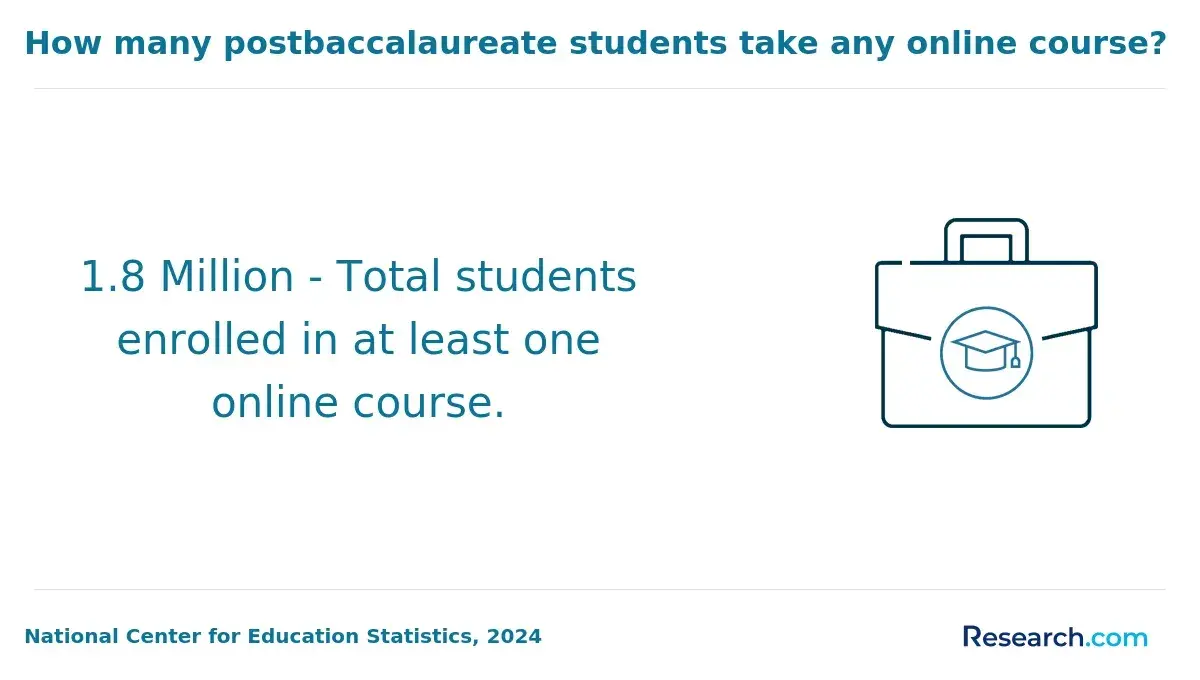
Online learning remains a major part of U.S. higher education. National Center for Education Statistics reporting released in 2024 showed that millions of postsecondary students were enrolled exclusively in distance education, which helps explain why institutions increasingly support digital billing and installment options. That enrollment trend does not mean every online program offers the same payment flexibility.
Monthly plans are most likely to be short-term arrangements. A semester plan may begin with an initial payment at enrollment and continue through the final month of the term; an accelerated eight-week session can leave fewer available installments.
Before applying, use this screening sequence:
- Confirm that the program is online and designed to meet educational requirements for your intended counseling license.
- Ask student accounts whether your exact program, enrollment status, and start term qualify for an installment plan.
- Request the installment dates, setup fee, down payment, late fee, and account-hold policy in writing.
- Compare the term payment to your dependable monthly income, not to an optimistic future income estimate.
Can monthly tuition plans make paying for Mental Health Counseling degrees more attainable?
Yes, a monthly plan can make a term balance easier to manage because it replaces one large due date with several predictable payments. It is most useful for students with stable income, employer reimbursement, savings designated for school, or a manageable balance after financial aid.
A plan is not a substitute for affordability. If the monthly amount is larger than your reliable cash flow, splitting the bill may only delay a financial shortfall. In that case, a lower-cost program, a lighter course load, scholarships, approved federal aid, or employer assistance may be safer choices.
The following comparison can help clarify which payment method fits your situation.
| Option | Often works best when | Main trade-off |
| Monthly tuition plan | You can pay the term balance from current income within a few months. | Missed payments can trigger fees, holds, or enrollment disruption. |
| Federal student loan | You need to spread eligible education costs over a longer repayment period. | Interest and repayment obligations can increase the long-term cost. |
| Employer tuition assistance | Your employer offers a benefit and your program meets its rules. | Reimbursement may arrive after you pay the school and may require continued employment. |
| Paying upfront | You have sufficient savings and the school offers no meaningful installment benefit. | It reduces liquidity and may not include a discount. |
Working professionals sometimes compare counseling preparation with other clinical-care pathways. If your interests are broader than counseling, reviewing nursing online programs can help you see how licensure-oriented programs differ in clinical placement, duration, and financing needs.
A monthly plan is generally a poor fit if you expect irregular income, already carry high revolving debt, or would need to miss essential expenses to make the installments. It also may be a poor choice when a student loan, scholarship, or employer payment will arrive after the plan's due dates and the school will not adjust the schedule.
Does monthly payment plans have an effect on the overall cost of Mental Health Counseling degrees?
A monthly payment plan usually does not reduce published tuition. Its financial effect depends on whether the school charges a setup fee, late fee, returned-payment fee, or finance charge. Many school-administered plans are designed to be interest-free when payments are made on time, but you must verify that language in the agreement.
Compare the total amount due under each option rather than focusing only on the monthly figure.
| Cost feature | Effect on total cost | What to verify |
| Published tuition | Usually unchanged by a payment plan. | Whether tuition is locked for the term or may change before registration. |
| Plan enrollment fee | Adds a fixed cost for using installments. | The amount, frequency, and whether it is refundable. |
| Interest or finance charge | Can make a plan more expensive over time. | Whether the plan is truly interest-free. |
| Late or returned-payment fee | Raises cost only if a payment is missed or rejected. | Grace periods, fee amounts, and account-hold rules. |
| Student loan interest | May increase long-term repayment beyond the amount borrowed. | Loan terms, disbursement timing, and projected repayment. |
For students considering accelerated clinical degrees, time-to-completion can also affect cash-flow planning. A fastest DNP program may have shorter academic terms and higher monthly billing pressure even when its overall structure differs from a counseling master's degree.
Do not choose a longer installment period solely because the payment looks smaller. Determine whether it adds fees or extends past the period in which tuition is due. A short, no-interest school plan can cost less than borrowing for a modest balance, while a fee-heavy arrangement may not.
Do monthly payment plans affect your financial aid eligibility for Mental Health Counseling programs?
Enrolling in a payment plan generally does not by itself reduce eligibility for federal financial aid. Financial aid eligibility is determined through the FAFSA, cost of attendance, enrollment status, satisfactory academic progress, program eligibility, and other federal and institutional rules. The payment plan typically covers the balance left after eligible aid is applied.
For the 2025-26 award year, the maximum Federal Pell Grant is $7,395, although graduate students are generally not eligible for Pell Grants. Mental health counseling students pursuing a master's degree may instead explore Direct Unsubsidized Loans, Graduate PLUS Loans, institutional scholarships, assistantships, employer benefits, and private financing where appropriate.
Timing is the important issue. Aid may disburse after add/drop deadlines or after the first installment date, and an expected award is not always the same as a posted payment. Confirm these points before signing up:
- Whether anticipated federal aid can be credited toward the payment-plan balance before disbursement.
- What happens if aid is reduced, canceled, delayed, or returned because of a withdrawal.
- Whether dropping below the school's required enrollment level changes an aid award or installment amount.
- Whether the school can revise due dates after employer reimbursement or approved third-party billing.
Submit the FAFSA early, monitor the student account rather than relying only on an award letter, and keep documentation of any scholarship or employer payment. For individualized advice, speak with the school's financial aid office before accepting loans or committing to a plan.
Is there a deposit required before starting Mental Health Counseling monthly payment plans?
Possibly. Schools may require an initial payment, a percentage of the term balance, a nonrefundable enrollment fee, or all of these before activating an installment plan. Other schools simply divide the outstanding balance into equal payments. There is no standard deposit requirement across online mental health counseling programs.
Do not confuse three different charges: an admissions enrollment deposit, a tuition-plan down payment, and a plan setup fee. An admissions deposit reserves a place after acceptance; a down payment reduces the term balance; and a setup fee pays for plan administration. A school may charge one, two, or all three.
Before paying, ask whether the amount will be credited to tuition, whether it is refundable if you withdraw before classes start, and whether financial aid can cover it. Also ask if a registration hold will prevent course enrollment until the first payment clears.
A useful cash-flow calculation is: first payment plus setup fee plus books, required background checks, insurance, technology, and any residency travel costs. That total is more realistic than treating the advertised monthly installment as the only expense at the start of a term.
Are there fees not covered by monthly tuition payment plans for Mental Health Counseling programs?
Yes. A plan may cover tuition and some mandatory institutional charges, but program-specific and clinical expenses can be billed separately. Counseling students should pay particular attention to costs connected to field experience, licensure preparation, required technology, and travel.
The table identifies common charges to confirm on the school's current cost-of-attendance and student-account materials.
| Potential charge | Often included in installments? | Why it matters for counseling students |
| Tuition | Usually yes | This is the primary balance the plan is designed to spread across a term. |
| Mandatory university fees | Sometimes | Technology, distance-learning, or student-service fees can raise the balance. |
| Plan setup and late fees | No | These may be charged separately or added after missed payments. |
| Books, test materials, and supplies | Usually no | Costs may arise before courses begin. |
| Practicum and internship expenses | Often no | Background checks, liability insurance, transportation, and site requirements may be out of pocket. |
| Residency or immersion travel | Usually no | Some online programs require in-person components. |
Students exploring other health-support careers should compare required non-tuition costs just as closely. For example, best online schools for medical billing and coding may have different equipment, certification-exam, and practicum expectations than a counseling program.
A common mistake is budgeting only for tuition and then using high-interest credit for clinical or travel expenses. Request an itemized estimate for the full academic year and set aside a separate reserve for charges the plan excludes.
What should you look for in payment plan terms for Mental Health Counseling programs?
Read the payment-plan agreement as carefully as the tuition schedule. The most favorable plan is not necessarily the one with the lowest first payment; it is the one whose complete cost, timing, and penalties fit your budget without endangering enrollment or financial aid.
Use the following questions to compare offers consistently across schools:
- How many installments are available for my term, and what exact dates are payments due?
- What initial payment, deposit, and enrollment fee are required before the plan begins?
- Is the plan interest-free, and what late, returned-payment, cancellation, or reinstatement fees can apply?
- Which charges are included: tuition only, or tuition plus mandatory institutional fees?
- What happens to my plan if financial aid, employer reimbursement, a scholarship, or a course-load change adjusts my balance?
- Will a missed payment create an account hold, remove me from classes, block transcript access, or prevent future registration?
- Can I change payment methods or pay the balance early without a penalty?
- Are practicum, internship, residency, and other clinical expenses billed outside the plan?
Keep a copy of the agreement, billing statement, and any answers supplied by student accounts. Verbal explanations can be helpful, but written terms are what you can use to verify an unexpected charge or due-date change.
Payment planning should also account for the structure of licensure-track health programs. Students considering a transition from support roles to nursing can compare schedules and required expenses in a CMA to LPN bridge program online before assuming that all online clinical programs bill in the same way.
How do you know if online Mental Health Counseling degrees with monthly payments are right for you?
A monthly plan can be the right choice when it helps you pay a realistic term balance from income or available funds without taking on unnecessary borrowing. It should support - not determine - your program selection. First confirm that the degree is appropriately accredited or otherwise accepted by your intended state licensing board, includes required practicum and internship experiences, and fits your professional goals.
A monthly payment arrangement may suit you if you have predictable monthly income, have already calculated the post-aid balance, understand the plan's due dates, and can keep an emergency cushion for unexpected expenses. It may not suit you if the installment would require credit-card borrowing, if your income fluctuates substantially, or if the program's accelerated schedule creates payments you cannot sustain.
Use this final decision process before enrollment:
- Calculate total program tuition and all required non-tuition costs, not just the first term's advertised rate.
- Confirm state licensure alignment and ask how the online program arranges or supports practicum and internship placements.
- Subtract confirmed grants, scholarships, employer funding, savings, and approved aid from the upcoming term balance.
- Compare the remaining monthly payment with your conservative monthly budget and reserve funds.
- Review loan options separately if the plan is unaffordable; compare total repayment, not only the immediate payment.
- Get the school's payment-plan terms, refund policy, and financial-aid timing in writing before registering.
The best outcome is a counseling program that fits both your licensure path and your financial capacity. If monthly billing only makes an otherwise unaffordable program appear manageable, pause and compare lower-cost or slower-paced options before committing.
Other Things You Should Know About Mental Health Counseling
Often, yes, if the institution accepts students from your state and extends its billing plan to online learners. However, payment eligibility is separate from counseling licensure eligibility. Confirm both before enrolling.
Usually not completely. Tuition for practicum courses may be included, but transportation, background checks, liability insurance, site-specific requirements, and some assessment-related costs may be separate.
Many schools allow early payoff, but policies vary. Ask whether prepayment changes any enrollment fee, whether automatic withdrawals must be canceled, and how quickly the account balance will update.
It can. Schools may assess late fees, place an account hold, block future registration, or apply other consequences described in the agreement. Contact student accounts before the due date if you expect a payment problem; some schools may explain available options, but accommodations are not guaranteed.
References
- Most Affordable Online Master's in Mental Health Counseling https://www.onlinemastersdegrees.org/most-affordable/counseling-programs/
- Master of Arts in Clinical Mental Health Counseling (MACMHC) | Houston Christian University https://hc.edu/online-learning/degrees/macmhc-clinical-mental-health-counseling/
- Student Loan Repayment Options | Sallie Mae https://www.salliemae.com/student-loans/manage-your-private-student-loan/understand-student-loan-payments/explore-loan-repayment-options/
- 2025 Most Affordable Online Master's Degrees in Counseling https://www.onlineu.com/most-affordable-colleges/counseling-masters-degrees
- Counseling Scholarships https://onlinecounselingprograms.com/become-a-counselor/resources/scholarships/
- Counseling Degree Programs Online with Financial Aid https://www.edumed.org/online-schools/counseling-degrees/financial-aid/
- Grants & Scholarships https://www.emoryhenry.edu/academics/clinical-mental-health-counseling/grants-scholarships/
- Best Online Counseling Degree Programs 2025 https://www.psychology.org/rankings/best-online-counseling-programs/