2027 Online Management Master's Programs With University Scholarships: Awards, Eligibility & Tuition After Aid

Co-Founder and Chief Data Scientist
Graduate tuition can make an online Management master's difficult to finance without a clear aid strategy. The National Center for Education Statistics reported about 3.2 million students enrolled in U.S. postbaccalaureate programs in fall 2022, underscoring the scale of graduate funding demand.
University scholarships, federal aid, employer benefits, and payment plans can reduce the amount borrowed, but terms differ sharply by school and enrollment format. This guide helps prospective and current online Management students compare scholarship opportunities, estimate tuition after aid, verify eligibility, and build a stronger funding plan.
Key Things to Know About Management Master's Programs with Scholarships
- Online Management master's students may qualify for institutional merit awards, need-based aid, employer tuition benefits, and federal Direct Unsubsidized or Graduate PLUS Loans; eligibility and award amounts are set by each university.
- Published graduate tuition varies widely by institution and credit requirement, so compare the total program price, mandatory fees, renewal conditions, and estimated net cost rather than a single per-credit rate.
- Scholarships often reduce tuition but may not cover fees, books, residencies, or living costs; combining smaller awards and employer assistance can lower borrowing when the university permits stacking.
What online Management master's programs offer university scholarships?
Several universities with online management-focused master's options maintain university-wide or graduate scholarship programs that eligible online learners can explore. Availability can change by term, residency, enrollment level, and whether an award is restricted to a particular school or academic department.
It's important to note that a scholarship listed by a university is not necessarily reserved for every Management master's student. Applicants should obtain written confirmation from the financial aid office before treating an award as part of their budget.
The programs below are examples of online or primarily online management-related graduate options where students should review institutional scholarship pages and program admissions materials. They are starting points for comparison, not guarantees of funding.
| University and online program example | Potential university funding route | What to confirm before applying |
| University of Maryland Global Campus - Master of Science in Management | UMGC institutional scholarships and military-affiliated education benefits | Whether the scholarship is open to graduate students, online students, and the intended start term |
| Penn State World Campus - Master of Professional Studies in Strategic Management and Executive Leadership | Penn State and World Campus scholarship opportunities | Program eligibility, credit-load requirements, and whether an additional scholarship application is required |
| University of Colorado Denver - Master of Science in Management and Organization | Graduate school, business school, and donor-funded awards | Online-program participation, residency restrictions, and award renewal terms |
| University of Denver - Master of Science in Strategic Management | University College scholarships and employer-related education benefits | Whether awards apply to online coursework and whether they reduce other institutional aid |
Program length matters because a scholarship that applies for one academic year may not support a longer part-time plan. Applicants seeking a compressed route can compare 1-year master's programs, then ask whether the shorter schedule affects scholarship disbursement or eligibility.
For each school, request a written estimate showing tuition, required fees, scholarship assumptions, and the number of credits the award covers. This makes comparison more reliable than choosing a program based solely on a scholarship advertisement or headline tuition figure.
What is the average tuition for Management master's programs before aid?
There is no single average tuition that accurately represents every online Management master's program. Total cost depends on the institution's per-credit tuition, the number of credits required, mandatory technology or student-service fees, transfer-credit policies, and whether tuition changes while a student is enrolled.
Management degrees may also be titled management and organization, strategic management, leadership, organizational leadership, or business management, which complicates broad cost comparisons.
College Board's Trends in College Pricing 2024 shows that published graduate tuition and fees differ substantially between public and private nonprofit institutions. That is useful context, but it is not a program-specific net-price estimate: online programs can price differently from campus programs, and published tuition excludes many students' aid.
Use this calculation to estimate the tuition portion of your pre-aid cost: total required credits × current per-credit tuition + mandatory program fees. Then subtract only confirmed grants and scholarships. Do not subtract loans, because loans reduce the amount due now but must generally be repaid with interest.
| Cost item | How to evaluate it | Why it affects affordability |
| Per-credit tuition | Multiply by the required credits after any approved transfer credit | A lower rate can still produce a higher total if the program requires more credits |
| Mandatory fees | Ask for technology, graduation, course-material, and distance-learning fees | Scholarships may apply only to tuition, leaving these charges unpaid |
| Course materials and travel | Check whether textbooks, software, proctoring, or residencies are required | These costs can fall outside an institutional award |
| Tuition increases | Ask whether the rate is locked for continuing students | An award with a fixed amount may cover less if tuition rises |
Compare the net cost for the entire degree, not only the first term. A school with higher published tuition can be the better financial choice if it offers renewable aid, accepts more transfer credit, or lets you retain employer reimbursement without reducing institutional scholarships.
What types of financial aid and scholarships are available for Management master's programs?
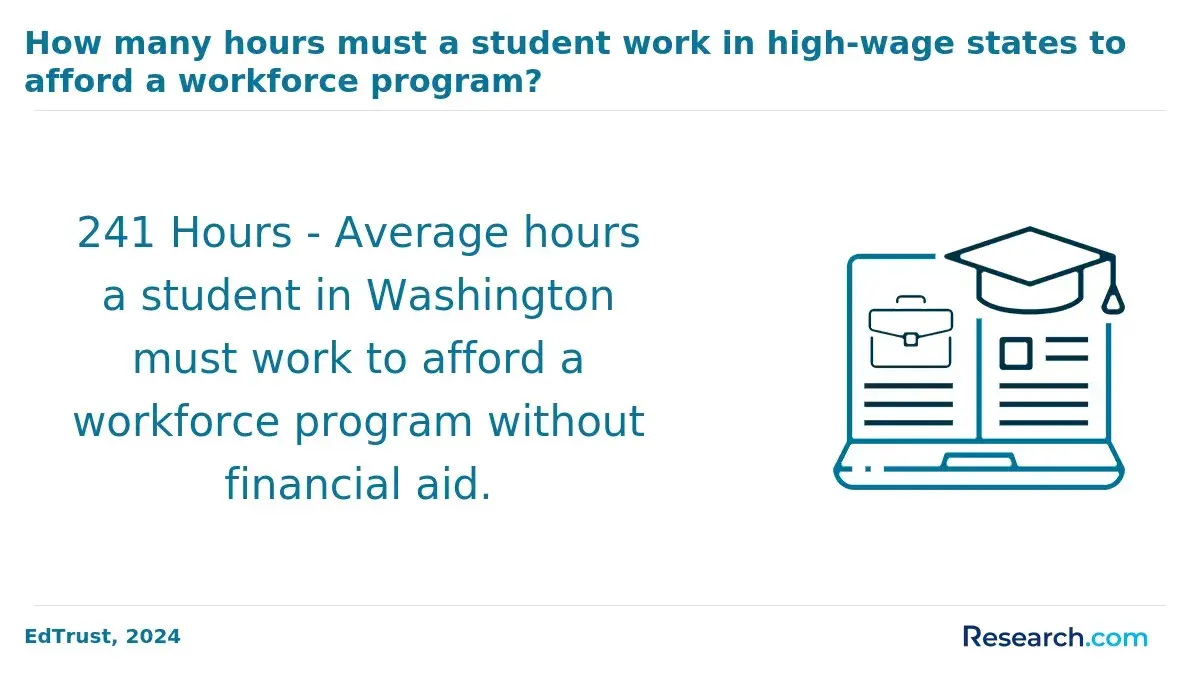
Financial aid for an online Management master's generally falls into four categories: university scholarships, grants, employer education benefits, and loans. Scholarships and grants usually do not require repayment if recipients meet the terms. Employer assistance may require continued employment or repayment if the employee leaves early. Loans can fill a gap but add future repayment obligations.
The following comparison clarifies which funding sources are usually worth prioritizing first. Readers should review each award's terms because labels such as "scholarship" and "fellowship" do not create uniform rules across institutions.
| Funding type | Typical basis for selection | Best use case | Key limitation |
| University merit scholarship | Academic record, professional experience, leadership, admissions profile, or a submitted essay | Applicants with strong academic or career evidence | Often competitive and may require a minimum enrollment level |
| Need-based institutional grant | Documented financial need, often using FAFSA or institutional forms | Students whose financial circumstances meet the school's criteria | Graduate need-based grant funds can be limited |
| External scholarship | Field, identity, service, employer affiliation, career goal, or community involvement | Students willing to apply broadly beyond their university | May reduce institutional need-based aid at some schools |
| Employer tuition assistance | Employment status and an approved degree or grade requirement | Working professionals whose employer supports career development | Annual caps, preapproval, and repayment obligations may apply |
| Federal student loans | FAFSA eligibility and enrollment at an eligible institution | Students with an unavoidable remaining funding gap | Borrowed principal and interest generally require repayment |
Working professionals should ask about employer reimbursement before accepting loans or declining a higher-priced program. If leadership advancement is the goal, compare the scholarship-adjusted cost of a Management master's with executive MBA programs; the better option depends on curriculum, admissions fit, employer support, and total borrowing rather than degree title alone.
How much do Management master's scholarships typically cover?
Management master's scholarships can range from a small one-time tuition credit to a larger renewable award, but there is no dependable "typical" coverage percentage across universities. Many graduate awards are partial rather than full tuition scholarships, especially for online professional programs. A full-tuition award can be valuable, but applicants should still determine whether it excludes fees, course materials, health insurance, travel, or reduced enrollment periods.
A useful way to evaluate an offer is to translate it into the portion of the total degree cost it actually offsets. The examples below are illustrations of the calculation, not published award levels or promises of aid.
| Illustrative offer structure | How to calculate its value | Decision consideration |
| Fixed one-time award | Divide the award by total estimated tuition and fees | Useful for reducing the first-term bill, but it may have limited impact on total borrowing |
| Per-credit tuition discount | Multiply the discount by the credits eligible for the discount | Confirm whether it applies to every required credit and whether the tuition rate can change |
| Renewable annual award | Add each eligible year only if renewal conditions are likely to be met | Often stronger than a one-time award, but academic-progress rules matter |
| Full tuition scholarship | Verify exactly what "tuition" excludes | May still leave non-tuition expenses and opportunity costs |
Ask the school for a net-cost worksheet that separates gift aid from loans and specifies whether the scholarship is divided across terms. If two awards have similar headline values, prioritize the one that is renewable, applies to more required credits, and leaves fewer uncovered mandatory charges.
Who is eligible for Management master's scholarships?
Eligibility for a Management master's scholarship depends on the award rather than on the degree label alone. Merit awards commonly consider undergraduate performance, professional accomplishments, leadership, recommendations, and the quality of the admissions application.
Need-based awards may require financial information through the Free Application for Federal Student Aid (FAFSA) or a university process. Donor awards may have narrower requirements, such as industry experience, military connection, geographic ties, or service commitments.
Before investing time in an application, match your circumstances to the most common eligibility screens.
- Confirm that the award accepts graduate students and explicitly includes online, hybrid, or distance learners.
- Check citizenship, residency, and FAFSA requirements, particularly when an award uses state or federal financial-aid information.
- Verify minimum enrollment status, because some awards require half-time or full-time registration even when the program permits part-time study.
- Review academic thresholds, including any minimum undergraduate GPA for selection and graduate GPA for renewal.
- Read restrictions involving other institutional awards, employer reimbursement, outside scholarships, or military benefits.
- Identify deadlines separately for admission, FAFSA submission, and the scholarship application.
Applicants changing fields should not assume they are ineligible for merit funding. Transferable management experience, supervisory responsibilities, measurable project outcomes, and a focused career statement can strengthen an application when a scholarship assesses professional potential rather than only grades.
What is the application process for Management master's scholarships?
The scholarship process usually begins before enrollment, often alongside the admissions application. Some universities automatically consider admitted students for selected merit awards; others require a separate portal application, FAFSA record, essay, recommendation, or interview. "Automatic consideration" does not mean automatic funding, so verify whether any action is still needed.
Use this sequence to avoid avoidable deadline and documentation problems.
- Create a funding calendar with admissions, FAFSA, scholarship, employer-reimbursement, and deposit deadlines.
- Request an itemized total-cost estimate for the specific online Management curriculum and intended enrollment pace.
- Complete FAFSA when eligible and when the institution recommends it, even if you expect a merit award.
- Prepare a concise resume, transcripts, leadership examples, and a career-goal statement that connects the degree to credible professional objectives.
- Tailor each essay to the award criteria instead of submitting one generic statement to every scholarship.
- Submit materials early, save confirmations, and follow up only through the school's stated process.
- Compare written aid offers by total renewable gift aid, remaining direct costs, enrollment requirements, and loan need.
A common mistake is accepting the first offer without requesting clarification. Ask the aid office whether the award is guaranteed for future terms, whether it can be deferred, whether it changes with part-time enrollment, and which charges remain after the scholarship posts to the account.
Do online Management students qualify for the same aid as on-campus students?
Online Management students can often qualify for federal financial aid and university scholarships, but they do not automatically receive the same awards as campus students. Federal aid eligibility is primarily tied to enrollment in an eligible program at a participating institution, satisfactory academic progress, and individual eligibility rules.
Institutional scholarships can be narrower because donor agreements or campus-based funds may restrict participation by program, modality, residency, or enrollment status.
Online learners should compare the award terms rather than relying on a general statement that "online students are eligible." The most important distinctions are summarized below.
| Question to ask | Why it matters for online students |
| Does the scholarship explicitly include online degree-seeking graduate students? | Some awards are open university-wide, while others are limited to a campus, college, or cohort. |
| What enrollment level is required? | Part-time online pacing may not meet the threshold for a particular award. |
| Are students charged a separate online tuition rate? | Different tuition structures can change the real value of a fixed scholarship. |
| Does the program require an in-person residency? | Travel and lodging can be material costs that tuition aid may not cover. |
| Can distance learners use campus employment or assistantships? | Many assistantships are tied to on-campus work, though policies vary by institution. |
Students considering a more quantitative management path should also compare curriculum and aid rules with an online master in data science. A less expensive program is not automatically the better value if it offers weaker employer relevance or requires more borrowing after available aid.
Can Management master's students combine multiple scholarships and grants?
Management master's students can often combine university scholarships, external scholarships, employer assistance, veterans' education benefits, and federal loans, but stacking is governed by the school's financial-aid policy. Universities may reduce need-based grants or loans after receiving notice of an outside award. They may also prohibit combining two institution-funded tuition discounts. Always disclose outside resources when required rather than assuming an award will have no effect.
Combining awards makes sense when each source has compatible terms and collectively reduces the amount borrowed. The trade-offs below can help applicants decide whether to pursue several smaller awards alongside a major offer.
| Potential benefit of stacking | Potential drawback | Practical response |
| Lower remaining tuition balance | Outside awards can trigger a revision to need-based aid | Ask how each additional award would change the current package |
| Less reliance on loans | Different awards may have conflicting enrollment or reporting rules | Keep a written record of every term, condition, and deadline |
| Broader funding beyond one competitive university award | Multiple applications take time and may require separate essays | Prioritize awards with strong eligibility fit and meaningful net value |
| Employer reimbursement can supplement tuition aid | Employer benefits may require preapproval or continued employment | Read repayment and grade requirements before committing |
Do not decline a scholarship simply because its amount appears small. A smaller external award that does not reduce your institutional aid can cover fees or books and reduce out-of-pocket spending. Conversely, an award that replaces an equal amount of existing grant aid may provide little additional financial value.
Students interested in behavioral analysis should understand the distinct education path described in how to become a criminal profiler. Funding should support a well-matched educational objective, not drive a student into a program unrelated to the intended career.
What are the requirements to maintain scholarship status in Management master's programs?
Scholarship status is usually maintained through satisfactory academic progress, required enrollment, and compliance with the award's conditions. The exact standard varies. A university may use one academic-progress policy for federal aid and a different renewal rule for a specific scholarship, so students should read both documents. Falling below the required level can affect future disbursements even if the student remains academically enrolled.
To protect a renewable award, monitor these requirements throughout the program rather than only at the end of each term.
- Maintain the scholarship's stated cumulative graduate GPA and complete courses successfully under the institution's academic-progress policy.
- Register for the required number of credits and notify the aid office before dropping, withdrawing from, or taking an incomplete in a course.
- Meet any annual renewal application, FAFSA, essay, service, or progress-report deadline.
- Follow restrictions on program changes, leaves of absence, transfer credits, and simultaneous institutional awards.
- Check account statements each term to confirm that the expected award posted correctly and contact the school promptly about discrepancies.
A frequent mistake is treating a scholarship as permanent after the first disbursement. Ask whether the award is renewable automatically, whether funding is contingent on available university resources, and whether the amount is prorated for part-time enrollment. If a serious health, work, or family issue affects performance, contact the financial aid office and academic advisor quickly; some institutions have appeal processes, but relief is not automatic.
What tips can help Management master's students secure more scholarship funding?
Students with the strongest funding outcomes typically approach scholarships as part of program selection, not as an afterthought after admission. Start with programs where your academic record, work history, schedule, and professional goals align with available awards. This is especially important for working adults, who may find employer support or flexible pacing more valuable than a modest scholarship tied to full-time enrollment.
These steps can improve the quality of your search and your ability to compare offers.
- Build a shortlist of accredited programs and record total credits, current tuition, required fees, scholarship deadlines, and renewal rules in one worksheet.
- Apply for university, department, professional-association, community, and employer-based funding rather than relying on a single award.
- Use achievement-based evidence in essays: team size, project scope, process improvements, leadership responsibilities, and how the Management master's supports a specific next step.
- Ask recommenders early and provide them with the scholarship criteria and a concise summary of relevant accomplishments.
- Request a written explanation of whether online enrollment, part-time study, outside awards, or employer reimbursement changes the offer.
- Appeal respectfully when circumstances have materially changed or a competing offer improves your case, but do not assume a school will match another institution's aid.
- Borrow only after subtracting confirmed gift aid, employer assistance, personal resources, and realistic payment-plan contributions.
Also compare adjacent graduate pathways when they better match your goals. Students interested in information stewardship and organizational knowledge may evaluate best library schools for more details.
Other Things You Should Know About Management
Usually, you must at least submit an admissions application before a university can make a program-based scholarship decision. Some schools automatically review admitted applicants, while others allow a scholarship application during the admissions process. Check the order of deadlines because scholarship deadlines may arrive before the program application deadline.
They can be, but availability is more limited than for on-campus students because many assistantships require in-person teaching, research, or administrative work. Ask the department whether remote assistantships exist and whether an assistantship is compatible with the online program's course schedule.
Gift aid can reduce the amount you need to borrow. It may also lead the financial aid office to revise a package so that total aid does not exceed the school's calculated cost of attendance. Report scholarships promptly and ask which part of your package would change.
Ask whether there is an appeal, waitlist, or later-cycle review process, and request feedback if the institution provides it. Then pursue external awards, employer assistance, a payment plan, lower-cost program options, or a different enrollment pace before increasing loan borrowing.
References
- How to Apply for a Master's Scholarship | INOMICS https://inomics.com/insight/how-to-apply-for-a-masters-scholarship-47226
- List of Masters Scholarships for International Students - MBA Crystal Ball https://www.mbacrystalball.com/blog/2024/03/04/list-of-masters-scholarships-for-international-students/
- How to Pay for Graduate School Outside of the U.S. (+39 Scholarship Resources) https://www.collegeessayguy.com/blog/financial-aid-non-us-graduate-school
- Mastercard Foundation Scholars Program https://mastercardfdn.org/en/what-we-do/our-programs/mastercard-foundation-scholars-program/
- 120 Scholarships for Graduate Students with February 2026 Deadlines https://bold.org/scholarships/by-year/graduate-students-scholarships/
- 2026 Most Affordable Online Master's Degrees in Management https://www.onlineu.com/most-affordable-colleges/management-masters-degrees
- Scholarships for Online Grad School | OEDb.org https://www.oedb.org/graduate-scholarship/
- 11 tuition-free universities in the US for master's degrees https://studyinternational.com/news/tuition-free-universities-in-the-us/
- Policy master's: Cost and funding (Part 4) - Emerging Technology Policy Careers https://emergingtechpolicy.org/pathways/graduate-school/policy-masters/4-cost-and-funding/