2027 Online Literacy Education Doctorate Accreditation Guide: Institutional, Programmatic, and Licensure Considerations

Co-Founder and Chief Data Scientist
Choosing an online Literacy Education doctorate is not just an academic decision; it can affect financial aid, transfer credit, employer recognition, and licensure eligibility. NC-SARA listed more than 2,400 participating institutions in 2024, showing how large the regulated online education market has become.
This guide is for prospective doctoral students comparing accredited programs, especially educators seeking reading specialist, literacy leadership, or faculty roles. You will learn how institutional accreditation, programmatic accreditation, state authorization, and professional licensure differ so you can avoid programs that may not meet your goals.
Key Things You Should Know
- An online Literacy Education doctorate should come from an institution accredited by an agency recognized by the U.S. Department of Education or CHEA; outdated "regional versus national" shorthand is less useful than verifying the current accreditor directly.
- Programmatic accreditation is not always required for literacy doctorates, but it can matter when the program is tied to educator preparation, reading specialist certification, administrator licensure, or state-approved endorsement pathways.
- State authorization lets an institution serve online students in a state, but it does not automatically mean the doctorate satisfies that state's professional licensure or certification rules.
Is an Online Literacy Education Doctorate Accredited Differently From an On-Campus Program?
An online Literacy Education doctorate is not accredited under a separate "online accreditation" system. The institution and, when applicable, the education unit or educator-preparation program are reviewed by recognized accreditors using standards that apply to quality, governance, faculty qualifications, student support, assessment, and integrity across delivery formats.
The practical difference is that online programs usually carry extra compliance questions. A campus program may mainly need institutional accreditation and state approval in its home state, while an online program must also address state authorization, distance-learning disclosures, identity verification, field-placement logistics, and licensure disclosures for students in multiple states.
The table below summarizes how accreditation expectations are usually similar across formats while compliance issues may differ for online learners.
| Issue | Online Literacy Education Doctorate | On-Campus Literacy Education Doctorate | Why It Matters |
| Institutional accreditation | Required for broad legitimacy and federal aid eligibility | Required for broad legitimacy and federal aid eligibility | Employers, transfer institutions, and federal aid rules typically focus first on institutional accreditation |
| Programmatic accreditation | May apply if the doctorate is part of educator preparation or licensure pathways | May apply under the same conditions | Some boards or districts prefer or require completion of a state-approved or professionally accredited educator-preparation pathway |
| State authorization | Important for students studying from outside the institution's home state | Usually less complex if students attend in the institution's state | Authorization affects whether the school may legally enroll online students in a given state |
| Field experiences | May require approved placements near the student | Often arranged through local campus partnerships | Placement approval can affect licensure eligibility even when coursework is fully online |
Students comparing formats should also look beyond the word "online." Some doctorates require a dissertation, while others use a capstone, applied research project, or problem-of-practice model. If format is a major concern, comparing online EdD programs no dissertation can help you understand how doctoral structures vary, though accreditation and licensure checks still apply.
What Is the Difference Between Institutional and Programmatic Accreditation for an Online Literacy Education Doctorate?
Institutional accreditation evaluates the college or university as a whole. Programmatic accreditation evaluates a specific school, college, department, educator-preparation unit, or program against field-specific standards. For an online Literacy Education doctorate, the safest approach is to verify institutional accreditation first, then determine whether the literacy program is connected to a programmatically accredited or state-approved educator-preparation pathway.
This distinction matters because different decision-makers look at different signals. Federal financial aid rules focus heavily on institutional accreditation. State educator licensing boards may focus on state approval, approved preparation pathways, testing, supervised experience, and sometimes programmatic accreditation or national recognition.
The table below clarifies the difference so you can ask the right questions before enrolling.
| Accreditation Type | What It Reviews | Common Examples in Education | What It Usually Affects |
| Institutional accreditation | The entire college or university, including governance, finances, student services, academic quality, and integrity | Accreditors recognized by the U.S. Department of Education, such as institutional accreditors serving public, private nonprofit, and some for-profit institutions | Federal student aid eligibility, baseline degree recognition, employer screening, transfer review, and admission to further study |
| Programmatic accreditation | A specific professional field, educator-preparation unit, or program | CAEP or AAQEP for educator preparation, when applicable to the institution's education unit or program | State approval, professional credibility, educator licensure pathways, and specialized employer expectations |
| State approval | Whether a program satisfies a state's educator-preparation or endorsement rules | State departments of education and educator standards boards | Eligibility for reading specialist, literacy coach, administrator, or other education credentials in that state |
| Professional certification recognition | Whether coursework aligns with a credentialing body's requirements | Reading specialist, literacy leadership, dyslexia, or structured literacy credential pathways, depending on the credential | Optional credentials, district advancement, or specialized literacy roles |
A common mistake is assuming institutional accreditation automatically means the literacy doctorate is approved for licensure. It does not. Institutional accreditation tells you the university has passed an institution-wide quality review; it does not confirm that a specific doctorate satisfies your state's reading specialist, literacy endorsement, or leadership credential requirements.
How Can You Verify That an Online Literacy Education Doctorate and Its Accreditor Are Legitimate?
Verification should happen before you apply, not after you are admitted. Accreditation language on a school website can be accurate, incomplete, outdated, or written in a way that is hard to interpret, so you should confirm claims through independent sources.
Use the following sequence to reduce the risk of enrolling in a program that is unrecognized, misrepresented, or unsuitable for your professional goals.
- Search the institution in the U.S. Department of Education's Database of Accredited Postsecondary Institutions and Programs and confirm the accreditor name, institutional status, and effective dates.
- Check the accreditor's own website to confirm that the institution is listed as accredited, not merely an applicant, candidate, branch site, or teach-out institution.
- Review the school's accreditation page and compare its claims with the federal database and accreditor listing; the names and status dates should match.
- If the doctorate is tied to educator preparation, verify programmatic accreditation or state approval through the education school, CAEP or AAQEP where applicable, and the relevant state education agency.
- Ask the program for written confirmation of whether it meets educational requirements for your intended license, endorsement, or certification in your state.
- Contact your state licensing board or department of education directly and keep a dated record of the response before committing tuition deposits or accepting loans.
Red flags include vague claims such as "fully approved," "internationally accredited," or "licensed by the state" without naming a recognized accreditor. Also be cautious if a school will not identify the accreditor, refuses to provide licensure disclosures, pressures you to enroll quickly, or claims that one online doctorate qualifies graduates for educator certification in every state.
Verification is especially important for career changers and educators moving across states. A program can be legitimate, accredited, and academically strong while still failing to meet a particular state's licensure rules.
Employer Confidence in Online vs. In-Person Degree Skills, Global 2024

An online Literacy Education doctorate does not always need separate programmatic accreditation. Many doctoral programs in literacy, reading education, curriculum and instruction, or language and literacy are designed for advanced scholarship, leadership, research, curriculum development, or higher education teaching rather than initial educator licensure.
Programmatic accreditation becomes more important when the doctorate is embedded in an educator-preparation system or when the student needs the program to support a specific professional credential. The table below shows when programmatic accreditation is likely to matter most.
| Student Goal | Is Programmatic Accreditation Usually Critical? | What to Verify |
| Earn a doctorate for district literacy leadership without a new license | Sometimes helpful but not always required | Institutional accreditation, employer recognition, curriculum relevance, and faculty expertise |
| Qualify for reading specialist or literacy endorsement | Often important, depending on the state | State-approved pathway, required coursework, testing, supervised experience, and any approved provider list |
| Teach literacy education at the college level | Usually less about programmatic accreditation and more about doctorate type, research record, and institutional reputation | Institutional accreditation, dissertation or research expectations, publications, and teaching experience |
| Move into administrator licensure | May be important if the doctorate includes administrator preparation | State administrator licensure approval, internship hours, and leadership standards alignment |
Different education fields also treat programmatic accreditation differently. For example, students comparing licensure-focused education programs may see more explicit accreditor requirements in areas such as school psychology programs online accredited by NASP. Literacy Education doctorates can be more variable, so the key is to match accreditation evidence to the credential you actually need.
The strongest question to ask is not "Is this program accredited?" but "Which accreditor or state agency has reviewed this exact program or educator-preparation pathway for the professional outcome I want?" That phrasing prevents confusion between institutional accreditation, programmatic accreditation, and state approval.
The accreditation that matters most depends on the professional outcome. Literacy Education doctorate students may be practicing teachers seeking salary advancement, reading specialists seeking endorsement, district leaders seeking literacy coordinator roles, or educators preparing for faculty and research positions. Each path may use a different approval standard.
For labor-market context, the U.S. Bureau of Labor Statistics reported a May 2024 median annual wage of $74,720 for instructional coordinators. That figure does not represent a guaranteed outcome for doctorate holders, but it shows why educators often scrutinize whether a literacy doctorate will be recognized for curriculum, coaching, and leadership roles.
The table below connects common literacy-related goals with the accreditation or approval evidence students should prioritize.
| Goal | Most Relevant Recognition | Typical Evidence to Request |
| Reading specialist certification or endorsement | State approval and any required educator-preparation accreditation | Written licensure disclosure for your state, required courses, field hours, testing requirements, and state-approved provider status |
| Literacy coach or district curriculum leader | Institutional accreditation plus employer-recognized curriculum quality | Course outcomes, faculty qualifications, applied leadership projects, and alignment with district literacy initiatives |
| K-12 administrator role | State administrator licensure approval if the doctorate includes leadership licensure | Internship requirements, state leadership standards alignment, and principal or superintendent credential pathway details |
| College teaching or research | Institutional accreditation and scholarly fit | Research methodology preparation, dissertation expectations, faculty publication record, and graduate teaching opportunities |
| Dyslexia or structured literacy specialization | Credential-specific requirements where applicable | Course alignment, practicum supervision, assessment training, and recognition by the credentialing organization or state agency |
Current literacy policy trends also matter. Many states have strengthened evidence-based reading instruction expectations, often connected to the science of reading, screening, intervention, and teacher preparation. If you need a state credential, confirm that the doctorate's coursework reflects your state's current standards rather than relying on older reading education requirements.
An online Literacy Education doctorate may meet licensure requirements in one state and not another. This is true even when the university is accredited, well known, and authorized to enroll online students. States control educator licensure, endorsements, testing, background checks, experience requirements, and supervised practice expectations.
Before enrolling, use a state-specific review process. This is especially important if you live outside the university's state, plan to move, or want a reading specialist, literacy endorsement, administrator credential, or other regulated education role.
- Identify the exact credential you want, such as reading specialist, literacy coach endorsement, dyslexia specialist, curriculum supervisor, principal, or superintendent.
- Find the official requirements from your state department of education or educator standards board, not from a general admissions page.
- Compare the state's required coursework, field experience, exams, teaching license prerequisites, and years of experience with the doctorate's plan of study.
- Ask the university for a written professional licensure disclosure for your state that says whether the program meets, does not meet, or has not determined your state's requirements.
- If the disclosure says "has not determined," contact the state board before enrolling and ask whether the program can be used for the credential you want.
- Keep copies of emails, catalog pages, program sheets, and board responses because requirements can change during a doctoral program.
Common mistakes include assuming a doctorate is "higher than" certification requirements, relying on another student's experience in a different state, or believing that a teaching license automatically converts into a reading specialist endorsement. Doctoral-level coursework can support advanced expertise, but licensure agencies still apply their own rules.
If you already hold an Education Specialist degree and are considering a doctoral bridge, review how prior graduate credits, licensure status, and field experiences will be evaluated. Programs such as EDS to EdD programs can be efficient for experienced educators, but state licensure eligibility still needs separate confirmation.
Practicum, internship, clinical, or residency requirements can determine whether a Literacy Education doctorate supports licensure or endorsement. Many online doctorates deliver coursework remotely, but states may still require supervised experience in approved settings, documentation by licensed professionals, or placements that align with state standards.
These requirements can be especially important for reading specialist, dyslexia, literacy intervention, curriculum supervision, or administrator pathways. If the program includes fieldwork, the placement must often be approved before the experience begins, not after it is completed.
Ask the school these questions before enrolling because placement rules can affect your timeline, cost, and eligibility.
- Does the doctorate require a practicum, internship, clinical experience, residency, or applied research placement?
- Can the field experience be completed in my state, district, or school, and who approves the site?
- What qualifications must the site supervisor hold, such as reading specialist certification, administrator licensure, or doctoral preparation?
- Are remote, hybrid, tele-supervised, or workplace-based placements accepted by the university and by my state licensing agency?
- What happens if my employer will not allow data collection, intervention work, classroom observation, or leadership activities required by the program?
- Will the university provide placement support, or am I responsible for finding and securing the site?
Online programs increasingly use digital observation tools, learning analytics, video coaching, and virtual collaboration platforms. These tools can make doctoral fieldwork more flexible, but they do not replace state approval when a license or endorsement requires in-person, supervised, or site-specific experience.
Students should also budget for short residencies, travel, background checks, liability insurance, testing fees, fingerprinting, and unpaid field hours. Even when tuition is transparent, these non-tuition requirements can affect whether the program is practical.
Accreditation can affect the practical value of an online Literacy Education doctorate long after admission. It may influence federal financial aid eligibility, transfer credit review, employer reimbursement, district salary-lane approval, faculty hiring, and admission to postdoctoral or additional graduate study.
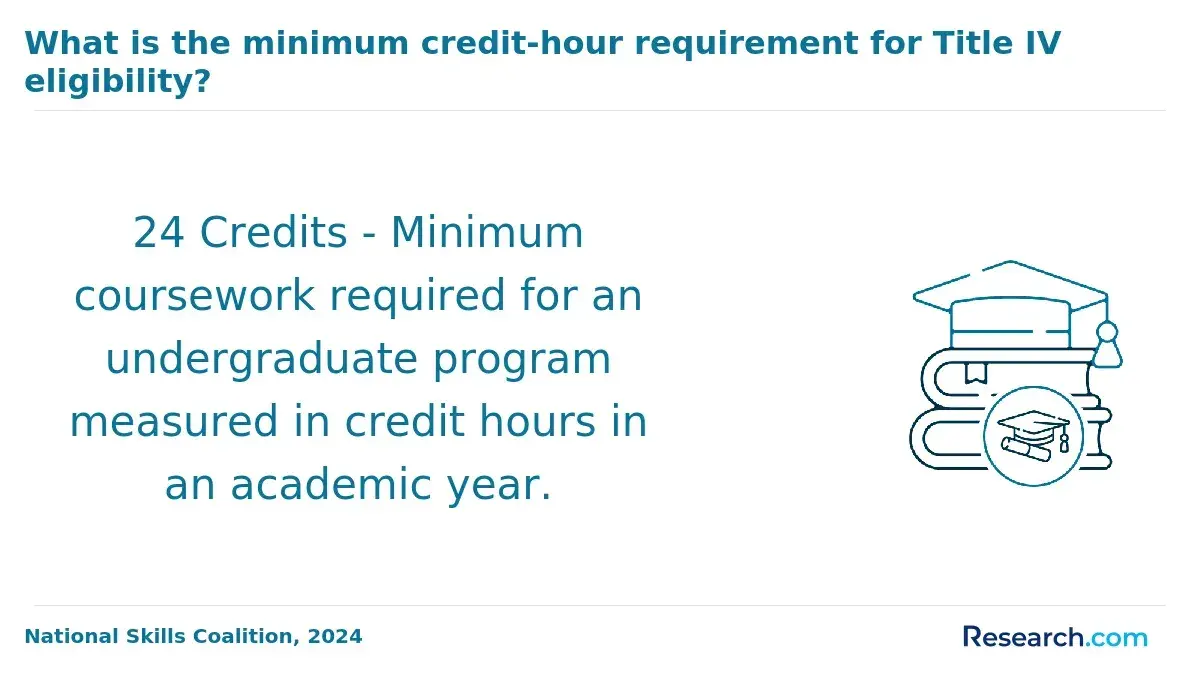
The most immediate financial issue is federal aid. In general, students must attend an institution accredited by a U.S. Department of Education-recognized accreditor to access Title IV federal student aid. Programmatic accreditation may not be required for federal aid, but it can still affect licensure and employer recognition.
The table below summarizes common downstream effects students should consider before committing to a program.
| Decision Area | How Accreditation Can Matter | What to Check |
| Federal financial aid | Institutional accreditation is central to Title IV eligibility | Federal aid participation, accreditor recognition, satisfactory academic progress rules, and loan limits |
| Transfer credits | Receiving institutions may reject credits from unaccredited schools or programs that do not align academically | Transfer policy, maximum transferable doctoral credits, age limits on credits, and residency requirements |
| Employer reimbursement | Districts and universities often require accreditation for tuition assistance or salary advancement | Human resources policy, approved provider lists, and whether online doctoral credits qualify |
| Licensure and endorsements | Institutional accreditation alone may not satisfy state educator-preparation rules | State-approved pathway, required exams, field hours, and written licensure disclosure |
| Further study or faculty roles | Accredited doctoral preparation is often expected for postdoctoral work, faculty searches, and scholarly credibility | Research preparation, dissertation or capstone rigor, faculty mentoring, and publication opportunities |
Cost should be evaluated alongside accreditation. A lower-cost doctorate may be attractive, but it is not a bargain if it is ineligible for federal aid, rejected by your employer, or unusable for a required credential. Conversely, a more expensive accredited program may still be a poor fit if it does not meet your state's licensure requirements.
Some educators ultimately decide that a doctorate is not the best next credential for their goals. If your interest is instructional technology, curriculum design, or corporate learning rather than literacy licensure, comparing best online instructional design master's programs may reveal a less costly and more targeted path.
What Happens if an Online Literacy Education Doctorate Loses Accreditation or Is Only in Candidacy?
Accreditation status can change. A program or institution may be fully accredited, placed on warning or probation, approved for teach-out, in candidacy, or seeking initial accreditation. These categories are not interchangeable, and each can affect risk differently.
Candidacy is particularly easy to misunderstand. It usually means a program or institution is progressing through review, not that accreditation is guaranteed. If you need licensure eligibility, financial aid, employer reimbursement, or transferability, candidacy may not be enough.
The table below explains common accreditation statuses and the questions students should ask.
| Status | What It Generally Means | Student Implication |
| Fully accredited | The accreditor has granted accreditation for a defined review period | Usually the lowest accreditation risk, though licensure still requires state-specific review |
| Candidacy or applicant status | The school or program is seeking accreditation but has not yet received full approval | May not satisfy financial aid, transfer, employer, or licensure expectations depending on the accreditor and state |
| Warning or probation | The accreditor has identified compliance concerns | Students should review the issue, timeline, and school response before enrolling |
| Teach-out | The institution or program is closing or losing approval and has a plan for current students | New students should be extremely cautious; current students should confirm completion, transfer, and aid options |
| Loss of accreditation | The accreditor has withdrawn recognition from the institution or program | Can affect aid, transfer, licensure, employment recognition, and degree value |
If accreditation status is uncertain, take these steps before making a decision.
- Read the accreditor's public action notice rather than relying only on the school's summary.
- Ask whether the status affects federal financial aid, current students, applicants, and graduates differently.
- Request written confirmation of how the school will protect students if accreditation is delayed, denied, or withdrawn.
- Contact your employer, transfer institution, or licensing board to ask whether candidacy or probationary status is acceptable.
- Consider waiting for full accreditation if your goal depends on licensure, reimbursement, or transferability.
The safest choice is not always the most famous institution or the most flexible online schedule. It is the program whose accreditation, state authorization, licensure disclosures, fieldwork structure, and professional outcomes match your specific state and career plan.
Other Things You Should Know About Literacy Education
An EdD often fits practitioners who want leadership, curriculum, coaching, or applied problem-solving roles. A PhD often fits students focused on research, theory, university faculty work, or scholarly publication. Accreditation and licensure checks matter for both degree types.
Many online doctoral programs are designed for working educators, but flexibility varies. Check course pacing, synchronous meeting times, residency requirements, dissertation or capstone expectations, and whether fieldwork can be completed at your current workplace.
It can support college teaching goals, especially if the institution is accredited and the program includes strong research preparation. However, faculty hiring depends on the institution, discipline fit, publications, teaching experience, and whether the role is tenure-track, clinical, adjunct, or administrative.
Price matters, but the cheapest option is not always the best value. Confirm institutional accreditation, licensure alignment, fieldwork support, faculty expertise, transfer policies, employer recognition, and total non-tuition costs before choosing based on tuition alone.
- Regional Accreditation vs National: Understanding Key Differences and Benefits - The Scholarship System https://thescholarshipsystem.com/blog-for-students-families/regional-accreditation-vs-national-understanding-key-differences-and-benefits/
- Understanding Academic Accreditation: A Guide for Students and Parents https://www.qahe.org/article/understanding-academic-accreditation-a-guide-for-students-and-parents/
- Why Is Accreditation Important? | ACE Blog https://ace.edu/blog/why-is-accreditation-important/
- View of Digital Literacy in Post-certification Healthcare Education https://jpaap.ac.uk/JPAAP/article/view/185/html
- Accreditation & Your Online Degree: Know Before You Go https://www.baypath.edu/news/bay-path-university-blogs/post/accreditation-your-online-degree-know-before-you-go/
- Literature Review of Accreditation Systems in Higher ... https://comum.rcaap.pt/bitstreams/442d4d2a-a913-42f1-b4cf-04ca180ea100/download
- Recognized Institutions https://transcriptresearch.com/pages/recognized-institutions
- National vs. Regional Accreditation: Which Should I Trust? | Resilient Educator https://resilienteducator.com/degrees/national-vs-regional-accreditation/
- Accreditation Standards Overview https://iacde.org/accreditation-standards-overview/
- Accreditation for Online EdD Programs - OnlineEdDPrograms.com https://www.onlineeddprograms.com/resources/accreditation