2027 Online Health Services Doctorate Programs with Quantitative, Qualitative, and Mixed-Methods Research Options

Co-Founder and Chief Data Scientist
Choosing an online health services doctorate often comes down to one hidden decision: whether the program can support the kind of research you want to do. The stakes are real, as the U.S. Bureau of Labor Statistics projects 29% growth for medical and health services managers through 2033, much faster than average.
This guide is for prospective doctoral students comparing quantitative, qualitative, and mixed-methods options. You will learn how research design affects coursework, dissertations, timelines, costs, faculty fit, and career outcomes, so you can choose a program that realistically supports your goals.
Key Things You Should Know
- Quantitative research is strongest for students who want to analyze large datasets, measure outcomes, evaluate policy effects, or pursue data-driven leadership roles in health systems.
- Qualitative research is often the better fit for students studying patient experience, workforce behavior, organizational culture, access barriers, or leadership decision-making.
- Mixed-methods research can produce richer evidence but usually adds workload because students must design, collect, analyze, and integrate both numeric and narrative data.
Which Online Health Services Doctorate Programs Offer Quantitative, Qualitative, or Mixed-Methods Research?
Online health services doctorate programs usually appear under several degree names, including Doctor of Health Administration, Doctor of Healthcare Administration, Doctor of Health Sciences, Doctor of Public Health, and PhD in Health Services or Health Policy. The research options are not determined by the degree title alone; they depend on the curriculum, dissertation rules, faculty expertise, institutional review board process, and whether the school allows applied projects as well as traditional dissertations.
The table below summarizes common online or hybrid doctorate formats and how they typically support research methodology. Use it as a screening tool, not as a substitute for reviewing a specific program handbook.
| Program type | Typical research options | Best fit | What to verify before applying |
| Doctor of Health Administration or Doctor of Healthcare Administration | Often qualitative, quantitative, or mixed methods for applied leadership problems | Executives, administrators, consultants, and health system leaders | Whether the final project is a dissertation, doctoral study, capstone, or applied improvement project |
| Doctor of Health Sciences | Often flexible, with research tied to clinical leadership, education, public health, or administration | Clinicians, educators, program directors, and interdisciplinary health professionals | Whether faculty can supervise your specific topic and methodology |
| Doctor of Public Health | Often mixed methods, epidemiologic analysis, program evaluation, or community-based research | Public health leaders, policy professionals, and population health specialists | Whether the curriculum includes biostatistics, epidemiology, qualitative methods, and applied practice components |
| PhD in Health Services, Health Policy, or Health Systems | Often more research-intensive and may emphasize quantitative methods, theory, or advanced methodology | Future faculty, policy researchers, analysts, and research scientists | Whether the program is fully online, hybrid, or requires residencies, seminars, or campus-based research milestones |
| DNP with systems leadership or population health focus | Usually applied evidence translation rather than a traditional dissertation | Nurse leaders, clinical executives, and quality improvement professionals | Whether the project allows original research or focuses on evidence-based practice implementation |
A common mistake is assuming that a program "supports research" simply because it requires a dissertation. Stronger evidence includes named courses in quantitative methods, qualitative methods, mixed-methods design, statistics, research ethics, data analysis software, and proposal development. If the catalog does not clearly state these supports, ask admissions to connect you with the doctoral program director before you apply.
How Do Quantitative, Qualitative, and Mixed-Methods Research Differ in Online Health Services Doctorates?
In a health services doctorate, methodology is the logic connecting your research question, evidence, analysis, and conclusion. Quantitative research asks "how much," "how often," or "what predicts what." Qualitative research asks "how," "why," or "what does this experience mean." Mixed-methods research combines both when one form of evidence is not enough.
The comparison below shows how each approach works in a doctoral health services context and what it requires from the student.
| Research method | Typical questions | Common data sources | Student strengths needed | Common risk |
| Quantitative | Does an intervention reduce readmissions? What predicts staff turnover? Are outcomes different across patient groups? | Surveys, claims data, electronic health records, public datasets, quality metrics | Statistics, measurement, data cleaning, comfort with software | Choosing a topic without access to enough usable data |
| Qualitative | How do leaders implement change? Why do patients avoid follow-up care? What barriers do workers experience? | Interviews, focus groups, documents, observations, reflective journals | Interviewing, coding, synthesis, ethical handling of participant narratives | Underestimating the time required to recruit participants and analyze text |
| Mixed methods | What is happening, and why is it happening? Do survey patterns match stakeholder experiences? | Surveys plus interviews, administrative data plus focus groups, sequential or parallel datasets | Research design discipline, integration, both numeric and narrative analysis | Designing two weak studies instead of one coherent combined study |
Quantitative methods often fit students who want measurable evidence for executive decisions, financial performance, outcomes evaluation, or policy analysis. Qualitative methods often fit students who want to understand behavior, culture, equity, communication, patient experience, or implementation barriers. Mixed methods fit when the research problem requires both scale and depth, such as measuring whether a care coordination model works and then explaining why staff adopted or resisted it.
How Does Research Methodology Affect the Dissertation or Capstone in an Online Health Services Doctorate?
Your methodology affects nearly every part of the dissertation or capstone: the research question, literature review, sample, ethical review, timeline, analysis plan, and final defense. It also affects feasibility. A sophisticated design is not useful if you cannot obtain data, recruit participants, or secure faculty approval.
Students should expect different dissertation or capstone demands depending on the method they choose. The following overview explains the practical differences.
| Requirement | Quantitative project | Qualitative project | Mixed-methods project |
| Proposal | Defines variables, hypotheses or research questions, sample, instruments, and statistical tests | Defines phenomenon, participant criteria, interview protocol, trustworthiness, and coding approach | Defines both strands and explains how the results will be integrated |
| Data access | May require permission to use organizational, clinical, claims, or survey data | May require recruitment access to leaders, clinicians, patients, staff, or community members | Requires access to both numeric and narrative data sources |
| Analysis | Uses statistical tests, models, descriptive analysis, or outcomes comparison | Uses coding, thematic analysis, content analysis, or grounded interpretation | Uses separate analyses plus an integration strategy |
| Final product | Often emphasizes measurable relationships, differences, predictors, or outcomes | Often emphasizes meaning, experience, barriers, perceptions, or organizational context | Often emphasizes convergence, explanation, or expansion of findings |
A common red flag is a program that advertises "methodology flexibility" but requires students to use a narrow dissertation template. Ask whether students have recently completed dissertations using your preferred method. If the answer is vague, request examples of approved titles, dissertation abstracts, or faculty research profiles.
Most online health services doctorates build research training in stages: foundational research design, statistics or qualitative methods, ethics, proposal development, and dissertation or capstone seminars. Applicants coming from a master's in healthcare administration may already understand health systems, finance, and policy, but they may still need advanced preparation in research design and data analysis.
When reviewing a curriculum, look beyond course titles. A strong doctoral research sequence should prepare you to move from a practical health services problem to a defensible research design.
- Research design: Courses should explain how to align problem statements, theory, research questions, sampling, data collection, validity, reliability, and limitations.
- Quantitative preparation: Look for statistics, applied analytics, regression, survey design, measurement, database use, or health outcomes analysis.
- Qualitative preparation: Look for interviewing, focus groups, coding, thematic analysis, case study design, trustworthiness, and reflexivity.
- Mixed-methods preparation: Look for explicit training in sequential, explanatory, exploratory, or convergent designs, not just separate quantitative and qualitative courses.
- Research ethics: Programs should train students on institutional review board review, informed consent, confidentiality, data security, and research with vulnerable populations.
- Proposal development: Strong programs offer structured milestones that help students refine the problem, literature review, methodology, and analysis plan before the final project stage.
Students with limited statistical background should not automatically avoid quantitative research, but they should confirm the program offers tutoring, software support, and applied statistics instruction. Students drawn to qualitative work should confirm that the curriculum teaches rigorous analysis rather than treating interviews as informal conversations.
Faculty fit can matter as much as the curriculum. A dissertation chair or capstone mentor helps narrow the topic, identify feasible data sources, select the method, interpret findings, and keep the project aligned with doctoral standards. In online programs, this support must be intentional because students may not have informal access to faculty offices, labs, or campus seminars.
Before choosing a program, evaluate whether faculty expertise matches your research plan. The best signs are specific and verifiable.
- Methodological match: At least one faculty member should have published, taught, or supervised projects using your preferred method.
- Topical match: Faculty should understand your area, such as health equity, long-term care, hospital operations, informatics, quality improvement, workforce policy, or population health.
- Availability: Ask how dissertation chairs are assigned, how often students meet with mentors, and whether mentor changes delay progress.
- Committee depth: For mixed methods or advanced quantitative work, ask whether committees can include specialists in statistics, qualitative analysis, or applied health services research.
- Online responsiveness: Confirm whether advising occurs through scheduled video meetings, written feedback, research residencies, virtual workshops, or dissertation boot camps.
A major mistake is choosing a school based only on reputation while ignoring whether anyone can supervise the exact design you want to use. If your topic requires advanced modeling, community-based qualitative research, or mixed-methods integration, faculty capacity should be a deciding factor.
Online doctoral students can collect rigorous health services data, but they must plan access early. Many projects depend on permissions from employers, health systems, public agencies, professional associations, patient groups, or dataset owners. Data access problems are one of the most common reasons students have to narrow or redesign a dissertation.
The most realistic data strategy depends on your method, professional network, and institutional approvals. Consider these practical steps before committing to a topic.
- Identify the exact data you need, including variables, participant types, documents, or outcome measures.
- Confirm who controls access and whether your role creates conflicts of interest, privacy concerns, or recruitment limits.
- Ask whether your school's institutional review board has experience with online recruitment, organizational data, healthcare settings, and multisite approvals.
- Check whether the program provides software such as SPSS, SAS, R, Stata, NVivo, ATLAS.ti, Dedoose, or secure survey platforms.
- Build a backup plan in case an employer, hospital, agency, or participant group cannot provide data on your original timeline.
Quantitative students should pay close attention to sample size, missing data, data quality, and whether variables actually measure the concept being studied. Qualitative students should plan recruitment, interview scheduling, transcription, coding cycles, and participant confidentiality. Mixed-methods students must also explain how one dataset informs, explains, or validates the other.
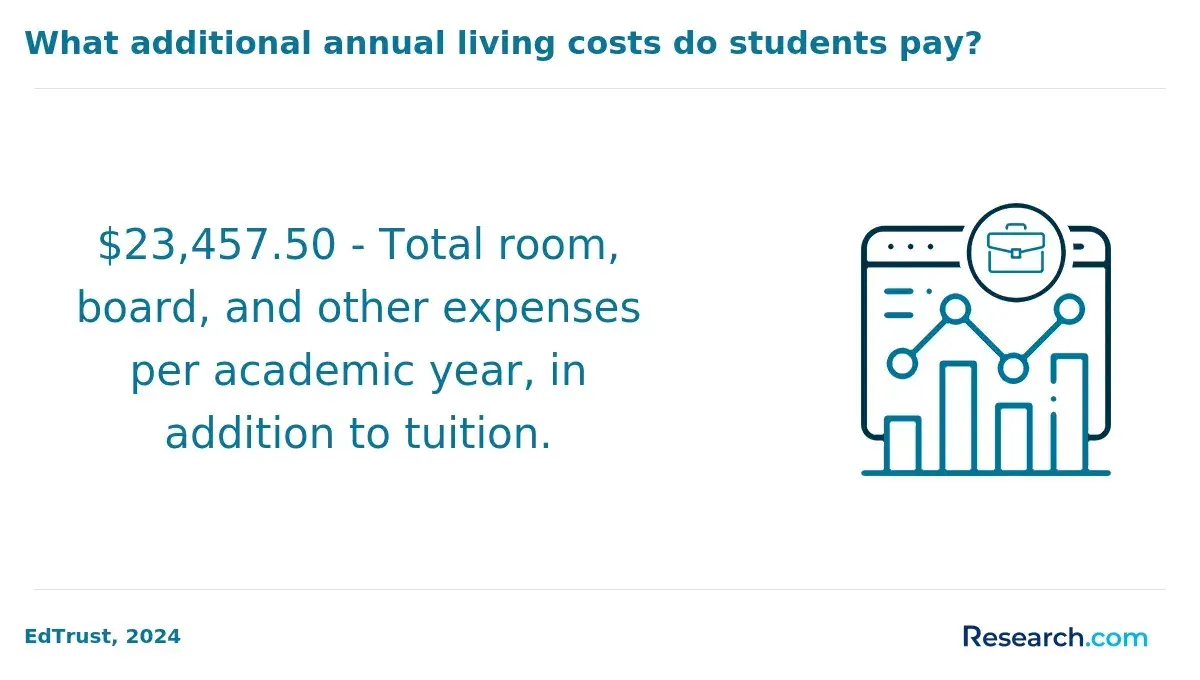
Research methodology can affect both time to completion and total cost because doctoral tuition is often charged by credit, term, dissertation continuation course, or capstone enrollment. Students comparing affordability may also want to review the cheapest online healthcare administration degree options earlier in their academic pathway, especially if they are still choosing between master's and doctoral study.
Cost planning should include more than tuition. For the 2024-2025 award year, federal Direct Unsubsidized Loans for graduate and professional students have an annual borrowing limit of $20,500, which means doctoral students may need employer tuition support, payment plans, scholarships, savings, or Grad PLUS Loans if program costs exceed that amount. This borrowing limit is not a recommendation to borrow; it is a planning benchmark for comparing out-of-pocket exposure.
The table below shows how methodology can create different cost and timeline pressures.
| Method | Potential time pressure | Potential cost pressure | Ways to reduce risk |
| Quantitative | Delays can occur if datasets are incomplete, restricted, or not approved for student research | May require statistics support, software, data-use agreements, or extra dissertation terms | Choose accessible datasets and confirm analysis support before proposal approval |
| Qualitative | Recruitment, interviews, transcription, and coding can take longer than expected | May require transcription, participant incentives, software, or extended enrollment | Limit scope, define participant criteria clearly, and pilot the interview protocol |
| Mixed methods | Two data streams and integration steps can extend the proposal and analysis phases | May require both statistical and qualitative tools, plus more faculty review cycles | Use mixed methods only when the research question genuinely requires it |
The most expensive dissertation is often the one that has to be redesigned late. To control cost, select a feasible question, verify data access early, and avoid choosing mixed methods simply because it sounds more comprehensive.
The best research method is the one that strengthens the kind of evidence you will use after graduation. A doctoral student aiming for health system analytics may benefit from quantitative depth, while a student aiming for executive leadership or organizational change may benefit from qualitative or mixed-methods expertise. Career fit matters because doctoral research often becomes a portfolio signal for employers, consulting clients, academic committees, or policy organizations.
The U.S. Bureau of Labor Statistics reported a median annual wage of $110,680 for medical and health services managers in May 2023, with the figure published in its current occupational data. That number should not be treated as a doctoral salary guarantee, but it shows why many working professionals weigh doctorate cost against leadership, research, consulting, teaching, or specialized advancement goals.
The table below connects research methods with common health services career directions.
| Career goal | Methodology that often fits | Why it fits |
| Health system executive or administrator | Qualitative or mixed methods | Useful for studying leadership, change management, workforce culture, patient experience, and implementation barriers |
| Quality improvement or outcomes leader | Quantitative or mixed methods | Useful for measuring performance indicators, readmissions, cost, safety, access, and intervention results |
| Policy analyst or population health researcher | Quantitative or mixed methods | Useful for evaluating trends, disparities, program effects, and population-level outcomes |
| Academic faculty or research scientist | Depends on discipline, but often quantitative or mixed methods | Useful when publishing empirical research, securing grants, or contributing to theory and evidence development |
| Consultant or organizational strategist | Mixed methods or qualitative | Useful for combining performance metrics with stakeholder insight and implementation context |
| Health informatics or information management leader | Quantitative | Useful for analytics, data governance, reporting, and outcomes measurement. |
Students planning to teach should ask whether the program prepares them to publish, present research, and teach methodology. Students pursuing applied leadership should ask whether the capstone or dissertation can solve a real organizational problem without compromising research ethics or objectivity. They also compare health information management salary data before choosing a specialization
Research resources are the difference between a program that merely allows a methodology and one that can help you complete it. Online students should evaluate advising, library access, software, statistics help, writing support, research workshops, dissertation templates, and technology for secure data collection.
Use the following checklist when comparing programs. The goal is to confirm that the school can support the work you actually plan to do.
- Accreditation and legitimacy: Confirm institutional accreditation from an agency recognized by the U.S. Department of Education or the Council for Higher Education Accreditation, and review any field-specific accreditation relevant to your degree type.
- Research course sequence: Check whether methods courses are required before the proposal stage and whether students receive training in their chosen methodology.
- Dissertation or capstone examples: Ask for recent approved project titles or abstracts so you can see what methods the program has actually supported.
- Software access: Confirm whether licenses are included in tuition or require separate student purchase.
- Library and data resources: Look for access to healthcare databases, journals, interlibrary loan, dataset guidance, and research librarians.
- Statistical and qualitative support: Ask whether support is instructional or limited to troubleshooting software.
- Residency expectations: Determine whether the program requires campus visits, virtual residencies, synchronous seminars, or proposal defense attendance.
- IRB process: Ask how long reviews usually take and whether workplace-based studies require separate organizational approval.
- Transfer credit and prior learning: Confirm whether doctoral-level research courses from another institution can reduce time or cost.
Be cautious if advisors cannot explain how dissertation chairs are assigned, what software students use, or whether mixed-methods projects are commonly approved. These gaps can signal that the advertised methodology options are thinner than they appear.
How Should Students Choose an Online Health Services Doctorate Based on Research Methodology?
Start with the problem you want to solve, not the method you find most impressive. A quantitative design is not automatically more rigorous, a qualitative design is not automatically easier, and mixed methods is not automatically better. The right program is the one whose faculty, curriculum, data resources, and final-project structure match your question and career goal.
If you are not yet ready for doctoral-level research, it may be smarter to build academic momentum through graduate certificates, bridge coursework, or accelerated healthcare programs before committing to a doctorate. Doctoral study is usually most valuable when you already have a clear professional direction and enough preparation to sustain a multi-year research project.
Follow this decision process when comparing programs.
- Write your intended research problem in one sentence, such as reducing avoidable readmissions, improving rural access, strengthening workforce retention, or evaluating telehealth implementation.
- Turn the problem into a research question and identify whether it asks about measurement, meaning, or both.
- Match the question to quantitative, qualitative, or mixed-methods design before selecting schools.
- Review each program's required research courses and confirm they prepare students for your preferred design.
- Identify faculty members who have supervised or published work using that methodology.
- Ask how students obtain data, complete IRB review, receive software support, and move through dissertation milestones online.
- Compare total cost, continuation fees, residency costs, employer tuition benefits, transfer credit, and expected time to completion.
- Choose the program that best balances methodology support, faculty fit, affordability, accreditation, and career relevance.
Students should avoid programs that require them to select a dissertation method before they understand the research question. They should also avoid choosing mixed methods because it sounds more advanced. A focused, feasible single-method study with strong mentorship is often more valuable than an overbuilt project that delays completion.
Other Things You Should Know About Health Services
No. Some online health services doctorates are PhD programs, but many are professional doctorates such as a DHA, DHSc, DrPH, or DNP. A PhD usually emphasizes original scholarly research, while professional doctorates often emphasize applied leadership, policy, practice improvement, or organizational problem-solving.
Many do not require a clinical license, especially DHA, healthcare administration, health policy, and health services programs. However, DNP programs and some clinically focused doctorates may require an active nursing or professional license. Always check program admissions rules and state authorization requirements.
Many students do, especially in part-time or executive-format programs. The challenge is not only coursework but also the dissertation or capstone stage, where data collection, writing, revisions, and faculty feedback can require consistent weekly time.
It can, but hiring depends on the institution, discipline, accreditation standards, teaching experience, publications, and whether the doctorate matches the subject area. Students who want academic roles should choose a program with strong research training, publication support, and faculty mentorship.
- Top Online PhD in Public Health (DrPH) Programs - MPH Online https://www.mphonline.org/online-phd-in-public-health/
- What Can You Do with a Doctor of Health Science? | University of Bridgeport https://www.bridgeport.edu/news/what-can-you-do-with-doctor-of-health-science-dhs/
- Mixed-Methods Research: Combining Qualitative and Quantitative Data https://www.nngroup.com/articles/mixed-methods-research/
- Transform Healthcare: Top Online PhDs in Health Sciences https://www.phds.me/online-programs/phd-in-health-sciences/
- The Science and Art of Mixed Methods in Medical Education Research https://journals.stfm.org/familymedicine/2026/february/ledford-0205/
- Mixed methods study https://www.gov.uk/guidance/mixed-methods-study
- Health Science Ph.D. (Online/Hybrid) - Degree Info & School Reviews https://www.edumed.org/online-schools/health-science-degrees/phd-doctorate/
- Quantitative and Qualitative Methods Doctoral Programs https://www.apadivisions.org/division-5/resources/doctoral