2027 Online Health Informatics Master's Programs Under $20,000: Total Tuition and Required Fees

Co-Founder and Chief Data Scientist
An advertised low tuition rate can still produce a master's degree bill above $20,000 once technology, distance-learning, graduation, and per-term fees are added. This guide is for working healthcare professionals, career changers, and data-minded students comparing affordable online health informatics master's programs.
The U.S. Bureau of Labor Statistics projects employment for health information technologists and medical registrars to grow 16% from 2023 to 2033, faster than average. Use this guide to calculate a realistic program total, assess academic quality, and decide whether a lower-cost degree fits your career plan.
Key Things You Should Know
- An online health informatics master's stays under $20,000 only when tuition plus mandatory institutional and program fees remain below that threshold; books, optional travel, and personal equipment may still add costs.
- Most master's programs require roughly 30 to 42 credits, so the decisive calculation is the published per-credit rate multiplied by required credits, plus every mandatory fee charged during enrollment.
- Affordability should be balanced with accreditation, curriculum, applied experience, and career fit: the Bureau of Labor Statistics projects 16% growth for health information technologists and medical registrars from 2023 to 2033.
How Much Does an Online Health Informatics Master's Degree Under $20,000 Cost in Total?
The total cost of an online health informatics master's degree is not the number displayed beside "tuition." For a program to qualify as under $20,000, add tuition for every required credit and all mandatory school, program, distance-learning, and graduation charges. A program with tuition below the limit can exceed it after recurring fees are included.
This calculation framework lets applicants compare schools consistently even when institutions describe charges differently.
| Cost component | How to calculate it | Include in the under-$20,000 test? |
| Tuition | Required credits × applicable per-credit rate, or published flat program rate | Yes |
| Mandatory recurring fees | Required fee × expected terms or courses | Yes |
| One-time mandatory charges | Application, matriculation, graduation, or required orientation charges | Yes, if charged after admission |
| Books and supplies | Course-material estimate | Track separately unless billed as mandatory institutional charges |
| Computer, internet, and travel | Personal or residency-related expenses | Track separately; they affect affordability |
Ask each admissions or bursar office for a written estimate based on your start term, residency status, required credits, and intended pace. Confirm whether the listed rate is locked for the cohort or may change annually. A flat-rate program can be easier to budget, while a per-credit program may be less expensive if it requires fewer credits.
Online study can reduce commuting and relocation expenses compared with campus attendance, but it is not automatically cheaper. Required synchronous sessions, clinical or practicum travel, and proctoring can change the final personal cost.
What Required Fees Can Increase the Cost of an Online Health Informatics Master's Degree Beyond $20,000?
Required fees are the most common reason a seemingly affordable online master's crosses the $20,000 line. Schools may charge them by semester, course, credit, enrollment period, or degree rather than including them in the published tuition rate.
Review the fee schedule for the academic year in which you will enroll and identify which charges apply specifically to online graduate students.
| Fee type | Why it matters | Question to ask |
| Online learning or distance fee | May be assessed every term or per course | Is this charged to every online graduate course? |
| Technology fee | Can recur even when coursework is fully online | Is the fee per term, per credit, or annual? |
| Student services fee | May apply regardless of whether students use campus services | Are online students exempt from any portion? |
| Program, practicum, or assessment fee | May be tied to specialized software, projects, or placement support | Which courses trigger this charge? |
| Graduation or records fee | Often appears near program completion | Is it mandatory to receive the degree? |
Avoid comparing a school's "estimated tuition" with another school's "total program cost." Also avoid assuming that a fee listed as optional does not apply; read its eligibility language and ask for clarification in writing. If a required fee is unknown until registration, use a conservative budget and decide whether enough room remains below your cap.
Healthcare professionals exploring adjacent education pathways may also compare medical assistant classes online, although a short clinical-support credential is not a substitute for graduate informatics preparation.
How Does Per-Credit Tuition Affect the Total Cost of an Online Health Informatics Master's Degree Under $20,000?
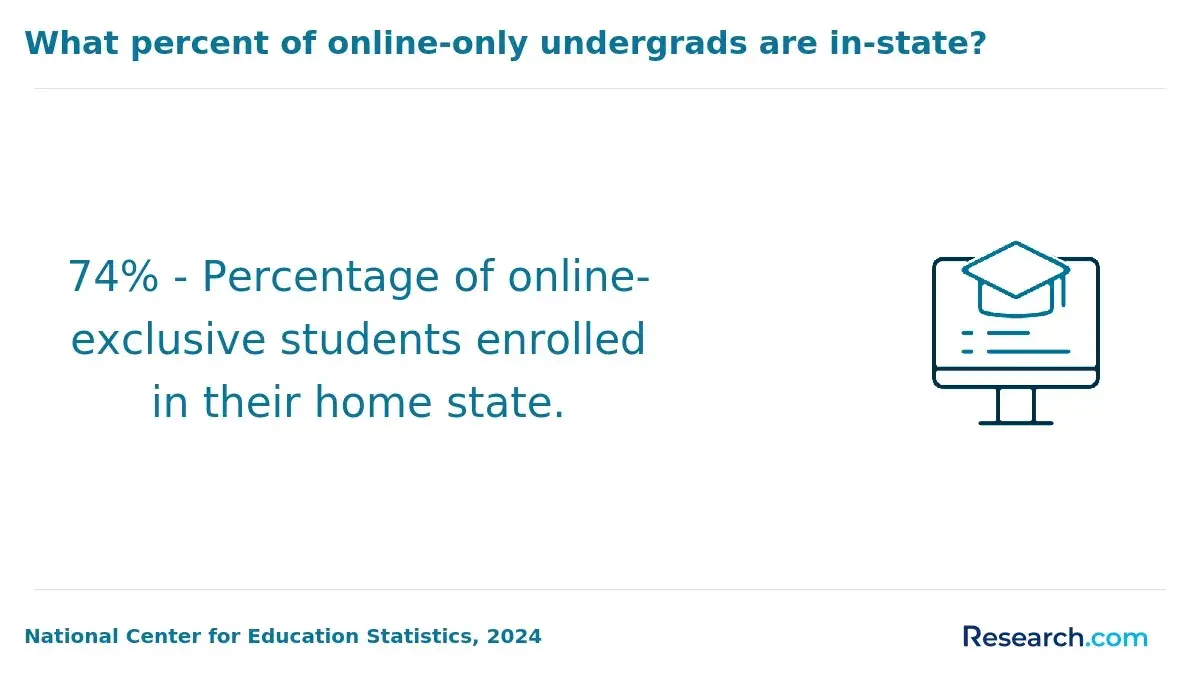
Per-credit pricing directly determines whether an online health informatics master's can remain under $20,000. Divide your available tuition-and-fee budget by the required credits only after reserving money for mandatory fees. For example, a 36-credit degree with no required fees must cost less than about $556 per credit to remain below $20,000; any mandatory fee lowers that workable rate.
The comparison below shows why credit count matters as much as the advertised rate.
| Required credits | Maximum average tuition per credit before fees | Planning implication |
| 30 | $667 | There is more room for required fees, but verify that the curriculum meets your goals. |
| 33 | $606 | Moderate per-credit pricing can still fit if fees are limited. |
| 36 | $556 | Recurring fees can quickly eliminate the remaining margin. |
| 42 | $476 | A low listed rate is essential; compare required prerequisites and concentrations. |
Do not assume a lower per-credit rate always means a lower total. One program may require additional foundation courses, a capstone sequence, or prerequisites that another program incorporates into fewer credits. Ask whether prerequisite courses are required before admission, whether they are graduate-level charges, and whether prior coursework can satisfy them.
For students considering pharmacy informatics or medication-data roles, an online pharmacist degree follows a separate professional pathway and usually has a very different cost structure from a health informatics master's degree.
How Long Does It Take to Complete an Online Health Informatics Master's Degree Under $20,000?
Many online health informatics master's programs are designed for part-time professionals and can take about 18 months to three years, depending on credit load, course sequencing, transfer credits, and capstone requirements. Accelerated options may finish sooner, but faster completion does not necessarily reduce tuition if the program charges by credit.
Format affects both scheduling and indirect costs. Asynchronous courses suit students who need to study around shifts, while synchronous classes provide live interaction but may conflict with clinical or administrative work schedules. Hybrid programs can offer valuable networking or hands-on experiences, but required visits may add travel and lodging expenses.
Before enrolling, request a term-by-term plan that identifies prerequisite courses, the frequency of electives, capstone timing, and any required practicum. A program advertised as "online" may still have an on-campus orientation, residency, or placement expectation. Delays caused by missed sequential courses can increase fees and postpone career benefits.
Students moving from bedside practice into advanced nursing roles should distinguish an informatics degree from ADN to NP programs online; nurse practitioner preparation includes clinical and licensure-focused requirements that health informatics programs generally do not provide.
How Can Students Verify Accreditation for an Online Health Informatics Master's Degree Under $20,000?
Verify both institutional accreditation and, where applicable, programmatic recognition before treating a low-cost degree as a strong value. Institutional accreditation indicates that the college or university meets recognized quality standards and is especially important for federal aid eligibility, employer confidence, and future doctoral study.
Health informatics programs may also align with discipline-specific expectations, but programmatic accreditation is not universal and is not required for every health informatics career. The important question is whether the curriculum supports your intended role, such as clinical data analyst, health information manager, informatics specialist, implementation analyst, or healthcare quality analyst.
Use these checks before paying an application fee:
- Find the institution's accreditor on the school's official accreditation page and confirm the status through the accreditor's directory.
- Read the curriculum for healthcare data standards, privacy and security, analytics, database concepts, workflow, and project management.
- Ask whether a practicum, capstone, or applied project is required and how online students receive support.
- Confirm whether the degree is designed to prepare students for any certification you intend to pursue; certification eligibility is set by the certifying body, not assumed from the degree title.
- Check whether your employer, state agency, or target job postings require a particular degree type, certification, or healthcare background.
A red flag is a school that makes broad career claims but does not clearly identify its accreditation, required curriculum, faculty credentials, or student support. Accreditation alone does not guarantee job placement, but it is a basic screening step before choosing based on price.
Do Out-Of-State Students Pay More for an Online Health Informatics Master's Degree Under $20,000?
Out-of-state students may pay more at public universities, but many online graduate programs use one nationwide rate or a separate online rate. Never assume that "online" means in-state tuition applies. Residency rules, military benefits, employer partnerships, and state authorization can all affect eligibility and cost.
Request a personalized estimate that states your residency classification and confirms whether the rate applies for the entire degree. If a school charges different resident and nonresident rates, calculate both tuition and fees rather than comparing only the lower resident figure. Also verify that the institution is authorized to enroll students who live in your state.
Healthcare workers seeking a route into registered nursing should note that online RN programs for non nurses in florida involve state-specific clinical placement and licensure considerations that differ substantially from an online, non-licensure informatics master's program.
Can Transfer Credits Keep the Total Cost of an Online Health Informatics Master's Degree Under $20,000?
Transfer credits can reduce total tuition only when the receiving institution accepts them, applies them to required degree credits, and permits enough transfer work to make a meaningful difference. Graduate transfer policies often limit the number of credits, require recent coursework, set minimum grade standards, and evaluate equivalency course by course.
Students should request a transfer evaluation before relying on a low estimated total. A course that appears similar in title may not replace a required informatics, analytics, database, or healthcare systems course. Some programs accept transfer credit but still require a minimum number of credits completed at the institution, limiting potential savings.
Compare the cost of sending official transcripts and completing any bridge coursework against the tuition saved. Transfer credit makes the most sense for students with relevant graduate coursework that clearly maps to the target curriculum. It is less useful when the prior course is outdated or when a school's specialized concentration requires its own sequence.
Can Financial Aid Bring the Cost of an Online Health Informatics Master's Degree Below $20,000?
Financial aid can reduce what you pay out of pocket, but it does not change the published tuition and mandatory-fee total. Eligible graduate students may use federal student loans, and some may qualify for employer tuition assistance, institutional scholarships, military education benefits, or workforce funding. Terms, eligibility, and award amounts vary.
Start with the Free Application for Federal Student Aid, then ask the financial aid office whether online graduate students are eligible for institutional scholarships and whether enrollment intensity changes eligibility. Employer support can be particularly relevant in healthcare systems that need staff with electronic health record, quality-improvement, privacy, and analytics skills.
Compare aid offers by separating grants and scholarships from loans. Loans may make enrollment possible, but borrowing increases the degree's long-term cost through interest. A useful budget includes tuition and required fees, expected aid that does not need repayment, the amount you must pay from income or savings, and the amount you would borrow.
Applicants weighing several healthcare education paths can also review nursing schools that don't require TEAS if admissions testing is a barrier, though nursing education has separate clinical, approval, and licensure requirements.
Is an Online Health Informatics Master's Degree Under $20,000 Worth the Cost for Career Advancement?
An online health informatics master's under $20,000 can be worthwhile when it builds skills required for your target role and does not require unsustainable borrowing. Health informatics sits at the intersection of clinical operations, data management, technology, privacy, and quality improvement. Common roles include informatics specialist, clinical systems analyst, health data analyst, implementation specialist, and health information manager.
Labor-market data supports careful consideration rather than an automatic return-on-investment conclusion. The U.S. Bureau of Labor Statistics reports a 2023 median annual wage of $62,990 for health information technologists and medical registrars and projects 16% employment growth from 2023 to 2033. That occupation is a useful reference point, but pay varies by location, experience, employer, job duties, certifications, and whether an employer requires a graduate degree.
A lower-cost program often makes sense for an experienced clinician, health information professional, or operations employee who needs formal informatics knowledge for an internal transition. A more expensive program may be justified when it offers a specialized concentration, stronger applied analytics training, employer relationships, a structured practicum, or schedule flexibility that prevents reduced work hours.
Review actual job postings in your target market before enrolling. Identify the recurring tools and skills requested, such as electronic health record workflow, SQL, data visualization, interoperability, privacy, project management, or quality reporting. Then test whether the program's required courses, not just its marketing language, teach those competencies.
How Should Students Choose the Best-Value Flat-Rate Online Health Informatics Master's Program?
The best-value flat-rate online health informatics master's program is not automatically the lowest sticker-price option. A flat program price can simplify budgeting, especially when a student needs a predictable number of terms, but confirm what happens if you take longer than planned or need to repeat a course.
Use this comparison process to make a final decision:
- Set a hard ceiling of $20,000 for tuition and mandatory fees, then reserve a separate amount for books, equipment, and possible travel.
- Obtain the current written tuition schedule, fee schedule, required credit count, and estimated completion plan for every program under consideration.
- Calculate a comparable total for each school using the same assumptions about residency, transfer credits, and pace of study.
- Compare required courses, concentration choices, capstone expectations, faculty access, career support, and online delivery format.
- Verify institutional accreditation, state authorization, admissions prerequisites, and any certification alignment relevant to your goal.
- Choose the option with the strongest career fit that remains financially manageable without relying on uncertain aid or unrealistic completion assumptions.
Common mistakes include treating a flat tuition figure as inclusive of all fees, overlooking required campus visits, and choosing a program solely because it is cheaper. The most durable value comes from a program whose curriculum fits the work you want to do, whose schedule you can complete, and whose all-in cost you can verify before enrollment.
Other Things You Should Know About Health Informatics
Health informatics focuses broadly on using data, technology, systems, and workflows to improve healthcare delivery. Health information management often emphasizes the governance, quality, privacy, coding, and lifecycle of health records. Programs can overlap, so compare required courses rather than relying on the degree title alone.
Not always. Many programs admit applicants from healthcare, information technology, business, public health, or related fields. Students without healthcare experience may need prerequisites or may benefit from courses in medical terminology, healthcare systems, and privacy rules.
Useful curricula commonly include healthcare information systems, data analytics, database concepts, interoperability, privacy and security, workflow analysis, quality improvement, and project management. The best skill mix depends on whether you want clinical, technical, operational, or data-focused work.
No. A health informatics master's is generally a non-licensure graduate degree. It does not qualify someone for professional clinical licensure such as nursing, pharmacy, or medicine, although licensed clinicians may use informatics education to move into technology and leadership roles.
References
- Admissions | MS Health Informatics https://professionaladvancement.mercer.edu/academic-programs/graduate-and-professional/health-informatics/admissions/
- M.S. in Health Informatics https://financialaid.mercer.edu/cost-of-attendance/graduate-and-professional/college-of-professional-advancement/m-s-in-health-informatics/
- Tuition Stability Plan https://www.universityofcalifornia.edu/press-room/tuition-stability-plan
- The Effects of Rising Student Costs in Higher Education - Ithaka S+R https://sr.ithaka.org/publications/the-effects-of-rising-student-costs-in-higher-education/
- Hidden College Costs: What Families Miss Every Year https://www.collegeflightpath.com/cfp-blog/hidden-college-costs-and-how-to-manage-them
- Do College Career Development Programs Help Students Get Jobs? https://www.scholaro.com/db/News/do-college-career-development-programs-help-263
- Job Placement After Graduation https://www.usfhealthonline.com/resources/career/employment-opportunities-for-unemployed-recent-college-graduates/
- Master's in Health Informatics https://nursinglicensemap.com/resources/healthcare-degree-programs/masters-in-health-informatics/
- Job placement services and supports https://catalog.results4america.org/strategies/job-placement
- How to Plan a College Budget Beyond Tuition https://cbrg.info/college-budget-beyond-tuition/