2027 Online Geographic Information Systems Degree Programs With No Personal Statement or Admissions Essay Required

Co-Founder and Chief Data Scientist
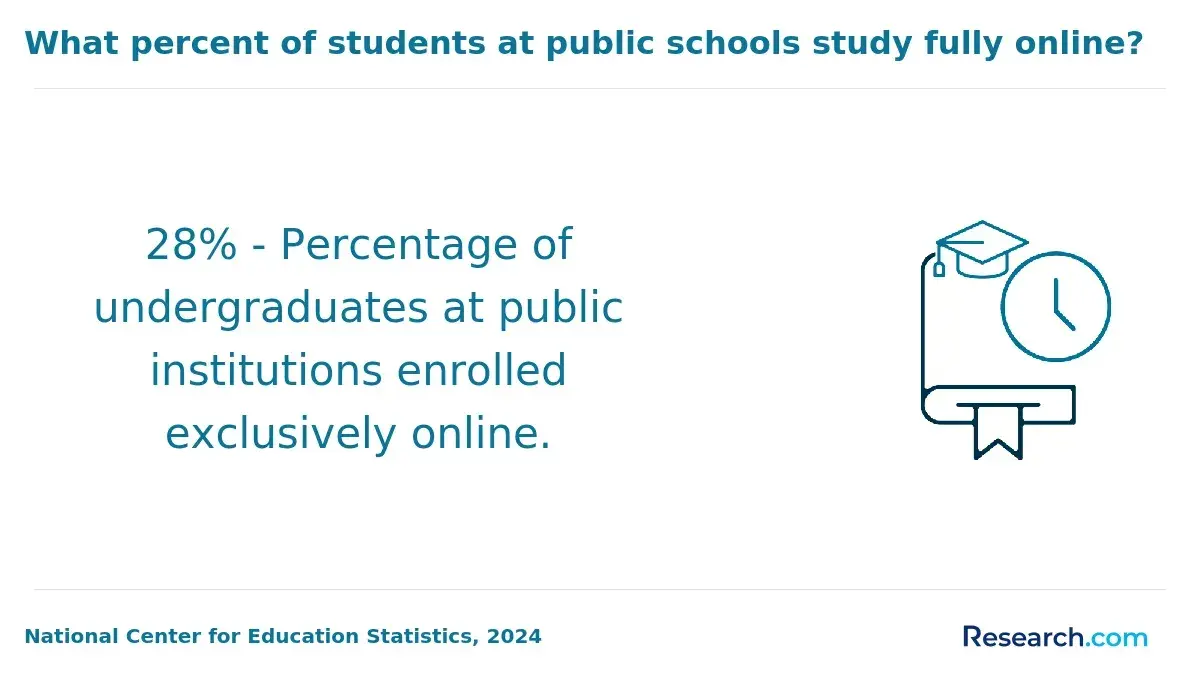
An online GIS degree can be appealing when you want to avoid a lengthy personal statement, but "no essay required" does not eliminate academic screening. The National Center for Education Statistics reported that 53% of postsecondary students took at least one distance-education course in fall 2022, underscoring how common online study has become.
This guide is for applicants seeking a simpler GIS application and explains what schools may require instead, how to confirm the policy, and how to compare program quality, cost, transfer rules, and career value.
Key Things You Should Know
- A true no-essay GIS application does not require a personal statement for standard admission, but schools may still review transcripts, GPA, prerequisite coursework, residency documents, or placement information.
- Essay-optional and essay-waived policies are not identical: an optional essay may strengthen an application, while a waiver can apply only to qualifying applicants; honors, scholarships, and graduate programs may still require writing.
- GIS has measurable labor-market relevance: the U.S. Bureau of Labor Statistics reported a $78,380 median annual wage for cartographers and photogrammetrists in May 2024, but job eligibility depends on skills, portfolio quality, location, and employer requirements rather than admissions simplicity.
What Does No Personal Statement or Admissions Essay Required Mean for Online Geographic Information Systems Degree Programs?
A no-personal-statement or no-admissions-essay policy means the institution does not ask standard applicants to submit a written narrative about their goals, experiences, or fit for the program. In an online GIS degree, the admissions office instead usually relies on objective materials such as prior coursework and academic records.
This policy can apply to an undergraduate certificate, associate degree, bachelor's completion program, master's degree, or graduate certificate. It does not mean every applicant category follows the same process. International applicants, applicants seeking conditional admission, students with unusual academic histories, and applicants to competitive graduate concentrations may face additional documentation requirements.
GIS programs typically combine mapping, spatial analysis, databases, remote sensing, cartography, and software-based problem solving. A streamlined application may reduce writing time, but it should not replace checking whether the curriculum teaches the technical tools and analytical methods relevant to your intended role.
What Admissions Requirements Do Online Geographic Information Systems Degree Programs Use Instead of an Essay?
Without an essay, schools commonly use academic and administrative records to determine readiness. Exact standards vary by degree level, so confirm the requirements for the online program itself rather than assuming the university-wide page applies.
| Requirement | What the school evaluates | Why it matters for GIS applicants |
| Official transcripts | Completed courses, grades, degree conferral, and academic standing | Programs may look for mathematics, geography, computer, statistics, or science preparation. |
| Minimum GPA | Academic performance, often cumulative or from recent coursework | A published minimum is usually an eligibility threshold, not a guarantee of admission. |
| Prerequisites | Required prior courses or equivalent knowledge | Statistics, algebra, programming, or introductory geography may be expected in advanced programs. |
| Resume or work history | Professional background, particularly for adult or graduate applicants | Planning, environmental, survey, IT, public safety, and data roles can provide relevant context. |
| Recommendations or interview | Readiness and professional potential | These are more common in selective graduate admissions than in undergraduate enrollment. |
A test-optional policy concerns standardized test scores, not essays. If a program is both test-optional and no-essay, transcripts and prerequisite grades may carry even more weight. Applicants whose records do not fully show their readiness should ask whether a resume, portfolio, or optional statement can be considered.
Students comparing fields with different admissions conventions can also review online degrees that pay well to keep application convenience separate from long-term career fit.
Who Is a Good Fit for Online Geographic Information Systems Degree Programs With No Admissions Essay?
No-essay online GIS programs can fit applicants with clear academic records who prefer to be evaluated primarily on transcripts and prerequisites. They can be especially practical for working adults, transfer students with substantial credit, military-connected learners, and applicants who need to apply to several schools efficiently.
A simplified process is less useful for applicants who need substantial context to explain a low GPA, a long enrollment gap, a disciplinary record, or a career change. In those situations, an essay-optional program may offer a valuable opportunity to show readiness beyond numerical measures.
Consider a no-essay pathway if these conditions describe you:
- Your transcript already meets the stated GPA and prerequisite requirements.
- You want a career-focused curriculum in mapping, geospatial data, remote sensing, planning, environmental analysis, or location intelligence.
- You can learn independently in an online format and have reliable access to the required computer hardware and GIS software.
- You do not need a written statement to explain circumstances that may affect an admissions decision.
Before choosing solely for admission convenience, compare the degree with your target occupation. GIS technicians, analysts, cartographers, geospatial developers, and planners can require different levels of programming, statistics, fieldwork, domain knowledge, or graduate education.
What Is the Difference Between No-Essay, Essay-Optional, and Essay-Waived Geographic Information Systems Degree Admissions?
Admissions labels can sound similar while producing different application choices. The distinction matters most when your academic record needs explanation or when you want to compete for a selective cohort or scholarship.
| Policy | Meaning for standard admission | Best use case | Important caution |
| No essay required | No personal statement is requested in the regular application. | Applicants with records that clearly meet published requirements. | Separate scholarship, honors, or departmental applications can still require writing. |
| Essay-optional | You may submit an essay, but it is not mandatory. | Applicants who can add useful context, achievements, or career direction. | "Optional" does not always mean it has no effect on a holistic review. |
| Essay-waived | An essay normally exists but is removed for a defined group or term. | Applicants who meet waiver criteria. | Confirm the waiver applies to your degree level, start term, and applicant type. |
| Essay required | A written statement is part of the admissions file. | Applicants seeking programs that evaluate goals and preparation holistically. | Submitting other materials does not substitute for the required statement. |
Read the checklist in the application portal before submitting. A marketing page may advertise "no essay," while a later departmental form requests a goals statement, a writing sample, or an explanation of prerequisites.
If you are considering a graduate path in another field, admissions expectations can differ significantly; for example, CACREP accredited counseling programs may have profession-specific requirements that do not translate to GIS admissions.
Are Online Geographic Information Systems Degree Programs With No Admissions Essay Easier to Get Into?
Not necessarily. Removing an essay reduces one application task; it does not automatically make a program open admission, less selective, or academically easier. A school may still deny admission when an applicant does not meet GPA, prerequisite, degree-completion, or documentation standards.
For GIS, selectivity often depends on program level. Entry-level certificates may focus on basic eligibility, while master's programs may expect a completed bachelor's degree and evidence of quantitative or technical preparation. Limited course seats, cohort structures, transfer-credit rules, and institutional capacity can also affect admission decisions.
The U.S. Bureau of Labor Statistics projects 6% employment growth for cartographers and photogrammetrists from 2023 to 2033. That outlook signals continuing demand for certain geospatial capabilities, but it does not mean every GIS credential has identical employer recognition or outcomes. Compare curriculum depth, hands-on projects, and technical support rather than treating a short application as evidence of lower or higher quality.
A better question than "Is it easier?" is whether the program's entry requirements accurately match your preparation. If you need foundational mathematics or computing support, ask about prerequisite courses, tutoring, and conditional admission before enrolling.
How Can You Verify Accreditation and Quality in No-Essay Online Geographic Information Systems Degree Programs?
Start by verifying that the institution holds institutional accreditation recognized by the U.S. Department of Education or the Council for Higher Education Accreditation. Institutional accreditation is important for federal aid eligibility, credit transfer discussions, and employer confidence, although it does not by itself prove that a GIS curriculum is strong.
Then evaluate evidence specific to geospatial education. A quality online GIS program should identify its faculty, course sequence, learning platform, software access, project expectations, and student-support model. Look for instruction in spatial data management, cartography, coordinate systems, analysis, visualization, and ethical data use, with appropriate electives such as Python, remote sensing, web GIS, or database systems.
Use this verification sequence before applying:
- Find the program's official admissions page and save the requirement list for your intended term.
- Confirm institutional accreditation through the accreditor or federal accreditation directory.
- Review required courses, software licenses, live-session expectations, and any residency or field components.
- Ask whether students complete portfolio-ready projects using current GIS tools and real spatial datasets.
- Request the total estimated cost, including technology, proctoring, software, and graduation fees.
Do not confuse a streamlined application with professional accreditation. GIS is generally not governed by one universal programmatic accreditor or a single nationwide license requirement; employers may instead assess coursework, software competence, domain experience, and work samples.
For comparison, accreditation can be much more tightly connected to professional preparation in fields such as cheap online masters in counseling, which is why field-specific standards should always be checked independently.
How Does the Application Process Work for Online Geographic Information Systems Degree Programs With No Personal Statement?
The application is usually shorter because it omits the personal narrative, but it still requires careful document matching. Apply early enough to resolve transcript delays, prerequisite questions, financial-aid verification, and transfer evaluations before the term begins.
A typical process follows these steps:
- Select the exact online GIS degree, certificate, or concentration and confirm its start date and applicant category.
- Create the institution's application account and review the program-specific checklist.
- Submit the application and request official transcripts from every required prior institution.
- Provide any required residency, identity, military-benefit, or international documentation.
- Send supplemental materials only if requested, such as a resume, course descriptions, recommendations, or prerequisite verification.
- Review the admission decision, transfer-credit evaluation, financial-aid offer, and enrollment conditions before accepting.
Keep copies of confirmation emails and uploaded documents. A common mistake is assuming that an application is complete when the form is submitted; many schools do not review it until official transcripts arrive.
Applicants interested in leadership-oriented study beyond GIS may find that doctoral admissions are more writing-intensive; an online PhD leadership option may require materials that are not part of a no-essay undergraduate GIS application.
Can Transfer and Adult Students Apply to Online Geographic Information Systems Degree Programs Without an Essay?
Yes, many online GIS programs allow transfer and adult applicants to apply without a personal statement, but their review often includes additional academic details. Transfer admission is generally based on official transcripts, transferable-credit rules, minimum grades, and whether prior courses meet general education or GIS prerequisite requirements.
Adult learners may benefit from flexible schedules and asynchronous coursework, yet they should verify whether the program is designed for beginners or assumes prior technical knowledge. Work experience can be relevant, but it does not always replace a required statistics, programming, or geography course.
Before applying as a transfer or adult student, ask the admissions office:
- How many credits can transfer, and what minimum grade is required?
- Will prior GIS, surveying, computer science, environmental science, or planning coursework satisfy prerequisites?
- Is a course syllabus needed for transfer-credit review?
- Can professional training or military experience receive credit, and is there a separate evaluation fee?
- Does the no-essay policy apply to readmission, transfer, and degree-completion applicants?
Do not withdraw from a current institution until you receive a written transfer evaluation and understand how remaining credits affect completion time. An apparently faster application can become more expensive if fewer credits transfer than expected.
Do No-Essay Online Geographic Information Systems Degree Programs Affect Tuition, Financial Aid, or Scholarships?
No-essay admission usually does not determine tuition. Price is set by factors such as residency, degree level, credit load, course fees, institutional aid policy, and whether online students pay separate technology or distance-learning charges. Compare the total program cost rather than only the advertised per-credit rate.
Federal financial aid eligibility is generally based on completing the Free Application for Federal Student Aid, enrollment status, satisfactory academic progress, and program eligibility - not on whether the admissions application included an essay. Institutional grants may use separate forms and deadlines.
Scholarships are the major exception. A college may admit you without an essay but require a short statement for merit awards, donor scholarships, honors programs, research opportunities, or leadership funding. Missing that separate deadline can reduce your funding options even after admission.
Review these cost factors side by side before choosing:
| Cost factor | What to confirm | Potential decision impact |
| Tuition rate | Per-credit price and resident versus nonresident treatment | Online status does not always create a single nationwide rate. |
| Required fees | Technology, proctoring, lab, software, and graduation charges | Fees can materially change the total beyond tuition. |
| Transfer credit | Accepted credits and remaining credits required | More accepted applicable credit can reduce time and cost. |
| Financial aid | FAFSA deadlines, eligibility, and enrollment requirements | A lower sticker price is not always the lower net price. |
| Scholarships | Separate application, essay, recommendation, and deadline rules | Essay-free admission does not mean essay-free funding applications. |
Students who are comparing career-oriented online credentials may also consider an accelerated online finance degree, but should evaluate each field's curriculum, costs, and job targets independently.
How Should You Compare Online Geographic Information Systems Degree Programs With No Admissions Essay?
Use admission simplicity as one filter, not the deciding factor. The strongest option is the one whose entry requirements, curriculum, schedule, total cost, and career alignment fit your circumstances.
Compare finalists using the same questions so that marketing language does not obscure meaningful differences:
- Is the no-essay policy explicitly listed for my degree level, start term, and applicant type?
- What GPA, transcript, prerequisite, test-score, recommendation, and resume requirements remain?
- Is the institution appropriately accredited, and is the online GIS curriculum clearly described?
- Which GIS platforms, programming languages, databases, remote-sensing tools, and portfolio projects are included?
- Are courses asynchronous, scheduled live, accelerated, or offered in a sequence that fits my work obligations?
- What is the total estimated cost after transfer credit, fees, aid, and likely software expenses?
- What career services, internship support, faculty access, tutoring, and technical support are available to online students?
Red flags include vague accreditation claims, missing total-cost information, unclear software access, no published transfer policy, or an admissions representative who cannot confirm whether an essay is required for your category. Ask for answers in writing and retain them with your application records.
A no-essay GIS pathway is a sound choice when it saves time without forcing you to compromise on academic preparation or career relevance. Choose an essay-optional or essay-required program instead when a written statement would meaningfully explain your strengths, demonstrate your goals, or improve access to competitive funding.
Other Things You Should Know About Geographic Information Systems
Not always. The policy may apply only to domestic first-time undergraduate applicants, a specific online program, or a particular term. Transfer, international, graduate, readmission, and conditional-admission applicants may have different requirements.
Yes. A school may request an explanation of academic history, a prerequisite petition, a statement for conditional admission, or a writing sample for a specialized track. Check both the general application and department-level instructions.
They may. Admission and scholarship processes are often separate. Merit, donor, honors, and leadership scholarships can require essays, recommendations, or additional applications even when regular admission does not.
Many entry-level GIS programs do not require one. A portfolio can still help demonstrate mapping, analysis, programming, or data-visualization work, particularly for graduate admission, internships, and job searches.
References
- Geographic Information Systems - Lassen College https://www.lassencollege.edu/academics/programs/geographic-information-systems/
- AI & College Application Essays: Dos, Don'ts & What Colleges Check - JRA Educational Consulting https://www.jraeducationalconsulting.com/blog/ai-and-college-application-essays-understanding-the-dos-and-donts
- Do Colleges Check Essays for AI? Understanding the Detection Process https://pioneeracademics.com/news/ai-era-application-process-tips/
- College Applications Without Essays: Do They Exist? https://collegewise.com/blog/college-application-without-essay
- GIS Degrees vs. Certificates | Choose the Right Path for You https://bootcampgis.com/comparing-gis-degrees-to-gis-certificates/
- Admission Essay vs Personal Statement | What's the Difference? https://www.proof-reading.com/resources/admission-essay-vs-personal-statement
- Navigating College Applications with AI: What Colleges Say + CEG's Advice to Students and Counselors https://www.collegeessayguy.com/blog/navigating-college-apps-with-ai
- 2025 Best Online GIS Degrees https://www.onlineu.com/degrees/geographic-information-systems