
2027 Online Gender & Sexuality Studies Master's Programs With University Scholarships: Awards, Eligibility & Tuition After Aid

Co-Founder and Chief Data Scientist
Scholarship terms can determine whether an online Gender & Sexuality Studies master's is manageable without excessive borrowing. University aid may include merit awards, need-based grants, departmental scholarships, assistantships, and employer benefits, but online eligibility varies by school.
NCES reported average graduate tuition and fees of $12,596 at public institutions in 2022-23, making a clear aid comparison essential. This guide is for prospective and current students who want to compare funding, confirm eligibility, estimate net cost, and build a stronger scholarship plan.
Key Things to Know About Gender & Sexuality Studies Master's Programs with Scholarships
- Online Gender & Sexuality Studies master's students may be considered for institutional scholarships, but some awards require campus residency, full-time enrollment, or participation in an in-person department activity.
- NCES reported average graduate tuition and fees of $12,596 at public institutions in 2022-23; compare each school's total program tuition, mandatory fees, and realistic renewable aid rather than its advertised per-credit rate alone.
- Federal Direct Unsubsidized Loans can provide up to $20,500 per academic year for eligible graduate students, but scholarships and grants reduce the amount that must be repaid and should be pursued first.
What online Gender & Sexuality Studies master's programs offer university scholarships?
A small number of universities offer online or substantially online graduate programs focused on gender, women's, sexuality, queer, or intersectional studies. Scholarship availability is usually administered at the university, graduate-school, college, or department level rather than attached automatically to the academic program.
The options below are useful starting points, but applicants should confirm the current delivery format and whether distance students are eligible before treating any scholarship as part of their budget. Award names, deadlines, and online-student rules can change from one admission cycle to the next.
| University and program example | Online availability to verify | University funding path to investigate | Best question for financial aid |
| Arizona State University, Master of Arts in Gender, Women and Sexuality Studies | ASU Online program availability may vary by curriculum and admission term | Graduate scholarships, college awards, external scholarship matching, employer support | Which institutional awards are open to fully online graduate students in this program? |
| University of Wyoming, Master of Arts in Gender and Women's Studies | Online or distance-study options should be confirmed with the department | Graduate School scholarships, department funding, limited assistantship opportunities | Can distance students receive department scholarships or assistantships? |
| University of Louisville, graduate study in Women's, Gender and Sexuality Studies | Course modality and online completion options should be confirmed | Graduate School aid, college scholarships, veteran and employer benefits | Is scholarship eligibility affected by part-time or online enrollment? |
Choose a program only after comparing its written aid terms with your intended enrollment pattern. A school with a slightly higher tuition rate can be less expensive if it offers renewable institutional grants that apply to online coursework; conversely, a low posted tuition rate may not help if its aid excludes remote students.
Applicants considering adjacent helping-profession pathways may also compare the cheapest online master's in social work options when their career goal requires clinical, community-service, or policy practice preparation rather than an interdisciplinary studies credential.
What is the average tuition for Gender & Sexuality Studies master's programs before aid?
There is no single national tuition average specific to Gender & Sexuality Studies master's programs because programs may be housed in humanities, social science, liberal arts, or interdisciplinary studies colleges. The most reliable benchmark is graduate tuition overall: NCES reported average tuition and required fees of $12,596 at public institutions for 2022-23. This is a comparison point, not a projected price for any particular program.
Calculate the full pre-aid price using the school's published required credits and current rate, then add mandatory distance-learning, technology, student-service, graduation, and course-material charges. Public universities may charge different rates for residents and nonresidents, while online programs may use a separate universal rate.
| Cost item | How to estimate it | Why it matters after aid |
| Tuition | Required program credits multiplied by the applicable per-credit rate | Most institutional scholarships apply here first |
| Mandatory fees | Multiply per-term fees by expected terms and add one-time charges | Some scholarships do not cover these charges |
| Books and course materials | Use the institution's cost-of-attendance estimate | Usually remain an out-of-pocket cost |
| Living costs | Use your own budget and the school's attendance estimate | May determine whether loans or employer aid are needed |
For an estimated net tuition figure, subtract only scholarships and grants that are confirmed in writing and renewable under your enrollment plan. Do not subtract loans, anticipated outside awards, or assistantship pay until the school confirms how each item will be applied.
If you are weighing a shorter credential before committing to graduate school, review short certificate programs that pay well online as a separate, lower-commitment route for building skills or testing a career direction.
What types of financial aid and scholarships are available for Gender & Sexuality Studies master's programs?
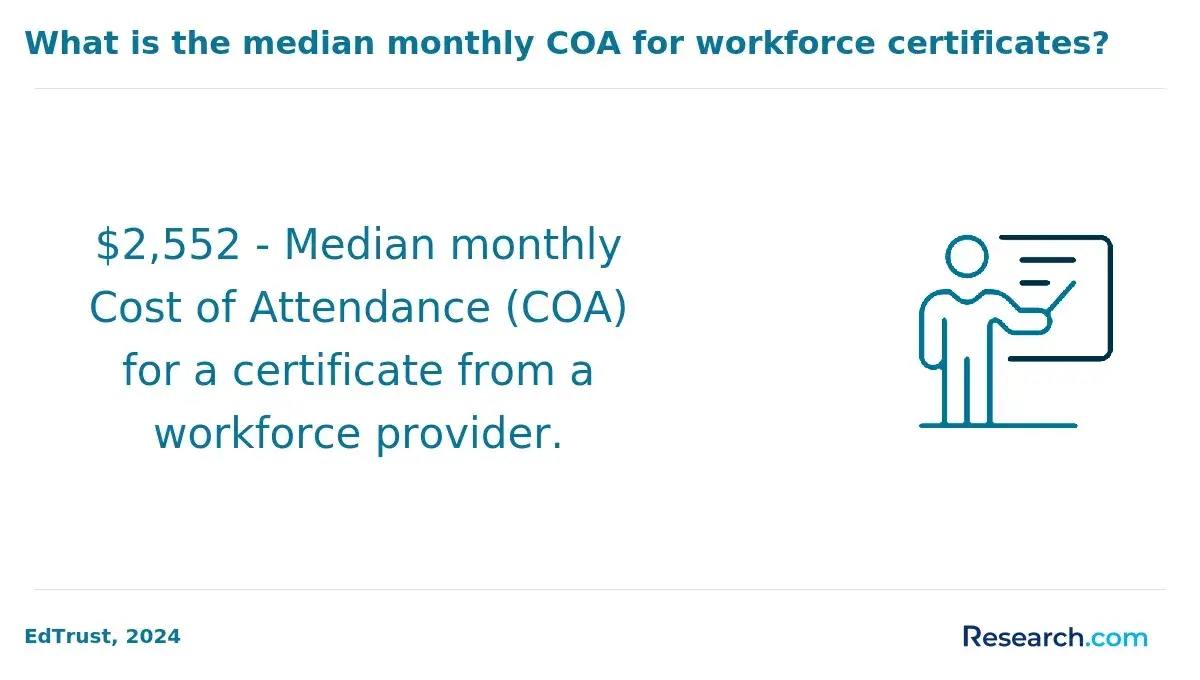
Financial aid is broader than a university scholarship. Scholarships and grants generally do not require repayment, while loans do. Assistantships may combine a stipend, tuition benefit, and work obligation, but they are often less available to fully online students because the work may require campus presence.
The following categories help applicants prioritize funding sources based on their circumstances rather than applying only for a single departmental award.
| Aid type | Typical basis | Repayment or work requirement | When it makes sense |
| University merit scholarship | Academic record, leadership, professional achievement, or admission application | No repayment; renewal conditions may apply | Strong applicants seeking predictable tuition reduction |
| Need-based institutional grant | Demonstrated financial need, often through FAFSA or an institutional form | No repayment | Students with documented financial need who meet citizenship or institutional requirements |
| Department scholarship | Academic fit, research interests, service, or identity-focused advocacy | No repayment; may require an essay or recommendation | Applicants with a clear connection to Gender & Sexuality Studies |
| Graduate assistantship | Academic qualifications and department staffing needs | Work hours required; may include tuition support | Students able to meet schedule and location expectations |
| Federal Direct Unsubsidized Loan | FAFSA eligibility and enrollment | Must be repaid with interest | Funding gap after scholarships, grants, and savings |
| Employer tuition assistance | Employer policy and job relevance | Possible continued-employment or repayment agreement | Working professionals whose employer supports relevant education |
Graduate students should not expect Federal Pell Grants, which are generally limited to eligible undergraduate study. Complete the FAFSA anyway: many schools use it to assess need-based institutional assistance and federal loan eligibility.
Students seeking licensure-oriented mental-health preparation should separately assess accredited counseling programs, because an interdisciplinary Gender & Sexuality Studies degree does not by itself establish counseling licensure eligibility.
How much do Gender & Sexuality Studies master's scholarships typically cover?
Scholarship coverage ranges from a modest one-time credit to a full tuition award, but full funding is uncommon and should never be assumed. A scholarship's value depends on its amount, duration, renewability, enrollment rules, and whether it applies to tuition only or also offsets fees.
Use this comparison to interpret an award letter beyond the headline amount.
| Coverage pattern | What it may reduce | Key trade-off |
| One-time fixed award | A single term or academic year of tuition | Helpful for the first bill but may leave later terms unfunded |
| Renewable annual scholarship | Tuition across multiple years if conditions are met | More valuable for long programs, but GPA and enrollment conditions matter |
| Tuition-only scholarship | Posted instructional tuition | Fees, books, and living expenses may remain |
| Assistantship tuition benefit | Partial or substantial tuition, depending on the appointment | Requires work and may be unavailable remotely |
| Full cost-of-attendance package | Potentially tuition plus approved educational costs | Highly competitive and governed by detailed terms |
Compare awards using a total-program view. For example, a smaller renewable scholarship can be financially stronger than a larger first-year award if the program takes more than one year. Ask the financial aid office whether the award is divided by term, whether it can be used in summer, and whether a reduced course load changes the amount.
Federal Direct Unsubsidized Loans have an annual maximum of $20,500 for eligible graduate students. That ceiling can help cover a gap, but it is borrowing rather than a discount; use it as a financing tool after evaluating grants, scholarships, employer support, and personal savings.
Who is eligible for Gender & Sexuality Studies master's scholarships?
Eligibility depends on the award, not simply on admission to an online master's program. Merit scholarships commonly emphasize academic performance or professional achievement; need-based grants commonly require financial information; department awards may prioritize demonstrated engagement with gender, sexuality, equity, advocacy, research, or community work.
Before spending time on an application, check these common eligibility variables against the scholarship's official terms.
- Degree status: confirm that graduate, master's, and nondegree categories are treated differently where applicable.
- Modality: verify that fully online students are included rather than only hybrid or campus-based students.
- Enrollment intensity: identify whether the award requires full-time enrollment, a minimum credit load, or continuous enrollment.
- Academic standing: check the required cumulative GPA, satisfactory academic progress standard, and any admission GPA threshold.
- Residency and citizenship: determine whether the award is limited to state residents, domestic students, or specific visa categories.
- Program affiliation: confirm that the Gender & Sexuality Studies curriculum is an eligible major or department.
- Service or identity criteria: read these requirements carefully and apply only when you can document eligibility accurately.
Online students with strong academic records and a clear professional or research purpose should actively pursue university scholarships. Students enrolled part time, studying from outside the institution's state, or unable to satisfy campus-work obligations may need a funding plan centered on employer reimbursement, federal loans, savings, payment plans, and external awards.
Prior undergraduate preparation can support an application narrative. Applicants who developed quantitative research skills through an online bachelor in mathematics, for example, can explain how those skills support policy analysis, survey research, or social-science inquiry.
What is the application process for Gender & Sexuality Studies master's scholarships?
The strongest scholarship process begins before admission deadlines because institutional awards may have earlier priority dates than the program application. Treat scholarship applications as separate requirements unless the university explicitly states that applicants are automatically considered.
Use the following sequence to avoid the most common timing and documentation mistakes.
- Build a comparison sheet for each program with tuition, required credits, scholarship deadline, online eligibility, renewal rule, and financial aid contact.
- Submit the admission application early enough for scholarship review, including transcripts and any required writing sample.
- Complete the FAFSA when eligible and when the university requests it for need-based consideration.
- Prepare a focused statement connecting your academic interests, professional goals, community engagement, and the program's curriculum.
- Request recommendations from people who can provide specific evidence of academic ability, research potential, leadership, or relevant service.
- Upload documents before the scholarship deadline and retain confirmation records.
- Compare written aid offers by total renewable value, uncovered fees, enrollment conditions, and loan need.
- Ask for reconsideration only when you have new, documented information, such as a changed financial circumstance or a competing written offer.
Typical required materials include an admission application, transcripts, résumé, personal statement, recommendation letters, FAFSA information when need is considered, and proof of eligibility for identity-, residency-, or service-based awards. Avoid reusing a generic essay without explaining why your goals fit the particular university and program.
Working applicants should ask human resources about tuition assistance before accepting enrollment. Employer reimbursement can be especially useful when a degree supports workplace equity, training, nonprofit leadership, research, policy, or student-services responsibilities.
Do online Gender & Sexuality Studies students qualify for the same aid as on-campus students?
Online students can often receive federal student aid and some university scholarships when they are enrolled in an eligible degree program, but they should not assume parity with campus-based students. Federal aid eligibility is generally tied to the institution and eligible program rather than course location; institutional aid can use narrower rules.
The most important distinction is between aid that follows enrollment and aid tied to campus participation. Merit awards may be open to online students, while assistantships, residence-based grants, student-activity scholarships, and department positions may require physical presence or a particular campus affiliation.
| Funding source | Online student likelihood | What to confirm |
| Federal Direct Loans | Often available for eligible online degree students | Program eligibility, enrollment level, FAFSA requirements, and borrowing limits |
| University merit scholarship | Varies by institution | Whether distance learners are included in the award definition |
| Need-based institutional grant | Varies by institution | FAFSA requirement, residency rules, and online exclusions |
| Graduate assistantship | Often limited for fully online students | Work location, hours, appointment type, and tuition-benefit terms |
| Employer tuition assistance | Often independent of delivery format | Employer approval, grade requirements, and repayment obligations |
Ask one direct question in writing: "As a fully online student in this specific master's program and enrollment status, which institutional scholarships, grants, and assistantships can I receive?" A program coordinator can explain academics, but the financial aid office should confirm award eligibility and disbursement rules.
Can Gender & Sexuality Studies master's students combine multiple scholarships and grants?
Gender & Sexuality Studies master's students can often combine multiple scholarships and grants, but stacking is controlled by institutional policy and the student's cost of attendance. A university may reduce one award after another source is posted, restrict use to tuition, or prohibit combining certain institutional awards.
Combining smaller awards can be a sound strategy because it reduces reliance on loans and creates a backup if one scholarship is nonrenewable. However, evaluate the package as a whole rather than adding award amounts without checking the terms.
| Potential advantage | Potential limitation | How to manage it |
| Several awards may cover more tuition than one small scholarship | A school may cap total institutional aid | Request the written stacking policy before committing |
| External scholarships can reduce borrowing | They may trigger an aid-package adjustment | Report outside awards promptly and ask what will change |
| Employer support can supplement university aid | Reimbursement may arrive after you pay tuition | Plan cash flow and ask about payment-plan options |
| A renewable award improves multiyear planning | It may be lost if enrollment or GPA changes | Build a backup budget for the renewal risk |
Do not conceal outside scholarships. Schools are required to keep total aid within applicable limits, and reporting funds early gives the aid office time to explain whether loans, work-study, grants, or institutional awards will be adjusted.
Career changers comparing funding across fields may find that construction management degrees have different employer-support and labor-market considerations; compare the actual cost, aid terms, and career fit rather than assuming one field is automatically a better financial choice.
What are the requirements to maintain scholarship status in Gender & Sexuality Studies master's programs?
Most renewable scholarships require satisfactory academic progress, continued enrollment in an eligible program, and compliance with university conduct and financial-aid policies. The exact GPA, credit-load, and renewal-review schedule are set by the institution, so the award letter and scholarship agreement control.
Protect a renewable award by monitoring these requirements throughout each term.
- Maintain the stated cumulative GPA and complete enough credits to remain in satisfactory academic progress.
- Stay enrolled in the required program, campus designation, and delivery mode if the award is restricted to them.
- Meet minimum enrollment requirements before dropping, withdrawing from, or taking an incomplete in a course.
- Complete renewal forms, FAFSA updates, progress reports, or donor acknowledgments by their deadlines.
- Report changes in outside scholarships, employer reimbursement, residency, or financial circumstances when required.
- Contact financial aid before taking a leave of absence, changing programs, or reducing your course load.
A common mistake is treating the first disbursement as a guarantee of future funding. Before enrolling, ask whether the scholarship is automatically renewed, reviewed annually, limited to a fixed number of terms, or subject to available funds. Also ask whether an appeal is available if illness, caregiving, or another documented circumstance affects academic progress.
What tips can help Gender & Sexuality Studies master's students secure more scholarship funding?
A competitive scholarship application makes a specific case for why your preparation and goals fit the program, rather than relying on broad statements about interest in equity or social change. Applicants can improve both their odds and their financial planning by applying strategically across university, department, employer, and external funding sources.
The following practices are especially useful for online master's applicants who may have fewer campus-based funding options.
- Apply by priority deadlines, which may occur before the final admission deadline.
- Target awards whose eligibility language clearly includes graduate, online, part-time, or your residency category.
- Use a tailored statement that connects your background to a defined research, policy, education, nonprofit, advocacy, or workplace goal.
- Ask recommenders early and provide them with your résumé, program description, and scholarship criteria.
- Calculate total program cost after confirmed renewable aid, including fees and likely annual tuition changes.
- Request a written explanation of whether awards stack and what happens if outside funding arrives.
- Ask your employer about reimbursement, paid professional development, and any required service commitment before borrowing.
- Keep a deadline calendar and save copies of submitted applications, award letters, and renewal conditions.
Prioritize a school that provides the clearest written net-cost picture and funding rules, not merely the largest first-term discount. If two programs offer similar academic fit, the better choice is usually the one with renewable aid, transparent online eligibility, manageable fees, and a realistic schedule for maintaining academic progress.
Other Things You Should Know About Gender & Sexuality Studies
Scholarship funds used for qualified tuition and required course materials may be treated differently from funds used for living expenses, travel, or other nonqualified costs. Tax treatment depends on the student's circumstances, so keep award records and consult a qualified tax professional or IRS guidance.
Sometimes. Federal aid may be available to eligible online degree students regardless of location, but institutional scholarships can have residency or campus restrictions. Obtain written confirmation from the university before including an award in your budget.
Meet aid deadlines and accept only what you need when bills are due. If later scholarships reduce your costs, ask the financial aid office how to reduce or return unused loan funds within the applicable timeframe.
Some universities offer merit scholarships to international students, but eligibility is institution-specific and federal student aid is generally unavailable to most international students. Review the university's international student funding rules and confirm whether online enrollment is eligible.
References
- About - Master's in Women, Gender, Spirituality, Social Justice | CIIS https://www.ciis.edu/academics/graduate-programs/womens-spirituality/about-the-ma
- Related Resources https://www.hrc.org/resources/scholarships/search/p4
- Scholarships for Women: Online Education Aid https://www.oedb.org/scholarships/women/
- Scholarships and Resources for Transgender and Nonbinary Graduate Students https://www.onlinemastersdegrees.org/financial-aid/scholarships/transgender-student-scholarships-resources/
- 2025 Most Affordable Online Master's Programs https://www.onlineu.com/most-affordable-colleges/masters-degrees
- Fully Funded Master's Programs in Gender Studies | ProFellow https://www.profellow.com/fellowships/fully-funded-masters-programs-in-gender-studies/
- Average Cost of a Master's Degree: 2025 Analysis https://educationdata.org/average-cost-of-a-masters-degree
- Women's & Gender Studies M.S. https://catalog.towson.edu/graduate/degree-certificate-programs/liberal-arts/womens-gender-studies-ms/
- Financial Aid for Adult Learners: Grants, Scholarships & How to Pay for College (2026 Guide) https://www.straighterline.com/blog/financial-aid-resources-adults
- Scholarship and Grants for Women, Minorities and Other Groups https://www.debt.org/students/scholarships-and-grants/aid-for-women-minorities-and-other-groups/


