2027 Online Food Industry Management Degree Programs With No Letters of Recommendation Required

Co-Founder and Chief Data Scientist
Applicants who lack recent academic or workplace references may want an online Food Industry Management degree without recommendation letters, but admissions simplicity should not replace quality checks. National Center for Education Statistics data published in 2024 show that 53% of U.S. postsecondary students took at least one distance-education course in fall 2022.
This guide helps working adults, career changers, and transfer students identify programs with truly no-letter policies, understand substitute requirements, compare costs and formats, and verify accreditation before applying.
Key Things You Should Know
- "No letters of recommendation required" means every applicant can submit an application without references; it is different from letters that are optional, waived only for certain applicants, or requested after review.
- Online Food Industry Management is often offered under related titles such as food business management, foodservice management, hospitality management, food science management, supply-chain management, or an MBA concentration, so applicants should verify the requirements for the exact degree and term.
- Distance learning is mainstream: 53% of U.S. postsecondary students took at least one online course in fall 2022, according to NCES data published in 2024, but institutional accreditation, total cost, curriculum, and career relevance matter more than a streamlined application.
Which Online Food Industry Management Degree Programs Require No Letters of Recommendation?
A small number of institutions use the exact title Food Industry Management; more commonly, the same career preparation appears in food business, hospitality, foodservice, operations, supply chain, or food science programs. Because admissions policies can change by degree level, campus, and start date, there is no permanent national list of no-recommendation programs. Treat a school's current program admissions page and application checklist as the controlling source.
The comparison below shows where applicants are most likely to find closely aligned online options and what to confirm before paying an application fee. It does not assume that a related program has a no-letter policy.
| Program type | Typical credential | Food-industry relevance | What to verify |
| Food business or food industry management | Bachelor's or master's degree | Product commercialization, purchasing, retail, distribution, quality, and operations | Whether recommendations are absent from the required-document list for all applicants |
| Foodservice or hospitality management | Associate, bachelor's, or master's degree | Restaurant operations, catering, safety, staffing, and unit management | Whether prior hospitality coursework or experience is required |
| Food science management | Master's degree or graduate certificate | Quality systems, regulatory affairs, production, and product development | Science prerequisites, laboratory expectations, and whether references are required for graduate admission |
| Supply chain or operations management | Bachelor's, master's, or MBA concentration | Procurement, forecasting, warehousing, sourcing, and cold-chain logistics | Whether food-sector electives or internships are available |
Use a program's application portal only after reading its admissions page. If the page says "recommendations may be requested," "required for conditional admission," or "required for international applicants," it is not a universal no-letter option.
Applicants who want a management credential with admissions flexibility can also compare programs that remove standardized-test barriers, such as best MBA programs without GMAT, while checking whether those programs still require professional references.
What Are the Admission Requirements for Online Food Industry Management Degree Programs With No Recommendation Letters?
Removing recommendations usually shortens the application; it does not remove academic review. Undergraduate applicants commonly submit a completed application, official or unofficial transcripts for an initial review, and proof of high school completion or prior college work. Graduate applicants generally need a completed bachelor's degree and transcripts, and some programs expect relevant coursework in business, statistics, nutrition, food science, or operations.
Requirements vary, but applicants should expect schools to substitute direct evidence of readiness for third-party endorsements. The following materials are common substitutes and should be prepared before applying.
- Official transcripts showing cumulative GPA, completed credits, and prerequisite courses
- A personal statement explaining food-industry interests, career goals, and online-study readiness
- A current résumé documenting management, culinary, production, retail, logistics, quality-control, or customer-service experience
- Proof of English-language proficiency when required for applicants educated outside the U.S.
- Placement, prerequisite, or foundational-course completion when a transcript does not show required preparation
Some programs are test optional, while others may still request GRE, GMAT, or placement results. A school may also offer provisional or conditional admission to applicants who need to complete prerequisites. Ask whether that status affects financial aid eligibility, course sequencing, or the time needed to graduate.
Are Online Food Industry Management Programs With No Letters of Recommendation Easier to Get Into?
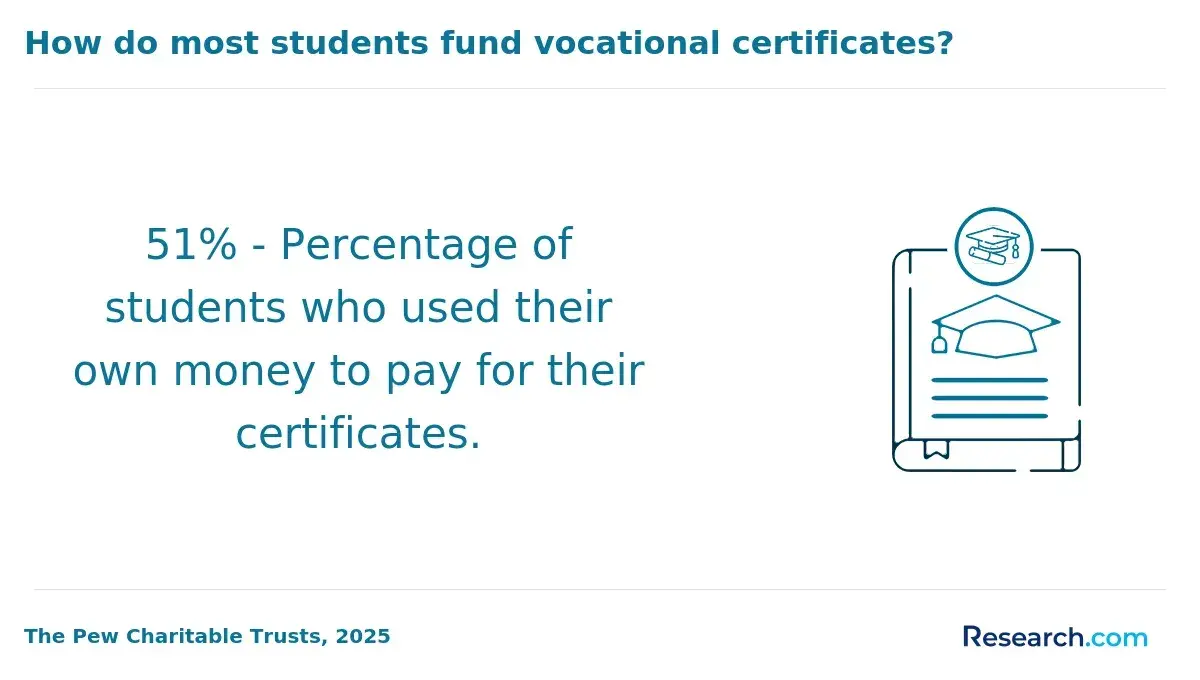
Not necessarily. A no-letter policy changes the evidence used in an admission decision; it does not establish lower standards or guarantee admission. A program can be selective while relying on grades, prerequisite performance, professional experience, an essay, or capacity limits. Conversely, open-admission pathways may have few entry barriers but still require students to meet progression standards after enrollment.
The most useful question is not whether the application is "easy," but whether the program's stated standards match your record and goals. Applicants returning after a long break may benefit from a streamlined process because they do not need to locate former instructors. Applicants with weaker transcripts should not assume letters would have offset academic requirements; they should ask about prerequisite courses, conditional admission, and academic-support services.
A simpler admissions process can suit professionals seeking an applied credential, but it is wise to compare it with the broader options described in easiest masters degree guidance if flexibility is the primary goal. The stronger choice is the one that also provides relevant food, operations, or supply-chain coursework.
What Do Online Food Industry Management Programs Evaluate Instead of Letters of Recommendation?
Admissions offices use materials that show whether an applicant can complete college-level work and contribute to an applied management curriculum. The evidence matters differently by level: bachelor's programs usually emphasize prior academic preparation, while master's programs often weigh professional experience and fit with the curriculum more heavily.
This table explains what common alternatives can demonstrate and how applicants can make each item more useful.
| Application material | What it can show | Applicant focus |
| Transcript | Academic preparation, GPA trend, and prerequisites | Address a weak term briefly if the application permits context. |
| Personal statement | Career direction, motivation, and writing ability | Connect goals to specific coursework, not just a desire for promotion. |
| Résumé | Relevant work scope and leadership experience | Quantify responsibilities such as scheduling, inventory, quality, procurement, or team supervision. |
| Prerequisite coursework | Readiness for business, analytics, or food-science classes | Confirm that completed courses will satisfy the school's exact requirement. |
| Interview or admissions conversation | Program fit and communication skills | Prepare questions about online delivery, internships, and career support. |
A strong application is specific. For example, a production supervisor can describe experience with sanitation procedures, production scheduling, yield, inventory controls, or cross-functional communication rather than simply listing a job title. Do not submit a generic essay because letters are absent; the statement may become the main narrative document in the file.
How Can You Tell if an Online Food Industry Management Degree With No Recommendation Requirement Is Accredited and Legitimate?
Start with institutional accreditation. In the U.S., recognized institutional accreditation indicates that a college has undergone external review of its educational quality and operations. Verify the institution in the U.S. Department of Education's accreditation database, then confirm that the online degree is awarded by that institution rather than by an unaffiliated marketing or enrollment company.
Food Industry Management usually does not require a separate professional license, but a program may include fields with additional expectations, such as food safety, nutrition, dietetics, or culinary operations. Programmatic accreditation can be helpful where relevant, but institutional accreditation is the essential baseline for federal financial aid, credit transfer, and many employer tuition-benefit policies.
Before enrolling, use these steps to separate a credible streamlined-admissions program from a risky one.
- Confirm the school's institutional accreditation and the exact legal name of the degree-granting institution.
- Read the current catalog for curriculum, credit total, academic policies, faculty information, and graduation requirements.
- Check that the online program appears on the institution's own website and that the admissions office confirms no recommendations are required for your applicant category.
- Request a written breakdown of tuition, mandatory fees, technology charges, and estimated books or course materials.
- Ask whether students in your state may enroll and whether internships, practicums, or food-safety training have location-specific requirements.
Red flags include pressure to enroll immediately, vague faculty or curriculum details, promises of automatic job placement, unclear accreditation language, and an admissions representative who will not provide policies in writing. Employers generally focus on the degree-granting institution, accreditation, relevant skills, and experience - not whether an applicant submitted recommendation letters.
How Much Do Online Food Industry Management Degree Programs With No Letters of Recommendation Cost?
No-recommendation admissions do not determine tuition. Total cost depends on degree level, public or private control, residency policy, transfer credits, required technology, books, lab kits, and whether food-safety or experiential learning costs are billed separately. Use each institution's published tuition schedule rather than a single advertised per-credit price.
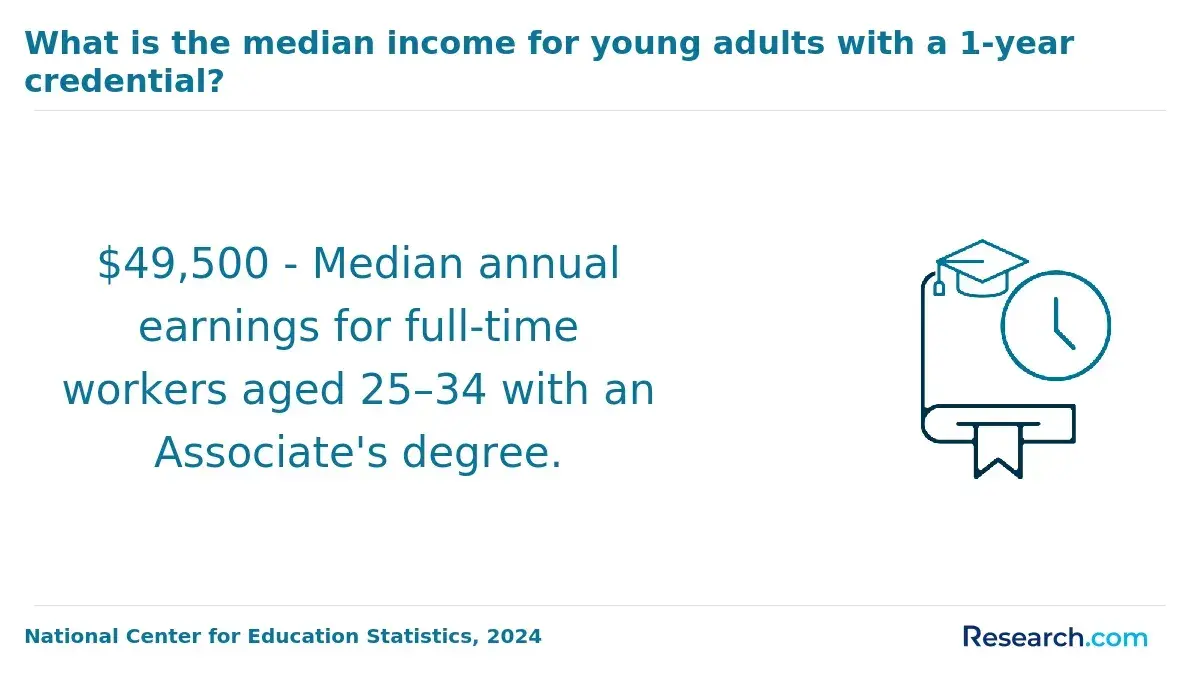
For broad context, College Board's 2024-25 estimates placed average published tuition and fees at $11,610 for in-state students at public four-year colleges and $43,350 at private nonprofit four-year colleges. Those figures are not online-program prices and exclude living expenses, but they illustrate why applicants should compare full program cost and net price rather than admissions convenience alone.
The cost categories below help applicants request comparable estimates from schools.
| Cost category | Why it varies | Question to ask |
| Tuition | Per-credit, flat-rate, residency, and program-specific pricing differ | What is the tuition for all required credits at my expected pace? |
| Mandatory fees | Online learning, student services, graduation, and technology fees may apply | Which fees are charged each term and which are one-time? |
| Materials | Texts, software, lab supplies, and food-safety training can add costs | Which materials are required and what is the estimated amount? |
| Transfer credit | Accepted credits can reduce remaining tuition and completion time | How many credits are likely to apply after an official evaluation? |
Students comparing career return may also find it useful to review bachelor degrees that pay well. Pay outcomes vary by occupation, region, experience, and employer, so use salary information as context rather than a promise of return on investment.
Can You Get Financial Aid for an Online Food Industry Management Degree With Streamlined Admissions?
Yes, eligible students in accredited online degree programs may qualify for federal financial aid. Whether a school requires recommendations has no direct effect on aid eligibility. Students should submit the Free Application for Federal Student Aid, commonly called the FAFSA, and follow the institution's separate financial-aid deadlines. Enrollment intensity, satisfactory academic progress, prior borrowing, dependency status, and program eligibility can affect the final aid offer.
Federal grants, Direct Loans, work-study opportunities where available, state aid, employer assistance, institutional scholarships, and private scholarships can each play a role. Aid may not cover every cost, particularly if a student attends part time or has already used substantial undergraduate aid eligibility.
Compare aid offers using net cost, not the largest headline award. Grants and scholarships generally do not require repayment when terms are met, while loans create repayment obligations. Ask the financial-aid office whether online students face different eligibility rules for campus-based grants, food-related practicums, or accelerated terms.
Applicants considering fields outside food management should compare subject-specific affordability carefully; for example, a most affordable online psychology degree may have different prerequisite, practicum, and licensure-related costs than a business-focused food management program.
How Long Does an Online Food Industry Management Degree With No Letters of Recommendation Take to Complete?
Completion time depends on the credential, transfer credits, course availability, prerequisites, and how many credits a student takes each term. A bachelor's degree typically requires about 120 semester credits, while many master's programs require roughly 30 to 36 credits; exact requirements are set by each institution. Accelerated terms can shorten the calendar, but they also increase weekly workload.
Online delivery can help working adults fit coursework around employment, yet asynchronous classes are not automatically self-paced. Food-industry programs may include group projects, scheduled exams, internships, virtual meetings, or field-based assignments. Students should ask for a sample course sequence and identify any courses offered only once per year.
For career context, the U.S. Bureau of Labor Statistics reported a 2024 median annual wage of $65,310 for food service managers. That occupation does not universally require a bachelor's degree, and the figure should not be treated as an expected outcome for a particular program; it shows why learners should match a degree's curriculum to their intended role, such as restaurant operations, procurement, quality, or distribution.
Can You Transfer Credits Into an Online Food Industry Management Degree Program With No Recommendation Letters?
Often, yes. Transfer admission and no-recommendation admission are separate policies. A college may accept transfer applicants without letters while still requiring official transcripts, a minimum grade in transferable courses, course descriptions, or a formal evaluation after admission. Credits are usually reviewed for equivalency, grade, recency, and fit with degree requirements.
General education, introductory business, accounting, marketing, statistics, nutrition, and hospitality courses may be more transferable than highly specialized food-science or upper-division management classes. Industry certifications and military or workforce training may sometimes be evaluated for credit, but acceptance is never automatic.
Take these actions before committing to a program.
- Send official transcripts early and request a written transfer-credit evaluation.
- Compare accepted credits with the degree audit, not only the school's maximum transfer-credit policy.
- Keep syllabi and course descriptions for technical, culinary, science, and management coursework.
- Ask whether transferred credits satisfy prerequisites, major requirements, or electives.
- Confirm the residency requirement, meaning the minimum credits that must be completed through the degree-granting institution.
A school that accepts many credits can reduce cost and time, but only if those credits apply to required coursework. Do not withdraw from a current course or assume a community-college class will transfer until the receiving institution confirms it.
How Should You Compare Online Food Industry Management Degree Programs That Do Not Require Letters of Recommendation?
Compare programs as career investments, not simply as applications with fewer steps. The best option depends on whether you want restaurant and foodservice leadership, food manufacturing operations, quality assurance, purchasing, retail management, supply-chain work, entrepreneurship, or graduate-level advancement.
This comparison framework highlights the questions that most directly affect quality, fit, and likely value.
| Comparison area | What strong evidence looks like | Why it matters |
| Admissions policy | Written confirmation that recommendations are not required for your degree and applicant type | Prevents late application surprises |
| Accreditation | Recognized institutional accreditation and transparent catalog information | Supports aid, transferability, and employer confidence |
| Curriculum | Courses in operations, finance, food safety, supply chain, marketing, and leadership | Connects study to target food-industry roles |
| Online format | Clear information on live sessions, deadlines, group work, internships, and support | Shows whether the format fits work and family obligations |
| Total cost | Itemized estimate after transfer credit and aid | Allows an accurate affordability comparison |
| Career support | Internship assistance, employer connections, advising, and transparent outcomes information | Can strengthen a transition into the field |
Common mistakes include assuming that no references means guaranteed acceptance, selecting a school before checking accreditation, and choosing the cheapest advertised tuition without reviewing fees or transfer rules. Another mistake is choosing a broad management degree when the intended job requires food-safety, quality, science, or supply-chain knowledge.
If you are comparing graduate study across disciplines, remember that program structures differ substantially. For example, child psychology masters programs may involve different experiential and professional requirements than food-industry management. Keep your comparison centered on the knowledge, network, and credentials your intended role actually needs.
Other Things You Should Know About Food Industry Management
Usually, yes. No-recommendation programs can be especially practical for adults without recent faculty contacts. You may still need transcripts, a résumé, and evidence that you meet prerequisites. Explain relevant work experience clearly in your application statement.
Some applied programs welcome beginners, while others - especially graduate programs - may prefer or require experience in food production, restaurants, retail, hospitality, logistics, or management. Check the exact program's admission criteria and ask whether experience can substitute for a prerequisite.
Review the current admissions page, program catalog, and application checklist. Then contact admissions and ask for written confirmation that letters are not required for your degree level, start term, transfer status, and residency or international-applicant category.
Depending on the curriculum and prior experience, graduates may pursue roles in foodservice supervision, restaurant operations, purchasing, retail food management, production coordination, quality systems, distribution, or food-business entrepreneurship. Employers may also expect food-safety training, operational experience, or specialized technical knowledge.
References
- Top MBA Programs No Letters of Recommendation Required | ARINGO https://aringo.com/mba-without-letters-of-recommendation/
- Tuition, Fees and Discounts https://www.ice.edu/tuition-financial-aid/tuition-fees-discounts
- Member Support https://membersupport.commonapp.org/s/article/bachelors-degree-in-food-business-management-ca-dpqodiqi
- Food Business Leadership https://www.ciachef.edu/cia-online-food-business-leadership-bachelors-degree-program/
- Online Master's in Food Business - CIA School of Graduate and Professional Studies https://masters.culinary.edu/food-business-masters-degree/
- 2025 Most Affordable Online Colleges & Degrees https://www.onlineu.com/most-affordable-colleges
- Study Food Industry Management in the USA https://www.studyusa.com/en/field-of-study/395/food-industry-management
- CourseCareers https://coursecareers.com/blog-posts/why-employers-no-longer-require-college-degrees
- Tuition & cost of attendance https://admission.universityofcalifornia.edu/tuition-financial-aid/tuition-cost-of-attendance/
- Food Industry Management https://www.niagara.edu/programs/food-industry-management/