2027 Online Entrepreneurship Master's Programs With University Scholarships: Awards, Eligibility & Tuition After Aid

Co-Founder and Chief Data Scientist
Scholarships can materially change the cost of an online entrepreneurship master's, but awards, deadlines, and online-student eligibility differ by university. The National Center for Education Statistics reported average graduate tuition and fees of $12,596 at public institutions and $28,017 at private nonprofit institutions for 2022-23, illustrating why applicants should compare aid before enrolling. This guide is for prospective founders, business professionals, and career changers who want to identify university funding, estimate tuition after aid, and build a practical application strategy.
Key Things to Know About Entrepreneurship Master's Programs with Scholarships
- Online entrepreneurship master's students may be eligible for institutional merit scholarships, need-based grants, federal Direct Unsubsidized Loans, employer tuition benefits, and outside awards, but program-specific scholarship access must be confirmed in writing.
- NCES reported average 2022-23 graduate tuition and fees of $12,596 at public institutions and $28,017 at private nonprofit institutions; an award's value matters only after comparing total program tuition, mandatory fees, and renewal terms.
- Prioritize programs that disclose whether online students qualify, whether awards renew automatically, and whether scholarships can be combined with employer reimbursement or other grants.
What online Entrepreneurship master's programs offer university scholarships?
University scholarships are usually awarded by the graduate school, business school, entrepreneurship center, alumni foundation, or financial aid office rather than by an online program alone. Therefore, an online entrepreneurship master's may have access to broader graduate awards even when its program page does not advertise a dedicated entrepreneurship scholarship.
Start with institutions that offer a fully online or hybrid graduate entrepreneurship degree, then ask whether distance learners can apply for business-school and university-wide awards. Schools may also offer an MBA with entrepreneurship coursework rather than a stand-alone entrepreneurship master's; applicants comparing that route can also review cheapest online MBA programs to weigh broader business training against a specialized degree.
The comparison below shows where scholarship information commonly appears and what to verify before treating an institution as affordable. Award availability can change by admission cycle, so obtain the current terms from the school.
| Program format to look for | Likely university funding source | What an online applicant should confirm |
| Online MS in Entrepreneurship or Innovation | Graduate-school merit awards, entrepreneurship-center funds, donor scholarships | Whether online enrollment and part-time study are eligible |
| Online MBA with an entrepreneurship concentration | Business-school scholarships, leadership awards, employer partnerships | Whether awards apply to the concentration and to distance learners |
| Hybrid entrepreneurship master's | Departmental scholarships and campus-based graduate awards | Any residency, cohort attendance, or campus participation requirement |
| Public-university online business master's | Institutional scholarships plus state, veteran, and federal aid where eligible | Residency-based tuition rules and whether scholarships cover nonresident charges |
Ask each admissions or financial aid office for four items: the scholarship list open to your program, the separate scholarship deadline, the typical enrollment requirement, and whether the award is deducted from tuition or issued as a refund after charges. Do not assume that admission to the program includes scholarship consideration.
What is the average tuition for Entrepreneurship master's programs before aid?
There is no single national tuition average for entrepreneurship master's programs because schools classify them differently: as business, management, innovation, or MBA programs. The most useful national benchmark is NCES's 2022-23 average graduate tuition and fees: $12,596 at public institutions and $28,017 at private nonprofit institutions. Those figures are institution-level averages, not the price of a particular online entrepreneurship degree, and they may exclude books, technology charges, residencies, and program fees.
For an individual program, calculate published tuition by multiplying the per-credit price by required credits, then add mandatory fees. Applicants whose budget requires the lowest possible upfront cost should distinguish a graduate degree from lower-cost undergraduate completion options such as a cheapest bachelor degree online; the latter is not a substitute for a master's but may make sense for people who have not yet completed a bachelor's degree.
Use this pre-aid cost worksheet when comparing offers. It prevents a large-looking scholarship from obscuring a higher starting price.
| Cost item | How to calculate it | Why it matters |
| Tuition | Required credits × published per-credit rate | Usually the largest direct charge |
| Mandatory program fees | Per-term fees + online learning or technology fees | May not be covered by a tuition-only scholarship |
| Residency costs | Travel, lodging, meals, and required event charges | Hybrid programs can have substantial non-tuition expenses |
| Net direct cost | Total direct charges − grants and scholarships | Shows the amount to finance before loans or employer aid |
A lower advertised tuition rate is not automatically the better value. Compare accreditation, curriculum fit, required credits, pace, transfer-credit rules, and the written aid offer. A program with a modest renewable scholarship can cost less overall than a lower-priced program with no institutional aid.
What types of financial aid and scholarships are available for Entrepreneurship master's programs?
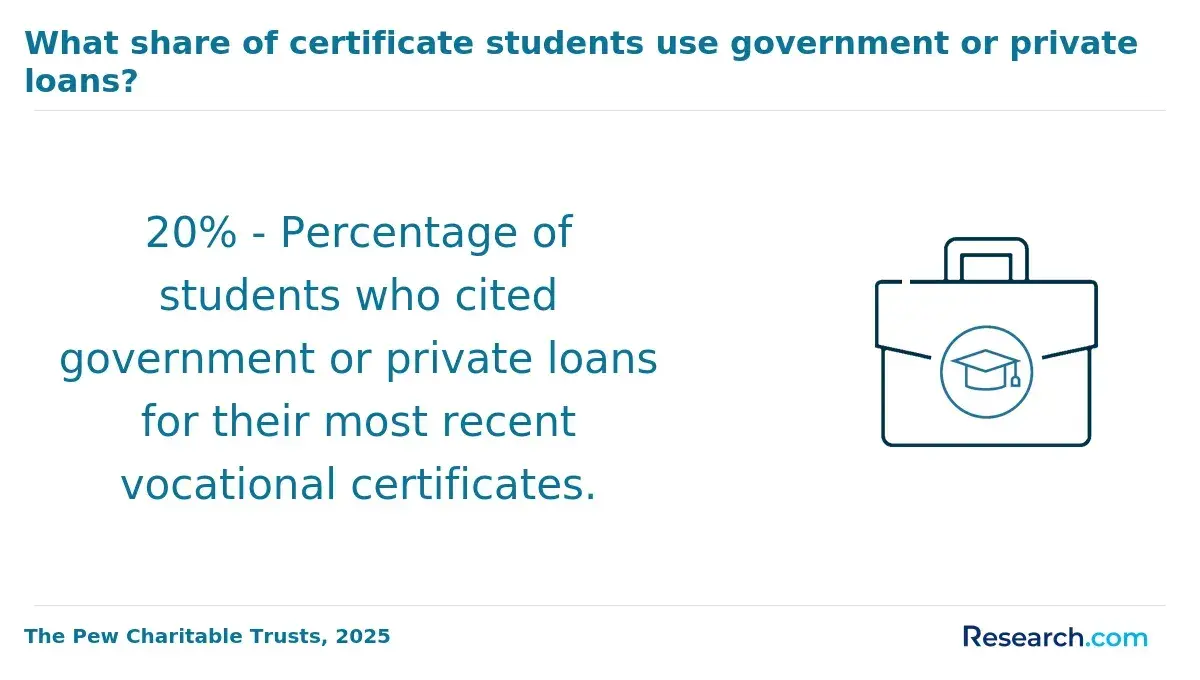
Entrepreneurship master's students can use several funding sources, and each has a different purpose. Scholarships and grants generally do not require repayment, while loans do. Employer benefits may be especially valuable for working professionals, but reimbursement policies can require continued employment or successful course completion.
The most common options are summarized below. Read award terms carefully because "scholarship" sometimes means a one-time tuition discount rather than renewable aid.
| Funding type | Typical basis for selection | Best use case | Key limitation |
| University merit scholarship | Academic record, leadership, professional achievements, essays | Applicants with a strong academic or entrepreneurial profile | Often competitive and limited in number |
| Need-based institutional grant | Financial need assessed through school-required forms | Students with documented financial need | Graduate need grants are less universal than undergraduate aid |
| Departmental or donor scholarship | Program fit, industry interest, identity, service, or venture experience | Applicants matching a narrow donor criterion | May have a separate application and deadline |
| Federal Direct Unsubsidized Loan | FAFSA eligibility and enrollment | Students needing predictable federal borrowing | Interest accrues while enrolled |
| Employer tuition assistance | Employer policy and job relevance | Working professionals whose role benefits from business training | May have annual caps or repayment conditions |
| Outside scholarship | Criteria set by a foundation, association, or community organization | Applicants willing to submit multiple targeted applications | School may reduce other need-based aid after receiving it |
Applicants developing finance-heavy ventures should consider whether a separate online finance degree better matches their skills goal before borrowing for an entrepreneurship credential. That decision should be based on curriculum and career fit, not scholarship availability alone.
How much do Entrepreneurship master's scholarships typically cover?
Most university scholarships for graduate business and entrepreneurship study are partial awards rather than full tuition funding. Coverage may be expressed as a fixed amount, a per-credit reduction, a percentage of tuition, or a named fellowship that covers tuition and sometimes fees. Because institutions publish awards differently and may not disclose average recipient amounts, applicants should rely on their own written offer rather than assume a standard coverage level.
These funding patterns help set realistic expectations and identify the questions that turn an award notice into a usable budget.
| Award structure | What it may cover | Financial planning implication |
| One-time fixed scholarship | A stated amount for one term or academic year | Confirm whether it applies before or after other aid and whether it renews |
| Renewable annual scholarship | A fixed amount each year while requirements are met | Useful for multi-year programs, but budget for loss if renewal terms are missed |
| Per-credit tuition award | A reduction for each eligible enrolled credit | Part-time students may receive less total aid than full-time students |
| Full-tuition fellowship | Tuition, and occasionally selected fees | Rare and often highly selective; verify whether living and travel costs remain |
Calculate net cost using the full program price, not a single semester. For example, subtract a renewable tuition award only for the number of terms it is explicitly guaranteed to cover, then add uncovered fees and expected residency expenses. A smaller award at a lower-cost school can produce a better debt outcome than a larger award attached to a high-cost program.
For applicants building products in design-led fields, compare curriculum alternatives as well as aid; a best online architecture degree path may be more appropriate when professional design education, rather than venture formation, is the central objective.
Who is eligible for Entrepreneurship master's scholarships?
Eligibility depends on the award, not just on admission to an entrepreneurship master's. Common requirements include admission to an eligible program, minimum enrollment, satisfactory academic progress, a stated GPA, a complete application, and U.S. citizenship or eligible noncitizen status for certain federally connected aid. Institutional merit scholarships may be open to international students, but that is a school-specific rule.
Review eligibility in categories before investing time in essays or recommendation requests.
- Merit awards: Often consider undergraduate performance, professional progression, leadership, venture creation, patents, community impact, or the quality of a business proposal.
- Need-based awards: Usually require financial information and may require the FAFSA or a university financial-aid application; graduate students should not assume need alone creates eligibility.
- Program and donor awards: May target a field, demographic group, geographic area, military affiliation, alumni connection, social-impact mission, or sector such as technology or family business.
- Enrollment-based awards: May require full-time study, a minimum number of credits, continuous enrollment, or participation in a specific cohort.
Career changers should also check whether an entrepreneurship degree is the best-funded and best-aligned route. For example, someone pursuing a legal-services business should first understand types of paralegals and salaries before choosing a business master's over occupation-specific education.
A common mistake is treating a minimum GPA as the only criterion. Scholarship committees frequently assess fit and evidence of follow-through, so an applicant with a credible market problem, customer research, measurable work results, and a clear funding plan may present a stronger case than one with a generic interest in starting a business.
What is the application process for Entrepreneurship master's scholarships?
The process often runs on a separate timeline from graduate admission. Some schools automatically review admitted applicants for merit aid, while others require a scholarship portal submission after admission. Apply early enough to meet both deadlines; an admission application submitted near the final program deadline may be too late for scholarship review.
Use this sequence to reduce missed opportunities and ensure that every application matches the award's criteria.
- Create a list of target programs and request each school's current scholarship calendar, online-student policy, and award-renewal rules.
- Submit the graduate admission application early and complete the FAFSA when you may be eligible for federal or need-based aid.
- Prepare a focused resume, transcript, recommendation contacts, financial documents when required, and evidence of leadership or entrepreneurial activity.
- Tailor each scholarship essay to the donor or school mission, explaining the problem you want to solve, your preparation, and how the degree supports a realistic plan.
- Track submission confirmations, interview requests, award notices, and any acceptance deadline in one calendar.
- Compare written offers by total net cost, conditions, and duration before paying a deposit.
If an offer is insufficient, ask respectfully whether reconsideration is available. Provide new, relevant facts, such as a competing written offer, a documented change in financial circumstances, or additional achievements. Do not frame an appeal as a demand, and do not commit to enrollment until you understand whether the revised package is guaranteed in writing.
Do online Entrepreneurship students qualify for the same aid as on-campus students?
Sometimes, but not always. Eligibility for federal student aid generally depends on enrollment in an eligible program at a participating institution, not on whether courses are delivered online. University scholarships can be more restrictive: some are available to all enrolled graduate students, while others require campus attendance, full-time residency, specific cohort participation, or access to a campus-funded activity.
Before applying, obtain a direct answer from the financial aid office and save it with the program materials. The following distinctions are particularly important.
| Funding source | Online eligibility pattern | Question to ask |
| Federal aid | Often available to eligible students in qualifying online programs | Is this exact program eligible, and what enrollment level is required? |
| University-wide merit scholarship | Varies by institution and award terms | Are fully online graduate students explicitly included? |
| Business-school scholarship | May be open to online cohorts or limited to residential students | Does the scholarship list the online entrepreneurship program as eligible? |
| Graduate assistantship | Often more limited for online students | Does the role require on-campus work, a particular state location, or full-time status? |
| Employer reimbursement | Usually format-neutral if the school is approved by the employer | Are online courses, fees, and the selected institution reimbursable? |
Do not rely on a general statement that "online students receive financial aid." Ask whether the specific scholarship is open to your delivery format, residency status, credit load, and start term. This is especially important for accelerated programs, where the academic calendar may not match standard semester-based award rules.
Can Entrepreneurship master's students combine multiple scholarships and grants?
Students can often combine university scholarships, outside scholarships, grants, veteran education benefits, and employer assistance, but stacking is controlled by institutional policy and the total cost of attendance. The financial aid office may adjust loans or need-based funding after receiving an outside award. A scholarship that looks additive may therefore replace borrowing rather than reduce tuition beyond the published bill.
Combining smaller awards is usually worthwhile when the terms are compatible, but evaluate these trade-offs before accepting them.
| Potential benefit | Potential drawback | How to handle it |
| Lower borrowing and interest costs | Aid may trigger adjustment to other need-based assistance | Request a revised aid estimate before committing |
| Multiple sources reduce reliance on one award | Different awards may have separate GPA or enrollment rules | Track each award's conditions individually |
| Employer reimbursement can preserve savings | Employer may require continued employment or repayment after departure | Read the employer agreement before using it as core funding |
| Outside awards can fill fee or travel gaps | Some university awards prohibit duplication of tuition funding | Disclose all awards promptly to the financial aid office |
Ask the school whether institutional scholarships can be combined with outside awards and employer reimbursement, which aid would be reduced first, and whether scholarships can exceed tuition. Also confirm whether reimbursement paid after grades are issued creates a temporary cash-flow gap that you must finance upfront.
What are the requirements to maintain scholarship status in Entrepreneurship master's programs?
Renewal requirements are contractual terms of the award and vary by institution. Common conditions include a minimum cumulative GPA, satisfactory academic progress, continuous enrollment, a minimum credit load, completion within a defined time frame, and compliance with student conduct standards. A renewable scholarship is not the same as guaranteed funding unless the award letter clearly states the renewal criteria and duration.
Protect your funding by reviewing these terms before the first term and at the start of every academic year.
- Keep a copy of the award letter, including the amount, covered terms, minimum GPA, credit requirement, and appeal process.
- Confirm whether dropping a course, taking a leave, changing from full-time to part-time, or repeating a class affects the award.
- Monitor academic progress before withdrawal deadlines, especially in accelerated online courses where one weak term can have a larger GPA effect.
- Notify the financial aid office promptly about outside scholarships, employer benefits, or enrollment changes.
- Ask whether renewal is automatic or requires a new application, FAFSA, progress report, or donor thank-you letter.
The most preventable error is discovering a renewal condition after changing enrollment. If work, caregiving, or a venture launch may require a lighter course load, choose a program whose scholarship terms realistically fit part-time study rather than assuming an exception will be approved.
What tips can help Entrepreneurship master's students secure more scholarship funding?
Strong scholarship applications connect your prior evidence to a specific entrepreneurial goal and show that you understand the financial commitment. Committees generally have more confidence in applicants who can explain a customer problem, the skills they need, and how they will use the program than in applicants who offer only a broad ambition to become an entrepreneur.
Focus your effort on actions that improve both competitiveness and affordability.
- Apply to programs early enough for priority scholarship review, even if the final admission deadline is later.
- Build a concise evidence file with transcripts, quantified work results, venture milestones, pitch competition participation, customer interviews, leadership roles, and community impact.
- Customize essays to each award's stated purpose instead of submitting one generic founder narrative.
- Ask recommenders to address relevant qualities, such as initiative, judgment, execution, resilience, and ethical leadership.
- Apply across university, department, donor, employer, professional association, and community sources rather than relying on one large award.
- Compare aid offers over the entire program length, including fees, required travel, expected tuition increases, and renewal conditions.
- Request clarification or reconsideration when an offer is unclear or a material financial circumstance has changed.
Prioritize university scholarships when they are renewable, compatible with your enrollment plan, and meaningfully reduce direct tuition. Working professionals should also prioritize employer reimbursement when the repayment terms are manageable. Applicants unable to secure substantial grants should reassess program cost, pacing, and borrowing before enrolling; reducing the amount financed is usually more reliable than expecting a future scholarship to close the gap.
Other Things You Should Know About Entrepreneurship
Some universities allow simultaneous applications, while others require admission first. Check the scholarship portal and submit the graduate application early because many merit awards are reviewed before final admission deadlines.
It can. Scholarships reduce your unmet cost of attendance, and a school may reduce loans or other aid to keep your total package within applicable limits. Ask financial aid which source would be adjusted first.
Sometimes. University pitch competitions may offer cash prizes, incubator support, or venture funding, but those funds are not automatically tuition scholarships. Confirm whether a prize is paid to you, your business, or the university account.
No. Compare the scholarship's duration and restrictions with total tuition, required credits, curriculum, accreditation, schedule, support services, and the debt remaining after aid. The best choice is the program with the strongest overall fit at a manageable net cost.
References
- 11 tuition-free universities in the US for master's degrees https://studyinternational.com/news/tuition-free-universities-in-the-us/
- Full Scholarships and Fully Funded Master's Programs in the U.S. and Abroad | ProFellow https://www.profellow.com/fellowships/full-scholarships-and-fully-funded-masters-programs-in-the-u-s-and-abroad/
- Inside Graduate Fellowships: How to Fund Your Master's Degree https://www.onlinemastersdegrees.org/financial-aid/fellowships/
- International Fellowships https://www.aauw.org/resources/programs/fellowships-grants/aauw-international-fellowships/
- Five Differences Between International And Domestic Scholarships - Scholarship America https://scholarshipamerica.org/blog/five-differences-between-managing-international-scholarships-versus-domestic-scholarships/
- 10 scholarships for young entrepreneurs and business owners - Clover Blog https://blog.clover.com/scholarships-for-young-entrepreneurs-and-business-owners
- Apply to be a Coke Scholar - $20,000 College Scholarship https://www.coca-colascholarsfoundation.org/apply/
- 2025 Most Affordable Online Master's Programs https://www.onlineu.com/most-affordable-colleges/masters-degrees
- Grad School Grants: Options for Online Education https://www.oedb.org/masters-grant/
- Scholarships and Grants for College | DeVry University https://www.devry.edu/tuition-financial-aid/financial-aid/scholarships-grants.html