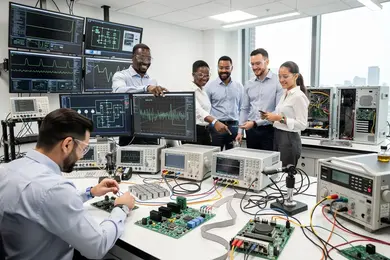
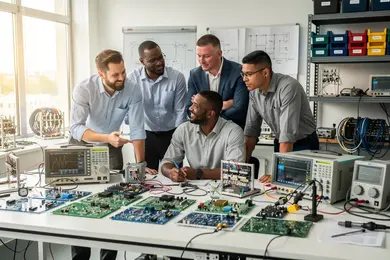
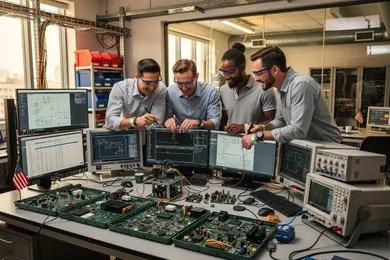
2027 Online Electrical Engineering Master's Curriculum Breakdown: Core Courses & Specializations

Co-Founder and Chief Data Scientist
Curriculum structure and specialization pathways in online electrical engineering master's programs critically shape professional positioning and adaptability in a rapidly evolving labor market. Employers increasingly value targeted expertise aligned with industry certifications and emerging technologies, but students face tradeoffs like overspecialization that can narrow future opportunities.
Course sequencing and workload must balance depth with practical application, addressing gaps between theoretical knowledge and operational demands. Recent analyses from the U.S. Bureau of Labor Statistics highlight a growing premium on skills in power systems and embedded software, underscoring curriculum as a strategic lever for aligned employability. This article analyzes how these academic choices influence career outcomes and workforce relevance.
Key Things to Know About Online Electrical Engineering Master's Curriculum
- Core courses often prioritize advanced circuit theory and signal processing, but this focus can limit early specialization, requiring strategic tradeoffs between foundational depth and niche expertise.
- Employers increasingly value interdisciplinary skills combined with core mastery; graduates lacking exposure to emerging tech like AI-integrated systems may face narrowed opportunities despite technical rigor.
- Online program pacing frequently affects cost and access-accelerated tracks reduce time investment but may inflate tuition or limit professional work integration, influencing practical eligibility for working professionals.
What Core Courses Are Included in an Online Electrical Engineering Master's Program?
Core courses in online electrical engineering master's programs signal how these curricula balance theoretical rigor with practical demands expected by employers and industry trends. This foundational sequence often sets a workload intensity that challenges students to swiftly integrate complex technical concepts, which can limit flexibility for concurrent specialization choices early in the program.
Such structuring reflects an emphasis on ensuring graduates possess a versatile toolkit applicable across multiple subfields rather than narrowly focused skills from the outset.
- Advanced Circuit Analysis: This course deepens understanding of semiconductor devices and integrated circuit design, which forms the basis for many hardware and embedded systems roles. It's essential for students targeting specializations that demand precision in analog and digital circuit optimization, where flawed design assumptions can propagate costly errors in product development cycles.
- Digital Signal Processing: Covering algorithms critical to communication technologies and data handling, this course aligns tightly with employer expectations for engineers who can implement and improve real-time processing systems. Mastery here supports pathways into telecommunications, audio engineering, and sensor technologies, emphasizing both theoretical frameworks and practical algorithm deployment.
- Electromagnetics: Focused on wave propagation and antenna theory, the course addresses core technical knowledge vital for wireless communication and radar applications. It provides the analytical tools engineers need to navigate increasingly complex RF environments, which has become more pronounced due to the explosion in wireless device connectivity and spectrum management challenges.
- Control Systems: With a strong emphasis on feedback mechanisms and automation, coursework in control systems underpins engineering solutions in aerospace, robotics, and manufacturing. This subject not only hones skills central to system stability and performance but also prepares students for problem-solving in multifaceted operational contexts where automation reliability is critical.
- Power Electronics: This course ties directly to emerging industry demands for sustainable and energy-efficient electrical power management solutions. It equips students with competencies essential for working with converters, inverters, and energy storage systems that are foundational to renewables integration and smart grid technologies, both growth areas within electrical engineering.
According to the National Science Foundation's 2024 report on STEM graduate education, over 85% of electrical engineering master's programs mandate coursework in signal processing and control theory, highlighting these areas as universal prerequisites across most specializations.
Beyond these technical proficiencies, many programs incorporate software tools like MATLAB, Simulink, and CAD to bridge the gap between abstract theory and real-world application, reflecting employer preferences for graduates who can simulate, design, and troubleshoot complex systems efficiently. While these core courses provide a comprehensive base, program sequencing often forces early commitments about specialization pathways.
Students weighing options such as renewable energy or embedded systems must consider how foundational courses prepare them for advanced electives. This layered approach demands careful planning to align course completion timelines with career goals or industry requirements.
For graduate students curious about broader research opportunities or considering future doctoral study, programs in electrical engineering should be compared with PhD programs online that may complement or extend their focus on core skills and applied research methods.
What Specializations Are Available in Online Electrical Engineering Master's Programs?
Choosing a specialization in an online electrical engineering master's program is a strategic decision that significantly shapes a student's technical expertise, job market competitiveness, and career trajectory. Since many employers prioritize candidates with applied project experience tied to specific domains, the specialization selected can affect access to internships, hands-on learning, and ultimately, employability.
Practical coursework intensity and industry alignment also vary, so understanding these factors is essential for working professionals and career changers navigating program options.
- Power Systems focuses on electrical energy generation, transmission, and distribution, including integration of renewable energy sources. This specialization develops skills in grid management software and smart grid technologies, preparing graduates for roles primarily in utilities and sustainable energy sectors where practical experience with live systems or simulators is often required.
- Communications centers on data transmission, wireless networks, and signal processing. Given the growth of 5G and IoT, the specialization equips students with advanced networking and applied laboratory skills frequently facilitated through virtual or partnered local labs, meeting telecommunications industry demands for project-oriented expertise.
- Control Systems and Automation emphasizes design and implementation of feedback control in robotics, manufacturing, and aerospace. This path relies on programming PLCs and simulation tools, but availability of comprehensive practical work can differ, influencing readiness for automation-heavy roles and potentially narrowing immediate job flexibility.
- Embedded Systems involves integrating hardware and software in devices such as medical equipment and automotive controls. Because hardware interaction is critical, students often need external hands-on experience to complement online coursework, reflecting industry expectations tied to the growing IoT ecosystem.
A 2024 study from the IEEE Education Society indicates over 60% of employers now emphasize specialization-linked project experience when hiring electrical engineers, reinforcing that practical components like internships or capstone projects are no longer optional but vital. This shift highlights the need for prospective students to evaluate specialization choices through the lens of field-specific experiential learning opportunities.
Can Students Choose Electives Outside Their Specialization?
Elective selection in online electrical engineering master's programs commonly operates within tight structural boundaries. Most programs mandate a sequential completion of core courses, restricting when and how students can enroll in electives outside their specialization.
Approval from academic advisors often acts as a gatekeeper, balancing program integrity with student preferences amid limited course capacity and prerequisite requirements. Data from the National Center for Education Statistics in 2024 reveals that only about 65% of graduate engineering programs provide any meaningful elective flexibility, and this flexibility is frequently curtailed by credit hour limitations and complex prerequisite chains.
Choosing electives beyond one's primary focus carries tangible career implications. While it can enhance interdisciplinary competencies, expanding a student's skill set relevant to emerging industry demands, these benefits come with tradeoffs such as increased workload and potential delays in program completion.
Employers often prefer candidates with deep expertise complemented by targeted interdisciplinary skills rather than broad but shallow knowledge, meaning indiscriminate elective selection may dilute a graduate's technical depth. For example, a power systems student pursuing electives in embedded systems could face extra preparatory demands but gain a competitive edge where integrated systems knowledge is valued.
A recent graduate recounted navigating elective decisions amid rolling admissions uncertainty. Initially hesitant to commit to courses outside her specialization without clear program approval, she delayed enrollment until receiving advisor confirmation that certain embedded systems classes were accessible.
This pause shortened her elective options and compressed her study timeline, creating stress but ultimately ensuring that her choices aligned with both institutional policies and her evolving career goals. The experience underscored the importance of early engagement with program advisors and strategic planning during the admissions process to optimize elective utilization without jeopardizing timely completion.
How Are Online Electrical Engineering Master's Courses Delivered?
Online electrical engineering master's programs commonly utilize a mixture of asynchronous and synchronous delivery to meet diverse student needs. Lectures and coursework are often accessible on demand, facilitating flexible course delivery methods for electrical engineering master's students who balance professional or personal obligations.
Synchronous components such as live sessions or virtual office hours encourage active interaction and clarify complex material, but require more rigid scheduling. Recorded lectures often integrate multimedia and simulations, aiming to replicate in-person pedagogy while allowing students to engage at their own pace.
This blended approach directly influences student workload and engagement expectations. For example, a recent 2024 report by the National Center for Education Statistics indicates over 60% of graduate engineering students maintain employment during their studies, making asynchronous options crucial to sustaining steady progress.
Yet, relying heavily on asynchronous materials can diminish real-time faculty feedback and peer collaboration, posing challenges for learners who thrive on immediate interaction. Balancing these delivery modes shapes both time management demands and the capacity to deepen understanding through practical, often technology-intensive projects.
The tradeoff between flexibility and engagement has tangible consequences for skill acquisition and retention. Students in rigorous specializations may find synchronous participation essential for mastering technical rigor and hands-on application, even if it complicates scheduling.
The delivery format also impacts overall program completion and how well students adapt to evolving engineering workforce requirements. Those evaluating online programs should consider how course structures align with their professional constraints and learning preferences to optimize outcomes, including consulting resources like the best online MSW programs for comparative perspectives on flexible graduate education delivery.
Which Core Classes Are Considered the Most Challenging?
Certain core classes in online electrical engineering master's programs stand out as especially demanding due to their reliance on advanced mathematical concepts, theoretical abstraction, and technical depth. Courses like advanced signal processing require a solid grasp of Fourier analysis and stochastic models, pushing students to apply complex mathematical tools in system design contexts.
Electromagnetic theory challenges learners with Maxwell's equations and field theory, often stretching those with limited physics preparation. Power systems analysis and control systems further extend this complexity by merging theoretical frameworks with practical, industry-driven problems, making these courses intense in both workload and conceptual difficulty.
These challenging courses carry significant consequences for academic progression and professional readiness. Difficulty in signal processing or electromagnetics can hinder timely advancement, especially for part-time students balancing full-time work, as these subjects often correlate with higher attrition rates-68% of students in a 2024 National Center for Education Statistics report identified these as the hardest.
Struggling in these areas can also delay entry into specialization tracks vital for roles like systems engineers or power analysts. For working professionals, the cognitive load and time commitments required to master this content create critical tradeoffs between educational demands and job responsibilities, influencing not just degree completion but also preparedness for technical roles.
One online electrical engineering student recalled the uncertainty navigating the program's rolling admissions timeline. Despite early preparation, the delay in application decisions caused stress over when to begin courses requiring rigorous math and physics backgrounds.
Hesitation about readiness for the mathematically intensive classes prompted a near deferment, but a last-minute admission offer allowed a swift start. This gap in timing underscored how admission pacing affects strategic course planning, especially for those concerned with balancing professional obligations and demanding coursework.
Do Online Electrical Engineering Master's Programs Require Internships or Practicums?
Online electrical engineering master's programs show considerable variation in how they handle internship or practicum requirements, reflecting differing priorities in experiential learning integration. Around 40% of accredited online programs mandate applied experience, but this often takes flexible forms such as virtual practicums, project-based coursework, or capstone projects rather than traditional in-person internships.
The decision to require these components frequently hinges on the program's specialization and target outcomes. For instance, programs focused on power systems or embedded systems are more likely to emphasize industry exposure, while research-oriented tracks may favor extensive coursework without mandatory practicums.
This dynamic often means that stated requirements in catalogs do not fully capture how experiential learning is delivered, with many programs substituting hands-on projects or simulations for direct workplace experience to accommodate remote learners and maintain academic rigor in online electrical engineering master's programs' internship requirements.
From a practical standpoint, this variability has significant implications for students balancing work and family commitments, as well as for their vocational preparedness. Programs requiring internships may offer partnerships with local employers or virtual alternatives, but scheduling and geographic constraints can limit access, potentially extending time-to-degree completion.
Conversely, programs without mandatory experiential components might streamline progression but risk diminished networking opportunities and less direct skills application, which matters given that 62% of engineering managers prioritize demonstrated project work over formal internships when assessing candidates.
Prospective students should carefully evaluate how internship or practicum provisions align with their career goals and professional circumstances, recognizing that the trade-offs between flexibility and hands-on experience can directly influence employability outcomes. Those exploring degree options might also consider related fields that provide relevant experiential learning, such as PsyD programs online, to understand educational models balancing practicum and theoretical work.
Which Courses Are Required for Professional Certification Exams?
Online master's programs in electrical engineering that align with professional certification exams deliberately structure core coursework to mirror exam competencies and regulatory standards. Universities commonly require advanced topics such as circuit analysis, signals and systems, electromagnetics, and control systems because these subjects correspond closely to the technical domains evaluated by bodies like the NCEES for the PE exam.
Accreditation by organizations like ABET serves as a practical benchmark ensuring that foundational and applied knowledge areas are sufficiently covered to meet eligibility criteria. Additionally, specialization courses tailored to power systems, communications, or electronics reflect domain-specific requirements found in various state licensure regulations, integrating both theory and applicable practices needed for exam success.
The practical consequences of curriculum decisions become evident when course substitutions or gaps exist, potentially delaying a candidate's certification timeline or necessitating supplemental study. For example, an electrical engineering graduate who opts out of power systems courses may find their preparation incomplete for the PE Mechanical exam emphases, requiring additional targeted coursework to bridge knowledge gaps.
Employers and licensing boards often expect verification of relevant technical and professional training, making course selection a critical step not only for passing exams but also for long-term employability in certification-dependent roles. According to data from the National Center for Education Statistics in 2024, nearly 80% of engineers who pursue licensure completed graduate studies covering these core areas.
Do Specialization Requirements Extend Graduation Timelines?
Specialization requirements in online Electrical Engineering master's programs are often embedded within tightly structured curricula that include prerequisite chains and credit distribution mandates. Depending on the program's design, these tracks can either align with the typical two-year full-time timeline or extend it, especially when specializations demand advanced theoretical courses or practical components such as capstones.
Course sequencing rules may restrict when students can enroll in certain specialization classes, limiting acceleration opportunities like course overloads or summer sessions. According to research from a 2024 higher education report, about 38% of students pursuing specializations face graduation delays of six months or more, highlighting how program design intricacies impact completion timelines.
In practice, specialization tracks introduce tradeoffs that affect course availability and workload balance, shaping how quickly students progress. For instance, a student focusing on power systems might encounter scheduling bottlenecks if key courses are only offered once annually, delaying graduation or forcing lighter course loads in other terms. This limitation also constrains elective substitutions, reducing flexibility to accelerate the overall program.
Working professionals must weigh these scheduling constraints against career timing, as extended study periods may delay entry into specialized roles despite the employability benefits of niche expertise. Understanding these structural hurdles allows students to plan strategically, balancing immediate workload with long-term career goals in fields valuing targeted skills within Electrical Engineering.
How Do Electrical Engineering Specializations Affect Career Opportunities?
Specializing within an online electrical engineering master's program serves as a critical signal to recruiters and hiring managers by clearly reflecting the candidate's technical focus and applied expertise. Employers interpret the emphasis on particular coursework, project experience, and competencies to gauge readiness for specialized roles, such as power systems or embedded systems engineering.
This targeted knowledge often aligns with specific industry demands, enabling graduates to access hiring pipelines seeking niche skills, which reinforces their suitability over generalists. Data from the U.S. Bureau of Labor Statistics (2024) suggests that engineers with advanced specializations experience employment growth rates up to 15% higher, highlighting how relevant specialization impacts practical employability amid evolving industry needs.
However, selecting a specialization also carries tradeoffs that affect career flexibility and entry-level role eligibility. Narrower fields may limit transitions between sectors, such as moving from IoT development to renewable energy grid integration, while broader specializations maintain wider but potentially less depth-focused opportunities.
For instance, a focus on communication technologies may open doors in telecommunications but require additional adaptation for aerospace positions. Working professionals and career changers must weigh these dynamics carefully to align specialization with long-term goals.
Those considering program affordability and career impact may also consult resources like 'What is the cheapest online college?', which can inform choices about where to pursue an online electrical engineering specialization impact on job prospects efficiently.
How Should Students Compare Online Electrical Engineering Master's Curriculum?
Comparing online electrical engineering master's curricula demands careful analysis of program design as a series of tradeoffs impacting job readiness, workload, and time-to-completion. Rather than choosing based on surface features like length or rankings, students should evaluate how curriculum structures translate into practical skills and career alignment.
Understanding these differences informs better decisions especially for working professionals and specialization-focused learners.
- Core Course Composition: Assess how the curriculum balances foundational subjects such as circuits, signal processing, and control systems against electives. Robust core courses provide a strong technical base, essential for adaptability in a rapidly evolving field.
- Specialization Depth and Relevance: Examine the availability and industry alignment of specialization tracks. Effective programs offer focused studies in areas like renewable energy or embedded systems that reflect employer priorities for niche expertise.
- Elective Flexibility and Customization: Consider how electives allow tailoring to individual career goals without compromising depth. Flexible electives support interdisciplinary learning but should not dilute core competencies.
- Delivery Format and Sequencing: Look for structured course sequencing that accommodates part-time learners and working professionals through modular or asynchronous formats without elongating time-to-degree unnecessarily.
- Practicum and Industry Integration: Identify programs incorporating applied projects, internships, or collaborations that reinforce theoretical knowledge with real-world problem-solving experience, a key factor in employability.
- Certification Alignment: Evaluate whether coursework aligns with relevant industry certifications or licensing requirements that enhance professional standing upon graduation.
- Progression and Workload Balance: Analyze if course pacing maintains consistent workload, helping avoid burnout while ensuring steady progression toward degree completion.
According to a 2024 IEEE Educational Activities Board survey, 68% of employers prefer candidates with advanced specialization aligned to niche sectors over generalist degrees, highlighting the importance of specialization relevance when deciding on the best criteria for selecting electrical engineering master's curriculum.
Integrating these factors allows prospective students to discern substantive curriculum differences beyond superficial features. This approach enhances selection strategies, especially for those balancing career changes or professional responsibilities.
For learners interested in cross-disciplinary technical skills, exploring the best cybersecurity courses can complement an electrical engineering master's education, broadening employability in interconnected fields.
What Graduates Say About Online Electrical Engineering Master's Curriculum
- Jireh: "After completing the core courses in electrical engineering, I quickly realized that having a solid portfolio and relevant internships mattered more in interviews than just licensure. Employers seemed to value hands-on experience and certifications that demonstrated practical skills, which motivated me to focus on projects outside of class. This approach helped me secure a remote position, though I understand that without a PE license, there's a ceiling to advancement in certain roles."
- Henrik: "My journey through the specialization courses was both rigorous and eye-opening. While the program opened doors to entry-level roles and faster workforce entry, I found that some niche positions-especially in power systems-still favor candidates with professional engineering licenses or extensive field experience. I had to pivot within the industry, prioritizing certifications and on-the-job learning to stay competitive, which has been a tactical move in the long run."
- Weston: "The master's program sharpened my technical skills, but workplace realities caught me off guard, particularly around hiring preferences. Companies often preferred candidates with a combination of practical experience and specialized certifications beyond the master's curriculum. I found flexibility in contract and consulting work, which aligned with remote opportunities, though salary growth was steadier rather than rapid. It's a balance between steady career progression and pursuing licensure for bigger leadership roles."
Other Things You Should Know About Electrical Engineering Degrees
Online Electrical Engineering programs in 2027 aim to balance workload by structuring foundational core courses to build necessary knowledge, while offering specialization depth to explore targeted interests. Efficient workload management is achieved through flexible scheduling and modular coursework, allowing students to tailor their experience based on personal and professional commitments.
Purely online programs tend to rely heavily on simulations, remote labs, and project-based assignments rather than traditional in-person experiments. While this can be effective for theoretical understanding and software tools, it may limit tactile hardware experience crucial in certain specializations like embedded systems or power electronics. Students aiming for roles requiring physical prototyping should evaluate programs for access to on-site labs or robust virtual alternatives that closely mimic real-world engineering environments.
Deeper specialization narrows one's expertise, which can enhance job prospects in targeted industries but may reduce adaptability if career shifts are anticipated. For professionals uncertain about long-term career goals, selecting specializations with broader applicability-such as control systems or signal processing-can maintain flexibility. Decision-making should weigh immediate skill market demand against potential changes in industry trends and personal interests over time.
Programs with high credit loads or strict sequential course requirements can prolong completion times, increasing financial and time investments. Flexible pacing, including part-time enrollment or asynchronous course options, allows professionals to balance studies with work demands but may extend the study duration and delay return on investment. Choosing programs that offer accelerated tracks without compromising depth can be advantageous when timely completion aligns with career advancement goals.
References
- Free elective courses https://studiegids.tue.nl/opleidingen/graduate-school/masters-programs/systems-and-control/curriculum/free-elective-courses
- Masters in Electrical Engineering program online | All About Circuits https://forum.allaboutcircuits.com/threads/masters-in-electrical-engineering-program-online.133858/
- Electrical Engineering Internships https://jobs.boeing.com/electrical-engineering-internships
- Is a master’s in electrical engineering worth it for your career and earnings? | edX https://www.edx.org/resources/is-a-masters-in-electrical-engineering-worth-it
- Top 5 Electrical Engineering Master Degrees | NEWENGINEER https://newengineer.com/advice/top-5-electrical-engineering-master-degrees-1255207
- A Comprehensive Look at Career Paths in Electrical Engineering https://www.engineeringtutoring.co.uk/electrical-engineering-career-paths-in-electrical-engineering
- Eskom | View - Re Advert-Learner Intern Grad Engineering https://eskomcareers.ci.hr/applicant/index.php