2027 Online Disaster Management Doctorate Programs with Specializations: Concentrations, Tracks, and Career Paths

Co-Founder and Chief Data Scientist
Choosing an online disaster management doctorate is really a choice about the problems you want to solve: climate hazards, emergency operations, homeland security, public health crises, infrastructure risk, or organizational resilience. The U.S. Bureau of Labor Statistics reported a May 2024 median annual wage of $86,130 for emergency management directors, showing that advanced leadership roles can be professionally significant.
This guide helps working professionals, researchers, and educators compare specializations, understand how tracks shape coursework and dissertations, and choose a path aligned with long-term career goals.
Key Things You Should Know
- Specializations usually define a focused subject area, concentrations group several related electives, and tracks often signal a career pathway such as research, executive leadership, public health preparedness, homeland security, or environmental risk.
- Most online disaster management doctorates take about 3 to 5 years and commonly require advanced research methods, leadership coursework, and a dissertation or applied doctoral project tied to the student's specialization.
- Career alignment matters: BLS May 2024 wage data places emergency management directors at a median annual wage of $86,130, while related leadership, consulting, policy, safety, and higher education roles may vary widely by sector, employer, and prior experience.
What Are the Best Specializations and Concentrations for an Online Disaster Management Doctorate?
The best specialization is the one that matches your professional setting, research interests, and intended contribution to the field. In online disaster management doctorates, a specialization is often a named focus area on the degree plan, a concentration is typically a cluster of electives in a subfield, and a track may be a broader pathway that prepares students for applied leadership, scholarship, or policy roles.
The table below compares common specialization options and explains when each one is a strong fit. Use it to narrow your list before reviewing individual curricula, faculty research, and dissertation expectations:
| Specialization or Concentration | Best Fit | Typical Coursework Emphasis | Career Direction |
| Emergency Management Leadership | Experienced responders, agency leaders, and operations managers | Incident command, interagency coordination, crisis leadership, organizational resilience | Emergency management director, preparedness executive, continuity manager |
| Homeland Security and National Preparedness | Professionals working in security, intelligence, law enforcement, or critical infrastructure | Threat assessment, terrorism studies, border and transportation security, infrastructure protection | Homeland security analyst, policy advisor, fusion center leader |
| Public Health Emergency Preparedness | Health administrators, public health practitioners, hospital planners, and epidemiology-oriented students | Pandemic planning, health systems resilience, risk communication, mass care coordination | Public health preparedness director, healthcare emergency manager, health policy consultant |
| Environmental Hazards and Climate Resilience | Students focused on floods, wildfires, extreme heat, environmental safety, and long-term mitigation | Hazard mitigation, climate adaptation, environmental risk assessment, community resilience | Resilience officer, environmental risk consultant, mitigation planner |
| Research, Policy, and Higher Education | Students aiming for academic, think tank, or evidence-based policy work | Quantitative and qualitative methods, program evaluation, policy analysis, dissertation design | Faculty member, researcher, policy analyst, research director |
| Business Continuity and Organizational Resilience | Corporate risk, insurance, logistics, utilities, and supply chain professionals | Continuity planning, enterprise risk, crisis communication, cyber-physical disruption | Business continuity director, resilience strategist, risk management consultant |
Emergency management leadership is often the most versatile option because it supports agency, nonprofit, higher education, and private-sector roles. Students who want broader mobility may prefer this route over a highly niche topic, especially if they are still deciding between government leadership, consulting, or teaching.
Homeland security and national preparedness may be a better fit for students whose work involves public safety, intelligence coordination, infrastructure protection, or criminal justice systems. If your interests also include policing, courts, corrections, or public safety administration, comparing this doctorate pathway with an online criminal justice degree can help clarify whether your goals are primarily emergency-oriented or justice-system-oriented.
How Do I Choose the Right Track in My Disaster Management Doctoral Degree?
Choose a track by working backward from your intended role, not by choosing the most popular-sounding concentration. A doctorate is a long investment, and the track can influence your methods courses, qualifying exams, dissertation committee, applied project, professional network, and job-market narrative.
Use the following process to evaluate tracks before you apply or enroll. It is designed to help you compare academic fit, career relevance, and practical feasibility:
- Define your target outcome: decide whether you are aiming for senior practice leadership, academic research, consulting, public-sector policy, public health preparedness, security leadership, or environmental resilience work.
- Review the required courses, not just the concentration title: look for methods, analytics, leadership, policy, and field-specific courses that support your intended dissertation or doctoral project.
- Check faculty alignment: confirm that at least two faculty members have expertise close to your topic so you are not dependent on a single advisor.
- Ask how online students complete research requirements: verify whether interviews, fieldwork, agency data, simulations, internships, residencies, or local site partnerships are required.
- Compare the track's professional signal: consider whether the specialization name will make sense to future employers, promotion committees, consulting clients, or academic hiring committees.
The table below shows the trade-offs between broader and narrower tracks. This distinction is important because a broader doctorate may support more career mobility, while a focused track may make you more competitive for specialized roles.
| Choice | Advantages | Potential Drawbacks | Best For |
| Broad disaster management track | Flexible, adaptable across sectors, useful for leadership roles | May require you to create a sharper dissertation niche | Professionals seeking promotion, consulting, or cross-sector mobility |
| Niche specialization | Clear expertise in a defined problem area | May narrow job options if the niche does not match employer demand | Students with a specific research agenda or established career field |
| Research-focused track | Stronger preparation for faculty, think tank, and policy research roles | May include heavier statistics, theory, and publication expectations | Future academics, evaluators, and research directors |
| Practice-focused track | Directly tied to organizational problem-solving and executive leadership | May be less theory-intensive than a traditional Ph.D. | Agency leaders, consultants, emergency managers, and executives |
Red flags include vague concentration descriptions, limited elective availability, no published faculty research in the advertised specialty, and a dissertation process that is unclear for distance learners. If a program cannot explain how your track connects to research supervision and career outcomes, keep comparing options.
Environmental hazards and climate resilience is increasingly relevant as communities plan for wildfire, flood, heat, and infrastructure risks. Students considering this path should also review environmental compliance, occupational safety, and risk prevention curricula, since some adjacent programs emphasize technical hazard control more than disaster governance; a helpful comparison point is the field covered by the best online environmental health and safety programs.
What Career Paths Can I Pursue With a Doctorate in Disaster Management?
A doctorate in disaster management can support leadership, research, consulting, teaching, and policy roles, but it usually works best when combined with relevant professional experience. Employers often value the doctorate most when it demonstrates advanced problem-solving, evidence-based planning, program evaluation, and the ability to lead complex systems under uncertainty.
The following table connects common doctoral concentrations with career paths. It is not a guarantee of employment, but it can help you identify which track gives you the strongest story for your next role:
| Career Path | Relevant Concentrations | Typical Responsibilities | Doctoral Value |
| Emergency Management Director | Emergency management leadership, public administration, organizational resilience | Preparedness planning, response coordination, training, recovery leadership, interagency collaboration | Supports executive decision-making, systems thinking, and program evaluation |
| Homeland Security or Critical Infrastructure Leader | Homeland security, national preparedness, infrastructure resilience | Threat analysis, security planning, infrastructure protection, policy implementation | Builds policy, risk analysis, and strategic planning expertise |
| Public Health Preparedness Director | Public health emergency preparedness, healthcare resilience, risk communication | Pandemic readiness, hospital coordination, community health planning, emergency communications | Strengthens health systems planning and applied research skills |
| Disaster Policy Analyst or Researcher | Research, policy, social vulnerability, climate resilience | Policy evaluation, grant research, data analysis, community risk studies | Provides advanced research methods and publication-oriented training |
| Higher Education Faculty Member | Research, emergency management education, homeland security studies | Teaching, scholarship, curriculum design, dissertation supervision | Signals scholarly preparation, especially when supported by publications |
| Business Continuity or Risk Consultant | Organizational resilience, enterprise risk, business continuity | Continuity plans, exercises, risk assessments, executive advising | Supports credibility with complex organizations and regulated sectors |
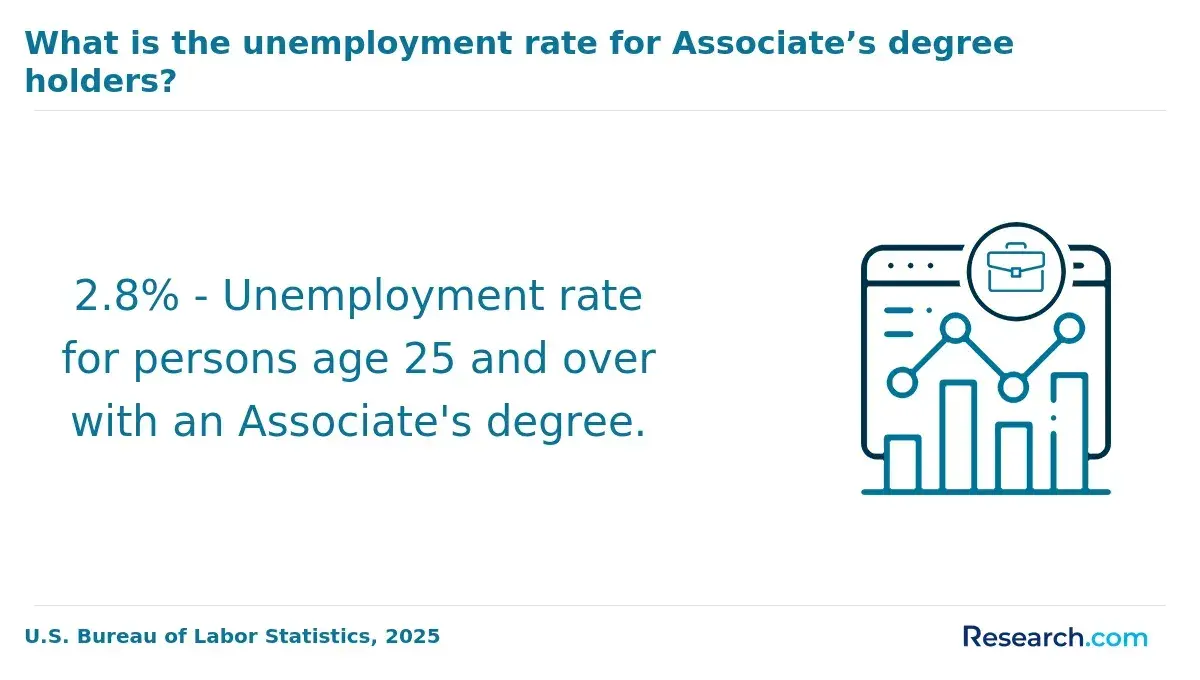
Some students enter disaster management through adjacent public safety fields. If your long-term path begins in law enforcement, corrections, or public safety administration, reviewing the best online associate degree programs in criminal justice can show how earlier credentials may build toward emergency management, homeland security, or doctoral-level public safety leadership later.
Current trends are expanding the skill set expected in many of these roles. AI-enabled risk modeling, geographic information systems, cyber-physical infrastructure threats, climate adaptation planning, and data-driven after-action reporting are becoming more visible in emergency management work. A strong doctoral track should help you interpret these tools responsibly rather than treat technology as a substitute for ethical leadership and community engagement.
Which Disaster Management Doctoral Concentrations Lead to the Highest-Paying Jobs?
No concentration guarantees a higher salary, and earnings depend heavily on sector, geography, clearance requirements, leadership scope, and prior experience.
However, concentrations connected to executive leadership, risk management, homeland security, healthcare administration, analytics, and infrastructure resilience may align with occupations that have higher median wages than traditional local emergency management roles.
The table below uses May 2024 U.S. Bureau of Labor Statistics wage data for related occupations. These figures are occupation-level medians, not degree-specific outcomes, so use them as labor-market context rather than promises:
| Related Occupation | Relevant Doctoral Concentrations | May 2024 Median Annual Wage | How to Interpret the Figure |
| Medical and Health Services Managers | Public health emergency preparedness, healthcare resilience | $117,960 | Relevant for students moving into hospital preparedness, health system resilience, or emergency operations leadership |
| Management Analysts | Business continuity, organizational resilience, disaster consulting | $101,190 | Useful benchmark for consulting-oriented graduates who advise agencies or companies on risk and continuity |
| Operations Research Analysts | Risk analytics, disaster modeling, infrastructure resilience | $91,290 | Relevant when the doctorate includes quantitative methods, modeling, or decision science |
| Emergency Management Directors | Emergency management leadership, homeland security, preparedness | $86,130 | Closest direct labor-market match for many applied disaster management graduates |
| Environmental Scientists and Specialists | Environmental hazards, climate resilience, mitigation planning | $80,060 | Useful comparison for hazard mitigation and environmental risk roles, especially when paired with technical experience |
The highest-paying pathway is often not the one with the most dramatic specialization name. It is the pathway that combines doctoral-level expertise with management authority, technical fluency, measurable project outcomes, and experience in a sector with larger budgets, such as healthcare, consulting, infrastructure, utilities, insurance, or federal contracting.
Students seeking stronger return on investment should evaluate whether the concentration builds marketable evidence, such as publishable research, applied evaluation projects, simulation design, continuity plans, grant-funded studies, policy briefs, or analytics portfolios. These outputs can make the doctorate more visible to employers than the specialization label alone.
Are Online Disaster Management Doctorate Degrees Respected by Employers and Academic Institutions?
Online disaster management doctorates can be respected when they come from accredited institutions, include rigorous research requirements, and align with the student's professional field. Employers and academic committees usually care less about whether coursework was online and more about institutional credibility, dissertation quality, applied expertise, publications, leadership record, and the relevance of the specialization.
Before applying, evaluate program legitimacy using criteria that employers and universities commonly recognize. These checks are especially important for doctoral programs because the credential may influence promotions, faculty applications, consulting credibility, and eligibility for research roles:
- Institutional accreditation: Confirm that the university is accredited by an agency recognized by the U.S. Department of Education or the Council for Higher Education Accreditation.
- Transparent dissertation or doctoral project requirements: Reputable programs clearly explain milestones, committee structure, research ethics review, proposal defense, and final defense expectations.
- Qualified faculty: Look for faculty with emergency management, disaster science, public administration, public health, security, environmental risk, or resilience scholarship.
- Appropriate online support: Verify library access, research software, writing support, statistics help, virtual advising, and doctoral student community.
- Career relevance: Ask whether alumni work in roles similar to your target path and whether the program supports practitioner research, academic publishing, or executive advancement.
A respected online doctorate should not feel easier simply because it is online. Strong programs require sustained research, field-relevant analysis, and independent scholarship. Be cautious if a school promises unusually fast completion, minimizes dissertation expectations, lacks faculty transparency, or emphasizes enrollment pressure over academic fit.
How Do Online Disaster Management Doctoral Programs Handle Research and Dissertation Requirements?
Online disaster management doctoral programs usually handle research through remote coursework, virtual advising, online library systems, research methods training, and structured dissertation milestones. Depending on the program type, the final requirement may be a traditional dissertation, an applied dissertation, a capstone-style doctoral project, or a publishable research portfolio.
The table below explains how specialization choice can affect doctoral research. This is important because a concentration is not just a transcript label; it often determines what data you need, which methods you use, and who can supervise your work:
| Research Focus | Common Data or Evidence | Likely Methods | Example Dissertation or Project Direction |
| Emergency operations leadership | After-action reports, interviews, training records, exercise evaluations | Case study, qualitative interviews, program evaluation | Improving multiagency coordination during large-scale evacuations |
| Public health preparedness | Health department plans, hospital policies, community communication materials | Mixed methods, policy analysis, survey research | Evaluating risk communication strategies for medically vulnerable populations |
| Climate and environmental hazards | Hazard maps, mitigation plans, community vulnerability assessments | Spatial analysis, document analysis, comparative case study | Assessing local adaptation planning for wildfire-prone communities |
| Homeland security | Policy documents, infrastructure risk assessments, security exercise reports | Risk analysis, policy evaluation, qualitative research | Strengthening critical infrastructure preparedness across regional partners |
| Business continuity | Continuity plans, disruption records, organizational interviews | Applied evaluation, case study, decision analysis | Designing a resilience framework for supply chain disruptions |
Students should ask early whether their proposed research requires access to sensitive data, protected health information, agency records, classified environments, or vulnerable populations. Online access does not remove ethics review requirements, and some topics may be difficult if you cannot secure a research site or organizational permission.
A practical way to reduce dissertation risk is to design a topic that is meaningful, feasible, and supervisor-supported. The strongest topics usually sit at the intersection of your professional access, faculty expertise, available data, and a clearly defined disaster management problem.
Can I Work Full-Time While Pursuing an Online Disaster Management Doctorate?
Yes, many online disaster management doctoral students work full-time, especially because the field attracts mid-career emergency managers, public administrators, military personnel, healthcare leaders, public safety professionals, and consultants.
The challenge is not simply attending online classes; it is sustaining research progress while managing professional responsibilities, deployments, exercises, emergencies, and family obligations.
Online formats vary, so compare delivery models carefully. The table below shows how different formats may affect working students:
| Online Format | How It Works | Fit for Full-Time Workers | Watch For |
| Asynchronous courses | Students complete weekly work on their own schedule | Often the most flexible option | Requires strong self-management and steady writing habits |
| Synchronous online sessions | Live classes meet at scheduled times | Useful for structure and discussion | May conflict with shift work, travel, or emergency response duties |
| Hybrid or low-residency format | Mostly online with occasional campus or intensive sessions | Good for networking and dissertation support | Travel costs and time away from work can add up |
| Cohort model | Students move through courses together | Provides accountability and peer support | Less flexible if you need to pause or reduce course load |
To make full-time work and doctoral study more realistic, plan for the dissertation from the first term. Students often struggle when they treat research as something that begins only after coursework:
- Choose a topic connected to your professional environment, but avoid relying on employer data unless permission is realistic.
- Set a weekly research block for reading, citation management, and writing, even during coursework-heavy terms.
- Tell your advisor about predictable work disruptions, such as hurricane season, wildfire season, deployment cycles, audits, or major exercises.
- Build a support plan for residencies, comprehensive exams, proposal defense, and final dissertation defense.
- Avoid overloading electives simply because they sound interesting; prioritize courses that move your dissertation or career goal forward.
The students who manage the workload best usually select a track that complements their current job rather than competes with it. If your role already gives you access to preparedness planning, policy implementation, training, or evaluation work, your doctorate can become part of your professional learning rather than a separate burden.
What Are the Admission Requirements for a Disaster Management Doctoral Program Online?
Admission requirements vary by institution and degree type, but online disaster management doctoral programs commonly expect graduate-level preparation, professional experience, academic writing ability, and a clear research or practice interest.
Some programs admit students with a master's degree in emergency management, public administration, homeland security, public health, criminal justice, environmental management, or a related field.
The table below summarizes common requirements and explains why each matters. Use it as a checklist when comparing programs, but always confirm details with the school because doctoral admission policies differ:
| Requirement | What Programs May Ask For | Why It Matters |
| Prior degree | Usually a master's degree; some programs may consider strong applicants from related fields | Shows readiness for advanced research, theory, and leadership study |
| GPA | Often a minimum graduate GPA set by the university | Helps programs evaluate academic preparation |
| Professional experience | Emergency management, public safety, military, public health, nonprofit, government, or risk roles | Supports applied research and classroom discussion |
| Statement of purpose | Career goals, research interests, specialization fit, and faculty alignment | Helps admissions committees assess whether the program can support your goals |
| Writing sample | Graduate paper, policy analysis, research proposal, or professional report | Shows doctoral-level writing and analytical readiness |
| Recommendations | Academic, professional, or supervisory references | Provides evidence of leadership, persistence, and research potential |
Applicants from adjacent fields should explain the connection clearly. For example, someone with public safety experience may connect criminal justice operations to emergency preparedness, while a healthcare administrator may focus on hospital surge planning or public health crisis response.
If you are still comparing earlier public safety pathways, understanding the criminal justice degree price can help you evaluate the full education ladder before committing to a doctoral route.
A strong application does more than say you are passionate about helping communities. It identifies a problem, shows why the chosen specialization is relevant, and demonstrates that your background gives you a realistic foundation for doctoral research or advanced practice.
How Much Does an Online Disaster Management Doctoral Degree Cost and How Can I Fund It?
The cost of an online disaster management doctorate depends on tuition per credit, required credits, technology fees, dissertation continuation fees, residencies, books, travel, and the time it takes to finish. Because doctoral timelines can extend if the dissertation stalls, the most important cost-control strategy is choosing a program and specialization that support timely research progress.
The U.S. Department of Education lists 2024-25 federal loan interest rates of 8.08% for Direct Unsubsidized Loans for graduate and professional students and 9.08% for Direct PLUS Loans. This matters because doctoral borrowing can become expensive if students finance multiple years of tuition, fees, and dissertation continuation without a clear completion plan.
Common cost categories include the following. Compare them across programs rather than looking only at advertised tuition:
- Tuition per credit or per term.
- Required doctoral credits, including dissertation or project credits
- Technology, library, graduation, and administrative fees.
- Residency or intensive-session travel expenses, if required.
- Books, research software, transcription, data collection, and professional association costs.
- Dissertation continuation fees if research extends beyond the standard timeline.
Funding options vary, but doctoral students should ask about both university aid and employer-supported benefits. Emergency management professionals may also find support through public agencies, military benefits, workforce development programs, or tuition reimbursement plans:
- Employer tuition assistance or professional development funding.
- Federal Direct Unsubsidized Loans and, when needed, Direct PLUS Loans.
- Graduate assistantships, teaching roles, or research assistantships, though these may be less common in fully online professional doctorates.
- Scholarships from professional associations, foundations, or public service organizations.
- Military, veteran, or public service education benefits when applicable.
- Agency-funded training support for roles tied to preparedness, resilience, public health, or homeland security.
Before enrolling, ask the program for a full estimated cost of attendance and a typical completion timeline for students in your intended track. A low tuition rate can become less attractive if the program has weak dissertation support, limited faculty alignment, or required travel that does not fit your budget.
What Is the Difference Between a Disaster Management Ph.D. and a Professional Disaster Management Doctorate?
A disaster management Ph.D. is usually more research-oriented, while a professional doctorate is usually more practice-oriented. Both can be rigorous, but they often prepare students for different kinds of doctoral work and career outcomes.
The table below compares the two degree types. This distinction matters because the best specialization for a future professor may differ from the best track for an executive emergency management leader:
| Feature | Disaster Management Ph.D. | Professional Disaster Management Doctorate |
| Primary purpose | Generate original research and contribute to theory | Apply advanced research to complex professional problems |
| Best fit | Future faculty, scholars, policy researchers, and research directors | Executives, agency leaders, consultants, practitioners, and applied policy professionals |
| Research expectation | Traditional dissertation with stronger emphasis on theory and methodology | Applied dissertation, doctoral project, or practice-based research study |
| Specialization choice | Should align closely with faculty scholarship and publishable research agenda | Should align closely with workplace problems, leadership goals, and applied impact |
| Career signal | Academic and research credibility | Advanced professional leadership and evidence-based practice |
A Ph.D. may be the better choice if you want a tenure-track role, publish in scholarly journals, or build a career around disaster science research. A professional doctorate may be the better fit if you want to lead agencies, redesign preparedness systems, evaluate programs, advise organizations, or solve operational problems using doctoral-level evidence.
The main mistake is assuming one doctorate is automatically more respected than the other. Respect depends on accreditation, rigor, faculty quality, research quality, and career fit. Choose the degree type that matches the work you want to do after graduation.
Other Things You Should Know About Disaster Management
Sometimes, but not always. Some universities list the specialization on the transcript rather than the diploma, while others use it mainly as an internal advising structure. Ask the registrar or program director how the concentration is officially recorded.
Many programs allow changes, but switching tracks can delay progress if required courses, research methods, or faculty supervision needs change. Ask whether completed electives can still count before changing your plan.
A certificate may be enough for targeted skill development or continuing education. A doctoral specialization is more appropriate when you need advanced research training, leadership preparation, dissertation work, or credibility for senior, academic, or consulting roles.
Regional relevance can be useful, especially for applied research and professional networking. However, avoid choosing too narrowly unless the topic also connects to broader methods, policy questions, or career goals that remain valuable outside one location.
References
- Top 30 Most Affordable Online Masters in Emergency Management https://www.bestcollegesonline.org/most-affordable/online-masters-emergency-management/
- Online MPA Programs with a Specialization in Emergency Management & Disaster Management https://www.onlinempaprograms.com/specializations/emergency-disaster-management
- 10 Best Emergency Management Fields https://www.drury.edu/business/management-major/10-best-emergency-management-fields/
- 25 Most Affordable Disaster Management MPH Degrees - MPH Online https://www.mphonline.org/best-disaster-management-mph/
- Careers in disaster risk management | RGS https://www.rgs.org/professionals/professional-practice-groups/disaster-risk-management-ppg/resources/careers-in-disaster-risk-management
- Discover career pathways in Disaster Management – Study Work Grow https://studyworkgrow.com/discover-career-pathways-in-disaster-management/
- Career Opportunities with Online MBA in Disaster Management https://www.onlinecu.in/blog/cu/things-to-do-with-online-mba-disaster-management-in-india