2027 Admission Requirements for Online Disaster Management Doctorate Programs: GPA, Prerequisites, Experience, and Eligibility

Co-Founder and Chief Data Scientist
Figuring out whether you qualify for an online disaster management doctorate can be confusing because programs weigh GPA, prior degrees, prerequisites, emergency-related experience, and research fit differently. The decision matters as online graduate education keeps expanding; NC-SARA's 2024 reporting showed more than 5 million distance-education students at participating U.S. institutions, reflecting how normal online advanced study has become.
This guide helps prospective doctoral students compare admission pathways, identify gaps, and decide whether they are ready to apply or need to strengthen their academic and professional profile first.
Key Things You Should Know
- Most online disaster management doctorate programs expect a graduate GPA near 3.0 or higher, though competitive applicants often show stronger recent graduate-level performance, especially in research, policy, public safety, or emergency management courses.
- A master's degree is commonly preferred or required for PhD, DPA, DHA, or Doctor of Emergency Management-style pathways, but some programs may accept bachelor's-prepared applicants into longer doctoral tracks with additional bridge coursework.
- Prerequisites usually focus on research methods, statistics, public administration, emergency management, homeland security, environmental risk, or health and safety; professional experience is often preferred, and some applied doctorates may expect several years in public safety, emergency services, military, nonprofit, healthcare, or government roles.
What Are the Basic Admission Requirements for an Online Disaster Management Doctorate Program?
At a minimum, most U.S. programs ask applicants to document prior college degrees, official transcripts, a qualifying GPA, a purpose statement, recommendations, and a resume or curriculum vitae. Programs that emphasize research may also ask for a writing sample, research agenda, or evidence of methodological preparation.
The table below summarizes the requirements applicants commonly encounter and explains how each one affects eligibility. Use it as a checklist before contacting admissions offices.
| Requirement area | What programs commonly expect | Why it matters |
| Prior degree | Usually a master's degree for doctoral entry; some programs admit bachelor's-prepared applicants into longer pathways | Shows readiness for graduate-level theory, research, and applied leadership work |
| GPA | Often a minimum around 3.0, especially for the most recent degree | Helps committees assess academic consistency, but it is rarely the only factor |
| Prerequisites | Research methods, statistics, emergency management, public policy, homeland security, public health, or risk analysis may be required or recommended | Prevents students from entering doctoral seminars without the foundation needed for advanced analysis |
| Experience | Professional, leadership, military, emergency services, nonprofit, healthcare, or research experience may be preferred or required | Applied doctorates often expect applicants to connect coursework to real disaster planning and response problems |
| Application documents | Statement of purpose, letters of recommendation, resume or CV, transcripts, writing sample, and sometimes interview materials | Shows fit, communication skill, doctoral motivation, and preparedness |
Applicants from public safety fields often have relevant experience even if their degree title is not "disaster management." For example, someone with an online criminal justice degree may be able to connect law enforcement, corrections, homeland security, or community risk work to doctoral-level disaster policy and emergency preparedness questions.
Do You Need a Master's Degree to Apply for an Online Disaster Management Doctorate?
You often need a master's degree to apply for an online disaster management doctorate, but it depends on the doctorate type and the school's structure. Research-oriented PhD programs and many professional doctorates prefer applicants who have already completed graduate coursework because doctoral study assumes advanced writing, theory, and research skills.
Some programs allow bachelor's-prepared applicants, but those pathways are usually longer and may include master's-level coursework before the student advances to doctoral candidacy. If a program says "master's preferred" rather than "master's required," applicants without a graduate degree should ask whether they are reviewed in the same applicant pool or through a separate bridge route.
The table below compares common pathways. It can help you determine whether you are eligible now or should pursue additional graduate preparation first.
| Applicant background | Likely admission route | Best-fit program type | Possible concern |
| Master's in emergency management, public administration, homeland security, public health, environmental safety, or a related field | Direct doctoral admission | PhD, DPA, Doctor of Emergency Management, DHA, or leadership doctorate with a disaster focus | May still need proof of statistics or research-methods preparation |
| Master's in an unrelated field | Direct admission may be possible with relevant work experience or bridge courses | Applied doctorate or interdisciplinary doctorate | Applicant must explain the connection between prior training and disaster management goals |
| Bachelor's only | Longer doctoral pathway, master's-to-doctorate bridge, or separate master's first | Select professional doctorates or combined graduate pathways | Not all programs allow this route, and completion time may be longer |
| Associate degree or partial college history | Bachelor's completion first | Undergraduate public safety, criminal justice, emergency management, or public administration route | Doctoral admission is not realistic until a bachelor's, and often a master's, is completed |
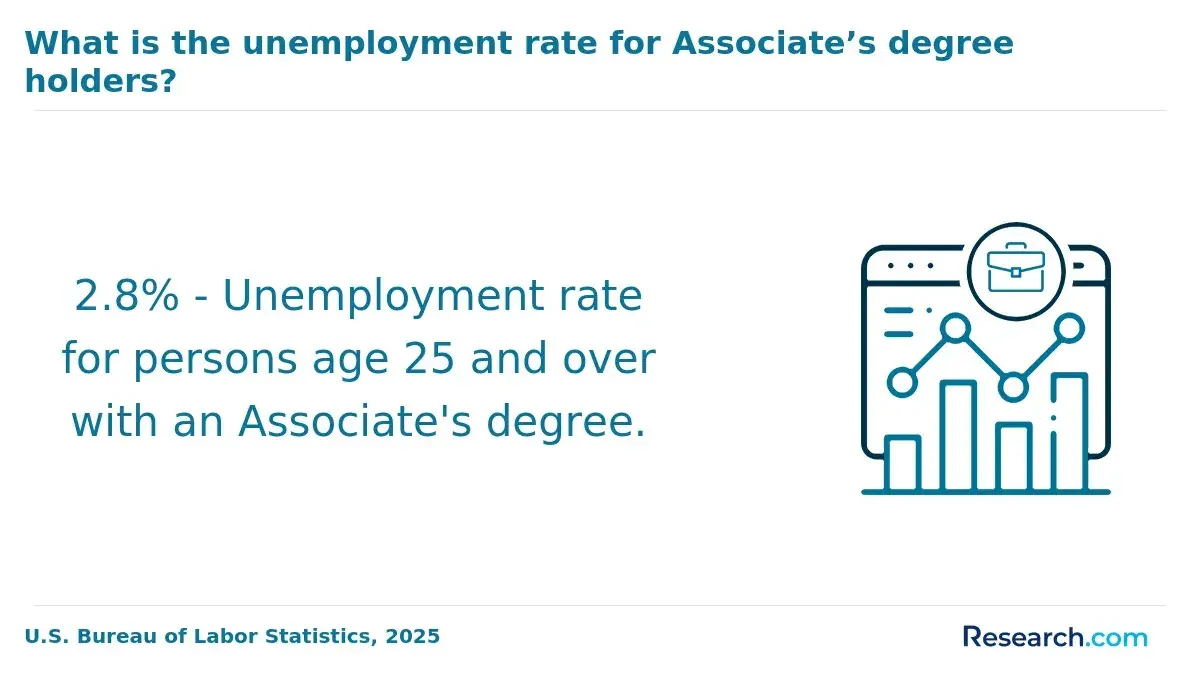
If you are still building the undergraduate foundation for disaster-related public safety work, the best online associate degree programs in criminal justice can be a starting point, but doctoral eligibility will require additional degrees beyond the associate level.
What GPA Do You Need for an Online Disaster Management Doctorate Program?
Most online disaster management doctorate programs use a minimum GPA around 3.0 as a screening benchmark, especially for graduate coursework. Some schools state a minimum cumulative GPA, while others focus on the GPA from the applicant's most recent degree or the last several credits of graduate study.
A 3.0 minimum does not mean admission is automatic. Doctoral committees usually treat GPA as one indicator of readiness alongside research ability, professional experience, recommendations, writing quality, and program fit. A candidate with a 3.1 GPA and a strong emergency management leadership record may be competitive for an applied doctorate, while a research-heavy PhD may expect stronger evidence of methodological preparation.
The table below explains how admissions committees may interpret GPA bands. These ranges are general planning benchmarks, not universal rules.
| GPA profile | How it is usually viewed | What the applicant should emphasize |
| 3.5 or higher | Strong academic signal, especially if earned in graduate-level coursework | Research interests, faculty fit, leadership experience, and writing sample quality |
| 3.0 to 3.49 | Commonly eligible if the program minimum is 3.0 | Recent coursework strength, relevant experience, clear doctoral goals, and strong recommendations |
| 2.75 to 2.99 | May require conditional review, GPA exception, or additional evidence | Graduate certificates, statistics or research courses, professional achievements, and a direct explanation of past academic issues |
| Below 2.75 | Often difficult for direct admission unless the program has a formal exception process | Substantial recent academic improvement, completed graduate coursework, and advisor confirmation before applying |
When comparing programs, check whether the GPA requirement applies to the bachelor's degree, master's degree, all college coursework, or the last degree earned. This distinction matters because a strong master's GPA can sometimes offset a weaker undergraduate record.
Can You Get Into an Online Disaster Management Doctorate Program With a GPA Below 3.0?
Yes, admission may be possible with a GPA below 3.0, but it is not something applicants should assume. Programs that allow exceptions usually require evidence that the low GPA does not reflect current doctoral readiness. This is especially important for online students because faculty need confidence that applicants can manage independent reading, writing, research, and deadlines without frequent in-person support.
Applicants below the stated GPA threshold should take a deliberate approach before submitting applications. These steps can help you avoid spending money on applications that are unlikely to move forward.
- Ask admissions whether the program has conditional admission, provisional admission, or a GPA petition process before applying.
- Find out whether the committee gives more weight to graduate GPA, last-degree GPA, or recent post-baccalaureate coursework.
- Complete one or more relevant graduate courses in statistics, research methods, emergency management, public administration, or risk analysis and earn strong grades.
- Use the statement of purpose to explain the academic trend briefly and professionally, focusing on what changed and why you are prepared now.
- Choose recommenders who can speak directly to your analytical writing, leadership, research ability, or readiness for doctoral-level study.
Common mistakes include assuming that work experience automatically cancels out GPA concerns, submitting a defensive explanation, or applying to programs that clearly state "no exceptions." A better strategy is to contact the program, verify the policy, and apply only where your improvement evidence fits the school's review process.
If you are considering additional coursework in a related public safety field before reapplying, compare tuition carefully. Resources that explain the average criminal justice degree price can help you estimate whether a certificate, bachelor's completion route, or master's course sequence is financially reasonable before committing.
What Prerequisite Courses Are Required for an Online Disaster Management Doctorate Program?
Prerequisite courses vary by program, but online disaster management doctorates commonly look for prior preparation in research, statistics, public policy, emergency management, risk, and organizational leadership. Some schools require specific courses before admission; others admit students with gaps and require leveling courses during the first year.
The table below shows common prerequisite areas and why they matter in doctoral study. Use it to compare your transcript against the program's course catalog and admissions page.
| Prerequisite area | Examples of acceptable preparation | Why it matters in a doctorate |
| Research methods | Graduate research design, qualitative methods, quantitative methods, program evaluation | Supports dissertation, capstone, or applied research design |
| Statistics | Applied statistics, data analysis, biostatistics, social science statistics | Helps students evaluate disaster trends, risk data, and emergency planning outcomes |
| Emergency management foundations | Preparedness, mitigation, response, recovery, incident command, continuity planning | Provides the operational language used in disaster policy and practice |
| Public administration or policy | Public finance, administrative law, policy analysis, intergovernmental relations | Connects disaster work to government systems and resource decisions |
| Risk, safety, or environmental systems | Hazard analysis, environmental health, occupational safety, climate risk, infrastructure resilience | Prepares students to analyze technical and community-level vulnerability |
| Leadership or organizational behavior | Strategic leadership, crisis leadership, nonprofit management, healthcare administration | Supports advanced roles that require cross-agency coordination |
If you lack one or two prerequisites, do not assume you are ineligible. Ask whether the school accepts graduate certificates, nondegree coursework, professional certifications, or employer-based training as partial evidence of preparation. However, be careful: FEMA, military, or employer training may strengthen an application but may not replace transcripted graduate coursework when a university specifically requires statistics or research methods.
Applicants interested in hazard prevention, workplace safety, environmental risk, or public health preparedness may also compare the best online environmental health and safety programs as related preparation, especially if their long-term doctoral interest involves environmental disasters, industrial incidents, or occupational safety leadership.
Can You Apply for an Online Disaster Management Doctorate With a Degree in Another Field?
You can often apply with a degree in another field if you can show that your background connects to disaster management. The field is interdisciplinary, so admissions committees may consider applicants from criminal justice, public administration, public health, environmental science, nursing, engineering, social work, urban planning, cybersecurity, military studies, nonprofit leadership, or business continuity.
The key issue is not the exact title of your prior degree. It is whether you can demonstrate readiness for the program's academic expectations and a credible reason for pursuing disaster management research or leadership. An unrelated degree with no professional connection may require more explanation, prerequisites, or a preparatory certificate.
Applicants changing fields should make the connection explicit in their materials. The following points are especially important when your transcript does not obviously match the doctorate.
- Explain the disaster management problem you want to study or solve, such as evacuation planning, climate-related hazard mitigation, public health emergency coordination, cyber-physical infrastructure risk, or community resilience.
- Identify transferable skills from your prior field, such as data analysis, policy writing, operations management, logistics, public communication, safety compliance, or interagency coordination.
- Show evidence of academic preparation through research methods, statistics, policy, leadership, or risk-related coursework.
- Ask whether the program requires leveling courses for students without emergency management or public administration backgrounds.
A common red flag is a statement of purpose that says the applicant is "interested in disasters" but does not explain a doctoral-level question, population, agency setting, or research direction. Strong applicants connect their past training to a specific contribution they want to make.
How Much Professional or Research Experience Do Online Disaster Management Doctorate Programs Require?
Experience expectations differ sharply by doctorate type. Applied doctorates often value professional leadership because students are expected to connect theory to practice, while research-oriented PhD programs may place more weight on research experience, academic writing, and methodological fit.
Labor-market context helps explain why experience matters. The U.S. Bureau of Labor Statistics reported a median annual wage of $83,960 for emergency management directors in its May 2023 occupational data published in 2024. That figure does not mean a doctorate leads directly to that role or salary, but it shows that many disaster management pathways sit within experienced professional and administrative labor markets rather than entry-level work.
The table below summarizes the types of experience that may strengthen an application. It is not a universal admissions scale, but it can help you evaluate whether your background is relevant.
| Experience type | Examples | How it may support admission |
| Emergency management practice | Preparedness planning, EOC work, disaster response, continuity planning, recovery coordination | Shows direct field relevance and applied problem awareness |
| Public safety or homeland security | Law enforcement, fire service, EMS, corrections, military, intelligence, border, or transportation security | Connects crisis operations, command systems, and public risk to doctoral study |
| Healthcare or public health | Hospital emergency preparedness, infection control, community health response, health system resilience | Supports disaster health, surge capacity, and population vulnerability research |
| Environmental, safety, or infrastructure work | Environmental health, occupational safety, utilities, transportation, critical infrastructure, climate adaptation | Supports hazard mitigation and technical risk analysis interests |
| Research or evaluation | Graduate thesis, published work, policy analysis, program evaluation, data projects | Signals readiness for dissertation or applied doctoral research |
| Leadership and administration | Supervisory roles, nonprofit management, agency coordination, training design, grant management | Shows capacity to lead complex projects and work across organizations |
If a program does not state a minimum number of years, do not interpret that as "experience does not matter." Instead, assume the committee will look for evidence that you understand the field well enough to ask meaningful doctoral questions.
Are the GRE, GMAT, or English-Proficiency Tests Required for an Online Disaster Management Doctorate?
GRE and GMAT requirements are less common than they once were in many professional and online doctoral programs, but requirements still vary by school. Some programs are test-optional, some waive exams for applicants with a qualifying graduate GPA or advanced degree, and some research-oriented programs may still request GRE scores.
The important distinction is between "not required" and "not considered." If a program is test-optional, strong scores may still help an applicant with a borderline GPA, limited research background, or older academic record. If a program says scores are not reviewed, submitting them will not improve the application.
English-proficiency testing is a separate issue. International applicants and some U.S. residents educated in another language may need TOEFL, IELTS, the Duolingo English Test, or another approved exam unless they qualify for a waiver. Because doctoral work requires advanced reading and writing, schools may enforce these requirements even when GRE or GMAT exams are waived.
Before applying, verify testing policies directly with the admissions office. Ask these questions so you do not miss a requirement or submit unnecessary scores:
- Is the GRE or GMAT required, optional, waived by GPA, or not considered at all?
- If optional, are scores useful for applicants with a GPA below the preferred threshold?
- Do test scores expire after a certain number of years?
- Which English-proficiency exams are accepted, and what waiver rules apply?
- Are there separate testing rules for international applicants, military applicants, or applicants with prior U.S. graduate degrees?
What Application Documents Do Online Disaster Management Doctorate Programs Require?
Online disaster management doctorate applications usually require more than transcripts and a form. Committees use the full file to judge whether the applicant can succeed in a rigorous online doctoral environment and whether the program can support the applicant's goals.
The documents below are commonly required or strongly recommended. Each one should be tailored to the program rather than reused without revision.
- Official transcripts from every college or university attended, including transfer institutions and graduate certificates.
- Resume or curriculum vitae showing emergency management, public safety, military, healthcare, nonprofit, environmental safety, policy, leadership, teaching, or research experience.
- Statement of purpose explaining your doctoral goals, relevant background, research or applied problem area, and reason for choosing that specific program.
- Letters of recommendation from people who can evaluate your graduate-level writing, leadership, research ability, professional judgment, or readiness for doctoral work.
- Writing sample, such as a graduate research paper, policy analysis, thesis chapter, published article, professional report, or capstone project.
- Proof of English proficiency, transcript evaluation, or immigration documentation when required for international applicants.
- Interview, portfolio, or supplemental essay if the program uses holistic or faculty-led review.
Transfer-credit eligibility is another document-related issue. Some programs allow a limited number of prior doctoral credits to transfer, but they usually review syllabi, grades, accreditation, credit age, and course equivalency. Master's credits typically support admission readiness rather than reducing doctoral credit requirements unless the program explicitly permits advanced standing.
Common mistakes include submitting a generic statement, using recommenders who only know you personally, failing to explain a low GPA, overlooking transcript evaluation requirements, or assuming that professional certifications automatically count as academic credit. A stronger approach is to build an application narrative in which every document supports the same message: you are prepared, focused, and a good fit for the program.
What Do Admissions Committees Look for in Online Disaster Management Doctorate Applicants?
Admissions committees look for more than minimum eligibility. They want evidence that you can finish the program, contribute to the field, and use the doctorate for a realistic academic, leadership, policy, or applied research goal. This is especially important in online programs, where self-direction, writing discipline, and time management are central to success.
Strong applicants usually show alignment across academics, experience, goals, and faculty or curriculum fit. The following factors tend to matter most in holistic review:
- Academic readiness: Recent success in graduate-level coursework, especially in research, statistics, policy, or disaster-related subjects.
- Field relevance: Professional or volunteer experience tied to emergency management, public safety, public health, military service, environmental risk, infrastructure, or community resilience.
- Doctoral focus: A clear research or applied problem that fits the program's curriculum and faculty expertise.
- Writing ability: Evidence that you can synthesize literature, analyze complex problems, and communicate clearly.
- Professional judgment: Recommendations and work history that show ethical decision-making, leadership, collaboration, and resilience under pressure.
- Online readiness: Ability to manage asynchronous coursework, independent research, technology platforms, and long-term deadlines.
Accreditation also matters when evaluating where to apply. Look for institutional accreditation recognized by the U.S. Department of Education or the Council for Higher Education Accreditation. Programmatic accreditation may be less standardized in disaster management than in fields such as nursing or counseling, but public administration, public health, business, or safety-related accreditations may matter depending on the program's home department and your career goals.
The best next step is to create a program-by-program admissions grid before applying. Track GPA rules, degree requirements, prerequisites, testing policy, experience expectations, faculty fit, tuition, transfer-credit limits, and deadlines. This prevents one of the most common doctoral admissions mistakes: assuming that requirements are interchangeable across online programs.
Other Things You Should Know About Disaster Management
Many online doctorates take about 3 to 5 years after a master's degree, depending on enrollment status, dissertation or capstone pace, transfer credits, and whether the program uses cohorts. Bachelor's-entry pathways usually take longer because they include additional graduate coursework.
It can strengthen your application, especially for applied programs, but it may not replace transcripted prerequisite coursework. Ask whether the school evaluates noncredit training for admission evidence, transfer credit, or portfolio review.
It can be respected when the institution is properly accredited, the curriculum matches the role, and the student has relevant experience. Employers typically care more about accreditation, skills, leadership record, and applied expertise than whether the coursework was online.
For research-oriented doctorates, yes, if the program encourages it. A brief, focused email about your research interests can help you assess fit. For applied professional doctorates, admissions advisors may be the better first contact unless faculty matching is part of the process.
References
- What Employers Say a Certification Adds to Resumes https://www.nrep.org/blog/what-employers-say-about-certifications
- Eligibility https://studentaffairscertification.org/get-certified/eligibility
- 2025 Most Affordable Online Emergency Management Degrees https://www.onlineu.com/most-affordable-colleges/emergency-management-degrees
- How to Become an Emergency Management Specialist https://www.publichealthdegrees.org/careers/emergency-management-specialist/
- BLOEMFONTEIN CAMPUS FACULTY CONTACT https://www.ufs.ac.za/natagri/departments-and-divisions/disaster-management-training-and-education-centre-for-africa-home/academic-programmes/phd-in-disaster-management
- Eligibility Pathways for Professional Certification https://assess.com/eligibility-pathways-certification/
- CPH Eligibility Requirements - NBPHE https://www.nbphe.org/certified-in-public-health/cph-eligibility-requirements/
- Emergency Management Career | Degree and Licensing Paths https://www.publichealthonline.org/emergency-management-career/
- Online Bachelor's in Emergency and Disaster Management https://www.monroeu.edu/academics/undergraduate-programs/school-criminal-justice/online-bachelors-emergency-and-disaster
- Become Certified https://www.childlife.org/certification/become-certified