2027 Online Digital Photography Degree Programs With No Application Fee and Rolling Admissions

Co-Founder and Chief Data Scientist
Choosing an online digital photography degree is not just about finding the easiest application. The better question is whether a no-fee, rolling-admission program lowers barriers without weakening academic quality, career value, or affordability. The U. S. Bureau of Labor Statistics reported a May 2024 median annual wage of $42,520 for photographers, so cost control matters for students entering a competitive creative field.
This guide is for working adults, career changers, transfer students, and first-time applicants who want flexible admissions and a practical way to compare programs before enrolling.
Key Things You Should Know
- No-application-fee policies usually save only the upfront application charge; the larger decision is total tuition, technology costs, transfer-credit value, and financial aid eligibility.
- Rolling admissions can help students start sooner, but it does not mean "no deadlines" because financial aid, scholarship, portfolio review, transcript processing, and course-seat limits may still apply.
- For career planning, use salary data cautiously: the BLS listed $42,520 as the May 2024 median annual wage for photographers, but outcomes vary widely by specialization, location, portfolio quality, and freelance business skills.
Which Online Digital Photography Degree Programs Have No Application Fee and Rolling Admissions?
The clearest answer is that only a limited number of online photography-focused degrees publicly combine both features: no application fee and rolling or frequent admissions. Policies can change, so students should treat the programs below as strong starting points and confirm the current application fee, start dates, and degree title directly with admissions before submitting materials.
This table summarizes programs that are commonly relevant to students searching for an online digital photography degree with low application friction. It focuses on degree-level options rather than short noncredit courses because accreditation, financial aid, and transfer-credit value matter most for long-term planning.
| School | Online photography degree option | Application-fee position to verify | Admissions format | Accreditation context | Best-fit student |
| Southern New Hampshire University | BA in Digital Photography | Commonly advertises no undergraduate application fee | Rolling admission with multiple online undergraduate term starts | Regionally accredited by NECHE | Students seeking a broad online bachelor's degree with general education, photography coursework, and transfer-credit flexibility |
| Sessions College | Associate Degree in Digital Photography | Commonly presents a no-fee application process | Open or rolling-style admissions with defined semester or term starts | Institutionally accredited by DEAC | Students who want a shorter undergraduate path focused on digital imaging, editing, lighting, and portfolio development |
| Rocky Mountain College of Art + Design | BFA in Photography, online option | Commonly promotes a free application | Rolling admissions with multiple start opportunities | Regionally accredited by HLC; art and design accreditation should be verified for the specific program | Students seeking a studio-oriented BFA with a heavier creative portfolio and visual arts emphasis |
Because the qualifying list is relatively short, students should also compare closely related online programs in visual communication, digital media, graphic design, and digital cinematography if their career goal includes content creation rather than still photography alone. A no-fee application is helpful, but it should not outweigh degree fit, portfolio outcomes, faculty feedback, transfer-credit policies, or total program cost.
How Does Rolling Admission Work for Online Digital Photography Degree Programs?
Rolling admission means a school reviews applications as they arrive instead of waiting for one fixed deadline. For online digital photography programs, this often pairs with several start dates each year, allowing students to begin in the next available term once transcripts, identification, financial aid documents, and any portfolio materials are complete.
The main benefit is timing flexibility. A student who misses a traditional fall deadline may not have to wait a full academic year; they may be able to start in the next online term. The limitation is that rolling admissions still depends on processing time, course availability, financial aid readiness, and whether the student meets academic requirements.
The comparison below shows why rolling admission is useful but not automatically better for every applicant. Use it to decide whether flexibility or structured deadline planning matters more for your situation.
| Admissions model | How applications are reviewed | Typical advantage | Common limitation | Best for |
| Rolling admissions | Applications are reviewed continuously or by recurring term cycles | Students can apply when ready and may start sooner | Financial aid, scholarships, portfolio review, and course seats may still have deadlines | Working adults, transfer students, and applicants who need scheduling flexibility |
| Fixed deadline | Applications are reviewed after a set priority or final deadline | Students know the exact application calendar and decision window | Missing the deadline can delay enrollment by a term or year | Students targeting competitive scholarships, honors options, or cohort-based studio programs |
| Open enrollment-style admission | Applicants may enter if they meet published eligibility requirements | Lower admissions complexity and faster entry | May offer less selectivity as a signal of portfolio competitiveness | Students seeking access, career reskilling, or a shorter credential pathway |
A common mistake is assuming rolling admission means admission is guaranteed. It does not. Schools may still deny applicants who lack a high school diploma or equivalent, have unresolved transcript issues, miss portfolio requirements, or fail to meet minimum academic standards.
How Much Can Students Save by Choosing an Online Digital Photography Degree With No Application Fee?
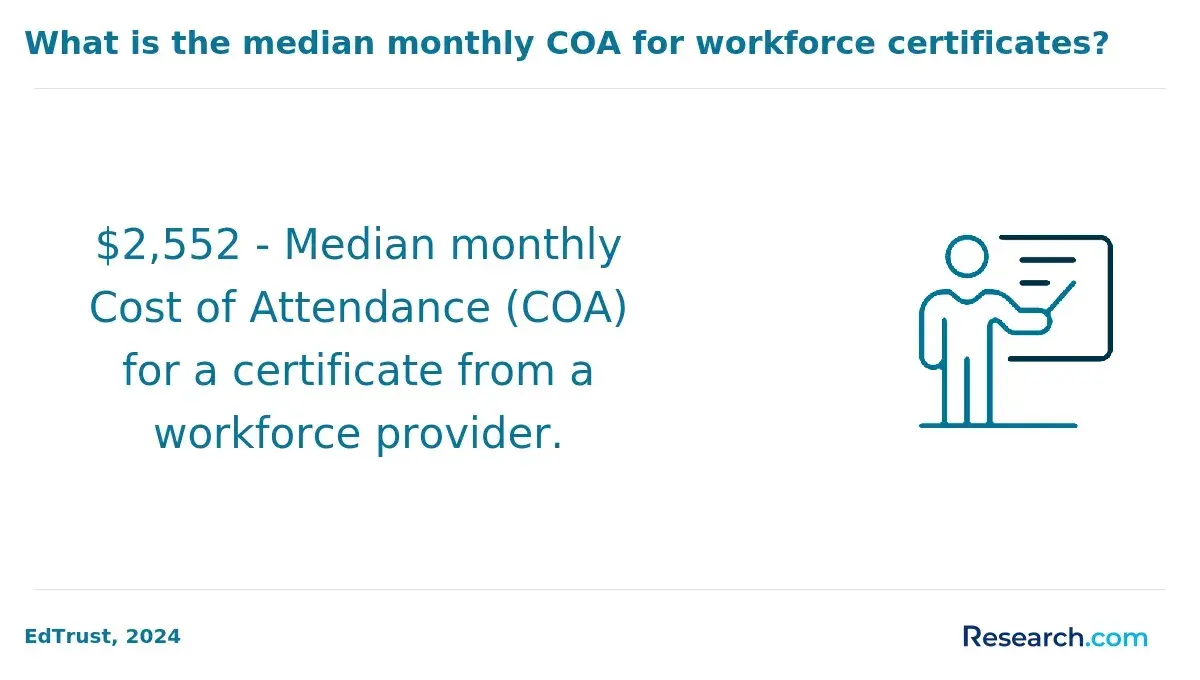
A no-application-fee policy can reduce upfront risk, especially if you are comparing several schools. However, the savings are usually small compared with tuition, required software, camera equipment, books, graduation fees, transcript charges, and potential portfolio-production costs.
The better way to evaluate savings is to separate application-stage costs from enrollment-stage costs. This table shows where the waived application fee fits into the broader cost picture.
| Cost category | What it may include | Why it matters | How to evaluate it |
| Application-stage costs | Application fee, transcript requests, test-score requests if required | No-fee applications reduce the cost of comparing programs | Confirm whether the fee is permanently waived or only waived during promotions |
| Enrollment-stage costs | Tuition deposit, orientation fee, technology fee, student services fee | Some schools with free applications still charge costs after admission | Ask for a written estimate before accepting admission |
| Program costs | Tuition, books, Adobe Creative Cloud or equivalent software, camera body, lenses, lighting, storage, printing | Photography programs can require tools beyond standard online-course materials | Ask which items are required immediately and which can be substituted or borrowed |
| Opportunity costs | Reduced work hours, unpaid project time, travel for optional residencies or portfolio events | Online study still requires substantial production and editing time | Build a weekly time budget before enrolling |
For perspective, a 120-credit bachelor's program priced at $330 per credit would total $39,600 in tuition before fees. That example shows why a waived application fee can be useful but should never be treated as proof that the degree is affordable overall.
Students comparing lower-cost education paths should think beyond photography alone. If the main goal is fast employment in a structured administrative or finance support role, a shorter option such as bookkeeper certification may offer a different cost and timeline profile than a creative bachelor's degree.
What Are the Admission Requirements for No-Fee Online Digital Photography Degree Programs?
Admission requirements vary by school and degree level. Associate and bachelor's programs usually require proof of high school completion or equivalent, while transfer applicants must submit official college transcripts. BFA programs may also place more emphasis on artistic intent, portfolio readiness, or prior creative work.
Before applying, gather the materials most commonly requested by online digital photography programs. Having these ready helps you benefit from rolling admissions instead of losing weeks to missing documents.
- Official high school transcript, GED documentation, or homeschool completion record if you are a first-time undergraduate applicant
- Official transcripts from every college previously attended, even if credits were earned years ago or in a different major
- Government-issued identification and residency information for tuition classification, if applicable
- Short personal statement or admissions questionnaire explaining your academic goals and interest in photography
- Portfolio samples, if required, especially for BFA or studio-intensive programs
- Technology readiness confirmation, including access to a computer capable of photo-editing work
- English-language proficiency documentation for applicants educated in non-English-language environments, if required by the school
Portfolio requirements deserve special attention. Some online photography programs admit beginners and do not require a formal portfolio, while others use portfolio review to place students, evaluate creative readiness, or award credit. If you are unsure, ask whether smartphone photography, edited images, commercial work, fine-art images, or class projects are acceptable.
Another mistake is assuming that a no-fee application means the school will accept incomplete materials. Rolling admissions can move quickly only when documents are complete, official, and matched to the correct applicant record.
When Should Students Apply to Online Digital Photography Degree Programs With Rolling Admissions?
Students should apply as soon as they have a realistic target start term and can provide complete documents. For online photography degrees, an ideal application window is often several weeks before the desired start date because transcript processing, financial aid packaging, transfer-credit evaluation, and course registration can take time.
The most practical approach is to work backward from your intended first day of class. This sequence helps students avoid the false comfort of "rolling" admissions.
- Choose a target start term and ask the school for the last date to submit a complete application for that term.
- Request all official transcripts early, especially from colleges that process records slowly or use third-party transcript services.
- Ask whether transfer credits must be evaluated before registration or can be finalized after enrollment.
- Complete the FAFSA and check whether institutional scholarships have priority deadlines separate from admission.
- Confirm required camera, software, and computer specifications before the course begins.
- Register as early as allowed because rolling admission does not guarantee that every course section has unlimited seats.
Federal aid timing matters. The maximum Federal Pell Grant for the 2025-26 award year is $7,395, and eligible students can lose planning flexibility if they wait too long to complete aid forms or submit verification documents. Even with rolling admission, financial aid offices may need extra time before funds are ready for the first term.
This timing principle applies across online education, not just photography. Students comparing flexible programs in other fields, such as an accelerated masters in counseling, should also verify whether admissions, course starts, clinical placement timelines, and financial aid deadlines operate on separate calendars.
How Can Students Strengthen an Online Digital Photography Degree Application?
A strong application shows that you are ready for online study, visual problem-solving, critique, and sustained creative work. Even when admission is accessible, better preparation can improve placement, scholarship consideration, transfer-credit review, and your first-term experience.
Focus on the parts of the application that demonstrate seriousness and readiness. The steps below are especially useful for students applying to BFA programs or any program that asks for a portfolio.
- Curate a small set of your strongest images instead of submitting every project you have completed.
- Include variety, such as portrait, product, documentary, landscape, studio, or conceptual images, if the program allows it.
- Show editing judgment by avoiding overprocessed images unless the style clearly supports the concept.
- Write a concise statement explaining what you want to learn, not just why you like photography.
- Label files professionally and follow the school's required format, size, and submission instructions.
- Ask admissions whether portfolio feedback is available before formal submission.
- Prepare for online learning by documenting your weekly study schedule, technology access, and workspace.
AI tools are also changing the field. Employers and clients increasingly expect photographers to understand digital workflows, metadata, image editing, file management, content rights, and ethical disclosure when AI-assisted editing is used. A stronger application can mention your interest in responsible technology use without presenting AI-generated images as original camera work unless the program explicitly allows it.
Are Online Digital Photography Degree Programs With No Application Fees Accredited and Legitimate?
Yes, some no-fee, rolling-admission online digital photography degrees are offered by legitimate accredited institutions. However, no application fee and rolling admissions are admissions policies, not quality indicators. Accreditation, curriculum, faculty, student work, transferability, and financial aid eligibility are more reliable signs of legitimacy.
Students should verify accreditation before enrolling because it can affect federal financial aid, credit transfer, graduate admission, and employer confidence. Use the school's official accreditation page and the U.S. Department of Education's Database of Accredited Postsecondary Institutions and Programs, but also ask whether any art-specific accreditation applies to the photography or design department.
Watch for red flags that may indicate a weak or risky program. These issues do not automatically mean a school is illegitimate, but they should prompt more questions before you enroll.
- The school advertises "free application" prominently but makes tuition, fees, or equipment costs hard to find.
- Admissions staff cannot clearly explain whether admission is rolling, open, cohort-based, or tied to fixed start dates.
- The program claims unrealistic career outcomes or suggests a degree alone will guarantee freelance income.
- Credits are unlikely to transfer because the institution lacks recognized accreditation or has limited articulation agreements.
- The curriculum appears outdated and does not address digital editing, lighting, workflow, rights management, portfolio development, or contemporary media platforms.
- The program requires synchronous attendance, campus visits, or specialized equipment but does not disclose those requirements early.
Students considering adjacent creative technology fields should use the same accreditation and cost-checking process. For example, applicants comparing photography with online colleges for game design should evaluate program outcomes, portfolio expectations, software costs, and employer-relevant skills rather than relying on application policies alone.
How Do Financial Aid and Total Costs Compare Among Online Digital Photography Degree Programs?
Total cost varies by degree level, tuition rate, transfer credits, enrollment pace, and required materials. A student who transfers 60 credits into a bachelor's program may pay far less than a first-time student completing all 120 credits at the same school, even if both applied for free.
This comparison shows the major cost and aid variables students should request from each school. It is more useful than comparing the application fee alone because it connects admissions flexibility to actual affordability.
| Cost or aid factor | Why it affects total price | Question to ask the school |
| Per-credit tuition | Small differences multiply across 60 to 120 credits | What is the current online undergraduate tuition rate for this program? |
| Transfer-credit acceptance | Accepted credits can reduce both cost and time to completion | How many credits can I transfer, and will photography or studio courses transfer? |
| Fees | Technology, student services, graduation, and course fees can add cost beyond tuition | Can you provide a full fee schedule for online students? |
| Equipment and software | Photography programs may require cameras, lenses, lighting, storage, and editing software | Which items are required in the first term, and are student discounts available? |
| Federal financial aid | Eligible accredited programs may allow grants, loans, and work-study consideration | Is this specific program eligible for federal student aid? |
| Scholarships | Creative, transfer, adult learner, military, and institutional scholarships may reduce net cost | Do scholarship deadlines differ from rolling admissions deadlines? |
College Board's 2024 pricing data showed that published tuition and fees at four-year institutions can vary widely by sector, which means students should compare net price rather than sticker price whenever possible. For photography applicants, this is especially important because freelance and entry-level creative income can be uneven early in a career.
If you are using photography as a pathway into entrepreneurship, studio ownership, or creative business management, compare the degree's business coursework with alternatives in other fields. Students primarily focused on management ROI may also want to review affordable online MBA programs later in their education planning.
Which Students Benefit Most From No-Fee, Rolling-Admission Online Digital Photography Degrees?
No-fee, rolling-admission photography degrees are most valuable for students who need flexibility but still plan to evaluate academic quality carefully. They are less useful for students who treat the waived fee as the main reason to enroll.
The students who often benefit most share one or more of the following circumstances. These profiles can help you decide whether the admissions model fits your life and goals.
- Working adults who need to apply around job schedules and prefer several possible start dates.
- Transfer students who want to compare credit evaluations from multiple schools without paying several application fees.
- Military-connected students who may need flexible enrollment windows because of relocation, deployment, or benefit timing.
- Career changers who want to test admissions options before committing to a full creative degree.
- Students who missed a traditional fall deadline but are ready to begin online coursework sooner.
- Applicants who are still building a portfolio and want an admissions advisor to clarify expectations before submission.
Students should be more cautious if they need a highly selective art-school environment, a campus studio culture, extensive in-person critique, darkroom access, or a specialized commercial photography network in a major media market. In those cases, a traditional program with fixed deadlines may be worth considering even if the application fee is higher.
Photography can be rewarding, but it is not the only creative academic path. Students comparing passion, earnings potential, and job flexibility may find it useful to explore majors that make money and are fun before choosing a degree primarily because the application is free.
How Should Students Choose Among No-Fee Online Digital Photography Degree Programs?
The best choice is the program that fits your career goal, budget, schedule, and learning style after you account for total cost. A free application and rolling admissions should help you compare options; they should not replace a full program review.
Use a decision process that starts with your intended outcome. A student who wants freelance portrait clients may need business, lighting, and portfolio courses, while a student interested in editorial or fine-art photography may value critique, visual theory, and exhibition preparation more heavily.
- Define your target role, such as freelance photographer, studio assistant, photo editor, content creator, product photographer, visual media specialist, or fine-art photographer.
- Confirm that the program is a true degree program, not only a short course or noncredit certificate using similar marketing language.
- Verify the current application fee in writing because waiver policies may change by term or applicant type.
- Ask whether admissions are genuinely rolling or simply offered through several fixed online starts.
- Compare net price after grants, scholarships, employer tuition assistance, military benefits, and transfer credits.
- Review the curriculum for lighting, digital workflow, editing, color management, portfolio development, visual storytelling, copyright, and business practices.
- Ask how online critiques work, including whether feedback is asynchronous, live, one-on-one, peer-based, or instructor-led.
- Check graduate work samples, student portfolios, internship support, career services, and alumni outcomes where available.
- Confirm whether any residency, live attendance, proctored exam, or specialized equipment requirement could affect your schedule.
- Choose the program that offers the strongest mix of affordability, accreditation, curriculum depth, transfer value, and career relevance.
A helpful rule is to apply for free strategically, not impulsively. Because no-fee applications reduce comparison costs, you can request admissions decisions and transfer evaluations from multiple schools, then choose based on the actual degree plan and net price rather than marketing claims.
Finally, compare photography with adjacent creative and business pathways if your goals are broader than image-making alone. Creative students often combine photography with design, marketing, e-commerce, media production, or entrepreneurship, and the right degree should support that larger direction.
Other Things You Should Know About Digital Photography
A degree is usually broader and may include general education, visual theory, business, critique, and portfolio development. A certificate is usually shorter and may work better for students who already have a degree or only need targeted technical skills.
Most students need a reliable computer, photo-editing software, storage or backup tools, and a camera that meets course requirements. Some courses may also require specific lenses, lighting, tripod use, printing, or color-management tools.
Yes, some photographers build careers through portfolios, client work, apprenticeships, and self-directed learning. A degree may still help students who want structured critique, broader visual training, business preparation, transfer credits, or a credential for media-related roles.
AI is becoming part of editing, image organization, background cleanup, and content production workflows. Students should learn both how to use AI-assisted tools responsibly and how to protect the value of original photography, authorship, client trust, and ethical disclosure.
References
- Best Online Photography Degrees https://www.onlineu.com/degrees/photography
- Diploma in Digital Photography and Photoshop | Free Course | Alison https://alison.com/course/diploma-in-digital-photography
- Remote Internships & Virtual Internships | The Intern Group https://theinterngroup.com/our-programs/virtual-internships
- Online Photography Degree | Associate Degree (AOS) https://www.sessions.edu/online-degrees/digital-photography/
- Online Photography Degrees https://www.affordablecollegesonline.org/degrees/best-online-bachelors-in-photography-programs/
- How Much Does it Cost to Learn Photography? https://blog.nobledesktop.com/learn/photography/photography-cost-to-learn