2027 Online Digital Marketing Doctorate Program Costs: Tuition, Fees, Financial Aid, and Employer Reimbursement

Co-Founder and Chief Data Scientist
An online digital marketing doctorate can be a major investment, especially as graduate borrowing becomes more expensive. Federal graduate Direct Unsubsidized Loans carry an 8.08% interest rate for 2024-25, while Grad PLUS Loans carry 9.08%, making upfront cost planning more important than ever.
This guide is for working marketers, business faculty candidates, agency leaders, and executives weighing a terminal credential. You'll learn how tuition, fees, aid, employer reimbursement, and career ROI fit together so you can decide whether the degree is financially realistic.
Key Things to Know About Online Digital Marketing Doctorate Program Costs
- Because few schools use the exact label "online digital marketing doctorate," most comparable programs are online DBA, PhD in business, marketing, strategic communication, or digital transformation doctorates; tuition commonly depends on 45 to 60 credits, per-credit pricing, dissertation enrollment, and residency requirements.
- Federal graduate aid can cover substantial costs, but it is not free money: graduate students may borrow up to $20,500 per year in Direct Unsubsidized Loans, and Grad PLUS Loans can cover remaining eligible costs after credit approval.
- Employer reimbursement can materially reduce out-of-pocket cost, but many employers cap tax-free educational assistance at $5,250 per year and may require job relevance, minimum grades, continued employment, and preapproval before the course begins.
What is the average tuition cost of an online Digital Marketing doctorate program?
The short answer: there is no single national average published specifically for "online Digital Marketing doctorate" programs because the credential is usually housed under business administration, marketing, communication, analytics, or leadership departments. For budgeting, most students should compare programs by total required credits, not just the advertised per-credit rate.
A practical tuition-only planning range for online digital marketing-related doctoral study is often about $35,000 to $90,000 before fees, books, travel, and dissertation extension costs.
Lower-cost options are usually public universities with competitive graduate rates or programs that accept transfer doctoral credits, while higher-cost options tend to be private nonprofit or private for-profit programs with flat per-credit tuition and required residencies.
The table below shows how tuition can change based on credit load and pricing model. Use it as a comparison framework, then verify each school's current tuition, doctoral fees, and dissertation rules directly with the bursar or graduate admissions office:
| Cost factor | Lower-cost scenario | Higher-cost scenario | Why it matters |
| Required credits | 45 credits | 60 or more credits | Extra credits compound quickly, especially when charged per credit. |
| Per-credit tuition | About $700 to $900 | About $1,200 to $1,500 or more | A small per-credit difference can add thousands to the total. |
| Dissertation enrollment | Included in standard credit plan | Charged every term until completion | Slow dissertation progress can become one of the largest hidden costs. |
| Transfer credit | Accepted from prior doctoral or graduate work | Limited or unavailable | Transfer policies may reduce tuition, but only if credits apply to degree requirements. |
Students comparing doctoral options after a master's may also want to benchmark lower-level marketing costs first; a cheapest online marketing degree search can help show how much more expensive doctoral-level study can be compared with graduate marketing programs below the doctorate.
Are online Digital Marketing doctorate programs subject to distance learning or technology fees?
Yes. Many online doctoral programs charge technology, online learning, library, student services, graduation, transcript, proctoring, or dissertation-related fees in addition to tuition. These charges may appear small per term, but they matter because doctorate students often enroll for several years.
Distance learning fees are especially important for online digital marketing students because the program may require learning management systems, analytics platforms, virtual collaboration tools, research databases, and dissertation support systems. Some schools include these costs in tuition; others list them separately on the student account.
The table below summarizes common fee categories and how they can affect your budget. The key is not whether a fee is "normal," but whether it is included in the quoted total cost of attendance:
| Fee type | How it usually appears | Budget risk |
| Technology or online learning fee | Per credit or per term | Can raise the effective per-credit cost beyond advertised tuition. |
| Residency or doctoral seminar fee | Per required session | May not include travel, lodging, or meals. |
| Dissertation continuation fee | Per term after coursework | Can increase total cost if research takes longer than expected. |
| Graduation and administrative fees | One-time charges | Small individually but often missed in early budgeting. |
| Proctoring or assessment fee | Per course or exam | Varies by course design and school policy. |
Before enrolling, ask for a term-by-term cost sheet rather than a tuition estimate. A strong cost sheet should separate tuition, mandatory fees, optional fees, residency expenses, estimated books, loan fees, and dissertation continuation costs.
What out-of-pocket expenses should online Digital Marketing doctorate students anticipate?
Out-of-pocket expenses are the costs you may need to pay even when tuition is covered by loans, scholarships, or employer reimbursement. For online digital marketing doctoral students, these costs often relate to research, software, travel, and time away from work.
The expenses below are worth checking before you commit because they are often excluded from headline tuition quotes. They can also vary widely depending on whether the program emphasizes academic research, applied business consulting, analytics, consumer behavior, social media strategy, or digital transformation:
- Books, case studies, and journal access not included in tuition or library subscriptions.
- Marketing analytics, survey, data visualization, SEO, advertising, or statistical software subscriptions required for coursework or dissertation research.
- Computer upgrades, webcam, microphone, secure internet, and backup storage needed for synchronous classes and research work.
- Travel, lodging, meals, and lost work time for required residencies, dissertation defenses, conferences, or campus intensives.
- Professional association memberships, conference presentation fees, and academic poster or publication costs.
- Dissertation expenses such as participant recruitment, transcription, research incentives, editing, formatting, or institutional review board-related administrative costs where applicable.
A useful budgeting method is to create two totals: the school's official cost of attendance and your personal cash-flow cost. The first helps with financial aid; the second helps you understand whether you can realistically pay term bills, travel costs, and software expenses while working.
Students whose digital marketing interests overlap with user research, conversion optimization, and digital product strategy may also compare curriculum and tool costs against an affordable UX degree, especially if their career goal is product growth rather than academic or executive marketing leadership.
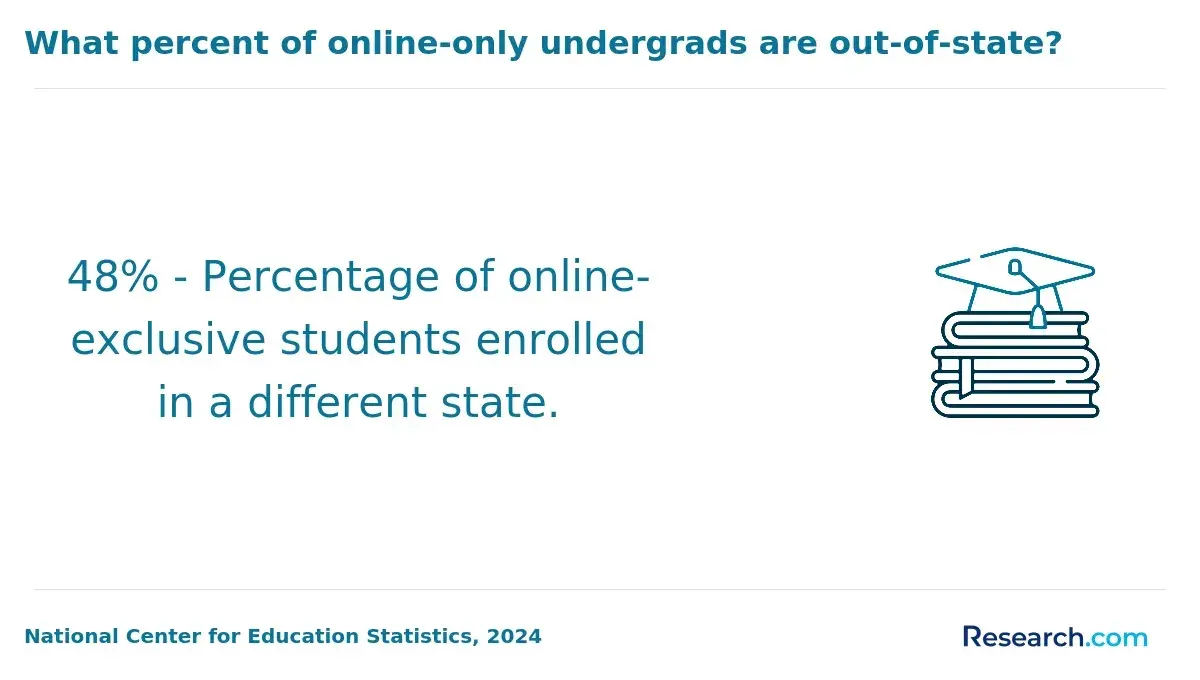
Does in-state versus out-of-state residency status impact online Digital Marketing doctorate tuition?
Residency can matter, but it depends on the university's online pricing model. Some public universities charge different graduate tuition rates for in-state and out-of-state students, while others use one flat online rate for all distance learners. Private institutions usually charge the same tuition regardless of state residency, although fees and discounts can still vary.
In-state tuition is not automatically the cheapest option. A public out-of-state program with a flat online rate may cost less than a public in-state program with higher doctoral fees, required residencies, or more credits. Likewise, a private nonprofit program may be more expensive per credit but faster to complete if it accepts more transfer credits or has a structured dissertation pathway.
The table below compares the main residency-based pricing models. Use it to avoid assuming that public, private, in-state, or online status alone determines affordability:
| Pricing model | Best fit | Potential drawback |
| Public in-state graduate tuition | Residents who can access a lower state-supported rate | May still include online fees, residencies, and limited course availability. |
| Public out-of-state tuition | Students targeting a specialized faculty or research area | Can be substantially higher if no online rate applies. |
| Flat-rate online tuition | Working professionals comparing programs nationally | May remove residency differences but not necessarily reduce total cost. |
| Private institutional tuition | Students seeking flexible pacing, cohort models, or applied DBA formats | Sticker price can be high, and scholarships vary by school. |
The best approach is to compare "total program cost at your expected pace," not tuition category. Ask each school to calculate the cost for your residency status, intended credit load, possible transfer credits, and likely dissertation timeline.
How do total costs for an online Digital Marketing doctorate compare to traditional on-campus programs?
Online programs often reduce relocation, commuting, parking, and campus housing costs, but they are not automatically cheaper than on-campus doctorates. The true comparison depends on tuition structure, assistantship access, residency requirements, and whether you can keep working while enrolled.
For working professionals, the biggest online advantage is usually income preservation. If the online format allows you to remain employed full time, the opportunity-cost savings may be larger than the tuition difference.
For students pursuing academic research careers, however, an on-campus PhD may provide more access to funded assistantships, teaching experience, faculty mentorship, and research networks.
The table below compares common cost differences. It is most useful for deciding whether online flexibility is worth the possible trade-off in campus-based funding opportunities:
| Cost category | Online doctorate | On-campus doctorate |
| Tuition | May use flat online rates or standard graduate rates | May vary by residency and funding status |
| Housing and relocation | Usually avoidable unless residencies are required | Often required if the student must live near campus |
| Employment continuity | Often compatible with full-time work | May require reduced work hours or full-time campus presence |
| Assistantships | Less consistently available | More common in research-intensive doctoral programs |
| Networking costs | May require conference or residency travel | More built into campus life but still may require conferences |
An online doctorate tends to make the most financial sense for experienced professionals who already have strong career momentum and need flexibility. A traditional on-campus doctorate may make more sense for students targeting tenure-track academic roles and seeking institutional funding, supervised teaching, and intensive research apprenticeship.
Can graduate assistantships and fellowships reduce online Digital Marketing doctorate costs?
They can, but online students should not assume they are available. Graduate assistantships and fellowships are more common in campus-based PhD programs than in professionally oriented online DBA or applied doctorate programs. When available, they may reduce tuition, provide a stipend, or offer hourly pay for teaching, research, administration, or faculty support work.
Assistantships are valuable because they reduce borrowing and may build teaching or research experience. The trade-off is time: assistantship duties can slow progress if you are already working full time, caring for family, or completing dissertation research.
When contacting programs, ask direct questions because funding rules vary by school and department. The following questions help you find out whether institutional funding is realistic for an online doctoral student;
- Are online doctoral students eligible for teaching assistantships, research assistantships, or tuition waivers?
- Are assistantships limited to full-time students, campus residents, or specific doctoral tracks?
- Does the award cover full tuition, partial tuition, fees, or only a stipend?
- How many hours per week are required, and can the work be completed remotely?
- Does assistantship participation extend the program timeline or affect course sequencing?
- Are fellowships available for dissertation research, conference travel, or underrepresented student groups?
Students pursuing academic careers should weigh assistantship access heavily. Students pursuing executive marketing leadership may find that employer reimbursement, consulting income, or part-time pacing is more practical than a traditional assistantship.
What financial aid options are available for students enrolled in an online Digital Marketing doctorate?
Financial aid for online digital marketing doctoral students usually depends on accreditation, enrollment status, program eligibility, and citizenship or eligible noncitizen status. The most common federal path is the Free Application for Federal Student Aid, followed by Direct Unsubsidized Loans and, when needed, Grad PLUS Loans.
Federal graduate borrowing can be significant, so it should be used carefully. For 2024-25, graduate Direct Unsubsidized Loans have an 8.08% fixed interest rate, and Grad PLUS Loans have a 9.08% fixed interest rate. That means every borrowed amount should be weighed against expected career benefit, repayment capacity, and lower-cost funding options.
The table below compares major funding options. It focuses on how each option affects cost rather than simply listing what exists:
| Funding option | How it can help | Important limitation |
| Direct Unsubsidized Loan | Can provide up to $20,500 per year for eligible graduate students | Interest begins accruing after disbursement. |
| Grad PLUS Loan | Can cover remaining eligible cost of attendance after other aid | Requires credit approval and has a higher interest rate than Direct Unsubsidized Loans. |
| Institutional scholarship | Reduces tuition without repayment | May be competitive, limited, or tied to enrollment pace. |
| Assistantship or fellowship | May provide tuition support, stipend, or research funding | Often less available to online students than campus students. |
| Employer reimbursement | Can reduce cash cost while the student keeps working | Often capped annually and may require continued employment. |
| Payment plan | Spreads term charges across installments | Does not reduce total cost and may include plan fees. |
Before borrowing, confirm that the institution is properly accredited and that the specific online doctoral program is eligible for federal aid. Students comparing broader graduate business pathways can also review affordable online business degree options to understand how doctoral study fits into the larger business education cost landscape.
Does employer tuition reimbursement cover an online Digital Marketing doctorate?
Employer tuition reimbursement may cover an online digital marketing doctorate if the degree is relevant to the employee's current role or future leadership path. Commonly eligible employees include marketing directors, digital strategy managers, brand leaders, analytics managers, agency executives, higher education staff, and business development professionals.
The federal tax code allows employers to provide up to $5,250 per year in tax-free educational assistance to an employee when the plan meets applicable requirements. Employers may offer less, more, or no reimbursement, but amounts above the tax-free threshold may have tax consequences unless another exclusion applies.
Reimbursement policies often include conditions, so read the plan document before enrolling. The most common requirements include the following:
- The program must be job-related or aligned with an approved career path inside the company.
- The employee must receive manager or HR approval before the course or term begins.
- The student must earn a minimum grade or satisfactory progress mark.
- The school must be accredited or otherwise approved by the employer.
- The employee may need to stay with the company for a set period after reimbursement.
- Reimbursement may apply only to tuition, excluding fees, books, travel, and dissertation expenses.
Employer reimbursement works best when your organization benefits directly from your doctoral research. For example, a dissertation on marketing attribution, customer experience, AI-enabled segmentation, or digital transformation may be easier to justify than a purely theoretical topic with limited workplace application.
How can working professionals negotiate employer sponsorship for an online Digital Marketing doctorate?
Negotiating sponsorship is different from casually asking for tuition reimbursement. You need to show how the degree will solve business problems, improve marketing performance, develop leadership capacity, or support retention. The strongest proposals connect coursework and dissertation research to measurable company needs.
Use a structured request instead of asking only whether the employer "pays for school." The steps below help you frame the doctorate as a business investment rather than a personal expense:
- Identify the company problem your doctoral work can address, such as customer acquisition cost, retention, brand measurement, marketing analytics maturity, or digital channel performance.
- Map specific courses, research methods, or dissertation topics to that business problem.
- Calculate the annual amount requested, separating tuition from fees, software, travel, and books.
- Offer a commitment plan, such as sharing research findings, leading internal training, mentoring marketing staff, or applying projects to company campaigns.
- Ask whether the employer can combine tuition reimbursement, professional development funds, conference funds, or paid study time.
- Clarify repayment terms if you leave the company before a required service period ends.
A strong sponsorship proposal should also include risk controls for the employer. Offer regular progress updates, grade documentation, a clear completion timeline, and a plan for how dissertation findings will be translated into practical recommendations.
Avoid one common mistake: asking after enrollment. Many companies deny reimbursement if approval was not granted before the term started, even if the program is relevant and accredited.
What ROI can graduates expect from an online Digital Marketing doctorate?
The ROI of an online digital marketing doctorate depends on your starting salary, total net cost, debt interest, time to completion, and career goal. It is usually strongest for professionals who already work in marketing leadership, analytics, consulting, higher education, or executive strategy and can use the doctorate to move into higher-responsibility roles.
Salary data can help frame expectations, but it should not be treated as a guarantee. The U.S. Bureau of Labor Statistics reported a May 2024 median pay of $159,660 for advertising, promotions, and marketing managers.
That figure reflects the broader occupation, not only doctorate holders, but it shows why experienced marketing leaders may be able to justify doctoral study if the credential supports advancement into senior strategy, consulting, or academic roles.
The table below outlines common ROI scenarios. Use it to evaluate whether the degree fits your career path rather than assuming the doctorate has the same payoff for every student:
| Career goal | How the doctorate may help | ROI caution |
| Executive marketing leadership | May strengthen credibility in strategy, analytics, digital transformation, and organizational decision-making | Experience and business results may matter more than the credential alone. |
| Consulting or agency leadership | May support premium positioning, research-backed advisory work, and thought leadership | ROI depends heavily on client pipeline and reputation. |
| Higher education teaching | May qualify graduates for some faculty, lecturer, or program leadership roles | Tenure-track roles may prefer research-intensive PhD training and publication records. |
| Corporate research or analytics leadership | May strengthen advanced research, consumer insight, and measurement expertise | Technical analytics skills and portfolio evidence may still be required. |
| Career change into marketing | May provide credibility but is often an expensive first step | A master's, certificate, or portfolio-driven path may be more cost-effective. |
Before enrolling, calculate your break-even point. Subtract scholarships, employer reimbursement, and assistantship support from total program cost, then estimate the realistic annual income increase you would need to justify the remaining cost and loan interest.
Students focused mainly on platform strategy, creator marketing, and community growth may also compare doctoral study with specialized social media degree programs before committing to a much larger doctoral investment.
Other Things You Should Know About Digital Marketing
Yes, but only if the school accepts the credits and applies them to doctoral requirements. Ask for a written transfer evaluation before enrolling, because some programs limit transfer credits or exclude credits used for a completed degree.
Accreditation can affect federal aid eligibility, employer reimbursement, credit transfer, and academic credibility. Before paying an application deposit, verify both institutional accreditation and any relevant business or programmatic accreditation expectations for your career goal.
Yes. Many programs charge dissertation continuation, enrollment, or supervision fees until completion. Students can reduce this risk by choosing a focused research topic early and confirming faculty availability before the dissertation phase.
Part-time enrollment may improve monthly cash flow, but it is not always cheaper overall. If the program charges recurring term fees or dissertation continuation fees, taking longer can increase the final cost.
References
- Online Business Degrees with Digital Marketing https://www.coloradotech.edu/degrees/studies/business-and-management/articles/online-business-digital-marketing-degree
- How Much Does a PhD Cost? UK & Global Guide for 2026 https://www.discoverphds.com/advice/funding/how-much-does-a-phd-cost
- 30 Marketing Scholarships with November 2025 Deadlines https://bold.org/scholarships/by-major/marketing-scholarships/
- Tuition Reimbursement Programs [A Guide for HR and Employers] https://compt.io/blog/employee-tuition-reimbursement/
- Average Cost of a Doctorate Degree [2026]: Ph.D., Psy.D. & More https://educationdata.org/average-cost-of-a-doctorate-degree
- 2025 Most Affordable Online Marketing Degrees https://www.onlineu.com/most-affordable-colleges/marketing-degrees
- Role of Marketing Costs in the OPM Regulation Debate https://onedtech.philhillaa.com/p/role-of-marketing-costs-in-the-opm-regulation-debate
- Educational Funding https://phdproject.org/educational-funding/
- Financial Aid for Online Colleges: What You Need to Know https://joinjuno.com/financial-literacy/financial-aid/financial-aid-online-colleges