2027 Online Data Science Master's for Financial Analysts: A Career Transition Guide

Co-Founder and Chief Data Scientist
An online data science master's can help a financial analyst move into more technical work, but it is not the right investment for every transition. Your existing experience with forecasts, risk, and business decisions may be valuable; the question is whether a program will add the coding, statistics, and project experience your target role requires.
This guide helps you identify realistic roles, evaluate programs against those roles, and decide whether a degree offers enough value over a smaller training commitment.
Key Things You Should Know
- Start with a target role, not a degree title. Finance-focused analytics and risk roles may build directly on analyst experience; machine-learning roles generally call for deeper programming and modeling evidence.
- Check technical depth before enrolling. A useful program should let you demonstrate coding, statistical evaluation, and projects using financial data - not just learn to use dashboards.
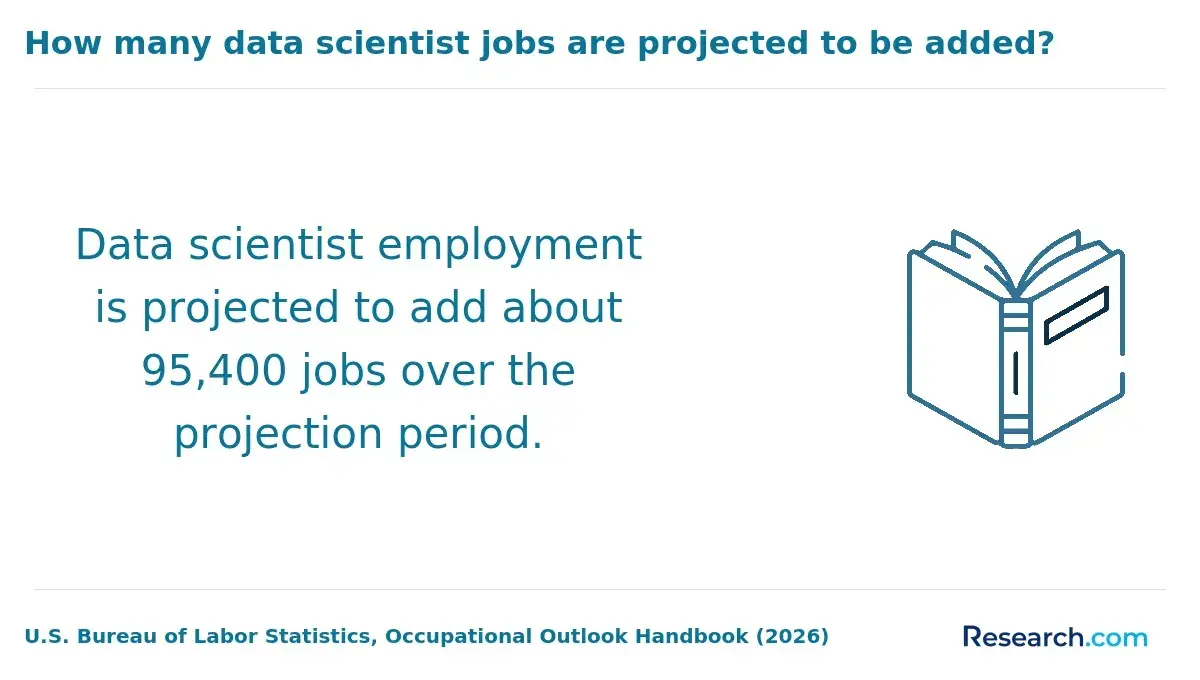
- Weigh opportunity against cost. The U.S. Bureau of Labor Statistics (BLS) projects 35% growth in data scientist employment from 2025 to 2035, but that occupation-wide forecast does not predict your hiring prospects or return on a particular degree.
What is an online data science master's for financial analysts?
It is a graduate degree in data science completed primarily online, chosen to develop skills beyond an analyst's existing finance toolkit. The most relevant programs connect programming, statistical inference, machine learning, and data engineering to decisions involving forecasts, portfolios, credit, fraud, pricing, or risk. A finance concentration can help, but substantial technical coursework and applicable projects matter more than the concentration's name.
The degree is one possible route, not a required credential for every analytics job. If you mainly want stronger reporting, SQL, and business analysis skills, compare data analytics master's degrees as well. If you want to design and evaluate predictive models, examine whether a data science program provides more of the statistical and computing depth you need.
How can financial analysts transition into data science with an online master's?
Begin by matching what you already do to a specific job description. Forecasting, explaining results to executives, checking assumptions, and understanding financial constraints transfer well. The gaps are often writing production-quality code, working with messy data at scale, testing models rigorously, and documenting their limitations. Which gaps matter most depends on the role.
A transition plan should produce evidence that an employer can inspect, not merely a transcript. Use these steps to test whether a master's is necessary before committing:
- Collect several postings for one target role and separate required skills from preferred credentials.
- Build a small project using data you may legally share; include a baseline, an appropriate validation method, and an explanation of the financial decision it informs.
- Compare your remaining gaps with actual course descriptions and project requirements. Ask whether courses teach implementation or only introduce concepts.
- Look for a chance to apply the skills in your current organization, then reassess whether structured graduate study would add value that shorter training cannot.
For example, a credit-risk project should address how information available at the time of a decision differs from data collected later. That distinction can reveal more about your readiness than a sophisticated model trained with information it could not have had in practice.
What careers can financial analysts pursue after earning a data science master's?
The most plausible first move is often into a role that still rewards financial judgment. Titles vary across employers, so compare responsibilities rather than assuming that every "data scientist" job involves the same work. The table shows how common destinations differ in their use of prior analyst experience.
| Target role | How finance experience helps | Additional evidence likely to matter |
| Financial or product data scientist | Frames revenue, pricing, or customer questions | Reproducible analysis, statistical testing, and model evaluation |
| Credit, fraud, or risk modeler | Understands losses, controls, and decision thresholds | Predictive modeling, validation, and clear documentation |
| Quantitative analyst | Understands markets and financial instruments | Role-specific mathematics, programming, and backtesting |
| Analytics engineer or advanced analyst | Connects reliable metrics to business decisions | SQL, data modeling, software practices, and data quality work |
A master's may strengthen your case, but it does not replace role-specific experience. Quantitative trading, for example, may demand mathematical and market skills that a broad data science curriculum does not teach. If you are considering a move out of finance altogether, investigate the new industry's data and constraints separately; AI study options for health data careers illustrate why an industry-specific path warrants its own evaluation.
What do online data science master's programs teach financial analysts?
Core subjects commonly include programming, probability and statistics, databases, machine learning, and communicating results. For a finance career changer, the important distinction is depth: seeing machine learning in an introductory survey is different from implementing models, comparing them against baselines, and explaining failure modes in a substantial project.
Look for curriculum that supports the financial questions you want to answer. Time-series work can be relevant to forecasting, but a program should also teach how to avoid look-ahead bias. Classification can support fraud or credit work, while model evaluation should account for uneven error costs, data drift, and the consequences of a false prediction. Courses in data engineering or software practices matter if the target role involves maintaining pipelines or deploying models.
Do not assume that a finance-themed elective guarantees a finance capstone or access to employer data. Check recent course descriptions, elective availability, project rules, and whether a final project permits a financially relevant question. Ask to see the expected deliverable: a presentation alone may be less useful for a technical transition than documented code, methods, evaluation, and limitations.
What are the admission requirements for an online data science master's?
Requirements vary by program. Schools may review an applicant's bachelor's degree, grades, quantitative preparation, programming experience, recommendations, and written materials. A finance background neither automatically satisfies nor rules out admission: one analyst may have extensive statistics and Python experience, while another may have worked mainly in spreadsheets.
Separate formal prerequisites from skills that would make the coursework manageable. For each shortlisted program, check its current admissions page for required mathematics or computing courses, whether work experience can demonstrate readiness, and whether a preparatory course counts toward a stated prerequisite. Self-study can improve your preparation without necessarily fulfilling a transcript-based requirement.
If application writing is a particular barrier, note that policies differ even across related degrees. Researching online machine learning master's degrees with no application essay can surface alternatives, but verify the current requirements of each program rather than treating a different degree's policy as evidence about data science admissions.
How long does an online data science master's take and cost?
Completion time depends on required credits, course availability, enrollment pace, and any limits on time to degree. A working analyst should request both a part-time course sequence and the program's maximum completion period. An advertised fastest path may rely on a workload or course schedule that does not fit full-time employment.
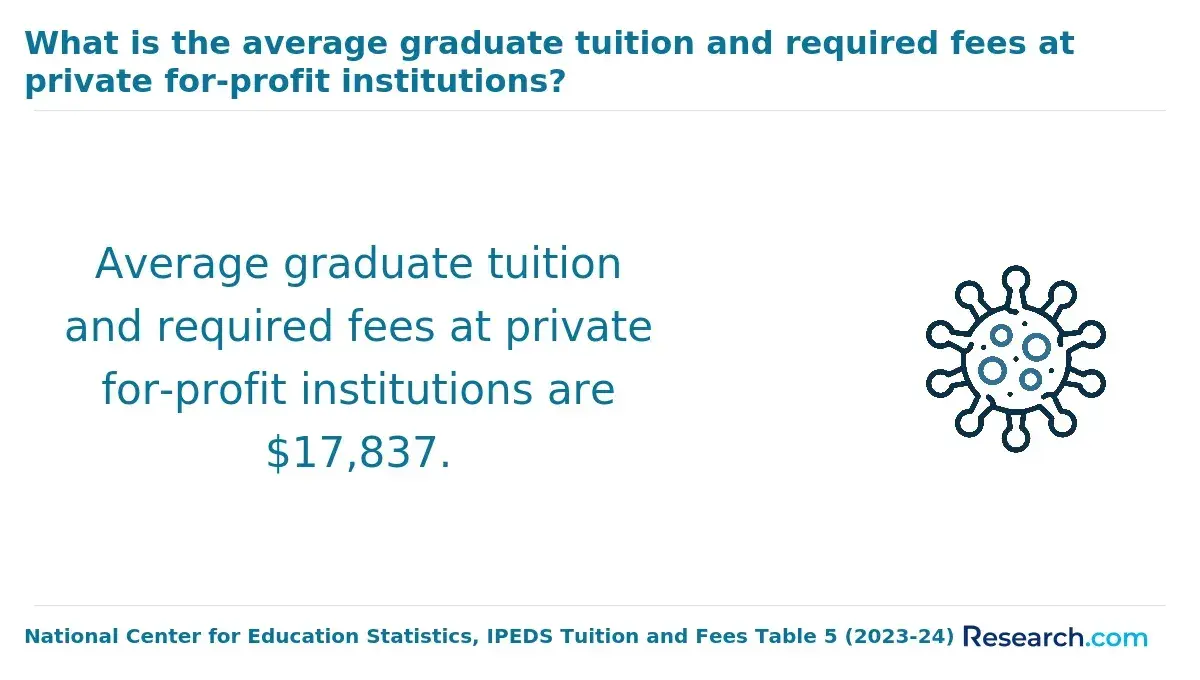
Published tuition is not the full financial commitment. The following components explain why two programs with similar advertised rates can have different total costs; obtain a current, personalized estimate before comparing them.
| Cost component | What to confirm |
| Tuition | Required credits, applicable rate, and whether rates can change |
| Mandatory fees | Technology, student, course, or graduation charges |
| Other expenses | Software, materials, equipment, and any required travel |
| Financing and work impact | Loan costs, employer assistance rules, and any reduced work hours |
Compare the total estimated cost against the incremental opportunities you expect, not against a data scientist's full salary. If your goal is specifically AI engineering rather than finance-focused data science, affordable online artificial intelligence master's degrees offer another path to investigate. Lower tuition alone is not a saving if the curriculum misses the skills your target job requires.
How do online and campus-based data science master's programs compare?
The key difference for an employed analyst is usually access and scheduling, not whether the credential can be rigorous. Online study can let you keep working and apply new methods on the job. Campus study may make in-person collaboration and local recruiting easier. Neither format guarantees flexibility, professional connections, or a particular career outcome.
Choose a format based on its actual operating rules: whether classes meet live, when exams occur, how group projects work, and whether residencies or campus visits are required. Ask both online and campus programs what career services and employer events their students can use. Alumni networking as a factor in AI master's selection is relevant to adjacent AI programs too, but the useful question is whether students in your chosen format can meaningfully access that network.
How can financial analysts verify data science program accreditation?
Check the institution first, then any specialized claim. In the U.S., institutional accreditation is a basic verification point for a degree program; specialized accreditation should not be assumed simply because a school uses the words "data science." Accreditation also does not establish that a curriculum suits your target job.
Before applying, use the institution's current accreditation information and confirm its status through the U.S. Department of Education's accreditation database or the Council for Higher Education Accreditation directory. Check the precise institution and credential, not just a similarly named campus or partner. Separately, confirm that the school may enroll students in your state and ask whether your online format has any required in-person activities. These are distinct questions from accreditation.
What salaries can financial analysts earn after moving into data science?
BLS reports a $120,230 median annual wage for U.S. data scientists in May 2025. That is an occupation-wide midpoint, not an entry-level offer, a finance-industry salary, or a prediction of what an analyst will earn after graduation. Pay for a particular move depends on responsibilities, location, employer, prior experience, and the role you leave.
For a useful personal comparison, look at compensation for the exact jobs you could plausibly pursue and compare it with your current total compensation. If a school publishes graduate salaries, ask who responded, whether the figure describes salary level or increase, and how many graduates already worked in technical roles. Do not credit a degree with an entire salary difference when experience and job changes may also explain it.
What certifications and skills strengthen a financial analyst's data science career?
Prioritize demonstrable skills over collecting credentials. Python or another language used by target employers, SQL, statistical reasoning, version control, and clear technical writing are valuable when you can apply them to a relevant problem. For finance-oriented modeling, add careful attention to data timing, validation, and the business cost of errors.
A certification may help document a specific tool skill, but its value depends on the job and employer. A finance designation can still communicate domain expertise; it does not, by itself, demonstrate that you can build or evaluate a data pipeline or predictive model. Before paying for another credential, compare job postings with your portfolio and choose the most consequential missing skill. A strong work sample should explain the financial question, data permissions, method, baseline, results, and limits.
Other Things You Should Know About Data Science
Only if your employer permits it and you can comply with confidentiality and data-use rules. Otherwise, describe the problem and your contribution without disclosing protected details, or recreate the method with data you are allowed to publish.
Not necessarily. Ask whether the program accepts an independently sourced project, permits an employer-sponsored project, and requires any daytime meetings. Employer data may need approval before you use it for coursework.
That depends on your workplace. If there is a supportive internal path, asking for a defined analytics project can help you test the transition. Clarify expectations about your current duties and ownership of any resulting work.
Connect your finance experience to the target role, then show technical evidence. Describe the decision your analysis supported, the methods you used, and the result you could verify; distinguish professional work from course or personal projects.
References
- Cost of Attendance (Budget) | 2025-2026 Federal Student Aid Handbook https://fsapartners.ed.gov/knowledge-center/fsa-handbook/2025-2026/vol3/ch2-cost-attendance-budget
- Types of Financial Aid: Grants, Work-Study, and Loans | studentaid.gov https://studentaid.gov/understand-aid/types
- Accreditation in the U.S. | ed.gov http://www.ed.gov/laws-and-policy/higher-education-laws-and-policy/college-accreditation/accreditation-in-the-us
- How to Become a Quant | MSCF | Carnegie Mellon University https://www.cmu.edu/mscf/news/how-to-become-a-quant
- Online Program - UChicago Data Science Institute https://datascience.uchicago.edu/education/masters-programs/online-program/
- Exploring Careers at the Intersection of Data Science and Finance | University of Dallas https://blog.udallas.edu/tower-thoughts/exploring-careers-at-the-intersection-of-data-science-and-finance
- What Can I Do With a Degree in Data Science? Career Paths & Skills | Harvard SEAS https://seas.harvard.edu/news/what-can-i-do-degree-data-science-career-paths-skills
- M.S. in Data Science, Online | virginia.edu https://datascience.virginia.edu/degrees/msds-online
- Master of Science (M.S.) in Applied Data Science - UGA Online https://online.uga.edu/degrees-certificates/master-of-science-in-applied-data-science/
- What Can You Do with a Master's Degree in Data Science? | UCLA MSOL Data Science https://www.msol.ucla.edu/data-science-engineering/articles/what-can-you-do-with-masters-degree-data-science/