2027 Model Risk Management in an Online Data Science Master's: Courses, Projects, and Program Selection

Co-Founder and Chief Data Scientist
Choosing an online data science master's for model risk management takes more than finding "responsible AI" in a course description. Prospective students, especially analysts seeking validation, governance, or regulated-industry roles, need evidence that a program teaches how to test models, document limitations, monitor performance, and communicate decisions.
This guide shows which courses and projects build those skills and how to compare programs without mistaking a promising course title for substantial preparation.
Key Things You Should Know
- Look for a combination of statistical validation, machine learning, data governance, and applied work that produces documented model-risk decisions - not just accurate predictions.
- Ask whether a program lets you complete an end-to-end validation project with reproducible testing, limitations, monitoring thresholds, and a report for decision-makers.
- Compare total cost and scheduling alongside curriculum depth; the U.S. median annual wage of $120,230 for data scientists in May 2025 is an occupational benchmark, not a predicted salary for model risk graduates.
What is model risk management in data science?
Model risk management is the practice of identifying and controlling the harm that can result when a model is wrong, misused, poorly implemented, or applied outside its intended conditions.
It covers the model's full life cycle: defining its purpose, checking data and assumptions, evaluating performance, documenting limitations, approving use, and monitoring results after deployment.
In banking, U.S. supervisory guidance on model risk has made development, independent challenge, and governance particularly important. A data science graduate may encounter similar practices in insurance, healthcare, or other settings, but the applicable rules and review structure depend on the employer and use case.
A technically strong model can still be risky if, for example, it performs poorly for an important subgroup or continues operating after the underlying data changes.
Why study model risk management in an online data science master's?
A data science master's can provide the quantitative foundation to evaluate why a model works, when it fails, and whether its use is defensible. Online study may suit working analysts who want to test methods against problems they already understand, provided their employer permits the use of relevant data and examples.
The degree is most useful when students can apply statistics and computing to governance decisions rather than study them as separate subjects.
This focus differs from primarily building new AI systems. If your goal is model development first and risk evaluation second, artificial intelligence degree selection online may help you compare that alternative. For validation or oversight roles, favor a curriculum that lets you scrutinize existing models as rigorously as you build them.
What courses cover model risk management in data science master's programs?
Model risk management may appear across several courses rather than under its own title. The distinctions below help you judge whether a curriculum offers foundational exposure or enough depth to support a serious validation project:
| Course area | Relevant depth to look for | Evidence beyond the title |
| Statistics and experimental design | Uncertainty, sampling, calibration, hypothesis testing, and limitations of inference | Assignments that test assumptions and interpret results |
| Machine learning | Out-of-sample evaluation, leakage, overfitting, robustness, and model comparison | Work comparing performance under changing conditions |
| Data engineering and governance | Data lineage, quality controls, versioning, and reproducibility | Projects with traceable inputs and repeatable results |
| Responsible AI or domain electives | Fairness, explainability, privacy, documentation, or sector-specific oversight | Case studies requiring justified decisions and stated limitations |
A passing lecture is not equivalent to a dedicated course, and a dedicated course is not equivalent to applying its methods in a capstone. Read syllabi and assessment descriptions; ask whether students independently challenge a model and write findings for a nontechnical reviewer.
Data pipelines matter because an untraceable input can invalidate an otherwise sound test. Programs emphasizing AI graduate curricula with data systems coverage offer another comparison point if data lineage and production systems are your biggest skill gaps.
What projects build model risk management skills for data science careers?
A strong portfolio project evaluates a model's fitness for a stated decision, not merely its best accuracy score. A credit-risk, fraud-screening, demand-forecasting, or other consequential use case can work if the dataset is lawful to use and its limitations are clear.
The project should produce a review package that another analyst could inspect and repeat. An end-to-end sequence is:
- Define the decision, intended users, acceptable errors, and circumstances in which the model should not be used.
- Document data origins, missingness, potential leakage, and whether the sample represents the intended population.
- Compare a baseline with a more complex model using appropriate holdout testing, calibration, and relevant subgroup or stress tests.
- Record assumptions, material weaknesses, proposed controls, monitoring triggers, and a recommendation to approve, revise, or reject use.
Publish code, a reproducible workflow, and a short validation report when permissions allow. If using employer data, keep confidential information out of the portfolio and describe your methods with an approved public or synthetic example instead.
Ask prospective programs whether a capstone supervisor can support this kind of independent review; not every capstone allows the same topic or access to suitable data.
How do online and campus-based data science master's programs compare?
The credential's delivery format does not, by itself, establish model-risk depth. The practical difference is how each format supports technical feedback, collaborative review, and access to projects.
An online program is more suitable when you need to remain employed and can get timely faculty feedback on code and validation reports. Check for required live sessions, group-work schedules, and any campus visits before assuming it is fully flexible.
A campus-based program may be preferable when in-person research, employer partnerships, or scheduled face-to-face collaboration are central to your plans. In either format, ask to see a capstone brief or assessment rubric: it reveals more about the training than the delivery label.
What are the admission requirements for an online data science master's?
Requirements vary by institution. Common areas to check are a bachelor's degree, prior quantitative coursework, programming preparation, transcripts, recommendations, and a statement of purpose. Some programs offer preparation or bridging coursework, but self-study does not automatically satisfy a formal prerequisite.
For model risk work, readiness in probability, statistics, and programming matters more than familiarity with a particular governance acronym.
If an application component is a barrier, exploring no-essay machine learning graduate applications illustrates why requirements must be checked program by program. Confirm the current policy with admissions, and separately ask whether your background prepares you for validation-heavy electives.
How long does an online data science master's take and cost?
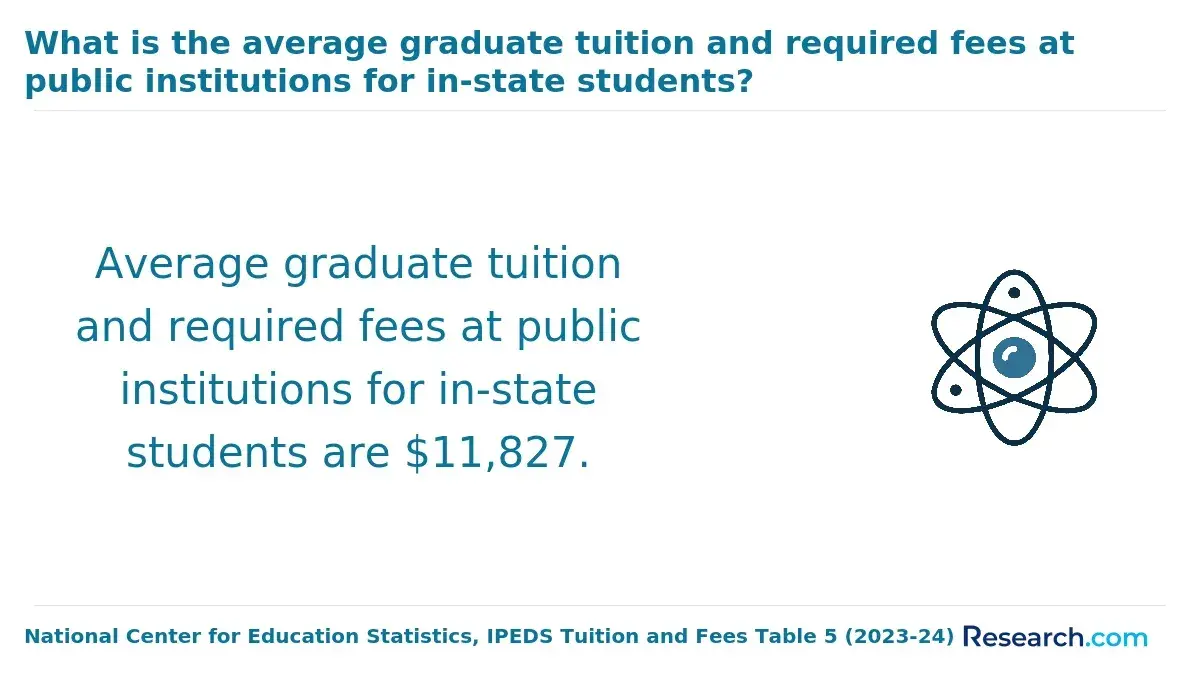
There is no reliable single duration or price for online data science master's programs: credit requirements, enrollment pace, residency rules, and fees vary. For a meaningful comparison, calculate each school's required credits multiplied by its applicable tuition rate, then add mandatory fees, required materials, and any travel.
Ask whether tuition or fees can change before you finish and whether the courses you need are offered often enough to support your intended pace.
For a working student, time away from paid work and employer tuition assistance may matter as much as the published tuition. Use data science master's duration and tuition comparisons to identify possibilities, then verify current figures and course schedules directly with each institution. A faster program is not a bargain if it leaves too little time for the validation work you want to show employers.
How does accreditation affect online data science master's programs?
Institutional accreditation is an important baseline check for an online master's, but it does not certify that a program teaches model risk management well.
Verify the institution's current accreditation through the accreditor or an official U.S. Department of Education listing, and confirm that the school is authorized to enroll students where you live. State authorization and access to federal financial aid are separate questions worth checking with the school.
After that baseline, evaluate the actual courses, instructors, and project requirements. A common mistake is treating accreditation - or a prominent university name - as proof of specialized validation training.
What careers and salaries can model risk management graduates pursue?
Relevant roles may include model validation analyst, model risk analyst, quantitative risk analyst, data scientist with governance responsibilities, and AI governance specialist.
Titles and required experience differ by employer; some validation positions expect substantial domain knowledge or prior modeling work, not simply a master's degree.
The U.S. Bureau of Labor Statistics reports a $120,230 median annual wage for data scientists in May 2025. That figure describes the broader occupation, not model risk positions specifically, and should not be treated as an entry-level offer or a salary increase caused by a degree.
BLS projects 35% growth in data scientist employment from 2025 to 2035. This indicates broad demand for data science skills, but it does not measure openings in model validation or guarantee a governance job.
Compare local postings for your target role: repeated requirements for testing, documentation, domain expertise, and stakeholder communication are more useful for choosing electives than an occupational average alone.
How do you choose a reputable online data science master's program?
Shortlist programs only after confirming that their published curriculum and delivery rules fit your circumstances. Then request specifics that show whether model risk management can be practiced, not merely discussed:
- Ask for recent syllabi or project rubrics showing validation, data quality, documentation, and monitoring work.
- Confirm which relevant electives run regularly and whether online students can complete a validation-focused capstone.
- Compare total estimated cost, live-session obligations, faculty feedback, and access to approved project data on the same basis across schools.
- Ask career services how they support experienced professionals seeking validation or governance roles; request outcome definitions rather than assuming general data science results apply.
Choose the program with the strongest verifiable fit for your target work, schedule, and budget, not the longest list of AI-related course titles. If professional connections are important, compare graduate AI programs with active alumni communities as one possible networking alternative, while checking what access online students actually receive.
Other Things You Should Know About Data Science
Usually not as a universal entry requirement. Employers set their own preferences, so check postings for your target roles before paying for a credential. Demonstrable validation work may be more relevant than a certificate with little assessed practice.
No. Any organization using models for consequential decisions may need to evaluate failures and controls. Banking has particularly established supervisory expectations, while terminology and obligations elsewhere vary.
Yes, although finance knowledge may help with banking roles. Start with sound statistics, model evaluation, and documentation, then learn the decision process and terminology of the industry you want to enter.
It adds evaluation questions, including whether outputs are reliable for a defined task and what human review is needed. Core habits - clear intended use, reproducible tests, documented limitations, and ongoing monitoring - remain relevant.
References
- Supervisory Guidance on Model Risk Management | federalreserve.gov https://www.federalreserve.gov/frrs/guidance/supervisory-guidance-on-model-risk-management.htm
- Model Risk Management: Revised Guidance | OCC.gov https://www.occ.gov/news-issuances/bulletins/2026/bulletin-2026-13.html
- Risk Management and Risk Analytics, Master of Science | St. John's University https://www.stjohns.edu/academics/programs/risk-management-and-risk-analytics-master-science
- Data Science: Policy, Governance & Society (Online) | Brown University https://graduateprograms.brown.edu/graduate-program/data-science-policy-governance-society-online-scm
- Master's in Data Science | utexas.edu https://cdso.utexas.edu/msds
- Risk and Analytics Curriculum | Master of Management, Risk and Analytics https://ra.poole.ncsu.edu/academics/curriculum/
- Master of Science in Data Science | MS in Data Science | Merrimack College https://online.merrimack.edu/data-science/
- 2026 UNC Online Master of Applied Data Science (MADS) https://online.unc.edu/online-masters-programs/masters-data-science/
- Financial Data Science and Risk Management | School of Arts and Sciences - Rutgers, The State University of New Jersey https://fsrm.rutgers.edu/
- M.S. in Data Science, Online | virginia.edu https://datascience.virginia.edu/degrees/msds-online