2027 Online Curriculum & Instruction Doctorate Programs That Do Not Require the GRE or GMAT

Co-Founder and Chief Data Scientist
Choosing an online curriculum and instruction doctorate is harder when schools use different admissions rules, degree formats, and dissertation expectations. The good news is that many education doctorates no longer require the GRE or GMAT.
That matters for working educators because the BLS reported a $74,720 median wage for instructional coordinators in May 2024, and doctoral study can support advancement into higher-responsibility curriculum, leadership, faculty, and education-design roles. This guide helps you compare no-test programs, avoid weak options, and decide whether applying without exam scores fits your goals.
Key Things You Should Know
- Many online curriculum and instruction doctorates are test-free or test-optional, but applicants still need strong graduate transcripts, professional experience, recommendations, writing samples, and a clear leadership or research purpose.
- Skipping the GRE can save the $220 GRE General Test fee listed for U.S. test takers, but it does not make doctoral admissions automatic or reduce the importance of accreditation, dissertation support, faculty fit, or total cost.
- Career value depends more on program quality and role alignment than test policy. BLS May 2024 median wages include $74,720 for instructional coordinators and $102,610 for postsecondary education administrators.
Which Online Curriculum & Instruction Doctorate Programs Do Not Require the GRE or GMAT?
Online curriculum and instruction doctorates without GRE or GMAT requirements are usually professional education doctorates, most often the online EdD, although some universities offer Ph.D. pathways in curriculum studies or curriculum and instruction. The GMAT is rarely relevant in this field; when admissions testing appears, the GRE is the exam applicants are most likely to encounter.
The table below summarizes common no-GRE or no-GMAT online options and the admissions details readers should verify before applying. Policies can change by term, concentration, state authorization, and doctoral pathway, so use this as a starting point rather than a final admissions checklist.
| Institution | Online doctorate option | Testing policy to verify | Best fit |
| American College of Education | Ed.D. in Curriculum and Instruction | No GRE or GMAT commonly required for doctoral admission | Working educators seeking a fully online, applied doctoral pathway |
| Liberty University | Ed.D. in Curriculum and Instruction | No GRE or GMAT commonly required | Students who want multiple curriculum-related specializations and flexible online coursework |
| University of Louisiana Monroe | Ed.D. in Curriculum and Instruction | No GRE commonly required under current online admissions materials | Educators interested in a public-university online doctorate with curriculum leadership focus |
| University of West Florida | Ed.D. in Curriculum and Instruction | No GRE commonly required for the online Ed.D. pathway | Applicants seeking curriculum leadership training with public-institution pricing considerations |
| University of South Carolina | Ed.D. in Curriculum and Instruction | GRE or GMAT commonly not required for eligible online applicants | Experienced educators looking for an online doctoral cohort connected to a research university |
| Kansas State University | Ed.D. in Curriculum and Instruction | Testing requirements may vary by doctoral track and term | Students who want a curriculum doctorate with research and practitioner leadership components |
A no-GRE policy can mean different things. Test-free means the program does not use GRE or GMAT scores in admission decisions. Test-optional means you may submit scores if they strengthen your file. Test-waiver means the school normally asks for scores but may waive them if you meet conditions such as a high graduate GPA, prior advanced degree, or substantial professional experience.
Why Have Online Curriculum & Instruction Doctorate Programs Eliminated GRE and GMAT Requirements?
Universities have reduced GRE and GMAT requirements in many education doctorates because these programs are designed for experienced professionals, not entry-level students. A practicing teacher, curriculum specialist, instructional coach, department chair, or district leader often has more relevant evidence of doctoral readiness than a standardized test score can provide.
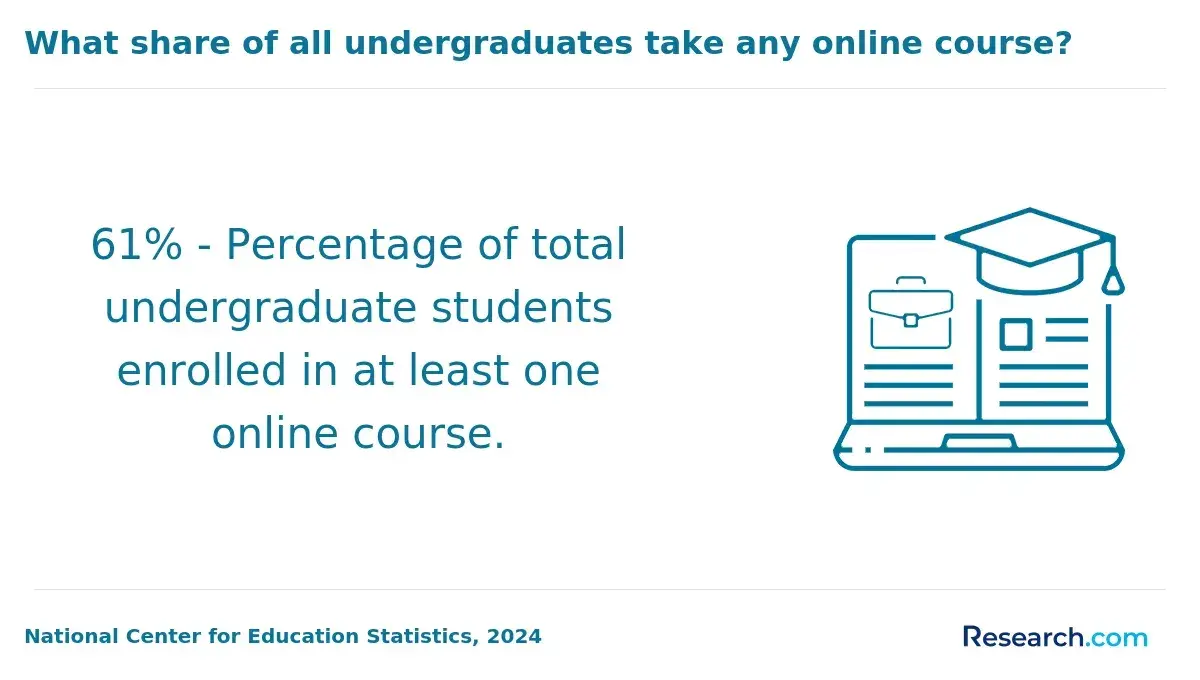
The shift also reflects how online doctoral education has changed. NCES data published in 2024 show that graduate distance education remains a major part of U.S. higher education, which means universities are competing for working adults who need flexible admissions processes. For these applicants, a writing sample, graduate GPA, leadership record, and professional recommendations often provide a better view of readiness for applied doctoral work.
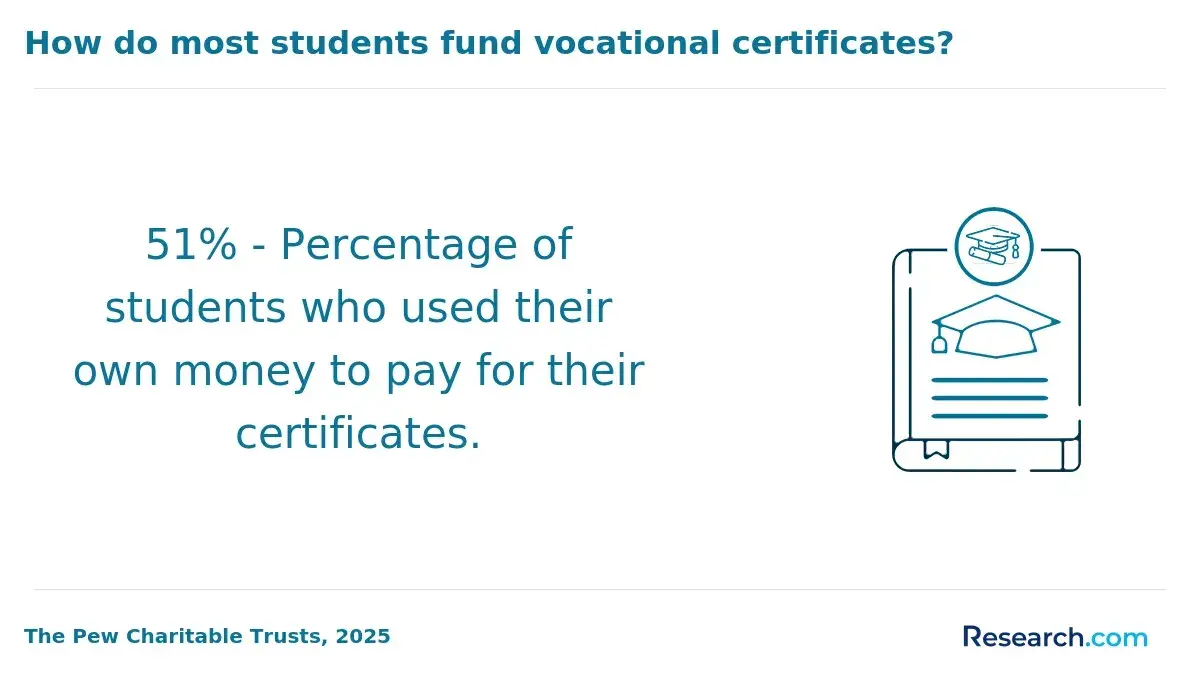
Schools also use no-test admissions to broaden access. Standardized exams add cost, scheduling pressure, and preparation time, which can disproportionately affect working adults, rural educators, military-affiliated students, caregivers, and applicants who have been out of school for years. Eliminating the exam does not remove academic expectations; it changes the evidence schools use to evaluate them.
What Admissions Factors Matter Most Without GRE or GMAT Scores?
Without GRE or GMAT scores, admissions committees look more closely at evidence that you can handle doctoral reading, research, writing, and independent inquiry. The strongest applications connect past experience to a specific problem of practice in curriculum, instruction, assessment, equity, learning design, or educator development.
The table below shows the application components that usually matter most in no-test doctoral review. Use it to identify where your file is already strong and where you may need to invest more time before submitting.
| Admissions factor | What reviewers look for | How to strengthen it |
| Graduate GPA and transcripts | Evidence of success in advanced coursework, especially research, assessment, leadership, or education theory | Explain any weak grades briefly and emphasize stronger recent graduate performance |
| Professional experience | Progressive responsibility in teaching, curriculum design, instructional coaching, assessment, administration, or training | Quantify leadership scope, such as grade levels served, programs led, or teams supported |
| Statement of purpose | A focused reason for doctoral study and a realistic curriculum and instruction problem you want to investigate | Connect your goals to faculty expertise, program design, and real educational challenges |
| Writing sample | Graduate-level organization, synthesis, citation habits, and ability to analyze evidence | Submit polished work that shows argument, evidence, and reflection rather than only personal narrative |
| Recommendations | Confirmation of leadership, intellectual curiosity, persistence, and readiness for doctoral work | Choose supervisors or faculty who can describe specific examples of your work |
| Interview or portfolio | Fit with cohort expectations, research interests, and professional ethics | Prepare examples of curriculum decisions you have made and what evidence informed them |
If GRE scores are optional, submitting them makes sense only when they clearly offset a weaker part of your application. For example, strong quantitative or analytical scores may help if your transcript lacks recent research coursework. If scores are average or old, your time may be better spent improving the statement of purpose and writing sample.
Are No-GRE or No-GMAT Online Curriculum & Instruction Doctorate Programs Easier to Get Into?
No-GRE and no-GMAT online curriculum and instruction doctorates are often easier to apply to, but they are not automatically easier to get into. The main advantage is that you remove one barrier: the time, cost, and stress of standardized testing.
That can be meaningful for working educators, especially since the GRE General Test fee for U.S. test takers is listed at $220 before any preparation materials or retesting costs.
Admissions may still be competitive because doctoral programs have limited advising capacity, cohort sizes, and dissertation supervision resources. A school can remove the exam and still reject applicants whose goals do not fit the program, whose writing is not doctoral-ready, or whose experience does not show enough connection to curriculum and instruction.
Applicants should also distinguish between accessibility and selectivity. A program with no test requirement may be accessible because it reduces unnecessary friction, but it can remain selective by requiring a master's degree, minimum GPA, professional experience, strong recommendations, and a credible research or improvement agenda.
Does Skipping the GRE or GMAT Affect the Quality of an Online Curriculum & Instruction Doctorate?
Skipping the GRE or GMAT does not, by itself, lower the quality of an online curriculum and instruction doctorate. Program quality depends on institutional accreditation, faculty expertise, curriculum depth, student support, research expectations, assessment practices, and whether the degree aligns with your career goals.
Before assuming a program is strong or weak based on test policy, evaluate the quality signals that actually affect learning and credibility. The following factors matter more than whether an exam appears on the application checklist:
- Institutional accreditation from an accreditor recognized by the U.S. Department of Education or the Council for Higher Education Accreditation.
- Clear dissertation, dissertation-in-practice, or capstone expectations, including timelines, committee structure, and research-methods preparation.
- Faculty with relevant expertise in curriculum theory, instructional design, assessment, teacher learning, equity, literacy, STEM education, educational technology, or leadership.
- Transparent online format details, including synchronous meetings, residencies, cohort model, field-based work, and expected weekly workload.
- Student support for doctoral writing, research design, library access, statistics or qualitative methods, and dissertation completion.
- Evidence that the curriculum prepares graduates for the roles they want, rather than offering only broad education coursework with little curriculum and instruction depth.
Specialized accreditation can also matter, but its role varies. CAEP recognition may be relevant for educator preparation programs, while state approval matters for licensure pathways.
Many curriculum and instruction doctorates are not designed to grant initial teacher or administrator licensure, so applicants should confirm the program's purpose before enrolling.
Which Students Benefit Most From Online Curriculum & Instruction Doctorate Programs Without GRE or GMAT Requirements?
No-test online doctoral programs are especially useful for experienced education professionals whose achievements are better reflected in practice than in exam scores. They are also attractive to students who need to apply on a realistic timeline without pausing work or family responsibilities for test preparation.
The applicants below often benefit most from no-GRE and no-GMAT pathways because their professional record can provide strong evidence of doctoral readiness:
- Licensed teachers moving into curriculum or EdD leadership, instructional coaching, assessment coordination, or department leadership.
- District or school leaders who want deeper expertise in instructional improvement, program evaluation, or teacher professional learning.
- Community college, higher education, or adult-learning professionals who design courses, lead academic programs, or evaluate learning outcomes.
- Instructional designers and edtech professionals who want stronger grounding in curriculum theory, learning sciences, and applied research.
- Experienced educators returning to graduate study after several years away from standardized testing.
- Military-affiliated students, caregivers, and full-time professionals who need a streamlined admissions process.
A no-test program may be a poor fit if you are choosing it only because it seems faster or easier. If your goal is a research-intensive faculty career at a university, compare Ph.D. options carefully and look for strong research-methods training, publication opportunities, and faculty mentorship.
If your goal is superintendent, principal, or administrator licensure, verify state requirements before assuming a curriculum and instruction doctorate will qualify you.
How Do Tuition and Financial Aid Compare for No-GRE Online Curriculum & Instruction Doctorate Programs?
Tuition and financial aid usually depend on the institution, credit count, residency requirements, and whether the school charges online students in-state, out-of-state, or flat-rate tuition. A no-GRE policy rarely changes tuition directly, but it can lower application-stage costs by removing exam registration, test prep, and retesting expenses.
The table below shows the main cost categories to compare across no-GRE online curriculum and instruction doctorates. This is important because two programs with similar admissions flexibility can differ substantially in total cost once fees, credits, and completion time are included.
| Cost category | Why it matters | What to ask before applying |
| Per-credit tuition | Doctorates often require a large number of credits, so small per-credit differences compound quickly | Is online tuition flat-rate, in-state, out-of-state, or cohort-based? |
| Total required credits | Programs may differ depending on whether they accept prior graduate credits or require a full doctoral sequence | How many credits are required after transcript evaluation? |
| Fees | Technology, dissertation, graduation, library, and online learning fees can add to the bill | Which fees are mandatory each term? |
| Residencies | Short campus visits can add travel, lodging, meals, and missed-work costs | Are residencies required, optional, virtual, or embedded in courses? |
| Dissertation extension costs | Extra terms can increase total cost if research takes longer than planned | What happens financially if the dissertation extends beyond the standard timeline? |
| Employer support | School districts, colleges, and education companies may offer tuition reimbursement | Does the program meet employer reimbursement rules? |
Federal aid can help, but borrowing should be planned carefully. For graduate students, the Federal Direct Unsubsidized Loan annual limit is $20,500, while Grad PLUS loans may cover remaining eligible cost of attendance after credit approval. That means many doctoral students can access financing, but loan availability should not be mistaken for affordability.
To compare ROI, calculate the total program cost against the roles you are realistically pursuing. If the doctorate supports promotion into curriculum administration, higher education leadership, instructional design management, or faculty work, the investment may be easier to justify.
If your current district or employer does not reward doctoral credentials, a lower-cost program or an education specialist degree may be more practical. Alternatively, students interested in exploring the side of counseling in education can opt for the cheapest CACREP-accredited programs online instead.
What Career Outcomes Can Graduates Expect From No-GRE Online Curriculum & Instruction Doctorate Programs?
Graduates of online curriculum and instruction doctorates often pursue roles that involve designing, evaluating, leading, or improving learning systems. The degree is most useful when paired with relevant experience, because employers usually look for a combination of doctoral training, leadership record, content expertise, and measurable instructional impact.
The table below provides U.S. salary context for roles that may align with curriculum and instruction doctoral training. These figures are occupational medians from BLS May 2024 wage data, not promises of earnings for any specific graduate.
| Role or career direction | How the doctorate may apply | Median annual wage, May 2024 |
| Instructional coordinator | Designing curriculum, evaluating instructional materials, coaching teachers, and using assessment data | $74,720 |
| Postsecondary education administrator | Leading academic programs, faculty support, assessment, accreditation, or teaching and learning initiatives | $102,610 |
| Elementary, middle, or high school principal | Guiding instructional improvement, curriculum alignment, teacher evaluation, and schoolwide learning goals | $104,070 |
| Training and development manager | Applying curriculum design and adult learning principles in corporate, nonprofit, government, or edtech settings | $125,040 |
Common career outcomes include curriculum director, instructional coach, district assessment leader, professional development director, higher education instructor, education consultant, learning experience leader, and instructional design manager. Some graduates from good online colleges also use the degree to strengthen credibility for policy, nonprofit, publishing, or education technology roles.
The doctorate alone usually does not replace required credentials. Public school leadership positions may require state administrator licensure, and tenure-track faculty roles may prefer or require a Ph.D., publications, and research experience. Before enrolling, match the degree type to the job descriptions you actually want.
What Common Application Mistakes Reduce Admission Chances to No-GRE Online Curriculum & Instruction Doctorate Programs?
Many applicants weaken their chances by treating a no-GRE policy as the most important feature of the program. Admissions committees still need evidence that you can complete doctoral-level coursework, conduct inquiry, write clearly, and contribute to a professional learning community.
The following mistakes are common in no-test doctoral applications. Avoiding them can make your application more coherent and competitive:
- Choosing a program only because it does not require the GRE or GMAT instead of comparing accreditation, faculty fit, curriculum depth, and dissertation support.
- Submitting a generic statement of purpose that says you want to "make a difference" without naming a specific curriculum or instruction problem you want to study.
- Ignoring minimum GPA rules, prerequisite degree requirements, professional experience expectations, or state authorization restrictions.
- Using recommenders who know you personally but cannot speak to your leadership, writing, research potential, or instructional expertise.
- Assuming an online doctorate has no campus visits, live meetings, fieldwork, or intensive research expectations.
- Overlooking whether the degree supports licensure, promotion, faculty eligibility, or salary-lane movement in your state or employer system.
- Failing to compare total cost of attendance, including fees, residencies, dissertation continuation terms, and transfer-credit policies.
- Applying too quickly after seeing "no GRE" and submitting weak writing samples, outdated resumes, or unclear career goals.
A stronger strategy is to build the application around fit. Show the admissions committee why this doctorate, this curriculum, and this faculty environment match your professional background and future work.
How Should Students Compare Online Curriculum & Instruction Doctorate Programs Without GRE or GMAT Requirements?
The best no-GRE online curriculum and instruction doctorate is not simply the easiest one to enter. It is the program that offers the right mix of academic credibility, flexibility, cost, support, and career alignment for your specific goal.
Use the sequence below to compare programs in a practical order. This keeps you from overvaluing admissions convenience while missing details that affect completion and long-term value:
- Confirm institutional accreditation and whether any specialized accreditation or state approval matters for your intended role.
- Identify the doctorate type, such as Ed.D. for applied leadership or Ph.D. for more research-intensive academic preparation.
- Verify the current testing policy directly with admissions, including whether the program is test-free, test-optional, or waiver-based.
- Compare curriculum and instruction depth, including courses in assessment, curriculum theory, instructional leadership, research methods, and program evaluation.
- Review dissertation, dissertation-in-practice, or capstone expectations, including committee support and typical milestones.
- Calculate total cost using tuition, credits, fees, residencies, transfer credits, employer support, and possible extension terms.
- Ask how online courses are delivered, including synchronous sessions, cohort pacing, part-time options, and weekly workload.
- Match graduate outcomes to your target roles by reviewing alumni paths, faculty expertise, and employer expectations.
The table below can help you decide which admissions pathway fits your profile. It is not about choosing the easiest path; it is about choosing the one where your evidence is strongest.
| Your profile | Best admissions pathway | Reason |
| Strong graduate GPA, leadership experience, and clear writing sample | Test-free program | Your existing record already shows readiness without adding an exam |
| Lower GPA but strong recent professional achievements | Test-free or waiver-based program | A strong statement, portfolio, and recommendations may better explain growth than test scores |
| Weak transcript and limited leadership evidence | Test-optional program with possible score submission | Strong scores may help, but you should also strengthen experience and writing |
| Research-intensive academic career goal | Selective Ed.D. or Ph.D. with strong faculty research fit | Faculty mentorship, methods training, and publication opportunities may matter more than test policy |
| Need licensure or salary-lane advancement | Program verified with state, district, or employer requirements | Credential recognition depends on local rules, not only the doctoral title |
Before applying, contact admissions with specific questions:
- Is the no-GRE policy permanent for this cycle?
- How many transfer credits can be reviewed?
- What is the expected completion timeline for working adults?
- Are there required residencies?
- What support exists for dissertation writing and research design?
Clear answers to these questions are often more valuable than a fast application process.
Other Things You Should Know About Curriculum & Instruction
Many programs take about three to five years, depending on transfer credits, course load, dissertation progress, and whether the student enrolls year-round. Part-time students and those needing extra dissertation terms may take longer.
Usually not by itself. Most doctoral programs in curriculum and instruction are advanced professional or research degrees for licensed or experienced educators. If you need initial teacher, principal, or superintendent licensure, confirm state-approved pathways before enrolling.
An Ed.D. usually emphasizes applied leadership, improvement, and practice-based research. A Ph.D. usually emphasizes original research, theory, and academic scholarship. Both can be rigorous, but the better choice depends on whether your goal is practice leadership or research-centered work.
Sometimes. Schools may accept credits from a master's degree, education specialist program, or prior doctoral coursework, but limits vary widely. Ask for a transcript review before estimating total cost or completion time.
References
- 2025 Online EdD Programs No GRE Required (Doctor of Education No GRE) https://www.onlineeddprograms.com/faqs/gre-mat-gmat-requirements
- Careers with a Doctorate in Educational Leadership | Neumann https://learn.neumann.edu/neuperspectives/careers-with-a-doctorate-in-educational-leadership
- Ed.D. vs. Ph.D. in Education | University of Bridgeport https://www.bridgeport.edu/news/doctorate-vs-phd-in-education/
- 2025 Most Affordable Online Doctorates in Education https://www.onlineu.com/most-affordable-colleges/education-doctoral-degrees
- Average Cost of a Doctorate Degree [2026]: Ph.D., Psy.D. & More https://educationdata.org/average-cost-of-a-doctorate-degree
- 25 Cheapest Online EdD Programs of 2025 https://www.eddprograms.org/schools/affordable-online-doctor-of-education-programs/
- Best Online EdD Programs with No GRE Requirement https://www.phds.me/online-programs/education-doctorate-edd/no-gre-required/
- What Can You Do with a PhD in Education https://aituedu.org/what-can-you-do-with-a-phd-in-education/
- Curriculum and Instruction Ed.D. https://www.gcsu.edu/education/proflearning/curriculum-and-instruction-edd
- Guide to the Best Online EdD Degree Programs for You https://teach.com/online-ed/education-degrees/online-edd-programs/