2027 Online Corrections Degree Programs With No Letters of Recommendation Required

Co-Founder and Chief Data Scientist
An online corrections degree can help working adults prepare for roles in detention, reentry, probation support, case management, and criminal justice administration without tracking down academic or workplace references. "No letters of recommendation required" means letters are not part of the standard application, although transcripts, GPA, identification, and other materials may still be required.
This matters as online learning remains a mainstream option: the National Center for Education Statistics reported that more than half of postsecondary students took at least one distance education course in fall 2022. This guide helps applicants compare admissions rules, legitimacy, cost, and career alignment before enrolling.
Key Things You Should Know
- Many schools offer corrections content through an online criminal justice, justice studies, or public safety degree rather than a stand-alone corrections degree; published requirements can change by program level and term.
- No recommendation letters required does not mean open admission or guaranteed acceptance: applicants commonly submit official transcripts, meet minimum GPA or placement standards, and complete identity or residency documentation.
- Verify institutional accreditation, total tuition, transfer policy, and career relevance before applying; the Bureau of Labor Statistics reports a $57,970 median annual wage for correctional officers and bailiffs in May 2024, but pay and hiring standards vary by employer and location.
Which Online Corrections Degree Programs Require No Letters of Recommendation?
Programs marketed as "corrections" are often bachelor's or associate degrees in criminal justice with coursework in corrections, rehabilitation, juvenile justice, courts, policing, or institutional management. A school may also offer a corrections concentration within criminal justice. For undergraduate online programs, recommendation letters are commonly absent from the standard application; graduate criminal justice programs are more likely to request them.
The options below illustrate the types of institutions and degree formats applicants may encounter. Admissions policies are program-specific, so confirm the current application checklist in writing before paying an application fee or submitting documents.
| Program type | Typical online credential | Recommendation-letter pattern | Best fit |
| Community college criminal justice program | Associate degree or certificate | Usually not part of standard undergraduate admission | Applicants seeking lower-cost general education and career entry preparation |
| Public university criminal justice program | Bachelor's degree, sometimes with corrections electives | Often not required for first-year or transfer admission | Students who want a broad degree for corrections, probation support, or related public service roles |
| Adult-focused online university | Associate's or bachelor's in criminal justice | Often streamlined; transcripts and identity records commonly replace letters | Working adults with college credit, military training, or career experience |
| Graduate criminal justice or public administration program | Master's degree | Varies widely; letters may be required, optional, or waived for selected applicants | Professionals pursuing supervisory, policy, or administrative pathways |
Do not assume that an online criminal justice degree automatically includes corrections preparation. Review the course list for subjects such as correctional institutions, offender rehabilitation, community corrections, correctional counseling, ethics, and constitutional law. Applicants considering people-centered reentry or behavioral-health work may also compare an MSW degree, since social work preparation differs substantially from criminal justice training.
A direct way to identify eligible programs is to search each school's official program page and application portal for "recommendations," "references," and "letters of recommendation." If the language says letters are "optional," that is not identical to "not required"; optional letters may still be useful for an applicant whose academic record needs context.
What Are the Admission Requirements for Online Corrections Degree Programs With No Recommendation Letters?
For most undergraduate online corrections-related programs, streamlined admissions remove one document rather than the school's review process. Schools still need evidence that an applicant completed prior education and is prepared for college-level coursework. Associate programs usually require a high school diploma, GED, or equivalent, while bachelor's completion programs normally require prior college credit or an associate degree.
This comparison shows common requirements that can replace recommendation letters. Exact GPA thresholds, prerequisites, and transcript rules differ by institution.
| Application material | Why a school uses it | What applicants should check |
| Official transcripts | Confirms prior education, grades, completed credits, and eligibility | Whether transcripts must come directly from each previous school |
| High school diploma or GED record | Establishes undergraduate entry eligibility | Whether a credential evaluation is needed for nontraditional records |
| Minimum GPA | Helps assess academic readiness | Whether the GPA applies to high school, transfer work, or the most recent degree |
| Personal statement | Explains goals, preparation, and circumstances not visible in grades | Whether it is required, scored, or only requested for exceptions |
| Resume or employment history | Provides context for adult learners and justice-sector professionals | Whether relevant work can support admission but not replace academic prerequisites |
| Placement testing or prerequisite courses | Determines readiness in writing, math, or college success skills | Whether prior transfer credit can waive placement requirements |
Standardized test policies also vary. Many online undergraduate programs do not require SAT or ACT scores, particularly for adult, transfer, or open-access applicants. That does not mean tests are prohibited; students with limited academic records should ask whether scores may strengthen an application.
Before applying, request the requirements for the exact degree, concentration, start term, and applicant category. A general university admissions page may not reflect a selective online completion program, a graduate program, or a state-specific cohort.
Are Online Corrections Programs With No Letters of Recommendation Easier to Get Into?
They may be easier to apply to, but they are not necessarily easier to enter or complete. Removing recommendation letters reduces an administrative barrier for applicants who have been out of school, work independently, or cannot contact former supervisors. Admissions teams can still assess transcripts, GPA, writing, prerequisites, disciplinary disclosures where permitted, and transfer-credit eligibility.
Program selectivity also depends on the credential. Entry-level associate and broad bachelor's programs often use more accessible admissions models than master's programs. Graduate study may require an undergraduate degree, a stronger cumulative GPA, a statement of purpose, relevant professional experience, and sometimes references because the program is preparing students for advanced leadership, research, or policy work.
A common mistake is treating "no letters required" as evidence of lower quality or automatic admission. Instead, evaluate the curriculum, faculty credentials, student support, completion rules, and institutional accreditation. Applicants with a lower GPA should ask about conditional admission, prerequisite options, and academic support rather than assuming that a streamlined application removes academic standards.
Corrections work can involve shift schedules, stressful environments, report writing, conflict management, and strict employer screening. A convenient admissions process should be only one factor in selecting a program; it cannot substitute for the competencies or background requirements of a correctional agency.
What Do Online Corrections Programs Evaluate Instead of Letters of Recommendation?
Without letters, admissions offices generally rely more heavily on records that are verifiable and comparable across applicants. The goal is not to eliminate evaluation but to assess readiness through academic history, documented experience, and an applicant's own explanation of goals.
The following materials can make an application stronger when references are not requested.
- Submit complete transcripts early and review them for missing courses, unresolved holds, or incorrectly recorded transfer credits.
- Use a personal statement to connect your goals to corrections, rehabilitation, community supervision, reentry, or justice administration rather than offering a generic career objective.
- Include a current resume when permitted, emphasizing relevant experience such as security, human services, military service, case documentation, crisis response, or public administration.
- Explain academic gaps briefly and factually, especially if recent coursework better represents your current readiness than older grades.
- Provide requested documentation promptly, including proof of graduation, residency information, or immunization and background materials if a practicum requires them.
For adult learners, relevant professional experience may help explain career readiness, but it usually does not replace required general education or writing courses. Applicants should also distinguish admissions review from employment screening. A school may admit a student who later must satisfy separate background checks, physical requirements, drug-testing rules, or agency standards for a corrections job.
Students whose longer-term goal is counseling, clinical casework, or licensed social work should choose a degree path carefully. A corrections-focused criminal justice degree can support justice-sector knowledge, while masters in social work online programs are designed around a different professional curriculum and may have separate field-placement and licensure considerations.
How Can You Tell if an Online Corrections Degree With No Recommendation Requirement Is Accredited and Legitimate?
Start with institutional accreditation. In the United States, recognized institutional accreditation is a key indicator that a college meets external quality standards and may participate in federal student aid programs. Corrections and criminal justice programs do not always hold a separate programmatic accreditation, so institutional accreditation, curriculum quality, and employer relevance deserve close attention.
Use these checks before enrolling, particularly if a school advertises unusually fast completion, guaranteed employment, or vague claims about approval.
- Confirm the institution is listed in the U.S. Department of Education's Database of Accredited Postsecondary Institutions and Programs and identify its recognized accreditor.
- Read the exact online program page, catalog entry, and current admissions checklist to confirm that recommendation letters are not required for your degree level.
- Compare the published curriculum with your target job's requirements, including corrections coursework, internships, writing-intensive classes, and ethics training.
- Ask whether online students receive the same transcripted degree as campus students and whether any courses, orientations, exams, or field experiences require in-person attendance.
- Request a written estimate of tuition, mandatory fees, transfer evaluation practices, and graduation requirements before accepting financial aid.
- Contact a prospective employer or state corrections agency to confirm whether the degree meets its education preference or promotion standards.
Red flags include pressure to enroll before receiving a written cost estimate, unclear accreditation language, promises that a degree bypasses agency hiring standards, and a curriculum with little detail about credits or faculty. Legitimate schools should identify the degree title, credit requirements, academic calendar, refund policy, and student-support contacts clearly.
Employer perception generally rests more on the institution's legitimacy, the degree level, relevant skills, and the applicant's work history than on whether recommendation letters were part of admission. Still, corrections agencies may prioritize academy training, civil-service rules, background investigations, or state requirements over a particular academic concentration.
How Much Do Online Corrections Degree Programs With No Letters of Recommendation Cost?
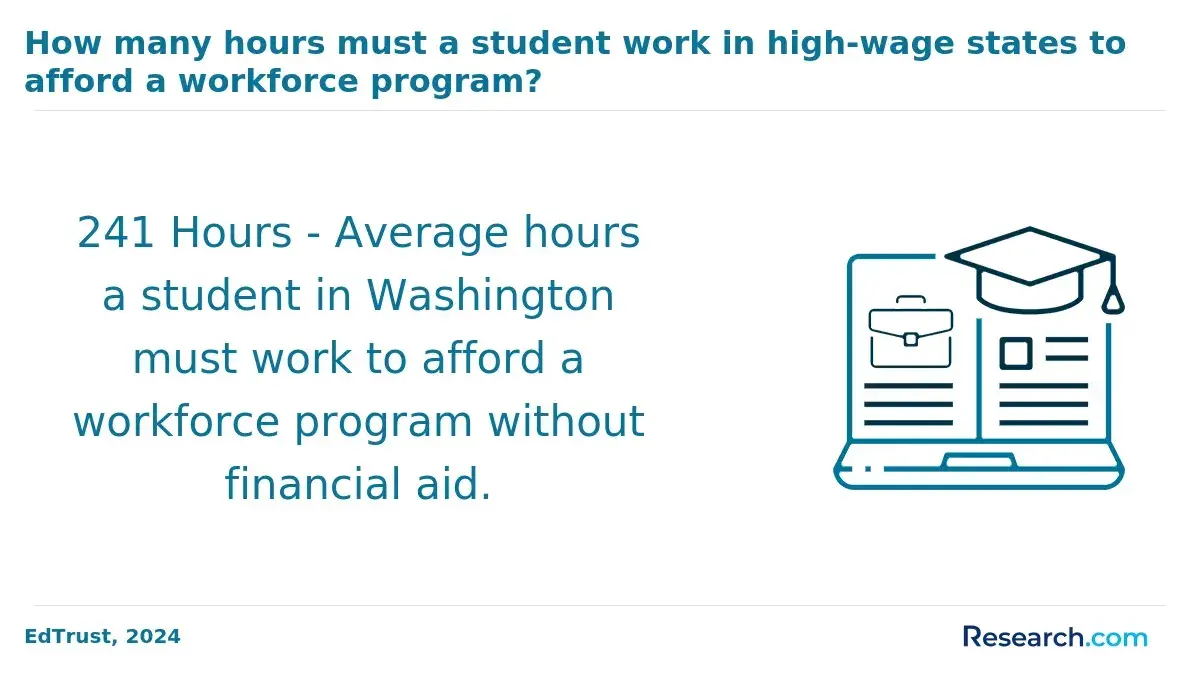
No-recommendation admissions do not determine price. Tuition is shaped by institution type, residency, degree level, number of transfer credits, online course fees, textbooks, technology, and whether required experiences involve travel. As a broad benchmark, College Board reported average published tuition and fees of $11,610 for in-state students at public four-year colleges for 2024-25. Online corrections-related programs can fall above or below that figure, so it should not be treated as a program quote.
Compare total degree cost rather than the advertised per-credit rate. The cost categories below are especially important for online learners.
| Cost factor | Why it changes the total | Question to ask |
| Tuition per credit | Rates can vary by residency, major, and course level | Is the online rate fixed for all enrolled terms? |
| Transfer credit | Accepted credits can reduce remaining coursework | How many credits will apply specifically to this degree? |
| Mandatory fees | Technology, graduation, course, and student-service fees may be separate | Which fees apply to fully online students? |
| Books and course materials | Digital access codes and specialized texts can add recurring costs | Are materials included in tuition or billed per course? |
| Field experience and travel | Internships, proctoring, residencies, or agency visits may require travel | Are any in-person requirements mandatory? |
Public community colleges and in-state public universities can be cost-conscious choices, especially for general education and transferable credits. Private online institutions may offer predictable term pricing or larger transfer evaluations, but applicants should compare the final written estimate and completion timeline. Students exploring graduate credentials beyond criminal justice can also compare an affordable master degree before assuming a higher-priced program has stronger career value.
Can You Get Financial Aid for an Online Corrections Degree With Streamlined Admissions?
Yes, eligible students can generally seek federal financial aid for an online program if the institution and program meet federal eligibility requirements. Simplified admissions and financial-aid eligibility are separate processes. Students should submit the Free Application for Federal Student Aid, commonly called the FAFSA, and follow the school's verification and document deadlines.
Financial aid may include grants, Direct Loans, work-study opportunities, state aid, institutional scholarships, employer tuition assistance, veterans' education benefits, or workforce funding. Eligibility, award amounts, enrollment requirements, and satisfactory academic progress rules vary. Aid may also be limited when a student has reached federal borrowing limits or takes courses that do not apply to the declared program.
Use this sequence to prevent a common enrollment mistake: accepting loans before knowing the net cost.
- Obtain the program's written tuition and fee estimate for your expected number of remaining credits.
- Submit the FAFSA and review the aid offer by separating grants and scholarships from loans that must be repaid.
- Ask whether aid applies to summer terms, part-time enrollment, repeated courses, and online-only attendance.
- Check whether your employer, union, military branch, or state workforce agency offers education benefits for justice or public-service employees.
- Compare the expected borrowing amount with the likely value of the credential for your intended role or promotion path.
Students seeking management roles sometimes compare corrections education with business training. For example, best AACSB online MBA programs may be relevant for experienced professionals pursuing broader administration skills, but an MBA does not replace corrections-specific education, agency training, or public-safety hiring requirements.
How Long Does an Online Corrections Degree With No Letters of Recommendation Take to Complete?
Completion time depends primarily on degree level, transferred credits, course load, and course scheduling - not on whether letters are required. A full associate degree is commonly structured around about two academic years of full-time study, while a traditional bachelor's degree commonly requires about four years of full-time study. A bachelor's completion program can take less time when substantial applicable transfer credit is accepted.
Online delivery can make scheduling more flexible, but it does not necessarily mean self-paced. Many programs use eight-week, ten-week, or semester-based courses with set assignment deadlines. Students working rotating shifts should ask whether classes are asynchronous, whether live attendance is required, and whether proctored exams follow fixed windows.
This timeline comparison helps applicants match the credential to their starting point.
| Starting point | Likely path | Main timing variable |
| High school diploma or GED | Associate degree or four-year bachelor's program | Full-time versus part-time enrollment |
| Some college credit | Associate completion or bachelor's transfer program | How many credits apply to major and general education requirements |
| Associate degree in a related field | Bachelor's completion program | Upper-division major requirements and residency credits |
| Bachelor's degree | Master's in criminal justice, public administration, or related field | Prerequisites, capstone, and any internship requirements |
Accelerated terms can shorten the calendar only if students can sustain the workload. Avoid choosing an accelerated schedule solely because admissions are simple. Career changers interested in creative communications rather than justice work might instead explore a graphic design bachelor degree, which has a different portfolio, software, and career-preparation focus.
Can You Transfer Credits Into an Online Corrections Degree Program With No Recommendation Letters?
Often, yes. Transfer evaluation is usually separate from admissions requirements, and recommendation letters typically do not affect whether coursework transfers. Colleges commonly review official transcripts to determine credit equivalencies, grades, course level, recency, and whether credits meet general education, elective, or major requirements.
Transfer-friendly programs can be a practical fit for learners who previously completed criminal justice, sociology, psychology, communications, public administration, or general education courses. However, a school may accept a credit as an elective without applying it to a required corrections or criminal justice course. The number of credits accepted is therefore less important than the number that count toward graduation.
Applicants should request an official or preliminary transfer evaluation before enrolling whenever possible. Ask about the maximum transfer limit, minimum transferable grade, residency-credit requirement, treatment of military or law-enforcement training, and whether prior learning assessment is available. Keep copies of course descriptions and syllabi in case the receiving school requests them for major-course review.
Do not rely solely on an informal estimate from a recruiter or generic transfer-equivalency webpage. A written evaluation tied to your intended degree and catalog year provides a more reliable basis for comparing cost and completion time.
How Should You Compare Online Corrections Degree Programs That Do Not Require Letters of Recommendation?
The best option is the one that fits the role you want, your prior education, and your financial limits - not simply the one with the shortest application. Corrections degrees can support knowledge relevant to custody operations, offender rehabilitation, reentry, juvenile justice, courts, and public administration. They do not by themselves qualify every graduate for sworn, licensed, clinical, or supervisory roles.
Compare finalists using the same questions so that marketing language does not obscure meaningful differences.
- Does the exact online program explicitly state that letters of recommendation are not required for your applicant type and start term?
- Is the institution accredited by a recognized accreditor, and can you confirm that status through the U.S. Department of Education database?
- Does the curriculum include corrections, rehabilitation, ethics, report writing, law, and community supervision topics relevant to your target role?
- What is the total estimated cost after transfer credit, required fees, books, and any travel or proctoring expenses?
- Are courses asynchronous enough for your work schedule, and what academic, tutoring, advising, and technical support is available online?
- Will the program meet the education preference for the correctional agency, probation office, social-service employer, or promotion track you are targeting?
- What are the school's policies for transfer credit, withdrawals, refunds, academic progress, and time to degree?
For a practical final check, contact both admissions and a prospective employer. Admissions can clarify documents and curriculum, while an employer can explain job-specific qualifications, academy training, civil-service examinations, background investigations, and degree preferences. This two-sided verification helps applicants avoid paying for a credential that does not match their intended career path.
An online corrections degree with no letters of recommendation can be a strong choice for self-directed adults with clear justice-sector goals and usable prior coursework. It may be a weaker fit for someone who needs clinical licensure, wants a role requiring a specialized academy credential, or has not yet identified the type of corrections, reentry, or public-service work they want to pursue.
Other Things You Should Know About Corrections
Many undergraduate online programs do not require an admissions interview, especially when they use transcript-based or transfer-based review. Some programs may contact applicants to discuss goals, transfer credit, or missing documents. An interview can also be required for internships or agency-affiliated experiences even if it is not required for college admission.
Usually, yes. Adult-focused and transfer programs commonly admit applicants with older academic records. You may need official transcripts, proof of high school completion if you have little college credit, and placement testing or prerequisite coursework. A resume or personal statement can help provide context for recent work experience.
Submit one only if the school permits it and the letter adds meaningful, current evidence of your readiness, professionalism, or relevant experience. Do not delay an application to obtain an optional letter. First confirm that the program will review optional materials and that the letter comes from someone who knows your work or academic performance well.
Recheck them before you apply, before you submit final documents, and before you enroll. Colleges can revise requirements by degree level, catalog year, start date, residency, or applicant category. Save a copy of the current checklist and ask admissions to confirm any important requirement by email.
References
- No Letters of Recommendation? Find Flexible Colleges Today https://www.educationconnection.com/resources/colleges-with-no-letters-of-recommendation-required/
- 15 Best Online Bachelor's In Criminal Justice https://www.criminaljusticedegreeschools.com/rankings/best-online-bachelors/
- How to Get an Online Criminal Justice Degree: Steps, Curriculum, and What to Expect https://www.uagrantham.edu/blog/how-to-get-an-online-criminal-justice-degree/
- Jobs with a degree in Criminal Justice | Monroe University https://www.monroeu.edu/academics/undergraduate-programs/school-criminal-justice/what-can-you-do-criminal
- Is Getting an Associate's Degree in Criminal Justice Worth it in 2025? https://www.neit.edu/blog/is-getting-an-associates-degree-in-criminal-justice-worth-it
- Online Criminal Justice Degrees (Types, Benefits & FAQ) https://www.allcriminaljusticeschools.com/criminal-justice/criminal-justice-online-degree/
- Best Online Criminal Justice Degrees https://www.onlineu.com/degrees/criminal-justice
- Find Online Criminal Justice Degrees & Schools https://www.firescience.org/law-enforcement-criminal-justice-degrees-programs-online/