2027 Online Computer Science Degree Programs With No Letters of Recommendation Required

Co-Founder and Chief Data Scientist
Applicants who cannot easily ask former professors or supervisors for references may find online computer science programs with no letters of recommendation required more accessible. "No letters required" means recommendations are not part of the standard application, not merely optional or waived case by case.
This matters as online study remains a major pathway: the National Center for Education Statistics reported that 54% of postsecondary students enrolled in at least one distance-education course in fall 2022. This guide helps prospective undergraduate and graduate students compare admissions requirements, accreditation, costs, timelines, and career fit before applying.
Key Things You Should Know
- Several legitimate online bachelor's computer science programs, including options at Western Governors University, Southern New Hampshire University, University of Maryland Global Campus, Arizona State University Online, and University of the People, generally do not list recommendation letters among standard admission materials; requirements can change by degree level and term.
- No-recommendation admissions still commonly require official transcripts, identity and residency information, prerequisite coursework, and sometimes a personal statement, résumé, placement assessment, or minimum GPA. A missing recommendation requirement is not an admission guarantee.
- Program value depends more on accreditation, curriculum, faculty support, transfer policy, and total price than on application simplicity. For context, the Bureau of Labor Statistics projects 17% growth in U.S. software developer employment from 2023 to 2033.
Which Online Computer Science Degree Programs Require No Letters of Recommendation?
Online computer science programs without recommendation letters are most commonly found at the bachelor's and degree-completion levels. They can suit working adults, career changers, military-connected learners, and students whose academic references are outdated.
Graduate computer science programs are more likely to request recommendations because they often assess research readiness, advanced mathematics preparation, or professional leadership.
The examples below identify institutions whose standard online undergraduate admissions information generally does not include letters of recommendation.
Applicants should confirm the requirement on the specific program's application checklist before paying an application fee, because institutional admission and admission to a particular college or concentration can differ.
| Institution and online degree | Typical recommendation-letter policy | Common materials to expect instead | Best-fit consideration |
| Western Governors University, B.S. Computer Science | Generally not listed as a standard requirement | Transcripts, application, readiness requirements, and enrollment documentation | Competency-based pacing may appeal to self-directed learners |
| Southern New Hampshire University, B.S. Computer Science | Generally not listed as a standard requirement | Application and transcripts; placement or transfer review may apply | Traditional term structure with multiple specialization options |
| University of Maryland Global Campus, B.S. Computer Science | Generally not listed as a standard undergraduate requirement | Application, transcripts, and transfer-credit evaluation | Useful for adult learners and military-affiliated students |
| Arizona State University Online, B.S. Computer Science | Generally not listed as a standard undergraduate requirement | Application, transcripts, and academic qualification review | May fit students seeking a public-university online format |
| University of the People, B.S. Computer Science | Generally not listed as a standard requirement | Application, identity verification, and academic documentation | Low published tuition model, but students should review all fees and support services |
Computer science is broad, so check whether a program offers the direction you want: software engineering, cybersecurity, data analytics, cloud computing, mobile development, or artificial intelligence. Students focused on machine learning can also compare an AI degree online when a specialized curriculum better matches their target role.
A program should be described as "no letters required" only when its current, standard admissions page does not ask for them. Treat wording such as "recommendations are encouraged," "optional," or "may be requested" differently: those programs may still use letters in borderline decisions, scholarship review, or graduate admissions.
What Are the Admission Requirements for Online Computer Science Degree Programs With No Recommendation Letters?
Admissions requirements vary by institution, degree level, and applicant background. Most online bachelor's programs use a combination of academic records and eligibility criteria rather than faculty references.
A student transferring from college may face a different checklist than a first-time student, while applicants to an online master's degree may need a stronger record in calculus, programming, algorithms, or discrete mathematics.
This comparison shows common requirements that may replace recommendation letters. It is a planning tool, not a substitute for the program's current application portal:
| Application component | How commonly it appears | What the school may assess |
| Official transcripts | Nearly universal | Prior coursework, GPA, degree completion, and prerequisite preparation |
| High school diploma or equivalent | Common for first-time bachelor's applicants | Basic eligibility for undergraduate study |
| College-level math prerequisites | Common in computer science | Readiness for calculus, discrete mathematics, statistics, and algorithms |
| Personal statement or short responses | Varies by school and degree level | Goals, preparation, persistence, and reasons for choosing the program |
| Résumé or work history | More common for graduate and adult-focused programs | Technical experience, career progression, and professional context |
| Test scores or placement assessment | Less common than in prior years, but still possible | Academic placement or English and math readiness |
Before applying, use the program's published checklist to verify the exact degree name, delivery format, deadline, prerequisite sequence, transcript rules, and whether documents must come directly from a previous school. Ask admissions in writing whether letters are "not required," "optional," or "not considered." Save the reply and the current webpage for your records.
Applicants should not assume a general university application applies to every computer science pathway. A post-baccalaureate program, accelerated master's program, or selective engineering-school major may impose additional requirements even when the university's broader online admissions process is streamlined.
Are Online Computer Science Programs With No Letters of Recommendation Easier to Get Into?
Not necessarily. Removing recommendation letters reduces an administrative barrier, but it does not tell you how selective, rigorous, or supportive a program is. Schools can still deny admission based on academic preparation, missing prerequisites, capacity limits, placement results, or incomplete documentation.
Computer science often has demanding gateway courses in programming, calculus, discrete mathematics, data structures, and algorithms. A school may use transcripts and math preparation as more consistent indicators of readiness than a letter from a recommender. This approach can be especially practical for applicants who have been out of school for years, changed careers, or worked independently.
Consider the trade-off carefully. Open-access or broader-access programs can create an entry point, but students may need strong time-management habits and may encounter rigorous progression rules after enrollment. More selective programs may offer smaller cohorts, research opportunities, or extensive career services, yet their admissions process can require more documentation.
Avoid two common mistakes: treating a recommendation-free application as guaranteed admission and choosing solely based on low friction. Compare the curriculum, tutoring, class availability, student support, completion policies, and total cost with the same care you would use for a program requiring three references.
Without letters of recommendation, admissions teams generally rely more heavily on evidence that the applicant can begin and persist in technical coursework. The most persuasive application is complete, accurate, and clearly connected to the program's academic expectations.
Schools may evaluate the following evidence in place of a recommender's perspective:
- Transcript patterns, including grades in math, science, programming, and prior college coursework.
- Completion of prerequisites such as college algebra, precalculus, calculus, statistics, or introductory programming.
- A résumé showing technical work, IT support, software projects, military training, internships, or relevant certifications.
- A personal statement explaining career goals, preparation, and how the applicant plans to manage online coursework.
- Portfolio materials, coding assessments, or placement evaluations when a program requests them.
- Recent coursework that demonstrates readiness if older grades do not reflect current ability.
For applicants with uneven transcripts, concrete evidence is often more useful than broad claims. Completing a transferable math or programming course, documenting a Git-based project when permitted, or describing measurable work responsibilities can help explain present readiness. Do not submit unsolicited materials unless the school allows them; admissions offices may not review extra files.
Career outcomes depend on skills, experience, location, and role rather than on whether a program requested references. The Bureau of Labor Statistics reported a 2023 median annual wage of $130,160 for U.S. software developers, quality assurance analysts, and testers; this occupational figure is not a starting-salary promise.
Students comparing computer science with other career paths can review highest paying jobs by bachelor's degree, while considering personal aptitude and local hiring conditions.
A legitimate online computer science degree should be awarded by an institution recognized by an accreditor accepted by the U.S. Department of Education or the Council for Higher Education Accreditation.
Institutional accreditation is the baseline check because it affects transferability, federal aid eligibility, employer confidence, and graduate-school options. Computer science does not require professional licensure in the way that nursing or teaching often does, but program quality still matters substantially.
Use this process before enrolling, especially if a school emphasizes speed, simplified admissions, or unusually low tuition:
- Confirm that the institution appears in the U.S. Department of Education's Database of Accredited Postsecondary Institutions and Programs.
- Check the accreditor named on the university website and verify that the accreditation is current rather than expired, withdrawn, or merely "pending."
- Look for ABET accreditation if it is important for your goals; ABET may accredit a specific computing program, but its absence does not automatically make an online degree illegitimate.
- Review the curriculum for core topics such as programming, data structures, algorithms, databases, operating systems, software engineering, and mathematics.
- Ask whether online students receive the same diploma title, transcript notation, faculty access, library services, tutoring, and career support as campus students.
- Read the refund policy, technology requirements, proctoring rules, and disclosures about state authorization before accepting enrollment.
Red flags include vague claims about accreditation, pressure to enroll immediately, unclear faculty information, a curriculum without foundational computer science courses, or a refusal to provide a written total-cost estimate. Be cautious with schools that use language resembling accreditation without identifying a recognized accreditor.
Employers typically focus on the awarding institution, skills, projects, internships, and interview performance more than the absence of recommendation letters in your original application. For technical roles, build evidence of ability during the degree through coursework, a portfolio, internships, open-source contributions where appropriate, and career-center support.
Cost varies more by institution, residency status, transfer credits, and pacing model than by whether recommendation letters are required. Applicants should compare the net price of completing the entire degree, not only a headline per-credit rate or a single term's tuition.
For broad context, the National Center for Education Statistics reported average published tuition and fees of $9,750 at public four-year institutions and $35,248 at private nonprofit four-year institutions for the 2022-23 academic year.
Those figures describe U.S. undergraduate institutions overall, not online computer science programs specifically, and do not represent the amount an individual student will pay after aid.
A meaningful cost comparison includes the following items because they can materially change the final bill:
- Tuition charged per credit, per course, per term, or through a flat-rate competency-based model.
- Mandatory technology, online learning, proctoring, graduation, and student-service fees.
- Whether online learners pay in-state, out-of-state, or uniform distance-learning rates.
- Costs for textbooks, coding platforms, cloud-computing labs, hardware, and reliable high-speed internet.
- Transfer-credit limits and prior-learning policies that may reduce the number of credits you must buy.
- Scholarships, employer tuition assistance, military benefits, grants, and the expected borrowing amount.
Request a personalized estimate for your anticipated credit load and ask whether tuition can rise after enrollment. A competency-based program can be economical for students able to complete multiple courses in a term, but it may not be the best value for learners who need a slower pace or frequent instructor-led deadlines.
When exploring costs across online fields, an online degree psychology comparison can illustrate why tuition models, credit requirements, and field-specific resources should be evaluated separately rather than assumed to be interchangeable.
Yes. Streamlined admissions and financial aid are separate processes. An eligible student in an accredited online degree program may qualify for federal grants, federal Direct Loans, state aid, institutional scholarships, veterans' education benefits, or employer tuition assistance, subject to program participation and individual eligibility rules.
Submit the Free Application for Federal Student Aid (FAFSA) as early as practical and review the aid offer alongside the degree's full cost estimate. Federal aid may require enrollment at least half time for certain loan eligibility, satisfactory academic progress, and completion of required verification steps. Online attendance alone does not prevent aid eligibility, but nondegree courses, unaccredited institutions, and some certificate formats can have different rules.
Ask the financial aid office whether computer science students have departmental scholarships, paid teaching or research roles for graduate students, or partnerships with employers.
Also ask how accelerated terms and competency-based enrollment are measured for aid purposes. Never assume that a scholarship application has the same requirements as admission; scholarships may request essays, references, or separate deadlines.
Borrow only after comparing the likely loan amount with realistic repayment obligations and your expected study pace. Students considering a later management credential can see how school-level quality signals differ in AACSB accredited online MBA programs; accreditation and aid questions should always be checked for the specific degree, not generalized across disciplines.
An online bachelor's degree in computer science commonly requires about 120 semester credits. Students beginning without transferable credit often take roughly four years while enrolled full time, although year-round schedules, accelerated terms, and competency-based formats can shorten the calendar time for some learners.
Part-time working students may need longer. An online master's degree is commonly shorter, but completion time depends heavily on prerequisite gaps and course sequencing.
Course order matters more in computer science than many applicants expect. Programming fundamentals typically lead to data structures and algorithms, which can be prerequisites for advanced work in software engineering, artificial intelligence, cybersecurity, or databases. A program that appears fast on paper may still require several sequential terms.
Ask the program for a sample degree map based on your transfer evaluation, not a generic timeline. Confirm how often required courses run, whether summer terms are available, how long capstones take, and whether students can pause enrollment without losing catalog rights or financial aid eligibility.
Online formats can work well for learners with jobs or family responsibilities, but they require scheduled study time and reliable technology. Students comparing pacing across professional fields may find that MSW best programs have very different scheduling constraints because supervised field placements are central to social work education.
Many online computer science programs accept transfer credits, but acceptance is never automatic. Institutions evaluate the source school's accreditation, course content, grades, age of coursework, and how a class fits their curriculum. Computer science courses can receive especially close review because programming languages, software tools, and curricular standards evolve.
Transfer students should request an official evaluation before committing whenever possible. General education credits may transfer more easily than upper-level computer science requirements, while calculus, discrete mathematics, programming, data structures, and computer architecture may need syllabus review or departmental approval.
To protect your time and money, follow these steps before enrolling:
- Send official transcripts from every previous institution, including courses you did not complete or do not expect to transfer.
- Keep course descriptions, syllabi, project descriptions, and textbook information for technical courses in case the department requests them.
- Ask for a written list showing accepted credits, remaining requirements, and the estimated number of terms or credits to graduation.
- Verify the maximum transfer-credit limit and whether credits must meet a minimum grade requirement.
- Check whether transfer courses satisfy prerequisites or merely count as electives.
- Confirm whether prior-learning assessments, industry certifications, military training, or exams can apply to degree requirements.
Do not choose a school based on a verbal promise that "most credits should transfer." A formal evaluation can change the real cost and completion time more than a small difference in advertised tuition.
How Should You Compare Online Computer Science Degree Programs That Do Not Require Letters of Recommendation?
The strongest choice is not necessarily the program with the fewest application documents. Compare programs based on whether they can help you build the technical foundation, credential, and evidence of skill needed for your intended next step: entry-level development, IT, cybersecurity, data work, graduate study, or a career pivot.
Use the following comparison framework after confirming that recommendation letters are not required for your specific application type:
| Decision factor | What to compare | Why it matters |
| Accreditation and recognition | Institutional accreditation, programmatic accreditation if applicable, and state authorization | Supports aid eligibility, credit transfer, and confidence in the credential |
| Curriculum depth | Math, programming languages, algorithms, systems, databases, security, and capstone requirements | Determines whether the degree builds durable computer science skills |
| Admissions fit | Transcripts, GPA, prerequisites, essays, résumé, placement tests, and application deadlines | Shows whether "no letters" truly applies and whether you are academically prepared |
| Online learning design | Live versus asynchronous classes, group work, lab access, exams, and faculty availability | Affects scheduling, support, and learning experience |
| Total cost | Tuition, fees, technology expenses, transfer credits, aid, and likely time to completion | Provides a more realistic affordability comparison |
| Career support | Internship help, portfolio guidance, interview preparation, employer relationships, and alumni outcomes | Can help turn coursework into marketable experience |
Contact at least two or three admissions offices with the same questions so you can compare written answers. Ask whether recommendations are required for your exact degree and start term, whether online students receive the same credential as campus students, what prerequisites are required, what transfers, and what the estimated total cost will be after your credits are evaluated.
This option is especially suitable for applicants with solid academic or professional evidence but limited access to recommenders. It may be a weaker fit for students seeking research-intensive graduate preparation, highly selective cohorts, or extensive faculty advocacy at admission; in those cases, programs requiring recommendations may provide a more appropriate application pathway.
Other Things You Should Know About Computer Science
Usually, no. If letters are not part of the published admissions checklist, they are not normally requested later for admission. However, separate opportunities such as scholarships, honors programs, internships, research positions, or graduate school applications may ask for references.
You can apply if the program's published policy permits it, but transcript-based review may make GPA more important when no letters are considered. Explain relevant circumstances only if the application provides space, and strengthen your profile with recent prerequisite coursework, documented projects, or applicable work experience.
Employers generally do not see your original admission materials. They are more likely to evaluate the institution, degree, technical skills, portfolio, experience, interviews, and ability to perform the role.
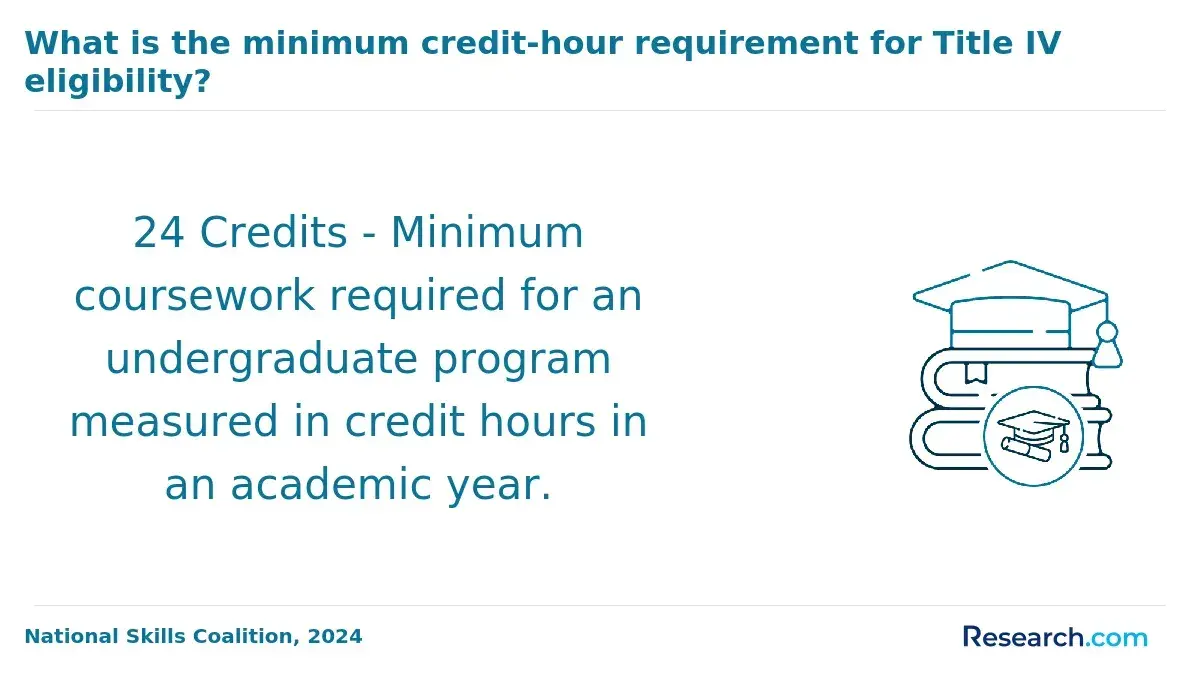
Yes. Many 2027 online computer science programs waive letters of recommendation for transfer applicants if they have 24 or more transferable semester credits and a minimum 2.0 GPA. Some universities instead require official transcripts only, with no separate recommendation form.
- Online Degree Programs, Undergraduate and Graduate https://www.coloradotech.edu/online-degree-programs
- Four Considerations in Collecting Reference Letters https://blog.inforeadycorp.com/post/four-consideration-for-reference-letters
- The Truth About Recommendation Letters https://www.ivywise.com/ivywise-knowledgebase/the-truth-about-recommendation-letters/
- How to write good letters of recommendation | MIT Admissions https://mitadmissions.org/apply/parents-educators/writingrecs/
- How to Get into Grad School Without Letters of Recommendation https://bemoacademicconsulting.com/blog/how-to-get-into-grad-school-without-recommendation-letters
- The Problem With Exclusively Online Degree Programs https://tcf.org/content/commentary/the-problem-with-exclusively-online-degree-programs/
- Best Online Computer Science Bachelor's Degrees of 2025 https://www.computerscience.org/degrees/bachelors/online/
- EB-2 NIW Without Recommendation Letters: 5 Evidence Types https://finbergfirm.com/2025/03/05/recommendation-letter-eb2-niw/
- How to get strong letters of recommendation | The College Grind https://collegegrind.org/posts/how_to_get_strong_letters_of_recommendation/