2027 Best Online Computer Science Master's Programs at Nonprofit Universities

Co-Founder and Chief Data Scientist
Choosing an online computer science master's program means weighing employer recognition, technical depth, price, and the reality of fitting graduate work around a job. Nonprofit universities can offer established accreditation and faculty-led instruction, but costs and formats vary sharply. The U.S. Bureau of Labor Statistics projects 17% growth in software developer employment from 2023 to 2033, making advanced computing skills relevant for many professionals. This guide compares reputable online options, explains the trade-offs behind "best," and gives you a practical framework for assessing fit, affordability, flexibility, and career outcomes.
Key Things You Should Know
- Strong options include Georgia Tech's OMSCS, UT Austin's MSCSO, UIUC's online MCS, and the University of Colorado Boulder's online MS-CS; compare each program's institutional accreditation, curriculum, delivery model, and total published tuition rather than relying on rank alone.
- Most online computer science master's degrees require about 30 to 36 credits and can take roughly 18 months to 3 years depending on pacing; applicants commonly need a bachelor's degree, programming preparation, calculus or discrete mathematics, and academic transcripts.
- Cost and career fit matter together: software developers had a $133,080 median annual wage in May 2024, according to the U.S. Bureau of Labor Statistics, but a graduate degree is not required for every role and does not guarantee a particular job or salary.
Which Nonprofit Universities Offer the Best Online Computer Science Master's Programs, and How Were They Selected?
The best nonprofit online computer science master's program is the one that matches your preparation, specialization goals, budget, and schedule. A nonprofit university reinvests revenue into its educational mission rather than distributing profits to owners or shareholders; it may be public or private. Nonprofit status is useful context, but it is not a substitute for accreditation, transparent pricing, rigorous coursework, and credible student support.
The programs below are notable options because they are offered by established U.S. nonprofit universities, lead to graduate computer science credentials, provide substantial online access, and publish meaningful information about curriculum or tuition. Tuition and fee schedules change, so treat published amounts as comparison starting points and obtain a written estimate from each school before applying.
| University and program | Credential and typical credits | Online format | Published tuition comparison point | Best fit |
| Georgia Institute of Technology | MS in Computer Science; 30 credits | Fully online OMSCS; course-based | About $6,750 in instructional tuition at $225 per credit, before applicable fees | Working professionals seeking broad specialization choice and a low instructional-tuition model |
| University of Texas at Austin | MS in Computer Science; 30 credits | Fully online MSCSO; asynchronous-oriented coursework | About $10,000 total published program tuition | Students wanting a structured, research-university curriculum at a predictable advertised price |
| University of Illinois Urbana-Champaign | Master of Computer Science; 32 credits | Online MCS; course-based professional degree | About $23,040 at a published $720 per credit, before changes or additional charges | Professionals seeking applied advanced coursework without a thesis requirement |
| University of Colorado Boulder | MS in Computer Science; 30 credits | Online, performance-based admission pathway available | About $15,750 at $525 per credit, before changes or additional charges | Applicants who want to demonstrate readiness through graduate coursework |
Use this comparison as a shortlist, not a universal ranking. Georgia Tech and UT Austin can be especially compelling for price-sensitive applicants with strong preparation, while UIUC may suit learners who prefer its professional MCS structure. Colorado Boulder's pathway can be useful for applicants whose prior record does not fully show their current ability.
When comparing finalists, ask each school for the current per-credit rate, mandatory fees, minimum time to completion, access to courses in your preferred specialization, and outcomes information for online students. A program that is inexpensive but does not offer the courses you need for systems, machine learning, security, or data-intensive computing may be a weaker value than a moderately higher-priced alternative.
Why Choose a Nonprofit University for an Online Computer Science Master's Degree?
A nonprofit online master's can make sense when you want a degree issued by a recognized university, access to faculty who teach within an academic department, and a curriculum designed around graduate-level computing rather than short-term training. Public nonprofits may offer lower instructional tuition, especially when online programs charge a flat rate. Private nonprofits can offer smaller cohorts, distinctive support models, or specialized curriculum, although their prices are often higher.
Online delivery usually means lectures, assignments, discussions, projects, examinations, and office hours are completed through a learning platform. "Online" does not always mean self-paced: many programs have weekly deadlines, proctored assessments, team projects, and fixed semester calendars. A fully online program generally has no campus visit requirement, while a hybrid program includes one or more in-person sessions.
University type should be one part of a broader decision. These comparisons show where a nonprofit online computer science master's can be advantageous and where another route may fit better.
| Option | Often a strong choice when | Potential trade-off |
| Public nonprofit online program | You want recognizable institutional accreditation and comparatively controlled tuition | Large cohorts may mean less individualized access unless the program has strong advising systems |
| Private nonprofit online program | You value a particular faculty model, niche curriculum, or smaller learning environment | Tuition may be materially higher |
| On-campus master's program | You want in-person research access, campus recruiting, or an immersive academic experience | Relocation and lost earnings can raise the real cost |
| Graduate certificate or targeted training | You need a narrower skill upgrade, such as cloud, data engineering, or security | May not provide the depth or signaling value of a full master's degree |
Do not assume a nonprofit degree is automatically better than every other option. Review the specific department, course catalog, instructor qualifications, admissions standards, and services available to distance learners. Professionals moving toward management may also compare a computer science degree with the cheapest online MBA options, but an MBA generally does not replace graduate-level preparation in algorithms, systems, or machine learning.
What Accreditation Should an Online Computer Science Master's Program Have?
For an online computer science master's, the essential credential is usually institutional accreditation. This means an accreditor recognized by the U.S. Department of Education or the Council for Higher Education Accreditation has evaluated the university as a whole. Regional institutional accreditors now operate nationally, so focus on the accreditor's recognition and the school's current status rather than older regional labels.
Programmatic accreditation is different. ABET accredits many computing programs, particularly at the undergraduate level, but ABET accreditation is not universal or typically required for master's-level computer science programs. The absence of ABET accreditation on a computer science master's does not by itself indicate a weak program. Instead, verify the university's institutional status and assess the program's academic quality directly.
Before enrolling, complete these checks. They help distinguish a legitimate online degree from a program with unclear recognition or limited authorization to serve students where you live.
- Confirm the university's institutional accreditation through the accreditor and the U.S. Department of Education database.
- Read the exact degree title on the university catalog and confirm it matches the credential advertised online.
- Check whether the university is authorized to enroll online students in your state and whether any residency or examination requirements apply.
- Review the computer science department's faculty roster, course descriptions, grading standards, and capstone or project expectations.
- Ask whether online and campus students receive the same diploma wording; reputable programs commonly issue the standard university degree without an "online" designation.
A common mistake is treating institutional accreditation and programmatic accreditation as interchangeable. Another is assuming that a university's nonprofit tax status proves academic quality. Verify both nonprofit status and accreditation, then evaluate whether the actual curriculum supports your target role.
Computer science is generally not a licensed profession in the way clinical fields are, so its accreditation expectations differ from those for marriage and family therapy online programs accredited. If you plan to combine computing with a regulated field, ask about that field's separate state rules.
How Much Does an Online Computer Science Master's Degree at a Nonprofit University Cost?
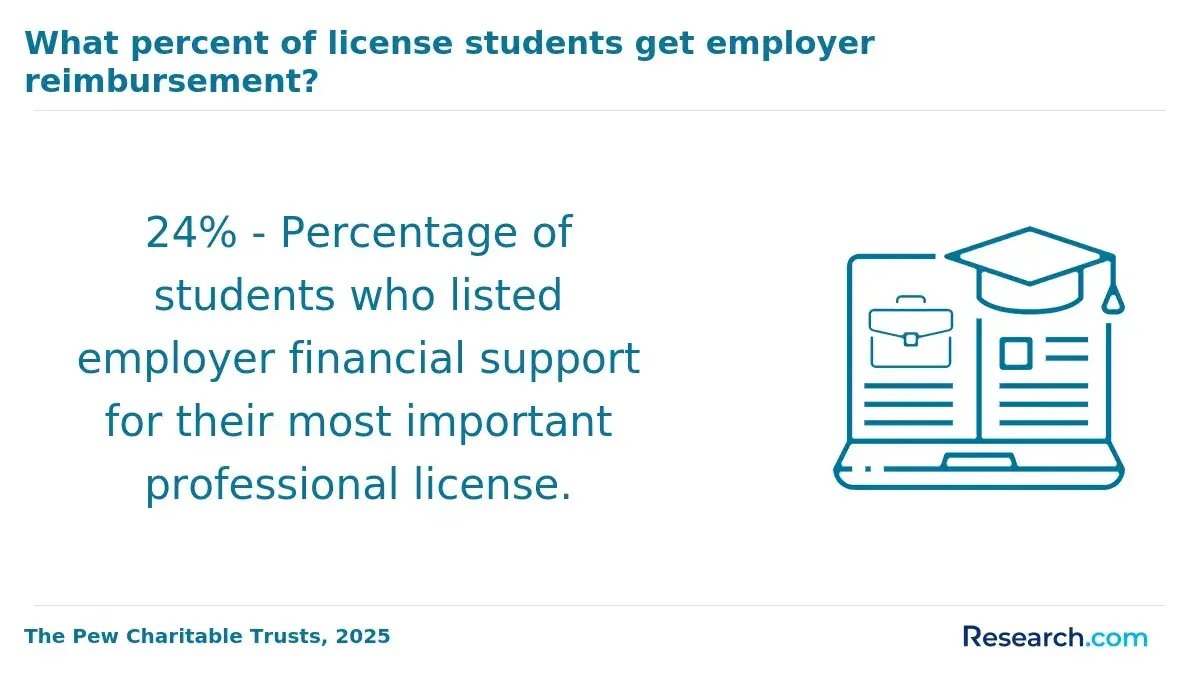
The total cost of an online computer science master's is more than the listed tuition rate. Calculate instructional tuition, mandatory university and technology fees, textbooks or software, proctoring, optional travel, and the cost of reducing work hours. For employer-sponsored students, also confirm reimbursement caps, grade requirements, repayment clauses, and when funds are paid.
The following cost ranges illustrate why comparing total credits and published program pricing matters more than comparing a single per-credit figure. They are not financial-aid offers and may exclude fees.
| Cost factor | What to compare | Why it affects value |
| Instructional tuition | Per-credit rate multiplied by required credits, or published all-in program tuition | Shows the baseline academic cost |
| Required fees | Technology, student service, course, application, and graduation fees | Can make a low advertised tuition figure less comparable |
| Credit requirement | Usually 30 to 36 credits for many programs | A lower per-credit rate is not always lower total cost |
| Transfer credit policy | Maximum accepted credits, age limits, and preapproval rules | May reduce time and cost, but many selective programs accept little or no transfer work |
| Opportunity cost | Whether work, caregiving, or overtime must be reduced | Often matters more than a modest tuition difference |
Federal Direct Unsubsidized Loans and Graduate PLUS Loans may be available to eligible graduate students at participating schools, subject to annual and aggregate limits, credit requirements for PLUS borrowing, and current federal rules. Complete the FAFSA even if you expect employer support; eligibility and school-based aid processes vary. Use borrowing cautiously: graduate loans should be tested against conservative earnings expectations, not promotional salary claims.
Price-sensitive students should compare total degree cost against alternatives that meet the same goal. Someone who still needs an undergraduate foundation may benefit from reviewing the cheapest online university options before committing to graduate coursework. For a master's applicant, request a personalized cost sheet and compare the amount you would pay over your expected enrollment period, not only the first term.
What Are the Admission Requirements for Online Computer Science Master's Programs?
Admissions requirements vary because online programs serve different audiences. A research-intensive MS may expect a computer science or closely related bachelor's degree and a stronger theoretical background, while a professional MCS may accept qualified applicants from STEM or technical fields who can demonstrate foundational competence.
Most applicants should expect some version of the following requirements. Meet the published minimums, but remember that minimum eligibility is not the same as competitive preparation.
- A bachelor's degree from an accredited institution, often in computer science, engineering, mathematics, or a related field
- Official transcripts showing academic performance and relevant prerequisite courses
- Evidence of programming ability, commonly through coursework or professional experience in languages such as Python, Java, C++, or similar tools
- Mathematics preparation that may include discrete mathematics, calculus, linear algebra, probability, or statistics
- A statement of purpose, résumé, and sometimes recommendation letters or a recorded introduction
- English-language proficiency evidence for applicants required to provide it under university policy
GRE policies differ: some programs do not require scores, some make them optional, and others may request them for applicants whose record needs additional evidence. Do not submit a score solely because it is available; follow each program's current instructions.
A frequent mistake is applying before closing prerequisite gaps. If your background is in business, design, or another nontechnical discipline, start with transferable undergraduate courses or verified preparation in programming, data structures, algorithms, and discrete mathematics. Creative-technology applicants may also explore graphic design pathways when their goal is digital design rather than software engineering or advanced computing theory.
Ask admissions staff whether prerequisites must be completed before application, before enrollment, or during an approved pathway. Get the answer in writing, especially if you are changing fields.
What Will You Study in an Online Computer Science Master's Program?
An online computer science master's develops advanced problem-solving and computing knowledge beyond introductory programming. Programs typically combine core theoretical study with electives, team projects, and assessments that require you to design, analyze, test, and communicate technical solutions. The exact balance matters: an MS may be more theory or research oriented, while an MCS is often course-based and professionally focused.
Review course descriptions rather than relying only on specialization titles. A useful curriculum comparison includes the following areas and the questions each area answers.
| Curriculum area | Common topics | Why it matters |
| Algorithms and theory | Algorithm design, complexity, discrete structures, computability | Supports technical interviews, systems thinking, and advanced study |
| Systems | Operating systems, distributed systems, networking, cloud computing | Relevant to platform, infrastructure, and backend engineering |
| Artificial intelligence and machine learning | Machine learning, natural language processing, computer vision, reinforcement learning | Useful for AI-focused roles, but requires mathematical and programming readiness |
| Data and information | Databases, data mining, data engineering, visualization | Supports data-intensive product and analytics work |
| Security | Secure software, cryptography, network security, privacy | Relevant to cybersecurity and risk-sensitive technology environments |
| Software engineering | Architecture, testing, DevOps, requirements, team development | Connects technical knowledge with production software practice |
Artificial intelligence adoption has increased employer interest in machine learning, data infrastructure, security, and responsible software development. Still, an AI concentration is not automatically the best choice. Choose it when you enjoy probability, linear algebra, model evaluation, and programming; choose systems or software engineering when your goal is reliable platforms, distributed applications, or technical leadership.
Ask whether courses are recorded or live, whether projects can be added to a portfolio, how group work is managed across time zones, and whether electives are offered frequently enough to complete your plan on schedule. Also check whether a thesis, capstone, comprehensive examination, or internship is required; online computer science programs often do not require clinical practicum or licensure hours.
How Flexible Are Online Computer Science Master's Programs, and How Long Do They Take?
Flexibility is not the same as low workload. Most online master's programs allow students to access lectures and materials remotely, but assignments commonly follow weekly deadlines and courses may require synchronized exams, meetings, or team sessions. A course-based master's often requires 30 to 36 credits; completion can range from roughly 18 months of intensive full-time study to 3 years or more part-time.
This comparison can help you choose a pace that protects both academic performance and personal sustainability.
| Enrollment pattern | Typical pace | Best for | Main caution |
| Full-time | Often 3 or more courses per term, where permitted | Students with significant time availability or reduced work commitments | Technical courses and group projects can create a demanding weekly workload |
| Part-time | Often 1 course per term, sometimes 2 | Working professionals and caregivers | Longer completion time may expose you to future tuition changes or curriculum updates |
| Asynchronous-oriented | Recorded content with scheduled deadlines | Students across time zones or with variable work shifts | Requires disciplined calendar management and proactive communication |
| Hybrid or limited-residency | Mostly online with occasional campus-based components | Students who value face-to-face networking or labs | Travel cost and attendance requirements can affect feasibility |
Before enrolling, map every term through expected graduation. Confirm maximum time limits, leave-of-absence policies, summer availability, course rotation, and whether prerequisite courses delay access to advanced electives. This step is especially important if you are balancing a job, military obligations, or caregiving.
A common error is choosing the fastest advertised format without checking course sequencing. A program may be technically accelerated while offering a critical elective only once each year. Students seeking other fast creative-professional pathways can compare an online architecture degree, though architecture education and professional licensing follow substantially different requirements from computer science.
What Student Support, Faculty Access, and Networking Do Online Computer Science Master's Programs Offer?
Online students should expect more than access to recorded lectures. Strong programs provide clear academic advising, responsive technical support, library access, faculty office hours, disability services, tutoring or writing support, and career resources that are genuinely available to distance learners. The quality of these services can materially affect persistence and the usefulness of the degree.
Ask specific questions instead of accepting broad claims about "community." The following indicators reveal whether support is designed for online graduate students.
- How quickly do instructors or teaching assistants normally respond, and are live office hours offered in more than one time window?
- What is the average class size, and how are students assigned to project teams?
- Can online students use career coaching, résumé reviews, mock interviews, employer events, and alumni directories?
- Are research opportunities, lab collaborations, hackathons, and student organizations accessible remotely?
- Does the school publish retention, graduation, or career-outcome information specific to the online program?
- What support is available if a course is technically difficult or a personal emergency interrupts a term?
Faculty access differs by program scale. Large programs may use experienced teaching assistants, active discussion forums, and robust peer communities; smaller programs may offer more direct professor interaction. Neither model is automatically superior. Choose the model that matches how you learn and how much structure you need.
Networking is most effective when it is intentional. Join program communities early, contribute meaningfully to group projects, attend virtual events, and maintain a portfolio of technically substantive work. A degree alone may open conversations, but your projects, communication, and professional relationships help translate coursework into opportunity.
What Jobs, Salaries, and Career Outcomes Can You Expect From an Online Computer Science Master's Degree?
An online computer science master's can support advancement into software engineering, data, machine learning, security, systems, and research-oriented roles. It is most valuable when the coursework closes a clear skills gap or enables a credible move into more technical work. Employers may evaluate the university, your academic record, portfolio, prior experience, interview performance, and ability to apply concepts - not merely whether the program was online.
Federal labor-market data provides useful context, but it does not predict an individual outcome. The U.S. Bureau of Labor Statistics reports that software developers had a median annual wage of $133,080 in May 2024 and projects 17% employment growth from 2023 to 2033. That outlook reflects broad demand for software, AI-enabled products, security, and digital services, while hiring conditions can vary by location, specialty, experience level, and economic cycle.
These roles illustrate how degree content can align with career direction.
| Potential role | Typical responsibilities | Helpful graduate focus |
| Software developer | Build, test, maintain, and improve applications or services | Software engineering, systems, databases, cloud computing |
| Machine learning engineer | Develop, evaluate, deploy, and monitor machine-learning systems | Machine learning, statistics, data engineering, responsible AI |
| Data engineer | Design pipelines, storage systems, and reliable data workflows | Databases, distributed systems, cloud platforms, data management |
| Information security analyst | Assess threats, protect systems, and support incident response | Security, networks, secure systems, cryptography |
| Computer and information research scientist | Investigate computing problems and develop new approaches | Algorithms, AI, systems, research methods; often thesis or research experience |
For many experienced developers, the degree can help deepen technical credibility or support movement into specialized work. For career changers, it may be only one part of the transition: build projects, practice interviews, pursue internships or internal assignments when possible, and demonstrate fundamentals. Be skeptical of any school that implies a salary, promotion, or job placement is assured.
Is an Online Computer Science Master's Degree From a Nonprofit University Worth It?
An online computer science master's from a nonprofit university can be worth the investment when it provides knowledge and access you are unlikely to gain as efficiently through work alone, and when the total cost fits a conservative financial plan. It is often a good match for experienced technologists aiming to specialize, STEM graduates strengthening computing expertise, and career changers who already possess or are willing to build the necessary foundations.
It may be a weaker value if you need only a narrow technical skill, would need substantial high-interest borrowing, dislike independent online learning, or have not yet tested whether you enjoy programming and mathematical problem-solving. In those cases, prerequisite courses, a graduate certificate, structured portfolio work, or an employer-supported project may be a lower-risk first step.
Use this final decision sequence before accepting an offer. It turns broad comparisons into a decision based on your own goals.
- Define a target outcome, such as senior software development, security, machine learning, data engineering, or research preparation.
- Match that outcome to required courses and confirm those courses are regularly available online.
- Verify institutional accreditation, state authorization, degree title, and any residency, thesis, capstone, or examination requirement.
- Calculate total cost after grants, employer assistance, savings, and realistic borrowing; include fees and the value of your time.
- Compare your weekly schedule with the program's deadlines, team-project expectations, and maximum completion period.
- Speak with admissions staff, current students, or alumni about faculty access, course quality, and career support for online learners.
- Choose the program that best balances academic rigor, affordability, flexibility, and your actual career plan - not the one with the strongest marketing claim.
The most common mistakes are choosing solely on headline tuition, overlooking prerequisite gaps, assuming all online degrees are self-paced, and treating rankings as a substitute for curriculum review. A carefully selected nonprofit program can offer strong value, but the best return comes from finishing with relevant skills, manageable debt, and work you can show employers.
Other Things You Should Know About Computer Science
Many reputable universities issue the same diploma to online and campus students, without an "online" notation. Confirm this directly with the registrar or admissions office because diploma practices are institution-specific.
Sometimes. Programs may admit applicants with related STEM degrees or substantial technical experience, but they commonly expect evidence of programming, data structures, algorithms, discrete mathematics, and quantitative readiness. Applicants from unrelated fields may need prerequisites first.
Employers generally evaluate the university's reputation, accreditation, degree content, your experience, technical skills, and interview performance. A degree from an established nonprofit university can be recognized, but it does not eliminate the need for a strong portfolio and demonstrated ability.
Choose based on curriculum and career purpose, not title alone. An MS may include more theory, research, or thesis options, while an MCS is often course-based and professionally oriented. Read the catalog, graduation requirements, and elective list to determine which structure supports your goal.
References
- 2026 Most Affordable Online Master's Degrees in Computer Science https://www.onlineu.com/most-affordable-colleges/computer-science-masters-degrees
- Average Cost of a Master's Degree: 2025 Analysis https://educationdata.org/average-cost-of-a-masters-degree
- An Elite Grad-School Degree Goes Online https://www.educationnext.org/elite-grad-school-degree-goes-online-georgia-tech-virtual-masters-increase-access-education/
- How Long Does it Take to Earn an MS in Computer Science? https://www.onlineengineeringprograms.com/faq/how-long-to-earn-masters-in-cs
- Best Master's in Computer Science 2025 | ComputerScience.org https://www.computerscience.org/degrees/masters/
- OnlineColleges.net https://www.onlinecolleges.net/rankings/best-online-masters-computer-science-degree-programs/
- Best Online Master's Programs in Computer Science: 2025 Picks https://www.onlinemastersdegrees.org/best-programs/computer-science/