2027 Online Community Health Doctorate Accreditation Guide: Institutional, Programmatic, and Licensure Considerations

Co-Founder and Chief Data Scientist
Choosing an online Community Health doctorate is partly an academic decision and partly a risk check. NC-SARA's 2024 annual data show more than 2.1 million exclusively distance-education enrollments at participating U.S. institutions, making accreditation and state authorization more important than ever.
This guide explains institutional accreditation, programmatic accreditation, and licensure considerations for prospective doctoral students comparing online programs. You will learn what to verify, which accreditors matter, and how to avoid enrolling in a program that may not support your career, certification, financial aid, or state licensure goals.
Institutional accreditation ensures the overall quality of the institution offering the program, while programmatic accreditation focuses on the specific academic program. Licensure considerations are essential for students seeking to practice in a specific state, as some states may not recognize degrees from unaccredited or unauthorized institutions.
Key Things You Should Know
- Institutional accreditation confirms that the university meets recognized standards; for federal student aid, the school must be accredited by a U.S. Department of Education-recognized institutional accreditor.
- Programmatic accreditation is separate and may matter for public health credentials, employer recognition, or clinical pathways; CEPH is the key programmatic accreditor for public health programs, but not every Community Health doctorate needs CEPH accreditation.
- State authorization is not the same as licensure approval; an online doctorate may be legal to offer in your state but still fail to meet state-specific requirements for a license, certification, practicum, internship, or supervised experience.
Is an Online Community Health Doctorate Accredited Differently From an On-Campus Program?
No. An online Community Health doctorate is not accredited under a separate "online accreditation" system. Legitimate accreditation reviews the institution, and sometimes the specific program, using standards that apply across delivery formats. What changes is the evidence the school must provide for distance education quality, student support, identity verification, technology access, assessment integrity, and supervised fieldwork arrangements.
For students, the important point is that "online" should not mean "less reviewed." If a university advertises a doctorate in Community Health, Public Health, Health Education, Health Promotion, or a related field, you should be able to verify the school's institutional accreditation and determine whether the specific program has any programmatic accreditation relevant to your goals.
This comparison shows how accreditation questions usually differ by delivery format. The standards are similar, but the practical risk points are different for online students.
| Accreditation issue | Online Community Health doctorate | On-campus Community Health doctorate | Why it matters |
| Institutional accreditation | Should be held by the university offering the degree | Should be held by the university offering the degree | Usually affects federal aid eligibility, credit recognition, and employer trust |
| Programmatic accreditation | May apply if the program is in public health, health education, or a licensed clinical field | May apply under the same subject-area standards | Can affect certification eligibility, employer preference, or professional pathways |
| State authorization | Must be addressed for students located outside the institution's home state | Usually less complex unless the student participates remotely from another state | Determines whether the school is allowed to enroll online students in your state |
| Field placement approval | Often depends on local site availability and state rules | Often arranged near campus or through established regional partners | May affect licensure, certification, graduation timing, and travel costs |
The common mistake is assuming that a program is questionable just because it is online or trustworthy just because it uses a university name. Neither assumption is enough. The better approach is to verify accreditation status, delivery approval, and state-specific professional eligibility before you apply.
What Is the Difference Between Institutional and Programmatic Accreditation for an Online Community Health Doctorate?
Institutional accreditation evaluates the college or university as a whole. Programmatic accreditation evaluates a specific school, department, degree, or professional preparation pathway. For an online Community Health doctorate, both can matter, but they answer different questions.
Institutional accreditation tells you whether the university meets broad standards for governance, faculty, student services, academic quality, financial stability, and integrity. Programmatic accreditation tells you whether a particular academic area meets specialized expectations set by a profession or discipline.
The table below separates the four approval concepts that students often confuse. Understanding the differences can prevent costly enrollment mistakes.
| Term | What it means | Who reviews it | What it can affect |
| Institutional accreditation | The university is accredited as a whole | A recognized institutional accreditor | Federal aid, transfer credit review, graduate school recognition, employer confidence |
| Programmatic accreditation | A specific program or professional unit meets field-specific standards | A specialized accreditor such as CEPH for public health | Certification eligibility, licensure pathways, employer preference, doctoral credibility in the field |
| State authorization | The institution is allowed to offer distance education to students in a state | State agencies, SARA participation, or state-specific approval processes | Whether you can legally enroll from your location |
| Professional licensure approval | The curriculum meets educational requirements for a state-regulated license or credential | State licensing boards or credentialing bodies | Eligibility for a license, certification, supervised practice, or exam |
If you are comparing doctorate options with broader public health preparation, you may also be weighing master's-level routes. Applicants who want a public health credential before or instead of a doctorate can compare easiest MPH online programs to get into, but they should still verify accreditation and state requirements for their intended role.
A strong rule of thumb is this: institutional accreditation is the minimum legitimacy check, while programmatic accreditation is the professional fit check. You generally should not treat one as a substitute for the other.
How Can You Verify That an Online Community Health Doctorate and Its Accreditor Are Legitimate?
You should verify accreditation directly rather than relying only on admissions pages, advertisements, or third-party rankings. The safest process is to check the school, the program, and the accreditor using official databases and written school disclosures.
Use this sequence before submitting an application fee or signing an enrollment agreement:
- Search the university in the U.S. Department of Education Database of Accredited Postsecondary Institutions and Programs or the Council for Higher Education Accreditation directory.
- Confirm that the accreditor listed for the institution is recognized and that the school's accreditation is active, not expired, withdrawn, or under a severe sanction.
- Look up the specific Community Health, Public Health, Health Education, or related doctoral program on the programmatic accreditor's website when programmatic accreditation is advertised.
- Check whether the program name, degree level, campus, online modality, and academic unit match the listing in the accreditor's database.
- Request written confirmation from the school about whether the program meets educational requirements for your state and intended credential.
- Save screenshots or PDF copies of accreditation, state authorization, and licensure disclosures for your records before enrolling.
Red flags are especially important in doctoral education because the time and cost commitment can be substantial. Watch for vague language such as "recognized worldwide," "accreditation pending," "licensed as a business," or "approved by a private association" when the school cannot point to a recognized accreditor.
Common warning signs include the following:
- The school claims accreditation but does not name the accreditor clearly.
- The accreditor's website lists no standards, peer-review process, or recognized institutional members.
- The program says it is "equivalent to accredited" or "in the process of accreditation" without a formal candidacy status.
- The institution promises licensure eligibility in all states without asking where you live or plan to practice.
- The admissions team discourages you from contacting the licensing board or accreditor directly.
Verification is not busywork. It is a consumer-protection step that helps you avoid unrecognized credits, blocked licensure paths, and a doctorate that employers or universities may not accept.
Sometimes, but not always. Community Health is a broad field, and doctoral programs may be designed for research, public health leadership, health promotion, community intervention, teaching, health policy, epidemiology support, program evaluation, or clinical-adjacent leadership. Programmatic accreditation matters most when your intended credential, employer, or professional pathway requires it.
For public health degrees, the Council on Education for Public Health, commonly known as CEPH, is the major specialized accreditor. A DrPH or PhD housed in a school or program of public health may be CEPH-accredited if it falls within the accredited unit. However, some Community Health doctorates are housed in education, health sciences, nursing, behavioral health, or interdisciplinary departments and may not carry CEPH accreditation.
The practical question is not simply "Is CEPH required?" The better question is "Required for what?" The table below shows when programmatic accreditation tends to matter most.
| Goal | How programmatic accreditation may matter | What to verify |
| Public health leadership or academia | CEPH accreditation may strengthen recognition, especially for DrPH or public health school pathways | Whether the doctoral degree is included in the accredited public health unit |
| Certified in Public Health credential | Eligibility routes may depend on CEPH-accredited degree status or approved experience pathways | Current NBPHE eligibility rules for your degree and background |
| Health education certification | Coursework may support CHES or MCHES eligibility, but rules are credential-specific | NCHEC eligibility requirements and required competency areas |
| Clinical or licensed practice | Different specialized accreditors may apply, such as nursing, counseling, social work, psychology, or dietetics accreditors | The state board's approved education requirements for that profession |
| General community health research | Institutional accreditation may be the main requirement if no professional credential is involved | Faculty expertise, research fit, dissertation support, and employer expectations |
If your interests are closer to nutrition, food systems, or community nutrition, master's preparation may also shape doctoral readiness. Students comparing lower-cost prerequisite pathways can review cheapest online master's in nutrition options while still confirming ACEND, state licensure, or certification implications where relevant.
Do not reject a program automatically because it lacks programmatic accreditation, but do not assume it is enough because the university is institutionally accredited. Match accreditation type to the outcome you need.
Community health itself is not licensed as a single profession in the same way that medicine, nursing, psychology, counseling, or dietetics may be. Many community health roles are non-licensed, employer-defined positions. However, an online Community Health doctorate can overlap with licensed or certified fields, and that is where accreditation becomes more consequential.
For salary context, the U.S. Bureau of Labor Statistics reported a May 2024 median annual wage of $63,000 for health education specialists. This figure does not mean a doctorate is required or that doctoral graduates will earn that amount; it simply shows that community health-related work exists in a defined labor market where employers may evaluate credentials carefully.
The table below connects common community health-related pathways with the accreditation or approval issue students should investigate.
| Pathway | Possible credential or requirement | Accreditation or approval to check | Student risk if overlooked |
| Public health leadership | CPH or employer-preferred public health training | CEPH accreditation and NBPHE eligibility rules | Degree may not fit preferred credential routes |
| Health education | CHES or MCHES certification | NCHEC coursework and competency requirements | Doctoral coursework may not satisfy exam eligibility without proper preparation |
| Community health worker roles | State or employer certification in some states | State health department or certification board requirements | Doctorate may exceed education level but miss required field training or local certification steps |
| Clinical nutrition or dietetics | Registered Dietitian Nutritionist pathway or state licensure | ACEND accreditation and state dietetics board rules | Community health degree alone may not meet supervised practice or exam eligibility |
| Behavioral health, counseling, or social services | Professional license may be required for clinical practice | State board-approved programmatic accreditation, such as CACREP, APA, or CSWE where applicable | Graduates may be unable to pursue clinical licensure from that degree |
If your goal is a licensed role, verify the license first and the degree second. In other words, start with the state board's education rules, then evaluate whether the doctorate satisfies them.
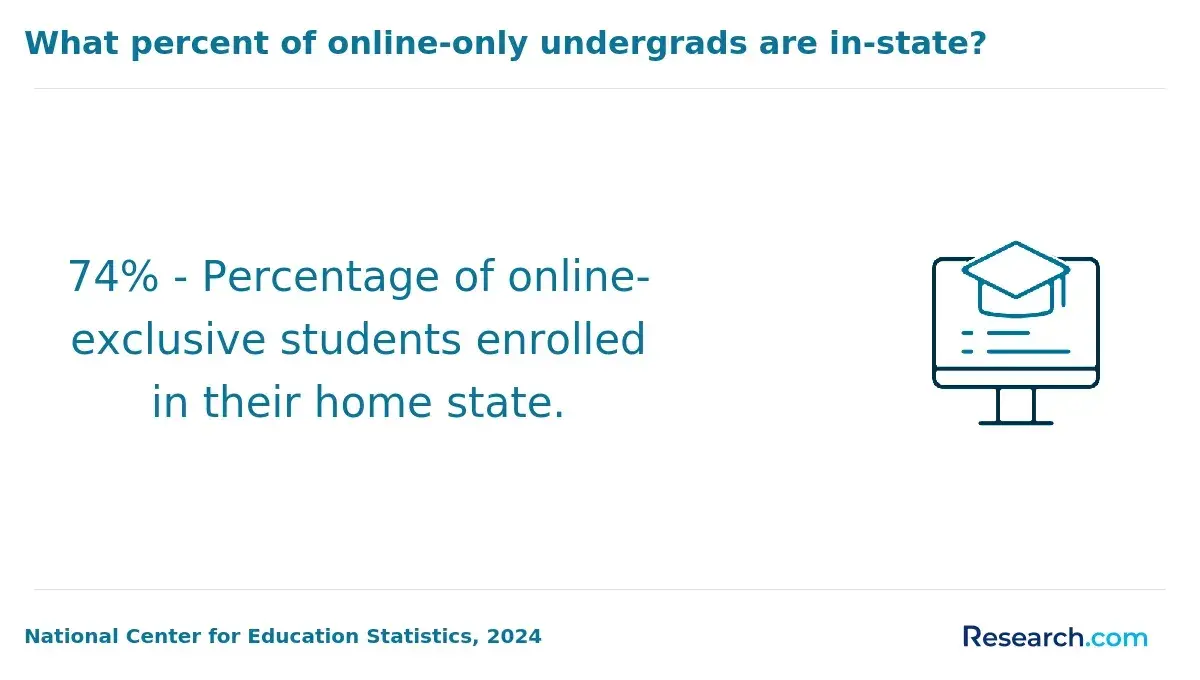
It might, but you should never assume it will. Licensure requirements are state-specific and profession-specific. A program can be accredited, reputable, and legal to offer online while still failing to meet the educational requirements for a regulated occupation in your state.
This matters most if your Community Health doctorate is tied to a regulated profession or if you plan to use the degree to qualify for a state credential. Some states regulate community health workers through certification frameworks; others focus on employer-based training. Clinical fields have much stricter board rules.
Before enrolling, use this licensure check to avoid relying on incomplete admissions information:
- Identify the exact profession or credential you want, such as CPH, CHES, MCHES, community health worker certification, dietetics licensure, counseling licensure, nursing practice authority, or another state-regulated role.
- Find the state board or credentialing body that controls eligibility in the state where you live or plan to practice.
- Read the education rules for degree level, programmatic accreditation, coursework, practicum hours, supervised experience, exams, and background checks.
- Ask the online doctorate program for a written professional licensure disclosure for your state, not a general statement about national recognition.
- Confirm directly with the board if the program's disclosure is unclear, conditional, or based on student-arranged field experiences.
One common mistake is checking only your current state. If you expect to move, work remotely across state lines, or serve clients in another jurisdiction, you may need to evaluate more than one state's requirements. Licensure portability is improving in some professions, but many health-related credentials still depend on state law.
Yes. Field-based requirements can determine whether a program supports graduation, certification, or licensure. Even when coursework is fully online, doctoral students may need a practicum, applied project, internship, residency, dissertation research site, community partnership, or supervised professional experience.
For community health and public health doctorates, fieldwork often focuses on needs assessment, intervention design, policy implementation, program evaluation, epidemiologic analysis, leadership practice, or community-based research. For clinical-adjacent programs, the rules may be stricter and may require approved supervisors, minimum hours, specific client populations, or board-approved sites.
Ask the school detailed placement questions before committing. These questions are especially important if you live far from campus or in a state with limited approved sites:
- Does the program place students, or must students find their own practicum or internship sites?
- Are placements available in my state, and has the university previously approved sites there?
- Do supervisors need a specific license, credential, degree, or state approval?
- Are any in-person residencies, intensives, defenses, orientations, or campus visits required?
- Will field hours count toward the credential I want, or only toward degree completion?
- What happens if a site withdraws, a supervisor leaves, or state rules change during the program?
Students with nutrition-focused community health interests should be especially careful because dietetics and nutrition licensure rules vary by state. If you are still building foundational credentials, an accelerated nutrition degree online may be useful only if it aligns with the professional pathway you intend to pursue.
The biggest mistake is treating "online" as meaning "no local obligations." In many applied health doctorates, the online classroom is only one part of the program; local field placement may be the part that affects licensure most.
Accreditation affects more than reputation. It can influence whether you can receive federal financial aid, whether another university accepts your credits, whether employers recognize your doctorate, and whether you can continue into postdoctoral, faculty, or professional training.
For federal student aid, institutional accreditation by a recognized accreditor is a major eligibility condition, though students must also meet program, enrollment, citizenship, and satisfactory academic progress requirements. Programmatic accreditation may not always be required for aid, but it can matter for professional outcomes.
The following table summarizes where accreditation status often has practical consequences.
| Decision area | Why accreditation matters | What students should understand |
| Federal financial aid | Institutional accreditation is tied to institutional eligibility for Title IV aid | An unaccredited school may leave students without federal loans or grants |
| Transfer credits | Receiving schools review accreditation, course level, grades, and fit | Accreditation helps but does not guarantee transfer acceptance |
| Employer recognition | Employers may screen for accredited institutions or relevant programmatic accreditation | Public agencies, universities, and healthcare employers may be stricter than private employers |
| Certification and licensure | Credentialing bodies may require specific programmatic accreditation or coursework | Institutional accreditation alone may not be enough |
| Further study | Postdoctoral, faculty, or second-degree programs may review accreditation and research rigor | Doctoral quality, dissertation support, and faculty fit matter alongside accreditation |
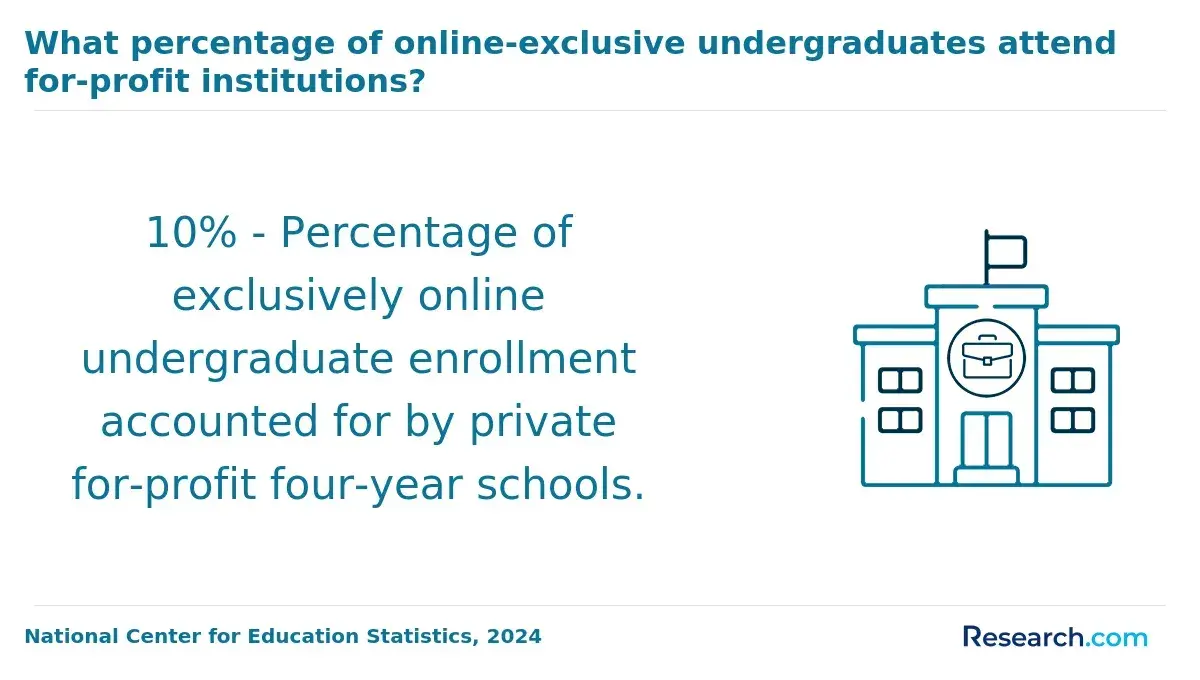
Cost is another reason to verify accreditation early. The National Center for Education Statistics reported in 2024 that average graduate tuition and required fees vary widely between public, private nonprofit, and private for-profit institutions. That variation means a low advertised tuition rate is not enough; students should compare total program cost, required travel, technology fees, dissertation continuation fees, and field placement expenses.
A practical evaluation should include these financial and academic questions:
- Is the university currently eligible to participate in federal student aid programs?
- What is the total estimated cost through dissertation completion, not just per-credit tuition?
- Are there separate fees for online learning, residencies, doctoral candidacy, dissertation extension, or practicum supervision?
- Does the university have written transfer-credit policies for doctoral coursework?
- Do target employers, public health agencies, universities, or credentialing bodies recognize the degree and accreditor?
The safest approach is to compare total risk, not just tuition. An inexpensive doctorate that does not meet accreditation or licensure requirements can be more costly than a higher-priced program that fits your professional plan.
What Happens if an Online Community Health Doctorate Loses Accreditation or Is Only in Candidacy?
Accreditation status can change. A school or program may be fully accredited, on warning or probation, in candidacy, newly applying for accreditation, voluntarily withdrawing, or losing accreditation. Each status has different implications for students.
Candidacy is not the same as full accreditation. It usually means the accreditor has recognized that the program is progressing through a formal review process, but full accreditation has not yet been granted. In some fields, graduates of candidate programs may receive certain protections if accreditation is later awarded; in others, they may not. You need the accreditor's rules in writing.
This table summarizes common accreditation statuses and why they matter.
| Status | What it generally means | Student implication |
| Full accreditation | The institution or program currently meets accreditor standards | Usually the lowest accreditation-related risk, though licensure still must be verified |
| Candidacy or pre-accreditation | The program is under formal review but not fully accredited | Eligibility for credentials may be uncertain or conditional |
| Warning, monitoring, or probation | The accreditor has identified compliance concerns | Students should review the accreditor's public notice and ask about teach-out protections |
| Voluntary withdrawal | The institution or program is leaving accreditation voluntarily | Students need dates, transition plans, and credentialing impact information |
| Accreditation loss | The accreditor has withdrawn approval | Financial aid, transfer, employment, and licensure outcomes may be affected |
If a program is in candidacy or has an accreditation concern, ask for written answers before enrolling. You should understand the expected review timeline, what happens if accreditation is denied, whether a teach-out agreement exists, and whether your graduation date affects credential eligibility.
In some cases, a different health pathway may be a better fit than accepting accreditation uncertainty. For example, students who want a faster route into public health, nutrition, or applied health roles may compare accredited master's or certificate options before committing to a doctorate.
Other Things You Should Know About Community Health
No. A DrPH is usually a professional doctorate focused on public health leadership, applied practice, policy, and advanced program implementation. A PhD in Community Health is usually more research-oriented and may be better suited for academic, research, or theory-driven roles. Accreditation and licensure relevance depends on the program's structure, not just the degree title.
Possibly. Many colleges evaluate faculty candidates based on an accredited doctoral degree, research experience, publications, teaching background, and subject fit. Online delivery is usually less important than institutional accreditation, dissertation quality, faculty mentorship, and whether the degree matches the courses you want to teach.
No. Community health worker certification rules vary widely. Some states have formal certification or training systems, while others rely on employer requirements, grant requirements, or local public health agency standards. Check your state health department or workforce certification body before assuming a doctorate satisfies local requirements.
Choose based on your career goal. Community Health doctorates often emphasize health promotion, community intervention, prevention, education, and local population health. Public Health doctorates may offer broader training in epidemiology, policy, biostatistics, leadership, and systems-level practice. If certification, licensure, or public agency employment matters to you, compare accreditation and credential eligibility before choosing.
- Common PhD Challenges Faced by Doctoral Students https://academicsupervision.com/phd-challenges-faced-by-students/
- Health and Human Services: Campus & Online Degrees and Careers https://www.publichealthonline.org/human-services/online-degree-programs/
- The Benefits and Challenges of Programmatic Accreditation in Higher Education https://www.globalaccrediting.org/news-and-updates/the-benefits-and-challenges-of-programmatic-accreditation-in-higher-education
- List of Accredited Schools and Programs - Council on Education for Public Health https://ceph.org/about/org-info/who-we-accredit/accredited/
- State Telehealth Policies for Cross-State Licensing - CCHP https://www.cchpca.org/topic/cross-state-licensing-professional-requirements/
- CPH Eligibility Requirements - NBPHE https://www.nbphe.org/certified-in-public-health/cph-eligibility-requirements/
- Navigating Your Future in Public Health: The Value of Accreditation https://masterspublichealth.com/accredited-school-of-public-health/
- Nationally Accredited - Public Health - Dayton & Montgomery County https://www.phdmc.org/about/nationally-accredited
- Doctorate of Public Health Program at MCW https://www.mcw.edu/education/graduate-school/graduate-school-programs/public-health/doctor-of-public-health
- Effects of NCAAA Accreditation on Health Sciences Educational Programs | JHL | Dove Medical Press https://www.dovepress.com/effects-of-ncaaa-accreditation-on-health-sciences-educational-programs-peer-reviewed-fulltext-article-JHL