2027 Online Cloud Computing Degree Programs With No Application Fee and Rolling Admissions

Co-Founder and Chief Data Scientist
Choosing an online cloud computing degree is easier when you can apply without paying a fee and start on a flexible schedule, but those features do not automatically make a program affordable or high quality. The U.S. Bureau of Labor Statistics projects about 356,700 openings each year in computer and information technology occupations from 2023 to 2033, making cloud skills relevant for career changers, working adults, and IT professionals.
This guide explains which programs to compare, how rolling admissions works, what costs to verify, and how to choose a degree that fits your goals.
Key Things You Should Know
- No-application-fee programs can save applicants upfront money, but the bigger financial decision is total tuition, technology fees, transfer-credit acceptance, and aid eligibility.
- Rolling admissions usually means applications are reviewed continuously, but financial aid, course availability, scholarship priority dates, and start-term cutoffs can still create real deadlines.
- Cloud-related roles are tied to a strong U.S. tech labor market: BLS data published in 2024 projects computer and information technology occupations to grow much faster than average from 2023 to 2033.
Which Online Cloud Computing Degree Programs Have No Application Fee and Rolling Admissions?
Several U.S. online programs advertise cloud computing degrees or cloud-focused IT pathways with no application fee and flexible admissions calendars. Because fee waivers, program names, and start dates can change, treat the table below as a starting point and confirm each policy directly on the school's admissions page before applying.
| School | Example online cloud-related program | Application-fee status to verify | Rolling or flexible admissions feature | Accreditation type to confirm |
| University of Maryland Global Campus | Cloud Computing Systems degree options | Commonly advertises no application fee for many applicants | Multiple online session starts throughout the year | Regional institutional accreditation |
| Purdue Global | BS in Cloud Computing and Solutions | Commonly advertises no application fee | Frequent online start dates | Regional institutional accreditation |
| Franklin University | BS in Cloud Computing | Commonly advertises a free online application | Multiple start dates and adult-focused admissions | Regional institutional accreditation |
| Southern New Hampshire University | Online IT degree pathways with cloud-relevant concentrations or coursework | Commonly advertises no application fee | Rolling admission with several undergraduate and graduate terms | Regional institutional accreditation |
| National University | Cloud computing or IT programs with cloud-focused coursework | Commonly advertises no application fee | Frequent monthly or term-based starts | Regional institutional accreditation |
When comparing programs, focus on whether the curriculum maps to cloud infrastructure, virtualization, networking, security, automation, DevOps, and major cloud platforms. A program that simply includes one cloud elective may not provide the same depth as a dedicated cloud computing degree.
Students comparing technology degrees often look at online study across fields; for example, Research.com's guide to affordable online masters can help readers think beyond sticker price and evaluate total cost, format, and value across graduate options.
How Does Rolling Admission Work for Online Cloud Computing Degree Programs?
Rolling admission means a school reviews applications as they arrive instead of waiting for one fixed deadline. For online cloud computing programs, this can be especially helpful for working adults who need to coordinate employer tuition benefits, transfer credits, family responsibilities, or military benefits around a preferred start date.
The comparison below shows why rolling admissions adds flexibility, but not unlimited time. The main advantage is faster decision-making; the main risk is assuming there are no cutoffs.
| Feature | Rolling admissions | Fixed-deadline admissions | What it means for applicants |
| Application review | Applications are reviewed continuously or by upcoming start term | Applications are reviewed after a published deadline | Rolling admission can shorten the wait for a decision |
| Start dates | Often monthly, every 6 to 10 weeks, or several times per year | Often fall, spring, and sometimes summer | More start dates can help students begin sooner |
| Course availability | Not every course may run every term | Course sequence may be more predictable | Students should ask when cloud-specific courses are offered |
| Aid and scholarships | May still have priority deadlines | Usually tied closely to admission deadlines | Applicants should separate admissions flexibility from financial aid timing |
A common mistake is treating rolling admission as a reason to delay. In practice, applying earlier can give students more time to submit transcripts, resolve transfer-credit issues, complete placement steps, and register before high-demand online sections fill.
How Much Can Students Save by Choosing an Online Cloud Computing Degree With No Application Fee?
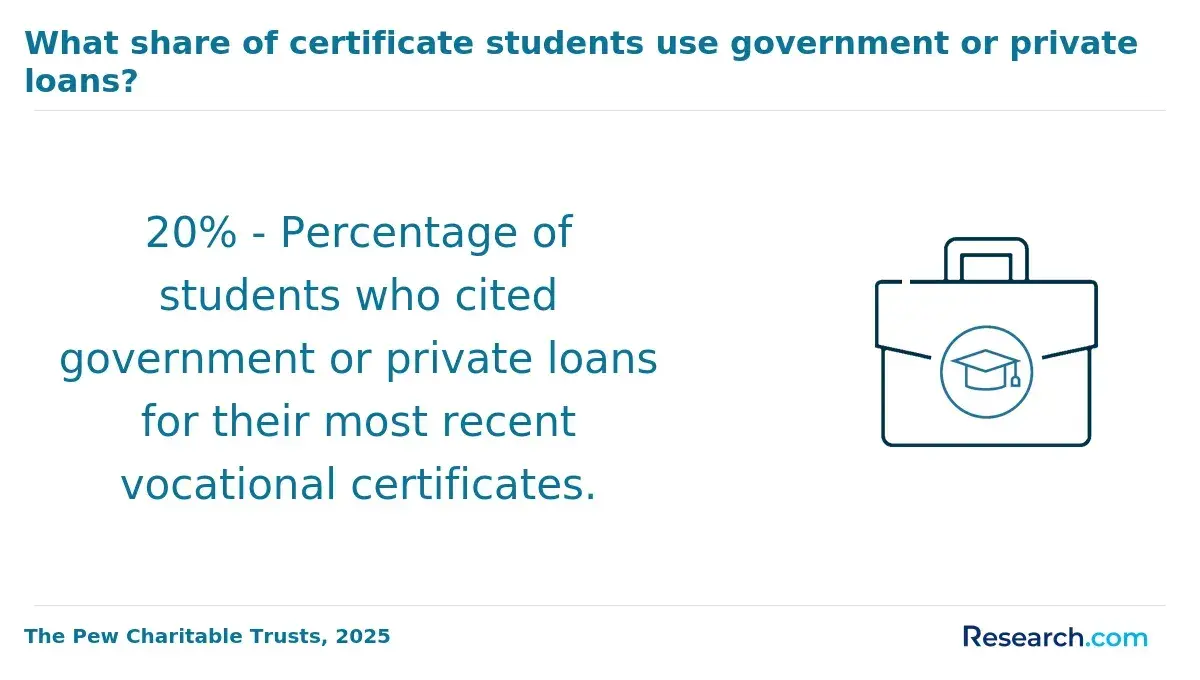
A waived application fee can be useful, especially if you are applying to several schools, but it is usually a small part of the full investment. A simple way to think about the savings is this: if a comparable school charges a $50 application fee and you apply to four no-fee programs instead, the upfront savings would be $200, but that amount could be outweighed by one extra course, a technology fee, or fewer accepted transfer credits.
College Board's 2024 Trends in College Pricing report lists average published tuition and fees for full-time undergraduates at public four-year in-state institutions at $11,610 for 2024-25. That figure is not specific to online cloud computing programs, but it shows why applicants should evaluate the full cost of attendance rather than focusing only on a waived application charge.
Use the following cost categories to compare programs before deciding that a no-fee application is a meaningful bargain.
- Tuition model: Compare per-credit pricing, flat-rate terms, competency-based pricing, and any surcharge for out-of-state or online students.
- Required fees: Ask about technology fees, graduation fees, course-material fees, lab fees, portfolio-assessment fees, and proctoring charges.
- Transfer credits: A program that accepts more prior credits may cost less overall even if another school has a slightly lower per-credit rate.
- Certification costs: Cloud programs may encourage or embed certifications from AWS, Microsoft Azure, Google Cloud, CompTIA, Cisco, or Linux providers, and exam costs may or may not be included.
- Time to completion: Finishing faster can reduce opportunity costs, but only if the pace is realistic with work and family obligations.
The bottom line is that no application fee is valuable when it helps you compare multiple legitimate programs with low friction. It should not be the deciding factor if another accredited program has stronger transfer policies, better course sequencing, or a lower total cost.
What Are the Admission Requirements for No-Fee Online Cloud Computing Degree Programs?
Admission requirements vary by degree level, but most no-fee online cloud computing programs still require standard academic documentation. A free application does not mean open enrollment, automatic admission, or lower academic expectations.
The table below summarizes common requirements so applicants can prepare materials before the next start-date cutoff.
| Program level | Typical academic requirement | Common supporting materials | Cloud or IT preparation to check |
| Associate degree | High school diploma, GED, or equivalent | Application, transcripts, placement information if required | Basic computer literacy and math readiness |
| Bachelor's degree | High school diploma or transfer credits from prior college study | Official transcripts, transfer evaluation, sometimes resume for adult learners | Introductory programming, networking, databases, or systems coursework may help |
| Master's degree | Bachelor's degree from an accredited institution | Transcripts, resume, statement of purpose, possible recommendations | Prior IT, computer science, cybersecurity, networking, or systems experience may be expected |
| Graduate certificate | Bachelor's degree or relevant professional background, depending on the school | Application, transcripts, resume, sometimes proof of technical experience | Designed for targeted upskilling, but prerequisites can still apply |
Applicants should read the admissions page and catalog together. The admissions page may tell you how to get accepted, while the catalog often explains prerequisites, minimum grades, transfer limits, capstone requirements, and whether certain cloud courses must be completed in sequence.
Working adults who are exploring different online career-change paths may also compare admission expectations in adjacent fields; Research.com's guide to best MSW programs online, for example, shows how professional graduate programs can differ sharply in prerequisites, fieldwork, and career outcomes.
When Should Students Apply to Online Cloud Computing Degree Programs With Rolling Admissions?
Students should apply as soon as they have a realistic target start date, not simply whenever the school says applications are open. A good rule is to begin the process 8 to 12 weeks before the desired term, especially if you have prior college credits, military training, international transcripts, employer reimbursement paperwork, or financial aid questions.
The timeline below helps applicants use rolling admissions strategically instead of rushing into the next available start date.
- Eight to twelve weeks before starting: Identify three to five accredited programs, confirm the application fee policy, and request unofficial transfer-credit estimates if available.
- Six to eight weeks before starting: Submit applications, order official transcripts, complete the FAFSA if eligible, and ask about scholarship or employer-benefit deadlines.
- Four to six weeks before starting: Review admission decisions, compare degree audits, confirm remaining credits, and ask when required cloud courses are offered.
- Two to four weeks before starting: Register for classes, confirm technology requirements, finalize payment plans, and avoid overloading the first term if you are working full time.
Rolling admissions can also support accelerated study, but speed should match your life and learning style. Students comparing faster online pathways in other fields, such as psychology online programs, will see the same trade-off: flexible start dates help, but course intensity and support services determine whether the pace is sustainable.
How Can Students Strengthen an Online Cloud Computing Degree Application?
A strong cloud computing application shows that the applicant understands both the academic workload and the technical direction of the field. This matters most for master's programs, competitive scholarships, and programs that expect prior exposure to IT systems.
Before submitting, use the following steps to make the application more complete and easier for admissions staff to evaluate.
- Clarify your goal: State whether you are aiming for cloud administration, cloud architecture, DevOps, cybersecurity, data engineering, systems engineering, or technical management.
- Document technical experience: Include help desk, networking, scripting, systems administration, cybersecurity, database, or software experience, even if it was gained outside a formal IT job.
- Highlight relevant certifications: List active certifications such as CompTIA Network+, Security+, Cloud+, AWS, Azure, Google Cloud, Cisco, Linux, or Kubernetes credentials if you have them.
- Prepare transcripts early: Incomplete transcripts are one of the easiest ways to miss a preferred rolling-admission start date.
- Ask for a transfer review before enrolling: Do not assume credits will apply to the major just because they transfer as electives.
- Write a focused statement if required: Explain why the program's cloud curriculum fits your target role rather than using a generic technology-career essay.
Applicants should also check whether the program teaches current cloud practices such as infrastructure as code, identity and access management, containerization, automation, zero-trust security, cost optimization, and multi-cloud operations. Similar to students comparing top online MBA programs, cloud applicants should look past easy admissions features and evaluate whether the curriculum and outcomes support their next career step.
Are Online Cloud Computing Degree Programs With No Application Fees Accredited and Legitimate?
Yes, many online cloud computing programs with no application fees and rolling admissions are legitimate, but applicants must verify accreditation and program substance. A school can be accredited and still have a cloud curriculum that is too shallow for your goals, while an unaccredited or poorly transparent provider can create major problems for transfer, financial aid, employer reimbursement, and graduate admission.
Use this verification sequence before submitting deposits or signing enrollment agreements.
- Check institutional accreditation: Confirm the school is listed with a recognized accreditor through the U.S. Department of Education or Council for Higher Education Accreditation databases.
- Review the catalog: Look for required cloud courses, prerequisites, capstone requirements, credit totals, residency rules, and course descriptions.
- Confirm online format: Ask whether classes are fully asynchronous, synchronous, hybrid, or require campus visits, labs, exams, or live attendance.
- Ask about faculty and support: Look for access to advising, tutoring, cloud labs, career services, and technical support outside standard business hours.
- Verify financial aid eligibility: Make sure the program, not just the institution, is eligible for the aid or benefits you plan to use.
Do not rely only on marketing phrases such as "career-ready," "industry-aligned," or "no-cost application." The same accreditation discipline applies across online education, including advanced options such as PhD programs online, where institutional legitimacy and program fit matter more than convenience alone.
How Do Financial Aid and Total Costs Compare Among Online Cloud Computing Degree Programs?
Financial aid and total costs can vary widely even among programs that all waive the application fee. The right comparison is not "free application versus paid application," but "total net cost, time to completion, support, and career relevance."
The table below shows the cost factors that commonly affect online cloud computing students and why each one matters.
| Cost factor | Why it matters | Question to ask the school |
| Tuition per credit or term | This is usually the largest direct cost | Is the rate fixed for online students, and does it change by residency? |
| Accepted transfer credits | Transfer credit can reduce both cost and completion time | How many credits apply to the major, not just general electives? |
| Course materials and labs | Cloud courses may require virtual labs, platforms, or exam tools | Are cloud lab fees, textbooks, and software included in tuition? |
| Certification exams | Some programs align with industry certifications, but exams may cost extra | Are certification vouchers included, discounted, optional, or required? |
| Financial aid deadlines | Rolling admission does not always mean rolling scholarship availability | Are there priority dates for grants, scholarships, military benefits, or employer billing? |
| Enrollment intensity | Part-time study may be more manageable but can extend total time | What is the realistic course load for a working adult? |
Federal Student Aid lists annual Direct Unsubsidized Loan limits for eligible graduate or professional students at up to $20,500, but borrowing capacity should not be treated as affordability. Students should compare grants, employer tuition assistance, military education benefits, scholarships, payment plans, and transfer credits before taking on debt.
A no-fee program with higher tuition may still be worthwhile if it accepts more transfer credits, offers stronger cloud labs, aligns with certification goals, or helps you finish sooner. Conversely, a free application is not meaningful if the final cost is higher and the curriculum does not match your intended role.
Which Students Benefit Most From No-Fee, Rolling-Admission Online Cloud Computing Degrees?
No-fee, rolling-admission online cloud computing degrees are most useful for students who need flexibility without sacrificing accreditation or academic depth. They are especially helpful when the applicant wants to compare multiple schools before committing and does not want application fees to limit the search.
These programs often fit the following student profiles.
- Working IT professionals: Students already in help desk, networking, systems administration, cybersecurity, or software roles may use a cloud degree to move toward infrastructure, architecture, DevOps, or platform engineering.
- Career changers with technical aptitude: Applicants from operations, analytics, logistics, finance, or military technology roles may benefit if the program includes foundational IT coursework.
- Students with transfer credits: Rolling admissions lets transfer students compare degree audits and start when the credit evaluation makes financial sense.
- Military-affiliated students: Frequent start dates can align better with deployments, relocations, and benefit timelines.
- Adult learners balancing family and work: Multiple starts and no application fee reduce friction, but course load still needs careful planning.
Some students should be cautious. If you need a highly selective research environment, a cohort-based graduate program, a campus lab experience, or a degree from a specific employer-preferred institution, rolling admission may matter less than program reputation, faculty expertise, and career placement support.
How Should Students Choose Among No-Fee Online Cloud Computing Degree Programs?
The best choice is the program that offers the strongest combination of accreditation, curriculum depth, affordability, transfer value, schedule fit, and career alignment. No application fee and rolling admissions are helpful features, but they should function as filters, not final decision rules.
Use this decision checklist before enrolling.
- Verify the fee policy: Confirm that the application is currently free and ask whether any enrollment, transcript, orientation, graduation, or technology fees apply later.
- Confirm rolling admissions details: Ask for the next three start dates, application cutoffs, registration deadlines, and whether cloud courses are available in each term.
- Compare total program cost: Calculate remaining credits after transfer, tuition, fees, materials, certification exams, and expected time to completion.
- Check curriculum depth: Look for networking, cloud architecture, security, automation, virtualization, scripting, databases, DevOps, and hands-on labs.
- Evaluate support: Ask about online tutoring, career services, faculty access, technical support, internship help, and cloud lab availability.
- Review outcomes carefully: Look for transparent career services data, employer partnerships, certification alignment, and alumni examples without assuming any salary is guaranteed.
- Read withdrawal and refund policies: Flexible admissions can make it easy to start quickly, so understand financial consequences before the term begins.
A practical strategy is to apply to several accredited no-fee programs, compare official transfer evaluations and aid offers, then choose based on net cost and academic fit. Avoid choosing a school simply because it is the fastest to admit you; the better investment is usually the program that helps you build durable cloud skills at a manageable total cost.
Other Things You Should Know About Cloud Computing
Yes, some cloud roles are accessible through experience, certifications, projects, and entry-level IT work. A degree may still help with long-term advancement, management tracks, employer screening, and roles that require broader knowledge of systems, networking, security, and architecture.
Common options include AWS Certified Solutions Architect, Microsoft Azure Administrator, Google Associate Cloud Engineer, CompTIA Cloud+, CompTIA Security+, Linux certifications, and Kubernetes credentials. The best choice depends on whether you want to work in administration, architecture, security, DevOps, or data infrastructure.
Many require at least some scripting or programming because cloud work often involves automation, infrastructure as code, APIs, and troubleshooting. Students should expect exposure to languages or tools such as Python, PowerShell, Bash, SQL, Terraform, or YAML, depending on the curriculum.
Related roles include cloud support associate, systems administrator, network administrator, cloud engineer, DevOps engineer, site reliability engineer, cloud security analyst, solutions architect, and infrastructure engineer. Entry requirements vary by employer, experience level, certifications, and technical portfolio.
References
- How Long Does It Take to Become a Cloud Engineer? https://nareshit.com/blogs/how-long-does-it-take-to-become-a-cloud-engineer
- Why Employment Outcome Rates Matter | ACI Learning https://www.acitechacademy.com/blog/why-employment-outcome-rates-matter-a-guide-for-students-and-employers/
- How does a college degree improve graduates’ employment and earnings potential? - APLU https://www.aplu.org/our-work/4-policy-and-advocacy/publicuvalues/employment-earnings/
- Comparing Tuition Costs in Fifteen Different Countries - IvyEdge Global https://ivyedgeglobal.com/comparing-tuition-costs-in-fifteen-different-countries/
- Comparing financial aid offers: How to choose the right college https://www.citizensbank.com/learning/financial-aid-offer.aspx
- Cloud Computing Bachelor's Degrees | Top Online Programs 2024 https://www.itcareerfinder.com/program-rankings/best-cloud-computing-bachelors-degrees.html
- Why Job Placement Rates Matter in Higher Education https://accreditationxpert.com/job-placement-rates-higher-education/
- Cloud Computing Training in the Netherlands https://www.nobleprog.nl/en/cloud-computing-training
- Online Master's Degree: Cloud Computing Systems https://www.umgc.edu/online-degrees/masters/cloud-computing-systems
- Cloud Computing Engineering https://hochschule-burgenland.at/en/master-cloud-computing-engineering/