2027 Online Clinical Research Management Doctorate Programs with Practicum, Internship, Clinical, or Fieldwork Requirements

Co-Founder and Chief Data Scientist
Choosing an online clinical research management doctorate is not just about coursework; it is about whether you can complete the required supervised experience without disrupting your job, location, or budget. The stakes are high: the U.S. Bureau of Labor Statistics reported a May 2024 median pay of $117,960 for medical and health services managers, a role category that includes many research operations leaders.
This guide explains program types, placement models, costs, timelines, red flags, and career fit so you can decide whether hands-on doctoral training is realistic and worthwhile.
Key Things You Should Know
- Online clinical research management doctorates are usually not fully remote when they include practicum, internship, clinical, fieldwork, residency, or applied project requirements; students should verify hours, site rules, and supervisor qualifications before enrolling.
- Placement policies vary widely: some programs help approve or coordinate sites, while others expect students to identify an eligible employer, hospital, research center, contract research organization, or community health partner.
- Fieldwork can improve career readiness for clinical trial leadership, regulatory operations, and research administration roles, but it can also add travel, unpaid time, delayed graduation risk, and borrowing costs, especially with 2024-25 federal graduate loan rates at 8.08% for Direct Unsubsidized Loans and 9.08% for Grad PLUS Loans.
Which Online Clinical Research Management Doctorate Programs Require Practicum, Internship, Clinical, or Fieldwork Experience?
Online doctoral options in clinical research management are often housed under broader degree names, such as Doctor of Health Science, Doctor of Medical Science, Doctor of Clinical Research, Doctor of Health Administration, PhD in clinical or translational science, or professional doctorates with clinical research, regulatory science, or healthcare leadership tracks.
The key is not the title alone; it is whether the curriculum includes supervised applied learning outside the online classroom.
The table below shows the types of online or hybrid doctoral programs most likely to include experiential requirements and how those requirements usually appear in the curriculum. Use it as a screening tool before you request admissions materials:
| Program type | How clinical research management fits | Common experiential requirement | Best fit |
| Doctor of Health Science with clinical research or healthcare leadership focus | Prepares experienced healthcare and research professionals for leadership, quality improvement, education, and applied research roles | Practicum, applied doctoral project, organizational field experience, or capstone implementation | Working professionals who want practice-based leadership training |
| Doctor of Clinical Research or clinical investigation doctorate | Focuses on trial design, ethics, compliance, biostatistics, patient safety, and research operations | Research practicum, supervised project, protocol development, or clinical research site experience | Clinical research coordinators, monitors, investigators, and trial managers moving into senior roles |
| PhD in clinical and translational science | Emphasizes original research, grant writing, translational methods, and scholarly publication | Research rotations, dissertation research, lab or clinical research site participation, or mentorship-based fieldwork | Students aiming for academic, investigator, or research scientist pathways |
| Doctor of Health Administration with research operations electives | Connects healthcare administration, compliance, budgets, staffing, and organizational strategy to research settings | Administrative practicum, executive residency, consulting project, or applied capstone | Professionals targeting research administration, site leadership, or health system research operations |
| Regulatory science or clinical trial management doctorate track | Centers on FDA-regulated products, trial oversight, quality systems, risk management, and documentation | Applied regulatory project, industry practicum, or employer-based fieldwork | Professionals in sponsors, CROs, regulatory affairs, quality assurance, and compliance |
A major red flag is a program that advertises itself as online but does not clearly explain whether the applied experience is remote, local, employer-based, campus-based, or tied to specific state approvals. If the catalog uses terms like "practicum," "residency," "clinical experience," "internship," "field experience," "doctoral project implementation," or "approved site," ask for the placement handbook before applying.
What Are the Practicum, Internship, Clinical, and Fieldwork Requirements for Online Clinical Research Management Doctorates?
These terms are sometimes used interchangeably, but they can mean different things for scheduling, supervision, evaluation, and site approval. Understanding the distinction helps you compare programs accurately instead of assuming that every hands-on requirement has the same workload.
The table below clarifies the most common experiential terms used in online clinical research management doctoral programs and what each usually means for the student:
| Requirement | Typical meaning | Common setting | What to verify |
| Practicum | Structured supervised learning tied to specific competencies or doctoral courses | Research office, hospital trial unit, academic medical center, CRO, sponsor, public health agency, or employer site | Required hours, competencies, deliverables, supervisor credentials, and grading method |
| Internship | Longer applied experience that may resemble a temporary professional placement | Clinical research site, pharmaceutical company, device company, regulatory department, or research administration office | Whether it is paid, unpaid, full-time, part-time, remote, hybrid, or restricted to approved partners |
| Clinical experience | Supervised work in or around patient care, trial participants, clinical documentation, safety monitoring, or care delivery systems | Hospital, clinic, trial site, or academic health system | Patient-contact rules, health clearance, background check, immunization, liability coverage, and state authorization |
| Fieldwork | Broad applied work completed in a real organization, often linked to leadership, evaluation, policy, or implementation | Employer, community partner, research network, nonprofit, public health organization, or healthcare system | Site approval timeline, deliverables, faculty oversight, and whether remote work is allowed |
| Residency | Short in-person or synchronous intensive experience, often used for doctoral advising, skills assessment, networking, or project defense | Campus, partner site, virtual intensive, or professional conference setting | Travel requirements, dates, lodging costs, attendance rules, and whether alternatives exist |
Clinical research management students should also distinguish doctoral fieldwork from entry-level clinical training. For example, online pharmacy school programs may include extensive clinical rotations tied to professional licensure, while a clinical research management doctorate may instead require applied leadership, compliance, or research operations experience.
Before enrolling, ask the program to define the requirement in writing. Important questions include:
- How many supervised hours are required, and are they completed in one term or spread across multiple terms?
- Can the experience be completed at a current workplace, or must it be at a new site?
- Who approves the site, and how long does approval usually take?
- What credentials must the site supervisor hold?
- Are evening, weekend, hybrid, or remote fieldwork options permitted?
- What happens if a site withdraws, a supervisor leaves, or a student relocates?
How Do Online Clinical Research Management Doctorate Programs Arrange Practicum and Clinical Placements?
Placement arrangement is one of the biggest differences among online programs. Some schools maintain formal site networks or dedicated placement coordinators, while others require students to propose a site and then obtain faculty approval.
The table below compares the major placement models and what they mean for risk, convenience, and student responsibility:
| Placement model | How it works | Student advantage | Potential drawback |
| School-arranged placement | The program identifies or assigns approved sites, often using existing agreements | Less burden on the student and clearer compliance oversight | May be geographically limited or less flexible for working adults |
| Student-identified, school-approved site | The student finds a site, and the school verifies suitability before fieldwork begins | Greater chance of completing requirements near home or at work | More responsibility, paperwork, and risk of delays if the site is rejected |
| Employer-based placement | The student completes applied work within a current organization, often outside normal job duties | Can reduce travel and scheduling disruption | May require conflict-of-interest review, separate supervision, and formal approval |
| Virtual or remote applied project | The student completes data analysis, regulatory documentation, quality improvement, or project management remotely | Highest flexibility when permitted | May not satisfy programs requiring direct site engagement or clinical environment exposure |
| Hybrid residency plus local fieldwork | Online courses are paired with short in-person intensives and local supervised experience | Balances online access with hands-on networking and assessment | Adds travel costs and fixed attendance dates |
A strong placement process should include a written handbook, a site approval checklist, supervisor qualification rules, affiliation agreement templates, liability insurance guidance, and a backup process if a site falls through. If an admissions advisor says placements are "usually easy" but cannot provide documentation, treat that as a warning sign.
Students can reduce placement risk by following a clear verification process before they commit to a program:
- Request the practicum, internship, clinical, or fieldwork handbook before applying.
- Ask whether the school has approved sites in your state or region within the last two academic years.
- Confirm whether your employer can serve as a site and whether your regular supervisor can evaluate you.
- Ask how affiliation agreements are handled and who is responsible for legal review.
- Confirm the deadline for securing a site before the required term begins.
- Ask what percentage of students have experienced placement delays, if the school tracks that information.
Employer Confidence in Online vs. In-Person Degree Skills, Global 2024

Many students can complete fieldwork near home, but it is not automatic. Local completion depends on state authorization, site availability, supervisor qualifications, institutional agreements, project scope, and whether the program allows student-identified placements.
Location matters because clinical research environments are not distributed evenly. Students in major metro areas may have access to academic medical centers, trial networks, sponsors, contract research organizations, and large health systems, while rural students may need to use employer-based projects, tele-research operations, public health agencies, or hybrid arrangements.
Use the checklist below to determine whether a local placement is realistic before enrolling:
- Confirm that the school is authorized to offer experiential education in your state.
- Ask whether the program has previously approved sites within commuting distance of your home or workplace.
- Identify at least two possible sites, such as a trial office, hospital research department, CRO, IRB office, regulatory affairs unit, or public health research program.
- Ask each site whether it can host doctoral-level applied work, not just undergraduate or master's-level internships.
- Verify whether the site can provide a qualified supervisor with experience in clinical research, healthcare leadership, regulatory compliance, or research administration.
- Check whether the program allows remote deliverables, hybrid supervision, or employer-based work when in-person trial operations are not available.
The same local-placement question appears in other health doctoral pathways. For instance, students comparing clinical research management with online pharmacy school should understand that pharmacy rotations are typically tied more directly to licensure and patient-care site availability, while research management fieldwork may offer more organizational flexibility depending on the program.
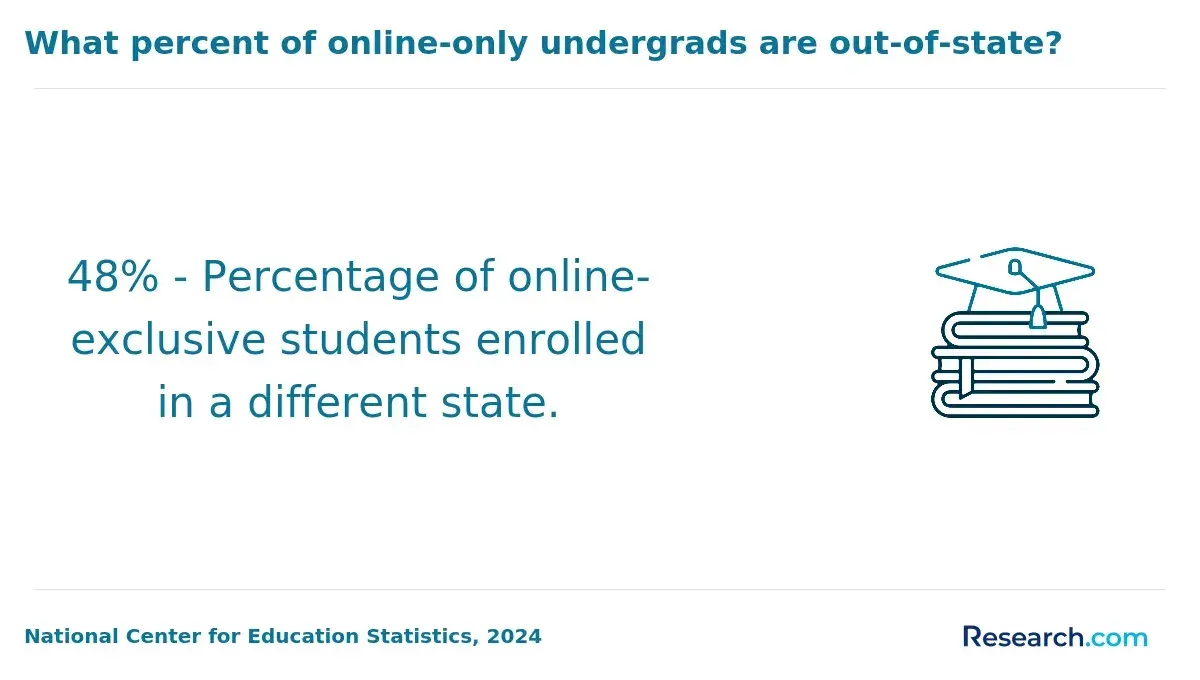
The most common mistake is assuming that "online" means "available in every state." Always ask for the program's state authorization list, clinical placement restrictions, and any excluded states before you submit an enrollment deposit.
Fieldwork can add value, but it can also add costs that do not appear in tuition estimates. These may include travel, parking, lodging for residencies, background checks, drug screening, immunization records, professional liability coverage, software, unpaid time away from work, and extra terms if placement approval is delayed.
Federal Student Aid set 2024-25 interest rates at 8.08% for Direct Unsubsidized Loans for graduate students and 9.08% for Grad PLUS Loans. That matters because extending a doctorate by one or two terms because of placement delays can increase both tuition and interest costs, especially for students borrowing to cover living expenses.
The table below summarizes the main cost and timeline variables to compare across programs. These are not universal charges, but they are common enough that applicants should ask about them directly:
| Cost or timeline factor | Why it matters | Question to ask |
| Additional practicum or internship credits | Some programs charge tuition for supervised experience credits just like didactic courses | Are experiential credits included in the published tuition estimate? |
| Residency travel | Short campus visits can require airfare, lodging, meals, and time off work | How many in-person days are required, and when are they scheduled? |
| Compliance requirements | Health clearance, background checks, drug screening, and documentation can add out-of-pocket costs | Which requirements are student-paid, site-paid, or school-paid? |
| Unpaid fieldwork time | Even local placements can reduce work hours or require schedule changes | Can fieldwork be completed during evenings, weekends, or within current employment? |
| Placement delay | A delayed site approval can push graduation into a later term | What is the latest date a site must be approved to stay on track? |
| Project extension | Applied doctoral projects may take longer if data access or organizational approval is slow | What happens if the site cannot provide data, participants, or approvals on time? |
To estimate the true cost, build a fieldwork budget in addition to a tuition budget. Include transportation, professional clothing, technology, compliance fees, lost wages, childcare, residency lodging, and one contingency term in case a site or project timeline changes.
Flexibility varies by program design. A doctorate built for working professionals may allow employer-based projects and part-time fieldwork, while a program tied to clinical site operations may require fixed hours, daytime availability, or specific types of supervised exposure.
Applicants should evaluate flexibility across several dimensions, not just whether the lectures are asynchronous. The list below shows the main flexibility points that affect completion for working adults:
- Scheduling flexibility: Whether supervised hours can occur outside standard weekday business hours.
- Site flexibility: Whether students can use employers, local research offices, remote regulatory teams, or public health organizations.
- Supervisor flexibility: Whether the supervisor must hold a doctorate, clinical license, research certification, or specific administrative role.
- Project flexibility: Whether the experience can focus on trial operations, compliance, quality improvement, data governance, regulatory documentation, patient recruitment, or research finance.
- Geographic flexibility: Whether students in all states can participate and whether relocation affects eligibility.
- Pacing flexibility: Whether fieldwork can be completed over more than one term or must follow a fixed cohort calendar.
Students who work full time should be especially careful with programs that use cohort-based lockstep schedules. These can provide structure, but a missed placement deadline may require waiting until the next course sequence, which can delay graduation even if all online coursework is complete.
A practical way to test flexibility is to present the school with your real schedule. Share your work hours, state, potential sites, travel limits, and preferred graduation timeline, then ask the advisor or program director to identify any barriers in writing.
Clinical research management is different from fields such as nursing, pharmacy, psychology, or physical therapy because it generally does not have one universal state license for research managers. However, accreditation, state authorization, human-subjects protections, institutional review board expectations, and employer standards still matter.
For degree quality, start with institutional accreditation recognized by the U.S. Department of Education or the Council for Higher Education Accreditation.
Then examine whether the program's applied requirements align with your professional goal, such as clinical trial management, research administration, regulatory affairs, healthcare leadership, or academic research.
The table below shows the main compliance areas to verify before choosing an online doctorate with fieldwork:
| Area to verify | Why it matters | What to request |
| Institutional accreditation | Supports degree recognition, federal financial aid eligibility, and transfer credibility | Name of accreditor and current accreditation status |
| State authorization | Determines whether the school can enroll students or supervise fieldwork in your state | Approved, restricted, and excluded state list |
| Human-subjects protection | Clinical research projects may require IRB review or ethics training | IRB policy, CITI or equivalent training rules, and project approval process |
| Site affiliation agreements | Hospitals and research organizations often require legal agreements before hosting students | Template agreement and timeline for legal review |
| Licensure or certification alignment | Some students may hold separate clinical licenses or pursue research certifications | Written statement on whether fieldwork satisfies any external requirement |
| Data privacy and compliance | Projects involving patient, trial, or organizational data may involve HIPAA, 21 CFR Part 11, or internal security rules | Data use policy and secure technology requirements |
Do not assume doctoral fieldwork automatically satisfies a state license, employer credential, or professional certification requirement. If you are a licensed clinician, confirm with your licensing board whether doctoral fieldwork has any continuing education, scope-of-practice, or supervision implications.
Strong support can be the difference between a useful applied experience and a stressful administrative burden. Because online students may be far from campus, the best programs make placement expectations transparent and provide active guidance before the fieldwork term begins.
Look for support in three stages: before placement, during placement, and during final evaluation. The following features are especially important for doctoral students balancing professional responsibilities with applied training.
- Pre-placement advising that reviews state eligibility, site options, project fit, and documentation deadlines.
- A dedicated placement coordinator or faculty advisor who understands clinical research operations and site approval requirements.
- Standardized forms for affiliation agreements, supervisor approval, learning objectives, time logs, and evaluation rubrics.
- Clear escalation procedures if a supervisor becomes unavailable, a site cancels, or a project cannot continue.
- Faculty mentoring that connects fieldwork to the dissertation, capstone, or applied doctoral project.
- Technology support for secure documentation, virtual supervision, data management, and project reporting.
Applicants should also ask to speak with current students or recent graduates, if the school permits it. Their answers can reveal whether placement support is proactive or whether students are largely left to negotiate sites, legal agreements, and schedules on their own.
Be cautious if a program cannot provide a handbook, does not track placement problems, or gives inconsistent answers about who is responsible for finding a site. Those are signs that online convenience may come with hidden administrative risk.
Hands-on doctoral training can strengthen career readiness when it helps students build evidence of leadership, compliance judgment, project execution, and cross-functional communication. In clinical research management, employers often value the ability to manage protocols, budgets, audits, recruitment issues, safety documentation, vendors, and regulatory timelines in real organizations.
The U.S. Bureau of Labor Statistics reported a May 2024 median annual wage of $100,590 for medical scientists and $117,960 for medical and health services managers. These figures do not represent guaranteed outcomes for doctorate holders, but they show why many experienced research professionals pursue advanced credentials for leadership, investigator-support, or administrative roles.
Practice-based doctoral experiences may support several career directions:
- Clinical research manager or director roles overseeing trial teams, site performance, budgets, and compliance.
- Research administration leadership roles managing grants, contracts, IRB workflows, staffing, and institutional research strategy.
- Regulatory affairs or quality leadership roles focused on documentation, inspection readiness, risk management, and corrective action plans.
- Clinical operations roles in sponsors, contract research organizations, academic medical centers, and health systems.
- Applied faculty, training, or consulting roles that require both scholarly preparation and real-world implementation experience.
Current labor-market trends make applied experience more important. Decentralized trials, electronic data capture, risk-based monitoring, real-world evidence, and AI-assisted workflows are changing how research teams operate. Doctoral fieldwork can help students demonstrate that they can apply research ethics, data governance, and operational leadership in these newer environments.
Career switchers should be realistic. A doctorate with fieldwork can strengthen a résumé, but it may not replace foundational clinical or research experience.
Students entering the field from adjacent healthcare roles may need to build practical exposure gradually, much like students in medical assistant programs use hands-on training to move from classroom learning into patient-facing or clinical support work.
How Should Students Choose an Online Clinical Research Management Doctorate With Experiential Requirements?
The right program is the one that matches your career goal, location, schedule, budget, and ability to complete supervised experience. A prestigious curriculum will not help if you cannot secure an approved site, attend required residencies, or finish fieldwork without leaving your job.
Use the following decision process to compare programs before applying:
- Define your target role, such as clinical research director, research administrator, regulatory leader, investigator, academic faculty member, or health system research executive.
- Choose the degree type that fits that role; practice-focused doctorates usually emphasize applied leadership, while PhD programs usually emphasize original research and scholarship.
- Request the experiential handbook, not just the marketing page, and confirm required hours, terms, deliverables, and evaluation methods.
- Verify whether the program can support placements in your state and whether it has geographic restrictions.
- Ask whether you can use your employer and whether your project must differ from your paid job duties.
- Estimate total cost, including tuition, fees, residencies, compliance costs, travel, unpaid time, and a possible delay term.
- Confirm institutional accreditation, state authorization, IRB policies, and any professional certification or licensure relevance.
- Compare student support, including placement coordination, faculty mentoring, site backup policies, and responsiveness.
- Speak with current students or alumni about how long placement approval took and what obstacles they encountered.
- Get critical promises in writing before you enroll, especially regarding local placement, employer-based fieldwork, and online flexibility.
Students who want scientific preparation but not clinical site management may also compare this path with an online biology degree or another research-oriented program before committing to a doctorate with fieldwork.
The best choice depends on whether your goal is managing clinical research systems, conducting laboratory or translational research, or building credentials for a different health science pathway.
A good final test is simple: can you name the likely site, supervisor type, weekly schedule, required deliverables, and backup plan before enrolling? If not, keep asking questions. Experiential requirements can be worth the commitment, but only when the program's placement model fits your real life.
Other Things You Should Know About Clinical Research Management
Many doctoral programs prefer or require a master's degree in health science, clinical research, public health, healthcare administration, nursing, pharmacy, biology, or a related field. Some may admit highly experienced applicants with a bachelor's degree, but they may require additional graduate prerequisites.
No. PhD programs usually require a dissertation based on original research, while practice-focused doctorates may require an applied doctoral project, capstone, portfolio, or quality improvement project. Applicants should compare the final project format because it affects timeline, faculty mentoring, and career fit.
Many online programs are designed for working professionals, but full-time work becomes harder during fieldwork, residencies, data collection, or project implementation terms. Students should ask for a sample course sequence and weekly workload estimate before enrolling.
Certifications are not always required, but some employers prefer credentials in clinical research coordination, clinical research associate work, regulatory affairs, project management, or healthcare quality. A doctorate may complement these credentials, but it usually does not automatically replace employer-specific experience requirements.
- Clinical Research Associate Intern Guide | CCRPS https://ccrps.org/clinical-research-blog/clinical-research-associate-intern-a-comprehensive-guide
- MS in Clinical Research Management https://www.unthealth.edu/college-of-biomedical-and-translational-sciences/degree-programs/ms-in-clinical-research-management.html
- From Academia to Clinical Research: Q+A https://www.medpace.com/careers/blog/from-phd-to-clinical-research/
- Virtual Postgraduate Certificate in Clinical Trial Management | Parexel Academy https://www.parexel-academy.com/virtual-postgraduate-certificate-in-clinical-trial-management/
- Clinical Research Management (MS – online) - Biomedical Science Graduate Programs https://school.wakehealth.edu/education-and-training/graduate-programs/clinical-research-management-ms
- Clinical Internship https://www.childlife.org/certification/become-certified/clinical-internship
- Knowledge Guides: Clinical Research Management Program: Program Overview https://libguides.wakehealth.edu/c.php
- Getting Started in Clinical Research - ACRP https://acrpnet.org/career-center/getting-started-in-clinical-research
- Internship and Research Opportunities - The Council on Undergraduate Research https://www.cur.org/resources-publications/student-resources/internship-and-research-opportunities/
- Start a Career in Clinical Research | Become a CRA https://clinicaltrialpodcast.com/how-to-get-cra-experience/