2027 Online Clinical Research Management Doctorate Accreditation Guide: Institutional, Programmatic, and Licensure Considerations

Co-Founder and Chief Data Scientist
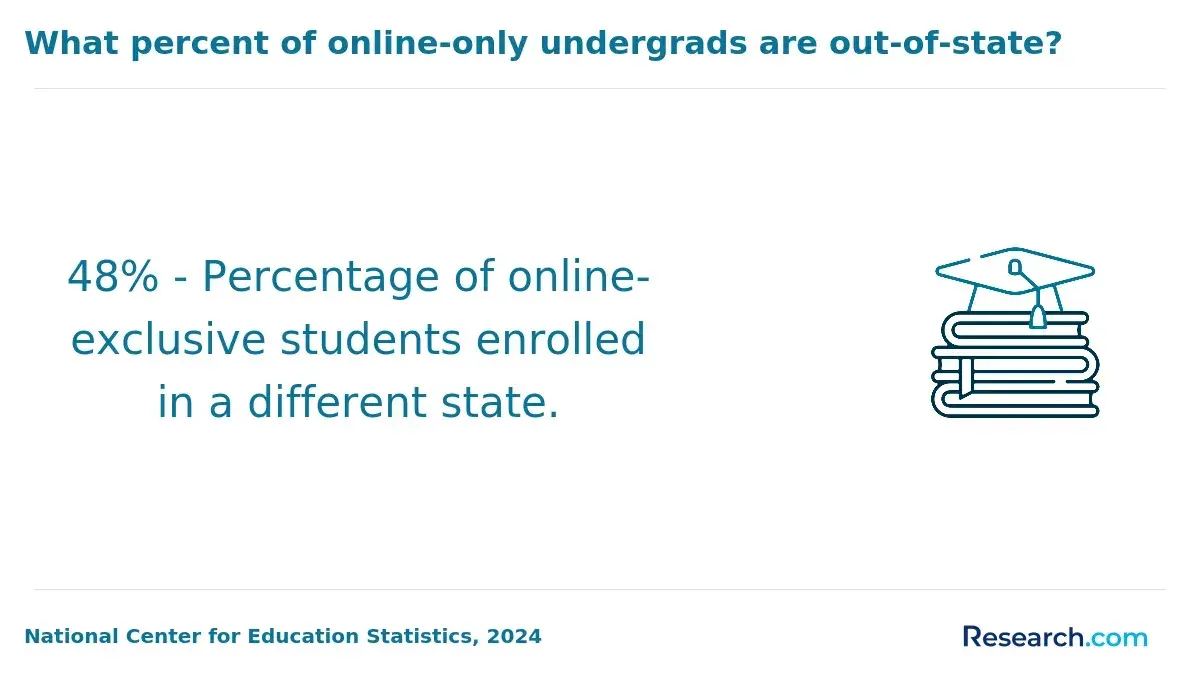
Choosing an online Clinical Research Management doctorate is partly an academic decision and partly a risk check. Recent federal IPEDS data released by NCES show more than 4.9 million U. S. students enrolled exclusively in distance education, making accreditation verification more important for online learners.
This guide explains institutional accreditation, programmatic accreditation, state authorization, and licensure considerations for prospective doctoral students. You will learn what to verify, which claims to question, and how to avoid programs that may not support financial aid, employment, certification, or state-specific professional goals.
Key Things You Should Know
- Institutional accreditation is the baseline requirement: verify the university and accreditor through the U.S. Department of Education Database of Accredited Postsecondary Institutions and Programs or CHEA before considering transfer credit, federal aid, or employer recognition.
- Programmatic accreditation is not usually mandatory for Clinical Research Management doctorates, but it may matter if your doctorate is tied to a licensed profession such as nursing, pharmacy, medicine, counseling, or another state-regulated healthcare role.
- Online delivery is not accredited separately, and NC-SARA reported more than 2,400 participating institutions in 2024; however, state authorization to enroll you is not the same as state approval for professional licensure.
Is an Online Clinical Research Management Doctorate Accredited Differently From an On-Campus Program?
An online Clinical Research Management doctorate is not supposed to be accredited under a weaker or separate standard simply because courses are delivered online. Accreditation reviews the institution, academic quality, faculty qualifications, student support, assessment, governance, and financial stability; distance education must also meet expectations for identity verification, interaction, learning resources, and student services.
The practical difference is not the label "online" but the evidence you can verify. A legitimate online doctorate should appear under an accredited institution, should be authorized to enroll students in your state, and should clearly disclose whether it is designed for licensure, certification, academic leadership, or applied clinical research administration.
The table below shows how online and campus formats are usually evaluated. Use it to avoid assuming that online automatically means less credible or that campus automatically means better recognized.
| Issue | Online Clinical Research Management Doctorate | On-Campus Clinical Research Management Doctorate | Why It Matters |
| Institutional accreditation | Reviewed at the university level by a recognized institutional accreditor | Reviewed at the university level by a recognized institutional accreditor | This is the main legitimacy check for federal aid, transfer review, and general employer recognition |
| Distance education review | Accreditor evaluates online delivery capacity, student verification, support, and learning resources | Usually less focused on online infrastructure unless hybrid courses are used | Poor online support can affect completion even when the institution is accredited |
| State authorization | Must be authorized to enroll students where they live, often through SARA or direct state approval | Usually governed by the state where the campus operates | Authorization determines whether the school can legally offer the program to you |
| Professional licensure fit | Must be checked against your state's board rules if the program claims to support a licensed role | Must also be checked, especially if you plan to work in a different state after graduation | Licensure rules are set by states, not by online program marketing language |
A common mistake is asking only, "Is the online program accredited?" A better question is, "Is the institution accredited by a recognized accreditor, is the program authorized in my state, and does it satisfy any education requirements for the specific credential or license I plan to pursue?"
What Is the Difference Between Institutional and Programmatic Accreditation for an Online Clinical Research Management Doctorate?
Institutional accreditation and programmatic accreditation answer different questions. Institutional accreditation asks whether the university as a whole meets recognized quality standards. Programmatic accreditation asks whether a specific degree or professional program meets standards set by a field-specific accreditor.
This distinction matters because Clinical Research Management is often an interdisciplinary administrative, regulatory, and scientific field rather than a single licensed profession. A doctorate may be academically legitimate through institutional accreditation even if there is no separate programmatic accreditor for Clinical Research Management.
The comparison below summarizes what each accreditation type can and cannot do for you.
| Accreditation Type | What It Reviews | Who Recognizes It | Typical Student Impact |
| Institutional accreditation | The entire college or university, including governance, faculty, finances, academic policies, assessment, and student services | U.S. Department of Education-recognized accreditors and, separately, CHEA-recognized accreditors | Often required for federal financial aid, graduate transfer evaluation, employer screening, and admission to later study |
| Programmatic accreditation | A specific professional program, curriculum, faculty qualifications, supervised practice, and outcomes | Field-specific accreditors recognized by agencies, employers, boards, or professional organizations | May be required for licensure, board eligibility, certification, or employment in regulated professions |
| State approval or authorization | Whether an institution may operate or enroll students in a state | State higher education agencies, licensing agencies, or SARA-participating states | Allows enrollment or operation but does not necessarily confirm licensure eligibility |
| Professional licensure approval | Whether education satisfies a state board's requirements for a licensed occupation | State licensing boards | Determines whether the degree can support a regulated professional credential in that state |
The old shorthand "regional accreditation versus national accreditation" can also mislead students. The U.S. Department of Education no longer treats institutional accreditors by that old regional/national distinction in the same way; what matters is whether the accreditor is recognized and whether the institution's current status is active, probationary, withdrawn, or otherwise limited.
How Can You Verify That an Online Clinical Research Management Doctorate and Its Accreditor Are Legitimate?
Verification should happen before you apply, before you accept admission, and again before you borrow money. Accreditation language can be vague, and some schools use terms such as "approved," "licensed," "candidate," or "member" in ways that do not mean fully accredited.
Use this sequence to check both the institution and any program-specific claims.
- Search the institution in the U.S. Department of Education Database of Accredited Postsecondary Institutions and Programs and confirm the institution name, campus, accreditor, and current status.
- Check the accreditor's own website to confirm that the school is currently accredited and not listed as withdrawn, on probation, or under a show-cause action.
- Search CHEA's recognized accreditor information as a secondary check, especially if the school emphasizes private or professional recognition.
- Ask the program for written confirmation of whether the doctorate has separate programmatic accreditation, whether that accreditation is required for your intended credential, and where the claim can be independently verified.
- Review the school's state authorization and professional licensure disclosures for your state of residence and the state where you plan to work.
- Contact the relevant state licensing board or certification body directly if your goal involves a regulated healthcare credential.
Red flags include a school claiming "international accreditation" without U.S. recognition, refusing to name the accreditor, listing an accreditor that cannot be found in recognized databases, promising universal licensure eligibility, or implying that candidacy is the same as full accreditation.
For science-focused students comparing multiple online pathways, the same verification habit is useful outside clinical research as well; for example, an online biology degree should also be checked for institutional accreditation and fit with later graduate, laboratory, or health-profession goals.
Most online Clinical Research Management doctorates do not need programmatic accreditation in the same way that pharmacy, nursing, medicine, counseling, or psychology programs often do. Clinical Research Management programs commonly prepare students for leadership in clinical trials operations, regulatory affairs, research compliance, data oversight, site management, or academic research administration rather than for a single state-issued license.
That said, "not usually required" does not mean "never relevant." Programmatic accreditation can matter when the doctorate is embedded in, combined with, or marketed toward a licensed healthcare discipline. It can also matter if an employer, hospital system, federal contractor, or academic department has specific credential expectations.
The table below helps you decide whether programmatic accreditation is likely to be essential, helpful, or less central for your goals.
| Your Goal | Is Programmatic Accreditation Usually Essential? | What to Verify |
| Clinical research operations leadership | Usually no | Institutional accreditation, curriculum quality, research methods training, compliance coursework, and employer recognition |
| Regulatory affairs or clinical trial compliance | Usually no | Coverage of FDA regulations, ICH-GCP, human subjects protection, quality systems, and applied research governance |
| Licensed clinical practice role | Often yes, depending on profession | Whether the underlying professional program meets board-approved or field-accredited education requirements |
| Academic faculty or doctoral research role | Sometimes | Institutional accreditation, dissertation expectations, research productivity, faculty qualifications, and hiring norms in your field |
| Professional certification in clinical research | Usually not a programmatic-accreditation issue | Certification body rules for education, experience, job role, and examination eligibility |
A useful rule is this: if your desired outcome is employment in clinical research administration, institutional accreditation and program quality may be the main checks. If your desired outcome is the authority to practice a licensed health profession, the state board's education rules become the deciding factor.
Clinical Research Management itself is not typically licensed as a standalone profession in the way nursing, pharmacy, medicine, counseling, or physical therapy are. Many clinical research roles use professional certifications, employer requirements, or experience thresholds rather than state licensure. However, students who already hold a healthcare license or plan to combine clinical research leadership with a licensed scope of practice must verify the rules for that profession.
The labor market context is also relevant. The U.S. Bureau of Labor Statistics reported a May 2024 median pay of $100,590 for medical scientists, a category that can include research-oriented roles but does not map perfectly to every clinical research management job. Use that figure as broad market context, not as a salary guarantee for a doctorate.
The table below separates common career directions by the type of credential check that usually matters most.
| Career Direction | Credential That May Matter | Who Sets the Rule | What the Doctoral Student Should Confirm |
| Clinical research manager or director | Employer-recognized degree, experience, and sometimes clinical research certification | Employer and certification body | Whether the doctorate is institutionally accredited and whether coursework supports trial operations, compliance, and leadership |
| Principal investigator in a clinical setting | Professional license, institutional privileges, sponsor requirements, and research experience | State board, employer, IRB, and trial sponsor | Whether the doctorate alone is sufficient, because many PI roles require a clinical license or scientific doctorate relevant to the study |
| Licensed healthcare professional moving into research leadership | Existing healthcare license plus continuing education or advanced degree | State licensing board | Whether the doctorate affects, supplements, or does not affect license renewal and scope of practice |
| Regulatory affairs or compliance leader | Employer-recognized education and specialized regulatory knowledge | Employer and industry credentialing organizations | Whether the curriculum includes human subjects protection, FDA-regulated research, quality assurance, and data integrity |
For comparison, a field such as pharmacy has a much clearer licensure-accreditation connection; students evaluating an online pharmacy school generally need to pay close attention to the professional accreditor and board eligibility because the degree is directly tied to a licensed occupation.
An online Clinical Research Management doctorate may meet your academic goals and still fail to meet a specific state licensing requirement if you are using it to qualify for a regulated credential. State licensing boards control licensure, not universities, accreditors, admissions counselors, or employers.
The safest approach is to start with your intended role, not the degree title. If you want a non-licensed clinical research leadership role, your main concerns are institutional accreditation, employer recognition, and relevant training. If you want the degree to support a licensed healthcare role, board rules must be checked before enrollment.
Before committing to a program, work through these checks in order.
- Identify the exact license, certification, or job credential you want, including the state where you plan to work.
- Read that state board's education requirements and note any required degree type, programmatic accreditation, supervised hours, exam, residency, or clinical placement rules.
- Compare the board's requirements with the school's written professional licensure disclosure for your state.
- Ask the program director for written confirmation of whether the program satisfies, does not satisfy, or has not determined the requirements in your state.
- Save all emails, catalog pages, disclosures, and board responses in case requirements change or you need documentation later.
Common mistakes include assuming that an online doctorate qualifies graduates in every state, relying on a general admissions statement instead of a board rule, and checking only your current state even though you plan to relocate. Licensure portability is especially important for online students because they often enroll across state lines.
Practicum, internship, clinical, or residency requirements can affect licensure eligibility when a state board or certification body requires supervised experience. Many Clinical Research Management doctorates emphasize applied projects, dissertations, capstones, research practicums, or short residencies rather than patient-care clinical hours. That may be appropriate for research leadership, but it may not satisfy requirements for a licensed clinical profession.
The table below explains how common experiential components differ and why the wording matters before you enroll.
| Requirement Type | What It Usually Means | Potential Licensure or Career Impact |
| Applied capstone | A project solving a workplace or research administration problem | Helpful for leadership portfolios but usually not a substitute for board-required clinical hours |
| Dissertation | Original or applied scholarly research supervised by faculty | Important for academic credibility, research roles, and doctoral rigor |
| Practicum or internship | Structured field experience, sometimes at a research site, CRO, IRB office, hospital, or sponsor organization | May support employment readiness and some certification experience requirements if documented correctly |
| Clinical placement | Supervised patient-care or professional practice experience | May be essential for licensed healthcare professions but is not automatically included in clinical research management programs |
| Residency or intensive | Short in-person or synchronous experience for research, advising, defense, leadership, or skills assessment | Can improve mentoring and assessment but may create travel, cost, and state authorization issues |
Ask who secures placements, whether remote placements are allowed, whether your state permits the placement, and whether supervisors must hold specific credentials. If a program says students are responsible for finding their own sites, clarify what happens if no approved site is available near you.
Accreditation can affect the practical value of a doctorate long after admission. It can influence federal financial aid access, transfer credit review, employer screening, eligibility for later academic programs, and whether professional organizations recognize your education.
Financial aid is one of the clearest examples. Federal Student Aid lists a 4.228% loan fee for Direct PLUS Loans first disbursed on or after October 1, 2024 and before October 1, 2025, which means graduate borrowing has transaction costs in addition to interest and tuition. If a school is not eligible for federal aid because of accreditation or Title IV status, students may face fewer consumer protections and more expensive private financing.
Consider these accreditation-related consequences before you enroll.
- Federal aid: Institutional accreditation by a recognized accreditor is usually necessary for Title IV eligibility, but the school must also participate in federal aid programs.
- Transfer credits: Receiving institutions decide whether to accept credits, and credits from unaccredited or poorly recognized schools are often harder to transfer.
- Employment: Hospitals, universities, CROs, sponsors, and government contractors may screen for degrees from accredited institutions.
- Further study: Postdoctoral training, faculty appointments, certificates, or additional graduate degrees may require prior study at an accredited institution.
- Certification documentation: Clinical research certification bodies may ask for education and work experience records, so course relevance and supervised experience should be documented clearly.
Cost comparisons should also include program length, residency travel, dissertation continuation fees, technology fees, and whether transfer credits reduce time to completion.
Just as second-career candidates researching 12-month accelerated nursing programs online for non-nurses must factor in mandatory in-person clinical rotations, lab kits, and board examination fees alongside base tuition, students comparing regulated healthcare doctorates must review true total costs separately.
A clinical credential involves very different programmatic accreditation, state licensure mandates, and overhead trade-offs than an administrative path like a Clinical Research Management doctorate.
What Happens if an Online Clinical Research Management Doctorate Loses Accreditation or Is Only in Candidacy?
If a program loses accreditation, enters probation, or is only in candidacy, the consequences can be serious. Students may face financial aid disruption, transfer barriers, employer questions, delayed graduation, or uncertainty about whether the credential will be accepted for a professional purpose.
Candidacy is especially easy to misunderstand. It usually means a school or program is moving through an accreditation review process, not that full accreditation has already been granted. Whether accreditation applies retroactively depends on the accreditor's rules, the timing of approval, and the institution's status, so students should not assume future recognition will cover them.
The table below summarizes common accreditation statuses and how students should interpret them.
| Status | What It Usually Means | Student Implication |
| Fully accredited | The institution or program currently meets the accreditor's standards | Still verify scope, location, program coverage, state authorization, and licensure disclosures |
| Candidacy or pre-accreditation | The institution or program is being reviewed but has not received full accreditation | Higher risk if you need the credential for aid, transfer, licensure, or employer recognition |
| Probation or warning | The accreditor has identified compliance concerns | Ask for the corrective timeline, teach-out protections, and whether aid or graduation timelines are affected |
| Withdrawal or loss of accreditation | The institution or program no longer holds that accreditation | Students should immediately ask about teach-out agreements, transfer options, refunds, and records access |
| Teach-out arrangement | A plan for students to complete or transfer after closure or accreditation problems | Review whether the teach-out institution and program meet your academic and professional requirements |
If accreditation status changes while you are enrolled, act quickly. Request written information from the school, verify the status with the accreditor, contact financial aid, ask about teach-out options, and check with any relevant licensing board or employer before completing additional credits.
Other Things You Should Know About Clinical Research Management
It depends on your goal. A PhD is often more research-intensive and may fit academic or investigator-focused paths. A professional doctorate or health administration doctorate may be better for applied leadership, operations, compliance, or executive roles. Accreditation and curriculum fit matter more than the degree abbreviation alone.
Programs often prefer applicants with a master's degree, healthcare or life science coursework, research experience, clinical operations exposure, or leadership experience. Some programs accept students from nursing, pharmacy, public health, biology, regulatory affairs, or healthcare administration backgrounds.
Many online doctorates are designed for working professionals, but dissertation, capstone, residency, and practicum expectations can create time pressure. Before enrolling, ask about weekly workload, synchronous sessions, travel requirements, and maximum time to completion.
AI is increasingly used in trial feasibility, recruitment support, monitoring, data review, documentation, and quality control. A strong doctorate should still teach regulatory judgment, ethics, human subjects protection, bias awareness, data integrity, and oversight because AI tools do not replace professional accountability.
- How to Become a Clinical Trials Manager - Education, Certification & Pay https://www.healthcaredegree.com/administration/clinical-trials-manager
- Risk-Based Quality Management in Clinical Trials: A Comprehensive Guide https://www.forschungsdock.com/risk-based-quality-management/
- Top 25 Clinical Research and Clinical Research Management Master's Degree Programs - Healthcare Management Degree Guide https://www.healthcare-management-degree.net/best/clinical-research-clinical-research-management-masters-programs/
- Clinical research career: 7 top roles, salaries & GCP guide https://pharmaeducenter.com/blog/clinical-research-career/
- How to Become a Clinical Research Coordinator or Trial Manager https://www.mhaonline.com/faq/how-do-i-become-a-clinical-research-coordinator
- Top certifications for clinical research: Boost your career and credibility https://www.sermo.com/resources/certifications-for-clinical-research/
- Online PhD in Clinical and Translational Research @ EUCLID - EUCLID (Euclid University) - Official Mobile site https://m.euclid.int/programs/online-phd-clinical-translational-research/
- Institutional vs Program Accreditation: What You Should Look For | Articles | Unimy https://www.unimy.com/article/institutional-vs-program-accreditation-what-you-should-look-for
- Accreditation – IACCRE – International Accreditation Council for Clinical Research & Education https://iaccre.org/clinical-research-accreditation/
- Understanding the Differences: Institutional Accreditation, Programmatic Accreditation, and ISO Certification https://www.qahe.org/article/understanding-the-differences-institutional-accreditation-programmatic-accreditation-and-iso-certification/