2027 Online Clinical Research Doctorate Program Costs: Tuition, Fees, Financial Aid, and Employer Reimbursement

Co-Founder and Chief Data Scientist
An online clinical research doctorate can advance a career in trial leadership, regulatory science, academic research, or clinical operations, but the cost can be substantial. Federal data published in 2024 show graduate tuition and required fees remain far higher at private nonprofit institutions than public institutions, and federal graduate loan rates have also risen compared with earlier borrowing cycles.
This guide is for working clinicians, research coordinators, scientists, and health professionals who need a clear way to compare tuition, fees, aid, employer reimbursement, and ROI before committing to a doctoral program.
Key Things to Know About Online Clinical Research Doctorate Program Costs
- Most online clinical research doctorate students should budget for total tuition in the broad range of about $42,000 to more than $100,000, depending on credit load, public versus private pricing, residency rules, and dissertation continuation costs.
- Hidden costs often include technology fees, online course fees, proctoring, research software, IRB-related expenses, graduation fees, and any required campus intensives or conference travel.
- Federal graduate aid can include up to $20,500 per year in Direct Unsubsidized Loans for eligible students, while Grad PLUS Loans may cover the remaining certified cost of attendance; employer reimbursement commonly has annual caps, with $5,250 often treated as the key tax-free education-assistance threshold.
What is the average tuition cost of an online Clinical Research doctorate program?
An online clinical research doctorate is usually a research- or leadership-focused terminal degree for professionals who want advanced roles in clinical trials, translational research, regulatory affairs, evidence generation, health sciences education, or research administration. Programs may be labeled as a PhD, Doctor of Health Science, Doctor of Clinical Science, or a clinical investigation concentration, so comparing costs requires looking beyond the degree title.
There is no single federal database that publishes an average tuition figure specifically for online clinical research doctorates. For practical budgeting, the most useful approach is to calculate total tuition from the school's per-credit price, required credits, and dissertation or doctoral project enrollment rules. Federal graduate tuition data are still useful as a reality check: NCES tables released in 2024 show public graduate tuition and required fees were much lower on average than private nonprofit graduate tuition, which helps explain why institutional type and residency pricing still matter.
The table below shows realistic planning scenarios for a doctoral student entering with a relevant master's degree. Use it to compare how quickly total tuition changes when a program charges more per credit or requires more post-master's credits.
| Common pricing scenario | Typical credit structure | Tuition planning range | What it means for the student |
| Public university, in-state or flat online rate | About 55 to 65 credits | About $42,000 to $68,000 | Often the most affordable route if the program does not add large online or residency fees. |
| Public university, out-of-state rate | About 55 to 65 credits | About $60,000 to $95,000 | Can cost nearly as much as a private program unless the school offers a reduced online rate. |
| Private nonprofit university | About 55 to 70 credits | About $70,000 to more than $120,000 | May offer strong research networks or flexible formats, but the student should verify aid and employer support before enrolling. |
| Extended dissertation or doctoral project enrollment | Additional terms beyond the standard plan | Varies by continuation fee or per-credit registration | Delays can add meaningful cost even after coursework is complete. |
A good affordability test is to ask the school for a written program cost sheet that assumes your exact entry status. If you already hold a master's degree in clinical research, public health, nursing, pharmacy, biology, statistics, or a related health science field, confirm whether any credits transfer and whether transferred credits reduce tuition or only waive prerequisites.
Are online Clinical Research doctorate programs subject to distance learning or technology fees?
Yes. Many online doctoral programs charge fees beyond base tuition, and these fees can affect the final bill even when the program advertises a simple per-credit rate. The most common mistake is comparing schools by tuition alone and missing mandatory distance learning, platform, registration, or dissertation fees.
The table below summarizes fee categories that online clinical research doctorate students should ask about before accepting admission. The exact amount varies by institution, so the key is to request the official cost of attendance and not rely only on marketing pages.
| Fee category | How it may appear on the bill | Why it matters |
| Technology or online learning fee | Per credit, per course, or per term | Can increase total cost each semester even when tuition looks competitive. |
| Registration or student services fee | Usually charged each term | Part-time students may pay it more times if they take longer to finish. |
| Proctoring or exam fee | Per exam or assessment | May apply in methods, statistics, compliance, or qualifying exam courses. |
| Dissertation or doctoral project continuation fee | Per term after coursework | Becomes important if research approval, recruitment, data access, or writing takes longer than planned. |
| Graduation, transcript, or credential fee | One-time fee near completion | Small compared with tuition, but still part of the final cash budget. |
Before enrolling, ask whether fees are locked for your cohort or may increase annually. Also ask whether the program has required residencies, intensives, or defense visits, because an "online" label does not always mean zero travel.
What out-of-pocket expenses should online Clinical Research doctorate students anticipate?
Out-of-pocket expenses are the costs that may not be obvious in the tuition quote but still affect affordability. Clinical Research doctorate students should pay special attention to expenses tied to data analysis, compliance, research dissemination, and any required in-person activity.
The table below helps you build a more complete budget. It is especially useful if you plan to self-fund part of the degree, use employer reimbursement after grades post, or borrow only enough to cover direct university charges.
| Expense | Typical situation | Budgeting note |
| Books, journal access, and digital materials | Research methods, biostatistics, ethics, and specialty courses | Some programs use library resources heavily, but students may still buy texts or manuals. |
| Statistical or qualitative analysis software | Dissertation, doctoral project, or evidence-synthesis work | Ask whether the university provides licenses for tools such as SAS, SPSS, R support, NVivo, or REDCap access. |
| Travel for residency or defense | Campus intensives, proposal defense, dissertation defense, or research seminars | Include airfare or mileage, lodging, meals, and unpaid time away from work. |
| Conference presentation | Poster, podium, or dissemination requirement | Some programs encourage or require dissemination, but funding is not always guaranteed. |
| Research compliance costs | IRB training, background checks, clinical site onboarding, or data-use agreements | These may be small individually but can delay progress if not planned early. |
| Lost wages or reduced hours | Part-time work reduction during dissertation, practicum, or intensive terms | Opportunity cost can be larger than fees for students in demanding clinical or research roles. |
If your main goal is entering healthcare quickly rather than moving into doctoral-level research leadership, compare the opportunity cost with shorter career routes such as medical assistant programs. A doctorate is usually best justified when the credential aligns with leadership, research design, teaching, regulatory strategy, or senior clinical operations goals.
To avoid under-budgeting, build your own cost worksheet before you apply. Include these items in the same document so you can compare programs side by side:
- Base tuition calculated as required credits multiplied by the current per-credit rate.
- Mandatory per-term and per-credit fees, including online, technology, student services, and registration fees.
- Estimated travel for any residency, immersion, campus defense, or required research presentation.
- Expected software, books, data access, transcripts, graduation, and credentialing costs.
- Loan interest and origination fees if you plan to borrow through federal graduate loans.
- Employer reimbursement timing, especially if reimbursement occurs only after successful course completion.
Does in-state versus out-of-state residency status impact online Clinical Research doctorate tuition?
Residency status can affect online Clinical Research doctorate tuition, but the impact depends on the university's pricing model. Some public universities charge separate in-state and out-of-state graduate tuition, while others use a flat online rate for all distance learners. Private nonprofit universities often charge the same doctoral tuition regardless of state residency, but they may still differ significantly in fees and aid.
The table below shows how to read common tuition models. This matters because the cheapest advertised per-credit rate may not be the cheapest rate for you once residency status is applied.
| Tuition model | Who benefits most | Potential drawback |
| Public in-state graduate tuition | Students who legally qualify as residents and can document residency before enrollment | Eligibility rules can be strict, and online enrollment may not automatically create residency. |
| Public out-of-state graduate tuition | Students who need a specialized program unavailable in their state | Total cost may rise quickly unless the school offers waivers or a distance-learning discount. |
| Flat-rate online tuition | Out-of-state students comparing public and private options | The flat rate may be higher than in-state tuition but lower than out-of-state tuition. |
| Private institutional tuition | Students prioritizing program fit, faculty match, or clinical research specialization | The sticker price can be high, so scholarships and employer support become more important. |
Do not assume residency will change after one semester. Ask the registrar whether online doctoral students can qualify for in-state tuition later, whether tuition changes if you move, and whether the quoted rate applies for the full program or only the current academic year.
How do total costs for an online Clinical Research doctorate compare to traditional on-campus programs?
Online programs can be more affordable than on-campus programs, but not automatically. The strongest savings usually come from avoiding relocation, commuting, parking, and lost income from leaving a full-time job. However, if the online program charges premium tuition or requires multiple in-person residencies, the gap can narrow.
The table below compares cost categories that often differ between online and campus-based clinical research doctorate programs. Use it to decide whether the online format saves money in your specific situation rather than assuming it always does.
| Cost factor | Online doctorate | On-campus doctorate | Decision takeaway |
| Tuition | May be flat-rate, in-state, out-of-state, or private tuition | Often follows campus graduate tuition rules | Compare the full tuition model, not only the format. |
| Employment continuity | Often compatible with full-time work | May require relocation, daytime classes, or reduced work hours | Keeping salary and benefits can be the largest financial advantage of online study. |
| Travel and housing | Usually limited, unless residencies are required | May require local housing, commuting, parking, and campus fees | Campus costs can be high for students who must relocate. |
| Research access | May rely on the student's workplace, remote data, or faculty-approved sites | May provide easier access to labs, seminars, and funded research groups | Online students should verify research support before choosing the lower-cost option. |
| Assistantship access | Often more limited | More common in research-intensive doctoral programs | A funded campus offer can beat an unfunded online offer on total cost. |
Students comparing clinical research with other health-professional doctorates may also want to benchmark costs against an online pharmacy school. The right comparison is not only tuition; it is the cost relative to licensing goals, career mobility, and the jobs the credential can realistically support.
Can graduate assistantships and fellowships reduce online Clinical Research doctorate costs?
Graduate assistantships and fellowships can reduce doctoral costs, but online clinical research doctorate students should not assume they are automatically available. Traditional PhD students on campus are more likely to receive teaching or research assistantships, while online professional doctorate students are often expected to remain employed and self-fund through aid, scholarships, or employer support.
Still, it is worth asking because some programs offer research stipends, project-based assistantships, tuition discounts, doctoral fellowships, diversity fellowships, or faculty grant-funded roles. These opportunities may not be advertised prominently on the main tuition page.
Use the following steps to investigate funding before you commit to a program:
- Ask the program director whether online doctoral students are eligible for teaching assistantships, research assistantships, tuition remission, or hourly research roles.
- Ask faculty whose research matches your interests whether grant-funded projects need doctoral student support.
- Check whether assistantship awards require full-time enrollment, campus presence, state residency, or specific work hours.
- Request the net value of the award, including whether it reduces tuition directly or pays a taxable stipend.
- Compare the time commitment with your current job, because a small award may not be worthwhile if it forces a major reduction in paid work.
A major red flag is a program that advertises doctoral funding broadly but cannot confirm whether online students actually receive it. Ask for recent examples of funding awarded to distance learners in your degree track.
What financial aid options are available for students enrolled in an online Clinical Research doctorate?
Eligible online doctoral students can use many of the same financial aid tools available to campus-based graduate students, provided the institution participates in federal student aid and the program is approved for Title IV funding. Accreditation matters here: a school may be legitimate in a general sense, but the specific program still needs to meet the institution's aid-eligibility rules.
Federal graduate borrowing terms are especially important because doctorate students often borrow above master's-level amounts. For the 2025-26 federal loan cycle, Direct Unsubsidized Loans for graduate and professional students carry a 7.94% fixed interest rate, while Grad PLUS Loans carry an 8.94% fixed interest rate; those rates make it important to borrow only what you need.
The table below summarizes common funding options and what each can realistically do for a clinical research doctorate budget:
| Funding option | Typical value | Best use | Important limitation |
| Direct Unsubsidized Loan | Up to $20,500 per year for most eligible graduate students | Covering part of tuition and required fees | Interest starts accruing immediately, and aggregate limits apply. |
| Grad PLUS Loan | Up to the certified cost of attendance minus other aid | Covering remaining tuition, fees, and approved living or study costs | Requires a credit check and usually has a higher origination fee than Direct Unsubsidized Loans. |
| Institutional scholarship | Varies by school | Reducing net tuition without repayment | May be competitive, renewable only with conditions, or limited for part-time students. |
| Assistantship or fellowship | Tuition support, stipend, or hourly pay | Lowering tuition while gaining research or teaching experience | Online eligibility may be limited. |
| Employer reimbursement | Often capped annually by employer policy | Reducing cash cost for working professionals | May require grade minimums, continued employment, or repayment if you leave. |
| Veterans and military education benefits | Depends on eligibility and program approval | Covering tuition, fees, or housing-related allowances | Students must confirm benefit rules with the school certifying official. |
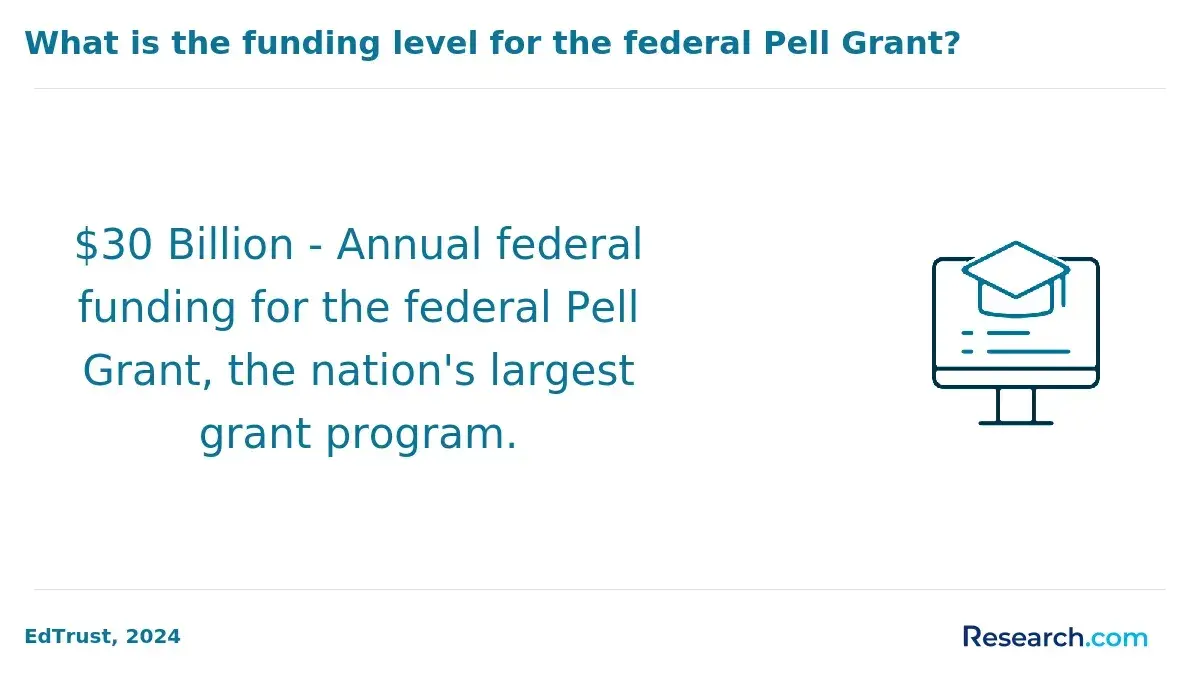
Students who are still building a science foundation before doctoral study may compare lower-cost pathways such as an online biology degree, but doctoral aid rules are different from undergraduate aid. Graduate students generally cannot rely on Pell Grants, so loans, scholarships, employer support, and institutional funding become more central.
Before borrowing, ask the financial aid office for a debt projection across the full expected timeline. A useful aid conversation should cover these questions:
- Is the specific online doctorate eligible for federal student aid?
- What is the official cost of attendance for full-time and part-time enrollment?
- How much of the cost can be covered by Direct Unsubsidized Loans before Grad PLUS borrowing is needed?
- Are scholarships renewable each year, and do they apply to dissertation continuation terms?
- Will dropping below half-time enrollment affect aid eligibility or loan deferment?
Does employer tuition reimbursement cover an online Clinical Research doctorate?
Employer tuition reimbursement may cover an online Clinical Research doctorate if the degree supports your current role or a documented career path within the organization. This is common in hospitals, academic medical centers, contract research organizations, pharmaceutical companies, biotech firms, public health agencies, and research networks, but coverage depends on the employer's written policy.
The IRS education-assistance exclusion makes $5,250 per year a common planning number because qualifying employer-paid education benefits up to that amount can generally be excluded from taxable wages. Some employers offer less, some offer more, and amounts above the tax-free threshold may still be valuable even if taxable.
The table below shows how employer reimbursement usually compares with self-funding. It can help you decide whether to slow your pace to match an annual benefit cap or move faster and pay more out of pocket.
| Funding approach | Cash-flow advantage | Best fit | Risk to check |
| Employer reimbursement after course completion | Reduces net cost after grades post | Students who can pay upfront or use short-term payment plans | You may need to repay the employer if you leave within a required service period. |
| Employer direct bill or sponsorship | Lower upfront cash burden | Employees in hard-to-fill research, regulatory, analytics, or leadership roles | May require executive approval and alignment with business goals. |
| Self-funding with payment plan | Avoids or reduces loan interest | Students choosing a lower-cost public or part-time route | Can strain monthly cash flow over several years. |
| Federal loans plus reimbursement | Provides liquidity while employer benefits reduce net debt | Students whose reimbursement arrives after tuition deadlines | Interest accrues if reimbursements are not applied quickly to loan principal. |
Read the policy carefully for covered expenses. Some employers reimburse tuition only, while others also cover fees, books, certifications, or required software. Also check grade requirements, annual caps, approved school lists, and whether doctoral programs require additional leadership approval.
How can working professionals negotiate employer sponsorship for an online Clinical Research doctorate?
Negotiating sponsorship works best when you frame the doctorate as a business investment, not a personal benefit. Clinical research employers are more likely to support tuition when the degree helps solve a measurable problem such as improving trial quality, reducing protocol deviations, strengthening regulatory compliance, expanding investigator-initiated research, or preparing internal leaders.
Use the following sequence to build a stronger request. It gives your manager and HR team a clear reason to approve support beyond the standard reimbursement cap.
- Connect the doctorate to your current role, such as clinical trial management, research operations, medical affairs, regulatory strategy, data quality, evidence generation, or site leadership.
- Identify two or three business outcomes the program could support, such as better study startup timelines, stronger compliance training, improved data interpretation, or expanded research capacity.
- Prepare a written cost plan that separates tuition, fees, books, travel, and expected reimbursement by calendar year.
- Offer a service commitment if appropriate, but ask for terms that are realistic and clearly limited in time.
- Request direct billing or upfront sponsorship if reimbursement timing would force you to borrow at high graduate loan rates.
- Ask whether the employer can fund specific components, such as statistics coursework, dissertation data costs, conference presentations, or software, if full tuition sponsorship is not possible.
A strong negotiation avoids vague claims like "this will help my career." Instead, show how your doctoral training can produce value for the organization through a capstone, dissertation, internal training project, process improvement study, or research initiative that your employer can use.
What ROI can graduates expect from an online Clinical Research doctorate?
The ROI of an online Clinical Research doctorate depends on your current salary, debt level, employer support, program cost, and target role. The degree is most likely to make financial sense for professionals who are already in clinical research or health sciences and need a terminal credential for senior leadership, principal investigator support, faculty roles, research strategy, regulatory science, or executive-level operations.
Salary data can help set expectations, but it should not be treated as a promise. BLS May 2024 wage data show that medical scientists had a median annual wage of $100,590, while medical and health services managers had a median annual wage of $117,960; these categories can overlap with doctoral-level clinical research pathways, but actual pay depends on employer, role, location, experience, and whether the position requires a doctorate.
The table below summarizes common outcomes to consider when estimating ROI. It is designed to help you compare the degree against your actual career target, not just the highest possible salary headline.
| Career direction | How the doctorate may help | ROI is stronger when | ROI is weaker when |
| Clinical research leadership | Supports advancement into director-level, portfolio, quality, or operations roles | You already have trial experience, and the employer values doctoral training | You are using the degree to enter the field with little relevant experience |
| Academic or teaching role | May meet terminal-degree expectations for faculty or program leadership | The program has strong research mentorship and publication support | The job market in your specialty is limited or prefers a research-intensive PhD |
| Regulatory, medical affairs, or evidence strategy | Strengthens research design, interpretation, and leadership credibility | You pair the degree with domain expertise, writing ability, and industry experience | The role values certifications or experience more than a doctorate |
| Research administration or institutional leadership | Can support credibility in IRB, compliance, grants, or clinical research infrastructure roles | Your employer reimburses tuition or provides promotion pathways | The degree is expensive and does not change your role eligibility |
Students weighing life-science careers more broadly can compare doctoral costs with the earning potential of the highest paying jobs with a biology degree. This comparison is useful because a doctorate has the strongest ROI when it unlocks a role you could not reasonably reach with a master's degree, certification, or experience alone.
A practical ROI calculation should include both money and risk. Before enrolling, work through these steps:
- Estimate total net cost after scholarships, employer reimbursement, assistantships, and transfer credits.
- Estimate borrowed principal plus interest, not just the tuition amount printed on the program page.
- Identify the specific roles you want and check whether they require, prefer, or rarely mention a doctorate.
- Compare expected salary growth with your current compensation, not with national medians alone.
- Ask whether the program's dissertation model, faculty expertise, and alumni outcomes match your target field.
- Set a maximum debt threshold that still allows you to meet retirement, family, housing, and emergency-savings goals.
Who should invest? The degree is most defensible for experienced professionals who can keep working, secure employer support, choose a reasonably priced program, and use the doctorate for a defined career move. Who should avoid it? Applicants who are unsure about clinical research, lack relevant experience, or would need to borrow the full cost at high interest should consider lower-cost credentials, a master's degree, targeted certificates, or gaining more field experience first.
Other Things You Should Know About Clinical Research
Many students finish in about three to five years, depending on transfer credits, enrollment pace, dissertation progress, and whether they work full time. The dissertation or doctoral project often creates the most timeline uncertainty.
Sometimes. Programs may accept a limited number of transfer credits from a relevant master's degree, but policies vary. Ask whether transferred credits reduce the total credits you pay for or simply satisfy prerequisite requirements.
Yes. Institutional accreditation is important for federal aid eligibility, credit transfer, employer reimbursement, and general credibility. Also confirm that the specific program is approved for online delivery and eligible for the aid you plan to use.
Not always. A low-cost program is attractive, but it should still offer qualified faculty, research support, appropriate accreditation, transparent dissertation requirements, and outcomes aligned with your career goal.
References
- Compensation in Clinical Trials in Tampa Bay | What You Need to Know https://tampabaymedicalresearch.com/the-importance-of-clinical-trials-in-advancing-medicine-3-2/
- Average Cost of a Doctorate Degree [2026]: Ph.D., Psy.D. & More https://educationdata.org/average-cost-of-a-doctorate-degree
- Funding Opportunities - American Physician Scientists Association https://www.physicianscientists.org/page/FundingOpportunities
- Scholarships & Grants for PhD & Doctoral Students | PhDs.me https://www.phds.me/financial-aid/scholarships-and-grants/
- How Much Does a PhD Cost https://aituedu.org/how-much-does-a-phd-cost/
- Do patients have to pay for clinical trials? https://www.antidote.me/blog/do-patients-have-to-pay-for-clinical-trials
- How Much Does It Typically Cost to Take a Clinical Research Course? - Clinical Research Courses FAQ | VIARES https://viares.com/blog/general/how-much-does-it-typically-cost-to-take-a-clinical-research-course/
- 2025 Most Affordable Online Doctorates in Education https://www.onlineu.com/most-affordable-colleges/education-doctoral-degrees
- Educational Funding https://phdproject.org/educational-funding/
- Funding your Degree https://gradsense.org/funding-your-degree/