2027 Cheapest Online Clinical Research Doctorate Programs That Pay Well: Tuition, Duration, and Career Outcomes

Co-Founder and Chief Data Scientist
Interest in admission to the cheapest online clinical research doctorate programs is rising as working trial managers, nurses, pharmacists, and health scientists seek doctoral credentials without leaving their jobs. Tuition keeps climbing, but online formats, transfer credits, employer benefits, and research funding can lower net cost. The payoff can be meaningful: BLS May 2024 data places medical and health services managers at a $117,960 median annual wage. This guide helps you compare estimated tuition, timelines, low-cost accredited options, aid strategies, and career paths so you can minimize out-of-pocket costs and improve long-term ROI.
Key Things About the Cheapest Online Clinical Research Doctorate Programs That Pay Well
- Low-cost online clinical research-focused doctorates usually fall around $35,000 to $60,000 in tuition-only costs, while research-intensive private options can exceed $70,000 before fees.
- Most affordable programs require about 45 to 60 graduate credits and take 3 to 5 years, with faster completion more likely when students transfer approved doctoral credits or enter with a strong research proposal.
- The strongest ROI usually comes from candidates already working in clinical trials, pharmaceutical research, health systems leadership, regulatory affairs, or medical science roles where BLS May 2024 wage benchmarks often exceed $100,000.
What is the estimated cost of completing an online doctorate in Clinical Research?
The estimated cost of an online doctorate in clinical research depends on whether the program is a true Ph.D., an applied health sciences doctorate, or a translational research doctorate. The cheapest accredited options are often not labeled only "clinical research"; they may be health sciences, translational health sciences, or clinical investigation doctorates with a clinical research dissertation or capstone.
Use the table below to compare the major cost categories. Tuition is the largest expense, but fees, dissertation enrollment, travel, and lost work time can change the real cost of attendance.
| Cost category | Typical range for affordable online options | What it means for your budget |
| Tuition-only total | $35,000 to $60,000 | Most low-cost programs fall here when calculated from published per-credit tuition and required doctoral credits. |
| Mid-priced private or research-intensive programs | $60,000 to $90,000+ | These may offer stronger research networks, but the higher price needs to be justified by career advancement or employer support. |
| Mandatory university and technology fees | $1,000 to $5,000+ | Online programs may still charge semester, platform, library, graduation, or clinical research compliance fees. |
| Residency, conference, or campus visit costs | Varies widely | Even one required visit can add airfare, lodging, meals, and unpaid time away from work. |
| Dissertation continuation or extension fees | Varies by school | These costs matter if your dissertation takes longer than the standard timeline. |
For many students, the practical planning number is not the advertised tuition total but the "net cost after aid." That means subtracting employer reimbursement, scholarships, tuition discounts, transfer credits, and any paid research support from the full cost of attendance.
A simple affordability test is to compare annual program cost with your expected salary gain. If a $45,000 doctorate helps you move into a role that pays $15,000 more per year, the tuition payback window may be about 3 years before taxes and loan interest. If the same degree only creates a small salary bump, a slower part-time path with employer reimbursement may be safer.
How long does it take to complete the cheapest online Clinical Research doctorate program?
The cheapest online clinical research doctorate programs usually take 3 to 5 years. Students with a master's degree, relevant research experience, and a focused dissertation topic are more likely to finish near the shorter end of that range, while part-time students balancing full-time clinical research jobs often need more time.
Program length is driven by credits, dissertation structure, and how quickly the student clears research milestones. This comparison shows how the main formats differ.
| Program format | Typical credit load | Common completion timeline | Best fit |
| Online Ph.D. in Clinical Research or Translational Health Sciences | 48 to 60 credits | 4 to 6 years | Students aiming for research leadership, academic roles, principal investigator support, or publication-heavy careers. |
| Applied doctorate in Health Sciences with clinical research focus | 45 to 60 credits | 3 to 5 years | Working professionals seeking executive, operational, or evidence-based practice leadership roles. |
| Accelerated or transfer-friendly doctorate | Varies after transfer review | 3 to 4 years | Students who already hold graduate credits in biostatistics, epidemiology, research design, or regulatory science. |
| Part-time online doctorate while working | Usually 1 to 2 courses per term | 4 to 7 years | Students prioritizing income stability and employer tuition reimbursement over speed. |
Accelerated completion makes sense when you can protect research time every week and enter the program with a realistic dissertation question. It may not make sense if you are new to clinical research methods, managing a demanding trial workload, or relying on employer reimbursement that is capped annually.
Before enrolling, ask the program director these timeline questions so you do not underestimate the commitment:
- How many credits can be transferred from a completed master's degree?
- Are dissertation or capstone courses billed at the same rate as regular courses?
- Is there a maximum time limit for completing the doctorate?
- How often are dissertation proposal defenses and final defenses scheduled online?
- What percentage of recent online doctoral students finished within the published timeline?
Which accredited universities offer the lowest tuition for an online Clinical Research doctorate?
Accredited low-tuition online clinical research doctorate options are limited, so students should widen the search to include clinical research, translational health sciences, health sciences, regulatory science, and clinical investigation programs. The key is to confirm that the curriculum supports your intended career outcome, not just that the tuition is low.
The table below summarizes examples of accredited U.S. universities that commonly appear in affordability searches for online doctoral study related to clinical research or health sciences research. Tuition changes frequently, so verify current per-credit rates, fees, and state authorization before applying.
| University | Online doctoral option related to clinical research | Estimated tuition-only affordability position | Accreditation check |
| University of Jamestown | Ph.D. in Clinical Research | Often among the more direct clinical research doctorate options with moderate total tuition | Check institutional accreditation and current program authorization for your state. |
| Liberty University | Ph.D. in Health Sciences | Frequently listed among lower-cost online doctoral options by per-credit tuition | Institutionally accredited; confirm whether the research focus fits clinical trials or translational research goals. |
| Faulkner University | Ph.D. in Health Sciences | Often competitive because of a relatively compact credit requirement | Institutionally accredited; review dissertation expectations and research methods depth. |
| Nova Southeastern University | Doctor of Health Science | Usually mid-priced compared with the lowest-cost health sciences doctorates | Institutionally accredited; best for applied leadership rather than traditional Ph.D. research careers. |
| George Washington University | Ph.D. in Translational Health Sciences | Typically higher-cost but highly relevant to translational and clinical research leadership | Institutionally accredited; compare cost against network, faculty expertise, and career goals. |
Do not choose the cheapest school automatically. A lower-cost applied doctorate may be ideal for clinical operations leadership, but a Ph.D. may be stronger if you need research design depth, publication experience, or a pathway into academic medical research.
Students comparing health-related doctoral options may also find it useful to review adjacent professional pathways, such as online pharmacy school, because pharmacy, regulatory science, and clinical trials careers often overlap in drug development settings.
What hidden fees should you expect in an online Clinical Research doctorate program?
Hidden fees can turn an affordable online clinical research doctorate into a much more expensive degree. The biggest mistake is comparing only per-credit tuition while ignoring required fees that appear each term or during the dissertation stage.
Review the full tuition and fee schedule before you apply. These are the costs most likely to surprise doctoral students:
- Technology fees for online platforms, remote proctoring, learning management systems, or digital library access.
- Dissertation continuation fees charged when the research phase extends beyond the standard course sequence.
- Graduation, transcript, candidacy, or doctoral defense fees that may appear near the end of the program.
- Residency or intensive-session expenses, including travel, lodging, meals, parking, and time away from work.
- Research compliance costs, such as background checks, human subjects training, software, statistical tools, or institutional review board requirements.
- Textbooks, journal access, data analysis software, and reference management tools not included in tuition.
- Late registration, payment plan, or course withdrawal fees that can accumulate if work obligations disrupt enrollment.
A budget-friendly alternative is to ask for a written cost-of-attendance estimate covering the entire degree, including dissertation enrollment. If the school cannot provide one, calculate your own by multiplying required credits by tuition and then adding every mandatory fee listed in the graduate catalog.
Also check whether online students pay the same tuition regardless of residency. Some public universities offer lower in-state rates, while others charge a single online rate. The cheaper advertised option may not be cheaper for your state or enrollment status.
What financial aid options and federal grants are available for online Clinical Research doctoral candidates?
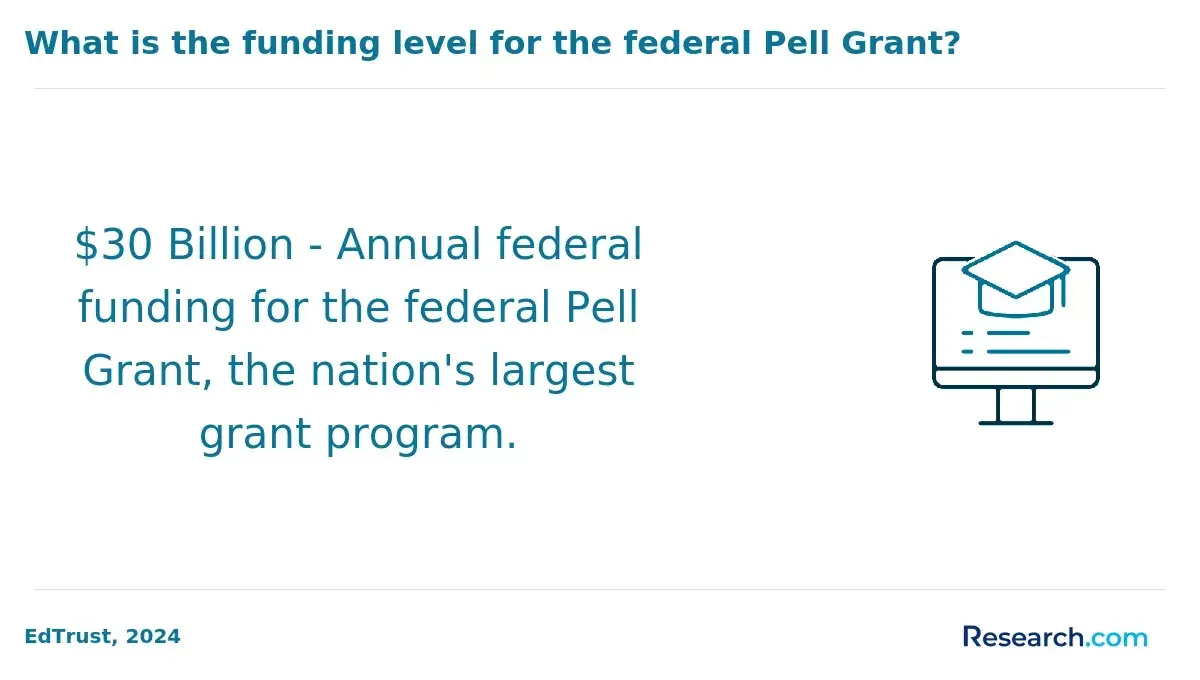
Federal aid for online clinical research doctoral candidates is usually loan-centered rather than grant-centered. Graduate students commonly use the FAFSA to access federal Direct Unsubsidized Loans and, if needed, Grad PLUS Loans, but true federal grants for doctoral study are limited and often tied to research training, teaching, service commitments, or specific eligibility rules.
Use financial aid in a deliberate order so you reduce high-interest borrowing. The following sequence helps working professionals lower out-of-pocket cost before relying on graduate loans:
- Submit the FAFSA early so the university can determine federal loan eligibility and any institutional aid tied to financial need.
- Ask the graduate school about doctoral scholarships, alumni discounts, diversity fellowships, public health scholarships, and health sciences research awards.
- Check whether your employer offers tuition reimbursement, tuition prepayment, professional development funds, or paid study time.
- Ask whether military, veteran, public service, or hospital system benefits can be combined with institutional aid.
- Use federal loans only after comparing interest, origination fees, repayment options, and expected salary gain.
Employer reimbursement can be especially powerful for clinical research professionals employed by hospitals, contract research organizations, pharmaceutical companies, universities, or government contractors. The trade-off is that many employers reimburse after grades are posted, cap annual benefits, or require you to stay employed for a set period after receiving funds.
If you are still building healthcare experience before a doctorate, lower-cost pathways such as medical assistant programs can help some students enter clinical environments sooner, but they are not substitutes for graduate-level clinical research training.
How can fellowships and research stipends offset the cost of an online Clinical Research doctorate?
Fellowships and research stipends can offset doctorate costs, but they are more common in research Ph.D. programs than in self-funded professional doctorates. Online students should ask directly because some schools reserve assistantships for campus-based students, while others allow remote research support, teaching assistance, or grant-funded project work.
The best opportunities usually connect your dissertation to a faculty project, clinical trials unit, public health center, or sponsored research initiative. These funding types are worth asking about before enrollment:
- Graduate research assistantships that pay a stipend, reduce tuition, or provide hourly compensation for faculty research support.
- Teaching assistantships for online courses in research methods, health sciences, evidence-based practice, or clinical trial operations.
- Institutional doctoral fellowships for high-achieving applicants, underrepresented students, or students pursuing priority research areas.
- NIH-style predoctoral training support when the student's research aligns with funded biomedical, translational, or population health projects.
- Employer-sponsored dissertation projects where a hospital, CRO, or pharmaceutical company supports research that improves internal operations.
Do not assume a stipend is free money. Ask whether it requires weekly work hours, delays your dissertation, affects outside employment, or requires campus attendance. A $5,000 stipend may not be worthwhile if it forces you to reduce paid clinical research work by more than that amount.
A practical approach is to contact faculty before applying. Briefly explain your research interest, current role, data access, and methodological skills. If a professor sees a match with an active project, your chance of finding funding or mentorship improves.
What is the average starting salary and long-term earnings potential for Clinical Research doctorate graduates?
There is no single national "starting salary" dataset for online clinical research doctorate graduates because salaries are reported by occupation, employer, geography, and experience rather than degree format. The most useful benchmarks come from BLS occupational wage data for roles that commonly value doctoral-level research, leadership, or scientific expertise.
The table below uses BLS May 2024 wage benchmarks as decision-support data. These are not guaranteed salaries for doctorate holders, but they show where doctoral training may align with higher-paying clinical research careers.
| Career benchmark | BLS May 2024 median annual wage | How the doctorate may help |
| Medical and health services managers | $117,960 | Supports advancement into research administration, clinical operations leadership, quality strategy, or executive healthcare roles. |
| Medical scientists | $100,590 | Aligns with clinical investigation, translational research, study design, and scientific leadership roles. |
| Natural sciences managers | $161,180 | Relevant for senior R&D, laboratory research leadership, biotech management, and scientific program direction. |
| Epidemiologists | $83,980 | Useful for population health research, outcomes research, surveillance, and public health analytics roles. |
For starting salary expectations, experience matters as much as the doctorate. A new doctoral graduate with years of trial management, regulatory, biostatistics, or pharmaceutical experience may compete for leadership roles sooner than a student who enters the doctorate directly from a master's program with limited industry experience.
Long-term earnings potential is strongest when the degree is paired with scarce skills: protocol design, clinical data strategy, regulatory submissions, health economics and outcomes research, biostatistics literacy, team leadership, and grant or budget management. Without those skills, the doctorate alone may not produce a large salary increase.
What high-paying career paths justify the cost of an online doctorate in Clinical Research?
High-paying clinical research doctorate career paths usually justify the cost when the credential helps you move from execution-level work into strategy, leadership, or scientific decision-making. The degree is less likely to pay off quickly if your target job values certifications and experience more than doctoral research training.
These career paths are most likely to support a strong ROI for experienced professionals:
- Director of Clinical Research or Clinical Operations, where doctoral training can strengthen credibility in protocol oversight, trial quality, and cross-functional leadership.
- Medical Science Liaison or scientific affairs leader, especially for candidates with strong therapeutic-area knowledge and the communication skills to work with physicians and investigators.
- Regulatory affairs or clinical strategy executive, where research design knowledge helps with evidence planning, submissions, and post-market study strategy.
- Health economics and outcomes research leader, where doctoral-level methods training supports real-world evidence, payer strategy, and population-level analysis.
- Principal investigator support, research faculty, or academic clinical research administrator, where a Ph.D. or research doctorate may matter more than an applied doctorate.
- Biotech or pharmaceutical R&D program leader, where scientific judgment, budget ownership, and team leadership can produce higher compensation bands.
An online doctorate is not strictly required for every executive clinical research role. Some directors and vice presidents advance through a master's degree, certifications, and years of trial leadership. The doctorate makes more sense when it fills a clear gap: research credibility, academic eligibility, scientific leadership, or advancement into roles where terminal credentials are preferred.
Students with life science backgrounds can also compare adjacent career ladders through resources on the highest paying jobs with a biology degree, especially if they are deciding whether a doctorate is necessary for their preferred industry role.
Which high-paying industries actively recruit professionals with an online doctorate in Clinical Research?
The strongest hiring markets for clinical research doctorate graduates are industries that need evidence generation, regulatory compliance, scientific leadership, and trial execution at scale. Recruiters typically evaluate the doctorate alongside experience, therapeutic expertise, publications, management history, and familiarity with Good Clinical Practice.
This table summarizes high-paying industries where doctoral-level clinical research training can be valuable. Compensation varies widely by geography, employer size, therapeutic area, and leadership scope.
| Industry | Common roles | Why doctoral training matters |
| Pharmaceutical companies | Clinical research director, medical affairs leader, clinical strategy manager | Drug development teams need leaders who understand study design, endpoints, regulatory expectations, and evidence quality. |
| Biotechnology and diagnostics | R&D program manager, clinical evidence lead, scientific operations director | Smaller firms often need professionals who can bridge science, operations, and investor or regulatory expectations. |
| Contract research organizations | Clinical operations director, project portfolio leader, quality and compliance executive | CROs value advanced research knowledge when managing complex trials, sponsors, vendors, and global study teams. |
| Academic medical centers | Clinical research administrator, research faculty, translational science program manager | Doctoral credentials can strengthen grant, publication, and research governance credibility. |
| Healthcare systems and insurers | Outcomes research leader, evidence-based practice director, population health research executive | These employers use clinical evidence to improve quality, cost, safety, and patient outcomes. |
Industry choice affects ROI. A lower-cost doctorate may pay back faster in pharma, biotech, or CRO leadership than in lower-paying academic or nonprofit research roles, unless the academic role includes tuition benefits, grant support, or a clear promotion pathway.
If you are earlier in your education path, an online biology degree can provide a flexible foundation for later graduate study, but doctoral-level clinical research roles usually require substantial experience beyond the bachelor's level.
How quickly can you achieve a positive ROI on an online Clinical Research doctorate?
A positive ROI on an online clinical research doctorate can happen in 2 to 5 years for students who keep net cost low and use the degree to secure a meaningful promotion. It can take much longer if the student pays full private tuition, borrows heavily, or enters a role with only a modest salary increase.
Use a simple payback calculation before enrolling: divide your net program cost by the realistic annual salary increase you expect after graduation. This does not include taxes, loan interest, or opportunity cost, but it helps you compare programs quickly.
| Net doctorate cost after aid | Estimated annual salary increase | Approximate tuition payback period | ROI interpretation |
| $40,000 | $20,000 | About 2 years | Strong potential ROI if the raise is realistic and sustained. |
| $50,000 | $10,000 | About 5 years | Reasonable only if the role also improves job security, leadership access, or long-term earnings. |
| $80,000 | $10,000 | About 8 years | Riskier unless the degree is required for a specific academic, executive, or research leadership goal. |
| $30,000 | $0 short-term increase | No immediate payback | May still be worthwhile for career transition, but not as a short-term financial investment. |
The biggest savings usually come from choosing an accredited low-tuition program, transferring eligible credits, avoiding unnecessary residency costs, using employer reimbursement, and finishing the dissertation on time. Dissertation delays can quietly damage ROI because they add fees while postponing the career benefits of the credential.
Avoid these common mistakes when evaluating ROI:
- Choosing an unaccredited or weakly recognized program because the tuition appears cheap.
- Ignoring whether your target employers prefer a Ph.D., applied doctorate, professional certification, or direct industry experience.
- Borrowing the full cost before applying for employer funding, scholarships, assistantships, or tuition discounts.
- Assuming online format means no travel, residency, research software, or dissertation continuation costs.
- Selecting a dissertation topic without considering data access, faculty expertise, and completion feasibility.
The best-value program is the one that matches your career target at the lowest realistic net cost. For a future research faculty member, that may be a Ph.D. with faculty mentorship. For a clinical operations director, it may be a lower-cost applied doctorate plus employer-funded tuition and a dissertation tied to measurable workplace outcomes.
Other Things You Should Know About Clinical Research
Some do, but not all. Fully online programs may allow remote coursework, advising, proposal defense, and final dissertation defense, while others require short residencies or research intensives. Always confirm travel requirements before applying.
A Ph.D. is usually better for academic research, publication-heavy roles, and scientific investigation. An applied doctorate may be better for clinical operations, healthcare leadership, quality improvement, or executive roles where practical research application matters more than a traditional academic pathway.
Yes, many online doctoral students work full-time, but the workload is demanding. Part-time enrollment is often more realistic for clinical research professionals managing trials, regulatory deadlines, travel, or leadership responsibilities.
Most programs expect a master's degree in a related field, graduate-level research preparation, professional healthcare or life sciences experience, transcripts, recommendations, a statement of purpose, and sometimes a writing sample or research proposal. Requirements vary by university.
References
- Labor Market | ELA https://ela.nauka.gov.pl/en/labor-market/who_earns_more_after_studies
- How long should a PhD take today - Swiss School of Business Research https://ssbr-edu.ch/how-long-should-a-phd-take-today/
- How to become a Clinical Research Associate (CRA) https://careers.iconplc.com/blogs/2024-11/how-to-become-a-clinical-research-associate-cra
- Average Cost of a Doctorate Degree [2026]: Ph.D., Psy.D. & More https://educationdata.org/average-cost-of-a-doctorate-degree
- How Long Does It Take to Get a PhD After a Master's Degree? https://streamlinedai.app/blog/how-long-phd-after-masters
- New Graduate Employment Data https://www.aacnnursing.org/news-data/research-data-center/new-graduate-employment-data
- Best Online Ph.D. and Doctoral Programs | OEDb https://www.oedb.org/rankings/online-phd-programs/
- Online PhD in Clinical and Translational Research @ EUCLID - EUCLID (Euclid University) - Official Mobile site https://m.euclid.int/programs/online-phd-clinical-translational-research/
- Research Summary: Education and Lifetime Earnings https://www.ssa.gov/policy/docs/research-summaries/education-earnings.html
- Which Clinical Research Courses Are Known for the Best Job Placements? - Clinical Research Courses FAQ | VIARES https://viares.com/blog/general/which-clinical-research-courses-are-known-for-the-best-job-placements/