2027 Online Christian Ministry Doctorate Programs with Rolling Admissions: Deadlines, Start Dates, and Application Tips

Co-Founder and Chief Data Scientist
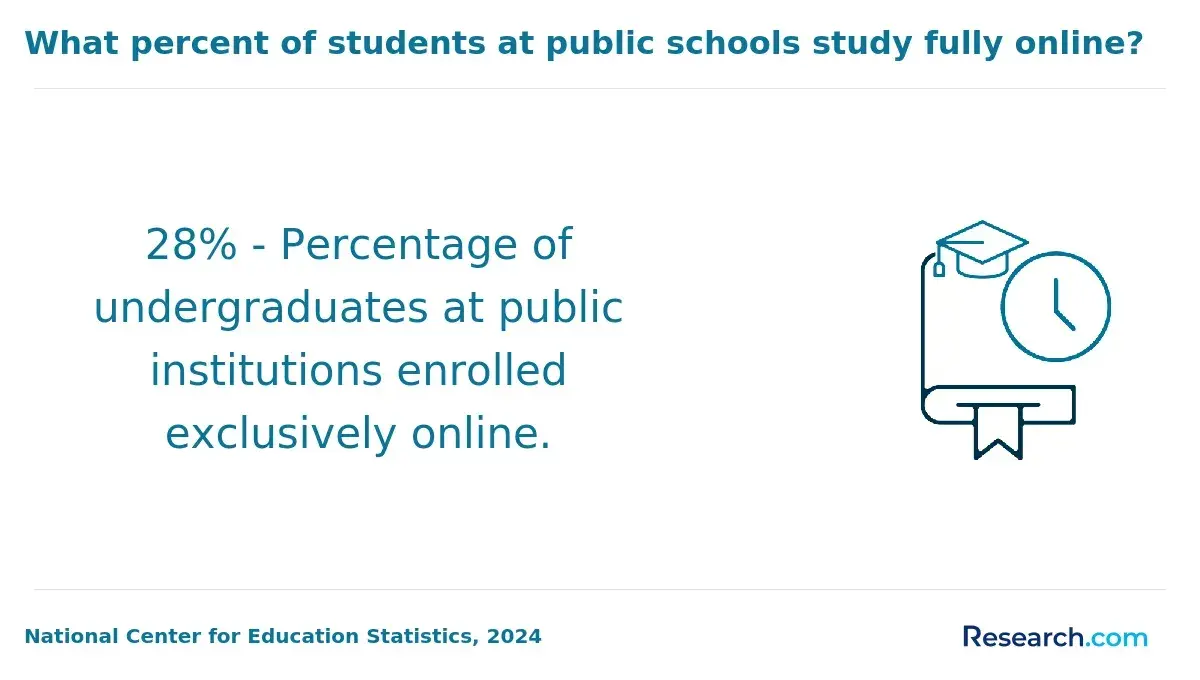
Choosing an online Christian ministry doctorate often comes down to timing: how soon you can apply, when you can start, and whether the program fits your ministry, work, and family calendar. NCES distance education data published in 2024 shows more than 1 million U.S. graduate students enrolled fully online, making flexible doctoral enrollment increasingly important.
This guide is for pastors, chaplains, ministry leaders, educators, and counselors comparing rolling-admission options. You'll learn how deadlines, start dates, financial aid, application strength, and program availability affect your best next move.
Key Things You Should Know
- Rolling admission usually means applications are reviewed as they arrive, but programs still set priority deadlines, cohort cutoffs, financial aid dates, and course-registration limits.
- Graduate students can borrow up to $20,500 per academic year in federal Direct Unsubsidized Loans, so applying early can matter when aid packaging, payment plans, and scholarship funds have separate timelines.
- The best start date is usually the one that gives you 8 to 16 weeks to complete transcripts, references, writing samples, interviews, aid forms, and employer or church scheduling.
How Does Rolling Admission Work for Online Christian Ministry Doctorate Programs?
Rolling admission means a school reviews completed applications continuously instead of waiting for one fixed deadline. For online Christian ministry doctorates, this model is common because many students are working pastors, chaplains, nonprofit leaders, missionaries, educators, or counseling-related professionals who need multiple entry points.
The term can be misleading, though. "Rolling" rarely means "apply whenever and start immediately." Most programs still attach applications to specific terms, sessions, or cohorts. A Doctor of Ministry, Doctor of Educational Ministry, Doctor of Practical Theology, or PhD in Christian ministry may accept files year-round but only admit students into fall, spring, summer, or accelerated online sessions.
The table below shows how rolling admission differs from fixed-deadline admission in ways that directly affect online ministry doctoral applicants.
| Admissions model | How applications are reviewed | Typical start-date pattern | Best fit | Main limitation |
| Rolling admission | Reviewed when the file is complete | Multiple annual terms or sessions | Working adults who need flexibility | Seats, aid, and courses may fill before the final cutoff |
| Priority rolling admission | Reviewed continuously, with earlier files favored for planning | Several starts, often tied to priority dates | Applicants seeking scholarships, advising, or preferred course access | Late applicants may still be considered but with fewer options |
| Fixed-deadline admission | Reviewed after a posted deadline | Usually one or two annual cohorts | Applicants who want a structured comparison cycle | Less flexible if ministry or work plans change |
Rolling admission is often better for students who already know their goal and can submit a strong file early. A fixed-deadline program may be better if you want a highly cohort-based doctoral experience, more predictable peer interaction, or a longer period to compare offers.
Applicants with counseling or pastoral care goals should also compare ministry doctorates with clinical counseling pathways. For example, students who need a licensure-oriented counseling degree may want to review the best online MFT programs before assuming a ministry doctorate is the right credential.
When Are the Best Start Dates for Online Christian Ministry Doctorate Programs?
The best start date depends on your readiness, not just the earliest available term. For many online Christian ministry doctorate students, the ideal start gives enough time to gather academic records, secure recommendations, arrange tuition funding, and plan around church calendars, counseling caseloads, military chaplaincy duties, or nonprofit leadership responsibilities.
Many online doctoral programs use term-based starts rather than true open enrollment. The table below summarizes common start-date patterns and the type of applicant each pattern tends to serve best.
| Start-date pattern | Common timing | Student fit | Planning consideration |
| Fall start | Late summer or early fall | Students who want the widest course selection and a traditional academic rhythm | Often attracts the largest applicant pool |
| Spring start | January or early spring | Students who need time after the holiday ministry season to begin coursework | Some courses may be sequenced from fall cohorts |
| Summer start | May, June, or July | Educators, pastors with lighter summer schedules, and students preparing for fall ministry initiatives | Course pace may be compressed |
| Multiple accelerated sessions | Every 6 to 10 weeks in some online formats | Self-directed professionals who want faster entry | Orientation, financial aid, and course availability may have earlier cutoffs |
Fall is often the strongest choice if you want maximum advising, course selection, and cohort connection. Spring or summer can make more sense if your current ministry role has seasonal intensity or if you need extra time to complete a writing sample, ministry resume, or church endorsement.
A later start date is not automatically worse. It may be smarter to delay one term if doing so lets you submit a better application, avoid overloading your ministry schedule, or secure funding without rushing.
How Do Rolling Admissions Affect Application Deadlines for Online Christian Ministry Doctorates?
Rolling admissions change how deadlines work, but they do not eliminate deadlines. Most schools use several layers of timing: a priority deadline, a final application cutoff, a document-completion deadline, a financial aid deadline, and a registration deadline.
This matters because online Christian ministry doctorate applicants often need third-party materials that are outside their direct control. Transcripts, references, denominational endorsements, pastoral supervisor letters, and international credential evaluations can take longer than expected.
Use the following deadline types to interpret what a school's admissions page really means.
- Priority deadline: The date by which applicants should submit to receive best consideration for admission review, scholarships, advising, or preferred cohort placement.
- Final application deadline: The last date the school will accept a new application for a specific start term.
- File-completion deadline: The date by which all transcripts, references, essays, interviews, and supplemental documents must be received.
- Registration deadline: The last date to enroll in courses after admission, which may arrive before the term officially begins.
- Financial aid deadline: A separate date for FAFSA, institutional aid, employer billing, church support, or payment-plan setup.
The most common mistake is assuming "rolling" means a partial application is enough to hold a place. In most programs, review begins only when the file is complete. If a recommendation letter or official transcript arrives late, your application may move to the next available start.
Students comparing Christian ministry with counseling-related routes should be especially careful about deadlines because licensure-focused programs may have stricter cohort structures. Those exploring alternatives can compare accelerated mental health counseling programs online if their goal requires a state-licensure pathway rather than a ministry doctorate.
A practical target is to begin preparing 3 to 4 months before your desired start date and submit the application 8 to 12 weeks before classes begin. Highly selective programs, programs with residencies, and programs requiring interviews or denominational documentation may require more time.
The application-to-enrollment timeline below shows a realistic planning window for working adults. It is not a universal rule, but it helps prevent the rushed submissions that often weaken doctoral applications.
| Time before desired start | Application stage | Why it matters |
| 16 weeks | Shortlist programs | Allows time to compare accreditation, format, tuition, residencies, and dissertation or project expectations |
| 12 weeks | Request transcripts and references | Third-party documents often create the longest delay |
| 10 weeks | Draft statement of purpose and ministry resume | Doctoral committees look for fit between your goals and the program's faculty, theology, and applied project model |
| 8 weeks | Submit application | Leaves time for file review, interview scheduling, aid processing, and course registration |
| 4 weeks | Finalize enrollment steps | Helps avoid late registration, delayed aid, or missed orientation requirements |
Applying early does not guarantee admission, but it gives you more room to solve problems. If a transcript is delayed, a recommender misses a deadline, or the admissions committee requests clarification about your ministry experience, early submission keeps one issue from derailing the whole term.
Students should avoid applying at the last possible moment simply because a program advertises rolling admission. A rushed file can signal poor doctoral readiness, especially if the writing sample is generic, the ministry goals are vague, or the references do not speak to leadership, theological maturity, and academic ability.
Admissions requirements vary by school and doctorate type, but most online Christian ministry doctorates evaluate three big questions: whether you are academically prepared, whether your ministry background fits the degree, and whether your goals match the program's theological and professional focus.
The table below summarizes common requirements and why they matter in a rolling-admission review.
| Requirement | Common expectation | Why admissions committees value it |
| Master's degree | Often an MDiv, MA in ministry, theology, biblical studies, counseling, or a related graduate degree | Shows readiness for advanced theological and applied doctoral work |
| Graduate GPA | Minimums vary by institution | Helps committees assess academic consistency and doctoral-level writing readiness |
| Ministry experience | Often required for DMin and applied ministry doctorates | Connects coursework and final projects to real ministry settings |
| Statement of purpose | Usually explains calling, goals, research interests, and program fit | Shows whether the applicant has a focused reason for doctoral study |
| Recommendations | Academic, pastoral, denominational, employer, or ministry-supervisor references | Provides evidence of character, leadership, scholarship, and service |
| Writing sample | Prior graduate paper, theological essay, ministry proposal, or research sample | Demonstrates ability to write analytically and use sources responsibly |
| Interview | May be required for cohort-based or selective programs | Allows the school to assess fit, expectations, and communication skills |
Applicants should also check whether the program requires a statement of faith, church membership, denominational standing, pastoral endorsement, background check, or on-campus residency. These requirements can affect both admission timing and enrollment feasibility.
For students whose ministry goals include pastoral counseling, family systems work, or clinical care, degree choice matters. A ministry doctorate may strengthen leadership and pastoral formation, while online masters programs for counseling may be more appropriate when state licensure is the central goal.
A strong application connects your calling, experience, academic readiness, and program fit. Rolling admission can reward applicants who submit early, but early only helps if the file is complete, polished, and aligned with the degree.
Before submitting, use your application materials to show why this specific doctorate is the right next step. The following steps help applicants move beyond a generic "I want to grow in ministry" statement.
- Define a clear ministry problem you want to address, such as congregational discipleship, pastoral leadership, chaplaincy care, preaching, Christian education, missions strategy, or community engagement.
- Connect that problem to the program's curriculum, faculty expertise, residency model, research expectations, or final doctoral project format.
- Ask recommenders who can speak to both academic readiness and ministry leadership rather than choosing references based only on title or seniority.
- Revise the writing sample for doctoral tone, source use, theological clarity, and practical relevance before uploading it.
- Explain schedule readiness, including how you will balance online coursework, ministry responsibilities, family commitments, and any required residencies.
Red flags include a vague statement of purpose, no clear ministry context, weak writing mechanics, unclear theology-program fit, and references that only praise character without describing leadership or analytical ability. These issues matter more in doctoral admission because programs are assessing whether you can complete sustained independent work.
Applicants should also be honest about career goals. If the goal is licensed therapy, a Christian ministry doctorate alone usually will not meet that requirement; if the goal is pastoral leadership, teaching in some ministry settings, chaplaincy development, or applied theological leadership, the degree may be a better fit.
Rolling admission can help you enter sooner, but financial aid often runs on a different clock. Federal aid, institutional scholarships, denominational grants, church support, employer tuition assistance, military benefits, and payment plans may each have their own deadlines.
For U.S. graduate and professional students, Federal Student Aid lists the annual Direct Unsubsidized Loan limit at $20,500. That figure is important because many ministry doctoral students rely on a mix of loans, personal funds, church support, and scholarships; applying late can limit time to compare borrowing, payment plans, and lower-cost alternatives.
Financial aid planning should happen before admission is finalized, not after. Ask each school how aid is packaged for students who enter midyear or in accelerated sessions, because a later start can affect disbursement timing and the number of credits counted in a payment period.
The most useful financial questions to ask include the following.
- Does the program have a scholarship priority deadline that is earlier than the admissions deadline?
- Are doctoral ministry students eligible for institutional grants, denominational discounts, military benefits, employer billing, or church partnership tuition rates?
- How many credits must I take each term to qualify for federal aid or maintain satisfactory academic progress?
- Are residencies, intensives, technology fees, graduation fees, continuation fees, or project fees billed separately from tuition?
- If I start in spring or summer, will my aid be prorated or packaged differently than a fall-start student's aid?
A common mistake is choosing the earliest start date without confirming the full cost of attendance. In online ministry doctoral programs, the lower-risk choice may be the term that gives you enough time to secure aid, reduce borrowing, and understand residency or project-related expenses.
Rolling admission can improve flexibility, but it does not mean every cohort, course, concentration, or faculty mentor is available at every start date. Online Christian ministry doctorate programs may limit enrollment to preserve advising capacity, residency space, faculty supervision, or cohort quality.
This is especially important in programs with specializations such as pastoral counseling, spiritual formation, chaplaincy, preaching, leadership, intercultural ministry, or Christian education. A school may admit students for multiple terms but offer certain concentration courses only once a year.
The table below shows the availability issues that can appear after admission and why they matter for planning.
| Availability factor | Potential effect | Why it matters |
| Cohort size | A start date may close when seats are filled | Late applicants may be pushed to the next term |
| Course sequencing | Some foundational courses may only begin in certain terms | Starting later may affect time to completion |
| Residency schedule | Online programs may require intensives or campus visits | Travel, work leave, and ministry coverage need advance planning |
| Faculty supervision | Project or dissertation mentors may have limited capacity | Specialized research interests may require earlier planning |
| Concentration availability | Not every focus area may be open each term | Applicants should confirm whether the desired track is active for the target start |
Rolling admissions also affect transfer-credit review. If you hope to transfer prior doctoral credits, clinical pastoral education, advanced standing, or graduate theology credits, ask whether the review must be completed before admission or before registration.
For students comparing pastoral counseling, ministry leadership, and advanced counseling credentials, cost and availability can vary widely. Those considering counseling doctorate alternatives may also compare the cheapest online PhD in counseling options alongside ministry doctorates to clarify which credential better fits their career and budget.
Rolling admissions are most useful when the program's timing supports your real life. An online Christian ministry doctorate is often pursued by adults who are already employed, so the right start date should match vocational seasons, family responsibilities, church calendars, and long-term career goals.
Career outcomes vary because Christian ministry doctorates serve different purposes. Some students use the degree for senior pastoral leadership, denominational roles, chaplaincy development, nonprofit leadership, Christian school or seminary teaching, consulting, writing, or ministry specialization.
For teaching-oriented students, the U.S. Bureau of Labor Statistics projected 8% employment growth for postsecondary teachers from 2023 to 2033, but academic hiring depends heavily on institution type, discipline, denomination, publications, and terminal-degree expectations.
The table below connects common student situations with the admissions timing that may fit best.
| Student situation | Best-fitting admissions approach | Reasoning |
| Full-time pastor entering a busy church season | Apply early but choose a later start | Protects application quality and reduces the risk of beginning during peak ministry demands |
| Chaplain or nonprofit leader with employer support | Use the first start date after funding approval | Aligns tuition assistance, work scheduling, and enrollment |
| Prospective seminary or college instructor | Prioritize program reputation, accreditation, and research fit over speed | Academic roles may value faculty alignment and scholarly preparation more than fast entry |
| Career changer from counseling or education | Confirm prerequisites before choosing a start | Additional theology or ministry coursework may be required |
| Student needing maximum structure | Consider cohort-based rolling or fixed-deadline programs | Frequent starts can be convenient but may provide less predictable peer progression |
Rolling admission is not automatically the best model for every applicant. Students who need a highly structured cohort, extensive faculty mentorship before applying, or a long discernment process may prefer a program with fixed deadlines and a single annual intake.
The key trade-off is convenience versus fit. A fast start is valuable only if the program has the right accreditation, theological alignment, faculty support, final project model, cost structure, and career relevance.
How Should Students Choose and Apply to Online Christian Ministry Doctorate Programs With Rolling Admissions?
The best way to choose a rolling-admission online Christian ministry doctorate is to compare timing alongside quality. A convenient start date should never outweigh accreditation, academic rigor, theological fit, faculty support, affordability, and alignment with your ministry or career goal.
Use the following process to move from interest to enrollment without rushing into the wrong program.
- Clarify the degree type you need, such as DMin for applied ministry leadership, PhD for research-intensive preparation, or another professional doctorate for specialized ministry practice.
- Verify institutional accreditation and, where relevant, theological accreditation, residency expectations, faculty credentials, and whether the program's credits or degree type will be recognized by your employer, denomination, or target institution.
- Map each school's rolling-admission calendar by start date, priority deadline, final deadline, file-completion deadline, financial aid deadline, and registration deadline.
- Compare total cost, not just tuition per credit, including fees, books, travel for intensives, continuation enrollment, project or dissertation costs, and graduation charges.
- Contact admissions before applying and ask whether your desired cohort, concentration, and advisor area still have availability.
- Prepare a complete file before submission, including official transcripts, references, statement of purpose, writing sample, resume, and any faith or ministry documentation.
- Choose the start date that gives you the strongest academic, financial, and ministry transition, even if it is not the earliest option.
Before committing, ask direct questions:
- Are applications truly reviewed as they arrive?
- What is the last date for a complete file?
- Do scholarships close earlier?
- Will all required first-term courses be available?
- Are residencies tied to this start date?
- Can transfer credits be reviewed before I enroll?
A good rolling-admission program should make timing clearer, not more confusing. If a school cannot explain deadlines, costs, course availability, or residency requirements in writing, treat that as a red flag and keep comparing options.
Other Things You Should Know About Christian Ministry Programs
No. A Doctor of Ministry is usually a professional doctorate focused on applied ministry leadership and practice. A PhD is typically more research-focused and may be better aligned with academic scholarship, publishing, or some teaching roles.
Usually no. Ministry doctorates may support pastoral, chaplaincy, leadership, teaching, or nonprofit roles, but they generally do not qualify someone for counseling, psychology, or social work licensure by themselves. Licensure rules depend on the state and profession.
Some do. Many programs are mostly online but include residencies, intensives, retreats, or project defenses. Applicants should confirm travel dates, costs, and attendance rules before choosing a start term.
It may be worth it when the degree directly supports a clear ministry goal, strengthens leadership capacity, fits your theology and schedule, and has costs you can manage responsibly. It is less compelling if you only need a credential quickly or if another degree better matches your career path.
- Online Christian College Fully Accredited Christian University Calvary Chapel University https://calvarychapeluniversity.edu/doctor-of-ministry/
- Admissions | Requirements | Deadlines https://denverseminary.edu/admission-aid/admission-process/
- Virginia Theological Seminary announces new application deadline for doctoral programs | Virginia Theological Seminary https://vts.edu/press-release/virginia-theological-seminary-announces-new-application-deadline-for-doctoral-programs/
- Seminary welcomes applicants to its accredited Doctor of Ministry program - EMU News https://emu.edu/now/news/2025/seminary-welcomes-applicants-to-its-accredited-doctor-of-ministry-program/
- Apply - Christian Theological Seminary https://www.cts.edu/admissions/apply/
- Rolling Admissions Explained: How It Works and When You Should Apply https://riseglobaleducation.com/blogs/rolling-admissions-explained-how-it-works-and-when-you-should-apply