2027 Online Business Law Degree Programs With No Application Fee and Rolling Admissions

Co-Founder and Chief Data Scientist
Choosing an online business law degree is often less about finding the easiest application and more about avoiding a costly mismatch. College Board's 2024 pricing report lists average published tuition and fees at $11,610 for in-state public four-year colleges and $43,350 for private nonprofit four-year colleges, so a waived application fee is only a small part of affordability. This guide is for working adults, transfer students, and career changers comparing flexible online programs. You'll learn how rolling admissions work, which costs matter most, and how to judge whether a no-fee program is a smart investment.
Key Things You Should Know
- No-application-fee online business law programs can reduce upfront costs, but the real comparison should focus on total tuition, technology fees, transfer-credit acceptance, financial aid timing, and career alignment.
- Rolling admissions means applications are reviewed continuously, but seats, scholarships, course availability, and financial aid deadlines may still run on fixed calendars.
- Business law can support roles in compliance, contracts, risk management, legal operations, and paralegal work; BLS May 2024 data reports median annual wages of $78,420 for compliance officers and $61,010 for paralegals and legal assistants.
Which Online Business Law Degree Programs Have No Application Fee and Rolling Admissions?
Online business law programs are not always labeled the same way. Some schools offer a business administration degree with a business law or legal studies concentration, while others offer legal studies, paralegal studies, compliance, or law-focused master's programs that prepare students to work with contracts, regulations, corporate governance, and risk.
The table below highlights examples of U.S. online programs that publicly emphasize no application fee, rolling or year-round admissions, frequent start dates, or similar flexible entry models. Policies can change by term, degree level, state authorization, and applicant type, so students should confirm the current application fee and admission cycle directly before applying.
| School | Online business law-related option | Application-fee position to verify | Rolling-admission or start-date pattern | Best fit |
| Southern New Hampshire University | BS in Business Administration with business law-related coursework or legal studies options | SNHU commonly advertises no undergraduate application fee | Multiple online undergraduate terms each year with rolling review | Working adults who want a business degree with legal and compliance relevance |
| American Public University | BA in Legal Studies or business programs with law-related coursework | APU commonly advertises no application fee | Monthly online course starts with frequent admissions review | Students seeking legal studies, public policy, compliance, or government-facing career paths |
| Purdue Global | BS in Legal Support and Services or business programs with law-focused electives | Purdue Global commonly advertises no application fee | Frequent online start dates, depending on program and term | Career-focused students seeking structured online legal support or business pathways |
| National University | Business, pre-law, and legal studies-related online options | National University commonly advertises no application fee | Year-round admissions with accelerated course starts | Adult learners who prefer short course blocks and fast enrollment cycles |
| Wilmington University | BS in Legal Studies or business programs with law-related coursework | Application-fee waivers or no-fee policies should be confirmed for the exact term | Rolling admissions and multiple online starts are commonly available | Transfer students comparing online legal studies and applied business options |
Students should treat this kind of list as a starting point, not a final ranking. A program with a $0 application fee may still cost more overall than a program with a $50 application fee if tuition, required fees, residency requirements, or lost transfer credits are higher.
The strongest candidates usually compare at least three program types: a business administration degree with law coursework, a legal studies degree with business electives, and a compliance or risk-focused business program. Students comparing broader academic options can also review top degrees for the future to understand how business law fits with long-term labor market demand.
How Does Rolling Admission Work for Online Business Law Degree Programs?
Rolling admission means a school reviews applications as they arrive instead of waiting for one fixed deadline. For online business law programs, this can be especially helpful because many programs offer several start dates throughout the year rather than a single fall entry point.
However, rolling admission does not mean students can apply at any time and immediately begin classes. Programs may still close enrollment once a section fills, require transcripts by a cutoff date, or set earlier deadlines for scholarships and financial aid packaging.
The comparison below explains how rolling admission differs from fixed-deadline admission and why the distinction matters when planning an online business law degree.
| Feature | Rolling admissions | Fixed-deadline admissions | Decision impact |
| Application review | Applications are reviewed continuously or in batches | Applications are reviewed after a deadline | Rolling review can shorten the wait for a decision |
| Start dates | Often multiple starts per year | Usually tied to fall, spring, or summer terms | Rolling programs can help working adults start sooner |
| Seat availability | May decrease as each term fills | Usually known after the deadline | Applying early still matters |
| Financial aid timing | May have separate priority dates | Often aligned with academic deadlines | Students should not assume aid is rolling too |
| Best use case | Flexible enrollment, career changers, transfers | Competitive programs, cohort models, scholarships | The better option depends on academic and funding goals |
The practical rule is simple: apply as soon as your materials are ready, not as late as the school allows. In rolling admissions, early applicants may have more time to resolve transcript issues, compare aid offers, register for preferred courses, and complete onboarding.
How Much Can Students Save by Choosing an Online Business Law Degree With No Application Fee?
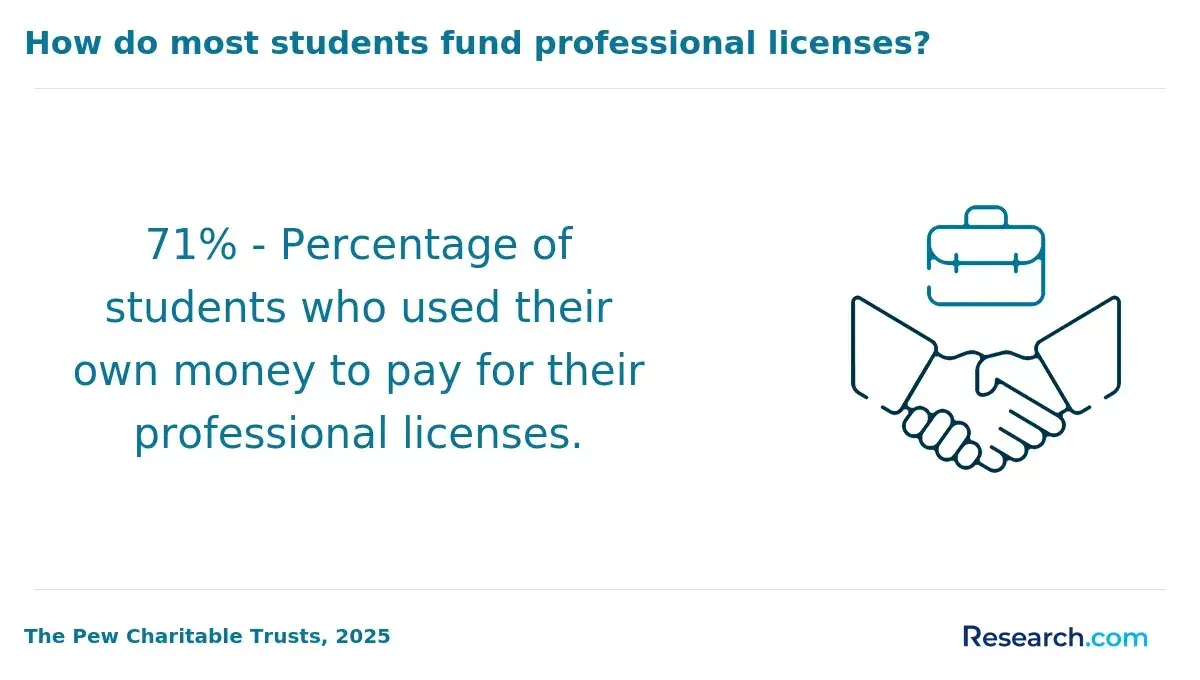
A no-application-fee program can save money at the search stage, especially for students applying to several schools. The savings are real, but they are usually small compared with tuition, course materials, technology fees, graduation fees, and the cost of retaking credits that do not transfer.
The table below shows how application-fee savings work in practical terms. It is most useful for students deciding whether to apply broadly or limit applications because of upfront costs.
| Application strategy | Typical fee scenario | Out-of-pocket application cost | What the savings mean |
| Apply to one no-fee program | $0 application fee | $0 | Lowest upfront cost, but limited comparison power |
| Apply to four no-fee programs | $0 application fee at each school | $0 | Lets students compare admissions and aid offers without application-fee pressure |
| Apply to four programs with $50 fees | $50 application fee at each school | $200 | The fee may discourage comparison shopping |
| Choose a higher-tuition no-fee program | $0 application fee but higher tuition | $0 upfront | The waived fee may be outweighed by total program cost |
The main benefit of no application fees is strategic flexibility. Students can apply to several legitimate programs, compare transfer-credit evaluations and financial aid offers, and then choose based on total value instead of guessing from a website.
A common mistake is treating the waived fee as proof that the school is affordable. It is better to calculate the estimated total cost after transfer credits, employer tuition assistance, scholarships, and required fees. Students researching cost trade-offs in other fields may find the same principle in guides to options such as cheapest online school counseling programs (CACREP-accredited): the sticker price rarely tells the whole story.
What Are the Admission Requirements for No-Fee Online Business Law Degree Programs?
Admission requirements depend on degree level. Undergraduate business law-related programs usually focus on proof of high school completion, prior college transcripts, transfer credits, and English proficiency when applicable. Graduate programs may require a bachelor's degree, resume, statement of purpose, minimum GPA, recommendations, or professional experience.
The table below summarizes common requirements by degree type so students can identify which application materials to gather first.
| Degree type | Common admission requirements | Business law relevance | Important caution |
| Associate degree in legal studies or business | High school diploma or equivalent, placement information, prior transcripts if transferring | Introductory path for legal office, business support, or transfer goals | May not be enough for compliance or management roles without further education |
| Bachelor's degree in business administration, legal studies, or compliance | High school transcript, college transcripts, application form, possible transfer evaluation | Common entry-level credential for business, contracts, compliance, and legal operations roles | Course content varies widely by school |
| Master's degree in legal studies, compliance, or business law | Bachelor's degree, resume, statement, transcripts, possible recommendations | Useful for professionals who work with regulation, contracts, governance, or risk | Usually does not qualify graduates to practice law as attorneys |
| JD or law degree pathway | Bachelor's degree, law school admission requirements, possible LSAT or GRE depending on school | Required for many attorney roles after bar eligibility requirements are met | Online and hybrid JD options have strict accreditation and state bar implications |
Students should confirm whether the program requires synchronous class sessions, proctored exams, internships, capstone projects, or campus visits. These requirements can affect scheduling even when the program is advertised as online.
For applicants who want the fastest or most accessible entry point, an associate pathway can be a lower-risk way to begin before transferring. A guide to the easiest online associates degree can help students compare workload, transferability, and academic fit before committing to a bachelor's program.
When Should Students Apply to Online Business Law Degree Programs With Rolling Admissions?
Students should apply early enough to receive an admission decision, complete a transfer-credit review, file financial aid documents, and register for classes before the preferred start date. For many online programs, that means starting the process at least several weeks before the target term, even if the school technically accepts applications later.
The most effective timeline works backward from the desired start date. The steps below help prevent the common mistake of waiting too long because the program says admissions are rolling.
- Choose a target start date and ask the school for the final deadline for applications, transcripts, financial aid, and course registration.
- Request official transcripts from every college previously attended, including schools where only one or two courses were completed.
- Ask for a preliminary transfer-credit evaluation before assuming how many credits will count toward the degree.
- Submit the FAFSA and any institutional scholarship forms by the earliest applicable priority date.
- Confirm whether the first-term courses required for the major are available in the upcoming start term.
- Review the enrollment agreement, refund policy, technology requirements, and withdrawal deadlines before registering.
Working adults should build in extra time if they need employer tuition approval or documentation for military, veteran, or workforce benefits. Missing those administrative steps can delay enrollment even after admission.
Rolling starts are common across many online professional programs, not only business law. Students considering fields with cohort or clinical requirements, such as online MFT programs, should pay even closer attention because practicum timing can make admissions flexibility less flexible than it looks.
How Can Students Strengthen an Online Business Law Degree Application?
Most no-fee, rolling-admission programs are designed to reduce barriers, but that does not mean applicants should submit a rushed application. A stronger application can improve placement, transfer-credit clarity, scholarship consideration, and advisor confidence in the student's academic plan.
Applicants should focus on showing readiness for law-related business coursework, especially if they have been out of school for several years or have an uneven academic record. The following steps can strengthen the application without overcomplicating it.
- Write a focused statement that connects the degree to a specific goal, such as compliance, contracts administration, human resources, procurement, legal operations, entrepreneurship, or risk management.
- Use the resume to highlight work involving policies, documentation, customer disputes, audits, contracts, regulated industries, project coordination, or leadership.
- Explain academic gaps briefly and professionally, then point to evidence of current readiness such as recent coursework, certifications, or workplace responsibilities.
- Request recommendations from supervisors or instructors who can speak to writing ability, judgment, reliability, and ethical decision-making.
- Ask admissions whether unofficial transcripts are enough for initial review but confirm when official transcripts must arrive to avoid registration holds.
Business law programs often involve reading dense materials, applying rules to facts, and writing clearly. Students who can demonstrate strong communication, attention to detail, and ethical reasoning may be better prepared than applicants who simply rely on a flexible admissions policy.
Are Online Business Law Degree Programs With No Application Fees Accredited and Legitimate?
Yes, many legitimate online business law-related programs have no application fee and rolling admissions. Those features are not red flags by themselves. The real question is whether the institution is properly accredited, whether the program matches the student's career goal, and whether the credential will be recognized by employers, graduate schools, or licensing authorities.
Students should verify accreditation before applying. Institutional accreditation from an agency recognized by the U.S. Department of Education is the baseline for federal financial aid eligibility and credit transfer. Programmatic accreditation may also matter for certain business programs, paralegal programs, or law school pathways, depending on the credential and career goal.
Use the following checks before treating any online program as legitimate.
- Confirm the institution's accreditation status in the U.S. Department of Education's Database of Accredited Postsecondary Institutions and Programs.
- Check whether the school is eligible for federal student aid if you plan to use grants or federal loans.
- Ask whether credits transfer to regionally accredited colleges or graduate programs.
- Verify whether the program is fully online, hybrid, or online with required campus or synchronous components.
- For paralegal or law-related roles, ask whether the program aligns with employer expectations in your state or region.
- For attorney goals, confirm bar eligibility rules directly with the relevant state bar authority before enrolling in any JD pathway.
A major red flag is a school that emphasizes fast admission and no fee but avoids clear answers about accreditation, total cost, transfer credits, or licensure limitations. Admissions convenience should support a good decision, not replace due diligence.
How Do Financial Aid and Total Costs Compare Among Online Business Law Degree Programs?
Total cost is usually the deciding factor, not the application fee. Students should compare tuition per credit, required credits after transfer, technology fees, course materials, graduation fees, residency costs, and the availability of employer or military benefits.
College Board's 2024 Trends in College Pricing and Student Aid report shows that published tuition and fees vary sharply by institution type, with public in-state four-year pricing far below private nonprofit four-year pricing on average. For online students, that means the best-value program may be a public university, a private nonprofit, or a career-focused institution depending on transfer credits and aid-not the school with the lowest upfront application cost.
The table below shows the cost categories students should request from every school before comparing offers.
| Cost category | What to ask | Why it matters |
| Tuition | What is the tuition per credit or per term for online students? | Tuition drives most of the total cost |
| Required credits | How many credits will I need after transfer evaluation? | A cheaper per-credit rate can be offset by fewer accepted transfer credits |
| Mandatory fees | Are there technology, student service, course, exam, or graduation fees? | Fees can change the real cost of attendance |
| Books and materials | Are digital materials included or billed separately? | Course materials can affect term-by-term affordability |
| Financial aid | What are the FAFSA, scholarship, employer-benefit, and payment-plan deadlines? | Rolling admission does not always mean rolling aid priority |
| Residency or campus costs | Is any in-person attendance required? | Travel can reduce the value of an online format |
A smart comparison uses net cost, not advertised tuition. Net cost is the amount left after grants, scholarships, employer benefits, military benefits, and accepted transfer credits are considered.
Students comparing multiple career-oriented online degrees should also note that aid rules and clinical or fieldwork costs vary by discipline. For example, guides to clinical mental health counseling often emphasize separate practicum and licensure costs, while business law programs may emphasize transfer credits, course materials, and professional certification alignment.
Which Students Benefit Most From No-Fee, Rolling-Admission Online Business Law Degrees?
No-fee, rolling-admission online business law degrees are most useful for students who need flexibility but still plan to compare quality and total cost carefully. These features can be especially valuable for adults balancing work, family, military service, relocation, or unpredictable schedules.
The students who usually benefit most are those who can use flexible admissions to make a better comparison, not simply a faster decision.
- Working adults who want to move into compliance, contracts, procurement, legal operations, risk management, or human resources without leaving their jobs.
- Transfer students who need multiple schools to evaluate prior credits before choosing the lowest-cost completion pathway.
- Career changers who want to test admission options without paying several application fees upfront.
- Military-affiliated students who need frequent start dates that align with benefit processing, deployment schedules, or relocation.
- Students who missed a traditional fall deadline but are academically ready to begin in another term.
These programs may be less suitable for students whose goal is to become a licensed attorney, unless the pathway clearly leads to an accredited JD and satisfies state bar requirements. They may also be a poor fit for students who need a highly selective cohort, extensive faculty research opportunities, or a campus-based law school environment.
Business law also overlaps with family businesses, employment rules, contracts, and regulated service fields. Students comparing people-centered professional tracks may want to contrast business law with options such as online MFT programs, where licensure and supervised clinical hours play a much larger role in career access.
How Should Students Choose Among No-Fee Online Business Law Degree Programs?
Students should choose the program that best fits their career goal, budget, schedule, and transfer situation-not the program that is easiest to apply to. No application fee and rolling admissions are useful advantages only when the degree itself is credible, affordable, and aligned with the student's intended outcome.
A practical selection process should compare admissions flexibility after academic quality and total cost. The following steps give students a decision framework they can use before enrolling.
- Define the target role first, such as compliance analyst, contracts specialist, paralegal, HR manager, risk coordinator, procurement specialist, or entrepreneur.
- Match the degree type to that role by comparing business administration, legal studies, compliance, paralegal studies, and master's-level legal studies options.
- Verify institutional accreditation and, when relevant, programmatic recognition or state-specific requirements.
- Request a written transfer-credit evaluation before comparing total tuition.
- Ask for a full cost estimate that includes tuition, fees, materials, and expected remaining credits.
- Confirm the exact start dates, course rotation, synchronous requirements, and whether major courses are available every term.
- Compare career support, internship options, employer partnerships, alumni outcomes, and writing-intensive coursework.
- Review withdrawal, refund, and satisfactory academic progress policies before signing an enrollment agreement.
The biggest mistake is choosing a program because applying is free and fast. A better approach is to use no-fee applications to gather multiple admissions decisions and cost estimates, then enroll only when the academic, financial, and career evidence points to a strong fit.
Other Things You Should Know About Business Law
No. A business law, legal studies, or compliance degree can help students understand legal systems and business regulation, but becoming a lawyer generally requires a JD, meeting state bar requirements, and passing the applicable bar exam.
Business law focuses on legal issues in organizations, such as contracts, employment rules, corporate governance, consumer protection, and regulation. Legal studies is broader and may include courts, legal research, criminal law, civil procedure, and paralegal skills.
Employers are more likely to value an online degree when it comes from an accredited institution and matches the role's skill needs. Relevant coursework, writing ability, compliance knowledge, internships, certifications, and work experience can matter as much as delivery format.
It can be useful for entrepreneurs who want to understand contracts, liability, employment rules, intellectual property basics, and regulatory risk. However, a degree does not replace advice from a licensed attorney for specific legal matters.
References
- Online Colleges No Application Fee: Schools With No Fees to Apply https://www.top10onlinecolleges.org/with-no-application-fee/
- Purdue Global Law School | Earn a Law Degree Online https://www.purduegloballawschool.edu/
- Financial Aid Eligibility https://www.lsac.org/choosing-law-school/paying-law-school/financial-aid-eligibility
- Law Schools With No Application Fee https://www.enjuris.com/students/law-schools-without-application-fees/
- What Do I Need to Apply for an LL.M. Program? | LLM GUIDE https://llm-guide.com/llm-faq/what-do-i-need-to-apply-for-an-llm-program
- NALP | First-Gen College Students Face Challenges in the Entry-Level Legal Employment Market https://www.nalp.org/0224research
- World's Largest platform as University Common Application https://www.planstudyabroad.uniagents.com/course-details.php
- Average Cost of Law School [2025]: Tuition + Expenses https://educationdata.org/average-cost-of-law-school