2027 Online BA in Psychology - Mental Health for Recreation Program Leaders: Compare Prerequisites, Workload, and Career Fit
Audited and Verified:
Our Editorial and Data Verification Process
Research.com uses government datasets, official education statistics and primary institutional information to support its career and degree guides. Our review process checks factual accuracy, occupational definitions, source dates and the requirements associated with the credentials discussed.
How This Article Was Fact-Checked
Our editorial team verifies salary estimates, employment projections, education requirements and program information against original data providers and official organizations. Salary figures are checked against the relevant occupational definitions and reporting periods. Information about licensure, accreditation and required in-person training is reviewed separately.
Fact-checked and verified on:

Co-Founder and Chief Data Scientist
If you lead recreation programs, you may already use skills that psychology courses examine: motivating participation, adapting activities, and supporting people through difficult experiences. An online BA could strengthen that work, but it may not be the most direct route to your next job - and it will not qualify you to provide therapy.
This guide compares entry requirements, study workload, applied learning, and career paths so you can decide whether a psychology degree, a different major, or targeted training fits your goals.
Key Things You Should Know
- An online psychology BA commonly requires about 120 semester credits, but transfer evaluations and required course sequences determine an individual student's remaining workload.
- The strongest fit is nonclinical recreation leadership, community support, or preparation for further study - not independent diagnosis or psychotherapy.
- Compare programs by applied coursework, scheduling, approved fieldwork opportunities, total remaining cost, and the requirements of your target employer or credential.
What is an online bachelor's degree in psychology for recreation program leaders?
It is usually a general psychology BA delivered partly or entirely online, not a degree specifically titled "psychology for recreation program leaders." Students study behavior, development, research, and social contexts, then may choose relevant electives. A BA with mental-health coursework can inform accessible activity planning, staff communication, and referrals; studying disorders does not authorize treatment.
The degree makes the most sense if you want broader behavioral-science preparation, need a bachelor's degree for advancement, or plan to apply to graduate study. If your goal is specifically recovery programming, compare the curriculum with bachelor's study in addiction psychology online. Check whether an advertised focus is a formally recorded concentration or simply a set of electives.
What careers combine psychology, mental health, and recreation program leadership?
Your existing experience may be the strongest evidence for recreation roles; the BA can add skills in understanding behavior and evaluating programs. Job titles alone are unreliable, so compare actual duties and hiring requirements. The distinctions below help separate recreation leadership from regulated treatment.
| Potential role | Typical work | Qualification to check |
| Community recreation coordinator | Plans accessible activities, supervises staff, and works with partner agencies | Employer's degree and management-experience requirements |
| Behavioral-health program support worker | Coordinates activities, documents participation, and follows referral procedures | Employer training, safeguarding rules, and supervision |
| Recreational therapist | Provides therapeutic recreation within a treatment plan | Relevant therapeutic-recreation education, employer requirements, and any applicable state rules |
| Licensed mental-health clinician | Assesses and treats within a professional scope | Qualifying graduate education, supervised experience, and state licensure |
Recovery centers may also employ nonclinical activity or peer-support staff. Explore addiction recovery career paths by their duties and required credentials, rather than assuming every position involves counseling.
What education and licensing requirements apply to mental health careers?
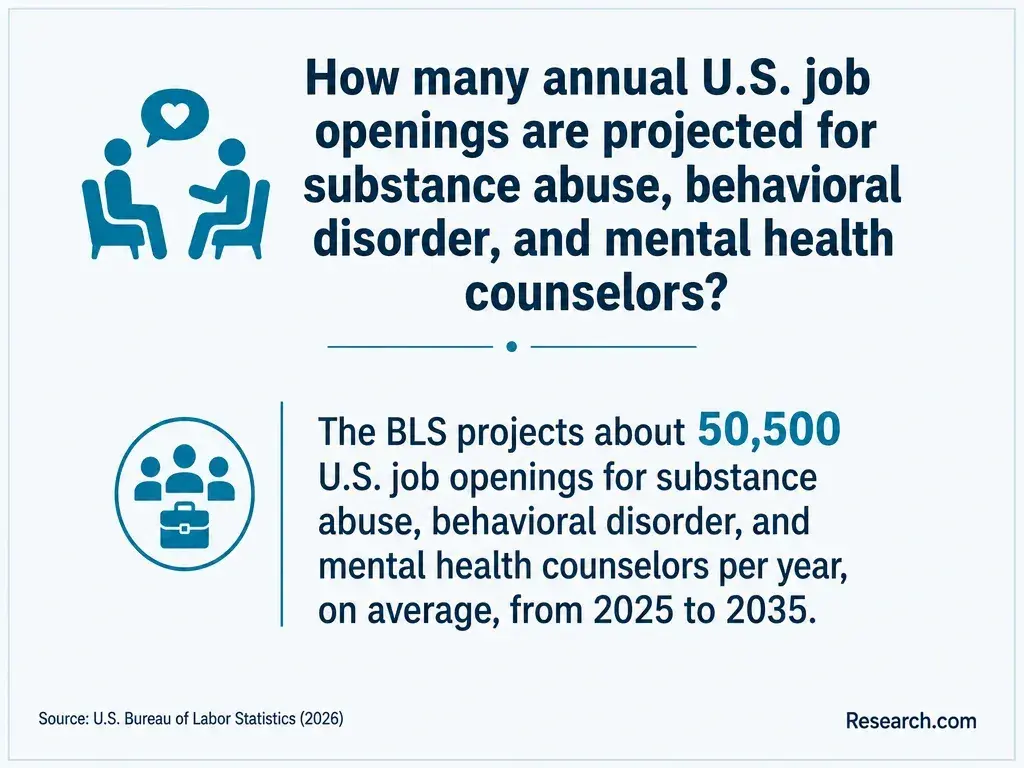
A psychology BA does not qualify its holder to diagnose mental-health conditions, provide psychotherapy, or independently practice as a psychologist. Counselors, clinical social workers, and psychologists follow different qualifying-degree, supervised-practice, examination, and state-licensing pathways. Addiction-counselor and peer-support rules also vary by state.
If you want to run inclusive recreation activities while clinicians handle assessment and treatment, seek clear supervision, referral procedures, and training on confidentiality and crisis escalation. If you want to become a therapist, identify the state and license first, then evaluate a qualifying professional program. Clinical counseling master's duration and earning potential is a separate decision from choosing an undergraduate psychology major.
Online delivery can let an employed leader keep working, but it does not automatically remove fixed meetings or local placement obligations. Compare the actual timetable - not just the "online" label - before deciding whether either format fits your program schedule.
| Decision factor | Online program | Campus-based program |
| Weekly scheduling | May offer asynchronous lessons; live sessions and group work can still be fixed | Regular travel and scheduled classes, with potentially easier face-to-face meetings |
| Applied learning | May require student-arranged, approved local experience | May offer nearby partnerships; placement is not automatic |
| Research access | Ask how remote students join faculty projects | Ask whether projects are open to working students |
A nonclinical BA placement is not a counseling practicum. If licensure-track study is your eventual goal, examine clinical mental health counseling accreditation and pacing separately; its supervised training has different requirements.
Prioritize developmental and social psychology for understanding participants and groups; abnormal psychology for informed, non-diagnostic mental-health literacy; and statistics and research methods for evaluating participation and outcomes. Electives in health psychology, disability, aging, or community psychology may fit your population. Leadership, accessibility, and program budgeting may sit outside the psychology department.
A useful applied assignment might evaluate whether an activity is accessible and reaches its intended audience using authorized, appropriately protected program information. It should not turn a participation measure into a mental-health diagnosis. If you are considering faster routes through forensic psychology graduate coursework for work with justice-involved participants, first check whether that specialization teaches the recreation, safeguarding, and community-program skills your job actually needs.
First-year applicants generally apply under the institution's undergraduate admission rules; transfer applicants submit prior college transcripts for evaluation. A school may admit you while still requiring introductory psychology, statistics, research methods, general education, and upper-division major courses. Prior recreation experience can strengthen your goals statement but does not ordinarily replace required academic credit.
For returning students, request a written degree audit showing not only credits accepted but which requirements they satisfy, when remaining courses run, and any residency requirement. Finding psychology colleges that consider prior credits is a starting point; only the receiving institution can approve your individual equivalencies.
Many bachelor's programs are structured around 120 semester credits, often planned as four years of full-time study. Your remaining time depends on applicable transfer credits, enrollment pace, prerequisites, and course availability. Working full time may make fewer courses per term more sustainable, even if that extends the calendar time.
Compare written estimates for tuition on remaining required credits, mandatory fees, materials, travel, and any unpaid fieldwork. Ask how changing course loads affects financial-aid eligibility and whether your employer offers education assistance. If substance-use counseling is the specific destination, cost-conscious substance use counseling undergraduate options may be more relevant than a broad BA - but verify state credential rules before paying for either.
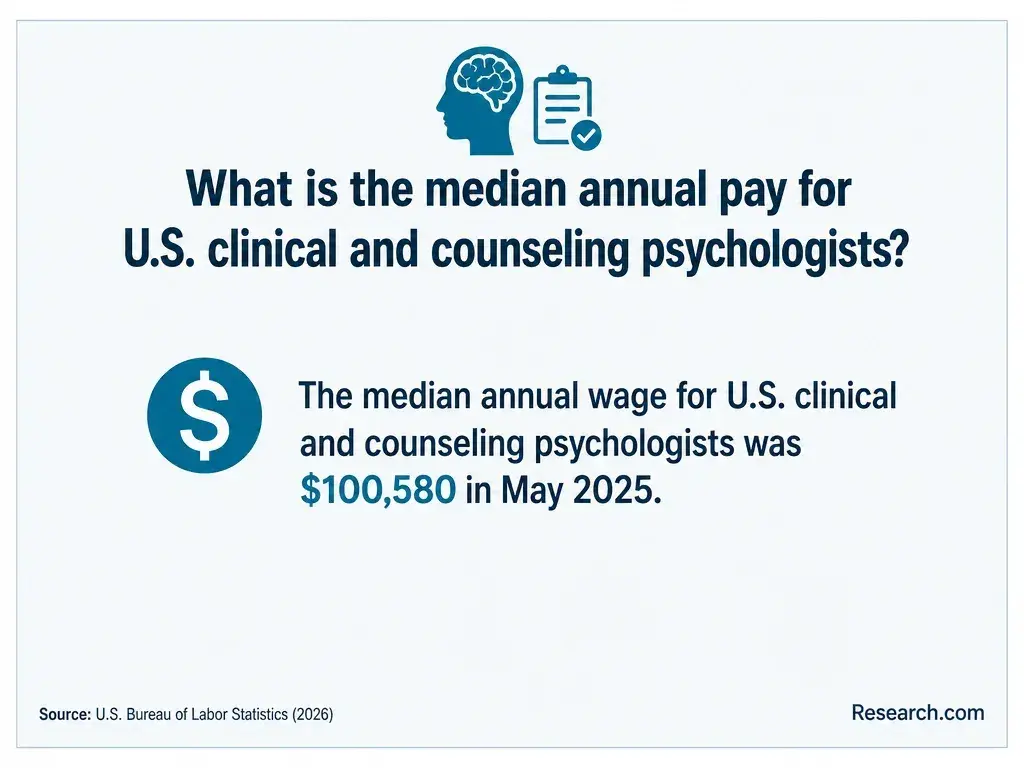
There is no single salary for "psychology and recreation graduates." The US Bureau of Labor Statistics reports wages and employment projections by occupation, not by degree combination. Its recreation workers category is a closer starting point for general activity-program jobs than its recreational therapists category, which describes a distinct occupation. Supervisory positions may also have requirements that entry-level occupational figures do not capture.
Before estimating a return on tuition, check the latest Bureau of Labor Statistics wage and projection figures for your precise target occupation, then compare local job postings for pay, experience, and credentials. Do not treat accelerated forensic psychology master's costs and outcomes as evidence of higher earnings in recreation leadership: that is a different educational and career path.
Choose credentials for a named job, not as a substitute for the degree or license that job requires. Depending on the setting, employers may value first aid and CPR, youth-safeguarding or de-escalation training, and accessibility-related professional development. Recreation-therapy certification and state-specific peer-support or addiction credentials have separate eligibility and scope rules; a psychology BA alone does not confer them.
If your target job includes substance-use counseling rather than activity coordination, comparing degrees in addiction counseling can help you identify education designed for that field. Confirm acceptable coursework and supervised-experience rules with the state credentialing authority before enrolling.
How can you choose an accredited online psychology program?
Verify the institution's current accreditation through its recognized accreditor and confirm that the specific BA, delivery format, and any advertised concentration are offered to students in your location. APA accreditation should not be used as a test for a general undergraduate psychology BA; it applies to specified professional psychology training programs, not every psychology degree.
Then ask an adviser for a course-by-course degree plan, a sample weekly schedule, total remaining-cost estimate, and written rules for internships or workplace-based projects. If you hope to use your present recreation program as an applied-learning site, obtain academic approval before assuming that paid work counts. Compare the result against your target job posting: a shorter certificate or supervised work experience may be the better investment. For a justice-system goal, examine forensic psychology degree formats and academic requirements as a separate option, not an automatic upgrade to recreation-focused preparation.
Other Things You Should Know About Psychology
They can listen respectfully, explain available resources, and follow employer referral and safety procedures. They should not diagnose a participant or present supportive conversation as psychotherapy.
Possibly, but only if the academic program approves the site, supervision, learning objectives, and documentation. Employment alone does not establish internship credit.
Neither label is inherently better. Compare the actual courses, applied opportunities, remaining credits, and any prerequisites for your intended next role or degree.
Not necessarily. Employer requirements, relevant experience, accessibility training, and supervision may matter more. Check postings for your target role before committing to a full degree.
- Behavioral Health Career Descriptions | samhsa.gov https://www.samhsa.gov/about/careers/behavioral-health-workforce/careers-by-state/descriptions
- Semester Course Load and Student Performance - PMC - NIH https://pmc.ncbi.nlm.nih.gov/articles/PMC7568764/
- Program Integrity Questions and Answers - Credit Hour http://www.ed.gov/laws-and-policy/higher-education-laws-and-policy/program-integrity-information-questions-and-12
- Recreation Therapy | Mississippi State Personnel Board https://www.mspb.ms.gov/career-catalog/direct-health-services/recreation-therapy
- How to Become a Therapist: Required Degrees and Types | Pace University New York https://www.pace.edu/news/degrees-to-be-a-therapist
- Employment-Based Practicum Placements | charlotte.edu https://socialwork.charlotte.edu/practicum-education/employment-based-practicum-placements/
- Online Bachelor's Degree (BA) in Psychology - ECU Flight Path https://onlineprograms.ecu.edu/programs/undergraduate-degrees/ba-psychology/
- Credit Hours and Calculation - Office of Online Education | Wake Forest University https://oe.wfu.edu/program-development-2/credit-hours-and-calculation/
- School of Social Work modifies practicum requirements to reduce burden for working professionals | missouri.edu https://healthsciences.missouri.edu/news/school-of-social-work-modifies-practicum-requirements-to-reduce-burden-for-working-professionals/
- What's the Difference Between Asynchronous and Synchronous Learning? | Ohio State Online https://online.osu.edu/content-hub/blogs/whats-the-difference-between-asynchronous-and-synchronous-learning/