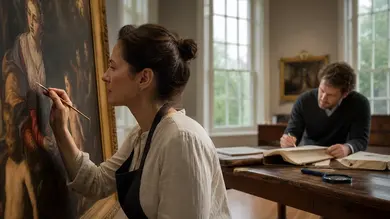
2027 Online Art History Master's Programs With No Personal Statement or Admissions Essay Required

Co-Founder and Chief Data Scientist
Finding an online Art History master's program can be difficult enough; determining whether "no essay" truly means no personal statement adds another layer. This guide is for applicants who want a streamlined graduate application without overlooking academic standards or hidden writing requirements. U.S. Bureau of Labor Statistics data projects 8% growth for archivists, curators, and museum workers from 2023 to 2033, making careful credential selection timely. Learn how to identify genuine no-essay options, compare alternatives, verify requirements, and decide whether simplified admissions fit your goals.
Key Things You Should Know
- A "no personal statement" policy usually means a school does not require a traditional narrative essay; it may still request short answers, a statement of purpose for certain applicants, a résumé, transcripts, recommendations, or writing samples.
- Verified fully online Art History master's programs that clearly waive every admissions essay are uncommon, and policies can change by term; confirm the current graduate application checklist directly with the university before paying an application fee.
- No essay is separate from no GRE and low-GPA admission: schools may still enforce a minimum GPA, prerequisite art-history coursework, graduate-level writing expectations, and institutional accreditation standards.
What Does "No Personal Statement or Admissions Essay Required" Mean for Online Art History Master's Programs?
For an online Art History master's program, "no personal statement required" generally means the application does not require a long autobiographical narrative explaining your background, goals, and reasons for applying. "No admissions essay" can mean the same thing, but the terms are not always used consistently. A school may eliminate one document while retaining another written component under a different name.
A personal statement usually emphasizes the applicant's experiences and motivations. A statement of purpose is often more academic, asking applicants to explain research interests, preparation, faculty fit, or career plans. An admissions essay may be either type. Short-answer prompts are briefer but are still written admissions materials, so applicants should not assume that a no-essay label means an entirely writing-free application.
The comparison below clarifies common labels and the questions applicants should ask before treating a program as a true no-essay option.
| Application label | What it commonly asks for | Does it count as a written requirement? | What to verify |
| No personal statement | No traditional narrative about background and goals | Possibly; another prompt may remain | Whether a statement of purpose or supplemental questions are required |
| No admissions essay | No general application essay | Possibly | Whether program-specific writing, research-interest, or diversity prompts apply |
| No GRE | No Graduate Record Examination score | Yes, unrelated to writing | GPA, prerequisites, and whether scores are optional or accepted |
| Streamlined application | Fewer materials or a simplified portal | Possibly | The complete checklist for the exact degree and entry term |
A streamlined application may make sense for a working professional, career changer, or applicant with clear academic records who does not need an essay to explain their preparation. A more selective application with a statement of purpose can be preferable if you need to address a weak semester, show specialized research interests, or demonstrate readiness for graduate-level art-historical writing.
Which Online Art History Master's Programs Do Not Require a Personal Statement or Admissions Essay?
Applicants should approach claims about no-essay online Art History master's programs cautiously. Fully online master's degrees specifically titled Art History are less common than online degrees in museum studies, art education, arts administration, liberal studies, or interdisciplinary humanities. In addition, universities often publish general graduate-school requirements separately from department-level requirements, and the department may add a statement, writing sample, or research-interest prompt.
Rather than relying on broad "no essay" lists, use the following comparison framework to identify whether an option is genuinely suitable. A school should be considered confirmed only when its current program page or admissions office states that neither a personal statement nor another essay-style substitute is required for the relevant online degree and term.
| Program route | Likelihood of art-history focus | Typical application pattern | Best use case |
| Online M.A. in Art History | Highest | Often requires transcripts and may require a statement or writing sample | Students seeking advanced disciplinary study, research, and art-historical methods |
| Online museum studies master's | Moderate to high | May emphasize professional experience, résumé, and recommendations | Applicants focused on collections, interpretation, exhibitions, or museum operations |
| Online humanities or liberal studies master's | Variable | May offer broader or more streamlined admissions | Students who want art-history electives within an interdisciplinary degree |
| Online arts administration master's | Moderate | Often evaluates professional goals and work experience | Students pursuing nonprofit, cultural-organization, or arts-management work |
Search the exact degree title, not only the university's online catalog. Confirm that the program is fully online, accepts students in your state, and leads to a master's degree rather than a graduate certificate. Applicants comparing streamlined options across fields can also see how admissions and affordability vary among cheapest online data science masters; the key lesson is that a convenient application should never replace a program-level quality review.
What Admission Requirements Do Online Art History Master's Programs Use Instead of an Essay?
When an essay is waived, admissions reviewers still need evidence that an applicant can manage advanced reading, visual analysis, research, citation, and scholarly writing. Transcripts are usually the central substitute because they show prior coursework, grades, degree completion, and academic progression.
The materials below are common alternatives. Their presence and weight differ by institution, degree track, and whether the applicant studied Art History or a related field as an undergraduate.
- Official transcripts: Schools commonly review the completed bachelor's degree, cumulative GPA, upper-level coursework, and grades in Art History, history, studio art, languages, or humanities.
- Prerequisite coursework: A program may require introductory survey courses, art-historical methods, research writing, or specified credits in Art History before enrollment or as conditional admission requirements.
- Résumé or curriculum vitae: This may document museum, gallery, archive, teaching, publishing, nonprofit, or arts-management experience.
- Recommendations: Faculty or supervisors can provide evidence of research ability, writing discipline, professional judgment, and readiness for graduate work.
- Writing sample: Some programs replace a personal essay with a prior research paper, exhibition review, or other analytical work; this is often more academically demanding than a personal statement.
- Interview or short responses: An admissions conversation or brief prompt may be used to confirm goals, availability, and program fit.
Do not confuse fewer documents with fewer standards. An applicant with substantial museum experience but limited Art History coursework may still need prerequisites, while an applicant with strong academic preparation may have a simpler file. In a different professional field, BCBA programs illustrate how required coursework and supervised experiences can matter more than an essay; Art History programs similarly evaluate the preparation most relevant to their curriculum.
Can You Get Into an Online Art History Master's Program With No Essay, No GRE, or a Low GPA?
Yes, it may be possible to find programs combining no-essay and no-GRE policies, but those policies answer different questions. No essay removes one written narrative. No GRE removes a standardized-test submission. Neither policy automatically changes GPA expectations, prerequisite requirements, or the school's ability to request additional materials.
For applicants with a low GPA, the most important distinction is between a published minimum and a competitive academic record. A minimum GPA can establish basic eligibility, but it does not ensure admission when spaces are limited or when a transcript shows little relevant coursework. Some institutions offer conditional, provisional, or holistic review, but the terms, academic conditions, and availability must be confirmed in writing.
Use this comparison to decide which flexibility matters most in your situation.
| Applicant situation | Most useful admissions feature | Important limitation |
| Strong transcript but limited time to write an essay | No personal statement requirement | You may still need a résumé, recommendations, or short answers |
| Strong coursework but no recent test score | No GRE policy | The program may still expect a competitive GPA and prerequisites |
| Lower cumulative GPA with better recent grades | Holistic or conditional review | Admission conditions may require a specified graduate GPA after enrollment |
| Career changer without Art History coursework | Programs with transparent prerequisites | No-essay admission does not waive foundational subject knowledge |
Applicants with a lower GPA should avoid submitting a bare application simply because an essay is optional. If the school permits supplemental information, a concise factual explanation of a documented disruption and evidence of recent academic success can help. If no supplement is allowed, focus on programs whose published criteria genuinely fit your record rather than assuming an advisor can override them.
Are Online Art History Master's Programs With No Personal Statement Easier to Get Into?
Not necessarily. Eliminating a personal statement changes the application process, not necessarily selectivity. A reputable program can use transcripts, prerequisite performance, recommendations, writing samples, and enrollment capacity to make admission decisions. Conversely, a program with an essay may use it primarily to understand research fit rather than to create an artificial barrier.
For Art History, academic readiness matters because graduate courses commonly involve sustained reading, formal visual analysis, research using primary and secondary sources, and discipline-specific citation. A program that does not request a personal statement may place more weight on the transcript or require students to complete foundation courses.
Compare the trade-offs before choosing a simplified pathway.
| Factor | No-essay application | Traditional essay-based application |
| Application time | Often shorter when no substitute writing is required | Usually longer because applicants prepare a tailored narrative |
| Ability to explain context | May be limited | Usually stronger for career changes, academic gaps, or research goals |
| Evidence of writing readiness | May come from transcripts or a writing sample | May come from the statement plus other materials |
| Relationship to quality | No direct relationship | No direct relationship |
A common mistake is choosing the school with the fewest application requirements before checking faculty expertise, course depth, library access, and student support. Students who need to build a broad academic foundation may find that affordable online degree programs at the bachelor's level are a better preparation route than entering a loosely aligned master's degree too quickly.
How Can You Tell Whether a No-Essay Online Art History Master's Program Is Accredited and Reputable?
For most online Art History master's programs, institutional accreditation is the primary accreditation check. Art History does not generally have a universal programmatic accreditor comparable to those used in certain regulated professions. Verify that the university is institutionally accredited by an accrediting agency recognized by the U.S. Department of Education or the Council for Higher Education Accreditation, then evaluate the degree itself.
Accreditation alone is necessary but not sufficient for a sound enrollment decision. Review whether the credential is a master's degree, whether online students receive comparable access to faculty and library resources, and whether the curriculum supports your intended career or doctoral-study plans.
Before applying, complete these checks using the school's current catalog, graduate admissions office, and official accreditation disclosures.
- Confirm the institution's recognized accreditation and verify that the legal university name matches the program's website and application portal.
- Read the online program's curriculum, required credits, delivery format, residency expectations, and course rotation rather than relying on marketing language.
- Review faculty profiles for relevant expertise in the geographic areas, periods, media, theory, or museum practice you want to study.
- Ask whether online students can access academic advising, research databases, librarian support, career services, and disability accommodations.
- Request written confirmation of current admissions requirements, tuition, fees, and any requirement that is described vaguely online.
Be especially cautious if a provider promises admission, presents unclear faculty information, cannot identify its accreditor, or uses a name easily confused with an established university. Simplified admissions should reduce unnecessary friction, not reduce transparency. This scrutiny also applies when comparing technical credentials such as a cybersecurity online degree, where employer recognition and curriculum quality matter alongside delivery speed.
How Much Do Online Art History Master's Programs With No Admissions Essay Cost, and What Financial Aid Is Available?
No-essay admissions do not inherently make a master's program cheaper. Total cost depends primarily on tuition per credit, required credits, technology or distance-learning fees, residency rules, course materials, and whether online students pay the same rate as campus students. Request a written estimate for the entire degree, not only a per-credit figure.
Federal Student Aid reported that the maximum Federal Pell Grant for the 2024-25 award year was $7,395, but Pell Grants are generally for eligible undergraduate students and are not a standard funding source for master's students. Graduate students commonly consider Direct Unsubsidized Loans, Graduate PLUS Loans, employer tuition assistance, institutional scholarships, payment plans, and external scholarships. Loan eligibility and terms depend on federal rules and individual circumstances.
The cost categories below help applicants compare offers on a consistent basis.
| Cost or funding factor | Why it matters | Question to ask |
| Tuition per credit | It is the starting point, but not the full program price | How many credits are required for graduation? |
| Mandatory fees | Technology, library, graduation, and course fees can change total cost | Which fees apply to fully online students each term? |
| Transfer credit policy | Accepted graduate credits may reduce time and tuition | What is the maximum transferable credit amount and approval process? |
| Institutional aid | Scholarships may require separate applications or early deadlines | Are online graduate students eligible on the same basis as campus students? |
| Employer support | Reimbursement can reduce out-of-pocket borrowing | Does the program's schedule and billing format meet employer rules? |
Compare net cost with the career purpose of the degree. Museum and cultural-sector roles can be mission-driven but compensation varies sharply by employer, city, job responsibilities, and prior experience. Career research should be as specific as reviewing a speech language pathologist salary guide for a separate profession: use role-specific pay context, not a generic promise about master's-degree earnings.
How Do You Apply to an Online Art History Master's Program With No Personal Statement Required?
Start with the program's own admissions page for the intended entry term. Graduate-school pages can be incomplete for departmental requirements, and catalog pages may lag behind a new application cycle. Save or print the current checklist so you can compare it with what appears in the application portal.
The following process helps prevent the most common error: discovering a supplemental requirement after the deadline.
- Create a comparison sheet for each program with the degree title, online format, application deadline, total credits, tuition basis, GPA minimum, prerequisites, test policy, and required documents.
- Ask admissions in writing whether the specific online Art History master's application requires a personal statement, statement of purpose, short answers, writing sample, interview, recommendations, or any materials requested after review.
- Order transcripts early and check whether each institution must send them directly to the graduate school or through an approved transcript service.
- Prepare a current résumé and identify recommenders only if the program requires or allows recommendations; do not assume they are unnecessary because an essay is waived.
- Complete the application carefully, disclose prior institutions as required, pay only verified institutional application fees, and retain confirmation records.
- Review the admission offer for conditions, transfer-credit decisions, financial-aid steps, deposit deadlines, and course-start information before accepting.
Applicants should also ask whether the program has synchronous meeting times, group-project expectations, optional residencies, and internship requirements. These details affect whether an online format is practical for your work schedule, caregiving responsibilities, and time zone.
How Long Does an Online Art History Master's Program With No Admissions Essay Take to Complete?
The absence of an admissions essay does not determine program length. Completion time depends on required credits, course sequencing, full-time or part-time enrollment, transfer-credit rules, summer availability, thesis or capstone requirements, and whether a student must first complete prerequisite coursework.
Many master's programs are designed around roughly two academic years of full-time study, while part-time online students may take longer. An accelerated format can reduce calendar time only if courses are available continuously and the workload fits your circumstances. A rapid admission decision should not be confused with a rapid degree timeline.
This planning comparison can help you estimate the practical difference between enrollment patterns.
| Enrollment pattern | Potential advantage | Planning concern |
| Full-time | May complete required coursework sooner | Higher weekly reading, writing, and tuition demands |
| Part-time | Often easier to combine with work or family obligations | Longer completion timeline and possible course-rotation delays |
| Accelerated terms | More frequent starts may offer scheduling flexibility | Condensed courses can require substantial weekly work |
| Thesis or capstone route | Can provide focused research or applied experience | May require additional planning, faculty approval, or a longer final term |
Before enrolling, request a term-by-term course plan. Ask whether required courses are offered every term, whether electives rotate, and what happens if you need to pause. The most affordable or fastest-looking option may not be the best value if a missed course extends graduation by a full year.
Is an Online Art History Master's Degree With No Admissions Essay Worth It for Your Career?
An online Art History master's degree can be worthwhile when it directly supports a defined goal: deeper scholarly knowledge, preparation for museum or cultural-heritage work, teaching advancement where permitted, arts administration, collections-related work, or preparation for later doctoral study. The no-essay feature is valuable mainly as an application convenience; it does not add labor-market value to the degree itself.
The U.S. Bureau of Labor Statistics projects employment for archivists, curators, and museum workers to grow 8% from 2023 to 2033, faster than the average for all occupations. That category covers diverse roles with different entry requirements, and many museum positions weigh internships, collections experience, technical skills, location, and networking alongside graduate education. Use the projection as evidence of broad occupational demand, not as a guarantee of a specific job.
Consider how the degree aligns with the career path you actually want.
| Career direction | How an Art History master's may help | Additional factors to evaluate |
| Museum or gallery work | Builds visual-analysis, research, and historical-context skills | Internships, collections software, exhibition experience, and local hiring networks |
| Archives or cultural heritage | Supports subject expertise and interpretation | Many roles prefer archival training, digital preservation skills, or specialized credentials |
| Arts administration | Provides cultural-sector knowledge and critical communication skills | Budgeting, fundraising, marketing, and nonprofit-management experience |
| Doctoral study | May strengthen research preparation and academic writing | Faculty mentorship, language study, thesis opportunities, and doctoral-program expectations |
A no-essay program is a sensible fit when its curriculum, faculty, cost, and format meet your needs and you already have evidence of academic readiness. Consider a program with a more traditional application if you need to show distinctive research interests, seek close faculty matching, or plan to use the master's as a bridge to a Ph.D. In either case, prioritize curriculum quality and career alignment over admissions convenience.
Other Things You Should Know About Art History
No. A school may waive the personal statement but still ask short-answer questions, a statement of purpose, a writing sample, or an explanation of prerequisite coursework. Read the program-specific checklist and the application portal before assuming there are no written materials.
Sometimes. Programs may reserve the right to request additional information when a transcript is incomplete, an applicant lacks prerequisites, or reviewers need clarification. Ask whether supplemental materials can be requested and whether that policy applies to all applicants or only selected files.
Not always. Some programs accept related humanities, history, studio art, museum studies, or interdisciplinary backgrounds. However, they may require introductory art-history courses, a minimum number of subject credits, or conditional coursework before or during the master's program.
It can support preparation for curatorial work, but qualification depends on the employer and role. Museums may also seek specialized subject expertise, collections or exhibition experience, research ability, internships, language skills, and, for some positions, a Ph.D. or substantial field experience.
References
- Average Cost of a Master's Degree: 2025 Analysis https://educationdata.org/average-cost-of-a-masters-degree
- Graduate Tuition & Financial Aid https://moore.edu/admissions-aid/graduate-students/tuition-financial-aid/
- 2025 Most Affordable Online Master's Programs https://www.onlineu.com/most-affordable-colleges/masters-degrees