2027 Online Applied Business & Technology Bachelor's Degree Completion Programs for Working Adults

Co-Founder and Chief Data Scientist
Finishing a bachelor's degree as a working adult is usually a credit, cost, and scheduling decision—not just a question of finding an online program. Online applied business & technology bachelor's degree completion programs are built for students who already have college credits and want a practical route to a four-year credential without leaving the workforce.
These programs can be useful for community college transfer students, military learners, career changers, supervisors moving into management, and adults whose promotion options are limited by the lack of a bachelor's degree. According to the National Center for Education Statistics, over 40% of students enrolled in online bachelor's completion programs are aged 25 to 39, showing how important flexible completion pathways have become for adult learners.
This guide explains how these programs work, how they differ from traditional four-year degrees, what transfer and prior-learning policies to review, how costs vary by institution, and which questions to ask before enrolling. The goal is to help you choose a program that protects your prior credits, fits your schedule, and supports your career plans.
Key Benefits of Online Applied Business & Technology Bachelor's Degree Completion Programs for Working Adults
- Online applied business & technology programs offer flexible scheduling, enabling working adults to balance professional responsibilities with academic progress seamlessly.
- Fully asynchronous coursework allows students to study anytime without sacrificing income, accommodating unpredictable work hours and family commitments.
- Degree completion programs accelerate graduation timelines by recognizing prior credits, often reducing time by up to 50% compared to traditional four-year degrees.
What Are Online Applied Business & Technology Bachelor's Degree Completion Programs, and Who Are They Designed For?
Online applied business & technology bachelor's degree completion programs are bachelor's pathways for students who have already earned college credit but have not finished a four-year degree. Instead of repeating a full freshman-to-senior sequence, these programs evaluate prior coursework and concentrate on the remaining upper-division business, technology, management, and applied professional courses needed for graduation.
They are especially relevant for adults who need a degree that connects directly to workplace responsibilities. According to the National Center for Education Statistics (NCES), millions of Americans hold some college credits but no credential. Many of these learners are community college transfers, military veterans, working parents, or professionals who started college earlier and now need a bachelor's degree for advancement.
The best fit is usually a student who already has transferable credits, can study independently, and wants a career-focused curriculum rather than a broad residential college experience. These programs often emphasize applied problem-solving, business operations, technology tools, project coordination, data-informed decision-making, and leadership in organizational settings.
- Accelerated structure: Completion programs usually focus on the remaining coursework needed for the bachelor's degree, often emphasizing upper-level classes rather than starting from the first year.
- Transfer-friendly design: Strong programs publish clear transfer policies, accept a substantial amount of prior coursework, and help students avoid retaking equivalent classes.
- Flexible delivery: Many programs are fully online or hybrid, with asynchronous courses, evening options, or shorter terms that make enrollment more realistic for working adults.
- Adult-learner support: Advising, transcript review, military credit evaluation, career services, and prior-learning assessment can make a major difference in whether students finish efficiently.
- Career focus: Applied business & technology curricula are typically designed for practical roles in operations, information systems, project management, analytics, logistics, health informatics, and administrative leadership.
Students searching for easy degrees that pay well should be careful with that phrase. A completion program may be more efficient than a traditional route, but it still requires discipline, writing, quantitative reasoning, technology use, and consistent weekly study. The better question is whether the program gives proper credit for what you have already completed and teaches skills employers can recognize.
How Do Online Applied Business & Technology Degree Completion Programs Differ From Traditional Four-Year Applied Business & Technology Bachelor's Degrees?
The main difference is where the student starts. A traditional four-year bachelor's degree is designed for students beginning with little or no college credit. A degree completion program assumes the student has already finished part of the undergraduate curriculum and needs an efficient path through the remaining requirements.
- Credit requirements: Completion programs generally require around 60 additional credits when transfer credits satisfy general education and lower-division requirements. Traditional bachelor's degrees often require 120 to 130 credits from start to finish and may be less flexible about accepting outside coursework.
- Curriculum sequence: Traditional programs usually move from general education into major courses over several years. Completion programs often begin closer to the major coursework, with applied business & technology classes mapped around prior college credit, professional learning, or military training.
- Time to completion: Students with substantial transfer credit may finish a completion program in one to two years full-time. A traditional bachelor's degree commonly takes about four years for students without significant transfer credit, based on IPEDS data.
- Cost efficiency: Completion programs can reduce total cost because students pay only for remaining credits, though this depends on how many credits transfer, tuition rates, and required fees.
- Student profile: Traditional programs often serve recent high school graduates. Completion programs are more commonly designed for working adults, community college graduates, veterans, and mid-career professionals.
- Recognition of prior learning: Many completion programs consider professional certifications, military training, credit-by-exam, or portfolio assessment. Traditional programs may offer these options, but they are often less central to the program model.
The trade-off is that completion programs may offer fewer campus experiences, fewer electives, and less exploratory time. That is not necessarily a drawback for adults who already know their goals, but it matters for students who want a broad undergraduate experience.
Before choosing between the two formats, ask for a written degree audit. The best program on paper may not be the best program for you if it accepts fewer of your credits than expected. Students comparing online pathways in other fields can also review affordable online MLIS programs to see how pricing, accreditation, and flexibility vary across disciplines.
Which Accredited Universities Offer the Most Affordable Online Applied Business & Technology Bachelor's Degree Completion Programs?
Affordability depends on more than the advertised tuition rate. For degree completion students, the real cost is shaped by transfer credit acceptance, residency requirements, term structure, fees, books, and whether the institution charges different rates for in-state and out-of-state online learners. The following accredited universities are commonly evaluated by adult learners because they combine online delivery with pricing models that can support completion students.
Western Governors University: Western Governors University uses a flat-rate tuition model charging roughly $3,625 per six-month term, with no distinction between in-state or out-of-state students. Its competency-based approach allows students to move ahead by demonstrating proficiency, which may shorten time to degree completion for learners who already know the material. WGU holds regional accreditation from the Northwest Commission on Colleges and Universities (NWCCU), and its business and technology offerings include programmatic accreditation from the Accreditation Council for Business Schools and Programs (ACBSP).
Fort Hays State University: Fort Hays State University offers an online applied business bachelor's completion option at about $226.67 per credit hour for online students regardless of residency. The university is regionally accredited by the Higher Learning Commission (HLC) and maintains ACBSP accreditation for its business degrees. Its lower per-credit pricing can be attractive, but students should still confirm how many credits will apply to the specific major.
University of Central Florida: The University of Central Florida charges approximately $212.35 per credit hour for in-state students and $399.24 for out-of-state learners in its online applied business completion program. UCF is accredited by the Southern Association of Colleges and Schools Commission on Colleges (SACSCOC), and its business programs hold ACBSP accreditation. It may be especially cost-effective for qualifying in-state students.
Central Methodist University: Central Methodist University's online applied business & technology program tuition averages $320 per credit hour with a uniform online rate regardless of residency. The university is accredited by the HLC. Its program structure is built for adults who need transfer credit review, flexible pacing, and practical coursework.
Columbia College (Missouri): Columbia College offers online tuition near $375 per credit hour and has policies that can support transfer students and military learners. The college is regionally accredited by the HLC. Students should compare its transfer evaluation and military credit policies against lower-priced options to determine total value.
Students comparing applied business pathways should look for three affordability signals: a clear transfer-credit maximum, a transparent tuition and fee schedule, and a graduation plan showing exactly how many credits remain. If cost is your first filter and you are open to a broader business major, reviewing the cheapest online business degree options can help you benchmark prices before committing to an applied business & technology completion program.
One adult learner described the process this way: "Navigating the credit transfer process was challenging at first, but the clear guidelines and advisor support made it manageable." He also valued the flexibility of studying around work. "It wasn't easy balancing everything, but knowing I could progress by demonstrating what I already knew kept me motivated." His experience highlights why affordability and academic design should be evaluated together, not separately.
How Many Transfer Credits Can Working Adults Apply Toward an Online Applied Business & Technology Degree Completion Program?
Most online applied business & technology degree completion programs allow a substantial amount of transfer credit, commonly ranging from 60 to 90 semester hours. The exact number depends on the institution, the student's prior coursework, course grades, accreditation of the previous school, residency rules, and whether credits match the new degree requirements.
Credit caps: Many universities limit how many credits can transfer into a bachelor's program. Even when a school accepts 90 semester hours, students still usually must complete a minimum number of credits at the awarding institution to satisfy residency and accreditation expectations.
Credit evaluation: Schools review course titles, descriptions, grades, credit levels, and the accreditation status of prior institutions. A course may transfer as a general elective even if it does not satisfy a major requirement, so students should distinguish between "credits accepted" and "credits applied to the degree."
Articulation agreements: Formal agreements between community colleges and universities can protect students from credit loss. These agreements identify which courses apply toward the bachelor's degree and are especially valuable for students transferring from associate degree programs.
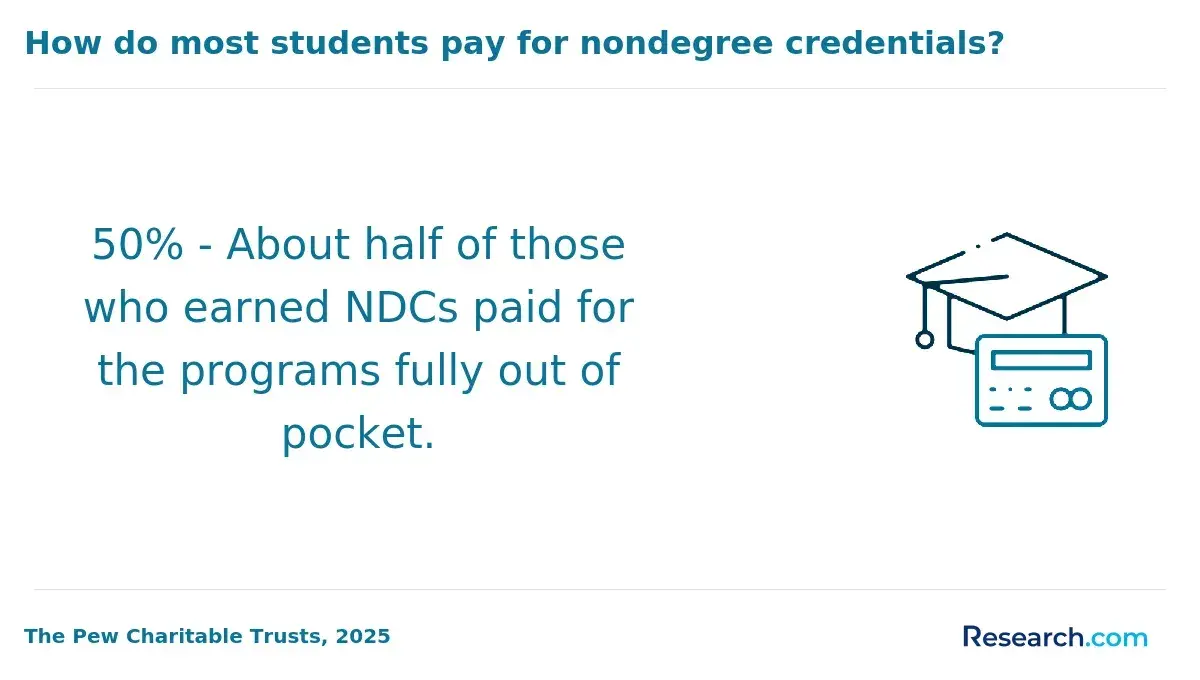
Credit loss risk: According to the U.S. Department of Education's transfer summit, students lose about 40% of credits when transferring between programs. This is why adult learners should request a program-specific transfer evaluation before enrolling, not after paying a deposit.
Military and professional credits: Transfer-friendly programs may accept ACE-recommended credits from military training, corporate learning, and recognized professional certifications. Veterans and experienced workers should ask whether these credits apply to electives only or can satisfy major requirements.
Transcript evaluation: The most important step is to submit official transcripts from every prior institution and request a written degree plan. A verbal estimate is not enough. The plan should identify accepted credits, remaining courses, total cost, expected graduation date, and any courses that must be retaken.
Students comparing business-related transfer pathways can review an online business administration bachelor's degree guide to understand how transfer policies may differ across closely related majors.
What Are the Typical Admission Requirements for Online Applied Business & Technology Bachelor's Degree Completion Programs?
Admission requirements are usually more targeted than those for first-year bachelor's programs because completion programs expect applicants to bring prior college experience. Requirements vary by school, but most programs evaluate whether the applicant has enough transferable credit and academic preparation to begin upper-division coursework.
- Transfer credit hours: Many programs require 24 to 60 transferable college credits. Some expect general education courses to be mostly complete before admission, while others allow students to finish remaining lower-division requirements after enrollment.
- GPA requirements: Applicants commonly need a cumulative GPA between 2.0 and 2.5. More selective programs may set higher thresholds or review recent coursework more closely if the applicant's older grades are weak.
- Official transcripts: Students generally must submit official transcripts from all colleges previously attended. Leaving out a transcript can delay admission or create problems later during degree clearance.
- Program prerequisites: Some applied business & technology programs require introductory coursework in business, computing, statistics, accounting, management, or related areas before students can enter advanced classes.
- Additional materials: Depending on the institution, applicants may need work verification, recommendation letters, a resume, a personal statement, or documentation of professional certifications.
- Open versus selective admission: Open-admission programs may be easier to enter, but students should still assess advising, completion rates, and academic support. Selective programs may require more preparation but can offer stronger structure or recognition.
- Conditional admission: Some schools offer provisional acceptance for students who do not yet meet all requirements. This may involve completing prerequisite or remedial coursework before full admission into the major.
Applicants can strengthen their file by completing missing prerequisites at a community college, improving recent grades, gathering certification records, and preparing a clear explanation of career goals. For working adults, the best application strategy is practical: collect transcripts early, ask for a preliminary credit review, and confirm that admission to the university also means admission to the applied business & technology program.
One graduate described the admission process as a "balancing act" between GPA, credit requirements, and work responsibilities. Conditional admission gave her a way to prove readiness through recommended coursework, while careful transcript preparation and relevant work experience helped her present a stronger application.
How Long Does It Take to Complete an Online Applied Business & Technology Bachelor's Degree Completion Program as a Working Adult?
Completion time depends primarily on three factors: how many credits transfer, how many courses a student can take each term, and whether the program uses accelerated or competency-based formats. A student transferring 30 credits may still need about 90 additional credits, while students bringing in 60 or 90 transfer credits may have a much shorter path. A learner with 90 accepted credits may have only 30 credits remaining and could finish in under a year with full-time study.
Enrollment pace has a major effect. Part-time students taking around six credits per semester may need four to six years to graduate, depending on remaining requirements and whether they enroll in summer courses. Full-time students taking 12 or more credits per term, especially in programs with accelerated eight-week courses, often complete their degrees in approximately two years when they enter with substantial transfer credit.
For many full-time workers, the most realistic plan is two courses, or six credits, per semester plus summer enrollment when possible. A student with around 60 transfer credits following that pattern might finish in roughly three years. Competency-based programs may shorten the timeline for students who can demonstrate prior knowledge quickly, but they require strong self-direction and consistent progress.
Students should build a timeline around their actual weekly availability, not an ideal schedule. Work travel, caregiving, overtime, health issues, and financial interruptions can slow progress. Employer tuition assistance, predictable course rotations, and asynchronous delivery can improve the likelihood of completion. Recent data from the National Student Clearinghouse indicates that over 40% of adult online degree completers highlight flexibility and time-to-degree as key reasons for their program choice.
- More transfer credit usually means a shorter timeline: Students with 60 to 90 accepted credits often finish much faster than those transferring fewer credits.
- Part-time study extends the calendar: Six credits per semester is manageable for many workers, but it can significantly lengthen time to graduation.
- Accelerated terms can help: Eight-week courses allow students to focus on fewer classes at once while still completing more credits across the year.
- Summer enrollment matters: Taking courses year-round can reduce completion time by several months to a full year.
- Competency-based learning is not automatic speed: It helps most when students already know the material and can complete assessments efficiently.
What Financial Aid, Grants, and Employer Tuition Assistance Options Are Available for Online Applied Business & Technology Completion Students?
Online completion students may qualify for many of the same aid options as traditional undergraduates, but eligibility depends on enrollment status, school participation in federal aid programs, satisfactory academic progress, prior borrowing, and whether the student is pursuing an eligible degree. Adults should confirm aid eligibility before enrolling, especially if they plan to attend part time.
- Federal financial aid: Eligible students can apply for Pell Grants and Direct Loans by completing the FAFSA. Adults returning to college should file even if they assume they will not qualify, because schools and states often use FAFSA information for additional aid decisions.
- State grants: Some states offer grants for adult learners, degree completers, or workforce-aligned programs. Availability and eligibility vary by state, so students should check both the state higher education agency and the college financial aid office.
- Institutional scholarships: Colleges may offer scholarships for transfer students, adult learners, online students, veterans, first-generation students, or students in business and technology programs.
- Employer tuition assistance: Under IRS Section 127, employers can provide up to $5,250 annually in undergraduate tuition benefits tax-free. Employees should ask whether the benefit is paid upfront or reimbursed after grades are posted.
- Military and veteran benefits: Veterans and service members should ask how military tuition assistance, GI Bill benefits, and ACE-recommended military credits can be combined with institutional aid.
- Scholarships for adult learners: Some private scholarships and fellowships specifically support adults completing unfinished degrees or preparing for advancement in applied business & technology fields.
Before using loans, compare the total remaining cost with the likely career benefit. A bachelor's degree can support advancement, but borrowing should be tied to a realistic plan for completion. Students should also ask whether dropping below half-time enrollment affects loan eligibility, employer reimbursement, or scholarship renewal.
A practical funding checklist includes filing the FAFSA early, requesting a full cost estimate, asking the employer for a written tuition benefit agreement, checking whether books and fees are covered, and confirming the grade requirement for reimbursement.
How Does Per-Credit-Hour Tuition for Online Applied Business & Technology Completion Programs Compare Across Accredited Institutions?
Per-credit tuition for online applied business & technology completion programs varies widely. National averages are around $350 per credit hour based on NCES and IPEDS data, but individual schools may charge as low as $225 per credit while others exceed $500. For students pricing 60 to 90 credits, tuition can fall in the $21,000 to $31,500 range before fees, books, and other costs.
A program charging $300 per credit hour would total about $18,000 for 60 transfer credits and $27,000 for 90 completed credits under the cost comparison model commonly used by students. However, the lowest per-credit rate is not always the lowest total price. A school that accepts fewer transfer credits may require more paid coursework, and mandatory fees can reduce the value of a low tuition rate.
Students should review the full cost of attendance, not only tuition. Technology fees, proctoring charges, graduation fees, textbooks, and course materials may add $1,000 to $2,000 or more. Some programs also have different rates for in-state and out-of-state students, while others use a flat online rate regardless of residency.
- Compare remaining credits: The most affordable program is often the one that applies the most credits toward your degree, not the one with the lowest advertised tuition.
- Ask for all required fees: Technology, assessment, proctoring, and graduation costs should be included in your estimate.
- Check residency pricing: Out-of-state online tuition can be much higher unless the school offers a flat rate.
- Look at term-based pricing carefully: Flat-rate or competency-based tuition can save money for fast-moving students but may cost more if progress is slow.
- Confirm aid eligibility: A lower-cost school is not automatically better if the program does not fit your aid, employer reimbursement, or military benefit requirements.
Students considering long-term business education may also compare bachelor's completion costs with graduate pathways such as the best online MBA in operations management programs, especially if their career goals include leadership in operations, logistics, or process improvement.
What Prior Learning Assessment and Credit-by-Exam Options Exist in Online Applied Business & Technology Degree Completion Programs?
Prior Learning Assessment (PLA) allows students to earn academic credit for college-level knowledge gained outside a traditional classroom. For adults in applied business & technology programs, PLA can reduce repeated coursework, shorten the path to graduation, and lower total tuition. Policies vary widely, so students should ask which options are accepted, how credits apply, and whether PLA credits count toward major requirements or electives only.
- CLEP and DSST exams: Many institutions accept College-Level Examination Program (CLEP) and DANTES Subject Standardized Tests (DSST) scores for credit. These exams are most useful for general education or introductory subjects a student already knows well.
- Portfolio assessment: Some schools allow students to submit a portfolio documenting professional learning, certifications, projects, training, and work products. A faculty evaluator then determines whether the learning is equivalent to specific college coursework.
- Military and corporate training: ACE-recommended credits can help translate military training and approved corporate education into college credit. This can be valuable for veterans, service members, and employees with substantial workplace training.
- Professional certifications: Business, project management, technology, logistics, and health information credentials may be considered for credit if they align with degree outcomes.
- Maximum credit acceptance: Some online applied business & technology completion programs may accept up to two-thirds of degree credits through PLA, exams, portfolios, ACE evaluations, and transfer coursework combined.
- Documentation standards: Students should gather transcripts, certificates, training records, job descriptions, supervisor verification, project samples, and reflective narratives before starting a portfolio review.
PLA is most valuable when completed early. If students wait until late in the program, they may take courses that could have been satisfied by exam or portfolio. Ask an advisor for a written PLA plan that shows the cost of each assessment, expected credit value, and where the credit applies in the degree map.
Students comparing how different fields handle rigorous online learning can also review ASHA-approved online speech pathology programs as an example of how professional standards shape flexible online education.
How Do Asynchronous Schedules in Online Applied Business & Technology Programs Accommodate Full-Time Working Professionals?
Asynchronous online programs are designed for students who cannot reliably attend live classes at fixed times. Instead of scheduled lectures, students access course materials, assignments, discussions, and exams through a learning platform. This format can work well for full-time employees, shift workers, parents, caregivers, and students in different time zones.
- Flexible access: Students can watch lectures, read materials, complete assignments, and participate in discussions outside standard business hours. This is helpful for workers with rotating shifts or unpredictable schedules.
- Structured deadlines: Asynchronous does not mean self-paced in every case. Most courses still have weekly due dates, discussion windows, quizzes, and project milestones that require steady progress.
- Fewer live attendance conflicts: Compared with synchronous programs, asynchronous courses reduce the risk of missing class because of overtime, travel, childcare, or commuting.
- Less immediate interaction: The trade-off is that students may receive feedback through messages, discussion boards, or recorded comments rather than real-time conversation. Learners who need live accountability may prefer synchronous or hybrid options.
- Eight-week terms: Many online programs use condensed eight-week courses, allowing students to focus on fewer subjects at a time while still completing credits at an accelerated pace.
- Technology expectations: Students should be comfortable using a learning management system, video tools, document sharing, online library databases, and digital communication tools.
- Time management: Successful students usually block study time on a calendar, start assignments before the deadline, track weekly modules, and communicate early when work obligations interfere.
The best asynchronous programs combine flexibility with clear structure. Look for courses with predictable weekly schedules, responsive instructors, accessible tutoring, technical support, and transparent grading rubrics. Flexibility helps only when the program is organized enough for busy adults to plan around it.
What Concentrations and Career Tracks Are Available Within Online Applied Business & Technology Degree Completion Programs?
Many online applied business & technology bachelor's degree completion programs allow students to choose a concentration within the standard 120-credit hour framework. A well-chosen concentration can make the degree more relevant to a student's current job or target role, but students should confirm that the specialization does not add extra credits, delay graduation, or require courses offered only once per year.
- Information Technology Management: This track prepares students for roles involving IT operations, systems coordination, technology planning, and project oversight. Certifications such as PMP and CompTIA are common, and median salaries often exceed $90,000 according to BLS data.
- Health Informatics: Health informatics combines healthcare processes, data systems, compliance, and business operations. This area is growing 15% faster than average, with certification options including Registered Health Information Administrator (RHIA).
- Supply Chain and Logistics: This concentration focuses on purchasing, distribution, inventory, transportation, process improvement, and operations management. It can support roles such as logistics manager, with salaries near $76,000. Certifications like Certified Supply Chain Professional (CSCP) are often relevant.
- Business Analytics: Business analytics emphasizes data interpretation, reporting, performance measurement, and decision support. Roles such as business analyst offer steady employment and median pay around $85,000.
- Project Management: Project management coursework covers planning, budgeting, risk management, scheduling, communication, and team coordination. It can support preparation for PMP certification, which may improve salary and job prospects.
Students should choose a concentration by working backward from the job they want. Review job postings in your region, note required software and certifications, and ask whether the program's courses map to those expectations. A concentration is valuable when it strengthens your resume without increasing cost or time to completion.
What Graduates Say About Online Applied Business & Technology Bachelor's Degree Completion Programs for Working Adults
-
: "Choosing this applied business & technology program was a game-changer for me. The clear structure and accreditation standards gave me confidence that employers would value the degree. The flexible transfer credit policy also helped me use my previous coursework instead of repeating material, which saved time and money.
— Joey"
-
: "What stood out most was how the program recognized prior learning through competency exams and portfolio reviews. It made the process feel personalized and respectful of what I had already learned through work. The tuition model was transparent and affordable, which made it easier to commit while balancing my job and classes.
— Morgan"
-
: "As a professional looking to advance, I paid close attention to alumni outcomes before enrolling. Graduates described career growth and increased earning potential after completion. The mix of practical business and technology skills matched what employers expected, and the transfer credit process helped me finish faster.
— Hudson"
Other Things You Should Know About Applied Business & Technology Degrees
In 2027, online applied business & technology bachelor's degrees are widely accepted by employers and graduate schools, as long as they are from accredited institutions. These programs are valued for fostering self-discipline, time management, and technological proficiency—skills highly regarded in the job market and academic advancement.
Most online applied business & technology degree completion programs offer tailored academic advising to help working adults navigate transfer credits and degree requirements. Students often have access to virtual tutoring, writing centers, and technical support. Career services typically include resume workshops, interview preparation, job placement assistance, and networking events adapted for online students.
Yes, some institutions offer flat-rate tuition or subscription-based models that allow students to pay a fixed amount for unlimited course access during a term. This can benefit working adults who want to accelerate their studies and control costs. However, traditional per-credit tuition remains the most common billing method, so students should carefully compare pricing structures.
References
- Online Degrees for Working Adults: Balance School and Career https://online.hilbert.edu/blog/online-degrees-for-working-adults/
- Find a Center https://www.brighthorizons.com/employers/benefits/employer-tuition-assistance
- Employers that Will Help Pay for College | Edvisors https://www.edvisors.com/blog/companies-with-college-tuition-reimbursement/
- The Best Online Degrees for Working Adults [Complete Guide] https://beal.edu/best-online-degrees-for-working-adults/
- How to Finance Your Online Studies – Part 1 | Tomorrow University https://www.tomorrow.university/blog/financing-options-for-prospective-tomorrow-university-students
- Financial Aid For Online Colleges https://www.affordablecollegesonline.org/financial-aid/financial-aid-for-online-colleges/
- Asynchronous Education vs Fixed Schedule Online Classes: Which Works for Working Professionals https://puie.ac/asynchronous-education-vs-fixed-schedule-online-classes-which-works-for-working-professionals/
- Credit for Prior Learning - Starting with Credits: Transfer, AP & More | Ozarks Technical Community College https://ozarkstech.edu/admissions/starting-with-credits/getting-credit-for-what-you-know/
- Online College Tuition Comparison: Online vs. In-Person https://www.uagrantham.edu/blog/online-college-tuition-comparison-online-vs-in-person/
- How fast can you get a bachelor's degree online? https://www.boisestate.edu/online/2025/01/27/how-fast-can-you-get-a-bachelors-degree-online/