2027 Online Aerospace Engineering Degree Programs With No Letters of Recommendation Required

Co-Founder and Chief Data Scientist
Applicants who do not have recent professors or supervisors to recommend them may find aerospace engineering admissions unnecessarily difficult. Online options with no required recommendation letters can reduce that barrier, particularly for working adults and career changers.
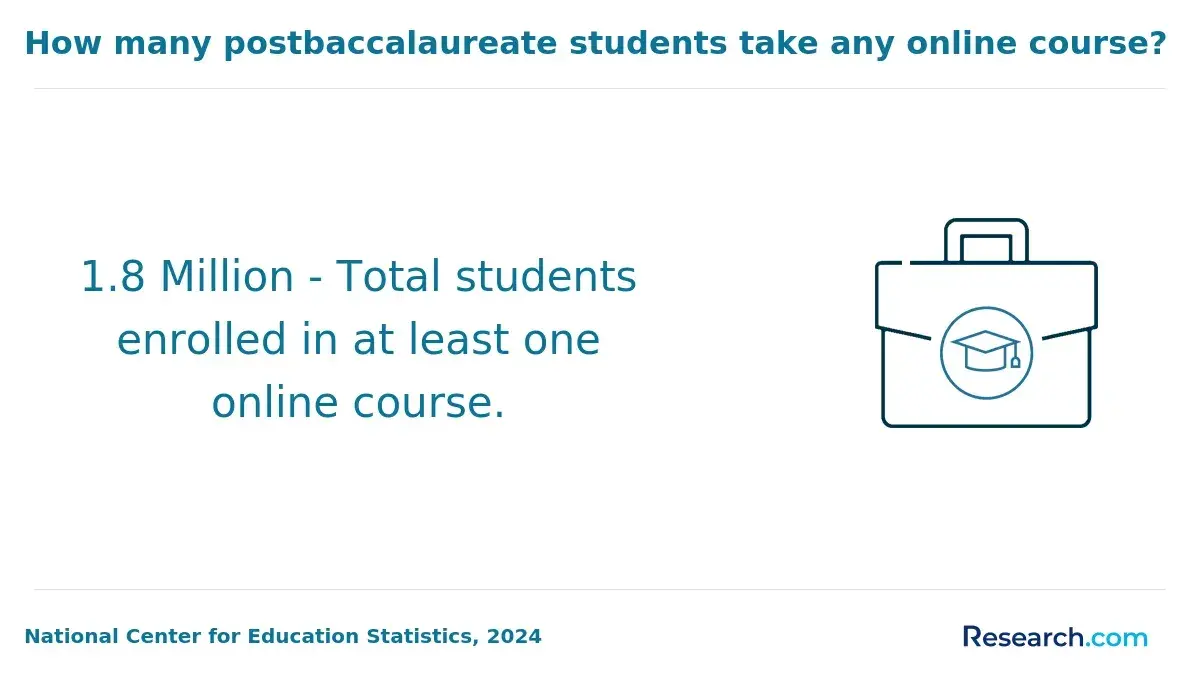
National Center for Education Statistics data show that more than half of U.S. postsecondary students took at least one distance education course in the most recently reported enrollment data. This guide explains how to locate legitimate programs, verify the exact admissions policy, compare academic quality, estimate costs, and decide whether streamlined admissions fit your engineering goals.
Key Things You Should Know
- "No letters of recommendation required" means an applicant can submit a complete application without references; it does not mean letters are merely optional, waived only for some applicants, or that transcripts, prerequisite courses, GPA, and other materials are unnecessary.
- Fully online aerospace engineering degrees are less common than online engineering management, systems engineering, or aerospace-focused graduate certificates. Undergraduate programs often use centralized admissions without recommendations, while many research-oriented master's programs still require two or three letters.
- Prioritize institutional accreditation and, for an engineering degree leading toward licensure or traditional engineering roles, ABET programmatic accreditation. Compare the total price, required labs or residencies, transfer policy, curriculum, and career alignment - not just the absence of recommendation letters.
Which Online Aerospace Engineering Degree Programs Require No Letters of Recommendation?
The clearest no-recommendation opportunities are usually online bachelor's-completion programs and some professionally oriented engineering master's programs that use centralized graduate admissions. Aerospace engineering is a specialized field, however, so applicants should expect a smaller pool of fully online options than in mechanical, electrical, or systems engineering.
A school's general online admissions page is not enough. The controlling source is the application checklist for the exact degree, concentration, term, and applicant type. Requirements can differ for first-year, transfer, international, certificate, nondegree, and graduate applicants.
| Program type | Likelihood of no required letters | What to verify | Best fit |
| Online bachelor's degree or degree-completion pathway | Often more likely | Whether aerospace engineering is fully online, ABET status, math and science prerequisites | Transfer students and applicants without academic references |
| Online master of engineering | Sometimes possible | Whether the professional program has a separate checklist from the research M.S. | Working engineers seeking advanced technical coursework |
| Online M.S. in aerospace engineering | Less likely | Letters, faculty research expectations, GRE policy, thesis or nonthesis track | Applicants considering research, doctoral study, or specialized design work |
| Graduate certificate in aerospace topics | Often more likely | Whether credits can later apply to a degree and required prerequisites | Professionals testing graduate-level study before committing |
Use the table as a screening tool rather than proof of eligibility. A school may list recommendations as "not required" for one online engineering credential while requiring them for its aerospace M.S. or for applicants below a stated GPA threshold.
Begin with the institution's current checklist, then email admissions a precise question: "For the online aerospace engineering program for my intended start term, are recommendation letters required for a complete application?" Save the written response and confirm it again before submitting.
Students still building quantitative preparation may also benefit from reviewing an online mathematics degree pathway, especially when calculus, differential equations, or linear algebra prerequisites are missing.
What Are the Admission Requirements for Online Aerospace Engineering Degree Programs With No Recommendation Letters?
Removing recommendation letters usually simplifies only one part of the application. Aerospace engineering remains mathematically intensive, and legitimate programs commonly use prior coursework and academic performance to determine whether an applicant can succeed in advanced mechanics, propulsion, aerodynamics, structures, controls, or orbital mechanics classes.
The materials below are common substitutes or companion requirements. They vary by degree level and school, so applicants should treat them as a planning checklist rather than universal rules.
- Official transcripts showing prior college work, cumulative GPA, and completion of required mathematics, physics, and engineering courses.
- An application form and fee or fee-waiver request, plus proof of identity or residency when applicable.
- A statement of purpose, short-answer responses, or an academic-goals essay explaining preparation and intended use of the degree.
- A current résumé, particularly for professional master's programs that value engineering, aviation, defense, manufacturing, software, or technical project experience.
- Prerequisite documentation such as calculus sequences, calculus-based physics, programming, statics, dynamics, thermodynamics, or fluid mechanics.
- GRE scores only when the specific program requires or accepts them; many programs have changed testing policies, so never assume a waiver is permanent.
Applicants with a nonengineering bachelor's degree should ask whether prerequisites must be completed before enrollment or may be taken conditionally. Conditional admission can be useful, but it may add time and tuition and may not provide the same course access as regular admission.
For an undergraduate route, compare broad online institutions carefully rather than assuming all remote degrees provide the laboratory depth needed for engineering. A list of cheap online universities can help with initial cost research, but affordability should be considered alongside aerospace-specific curriculum, faculty access, and recognized accreditation.
Are Online Aerospace Engineering Programs With No Letters of Recommendation Easier to Get Into?
Not necessarily. A no-recommendation policy reduces an administrative hurdle; it does not automatically reduce academic standards. Admissions teams may place greater weight on transcript quality, prerequisite grades, cumulative GPA, quantitative preparation, technical work history, and the clarity of an applicant's goals.
Professional, course-based programs may be designed for experienced engineers and therefore focus more on evidence of readiness than on faculty endorsements. By contrast, a research-focused M.S. may request letters because faculty need evidence of research potential, writing ability, persistence, and fit for thesis supervision. Neither model is inherently more rigorous.
| Admission feature | What it may indicate | What an applicant should do |
| No letters required | Streamlined file review or centralized admissions | Confirm the policy applies to the exact program and term |
| Strong prerequisite requirements | Academic readiness remains central | Review transcripts course by course before applying |
| Required statement or résumé | The school assesses goals and professional preparation directly | Connect past experience to the program's technical curriculum |
| Selective course sequencing | Enrollment capacity or advanced-course readiness may be limited | Ask about access to required courses and expected completion time |
A common mistake is equating a simpler application with guaranteed acceptance. Instead, use the published minimums as a baseline, identify any weaknesses in calculus, physics, or engineering fundamentals, and ask whether the program can review unofficial transcripts before you pay an application fee.
Without recommendation letters, admissions reviewers need other credible evidence that an applicant can manage advanced technical work. The strongest applications make that evidence easy to find: accurate transcripts, a focused résumé, and a concise explanation of the applicant's academic preparation and goals.
For graduate applicants, the following materials often carry the most weight because they demonstrate readiness more directly than a generic reference can.
- Academic record: Grades in calculus, differential equations, physics, programming, mechanics, fluids, thermodynamics, and related engineering coursework can show technical foundation.
- Statement of purpose: A useful statement identifies a specific aerospace interest, such as flight dynamics, propulsion, spacecraft systems, structures, or autonomy, and links it to prior preparation.
- Professional résumé: Engineering design, simulation, CAD, MATLAB or Python work, testing, quality assurance, manufacturing, aviation maintenance, military technical experience, and project leadership may provide relevant context.
- Portfolio or work sample: When permitted, a concise project summary, technical report, code repository description, or design artifact can demonstrate applied ability without disclosing proprietary employer information.
- Prerequisite performance: Recent strong grades in required quantitative courses can help applicants whose older GPA does not reflect their present ability.
Do not send extra materials unless the school permits them. An admissions office may not review unsolicited portfolios, and confidential employer work should never be uploaded without authorization. If your record needs context, use the designated essay or optional-information field rather than relying on an unsupported explanation in a résumé.
Aerospace careers can include aircraft and spacecraft design, testing, systems integration, manufacturing, simulation, and mission operations. The U.S. Bureau of Labor Statistics reports a national median annual wage of $130,720 for aerospace engineers in its most recently published occupational wage data.
That figure describes the occupation rather than the outcome of any one online degree; job prospects depend on degree level, experience, location, citizenship or security-clearance eligibility for certain roles, and the employer's requirements.
Accreditation and program design matter more than a streamlined application. Institutional accreditation indicates that the college or university has been reviewed by a recognized accrediting body. ABET accreditation, when available for the specific engineering program, evaluates an engineering curriculum against field-specific standards and can be especially important for students who may pursue licensure or employers that prefer an accredited engineering degree.
Check these items before applying. They help separate a genuinely accessible program from one that is unclear about recognition, cost, or academic delivery.
- Verify the institution's accreditation in the U.S. Department of Education or Council for Higher Education Accreditation databases.
- Search ABET's official program database for the exact degree title and delivery location; do not assume a campus program's accreditation automatically covers a distinct online program.
- Read the curriculum and confirm how laboratory, design, team-project, proctoring, and software requirements are completed remotely.
- Confirm that the institution awards the degree and that the transcript does not misrepresent the program or imply accreditation it does not hold.
- Ask whether the online degree meets educational requirements for engineering licensure in the state where you expect to work, if licensure is part of your plan.
- Review tuition, mandatory fees, refund rules, state authorization, student support, and the written no-recommendation admissions policy.
Engineering licensure is regulated by state boards, and requirements commonly include education, examinations, experience, and other conditions. An online degree may be suitable for many aerospace roles without leading directly to Professional Engineer licensure, but students interested in public-facing engineering responsibility should confirm their state board's rules before enrolling.
Be cautious when a provider promises admission, employment, security clearance, transfer credit, or licensure. Other red flags include missing faculty biographies, vague course descriptions, pressure to enroll immediately, unclear total pricing, and claims of "accreditation" that do not name a recognized accreditor. Comparing established providers among the most popular online colleges can be a useful starting point, but program-level verification remains essential.
No-recommendation admissions do not determine tuition. Cost depends on degree level, residency rules, credit requirements, public or private control, required software, laboratory kits, proctoring, campus residencies, and whether prior credits transfer. Request a written estimate for the full program rather than comparing only the advertised per-credit figure.
The cost categories below show why two programs with similar tuition can have very different total prices.
| Cost category | Why it matters | Question to ask |
| Tuition per credit | Forms the largest recurring charge | Is the rate fixed for online students, and how often can it change? |
| Required credits | Determines the tuition base | How many credits remain after transfer or prerequisite review? |
| Mandatory fees | May include technology, distance-learning, graduation, or student-service charges | Which fees apply each term and which are one-time? |
| Course materials and technology | Engineering software, computing equipment, books, and lab materials can add expense | Are licenses supplied, discounted, or required to be purchased? |
| Travel and residency costs | Some programs require on-campus labs, intensives, or presentations | Are any visits mandatory, and are travel expenses included in the estimate? |
For context, the College Board's published average tuition and fees for public four-year in-state undergraduate students for the current academic-year estimate is $11,610. That national benchmark is not an aerospace program price and excludes living costs, but it illustrates why applicants should compare the total credit load and all fees rather than relying on a single tuition label.
If management education is part of your long-term plan, compare it separately from engineering tuition. Resources on cheapest MBA programs may help later-career applicants evaluate a business credential, but an MBA does not replace the technical preparation required for aerospace engineering coursework.
Yes. A no-recommendation application process generally does not affect eligibility for federal student aid. Students at eligible institutions may submit the Free Application for Federal Student Aid (FAFSA) to determine potential eligibility for federal grants, work-study, and Direct Loans. Eligibility depends on the student, program, enrollment level, satisfactory academic progress, and other federal rules - not on whether letters were requested.
Online students should check the following funding details before accepting an offer.
- Confirm that the exact online program is eligible for federal aid and that the school has your correct program and enrollment information.
- Compare grants and scholarships first, then review federal loan terms before considering private loans.
- Ask whether part-time enrollment changes aid eligibility, disbursement timing, or the expected completion schedule.
- Ask employers about tuition assistance, reimbursement caps, grade requirements, service commitments, and whether approval is needed before classes begin.
- Review whether graduate assistantships are available to online students; many are limited, especially in nonthesis or fully remote programs.
Do not choose a program based solely on a scholarship headline or a low monthly payment. Compare net price, borrowing needed through completion, interest accumulation, and the likelihood that the curriculum supports your intended career move. An employer-funded master's degree can be valuable, but only if the course schedule and reimbursement conditions are workable.
Completion time depends on degree level, transfer credit, prerequisites, course sequencing, and the number of credits taken each term. Admissions simplicity does not shorten the academic pathway: aerospace courses often build in sequence, and advanced classes may require earlier work in mathematics, physics, programming, mechanics, or thermodynamics.
| Credential | Typical academic structure | Factors that can extend completion |
| Bachelor's degree | Usually about 120 semester credits | Missing general education, calculus or physics sequences, limited transfer acceptance, required labs |
| Bachelor's completion program | Remaining credits vary by transcript evaluation | Upper-division residency requirements and engineering prerequisites |
| Graduate certificate | Often a short set of graduate courses | Prerequisites, course availability, and part-time study |
| Master's degree | Commonly a structured graduate curriculum with capstone, project, or thesis options | Thesis requirements, prerequisite deficiencies, team projects, and taking one course at a time |
Ask for a sample part-time course plan before enrolling. It should show when required courses are offered, whether summer study is available, how long a leave of absence may delay progress, and whether a capstone has synchronous or residency expectations. Working adults should choose a pace that protects performance in foundational quantitative courses rather than enrolling in the maximum course load by default.
Students moving toward technical leadership may eventually compare management credentials such as an AACSB online MBA. That is a separate educational decision: an aerospace engineering degree develops technical depth, while a business program generally develops management and organizational skills.
Many online programs evaluate transfer credit, but acceptance is never automatic. Schools commonly review official transcripts, course descriptions, credit age, grades, accreditation of the sending institution, and equivalency to their own curriculum. Engineering programs may also require that key upper-division courses be completed at the degree-granting institution.
Transfer review is especially important in aerospace engineering because foundational courses must align closely. Calculus-based physics, statics, dynamics, mechanics of materials, programming, fluid mechanics, and thermodynamics may be evaluated differently from general elective credit.
Take these steps before making an enrollment commitment.
- Send official transcripts early and request a written preliminary or formal transfer evaluation.
- Keep syllabi, catalog descriptions, lab outlines, and major assignments for technical courses that may need departmental review.
- Separate transferable general education credit from major requirements; a high transfer total does not necessarily reduce aerospace core requirements.
- Ask about minimum grades, time limits on older math and science courses, and whether credit by examination is accepted.
- Confirm the number of credits that must be completed through the institution and obtain an updated degree plan in writing.
A frequent mistake is enrolling based on an informal estimate from a recruiter or a generic transfer tool. Wait for the institution's official evaluation, then calculate remaining credits, required prerequisites, and realistic completion time. If a program cannot explain how your courses map to the degree, it is not yet possible to compare its price accurately.
How Should You Compare Online Aerospace Engineering Degree Programs That Do Not Require Letters of Recommendation?
Compare programs in the order that protects your long-term options: legitimacy and curriculum first, then admissions fit, total cost, flexibility, and support. The best choice is not necessarily the program with the fewest application materials; it is the one that provides the technical preparation, recognition, schedule, and value needed for your intended role.
Use these comparison questions when speaking with admissions staff or reviewing program materials.
- Is the credential a bachelor's degree, master's degree, or certificate, and does it match the education level employers expect for my target role?
- Does the exact online program hold institutional accreditation, and does it have ABET accreditation where that distinction matters?
- Are recommendation letters truly not required for my applicant category, term, and degree track?
- What GPA, mathematics, physics, engineering, programming, résumé, statement, and test-score requirements still apply?
- How are laboratories, capstones, design reviews, examinations, group projects, and faculty office hours delivered online?
- What is the complete estimated cost after transfer credit, including fees, software, materials, and any travel?
- Which courses are offered each term, and what is the realistic part-time completion plan?
- What career services, internship support, technical networking, and alumni access are available to online students?
For many aerospace roles, employers focus on demonstrated technical competence, degree relevance, project experience, and the institution's reputation rather than on whether admissions required recommendation letters. Build employability during the degree through relevant projects, internships when feasible, technical portfolios, professional communication, and skills in modeling, programming, analysis, testing, or systems engineering.
A no-recommendation online aerospace engineering program is most suitable for qualified applicants who can document their preparation through transcripts and experience but lack convenient references.
It may be a poor fit for someone seeking research mentorship, a thesis-based pathway, or a program that clearly requires faculty recommendations for doctoral preparation. In those cases, taking a recent prerequisite course, completing a technical project, or cultivating current academic and professional contacts may widen your options.
Other Things You Should Know About Aerospace Engineering
Often, yes. Working adults are a major audience for streamlined admissions. Expect the school to review prior transcripts, especially quantitative prerequisites, and possibly request a résumé or statement explaining your experience and goals. Ask whether older calculus and physics courses remain valid.
Some do, particularly professional programs, but admission may be conditional on completing prerequisites. The required background can include calculus, differential equations, calculus-based physics, programming, and core engineering science. Request a prerequisite evaluation before applying.
Only if the program explicitly accepts optional letters and you have strong, relevant references. Unrequested materials may not be reviewed. A focused statement, accurate résumé, and complete transcript are usually more useful when the application has no recommendation field.
Check when you create your application, again before submission, and whenever you defer to a later term. Requirements can change by academic year, degree track, and applicant type. Rely on the current program checklist and written confirmation from admissions rather than third-party summaries.
- Recommender guide https://www.commonapp.org/counselors-and-recommenders/recommender-guide/
- College Admissions Rec Letters are a Waste of Time - Tex Admissions https://www.texadmissions.com/blog/2025/5/1/college-admissions-recommendation-letters-are-a-waste-of-time
- ABET https://www.abet.org/accreditation/find-programs/