2027 NICU vs Pediatric ICU Nursing: Daily Work, Schedules, and Career Fit
Audited and Verified:
Our Editorial and Data Verification Process
Research.com uses government datasets, official education statistics and primary institutional information to support its career and degree guides. Our review process checks factual accuracy, occupational definitions, source dates and the requirements associated with the credentials discussed.
How This Article Was Fact-Checked
Our editorial team verifies salary estimates, employment projections, education requirements and program information against original data providers and official organizations. Salary figures are checked against the relevant occupational definitions and reporting periods. Information about licensure, accreditation and required in-person training is reviewed separately.
Fact-checked and verified on:

Co-Founder and Chief Data Scientist
Choosing between a neonatal intensive care unit (NICU) and a pediatric intensive care unit (PICU) means choosing different patients, clinical problems, and ways of working with families. For nursing students, new graduates, and RNs considering a specialty change, the best fit depends on more than which age group you prefer.
This comparison explains what a shift can involve, how schedules and preparation differ, and which questions to ask before accepting a position or choosing a training pathway.
Key Things You Should Know
- NICU nurses care for newborns, including premature infants; PICU nurses care for critically ill infants, children, and adolescents. Both roles require an RN license and supervised specialty onboarding.
- Both units commonly staff 12-hour shifts, including nights, weekends, and holidays. Actual assignments and schedules depend on acuity, staffing, and the hospital.
- There is no universal NICU or PICU pay scale or nationally required specialty certification for every staff RN. Compare local offers and employer requirements rather than assuming one specialty pays more.
What is the difference between NICU and pediatric ICU nursing?
The central difference is the patient population and the conditions that bring patients to intensive care. NICU nurses primarily care for newborns who may need support because of prematurity, birth complications, or congenital conditions. PICU nurses care for children with a wider age range and a broader mix of acute illnesses, injuries, and postoperative needs. Hospital admission policies determine where an individual infant receives care.
This comparison highlights the work most likely to affect career fit; neither column describes every patient or every hospital:
| Decision factor | NICU | PICU |
| Patient population | Newborns, often including premature infants | Infants through adolescents, according to hospital policy |
| Common clinical focus | Newborn adaptation, growth and feeding, respiratory support, and developmental care | Acute illness or injury, postoperative recovery, and support for unstable organ systems |
| Family partnership | Teaching and supporting caregivers who are learning to care for a newborn | Including the child when developmentally appropriate and supporting caregivers during sudden or ongoing illness |
| Continuity | Some infants remain hospitalized for weeks or longer | Admissions may turn over quickly, though some children have prolonged stays |
A preference for newborn care may point toward the NICU; interest in a wider developmental range and more varied diagnoses may point toward the PICU. Neither role is simply the more advanced version of the other. Both are RN critical-care roles; a hybrid practical nursing study option does not, by itself, prepare someone for an RN position in either unit.
What does a NICU nurse do during a typical shift?
A NICU shift usually begins with handoff, review of each newborn's condition and care plan, and checks of assigned equipment. Throughout the shift, the RN assesses the infant, monitors for changes, administers prescribed treatments, documents care, and communicates concerns to the neonatal team. Feeding support, skin-to-skin care when appropriate, and helping caregivers learn their infant's cues may be substantial parts of the work.
The balance changes with acuity. A nurse assigned a critically unstable infant may spend much of the shift on close monitoring and rapid team communication; another assignment may involve several infants progressing toward discharge. Unit policy and staffing determine assignments—not a universal patient-to-nurse ratio.
NICU nursing can be a strong fit if you value precise observation and helping families build confidence over time. It may be less appealing if you want frequent changes in patient age and diagnosis. Nurses who later want to leave bedside care should distinguish that goal from specialty onboarding; nonclinical DNP specialization options address different career aims, not NICU staff-RN preparation.
What does a pediatric ICU nurse do during a typical shift?
A PICU nurse also starts with handoff, assessment, equipment checks, and a plan for monitoring and treatment. The work may then involve responding to changes in a child's condition, coordinating with respiratory therapists and other clinicians, managing prescribed therapies, preparing for procedures, and explaining care to caregivers. Communication changes with the patient's age: a school-age child or teenager may be able to describe symptoms, ask questions, and participate in care decisions.
PICU assignments can shift quickly when a new admission arrives or a patient deteriorates. The role can suit nurses who enjoy varied diagnoses, rapid reprioritization, and working with both children and their families. It also requires comfort with emotionally difficult events and with adapting communication across developmental stages.
Interest in children's mental health is valuable in either unit, but it is not the same career path as becoming a psychiatric nurse practitioner. For an RN considering that separate advanced practice goal, psychiatric NP certificate coursework options involve different entry qualifications and supervised preparation.
Expect more similarity in scheduled hours than in the pace of a shift. Hospital NICUs and PICUs operate around the clock. Twelve-hour day and night shifts are common, but some employers use other shift lengths or rotating schedules. A three-shift, 12-hour pattern totals 36 scheduled hours before handoff time, meetings, overtime, or on-call obligations; it does not guarantee the same three days off each week.
Ask about weekend and holiday rotations, self-scheduling rules, shift changes, and whether the unit requires nurses to float. A NICU's long-stay patients may create more continuity across shifts, while a PICU may have more abrupt changes in diagnoses and admissions. Either unit can have unpredictable, high-acuity days. Orientation may also follow a different schedule from the position you eventually hold.
If you plan to study while working, compare required live sessions, campus visits, and clinical commitments with your actual roster—not just an advertised online format. Even DNP programs organized by completion time cannot show whether a particular nurse's shift pattern will accommodate their required coursework.
Staff NICU and PICU nurses are registered nurses. The usual starting path is to complete an approved prelicensure nursing program, meet the state board's requirements, pass the NCLEX-RN, obtain an RN license, and then qualify for a hospital position. Employers set their own degree and experience preferences: some hire new graduates into structured critical-care orientations, while others prefer prior pediatric, neonatal, or acute-care experience.
An associate degree in nursing or a Bachelor of Science in Nursing can be a route to initial RN licensure when the program meets applicable requirements. An RN-to-BSN program instead assumes the student is already an RN; it does not replace initial licensure preparation. Applicants who already hold a non-nursing bachelor's degree can also investigate comparing ABSN entry requirements, including science prerequisites and clinical attendance.
A degree and license establish eligibility to seek RN work, not independent competence with neonatal or pediatric intensive care. Ask employers how long orientation lasts, how preceptors assess progress, and what happens if a new nurse needs more supervised practice.
An active RN license is the essential practice credential. There is no single national specialty certification required of every NICU or PICU staff nurse. Employers may require life-support training, such as neonatal resuscitation preparation for NICU roles or pediatric life-support preparation for PICU roles, on hire or within a specified period. Check the exact course, provider, and deadline in the job posting.
Experienced nurses may pursue specialty board certification, such as neonatal intensive care nursing certification through the National Certification Corporation or pediatric critical care certification through AACN Certification Corporation. These credentials have their own eligibility and renewal rules; neither replaces an RN license or an employer's competency checks. Verify the certifying organization's current requirements before paying for an exam.
Do not confuse a staff-RN specialty credential with preparation for an advanced practice role. For example, online MSN-PMHNP completion timelines concern a different graduate pathway, not certification to work as a NICU or PICU RN.
For initial RN licensure, students generally choose a prelicensure nursing program—not a separate degree that licenses them specifically as a NICU or PICU nurse. Specialty preparation then occurs largely through the hiring hospital's orientation, preceptorship, classes, simulation, and competency assessments.
The most useful comparison for an early-career nurse is therefore between transition-to-practice opportunities. A NICU orientation should develop neonatal assessment, feeding and developmental care, equipment use, and family teaching. A PICU orientation should develop assessment across childhood, recognition of deterioration, age-appropriate communication, and care of a varied critical-care population. The exact sequence and length depend on the employer and the nurse's experience.
Further degrees can serve later goals, but they are not a substitute for bedside onboarding. For instance, ADN-to-MSN education pathways may be relevant to an RN planning academic advancement; they do not automatically confer NICU or PICU competence.
Strong preparation begins with nursing fundamentals: health assessment, anatomy and physiology, pharmacology, pathophysiology, clinical judgment, medication safety, and communication. Pediatric or maternal-newborn coursework and clinical exposure can help a student explore a specialty, but school rotations alone may not provide extensive intensive-care experience.
After hiring, supervised practice matters most. A preceptor can observe how a new nurse recognizes changes, prioritizes work, communicates during escalation, documents care, and partners with families. Simulation can provide valuable rehearsal, but participation is not proof of independent bedside competence. Nurses changing specialties should expect their new unit to evaluate their existing skills and identify gaps.
For a licensed RN considering degree completion, a guide to RN-to-BSN programs with no clinicals addresses academic requirements, not a replacement for employer-supervised critical-care training.
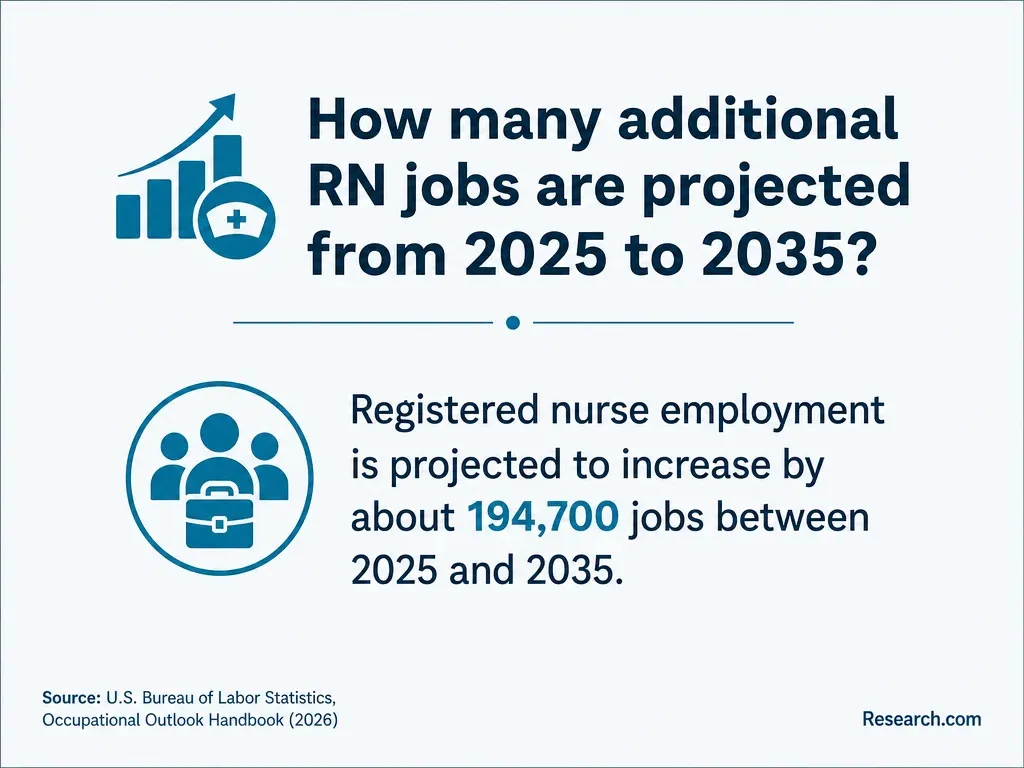
Reliable national wage statistics do not separate NICU and PICU staff nurses into distinct pay categories. The U.S. Bureau of Labor Statistics reports wages for the broader registered nurse occupation; its May 2024 median annual wage was $93,600. That figure is a national midpoint across RN specialties and employers, not an expected NICU or PICU offer. BLS also projected 5% employment growth for registered nurses from 2024 to 2034, rather than a separate projection for either unit.
For a meaningful comparison, request each employer's base hourly rate, night and weekend differentials, overtime rules, benefits, and pay progression. Compare offers using the shifts you would realistically work. Location, employer, experience, and contract terms can matter more to pay than the NICU-versus-PICU label.
Extra education is a cost decision, not a guaranteed raise. Before considering a master's nursing education on a BSN graduate's budget, check whether the intended role requires that degree and whether an employer offers tuition assistance.
How can you choose an accredited NICU or pediatric ICU nursing program?
First, separate the school decision from the job decision. If you are seeking initial RN licensure, verify the prelicensure program's status with the relevant state board of nursing, its institutional accreditation, and any nursing program accreditation it claims, such as ACEN or CCNE. Confirm that the program accepts students in your location and makes you eligible to seek licensure where you intend to practice. Accreditation, board approval, and a future employer's hiring decision are different determinations.
Then compare clinical opportunities without assuming a school can guarantee a NICU or PICU placement. Ask which pediatric and maternal-newborn experiences are available, how placements are assigned, and what students must attend in person. If you are already an RN, prioritize the hospital's orientation and mentorship over a school's specialty marketing.
Before committing to a position, ask to meet unit staff or observe the workplace if the hospital permits it. Request the orientation plan, typical scheduling and float rules, and the process for raising safety concerns. Graduate programs face a separate placement question: online FNP clinical coordination options, for example, concern supervised nurse practitioner education and should not be mistaken for NICU or PICU RN onboarding.
Other Things You Should Know About Nursing
Yes, if an employer hires them for the new role. Relevant critical-care skills may transfer, but the different patient population and conditions require specialty-specific orientation and competency assessment.
No dependable comparison applies to every nurse. Both units care for seriously ill patients and support families through uncertainty and loss. Consider the kinds of situations you find hardest and the support available on a prospective unit.
It depends on hospital policy and the position. Ask where nurses may float, what training is provided, and how assignments account for demonstrated competence.
Seek permitted shadowing, speak with nurses on both units, and ask how orientation and staffing work on nights as well as days. Student clinical experiences can inform your choice, but a brief observation will not show every shift condition.
- Ethical considerations at the end-of-life care - PMC - NIH https://pmc.ncbi.nlm.nih.gov/articles/PMC7958189/
- Products - Data Briefs - Number 525 - March 2025 https://www.cdc.gov/nchs/products/databriefs/db525.htm
- NICU staff: MedlinePlus Medical Encyclopedia https://medlineplus.gov/ency/article/007241.htm
- Work Stress and Burnout Among Nurses: Role of the... - NCBI https://www.ncbi.nlm.nih.gov/books/NBK2668/
- Nurse burnout and stress in the NICU | PubMed https://pubmed.ncbi.nlm.nih.gov/19060580/
- How to Become a Neonatal Nurse: A Comprehensive Guide | Davis & Elkins College https://www.dewv.edu/nursing-major/how-to-become-a-neonatal-nurse-a-comprehensive-guide/
- Nursing Shift Tips: Planning Your Effective Routine | denvercollegeofnursing.edu https://www.denvercollegeofnursing.edu/blog/nursing/creating-effective-routine-for-a-nursing-shift.html
- A Day in the Life of a PICU Nurse | chop.edu https://www.chop.edu/news/day-life-picu-nurse
- Stress and social support among registered nurses in a level II NICU - ScienceDirect https://www.sciencedirect.com/science/article/pii/S1355184121000338
- NICU Levels | childrenscolorado.org https://www.childrenscolorado.org/doctors-and-departments/departments/neonatal-intensive-care-unit/nicu-family-resources/nicu-levels/