2027 MSN/MBA Dual Degree Programs for Nurses in Pennsylvania: Entry Requirements, Format, and Total Cost
Audited and Verified:
Our Editorial and Data Verification Process
Research.com uses government datasets, official education statistics and primary institutional information to support its career and degree guides. Our review process checks factual accuracy, occupational definitions, source dates and the requirements associated with the credentials discussed.
How This Article Was Fact-Checked
Our editorial team verifies salary estimates, employment projections, education requirements and program information against original data providers and official organizations. Salary figures are checked against the relevant occupational definitions and reporting periods. Information about licensure, accreditation and required in-person training is reviewed separately.
Fact-checked and verified on:

Co-Founder and Chief Data Scientist
An MSN/MBA can help an experienced nurse prepare for healthcare leadership, but the two-degree label does not tell you whether a program fits your schedule or budget. Pennsylvania applicants need to check whether both degrees are awarded, which courses count toward both, and what attendance or practice-based work is required.
This guide identifies Pennsylvania options to investigate and shows how to compare admissions, format, completion time, and total cost, without mistaking a leadership degree for advanced practice preparation.
Key Things You Should Know
- An MSN/MBA awards two distinct degrees; shared coursework may reduce duplication, but the school determines exactly which credits count toward each award.
- Penn Nursing and Wharton, and Drexel University, are Pennsylvania-based options to investigate; confirm that the dual pathway is accepting applicants for your intended term.
- No single Pennsylvania-wide total price exists: calculate the cost of all required nursing and business credits, fees, attendance, and time away from work before comparing offers.
What Is an MSN/MBA Dual Degree for Nurses in Pennsylvania?
An MSN/MBA combines a Master of Science in Nursing with a Master of Business Administration. The nursing component may emphasize leadership, administration, or healthcare systems; the business component develops skills in finance, operations, strategy, and organizational management. A coordinated curriculum can allow approved courses to satisfy requirements in both degrees, but it is not necessarily cheaper or shorter than every standalone option.
This route makes the most sense for an RN targeting responsibilities that combine nursing leadership with substantial budget, operational, or strategic work. An MSN/MBA in administration does not qualify its graduate to practice as a nurse practitioner.
A nurse whose goal is advanced nursing leadership without a second business degree could also compare online DNP leadership pathways for graduate nurses, while checking each program's actual practice-hour requirements.
Which Pennsylvania Schools Offer MSN/MBA Dual Degree Programs?
Pennsylvania-based options include the University of Pennsylvania's Penn Nursing and Wharton pathway and a Drexel University MSN/MBA pathway. Program names, admissions arrangements, and availability can change. Treat this as a shortlist for direct confirmation, not a guarantee that either pathway is admitting students in a particular term.
The comparison below identifies the first questions worth asking each school; it does not substitute for a current degree audit or written cost estimate.
| Institution to contact | Dual-degree arrangement to confirm | Decision-critical question |
| University of Pennsylvania: Penn Nursing and Wharton | MSN and MBA study through separate schools | Which MSN specialization is eligible, and must applicants secure admission from both schools? |
| Drexel University | MSN/MBA pathway | Which nursing track and MBA format are available for the intended entry term, and how are shared credits counted? |
Ask each institution for its current program page, curriculum, admission instructions, and tuition schedule. If you hold an ADN rather than a BSN, confirm entry eligibility before assuming that master's nursing study after an ADN can be combined with its MBA.
What Are the Admission Requirements for MSN/MBA Programs?
Expect the nursing and business schools to evaluate different parts of your application. Graduate nursing admission commonly calls for an RN license and specified prior nursing education; an MBA application may place greater weight on professional experience, quantitative readiness, essays, and recommendations. Neither an RN license nor admission to one school automatically establishes eligibility for the combined pathway.
Before paying an application fee, request written answers about accepted bachelor's degrees, license requirements, minimum experience, prerequisite or statistics coursework, testing policies, and whether separate applications and deadlines apply.
An RN with a non-nursing bachelor's degree should ask for an individual transcript review. Likewise, doctoral nursing programs with broader entry pathways illustrate why entry rules for other graduate credentials should not be assumed to apply to an MSN/MBA.
There is no dependable Pennsylvania-wide completion time. Your schedule depends on both schools' required credits, approved overlap, course rotation, full- or part-time enrollment, and any nursing practicum or business capstone. A published minimum may assume a course load that is impractical alongside full-time RN work.
Ask for a term-by-term plan showing the first and last required courses, summer enrollment, and what happens if you pause for a term. Compare that plan with the schedules of a standalone MSN, MBA, or DNP programs organized by completion time only when those alternatives lead toward the role you actually want.
Check the nursing and business components separately. A school may offer online courses in one degree while requiring campus classes, live meetings, examinations, or other attendance for the other. Format can also vary by specialization and entry term; a university's general description as "online" does not establish that its entire dual degree is remote.
Working nurses should obtain a schedule of synchronous sessions, group projects, campus visits, and any approved practice-based requirements before committing to shifts or travel.
If your goal is an NP role rather than administration, consider that online FNP programs that provide preceptors address a different and clinically significant placement question; an MSN/MBA does not replace NP clinical preparation.
Nursing coursework may address healthcare systems, quality and safety, evidence appraisal, informatics, and nursing leadership. MBA coursework typically covers accounting or finance, operations, economics, strategy, and managing organizations. The decisive detail is the school's written curriculum map: a course that sounds relevant to both degrees is not necessarily approved to count twice.
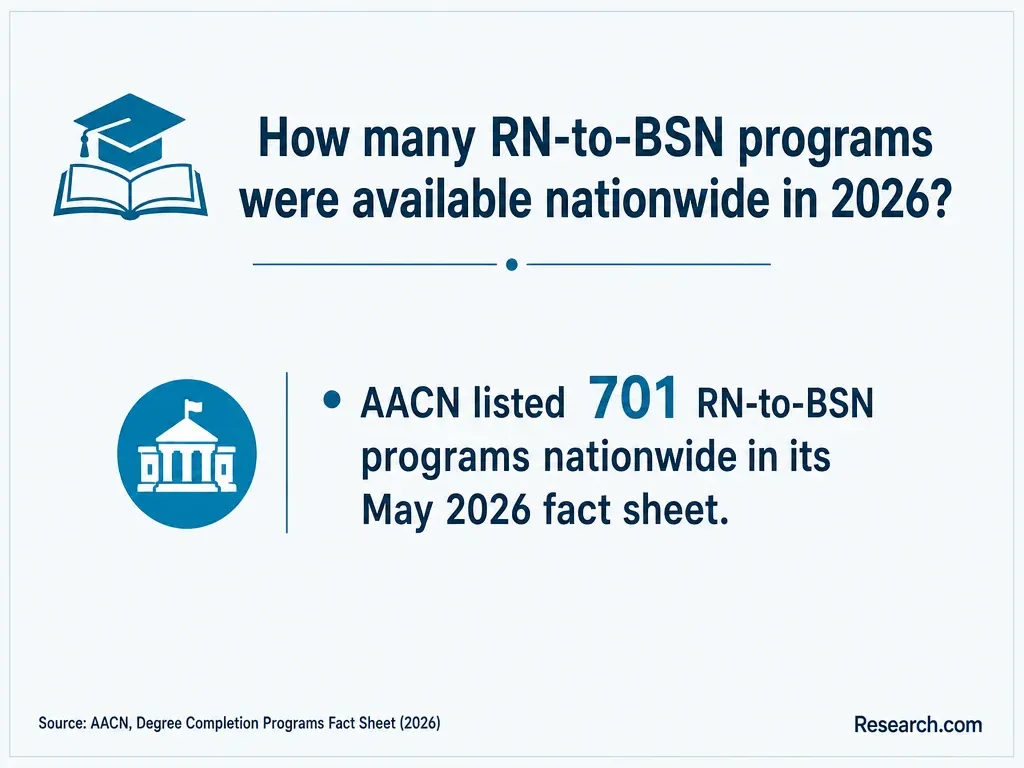
Ask whether the MSN includes a supervised practicum, an applied project, or both, and how each is assessed. Do not equate project work with direct patient-care hours. Nurses who need to finish undergraduate study first can examine RN-to-BSN project-based learning options, but should have the MSN/MBA admissions office confirm whether the completed credential meets its entry rules.
A defensible total cost requires a current, individual estimate from each school. There is no verified single tuition figure here for either Pennsylvania pathway, and an MBA credit may be billed at a different rate from an MSN credit. Shared credits can reduce required coursework without producing an equal reduction in billed tuition.
To compare offers, request an itemized estimate that accounts for the following charges and constraints.
- Required MSN credits, required MBA credits, approved shared credits, and the tuition rate applied to each.
- Mandatory university, program, technology, and graduation fees, including charges during part-time or extended enrollment.
- Books, travel or lodging for required visits, and costs associated with any practicum or project.
- Employer reimbursement limits, aid eligibility, and any income lost if the proposed course load requires fewer work hours.
Add the amounts payable across the full term-by-term plan, then compare that total with pursuing only the degree required for your target role. Psychiatric NP tuition comparisons concern a different qualification and should not be used as an MSN/MBA price benchmark.
Check three distinct matters: the university's institutional accreditation, the accreditation status and scope of the specific MSN program, and the business school's or MBA program's accreditation. CCNE and ACEN accredit nursing programs; business-school accreditation is a separate determination. Ask each school for the accreditor's name and whether the specific degree and track you intend to enter are covered.
Accreditation does not turn a leadership MSN into an APRN track or establish eligibility for a specialty exam. For example, PMHNP certificate admissions and timelines are relevant only if your separate goal is psychiatric-mental health NP preparation; certification and state practice requirements would still need independent review.
Depending on prior experience and the employer, graduates may pursue nurse manager, nursing operations, service-line management, quality leadership, or healthcare administration roles. These jobs differ: a nurse manager may oversee staffing and clinical operations, while an administrative role may emphasize budgets, contracts, or system-wide performance. Employers may require demonstrated management experience in addition to graduate education.
Compare job postings for your intended role before enrolling. If they prioritize a specific clinical population or NP credential, accelerated mental health NP master's coursework represents a different educational direction, not a feature of the MSN/MBA. If postings emphasize leadership experience instead, a smaller employer-supported management assignment or targeted training may be a less costly first step.
What Are the Salary and Job Outlook for MSN/MBA Nurses?
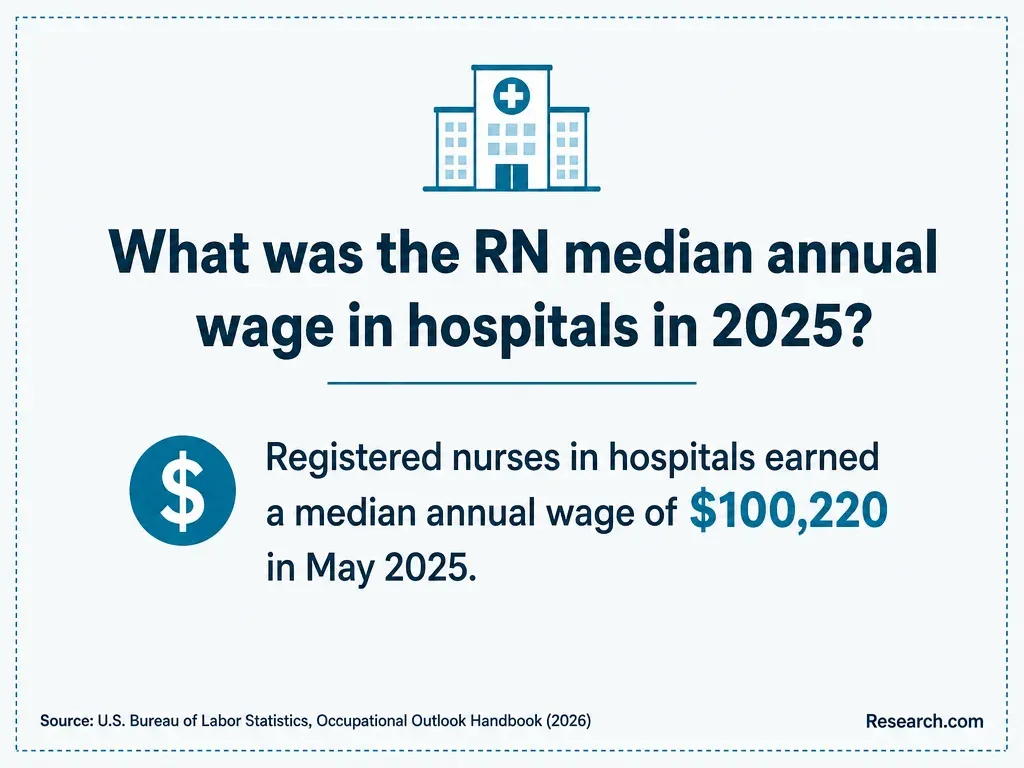
There is no standard "MSN/MBA nurse" occupation or corresponding salary statistic. The U.S. Bureau of Labor Statistics reports pay and employment projections by occupation, such as registered nurses and medical and health services managers, not by this particular pair of degrees. Those occupational groups include people with varied education and experience, so their medians cannot predict a dual-degree graduate's offer.
For a useful return-on-investment estimate, compare current Pennsylvania postings for the exact position you seek with your present compensation, the school's full cost estimate, and the likelihood of meeting employers' experience requirements. Do not use NP earnings to value an administration degree: nurse practitioner education on a budget leads toward a distinct, regulated career path.
Other Things You Should Know About Nursing Programs
Possibly. Ask whether its education benefit covers both schools, sets an annual cap, requires a minimum grade, or obligates you to remain employed after reimbursement.
That depends on the institution. Get written confirmation that courses completed before dual-degree admission will apply to both degree requirements; enrollment in one program does not guarantee shared-credit treatment later.
It can. Ask both schools about leave approval, course availability on return, time-to-degree limits, and whether previously approved shared credits remain applicable.
Not necessarily. Employers set their own education and experience requirements. Review local postings and internal promotion criteria before paying for two degrees when leadership experience or one relevant graduate degree may suffice.
- Fast Facts: Tuition costs of colleges and universities (76) | ed.gov https://nces.ed.gov/fastfacts/display.asp
- Cost of Attendance (Budget) | 2025-2026 Federal Student Aid Handbook https://fsapartners.ed.gov/knowledge-center/fsa-handbook/2025-2026/vol3/ch2-cost-attendance-budget
- Tuition and Fees | York College of Pennsylvania https://www.ycp.edu/cost-aid/tuition-fees
- Nursing (MSN-MBA Dual Degree) | Midway University https://www.midway.edu/academics/majors-and-programs/msn-mba-dual-degree.html
- Admission Requirements | USC Upstate https://uscupstate.edu/academics/mary-black-college-of-nursing/graduate-programs-and-resources/master-of-science-in-nursing/admission-requirements/
- Cost of Attendance | Student Financial Services https://sfs.temple.edu/eligibility/your-financial-aid-offer/cost-attendance
- M.B.A. and M.S.N. | Benedictine University https://ben.edu/degree_programs/mba-msn/
- Undergraduate Cost of Attendance | Penn Student Registration & Financial Services https://srfs.upenn.edu/costs-budgeting/undergraduate-cost-attendance
- RN to MSN-MBA Dual Degree | Spring Arbor University https://online.springarbor.edu/programs/master-of-science-in-nursing/rn-msn-mba
- Wharton MBA Dual Degree Programs | MBA Program https://mba.wharton.upenn.edu/interdisciplinary-programs/