2027 Most Recession-Resistant Careers You Can Pursue With a History Degree

Co-Founder and Chief Data Scientist
Facing economic uncertainty, history graduates often worry about job stability. Many assume their degree limits them to niches vulnerable during recessions. However, recent data shows that careers in archival science and historical research grow 8% faster than average in downturns due to persistent demand for cultural preservation and data analysis. With digital archives expanding rapidly, employers increasingly seek candidates skilled in technology alongside historical expertise. Navigating this landscape requires adaptability and targeted skill development. This article explores the most recession-resistant careers you can pursue with a history degree and offers practical strategies to remain competitive during economic fluctuations.
Key Points About Recession-Resistant History Careers
- Archives and museum work offer stable employment-History graduates' research and preservation skills are highly valued in maintaining cultural records during economic downturns.
- Government roles in policy analysis and cultural resource management often require historical expertise, providing recession-resistant careers with steady public funding.
- Educational institutions increasingly employ History graduates in curriculum design and education technology-fields experiencing 12% growth, reflecting sustained demand amid shifting academic needs.
What is the employment outlook for graduates of History?
The hiring landscape for history degree holders in the United States remains steady, supported by consistent demand for skills such as critical thinking, research, and communication. According to the U.S. Bureau of Labor Statistics, employment in roles frequently pursued by history graduates-like archivists, curators, and historians-is projected to grow by about 8% over the next decade, outpacing average job growth. Several key factors drive this positive employment outlook for history graduates:
- Education Emphasis: A lasting focus on education and research at schools and universities sustains demand for professionals well-versed in historical knowledge and analysis.
- Government Reliance: Policymaking and preservation efforts in government and nonprofit sectors depend heavily on accurate historical records and expertise.
- Cultural Tourism Growth: Expanding cultural tourism employs archivists and curators to manage historical sites, collections, and exhibitions, fueling job opportunities.
An additional benefit is the career resilience history graduates often enjoy. The unemployment rate for these roles typically remains below the national average, even during economic downturns, reflecting favorable career prospects for history degree holders during economic downturns. Students interested in combining their degree with emerging technological skills might explore related fields such as degrees in AI online, which increasingly intersect with historical data analysis and preservation.
What are the most recession-resistant careers for History degree graduates?
Certain roles within the field of history and related industries remain naturally shielded from economic volatility due to their essential functions or regulatory requirements. History graduates often find recession-proof careers where their skills in research, analysis, and preservation are vital. According to labor market data, history-related positions in government and education sectors saw only a 3% employment dip during economic contractions-well below the average 10% decline across all occupations. Below are five top resilient jobs for history graduates in today's economy.
- Archivist: Archivists protect government and institutional records critical for legal compliance and historical preservation. Their work ensures that accurate records are maintained, a regulatory necessity that organizations cannot postpone even during downturns.
- Government Historian: Employed by numerous government agencies, these historians analyze past policies and help guide strategic decision-making. Their roles support the creation of sound policies and ensure compliance, making them less vulnerable to budget cuts.
- Museum Curator: Museums provide education and preserve culture, relying on curators who oversee collections. Many museums receive government or nonprofit funding that protects these roles due to their importance for heritage and tourism, helping sustain jobs during recessions.
- Compliance Analyst (historical focus): These analysts interpret regulatory mandates often linked to historical legislation or trade agreements. Their expertise helps companies meet strict compliance standards, avoiding costly penalties, which increases job stability in economic downturns.
- Academic Researcher or Educator: Teaching and research positions in history remain crucial since education continuously produces qualified professionals. History educators foster critical thinking and cultural literacy, priorities that endure despite budget constraints in public education.
Those exploring educational advancement may consider programs that complement a history background with social work or public service qualifications, such as an accelerated MSW program online. This path can expand career options in recession-resistant fields tied to community support and policy implementation.
For students focused on secure pathways, targeting recession-proof careers for history majors in the United States means leveraging analytical and research skills in sectors where regulatory duties and public service demands limit job losses during economic slowdowns.
In which industries can History degree holders find work?
Graduates with a history degree can successfully transition into various sectors beyond traditional historical roles, demonstrating versatility amid shifting economic conditions. In fact, 68% of history graduates report steady employment during periods of economic uncertainty-highlighting their adaptability. Below are several key industries where their skills are especially valued.
- Education: History graduates contribute as educators and curriculum specialists in schools and higher education. Their expertise supports the development of critical thinking through well-crafted lesson plans and academic advising.
- Public Sector: Government agencies engage history graduates for roles in policy research, archives, and cultural preservation. Their insight into societal trends is essential for managing historical records regardless of economic fluctuations.
- Nonprofit Organizations: Many nonprofits focus on heritage conservation and educational outreach. History majors often manage fundraising efforts, grant proposals, and program administration, vital functions for nonprofit sustainability.
- Legal Field: Paralegal and legal research positions benefit from a history graduate's ability to interpret complex texts and analyze contexts, supporting case law and policy development during challenging economic times.
- Cultural Sector: Museums, archives, and libraries offer roles like curators and archivists who safeguard knowledge while engaging communities through educational and tourism initiatives that tend to maintain funding in downturns.
Speaking with a professional who earned an online history bachelor's degree revealed fresh perspectives on navigating career paths. He shared that integrating historical research skills into unfamiliar industries was initially daunting but became rewarding as he discovered how those competencies translated into strategic problem-solving. "I never expected to apply archival techniques to corporate data management," he reflected, emphasizing how adaptability was key to overcoming early-career uncertainties. He appreciated how the degree's emphasis on analysis and communication prepared him to handle evolving job demands across sectors, illustrating the practical benefits of a history education beyond conventional boundaries.
Employment in history-related roles tends to be more secure within the public sector-such as government offices, academic settings, and nonprofit organizations-largely because these positions rely on consistent public funding that remains stable even during economic slumps. Professionals like history educators and archivists in these areas usually face fewer layoffs, as their work fulfills essential cultural, legal, and educational functions mandated by government policies.
In contrast, private sector opportunities-including corporate research, consulting, and startup roles-are generally less stable, as they depend on fluctuating market forces and investor confidence. Despite this volatility, private organizations often offer quicker career advancement and higher earning potential for history graduates who can leverage their expertise in fields like business intelligence, user experience research, or strategic content development.
Recent analysis indicates that about 68% of history workers in the public sector report steady employment during economic downturns, compared to just 43% in private industry. This gap underlines the public sector's comparative resilience yet also highlights the importance of adaptability for those leaning toward private careers. Ultimately, graduates should weigh their personal tolerance for risk and whether they prioritize job security or rapid professional growth when deciding between these paths.
Location significantly impacts job security for history graduates, as certain states serve as hubs for industries that value their expertise. The following states are especially known for providing recession-resistant careers in history-related fields.
- California: With its extensive network of museums, universities, and federal agencies, California offers numerous roles in public history, cultural preservation, and education. Its diverse economy also creates strong prospects in archives and historic site management.
- New York: New York's vibrant academic institutions, libraries, and cultural organizations generate steady demand for history graduates. The presence of iconic landmarks and a thriving tourism sector supports museum curation and historical research careers.
- Virginia: Virginia benefits from a concentration of federal government offices and prominent historical locations, especially connected to early American history. Employment is often found in governmental research, national parks, and military history facilities, which tend to remain stable even during economic downturns.
Nationally, the projected growth rate for history-related occupations in stable industries like education and cultural heritage exceeds average job growth, highlighting how history graduates' analytical and research skills offer resilience in uncertain economic times.
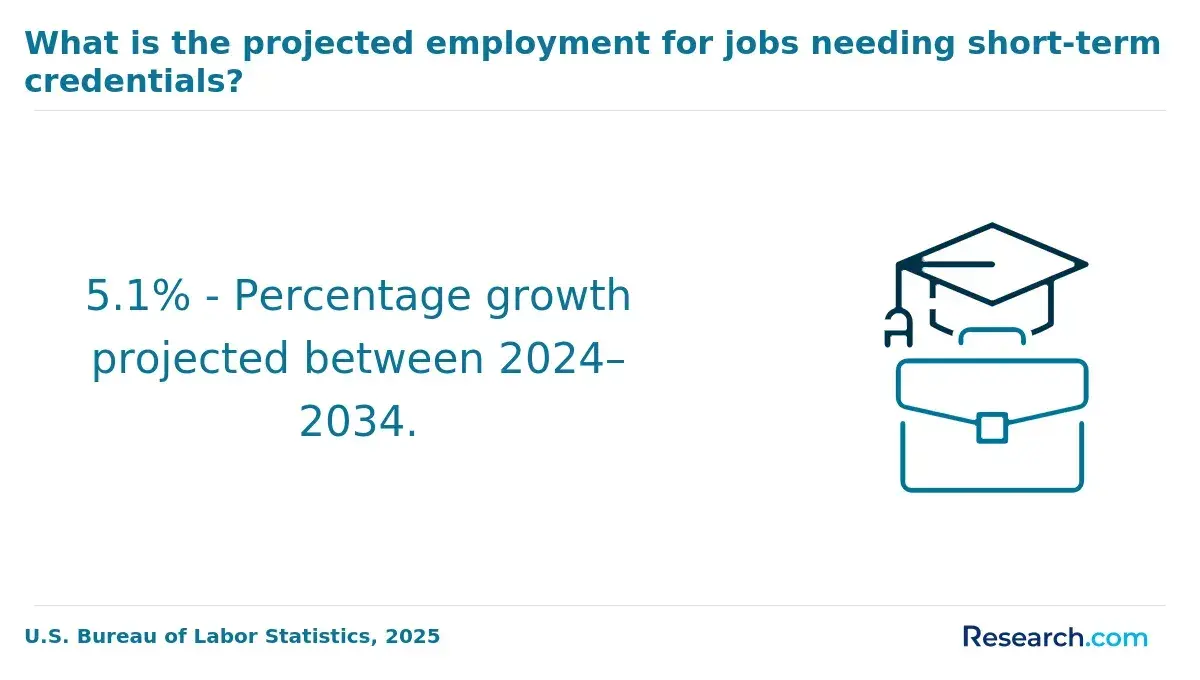
Post-graduate credentials and continuing education serve as a robust layoff shield by validating specialized, high-demand expertise-data from the U.S. Bureau of Labor Statistics shows that occupations requiring certifications in archival science, project management, or museum studies have unemployment rates nearly 30% below the national average during economic recessions. History career certifications for job security can significantly increase resilience in the job market. Here are some top certifications to consider for recession-proof history jobs:
- Certified Archivist (CA): Administered by the Academy of Certified Archivists, this credential demonstrates expertise in managing, preserving, and providing access to historical records. It is especially valuable for roles in government agencies, museums, and corporate archives where maintaining historical integrity is essential.
- Project Management Professional (PMP): This certification equips history graduates with formal project management skills crucial for digital humanities projects, museum exhibitions, and historical research firms. PMP-certified professionals are statistically more likely to retain jobs during recessions due to their ability to lead initiatives efficiently under constraints.
- Certified Museum Professional (CMP): Offered by the American Alliance of Museums, CMP certification enhances employability for curatorial and educational roles in cultural institutions. It emphasizes strategic planning and resource management, helping professionals remain valuable even amid budget cuts.
- GIS Professional (GISP): Proficiency in Geographic Information Systems, recognized with the GISP credential, opens opportunities in historical data mapping and spatial analysis. This skill is increasingly sought after in urban planning, environmental consulting, and heritage preservation sectors-fields with stable funding during downturns.
For those seeking to explore more about high paying certificate jobs, these certifications create valuable pathways that broaden career options far beyond traditional roles in history. By focusing on specialized credentials, graduates can position themselves competitively even in volatile economic climates.
Regularly upgrading skills makes professionals less vulnerable to layoffs during economic downturns. History graduates can build resilience by focusing on key abilities that boost employability and adapt to diverse roles. Consider these essential skills for history graduates to enhance employability:
- Digital Literacy: Mastery of data analysis tools and digital archiving platforms increases flexibility in fields like museum curation and archival work. Handling large datasets or digitizing materials is highly prized by employers seeking versatile candidates.
- Research Proficiency: Conducting in-depth primary-source research remains fundamental, but pairing it with critical thinking and synthesis sharpens your ability to contribute meaningfully to educational institutions, policy analysis, and cultural resource management.
- Communication Skills: Clear and engaging writing and speaking skills are crucial for translating complex historical content into accessible information, valued in media, education, and public relations sectors.
- Project Management: The ability to plan and manage exhibitions, publications, or outreach programs showcases leadership and organizational competence, qualities that enhance career stability across non-profit and academic roles.
- Cross-Cultural Competency: Understanding diverse historical viewpoints enhances employability in global organizations or nonprofits focusing on social justice and cultural preservation. This skillset meets the demand for professionals capable of navigating varied cultural contexts.
Career development skills for history degree holders like these open doors beyond traditional history jobs and help secure positions in recession-resistant fields. For example, pairing a history background with a cybersecurity online degree can further broaden options in growing tech-related arenas where security and data protection are vital.
School prestige often plays a significant role in securing stable jobs for history graduates, as employers may favor candidates from well-known institutions with established reputations. Graduating from a top-ranked school can signal rigorous training and a strong academic background, which can be especially valuable in competitive fields closely related to history, such as museum curation, archival management, or academic research.
Attending the right school also offers crucial networking advantages. Alumni connections, internship opportunities, and access to exclusive job fairs often come with prestigious programs, granting graduates a direct line to better job openings and professional mentorship. These networks can prove indispensable in industries where personal recommendations and professional reputation matter.
That said, graduates from any accredited history program can remain competitive by demonstrating proven performance-through internships, published research, or relevant work experience. Employers increasingly value tangible skills and accomplishments alongside academic pedigree, making dedication and real-world application powerful tools to overcome potential gaps in institutional reputation.
Aligning academic study with the evolving demands of the history field is vital for boosting employability and ensuring job stability. Proactive career preparation helps students acquire the practical experience and versatile skills that employers seek. Consider these key steps to strengthen your professional profile:
- Hands-On Internships: Secure placements in museums, archives, or government offices to gain direct exposure to research methods and archival management, demonstrating real-world competence.
- Digital Skills Development: Engage in projects involving data visualization or digital archiving to pair technological abilities with historical knowledge, making your skill set more relevant.
- Leadership Experience: Take on leadership roles in campus organizations such as history clubs or debate teams to cultivate communication, teamwork, and organizational capabilities.
- Research Dissemination: Publish papers or present findings at conferences to showcase your ability to analyze and clearly communicate complex ideas.
- Interdisciplinary Expertise: Broaden your knowledge in related fields like public policy, education technology, or library sciences to increase adaptability across various industries.
One professional who earned a history degree online shared his experience when asked about meeting job market demands. He described feeling initially uncertain about how to bridge academic theory with practical skills: "Navigating internships while balancing coursework was challenging, but hands-on work made me more confident." He emphasized the importance of networking, recalling, "Connecting with alumni opened doors I didn't expect." His journey highlights that persistence and actively seeking diverse experiences greatly enhanced his readiness for recession-resistant careers.
Careers considered recession-resistant for history graduates tend to offer moderate but stable salaries, generally between $50,000 and $75,000 annually. Roles such as archival management, museum curation, and historical research are common examples where average salaries reflect consistent demand. For those seeking higher-than-average earnings, specialized positions in government agencies or academia-with advanced degrees or certifications-can exceed $80,000, highlighting the financial benefits of additional qualifications.
Although some history-related jobs may not be among the highest paying, they provide steady employment even during economic downturns, making them attractive options for financial resilience. The average salaries for recession-proof history-related jobs tend to grow at a rate of around 3.5% annually, slightly surpassing the national average, especially within sectors like cultural preservation and education. This growth illustrates both the value and stability of these careers.
Income fluctuations among history professionals often depend on factors like industry, employer, and location. Moreover, continuing education-for instance, earning certifications in digital archiving or museum studies-can lead to salary premiums and bonus opportunities. Those interested in enhancing their credentials may consider pursuing an online masters history program to improve their financial outlook and career stability over time.
What Graduates Say About Their Career After Getting a Degree in History
- Taylor: "Choosing a history degree was driven by my curiosity about how past events shape our present world. This program honed my critical thinking and research skills, which proved invaluable when I transitioned into a government analyst role that's highly secure even in economic downturns. The ability to analyze patterns and cultural contexts has truly set me apart in my field."
- Cruz: "Reflecting on my time studying history, I realize it was the perfect foundation for my career in archival science. The training to meticulously evaluate sources and preserve narratives prepared me for a role that remains essential regardless of market shifts. In today's uncertain economy, having such specialized expertise feels empowering and stable."
- Luka: "My history degree was more than just an academic journey-it was a strategic choice to develop versatile skills adaptable to many industries. Working now as a policy advisor, I often draw on my deep understanding of societal trends and historical legislation. This background has been crucial in securing a position where demand is consistent and resilient amid recessions."
Other Things You Should Know About History Degrees
Yes, a history degree is valuable for various government positions, including roles in archives, cultural resource management, and policy research. These jobs often remain stable during recessions due to consistent public funding and the ongoing need for historical records and context in governance. Additionally, government agencies value the analytical and writing skills cultivated in History programs.
Museum curation and management positions tend to be moderately recession-resistant because cultural institutions often rely on public funding, grants, and donations that provide some economic stability. While budgets may tighten during recessions, these roles are typically sustained by the continuing interest in preserving cultural heritage. History graduates with expertise in curation may also diversify into education or fundraising to enhance job security.
Certifications in archival science, records management, and project management strengthen a history degree for stable careers. Common options include the Certified Archivist credential from the Academy of Certified Archivists and the Certified Records Manager designation from AIIM and ARMA International, both valued in government, education, and healthcare records roles.
- 5 recession-proof skills that make you immediately employable | ELVTR https://elvtr.com/blog/5-recession-proof-skills-that-make-you-immediately-employable
- Recession-Proof Jobs That Will Always Be In Demand https://www.buzzfeed.com/jenniferadams2/recession-proof-jobs
- Recession-proof job - Wikipedia https://en.wikipedia.org/wiki/Recession-proof_job
- 4 Recession-Proof, Essential Job Skills to Learn https://straighterline.com/blog/essential-job-skills-during-recession
- I dreaded working in the private sector, but the public sector didn't pay enough for me to live on. Here's how I found balance in my career. https://www.businessinsider.com/pros-cons-working-public-sector-private-sector-2025-6
- Public vs. Private Sector Jobs: Choosing a Career Path https://tsengcollege.csun.edu/blog/public-vs-private-sector-jobs-choosing-a-career-path
- History Majors: Beyond the Myths and Into the Workforce https://www.graydi.us/blog/gray-insights/history-majors-beyond-the-myths-and-into-the-workforce
- Error https://www.tryapt.ai/blog/top-10-recession-proof-jobs-in-2025-in-us
- How History Students Can Use Their Lessons in Today's Job Market https://www.historyfiles.co.uk/support/historyES297-How-History-Students-Can-Use-Their-Lessons-in-Todays-Job-Market.htm
- Very qualified for the future: history graduates’ employability and earnings https://www.history-uk.ac.uk/2022/07/15/very-qualified-for-the-future-history-graduates-employability-and-earnings/