2027 Military-Friendly Online Cybersecurity Bachelor's Degree Programs

Co-Founder and Chief Data Scientist
Transitioning from military service to a civilian career in cybersecurity presents unique challenges-particularly for veterans seeking flexible education that accommodates ongoing obligations and frequent relocations. Nearly 45% of military-friendly online cybersecurity bachelor's degree candidates balance coursework with active duty, demanding programs that offer asynchronous learning and credit for military experience.
Without such options, service members risk delays in entering a rapidly expanding workforce projected to grow 33% by 2030. This article examines top military-friendly online cybersecurity bachelor's degree programs, highlighting their accessibility, accreditation, and support designed to streamline veterans' career pivots into cybersecurity roles.
Key Things to Know About Military-Friendly Online Cybersecurity Bachelor's Degree Programs
- Military-friendly online Cybersecurity bachelor's programs offer flexibility through deployment deferments, flat military tuition rates, and credit evaluations that recognize military training and experience.
- Federal education benefits like the GI Bill, Military Tuition Assistance, and the Yellow Ribbon Program can often be combined to cover most tuition costs and fees.
- Return on investment is strong as these programs align with high-demand cybersecurity roles, with median salaries exceeding $100,000, minimizing out-of-pocket expenses for veterans and service members.
What are the best military-friendly online cybersecurity bachelor's degree programs available today?
Genuinely military-friendly online cybersecurity bachelor's degree programs deliver more than simple tuition discounts-they integrate critical support such as participation in the Yellow Ribbon Program, adherence to the Department of Defense's Principles of Excellence (POE), and dedicated military advising that simplifies navigating benefits like the GI Bill, Military Tuition Assistance (TA), and MyCAA for spouses.
Leading institutions recognized by Military Times, G.I. Jobs, and the Council of College and Military Educators (CCME) distinguish themselves with transparent military tuition rates, flexible academic policies, and robust benefit stacking strategies.
These schools accommodate deployment deferments, accept extensive military transfer credits, and provide career support informed by outcomes reported through the Bureau of Labor Statistics and the VA College Scorecard.
- University of Maryland Global Campus (UMGC): Military tuition hovers around $250 per credit, Yellow Ribbon participation, plus comprehensive military advising and deployment deferrals.
- Northern Arizona University (NAU): Flat military rate near $350 per credit hour, POE status, MyCAA spouse benefits, and expert support for TA and GI Bill navigation.
- Western Governors University (WGU): Flat tuition-about $3,625 per term-with generous credit transfers and competency-based learning tailored for military schedules.
- Excelsior College: Yellow Ribbon partner with tuition near $415 per credit, flexible scheduling, and prior learning assessments that ease deployment-related challenges.
- Liberty University: Military tuition starting at $350 per credit, POE compliant, and military student centers that provide career counseling based on BLS and institutional outcome data.
- Rowan University: Military tuition at $269 per credit, Yellow Ribbon supporter, offering counseling on stacking MyCAA, TA, and GI Bill benefits efficiently.
- Southeast Missouri State University: Military pricing around $279 per credit hour with flexible pacing and thorough military credit evaluations.
- Florida State University: POE accredited with military tuition near $200 per credit and strong veteran career placement guided by the VA College Scorecard.
These top accredited cybersecurity degrees for military students emphasize a holistic approach, ensuring near-zero out-of-pocket costs when benefits are fully applied. They combine flexible tuition with knowledgeable advising and proven career support to help military learners calculate their education's return on investment responsibly.
For those seeking degree programs that blend affordability and value, exploring online MSW resources along similar lines may offer insights into maximizing benefits across disciplines.
How do military Tuition Assistance (TA) and GI Bill benefits apply to online cybersecurity bachelor's programs?
Military Tuition Assistance (TA) offers up to $4,500 annually per service member as of 2024, covering tuition and fees for active-duty personnel enrolled in online cybersecurity bachelor's degree programs. Typically, TA pays up to $250 per credit hour, allowing service members to steadily advance through their courses without incurring personal costs.
Eligibility extends to active-duty members, National Guard, and Reserve personnel, with command approval and enrollment deadlines often required. Using military tuition assistance eligibility for online cybersecurity degrees ensures funding stability during active service.
The GI Bill, which includes Post-9/11 and Montgomery versions, provides robust support for veterans and their dependents pursuing cybersecurity bachelor's programs. The Post-9/11 GI Bill covers full in-state tuition at public institutions or the equivalent at private schools, along with monthly housing allowances that adjust to local living costs. An annual book stipend helps offset expenses for educational materials, crucial for degrees requiring extensive labs and software access.
When students qualify for both TA and GI Bill benefits, benefit stacking rules prioritize TA coverage of tuition first. The GI Bill then covers any remaining eligible costs, potentially including housing and books. If the GI Bill fully covers tuition, TA funds may be saved for other approved educational uses.
Active-duty and veteran students should consult education benefits counselors and use the VA's GI Bill Comparison Tool to understand school-specific benefits fully. This approach supports near-zero out-of-pocket costs and maximizes return on investment through prioritizing benefits and considering factors like prior learning assessments.
Military students considering a cybersecurity path may also explore flexible program policies such as deployment deferments, flat military tuition rates, and military credit evaluations. For information on affordable online degree options across disciplines, see this best online business degree guide for additional insights on cost-effective online education.
- Annual TA Cap: Military Tuition Assistance has a fiscal year limit of $4,500 per service member, with per-credit limits typically around $250, ensuring steady funding for online coursework.
- GI Bill Stipends: Post-9/11 GI Bill recipients receive monthly housing and yearly book stipends, providing crucial support beyond tuition coverage, beneficial for online cybersecurity studies.
- Benefit Coordination: TA often pays tuition first, with GI Bill benefits supplementing remaining costs or other expenses, requiring strategic planning to maximize value without losing benefits.
- Eligibility Variances: Active duty members primarily use TA, while veterans and qualified dependents rely more heavily on GI Bill programs, each with unique application rules and benefits.
- Resource Tools: The VA's GI Bill Comparison Tool is indispensable for reviewing how specific online cybersecurity programs accept and apply these education benefits, helping students make informed choices.
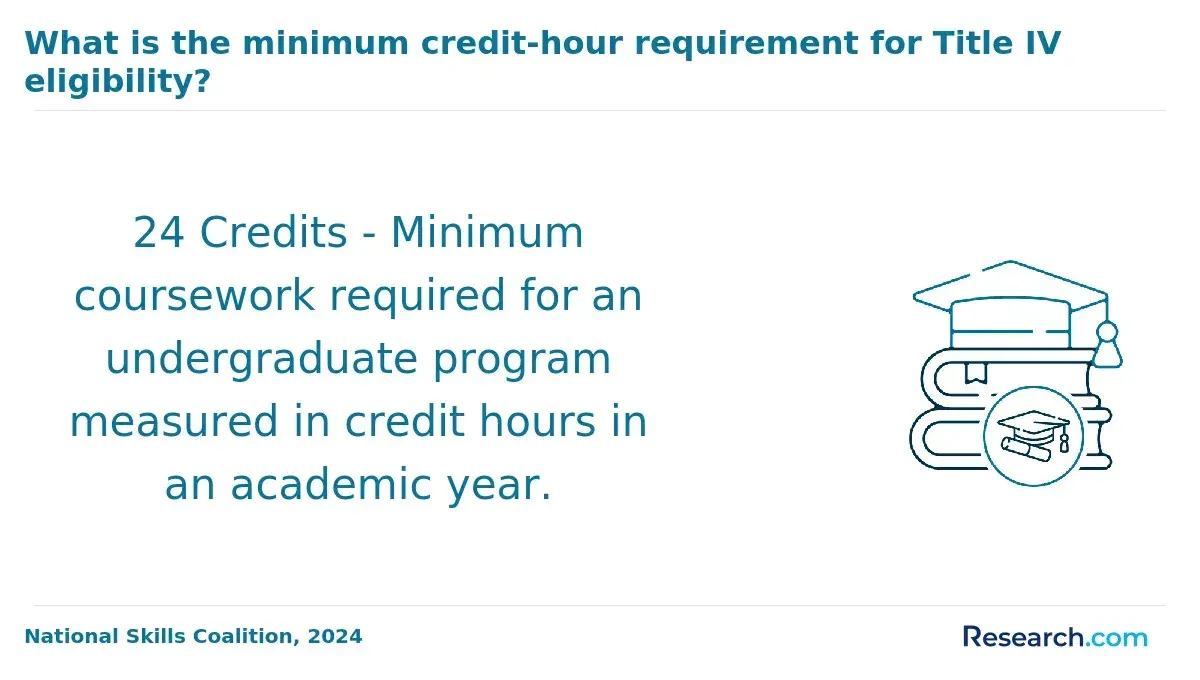
What is the typical duration of a military-friendly online cybersecurity bachelor's degree, and can active-duty students finish faster?
Military-friendly online cybersecurity bachelor's degrees generally follow a 120-credit hour curriculum designed for completion in about four years at a traditional full-time pace. Many institutions, however, offer accelerated paths tailored to service members, featuring shorter eight-week courses, competency-based models, and year-round enrollment. These formats enable continuous progression without long breaks, accommodating the unpredictable schedules of active-duty students.
Recognition of military experience is pivotal in shortening degree timelines. Schools frequently accept military credit transfers through ACE transcript evaluations and military life-credit waivers, allowing students to bypass redundant coursework.
Additionally, exams such as CLEP and DSST provide opportunities to earn credits by demonstrating prior knowledge, further reducing the number of required classes.
Some military-focused universities, including Southern New Hampshire University and Purdue Global, report that students actively serving can complete their degrees within two to three years by leveraging transferred credits and accelerated terms.
Shortening the time to degree confers financial advantages by lowering tuition expenses and preserving GI Bill entitlement months for future graduate education or training.
- Credit Structure: Most online cybersecurity programs require 120 credits, typically completed over four years under a standard academic calendar.
- Accelerated Scheduling: Eight-week terms and continuous enrollment options allow military students to progress faster and fit studies around deployments or duties.
- Credit Transfers: ACE evaluations and military training waivers reduce required coursework by converting service experience into academic credits.
- Exam-Based Credits: CLEP and DSST exams offer a chance to test out of specific classes, shortening time-to-degree significantly.
- Completion Data: Military-friendly schools publish averages of two to three years for degree completion among active service members utilizing these options.
- Benefit Efficiency: Quicker completion lowers overall costs and reserves GI Bill benefits for advanced degrees or certifications.
A professional who pursued a military-friendly online cybersecurity bachelor's degree shared that balancing coursework with frequent deployments was a major hurdle. He appreciated how flexible scheduling allowed him to study during quieter periods, while military credit transfers lightened his course load. "It wasn't just about finishing fast," he reflected, "but making sure each credit counted and that I could keep advancing without losing momentum.
The ability to test out of some courses saved me time and stress, especially when I was on active duty." This approach gave him confidence to transition smoothly into a cybersecurity career after military service.
The Yellow Ribbon Program enhances Post-9/11 GI Bill benefits by assisting veterans with tuition costs that exceed the in-state public school rate at private or out-of-state institutions. Eligible schools contribute funds toward these excess expenses, which the VA matches, thereby lowering the financial burden on military learners. This support is particularly valuable for those pursuing military-friendly online Cybersecurity bachelor's programs with Yellow Ribbon participation.
Several institutions with online cybersecurity degrees participate in the Yellow Ribbon Program, offering varying funding levels and slot availability. The University of Maryland Global Campus provides substantial funding with numerous slots annually.
American Military University features moderate contributions aimed at reducing costs for veterans. Southern New Hampshire University also supports this benefit with competitive availability. Liberty University allocates up to $5,000 per year with a limited number of slots, while Arizona State University extends participation to select programs including cybersecurity.
Additionally, University of Illinois Springfield, Colorado State University Global, and New Jersey Institute of Technology offer Yellow Ribbon funding to assist military students in minimizing tuition expenses.
Yellow Ribbon slots are limited and granted competitively, so confirming availability with the institution's veterans affairs office before enrollment is crucial. Veterans should assess these options carefully to maximize federal education benefits.
For relevant flexible programs that offer accelerated paths, including some in related fields, consider exploring a construction management accelerated degree as an alternative or complement.
Most military-friendly online cybersecurity bachelor's programs must have regional accreditation to ensure eligibility for GI Bill and other VA education benefits. Unlike national accreditation, regional accreditation is recognized by federal agencies and is necessary for institutions to maintain access to federal and state financial aid.
This accreditation also supports smoother credit transfers and acceptance of your degree by employers and graduate schools.
The seven regional accrediting bodies in the U.S. are:
- Higher Learning Commission (HLC): Oversees colleges mostly in the central United States, including many with online cybersecurity paths.
- Southern Association of Colleges and Schools Commission on Colleges (SACSCOC): Covers institutions primarily in the southern states, known for rigorous program reviews.
- New England Commission of Higher Education (NECHE): Accredits colleges in New England with a focus on high academic standards.
- Middle States Commission on Higher Education (MSCHE): Serves mid-Atlantic institutions, emphasizing ongoing improvement and student success.
- Northwest Commission on Colleges and Universities (NWCCU): Ensures quality education in the northwestern region.
- WASC Senior College and University Commission (WSCUC): Accredits West Coast colleges, many offering innovative online options.
- Accrediting Commission for Community and Junior Colleges (ACCJC): Specializes in two-year and some bachelor's institutions in western states.
Some cybersecurity degrees may also hold specialized programmatic accreditation like the NSA's Center of Academic Excellence, which complements but does not replace regional accreditation. Veterans should always confirm a program's approval status via the VA's WEAMS Institution Search and the U.S. Department of Education's accreditation databases before enrolling. Failure to verify this can lead to denied GI Bill benefits and issues transferring credits, creating costly setbacks.
One professional who advanced his career after graduating from a military-friendly online cybersecurity bachelor's program shared that navigating accreditation concerns initially felt overwhelming. "I was relieved once I verified the program's regional accreditation because it secured my VA benefits and made transferring credits straightforward," he recalled.
The clear accreditation also boosted his confidence in the degree's value, helping him to focus on building skills rather than worrying about financial or administrative hurdles. His experience highlights how vital accreditation verification is for military students balancing education with service commitments.

Military-focused online Cybersecurity bachelor's programs adapt to the unique demands of service members, offering academic flexibility that standard programs typically do not. These programs incorporate policies geared toward accommodating deployment, PCS moves, and irregular military schedules, reducing barriers to degree completion.
- Deployment Withdrawal Policies: Many institutions provide options allowing active-duty students to pause enrollment without academic or financial penalties during deployments. Such policies adhere to Department of Defense Voluntary Education Partnership MOU standards, ensuring seamless reentry upon return.
- Asynchronous Course Delivery: Fully asynchronous classes enable students to access lectures, assignments, and exams anytime, accommodating shifting duty hours and time zones.
- Rolling Enrollment Start Dates: Multiple start dates throughout the year allow military learners to begin courses as schedules permit, avoiding delays caused by changes in duty status or location.
- Military Credit Evaluations: Programs commonly assess military training, certifications, and experience for credit applicability, decreasing time needed to graduate and recognizing relevant prior learning.
- Financial Accommodations: Many schools offer flat military tuition rates with flexible use of benefits such as the GI Bill and Tuition Assistance, minimizing out-of-pocket costs even if deployment interrupts studies.
A recent Council of College and Military Educators survey reveals over 85% of military students rank deployment deferment policies as a top factor when selecting an online degree program, underscoring the critical nature of these accommodations.
Prospective military students should consult admissions advisors to confirm:
- Specific deployment-related withdrawal or leave-of-absence policies.
- Whether courses are fully asynchronous and accessible 24/7.
- Procedures for transfer and military credit evaluation.
- Availability of rolling enrollment options.
- Financial safeguards if deployment disrupts enrollment.
Verifying these elements will help ensure the chosen Cybersecurity program supports military lifestyles without compromising academic progress or financial stability.
Military students seeking an online Cybersecurity degree can access numerous financial aid sources beyond the GI Bill and Tuition Assistance (TA). Leveraging these options effectively through benefit stacking and strategic layering can significantly reduce or eliminate out-of-pocket expenses.
- MyCAA Scholarship: Designed for military spouses, this program awards up to $4,000 for certificates and associate degrees in STEM-related fields such as Cybersecurity. It supports part-time study and includes many online programs.
- State Veteran Education Grants: Various states offer educational grants and tuition waivers tailored to veterans and military families. These often extend to Cybersecurity and other STEM disciplines but differ by state.
- AMVETS Scholarships: The AMVETS Foundation provides scholarships for veterans and active duty service members pursuing degrees in technology and Cybersecurity, with eligibility and funding amounts varying yearly.
- VFW Scholarships: The Veterans of Foreign Wars administer scholarships nationwide that support veteran students, including those studying Cybersecurity, often collaborating with partner organizations to broaden funding access.
- Branch-Specific Education Funds: Each military branch offers dedicated education programs, scholarships, or reimbursements for Cybersecurity and related STEM fields. Examples include the Air Force's Spouse Tuition Assistance Program and the Army's College Fund.
When combined with federal benefits such as the GI Bill and the Yellow Ribbon Program, these resources can often cover full tuition and fees. Applicants are advised to consult their school's military education office early to optimize financial strategies, including prior learning assessments and institution-specific military credit for a better return on investment.
Recent Department of Defense statistics show a 15% increase in military-affiliated enrollment in Cybersecurity and IT-related degrees over the past three years, underscoring the expanding support and demand in this critical field.
Military students seeking an online cybersecurity bachelor's degree benefit significantly from transfer credit policies that recognize military training and experience. The American Council on Education (ACE) plays a vital role by evaluating military occupational specialties (MOS), Navy Enlisted Classification (NEC), and other formal military training, providing credit recommendations accepted by many universities.
These ACE credit recommendations convert military training into transferable college credits, accelerating degree completion and reducing costs for active-duty, veterans, National Guard, Reserve members, and military spouses.
Several military-friendly programs accept up to 90 transfer credits, covering most lower-division coursework needed for a cybersecurity degree. Notable institutions such as Colorado State University Global and Thomas Edison State University have formal Joint Services Transcript (JST) review processes that assess military service records for academic credit.
Early submission of the JST during admissions allows for a comprehensive credit evaluation up front, streamlining the path to enrollment and degree progress. This is especially important for students managing deployments or service obligations while maximizing federal education benefits like the GI Bill, Military Tuition Assistance, and the Yellow Ribbon Program.
Consulting official university transfer credit policies alongside the ACE Military Programs database ensures accurate understanding of accepted credits. Programs often combine ACE evaluations with prior learning assessments to recognize experiential learning beyond formal training.
Military students making financial decisions can benefit from stacking education benefits and leveraging near-zero out-of-pocket costs. Those interested in evaluating career prospects related to this field might explore whether is project management a good degree, as it often intersects with cybersecurity roles.
- ACE Credit Recommendations: ACE evaluates military training and provides official credit recommendations translating unique military skills into academic credits applicable toward cybersecurity programs.
- Generous Transfer Policies: Top online programs accept up to 90 credits, significantly accelerating graduation timelines by covering extensive degree requirements for military students.
- Joint Services Transcript (JST): Submitting JST early is critical to receive a formal review, ensuring military experiences are maximally credited before starting coursework.
- Prior Learning Assessments: These assessments complement ACE credits by recognizing additional military experiences, increasing transferable credit opportunities.
- Financial Benefits: Maximizing transfer credits reduces program costs and duration, optimizing the use of GI Bill and Military Tuition Assistance benefits with minimal out-of-pocket expenses.
Admission requirements for military-friendly online cybersecurity bachelor's degree programs vary to address the unique circumstances of active-duty service members, veterans, National Guard and Reserve members, and military spouses. Most programs require a high school diploma or GED and maintain minimum GPA thresholds around 2.0 to 2.5.
Some institutions ask for prerequisite coursework in math or computer fundamentals. Verification of military status is commonly done through a DD-214 discharge form, and many programs accept a Joint Services Transcript (JST) to convert military training into academic credits, enhancing degree affordability and shortening time to completion. These criteria reflect essential military student eligibility criteria for online cybersecurity bachelor's degree programs and eligibility for education benefits.
Many programs employ open-admission or rolling-admission policies to widen access for non-traditional students balancing military duties or civilian careers. These policies provide flexibility in application timing and less restrictive GPA or testing requirements.
On the other hand, more selective programs offer stronger academic reputations and employer recognition, appealing to veterans aiming for competitive cybersecurity roles, though they may require more rigorous application processes and provide fewer military-specific accommodations.
Active-duty and veteran applicants should improve their chances by including military leadership documentation, submitting official transcripts for credit transfer evaluations, and completing VA educational benefit certifications early. Proper preparation maximizes access to federal aid such as the GI Bill and Military Tuition Assistance.
For those comparing options, career outcome data-drawn from sources like the Bureau of Labor Statistics and VA's College Scorecard-along with financial frameworks considering benefit stacking and ROI calculations, are critical.
- Academic Baselines: High school diploma or GED is required, with minimum GPA thresholds and some prerequisite course demands depending on the program.
- Military Documentation: DD-214 forms and Joint Services Transcripts facilitate benefit eligibility and academic credit, reducing time and cost for military students.
- Admission Flexibility: Open and rolling admissions improve access for veterans and military-affiliated students with variable schedules and deployment considerations.
- Selective vs. Open Access: Selective programs often boast higher prestige and better employer recognition but may have stricter entry requirements and less military flexibility.
- Application Strengthening: Military leadership records, JST submission, and early VA benefit certification boost acceptance odds and financial aid utilization.
For those researching pathways, rankings such as the best online electrical engineering programs USA offer insight on program quality and support services available, which can apply by analogy to online cybersecurity programs welcoming military students.
Information security analysts, common roles for graduates of cybersecurity bachelor's programs, earn a median annual wage of about $103,000 according to the Bureau of Labor Statistics. Veterans and individuals holding security clearances often see salary increases above 10%, reflecting the value placed on their unique skills and experience within the field.
Specializations: Concentrations in information assurance, network defense, and cyber threat intelligence align well with federal government agencies, defense contractors, and civil service positions that frequently require security clearance and adherence to federal IT standards.
Career Outcomes: Graduates typically move into roles such as incident responder, systems security engineer, and cybersecurity analyst-occupations highlighted by steady growth and competitive wages in labor market data combined with O*NET's military crosswalk insights.
Financial Flexibility: Programs offering flat tuition rates for military learners, credit for prior military training, and policies accommodating deployments help reduce barriers to degree completion. When paired with GI Bill benefits, Military Tuition Assistance, or the Yellow Ribbon Program, these elements contribute to near-zero out-of-pocket education costs.
Veteran Advantages: Employers often prioritize veterans for cybersecurity positions, valuing their discipline, eligibility for security clearances, and practical experience in risk management and cyber policy. Institutional data from the VA College Scorecard further underscores improved graduate outcomes among military students benefiting from tailored support services.
Military spouses eligible for the MyCAA Scholarship can receive up to $4,000 to support career-oriented online Cybersecurity programs at approved, military-friendly schools. These institutions can be identified via the official MyCAA school locator, ensuring that funds target portable education paths that suit family and work demands.
Dependents and survivors may access benefits such as the Fry Scholarship, which covers tuition and fees for those connected to service members who died in the line of duty, commonly applicable to online degree tracks.
The CHAMPVA Education Support program offers additional financial relief for qualified dependents, helping to offset costs related to Cybersecurity studies. Several states provide Dependent Tuition Waivers, lowering or eliminating tuition for military dependents enrolled at state universities with fully online Cybersecurity degrees.
Maximizing financial aid involves strategically combining MyCAA, Fry, CHAMPVA, state tuition waivers, and institutional scholarships. This benefit stacking can significantly reduce out-of-pocket expenses, making degree completion more feasible.
Recent figures indicate that enrollment of military spouses in online degree programs rose by over 15% in the last three years, underscoring growing awareness and accessibility of these education benefits.
- MyCAA Scholarship: Offers up to $4,000 for eligible spouses pursuing portable, career-focused online Cybersecurity degrees at approved schools.
- Fry Scholarship: Covers tuition and fees for dependents of fallen service members enrolled in flexible online programs.
- CHAMPVA Education Support: Provides financial assistance to eligible dependents to defray costs linked to Cybersecurity education.
- Dependent Tuition Waivers: State programs that reduce or waive tuition for military dependents in qualifying online degrees.
- Benefit Stacking: Combining federal, state, and institutional aid maximizes coverage and cuts student debt for military families.
What Graduates Say About Their Military-Friendly Online Cybersecurity Bachelor's Degree Programs
- Westin: "Choosing an online Cybersecurity bachelor's degree program was essential for me because it offered the flexibility I needed while serving in the military. The ability to defer courses during deployments and the flat military tuition rates made it financially feasible and less stressful to continue my education. This program truly set me up for a smooth transition into the civilian tech workforce with confidence in my skills."
- Peter: "Reflecting on my experience, the standout feature of this military-friendly online Cybersecurity program was how it recognized and credited my military training toward the degree requirements. That acknowledgment made me feel valued and accelerated my path to graduation. Plus, the support for active duty personnel meant I could pursue my education without worrying about my unpredictable schedule-something many civilian programs just can't offer."
- Andrew: "Professionally, finishing an online Cybersecurity bachelor's degree tailored for military members opened up job opportunities I hadn't anticipated. The program's flexibility-including deployment deferments-allowed me to balance service commitments with academic rigor. Knowing the curriculum aligned closely with real-world cyber defense roles provided me with confidence that my career post-service would be meaningful and well-funded."
Other Things You Should Know About Cybersecurity Degrees
In 2027, military-friendly online cybersecurity bachelor's programs may offer tracks like network security, ethical hacking, and digital forensics. These tailored options cater to the specific interests and career goals of military students seeking to deepen their expertise in key cybersecurity areas.
Military students should consider factors like program accreditation, flexibility in scheduling, and the ability to transfer military training or credits. Evaluating career support services and connections to employers in the Cybersecurity field is also critical. Comparing graduation rates and graduate employment outcomes helps ensure the program aligns with their transition and job placement goals.
No. Admission usually does not require a security clearance. Security-cleared access is only needed for some internships, labs, or later federal contractor jobs. Programs typically ask for a high school diploma or 60 transferable credits, plus transcripts and a minimum GPA, often 2.0 to 2.5.
Yes, many military-friendly online Cybersecurity programs accept college credits earned through CLEP and DSST exams, as well as prior learning assessments based on military training. This credit recognition can accelerate degree completion and lower total education costs. Programs with flexible credit policies are especially valuable for service members seeking to maximize their military experience in academic terms.
- How Military Families Can Stay Safe Online During a PCS Move https://fosi.org/how-military-families-can-stay-safe-online-during-a-pcs-move/
- Cybersecurity Degree: Online Bachelor’s Program | National University https://www.nu.edu/degrees/cybersecurity-and-technology/programs/bachelor-of-science-cybersecurity/
- What is Cybersecurity ROI and What Are Its Benefits? https://cyesec.com/glossary/what-is-cybersecurity-roi-and-what-are-its-benefits
- Veterans' gateway to cybersecurity careers https://cybersecurityguide.org/resources/veterans-guide-to-cybersecurity/
- How to Access Veteran and Military Spouse Education Benefits https://www.umassglobal.edu/blog-news/military-spouse-education-benefits
- GI Bill: Guide for Military Veterans | CyberDegrees.org https://www.cyberdegrees.org/resources/gi-bill/
- Cybersecurity ROI Calculator - Programs.com https://programs.com/resources/cybersecurity-roi-calculator/
- SFS https://sfs.opm.gov/
- Military Mobility Depends on Secure Critical Infrastructure - CSC 2.0 https://cybersolarium.org/csc-2-0-reports/military-mobility-depends-on-secure-critical-infrastructure/