2027 Master's in Data Science vs. Master's in Computational Social Science: Choosing Your Graduate Path

Co-Founder and Chief Data Scientist
A master's in data science and a master's in computational social science can both prepare you to analyze complex data, but they train you to ask different questions. One generally emphasizes building analytical systems across industries; the other applies computational methods to human behavior, institutions, and social problems. If you are choosing between them, the decisive issue is not which title sounds more technical. It is whether your intended work calls primarily for broad technical implementation or for research grounded in social science. This comparison shows how to evaluate that fit alongside career options, cost, and program quality.
Key Things You Should Know
- Choose data science if you want broader preparation for building models and data systems; choose computational social science if you want to use those methods to investigate social questions.
- The U.S. Bureau of Labor Statistics (BLS) reports a $120,230 median annual wage for data scientists in May 2025, but that occupation-wide figure is not a salary prediction for either degree's graduates.
- Compare actual courses, projects, total cost, and graduate destinations: program titles alone do not establish technical depth or career fit.
What is the difference between a master's in data science and computational social science?
Data science is generally organized around extracting value from data: collecting and preparing it, building statistical or machine-learning models, and communicating or implementing results. Computational social science uses overlapping tools to study people, groups, institutions, and social systems. Its questions might concern political behavior, inequality, communication, or the effects of a policy.
The distinction is one of emphasis, not a boundary around jobs or methods. A computational social science student may write substantial code; a data science student may analyze social data. The table shows what to look for in each program's required work rather than assuming every school follows the same template.
| Comparison point | Data science master's | Computational social science master's |
| Central question | How can data support prediction, decisions, or operational systems? | How can data and computation explain social behavior or institutions? |
| Typical emphasis | Statistics, machine learning, data engineering, and implementation | Social theory, research design, computational methods, and interpretation |
| Project test | Can you develop and evaluate a useful analytical solution? | Can you answer a meaningful social question with a defensible method? |
| Potential limitation | Less attention to theory or causal claims unless deliberately selected | Less engineering depth unless deliberately selected |
Choose by the work you want to do. If you would rather deploy a model than investigate why a policy affected different communities differently, data science is likely the closer starting point. If social explanation is the point of the analysis, computational social science may offer a better intellectual home. Inspect electives before deciding: an individual curriculum can narrow or reverse these general differences.
Which degree has better career opportunities and earning potential?
Data science usually offers a clearer route to jobs explicitly titled "data scientist" because its typical curriculum maps more directly to broad technical hiring requirements. Computational social science may offer a stronger fit for research, policy, civic technology, and social-impact work. Neither degree title alone establishes eligibility for a role; employers assess methods, domain knowledge, experience, and evidence of completed work.
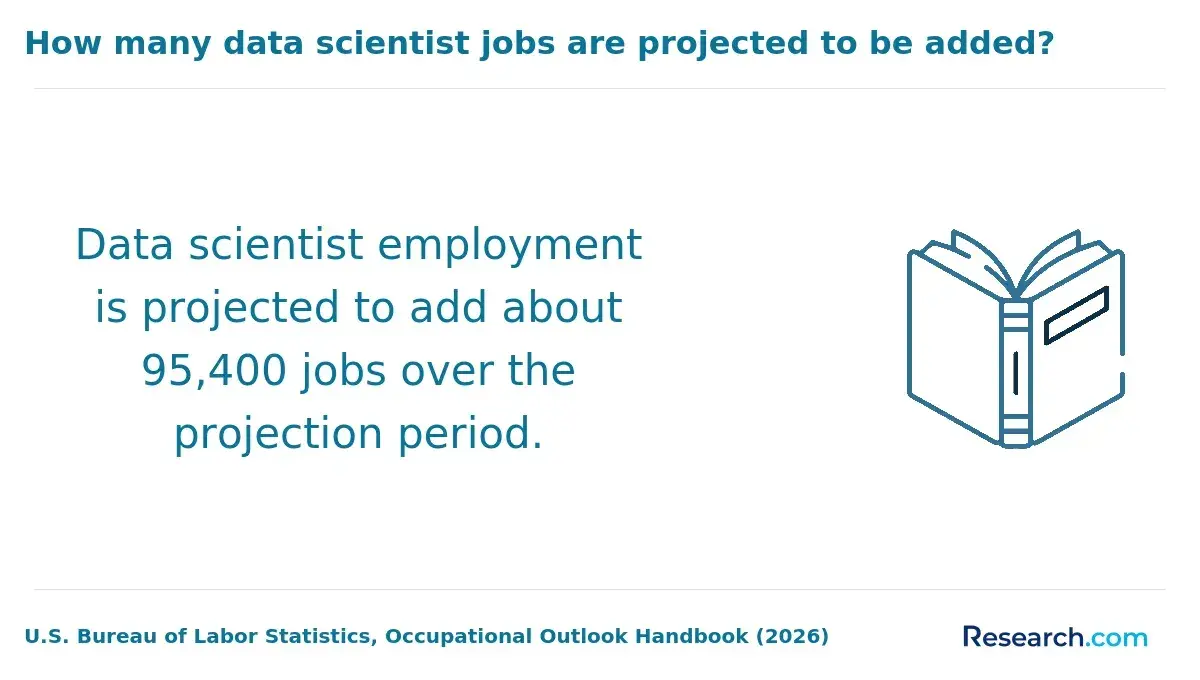
BLS projects 35% growth in U.S. data scientist employment from 2025 to 2035. That signals demand for the occupation, not a separate growth rate for data science graduates or a comparison with computational social science graduates. There is no single BLS occupation called "computational social scientist," so an occupation-to-occupation salary comparison would be misleading.
For earning potential, compare the roles you could realistically pursue, not degree labels. A prospective policy researcher and a prospective machine-learning engineer are entering different hiring markets even if both use Python. Prior experience, location, employer, and the technical scope of the job also affect pay. If your target is specifically an AI-focused role, selecting an AI program based on target roles may be more useful than assuming either degree provides sufficient AI specialization.
What do you study in each master's degree program?
Both paths can include programming, statistics, data visualization, and machine learning. The difference becomes clearer in required courses and the standards used to judge a final project. A data science project may prioritize predictive performance, reliability, or implementation; a computational social science project may also need a persuasive theory, sound sampling, and careful treatment of causal claims.
Course descriptions are more informative than labels. A course called "social network analysis" might focus on social theory, algorithms, or both. Likewise, a machine-learning course may teach model selection without covering deployment. Check prerequisites, assignments, and recent capstone descriptions to determine how deeply a topic is taught.
If your goal is computational research in a specific domain, test whether the program supplies relevant partners, data access, and electives. For example, a student interested principally in clinical applications may find that artificial intelligence master's preparation for healthcare work addresses domain needs more directly than either general degree. That is a reason to check fit, not to assume a specialized AI degree is necessary.
What are the admission requirements for each graduate degree?
Requirements vary by institution. Data science programs may expect evidence of calculus, linear algebra, statistics, and programming; computational social science programs may weigh research interests and preparation in a social science alongside quantitative skills. Neither pattern establishes a universal prerequisite or means applicants from another undergraduate field are ineligible.
Match your transcript and experience to each program's published requirements. If a prerequisite is missing, ask whether an accredited course, approved bridge course, or other evidence can fulfill it; independent study may improve readiness without formally satisfying a requirement. An applicant with strong social research experience but limited programming should also check whether introductory courses are part of the degree or assumed before enrollment.
If your main obstacle is entering a more technical AI curriculum without a computing major, graduate AI options for career changers without a CS degree offer another comparison. Confirm admission and prerequisite policies directly with any program before applying.
How long do these master's programs take and what do they cost?
There is no reliable degree-wide price or completion time for either field. Credit requirements, full- or part-time enrollment, thesis expectations, and course availability differ by school. A research project that depends on data access or an outside partner may also affect your timeline.
Ask each school for its current tuition schedule and a course-by-course completion plan. If cost is pushing you toward a different specialization, online AI master's programs for cost-conscious students can broaden the comparison - but assess their full costs and curriculum against the work you actually want to pursue. No projected salary should be treated as a guaranteed return on tuition.
Are online or campus-based programs better for graduate study?
Neither format is inherently better. Online study may make it easier to continue working or attend a program outside your area. Campus study may offer more immediate access to faculty, research groups, and local partners. For computational social science, those relationships can matter if your interests involve collaborative research or restricted datasets; for data science, they can matter when projects depend on employer or laboratory partnerships.
The meaningful comparison is operational: determine whether classes meet live, when team projects occur, whether a thesis adviser is available to online students, and whether any campus visits are required. Also ask if students in both formats can take the same electives and access comparable career and project support. An online program with strong mentoring can fit better than a nearby campus program that cannot support your intended work.
What jobs can you get with a computational social science degree?
Possible targets include policy analyst, social or behavioral researcher, research data analyst, civic-technology analyst, and analyst roles focused on users, communities, or public programs. Job titles and qualifications differ across government, nonprofits, universities, and businesses; some research positions require doctoral training or particular subject expertise.
The most useful career evidence is a project that shows you can formulate a social question, choose an appropriate method, document limitations, and explain findings to a nontechnical audience. If you want industry data scientist positions as well, seek substantial work in programming, statistical modeling, and reproducible workflows rather than relying on the degree title to communicate those skills.
What jobs can you get with a data science degree?
Possible targets include data scientist, data analyst, machine-learning analyst, and analytics roles in product, operations, or research. Some positions also expect software engineering, cloud infrastructure, or domain expertise beyond a master's curriculum. Read current job descriptions for your intended role before selecting electives.
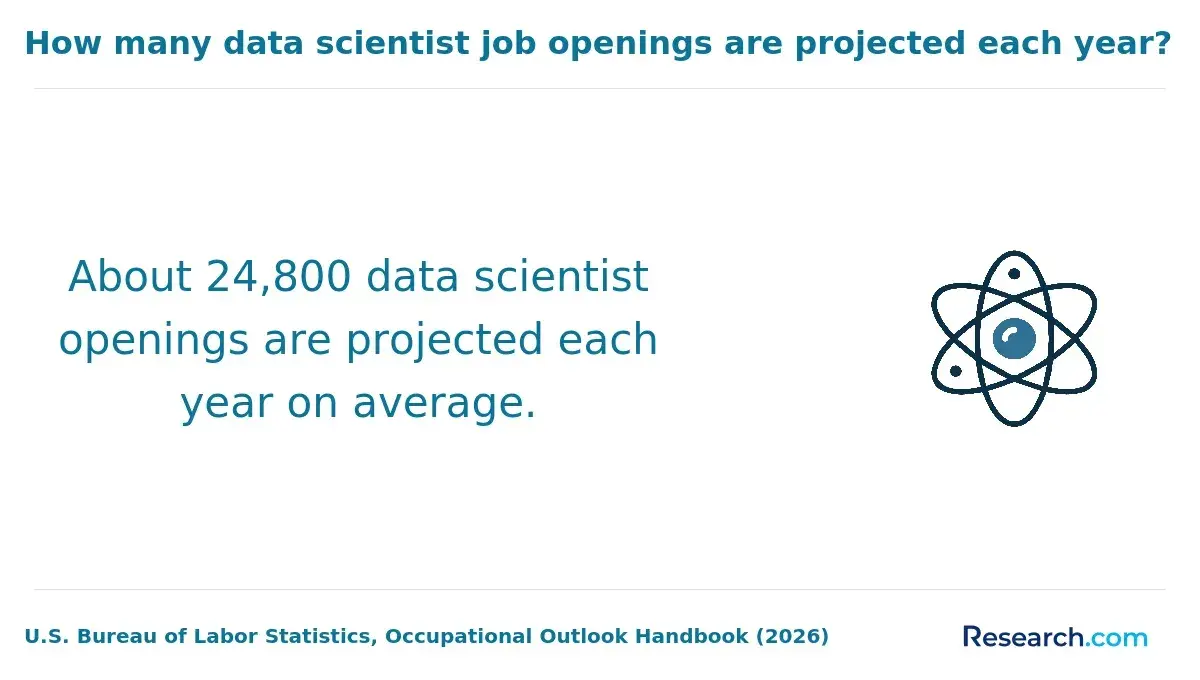
BLS projects about 24,800 U.S. data scientist openings per year on average from 2025 to 2035, including openings created when workers leave the occupation. That is a measure of occupation-wide opportunity, not openings reserved for new graduates. A strong portfolio should therefore show your individual contribution: the problem, data preparation, model or analysis, evaluation, and practical limitations.
What accreditation and certifications should you look for?
Start by verifying that the university holds recognized institutional accreditation and that the degree is an official graduate offering in its academic catalog. Do not assume a program lacks legitimacy because it has no separate "data science" or "computational social science" programmatic accreditation; check the institution's status and the particular degree's details rather than searching for a universal field-specific seal.
Certifications can demonstrate familiarity with a tool or platform, but they are not substitutes for a coherent curriculum or substantive projects. Give them more weight only when they align with the roles you seek. For online programs, also confirm that the school can enroll students in your state and whether any research, internship, or campus requirement affects you.
How do you choose a reputable master's program?
Shortlist programs by your intended work, then request evidence that each can help you do it. The following checks expose the most consequential mismatches before you commit tuition and time:
- Map required courses to your target role: Look for engineering and implementation depth for technical production roles, or theory and research-design depth for social inquiry.
- Inspect completed projects: Ask whether students can use relevant data, receive knowledgeable supervision, and produce work they may discuss with employers.
- Compare equivalent costs and timelines: Use all required credits and fees at the pace you can sustain, not different schools' headline tuition figures.
- Interrogate outcomes: Ask which graduates are represented, when results were collected, and whether the school reports role changes rather than salary alone.
- Check access: Verify elective availability, adviser capacity, career support, and any restrictions affecting online or part-time students.
A common mistake is choosing the program with the most attractive title or ranking while overlooking required courses that do not serve the intended career. If neither degree gives you enough depth in a target specialty, online artificial intelligence program comparisons may help you evaluate a third path. Ultimately, choose data science when its broader technical training matches the work you want to demonstrate; choose computational social science when rigorous investigation of social questions is the central goal.
Other Things You Should Know About Data Science
Potentially. If a PhD is your goal, prioritize opportunities to conduct original research, work closely with faculty, and develop a strong writing sample. Check the expectations of the doctoral programs you might pursue.
Possibly, but obtain the employer's permission and ask the university about privacy, confidentiality, publication, and project-approval rules before committing to the topic.
Recognition varies by employer and role. Make your methods, tools, research topic, and results explicit on your résumé so a reader does not have to infer your skills from the title.
Yes, but a pivot may require additional projects or experience. Keep evidence of transferable methods, and address any gaps between your coursework and the requirements of your new target role.
References
- Causal Inference Meets Deep Learning - PMC - NIH https://pmc.ncbi.nlm.nih.gov/articles/PMC11384545/
- Types of Financial Aid: Grants, Work-Study, and Loans | studentaid.gov https://studentaid.gov/understand-aid/types
- Annual Earnings by Educational Attainment - COE https://nces.ed.gov/programs/coe/indicator/cba/annual-earnings
- Curriculum Overview | vt.edu https://data.science.vt.edu/programs/ms-ds/course-info.html
- Data Science | cuny.edu https://www.gc.cuny.edu/data-science
- Social Data Science, MA - ASU degree https://degrees.asu.edu/masters-phd/major/ASU00/ASSTCMA/social-data-science-ma
- What Can I Do With a Degree in Data Science? Career Paths & Skills | Harvard SEAS https://seas.harvard.edu/news/what-can-i-do-degree-data-science-career-paths-skills
- Explore First Destinations | Get Started | Undergraduate Career Services https://undergradcareers.nd.edu/start/first-destinations/
- Machine Learning & Causal Inference: A Short Course | Stanford Graduate School of Business https://www.gsb.stanford.edu/faculty-research/labs-initiatives/sil/research/methods/ai-machine-learning/short-course
- Data Science - UCSD Catalog https://catalog.ucsd.edu/curric/DSC-gr.html