2027 Low-Cost Online Respiratory Therapy Associate Degree Programs with Financial Aid: FAFSA, Grants, and Scholarships

Co-Founder and Chief Data Scientist
Choosing an online respiratory therapy associate degree is really a cost-and-eligibility decision: the cheapest advertised tuition is not always the lowest final price. The U. S. Bureau of Labor Statistics reports a May 2024 median annual wage of $77,960 for respiratory therapists, with employment projected to grow 12% from 2024 to 2034. This guide is for students comparing online or hybrid associate programs, financial aid offers, grants, scholarships, and employer benefits so they can estimate the amount they may actually pay before enrolling.
Key Things You Should Know
- FAFSA can only be used at eligible institutions and eligible programs; online delivery alone does not make a respiratory therapy associate degree qualify for federal student aid.
- The maximum Federal Pell Grant is $7,395 for the 2025-26 award year, which can cover a major share of tuition at many public two-year colleges but may not cover books, clinical supplies, uniforms, exams, travel, or living costs.
- Respiratory therapy associate programs are often hybrid rather than fully online because accredited training requires lab practice, clinical rotations, and preparation for credentialing and state licensure.
Which Low-Cost Online Respiratory Therapy Associate Degree Programs Offer Financial Aid?
Low-cost online respiratory therapy associate degree programs that offer financial aid are usually public community colleges, technical colleges, and nonprofit colleges that participate in Title IV federal student aid and offer a qualifying respiratory care program. The most financially useful programs combine affordable tuition, FAFSA participation, recognized respiratory therapy accreditation, local clinical placements, and transparent fees.
Because program costs and aid participation can change, students should compare program types before requesting financial aid estimates. The table below summarizes the kinds of programs most likely to be affordable after aid and the trade-offs to verify with each school.
| Program type | Common degree format | Financial aid potential | Cost and eligibility factors to verify |
| Public community college or technical college | AAS or AS in respiratory care with online didactic courses and in-person labs or clinicals | Often FAFSA-eligible if the institution and program participate in federal aid | In-district tuition, program fees, clinical site distance, equipment, and state residency rules |
| Public college with selective respiratory care admission | Prerequisites followed by professional respiratory therapy coursework | May offer federal, state, and institutional aid, but admission to the professional phase can affect timing | Separate program application, prerequisite costs, waitlists, and satisfactory academic progress requirements |
| Private nonprofit college | Hybrid associate degree or completion-oriented pathway | May offer FAFSA access plus institutional scholarships | Total tuition, mandatory fees, scholarship renewal rules, and transfer-credit limits |
| Non-degree certificate or workforce training provider | Short training or exam-prep format | Often not eligible for federal student aid unless tied to an approved Title IV program | Whether the credential meets licensure or employer requirements for respiratory therapists |
The lowest-cost option is usually the program with the lowest net price, not the lowest tuition. Net price means tuition, fees, books, supplies, clinical costs, and required equipment minus grants and scholarships that do not have to be repaid.
Before applying, students should ask each school for the same cost items so the comparison is fair. These questions help reveal whether a program is truly low-cost after financial aid:
- Does the respiratory therapy associate degree itself qualify for federal student aid, or only the college generally?
- Is the program accredited for respiratory care education and acceptable for state licensure where the student plans to work?
- What are the full program costs, including tuition, online course fees, lab fees, background checks, immunizations, uniforms, books, testing, and graduation fees?
- How many credits can transfer from prior college coursework, military training, or approved prerequisites?
- Are clinical placements arranged near the student's location, and are travel costs the student's responsibility?
How Does FAFSA Work for Online Respiratory Therapy Associate Degree Programs?
FAFSA is the Free Application for Federal Student Aid. For an online respiratory therapy associate degree, it determines eligibility for federal grants, federal work-study, and federal Direct Loans, but it does not automatically mean the student will receive enough aid to cover the full program.
The key point is that FAFSA eligibility has two layers: the school must participate in federal student aid, and the specific program must be eligible. The table below shows the main FAFSA-related factors that affect online respiratory therapy students.
| FAFSA factor | Why it matters for respiratory therapy students | What to confirm with the school |
| Title IV participation | Only participating institutions can process federal grants and loans | The school's federal school code and whether the associate degree is aid-eligible |
| Enrollment intensity | Pell Grant amounts and loan timing can change when a student enrolls less than full time | How aid changes at full-time, three-quarter-time, half-time, and less-than-half-time status |
| Program admission status | Some students take prerequisites before entering the respiratory care cohort | Whether prerequisite-only enrollment is covered by the same financial aid package |
| Satisfactory academic progress | Students must meet GPA and completion-rate rules to keep federal aid | The minimum GPA, pace requirement, and appeal process |
| Clinical participation | Background checks, immunizations, and clinical eligibility can affect progression | Whether clinical delays change enrollment status or aid disbursement |
A practical FAFSA process should start before the student commits to a program. The goal is to compare award letters based on out-of-pocket cost rather than assuming that all FAFSA-eligible programs are equally affordable.
- Create a list of respiratory therapy associate programs that appear to meet accreditation, online format, clinical location, and cost requirements.
- Confirm each school's federal school code and ask whether the respiratory therapy associate degree is eligible for federal student aid.
- Submit the FAFSA with all schools under consideration so each financial aid office can prepare an offer.
- Request a full cost of attendance estimate, not just tuition, because respiratory therapy programs often include clinical and equipment expenses.
- Compare grants and scholarships first, then loans, because loans lower the current bill but increase future repayment obligations.
A common mistake is confusing "we accept FAFSA" with "this program will be affordable." FAFSA is an application and eligibility tool; the award depends on financial need, enrollment level, dependency status, school cost of attendance, prior aid use, and federal rules.
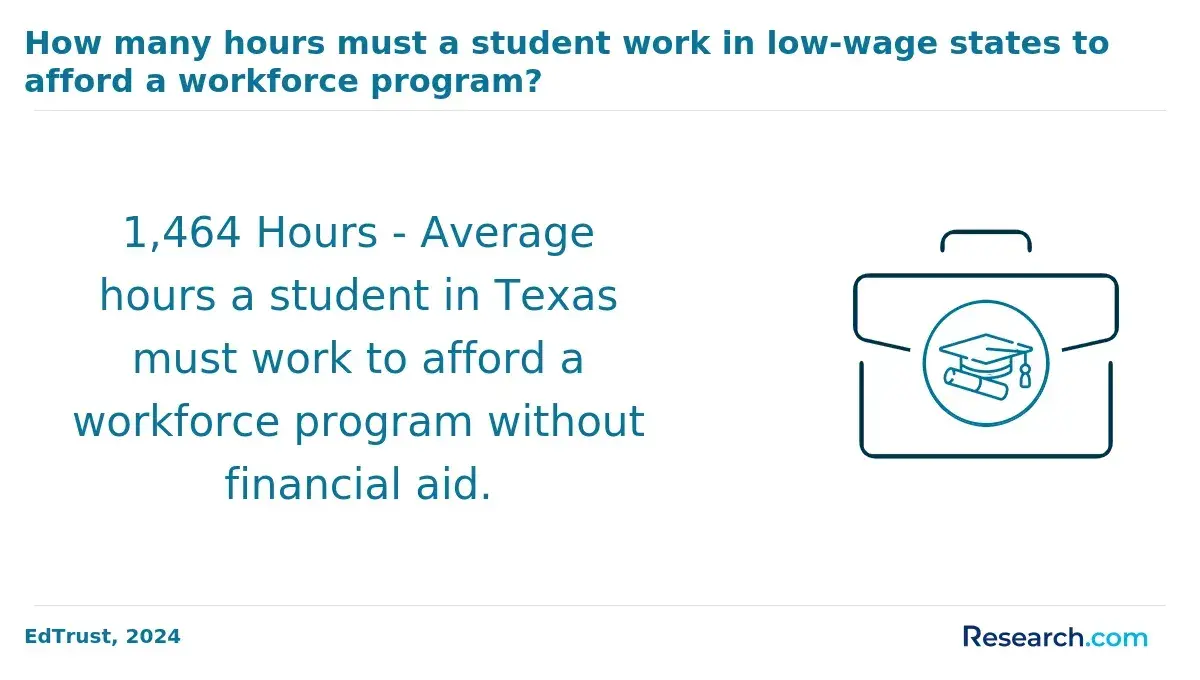
What Grants Can Help Pay for an Online Respiratory Therapy Associate Degree?
Grants are usually the best financial aid source because they generally do not have to be repaid if the student meets the rules. For online respiratory therapy associate degree students, the most important grants are federal, state, institutional, and workforce-related awards.
The main grant categories differ in who funds them and how students qualify. The table below explains where to look and what limitations to check before counting a grant as part of the final budget.
| Grant source | Who it may help | Important limitation |
| Federal Pell Grant | Undergraduate students with financial need who have not already exceeded lifetime eligibility | The amount can change by enrollment intensity and cost of attendance |
| Federal Supplemental Educational Opportunity Grant | Students with exceptional financial need at participating schools | Funds are limited and not every college participates |
| State need-based grants | Residents attending eligible in-state institutions or approved programs | Deadlines and residency rules vary by state |
| Institutional grants | Students a college wants to support based on need, merit, program demand, or local workforce priorities | Renewal may require minimum credits, GPA, or continued program enrollment |
| Workforce or healthcare training grants | Students preparing for high-demand allied health roles | Funding may depend on local workforce board rules, employer partnerships, or service expectations |
The Federal Pell Grant maximum of $7,395 for the 2025-26 award year is especially relevant for low-cost public two-year programs. By comparison, the College Board reported average published tuition and fees of $4,050 for public two-year in-district students in 2024-25, which means Pell can substantially reduce tuition for eligible students, although it may not cover the full cost of attendance.
Students should not assume grants will continue automatically every term. To avoid a funding gap, check these grant conditions before enrolling:
- Whether the grant requires full-time enrollment or pays a reduced amount for part-time study
- Whether summer courses are covered or require a separate aid review
- Whether prerequisite courses count toward the eligible program of study
- Whether a minimum GPA or course completion rate is required for renewal
- Whether withdrawing from a course could trigger repayment or reduce future eligibility
Scholarships can reduce out-of-pocket cost, but they are usually more competitive and more conditional than grants. Respiratory therapy students should search beyond general college scholarships because allied health, hospital, professional association, and local foundation awards may be better matched to the program.
Scholarship value depends on fit, renewability, and timing. The table below shows common scholarship sources and why each one may matter for online or hybrid associate degree students.
| Scholarship source | Best fit | What to check |
| College foundation scholarships | Students enrolled at community or technical colleges with local donor funds | Application window, essay requirements, program-specific funds, and whether awards apply to fees |
| Respiratory care department scholarships | Students admitted to the professional phase of a respiratory therapy program | Whether students must complete prerequisites before applying |
| Hospital or health system scholarships | Students willing to work for or complete clinical training with a sponsoring employer | Service obligations, employment requirements, and repayment clauses |
| State respiratory care society scholarships | Students preparing for respiratory care credentials in a specific state | Membership, residency, GPA, and program accreditation requirements |
| General healthcare scholarships | Students in allied health, first-generation college students, adult learners, or career changers | Whether associate degree students and online learners are eligible |
A strong scholarship search is organized by deadline and eligibility, not by award size alone. A smaller renewable scholarship can be more valuable than a one-time award if it continues through multiple semesters.
- Start with the program's financial aid office and respiratory care department because they know which awards past students have used.
- Search the college foundation database using terms such as allied health, respiratory care, healthcare, adult learner, and clinical education.
- Ask local hospitals, clinics, and long-term care facilities whether they sponsor respiratory therapy students.
- Review renewal rules before accepting an award, especially GPA, credit load, and continued major requirements.
- Report outside scholarships to the financial aid office so the school can adjust the aid package correctly.
One red flag is a scholarship that requires payment to apply or promises guaranteed awards. Legitimate scholarships may be competitive and time-consuming, but students should not have to pay an application fee to be considered for ordinary educational aid.
Financial aid can reduce the billed cost of an online respiratory therapy associate degree dramatically, but the reduction depends on the school's cost of attendance, the student's financial need, enrollment level, and scholarship success. The most useful comparison is net cost: total estimated program cost minus grants and scholarships.
The table below uses published national aid and tuition benchmarks to show why low-cost public programs can be especially powerful for Pell-eligible students. These figures are not a school-specific award estimate, but they help frame the affordability question students should ask each college.
| Cost or aid benchmark | Recent U.S. figure | How to use it in decision-making |
| Average published tuition and fees at public two-year in-district colleges | $4,050 for 2024-25 | Use this as a benchmark when judging whether an online or hybrid program is priced like a low-cost community college option |
| Maximum Federal Pell Grant | $7,395 for 2025-26 | Eligible students may be able to offset a large share of tuition and fees, but award amounts vary |
| Dependent undergraduate Direct Loan annual limit, first year | $5,500 | Loans can fill gaps, but they should be compared against expected monthly repayment after graduation |
| Dependent undergraduate Direct Loan annual limit, second year | $6,500 | Borrowing across multiple years can add up even in an associate program |
A higher-cost program can sometimes become cheaper after scholarships, but only if the aid is grant-based, renewable, and applied to required costs. A lower-tuition program can still become expensive if it charges high clinical fees, requires distant rotations, or offers little institutional aid.
Students should calculate three numbers before choosing a program. These figures make award letters easier to compare:
- Direct cost: tuition, required fees, books, supplies, lab materials, uniforms, background checks, drug screening, immunizations, and exam-related expenses billed or required by the program
- Gift aid: Pell Grant, state grants, institutional grants, and scholarships that do not require repayment
- Out-of-pocket cost: direct cost minus gift aid, before deciding whether to use savings, payment plans, employer benefits, work income, or loans
For readers comparing allied health pathways, cost should also be weighed against career direction. A student who prefers medical records, compliance, data, and revenue-cycle work may want to compare respiratory therapy with a health information management degree online, which may involve different clinical requirements and online flexibility.
Financial aid packages should be compared line by line, not by the largest total award. A package that includes more loans is not necessarily better than a smaller package with more grants and lower tuition.
The table below shows how two programs with different sticker prices can produce different affordability outcomes. The goal is to separate aid that reduces cost from aid that postpones cost through borrowing.
| Comparison point | Program A: lower sticker price | Program B: higher sticker price | Better question to ask |
| Tuition and required fees | Lower published cost | Higher published cost | What is the full cost of attendance for the entire program? |
| Grants and scholarships | May be mostly federal or state aid | May include institutional scholarships | How much aid does not have to be repaid? |
| Loans | May be optional if net cost is low | May make the award look larger | How much debt would be required to finish? |
| Clinical expenses | May be local and lower-cost | May require travel or additional site fees | Are clinical costs included in the estimate? |
| Transfer value | May have strong public college transfer pathways | May have articulation agreements with specific partners | Will credits apply to a future bachelor's degree if plans change? |
When award letters arrive, students should standardize the comparison. Schools may use different terms for the same type of aid, and some include loans in the headline amount while others separate them clearly.
- Remove loans from each award letter first so grants and scholarships are visible.
- Add all required program expenses that are not already included, especially clinical and technology fees.
- Divide the remaining cost by the number of semesters to estimate cash-flow needs.
- Check whether each scholarship renews automatically or requires a new application.
- Ask the school to explain how aid changes if the student drops below full-time status or repeats a course.
A common mistake is choosing the largest financial aid package without asking what portion is debt. For a low-cost associate degree, the strongest package is usually the one with the lowest net cost, manageable enrollment requirements, and the least need for borrowing.
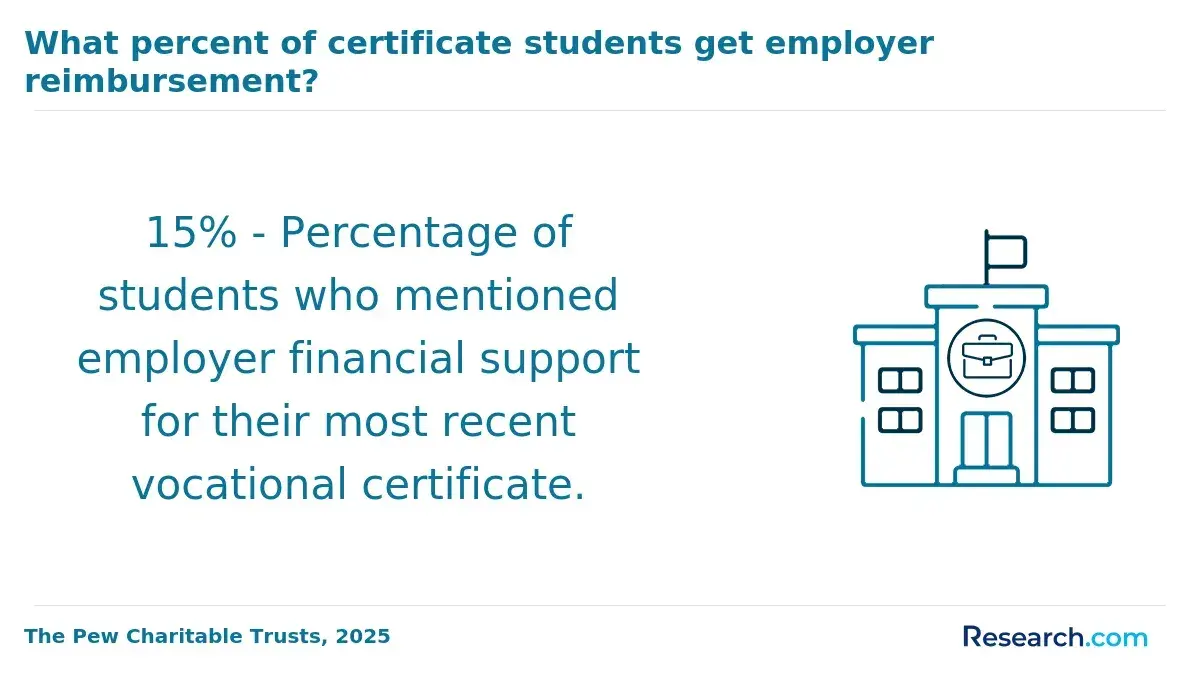
Employer tuition assistance can be an important funding source for respiratory therapy students, especially those already working in hospitals, sleep labs, pulmonary clinics, emergency departments, long-term care facilities, or other healthcare settings. It can also reduce loan dependence when grants and scholarships do not cover the full program.
Employer benefits vary widely, so students should treat them as conditional funding until the policy is confirmed in writing. The table below compares common employer-supported education benefits.
| Employer benefit | How it can help | Risk to review |
| Tuition reimbursement | Repays part of tuition after successful course completion | The student may need to pay upfront and wait for reimbursement |
| Tuition assistance paid directly to the school | Can lower the bill before payment is due | May require preapproval and eligible-program documentation |
| Clinical partnership or sponsorship | May connect students with clinical sites or workforce scholarships | May include work commitments or repayment clauses |
| Shift flexibility | Helps students attend labs, clinicals, and exams | Not a cash award, but it can affect persistence and total completion cost |
| Certification or exam support | May cover credentialing-related expenses after graduation | Usually separate from tuition aid and may apply only to employees in good standing |
Students should coordinate employer benefits with the financial aid office because outside funding can change the aid package. The best approach is to ask whether employer assistance reduces loans first or reduces grants and scholarships.
Employer support can be especially valuable for healthcare workers deciding between clinical and administrative advancement. Someone interested in management, compliance, or operations may also compare a respiratory therapy pathway with a future masters in healthcare administration, particularly if an employer funds graduate education after the associate degree stage.
Accreditation and enrollment status directly affect both financial aid and career value. For respiratory therapy, students should verify institutional accreditation, federal aid eligibility, and programmatic respiratory care accreditation before assuming an online associate degree will support licensure or employment.
Online respiratory therapy is not the same as fully remote training. Even when lectures are online, accredited programs typically require in-person labs, competency checks, simulation, and supervised clinical rotations because respiratory therapists work directly with patients, ventilators, oxygen systems, diagnostic equipment, and care teams.
The table below explains the most important accreditation and enrollment distinctions for financial aid and career planning.
| Requirement or status | Financial aid impact | Career or licensure impact |
| Institutional accreditation | Usually required for Title IV federal student aid participation | Can affect transfer credits and employer recognition |
| Programmatic respiratory care accreditation | May not by itself guarantee FAFSA eligibility, but it signals program alignment with respiratory care education standards | Often important for credentialing exams, state licensure, and employer acceptance |
| Full-time enrollment | May support maximum aid eligibility depending on need and program cost | Can shorten time to completion but may be difficult for working adults |
| Part-time enrollment | May reduce grant amounts and extend aid timelines | Can make school more manageable but may delay clinical progression |
| Non-degree or prerequisite-only status | May limit aid eligibility depending on school rules and program structure | Can delay entry into the professional respiratory care sequence |
Students should be cautious if a program avoids clear answers about accreditation, clinical placement, state authorization, exam eligibility, or licensure preparation. These issues can matter more than tuition because a low-cost program has weak value if it does not lead to the credential or state approval the student needs.
Enrollment changes are another common financial aid trap. Dropping a course, failing a prerequisite, pausing clinicals, or moving from full-time to part-time status can change aid amounts, trigger repayment calculations, or extend the total cost of the degree.
A low-cost online respiratory therapy associate degree with financial aid is most valuable for students who want a patient-care career, can complete in-person clinical requirements, and have access to enough grant, scholarship, employer, or savings support to keep borrowing manageable. It is usually a career-focused pathway rather than a purely transfer-oriented online degree.
Students most likely to benefit share several practical characteristics. These factors matter because respiratory therapy requires both academic coursework and hands-on clinical readiness.
- They live within reach of approved labs and clinical sites or can travel reliably for in-person requirements.
- They qualify for need-based aid, state grants, employer support, or local healthcare scholarships.
- They are comfortable with science-heavy coursework, patient assessment, equipment use, infection control, and emergency care settings.
- They want to enter the workforce with an associate-level allied health credential rather than spending more time and money on a longer degree first.
- They have confirmed that the program supports credentialing and licensure in the state where they plan to work.
Some students should consider alternatives before enrolling. A respiratory therapy associate degree may not be the best fit for someone who needs a fully asynchronous program, cannot attend clinical rotations, wants a non-patient-facing healthcare role, or plans to move to a state with different licensure requirements without confirming portability.
For students drawn to healthcare but less interested in bedside care, health information management may be a better match. Comparing respiratory therapy outcomes with health information management salary information can help clarify whether the student prefers clinical respiratory care, healthcare data, compliance, coding, or administrative career paths.
How Should Students Minimize the Total Cost of an Online Respiratory Therapy Associate Degree?
Students can minimize the total cost of an online respiratory therapy associate degree by focusing on net price, completion risk, and credential value at the same time. The cheapest path is not always the one with the lowest tuition; it is the one the student can complete, fund responsibly, and use for licensure or career advancement.
A strong cost-reduction plan should happen before enrollment, not after the first bill arrives. These steps help students turn financial aid information into a realistic payment plan:
- Verify that the institution participates in federal student aid and that the respiratory therapy associate degree is an eligible program.
- Confirm respiratory care accreditation, clinical placement expectations, state authorization, and licensure alignment before comparing prices.
- Request a full cost of attendance that includes tuition, fees, books, technology, uniforms, background checks, immunizations, transportation, testing, and graduation costs.
- Submit the FAFSA early and list every school under consideration so award letters can be compared side by side.
- Prioritize grants, scholarships, tuition waivers, employer assistance, and payment plans before using loans.
- Ask whether transfer credits, prior prerequisites, military education, or approved healthcare coursework can reduce the number of credits needed.
- Compare full-time and part-time plans based on aid eligibility, work schedule, clinical sequencing, and total time to completion.
- Calculate borrowing only after subtracting gift aid and realistic cash payments from the full program cost.
Several red flags can make a program look affordable when it is not. Students should slow down if they see unclear tuition disclosures, vague clinical placement promises, pressure to enroll before receiving an aid offer, scholarships with unclear renewal rules, or a financial aid package that relies heavily on loans.
Transfer planning also matters. Students who may later move into healthcare administration, informatics, quality improvement, or management should ask whether associate credits transfer into bachelor's programs.
Those comparing non-clinical healthcare pathways can also review the best online CAHIIM accredited health information management degree programs to understand how accreditation and transferability work in a different healthcare field.
The best final choice is the program that meets licensure and career requirements, keeps unpaid costs realistic, minimizes unnecessary borrowing, and gives the student a clear path to completion.
Other Things You Should Know About Respiratory Therapy
Usually no. Respiratory therapy programs may offer online coursework, but students typically must complete in-person labs, simulations, competency checks, and clinical rotations to prepare for credentialing and state licensure.
An AAS is usually career-focused and designed for entry into practice after graduation. An AS may include more transfer-oriented general education, but the exact difference depends on the college and its transfer agreements.
Many do. Common prerequisites may include anatomy and physiology, microbiology, chemistry, math, English, and medical terminology, but requirements vary by school and admission track.
Ask whether the program prepares students for credentialing and licensure in your state, where clinicals are held, what expenses are not included in tuition, how many students are admitted, and what happens if you cannot complete a clinical requirement on schedule.
- Local Respiratory Therapy Programs Report 100% Employment Rate for Recent Graduates - Kettering College https://kc.edu/local-respiratory-therapy-programs-report-100-employment-rate-for-recent-graduates/
- Grant Application | HeadStart.gov https://headstart.gov/grant-application
- Find The Best Online Respiratory Therapy Programs https://www.accreditedschoolsonline.org/healthcare/respiratory-therapy/
- Respiratory Therapy https://www.ntc.edu/academics-training/programs/all/associate-degree/respiratory-therapy
- Online Health Science Degrees with Financial Aid https://www.edumed.org/online-schools/health-science-degrees/financial-aid/
- Costs and Financial Aid https://www.kumc.edu/school-of-health-professions/academics/departments/respiratory-care-and-diagnostic-science/academics/respiratory-care-degree-programs/respiratory-care-bachelors-degree/costs-and-financial-aid.html
- A profession in motion: Shifting numbers and growing roles in respiratory therapy - CHEST Physician https://www.chestphysician.org/a-profession-in-motion-shifting-numbers-and-growing-roles-in-respiratory-therapy/
- Respiratory Care - Lake-Sumter State College https://www.lssc.edu/as-respiratory-care/
- 9 Online Schools That Accept FAFSA (and How to Get Financial Aid) https://www.studentloanplanner.com/financial-aid-online-colleges/
- Respiratory Therapy Associate Degree https://chartercollege.edu/programs/health-care/respiratory-therapy-aas/