2027 Low-Cost Online Medical Administrative Assistant Associate Degree Programs with Financial Aid: FAFSA, Grants, and Scholarships

Co-Founder and Chief Data Scientist
Choosing an online medical administrative assistant associate degree is mostly a cost-and-fit decision: tuition is only one part of what you will pay. The College Board reported average published tuition and fees of $4,050 for public two-year in-district students in 2024-25, but fees, books, enrollment status, and aid can change the real price.
This guide is for students comparing low-cost online options, FAFSA, grants, scholarships, and employer benefits. It explains how to estimate net cost, avoid financial-aid mistakes, and choose a program that supports healthcare office careers or future transfer plans.
Key Things You Should Know
- FAFSA-eligible associate degree programs can use federal aid, including the Pell Grant, which has a maximum award of $7,395 for the 2024-25 award year for eligible students.
- The cheapest advertised tuition is not always the lowest net cost; compare tuition, online fees, books, transfer credits, grants, scholarships, and loan borrowing before choosing.
- Medical administrative assistant programs are commonly 60 to 70 credits and may lead to medical office, patient access, scheduling, billing support, and healthcare administrative roles rather than clinical licensure.
Which Low-Cost Online Medical Administrative Assistant Associate Degree Programs Offer Financial Aid?
Low-cost online medical administrative assistant associate degree programs that offer financial aid are usually housed at public community colleges, technical colleges, and regionally accredited nonprofit colleges that participate in federal Title IV aid. The key is not whether a program is online, but whether the school is eligible for federal student aid and whether the specific associate degree is an aid-eligible program.
Program names vary. Students may see Associate of Applied Science in Medical Office Administration, Associate of Science in Medical Administrative Assistant, Health Administrative Services, Medical Administrative Specialist, or Healthcare Office Administration. AAS degrees are often career-focused, while AA or AS options may be more transfer-oriented. If the student's long-term goal is broader healthcare administration, comparing an associate program with a cheapest online healthcare administration degree can also clarify whether starting at the associate level is the best financial route.
The table below shows the kinds of low-cost online associate degree options students commonly compare and what to verify before assuming financial aid will apply. Use it as a screening tool, then confirm details with each school's financial aid office and program catalog.
| Program type | Common degree title | Typical affordability advantage | Financial aid check | Best fit |
| Public community college | AAS Medical Office Administration or Medical Administrative Assistant | Often lowest tuition for in-district or in-state students | Confirm the college participates in FAFSA and the online degree is Title IV eligible | Students seeking an affordable path into medical office roles |
| Public technical college | AAS Medical Administrative Specialist or Health Administrative Services | Career-focused courses and applied training may reduce time spent on unrelated electives | Ask whether all online terms meet aid-eligible enrollment requirements | Students who want practical training in scheduling, records, coding basics, billing support, and office systems |
| Regionally accredited nonprofit college | AS or AAS in Healthcare Administrative Support | May offer institutional scholarships or transfer pathways | Review net price after institutional aid, not just listed tuition | Students who want online flexibility and possible transfer to a bachelor's program |
| For-profit career college | Associate degree in Medical Administrative Assisting | May offer frequent start dates and structured online delivery | Compare loan-heavy aid packages carefully and verify accreditation, transferability, and total program cost | Students who need a fixed schedule but can confirm the net cost is reasonable |
A low-cost program should meet three tests before it makes your shortlist: it participates in federal aid, it has recognized accreditation, and its total price after grants and scholarships is manageable. A program that advertises "financial aid available" may still leave you with high out-of-pocket costs if most of the package is loans.
How Does FAFSA Work for Online Medical Administrative Assistant Associate Degree Programs?
FAFSA is the Free Application for Federal Student Aid. It is the form colleges use to determine eligibility for federal grants, loans, work-study, and often state or institutional aid. For an online medical administrative assistant associate degree, FAFSA works the same way it does for campus programs as long as the school and program are aid eligible.
The FAFSA process changed beginning with the 2024-25 award year, including the use of the Student Aid Index instead of the Expected Family Contribution. For students, the practical takeaway is simple: the FAFSA does not award money by itself; it gives each participating school the data needed to build a financial aid offer.
Students should follow these steps before relying on FAFSA to pay for an online associate degree:
- Confirm that the college participates in federal student aid and has a valid federal school code.
- Verify that the specific online medical administrative assistant associate degree is eligible for Title IV aid, not just the institution overall.
- Complete the FAFSA using accurate income, household, and contributor information.
- List every school you are seriously considering so each can prepare an aid offer.
- Compare aid offers using net price, required borrowing, and remaining balance rather than total aid listed.
- Ask whether changing from full-time to part-time enrollment would reduce or delay grants, loans, or institutional scholarships.
The biggest FAFSA mistake is assuming eligibility equals affordability. A student may qualify for aid but still owe money if tuition, online fees, books, and supplies exceed grants and scholarships. Loans can close the gap, but they should be treated as a cost-shifting tool, not a discount.
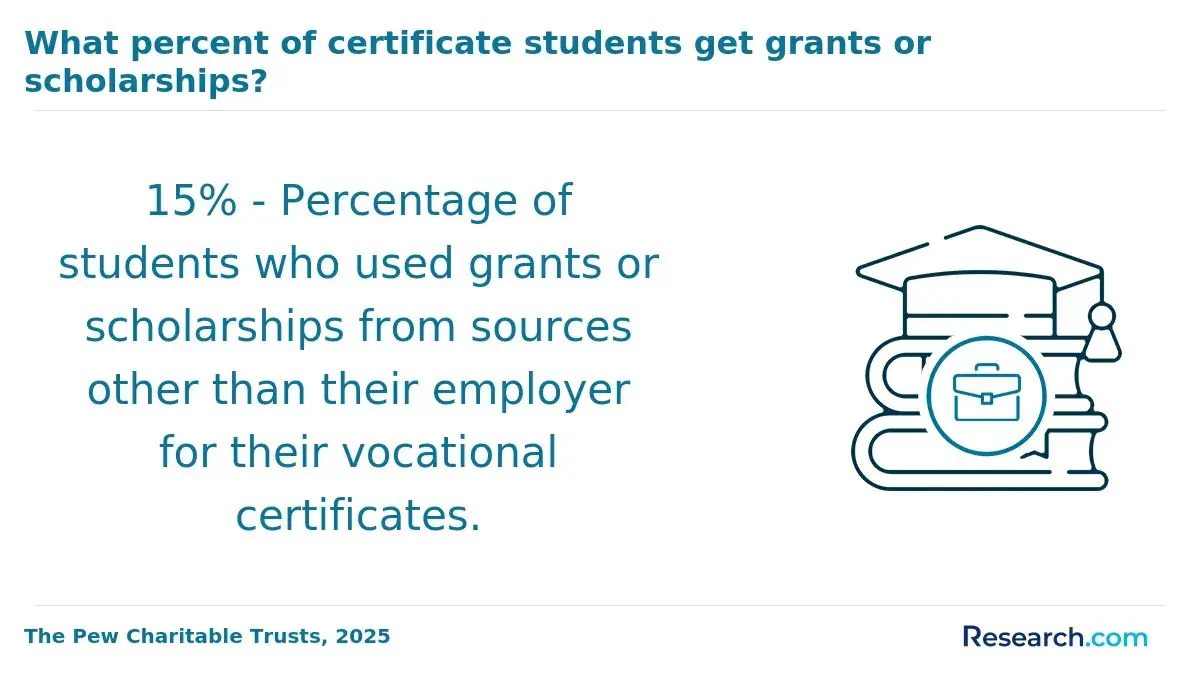
What Grants Can Help Pay for an Online Medical Administrative Assistant Associate Degree?
Grants are usually the best form of aid because they generally do not need to be repaid if the student meets enrollment and academic requirements. For low-income and moderate-income students, grants can be the difference between paying several thousand dollars out of pocket and completing an associate degree with little or no borrowing.
The most important grant source is the federal Pell Grant. The maximum Pell Grant for the 2024-25 award year is $7,395, but the actual award depends on financial need, enrollment intensity, cost of attendance, and annual eligibility rules. Students attending low-cost community colleges may find that Pell covers a large share of tuition and fees, though it may not cover books, technology, transportation, or reduced income from working fewer hours.
The table below compares major grant sources and how they usually apply to online associate degree students. Requirements vary by state and school, so students should confirm rules before enrolling.
| Grant source | Who may qualify | How it can reduce cost | Common limitation |
| Federal Pell Grant | Undergraduate students with financial need who have not exhausted eligibility | Can cover a meaningful portion of tuition and fees at low-cost colleges | Award changes with financial need and enrollment intensity |
| Federal Supplemental Educational Opportunity Grant | Students with exceptional financial need at participating schools | Adds campus-based grant aid on top of Pell when funds are available | Not every school participates, and funds can run out |
| State need-based grants | Residents who meet state income, residency, and enrollment rules | Can reduce remaining tuition after federal aid | Deadlines may be earlier than the FAFSA deadline |
| Workforce or career-training grants | Students preparing for in-demand healthcare support roles | May pay tuition, fees, books, or certification costs | Eligibility may depend on local workforce board rules or approved-program lists |
| Institutional grants | Students admitted to a college that offers need-based or completion grants | Can fill small gaps that prevent enrollment or graduation | May require minimum credits, GPA, or continuous enrollment |
Grant strategy matters. Students should submit the FAFSA early, check state deadlines, and ask whether the school has emergency completion grants, adult learner grants, or healthcare workforce funds. Missing a deadline can turn a grant-funded program into a loan-funded program.
Scholarships can reduce out-of-pocket cost without adding debt, but they require more targeted searching than FAFSA grants. Medical administrative assistant students should search in three directions: the college's scholarship office, local healthcare organizations, and professional or career-focused associations.
The strongest scholarship matches often depend on the student's background, location, school, or career goal. The following categories are worth checking because they commonly align with healthcare support, allied health, adult learners, or community college students:
- College foundation scholarships for students in medical office administration, allied health, business technology, health information, or healthcare support programs.
- Hospital auxiliary and health system scholarships for students preparing for healthcare careers in the local service area.
- Community foundation scholarships for adult learners, first-generation students, single parents, displaced workers, or county residents.
- Professional association scholarships connected to health information, revenue cycle, medical assisting, healthcare administration, or office administration.
- Phi Theta Kappa and community college transfer scholarships for students who perform well academically and may continue to a bachelor's degree.
Scholarships are useful only if the requirements match your situation. Before applying, check whether the award is restricted to full-time students, degree-seeking students, residents of a specific county or state, students with a minimum GPA, or students enrolled in a particular accredited program.
Students should also ask how outside scholarships affect their aid package. Some colleges reduce unmet need first, which helps the student, while others may adjust loans or institutional aid. The best outcome is usually when a scholarship reduces borrowing or the cash balance due rather than replacing grant aid the student would have received anyway.
Financial aid can reduce the cost of an online medical administrative assistant associate degree substantially, especially at low-tuition public colleges. However, the reduction depends on the student's aid eligibility, enrollment intensity, program price, residency status, and whether the school includes additional online, course, testing, or graduation fees.
The table below uses simplified examples to show why students should compare net price rather than advertised tuition. These are not promises of aid; they illustrate how different cost structures and grant levels can change the amount a student may need to pay or borrow.
| Scenario | Estimated annual tuition and required fees | Grant and scholarship aid example | Estimated remaining direct cost | Decision insight |
| Low-cost public college with strong grant eligibility | $4,050 | $4,050 | $0 before books and supplies | A low-tuition program can become highly affordable when grants cover tuition and required fees |
| Moderate-cost online program with partial aid | $8,000 | $4,500 | $3,500 before books and supplies | The student should compare payment plans, scholarships, and transfer credits before borrowing |
| Higher-cost online program with loan-heavy aid | $14,000 | $3,000 | $11,000 before books and supplies | A large total aid package may still be expensive if most remaining aid is loans |
Net price should include tuition, mandatory fees, online course fees, textbooks, access codes, exam fees, background checks if required, and graduation fees. If the program prepares students for optional certifications in medical office, billing, coding, or administrative support, ask whether exam costs are included or paid separately.
Salary context also matters. The U.S. Bureau of Labor Statistics reported May 2024 wage data for medical secretaries and administrative assistants in the healthcare support and administrative labor market, with earnings varying by employer, region, experience, and duties. Students should use wage data cautiously: an associate degree can improve preparation, but it does not guarantee a specific salary or promotion.
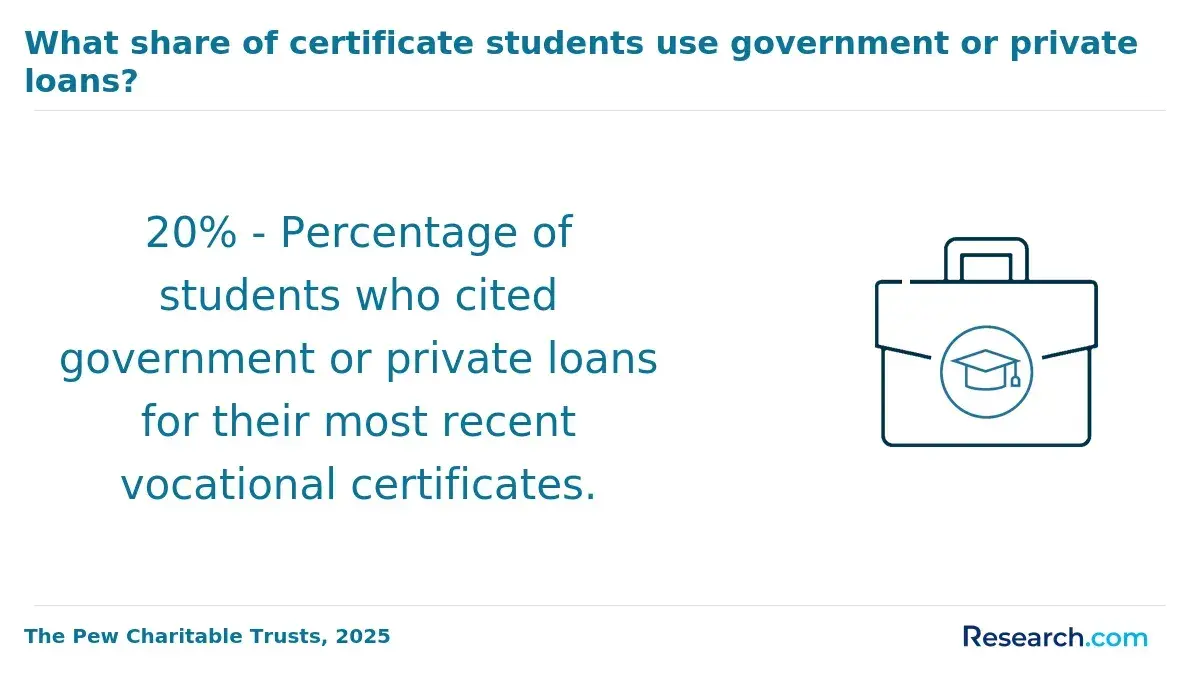
Financial aid packages can look generous while still producing very different out-of-pocket costs. One school may offer more total aid because it costs more, while another may offer less aid but leave the student with a smaller balance because tuition is lower.
The comparison below shows the main aid-package elements students should review side by side. The goal is to identify the lowest realistic cost, not the biggest award letter.
| Comparison factor | Why it matters | What to ask the school |
| Direct cost | Tuition and required fees are the charges most likely to appear on the student bill | What will I be billed each term if I take the recommended course load? |
| Indirect cost | Books, software, supplies, internet, transportation, and lost work hours can affect affordability | Which costs are estimated but not charged directly by the school? |
| Gift aid | Grants and scholarships reduce cost without repayment if requirements are met | Which awards do not need to be repaid, and which are renewable? |
| Loans | Loans may make enrollment possible but increase long-term cost | How much of my aid package is borrowing, and can I decline part of it? |
| Enrollment assumptions | Aid may change if the student attends less than full time | What happens to my aid if I take 6, 9, or 12 credits? |
| Satisfactory academic progress | Students can lose aid if they do not meet pace, GPA, or completion rules | What GPA and completion rate must I maintain? |
Students should watch for red flags in aid comparisons. These include award letters that combine grants and loans without clear labels, tuition estimates that exclude online fees, scholarships that apply only to the first term, and programs that do not clearly explain transfer-credit acceptance.
A higher-cost program can be the better financial choice only when its grants, scholarships, transfer policy, completion support, and career services reduce the student's risk and net cost. If two programs have similar outcomes and accreditation, the lower net price is usually the more practical choice.
Employer tuition assistance can help pay for an online medical administrative assistant associate degree, especially for students already working in hospitals, clinics, long-term care facilities, insurance offices, or medical billing companies. Many healthcare employers support education that improves scheduling, patient access, revenue cycle, records, compliance, or office management skills.
Federal tax rules generally allow up to $5,250 per year in qualifying employer educational assistance to be excluded from taxable income, though students should confirm current tax treatment with the employer or a tax professional. For a low-cost associate degree, that amount can cover a large share of annual tuition at many community colleges.
Employer benefits vary widely, so students should ask detailed questions before enrolling. The most important points to clarify are:
- Whether tuition assistance is paid upfront, reimbursed after grades post, or paid directly to the school.
- Whether the benefit covers only tuition or also fees, books, software, and certification exams.
- Whether the employer requires a minimum grade, specific major, manager approval, or continued employment after reimbursement.
- Whether FAFSA grants and employer benefits can be combined without reducing institutional aid.
- Whether the program schedule fits work shifts, overtime expectations, and family responsibilities.
Students who plan to move beyond front-office roles may also use employer benefits strategically. After completing an associate degree, some workers continue into bachelor's or graduate pathways such as online masters healthcare management programs later in their careers, but that decision should depend on job goals, employer requirements, and the return on additional tuition.
Accreditation affects financial aid, credit transfer, employer recognition, and long-term educational value. For FAFSA purposes, the institution must be eligible to participate in federal student aid programs. For transfer and credibility, students should generally look for institutions accredited by agencies recognized by the U.S. Department of Education or the Council for Higher Education Accreditation.
Medical administrative assistant associate degrees usually do not lead to state licensure in the way nursing or radiologic technology programs do. However, program quality still matters because employers may value training in electronic health records, insurance processes, medical terminology, privacy rules, customer service, scheduling systems, and professional communication.
Enrollment status also affects aid. Full-time students often receive larger term-based awards and finish faster, while part-time students may be able to keep working and avoid borrowing. The best choice depends on how aid is prorated and how long the student can sustain enrollment.
| Enrollment pattern | Potential financial-aid impact | Cost trade-off | Who may prefer it |
| Full time | May maximize term-based grant eligibility and speed completion | Less time to work may increase living-expense pressure | Students who can study intensively and want to finish quickly |
| Three-quarter time | May keep some grant eligibility while reducing course load | Program takes longer than full time | Working adults balancing job and family duties |
| Half time | May preserve loan eligibility and partial grant eligibility, depending on rules | Longer completion time can increase fee exposure and life-disruption risk | Students who need a manageable schedule |
| Less than half time | May sharply limit federal loan options and reduce grant eligibility | Lower term bill but slower progress | Students taking one course cautiously before committing |
Students considering faster completion should ask whether compressed terms affect workload, aid disbursement, and satisfactory academic progress. Some accelerated healthcare programs can reduce calendar time, but speed only helps financially when students can complete courses successfully without repeating credits.
A low-cost online medical administrative assistant associate degree with financial aid is most valuable for students who need a practical credential for healthcare office work and want to limit debt. It is especially useful when the program is affordable after grants, aligned with local employer needs, and flexible enough to complete while working.
The degree may be a strong fit for the following students:
- Adults entering healthcare from retail, hospitality, call center, clerical, or customer service roles who need healthcare-specific terminology and office training.
- Current healthcare workers in entry-level roles who want to move into scheduling, patient access, unit coordination, billing support, or administrative supervision.
- Students who qualify for Pell Grants, state grants, employer assistance, or institutional scholarships that significantly reduce net price.
- Students who want an associate credential before deciding whether to transfer into healthcare administration, health information, business, or management.
- Students who need a fully online or mostly online format because of work, caregiving, transportation, or rural access constraints.
Some students should consider a different path. A short certificate may be cheaper for someone who already has office experience and only needs medical terminology or billing basics. A bachelor's degree may be better for someone aiming for management-track roles, especially if they already have transfer credits. Students targeting executive or advanced administrative leadership may eventually compare options such as a masters in healthcare administration, but that is usually a later step after confirming career direction and employer expectations.
The labor market is also changing. Healthcare offices increasingly use patient portals, automated appointment reminders, electronic health records, and AI-supported documentation tools. This does not eliminate the need for administrative staff, but it raises the value of digital fluency, privacy awareness, problem-solving, and patient communication skills.
How Should Students Minimize the Total Cost of an Online Medical Administrative Assistant Associate Degree?
Students can minimize the total cost of an online medical administrative assistant associate degree by treating affordability as a step-by-step calculation. The goal is to reduce the number of credits paid for, maximize gift aid, avoid unnecessary fees, and borrow only when the expected career value justifies it.
Use the following sequence before committing to a program:
- Start with FAFSA-eligible, accredited colleges and eliminate programs that cannot clearly confirm aid eligibility for the specific online associate degree.
- Request the full cost of attendance and separate direct charges from estimated indirect expenses.
- Compare net price after grants and scholarships, not just published tuition or total aid offered.
- Ask whether prior college credits, placement scores, military training, industry certifications, or work-based learning can reduce required credits.
- Check whether the program is AAS, AS, or AA and whether credits transfer into a bachelor's degree if you may continue later.
- Apply for college foundation scholarships, local healthcare scholarships, and state grants before taking optional loans.
- Ask about payment plans, book-inclusive tuition, open educational resources, and used or rental textbook options.
- Confirm satisfactory academic progress rules so you do not lose aid because of withdrawals, repeated courses, or low completion pace.
- Calculate loan payments before borrowing and compare them with realistic entry-level wages in your region.
- Choose the program with the best combination of low net cost, recognized accreditation, student support, schedule fit, transfer value, and career preparation.
Common mistakes include assuming all online programs accept FAFSA, overlooking technology and course fees, choosing the school with the largest aid package without separating loans from grants, and ignoring scholarship renewal rules. Another costly mistake is enrolling part time without asking how aid changes; a lower course load may help with work-life balance but can extend the program and increase the chance of stopping out.
The best financial decision is rarely based on tuition alone. A program is genuinely affordable when the student can complete it, pay the remaining balance without excessive debt, and use the credential for a realistic next step in healthcare administration or support.
Other Things You Should Know About Medical Administrative Assistant
No. A medical administrative assistant focuses on front-office and administrative tasks such as scheduling, patient communication, records, insurance forms, and office workflow. A medical assistant may perform both administrative and clinical tasks, depending on training, employer policies, and state rules.
Many do not require clinical rotations because the role is administrative rather than clinical. Some programs may include a practicum, internship, capstone, or supervised office experience, so students should confirm whether any in-person requirement exists before enrolling.
A strong program should build medical terminology, electronic health records familiarity, scheduling, billing and coding basics, insurance processes, HIPAA and privacy awareness, customer service, office software, professional writing, and healthcare communication skills.
It can help students qualify for or move toward healthcare office roles, but advancement depends on experience, employer needs, local labor markets, certifications, and further education. Students interested in management should choose a program with transferable credits and a clear pathway to a bachelor's degree.
- Best Online Medical Assistant Programs in 2025 | Affordable, Accredited & Flexible https://www.clinicalskillsinstitute.com/post/best-online-medical-assistant-programs-in-2025-top-5-affordable-flexible-options
- Medical Assistant Scholarships: Find Top Opportunities https://www.edumed.org/financial-aid/scholarships/medical-assistant-programs/
- Financial Aid For Medical Assistant Training https://medcareernow.com/articles/financial-aid-for-medical-assistant-training
- Medical Assistant Training Programs vs. Degree Programs: Which Path Makes More Sense in Omaha? https://omahamedicalassistant.com/blog/medical-assisting/medical-assistant-training-programs-compared/
- Medical Assistant Programs With Financial Aid: What Students Should Check Before Enrolling https://ccitraining.edu/blog/financial-aid-medical-assistant-programs/
- Cheapest Medical Assistant Programs: Online & In-Person https://www.stepful.com/post/cheapest-medical-assistant-programs
- Best Health Administration Scholarships - Eligibility & Deadlines https://www.mhaonline.com/blog/health-administration-scholarships
- Medical Administrative Assistant https://carrington.edu/program/medical-administrative-assistant/
- CMAA Certification - Train in 15 weeks https://medcerts.com/certifications/healthcare/cmaa-certified-medical-administrative-assistant-certification
- Online Medical Administrative Assistant Programs https://www.ultimatemedical.edu/program/medical-administrative-assistant/