
2027 Low-Cost Online Interdisciplinary Studies Associate Degree Programs with Financial Aid: FAFSA, Grants, and Scholarships

Co-Founder and Chief Data Scientist
Choosing an online interdisciplinary studies associate degree is usually a cost-and-transfer decision, not just a major choice. College Board's 2024 pricing data placed average published tuition and fees at public two-year colleges at $4,050, which makes community colleges a strong starting point before aid.
This guide is for students who want a flexible associate degree, need online study, and want to use FAFSA, grants, scholarships, or employer benefits wisely. You will learn how to compare real net cost, avoid financial-aid mistakes, and choose a program that supports transfer, career mobility, or both.
Key Things You Should Know
- A FAFSA-eligible online associate program must be offered by a Title IV-participating institution; online delivery alone does not determine federal-aid eligibility.
- The maximum Federal Pell Grant for the 2024-25 award year is $7,395, which can cover a large share of tuition at many low-cost public two-year colleges but may not cover fees, books, or living expenses.
- The lowest advertised tuition is not always the lowest out-of-pocket cost; compare net price after grants, scholarships, required fees, enrollment status rules, and transfer-credit policies.
Which Low-Cost Online Interdisciplinary Studies Associate Degree Programs Offer Financial Aid?
Low-cost online interdisciplinary studies associate degree programs that offer financial aid are typically housed at accredited public community colleges, state colleges, and some nonprofit institutions that participate in federal student aid. The degree may be named interdisciplinary studies, general studies, liberal arts, individualized studies, university studies, or multidisciplinary studies, so students should search by both degree title and transfer pathway.
The most important distinction is not whether the program is online; it is whether the school participates in federal Title IV aid and whether the specific program is an eligible degree program. A non-degree certificate, continuing education pathway, or unaccredited provider may advertise low tuition but still be ineligible for FAFSA-based aid.
The table below shows the main types of online associate degree options students are likely to encounter and how each usually fits financial-aid and career planning. Use it to narrow your search before comparing individual schools.
| Program type | Common degree names | Best fit | Financial-aid considerations | Cost-value factor to check |
| Public community college transfer program | AA in General Studies, AA in Interdisciplinary Studies, AA in Liberal Arts | Students planning to transfer to a bachelor's program | Often FAFSA-eligible when the institution participates in Title IV aid | State transfer agreements and general education acceptance |
| Public technical or state college pathway | AS in General Studies, AS in Multidisciplinary Studies | Students who want a mix of transfer courses and practical electives | May qualify for Pell Grants, state grants, and institutional aid | Whether credits transfer as major requirements or only electives |
| Career-focused associate pathway | AAS in Applied Studies, AAS in Individualized Studies | Working adults combining prior credits, military learning, or technical coursework | Can be aid-eligible if it is an approved degree program | Whether the AAS transfers cleanly into a bachelor's completion program |
| Private nonprofit online associate program | AA in Liberal Arts, AA in Interdisciplinary Studies | Students needing broad online availability or accelerated terms | May offer federal aid and institutional grants, but tuition can be higher | Net price after grants, fees, and transfer-credit evaluation |
| Non-degree or continuing education option | Certificate, professional studies track, noncredit online courses | Skill building rather than degree completion | Often not FAFSA-eligible unless formally approved as an eligible program | Whether the credits apply to a future degree |
Students comparing programs should ask each school for the full cost of attendance, not just tuition per credit. Online programs may add technology fees, distance-learning fees, proctoring charges, graduation fees, transcript fees, textbooks, access codes, and course materials that can change the final price.
A practical short list should include at least one in-state public community college, one regional public college with online completion options, and one transfer-friendly nonprofit institution if flexibility is a major concern. This comparison helps students see whether a higher-tuition school becomes competitive after grants, scholarships, transfer credit, or shorter time to completion.
How Does FAFSA Work for Online Interdisciplinary Studies Associate Degree Programs?
FAFSA is the application used to determine eligibility for federal grants, federal student loans, work-study, and many state or institutional aid programs. For an online interdisciplinary studies associate degree, the process works much like it does for campus programs: the student files the FAFSA, lists eligible schools, receives aid offers, and compares the net cost after gift aid and any loans.
The FAFSA does not guarantee free college. It provides a formula-based eligibility calculation that schools use to build financial-aid packages, and each school's cost of attendance, enrollment status, and aid policies can produce different outcomes for the same student.
Students should follow this sequence before enrolling because financial-aid timing and program eligibility can affect whether tuition must be paid upfront.
- Confirm that the institution participates in federal student aid by checking the school's financial-aid office information and federal school code.
- Verify that the online interdisciplinary studies associate degree is an eligible degree program, not a noncredit or continuing education option.
- Complete the FAFSA using accurate income, household, dependency, and school-listing information.
- Review each school's aid offer and separate grants and scholarships from loans that must be repaid.
- Ask whether aid is calculated differently for full-time, three-quarter-time, half-time, or less-than-half-time enrollment.
- Calculate the remaining balance after gift aid, required fees, books, technology costs, and any tuition payment plan charges.
The FAFSA Simplification changes introduced for recent aid cycles replaced the Expected Family Contribution with the Student Aid Index. For students, the practical takeaway is that aid estimates may look different from older award letters, so it is better to rely on the current school-issued aid offer than on assumptions from a previous year.
A common mistake is assuming that "FAFSA accepted" means a program is automatically affordable. A school can accept FAFSA and still leave a student with a high net price if tuition is high, institutional aid is limited, credits do not transfer, or the student enrolls below the level needed for full aid eligibility.
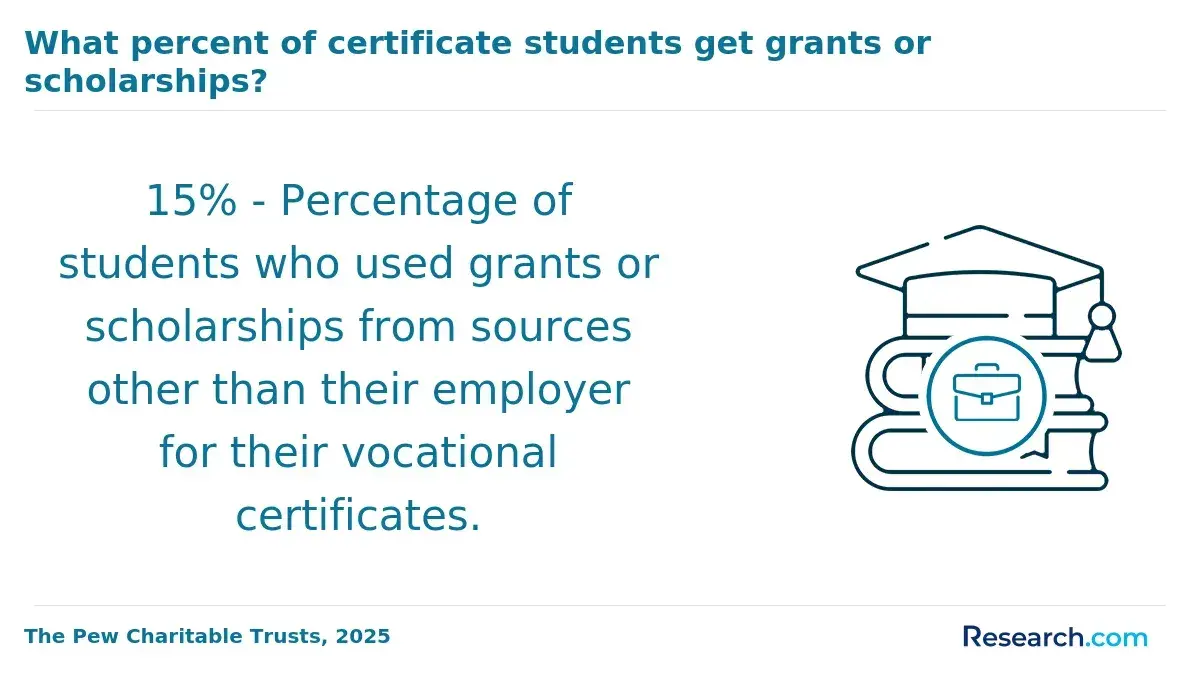
What Grants Can Help Pay for an Online Interdisciplinary Studies Associate Degree?
Grants are usually the most valuable form of financial aid because they generally do not need to be repaid when students meet the eligibility rules. For online associate degree students, the best grant opportunities often come from federal, state, and college-based programs.
The table below summarizes grant categories that may apply to an online interdisciplinary studies associate degree. It is meant to help students know what to ask about when speaking with a financial-aid office.
| Grant type | Who may qualify | Why it matters for associate degree students | Key condition to verify |
| Federal Pell Grant | Undergraduate students with financial need who have not already earned a bachelor's degree in most cases | Can substantially reduce tuition at low-cost public two-year colleges | Award amount depends on eligibility, cost of attendance, and enrollment intensity |
| Federal Supplemental Educational Opportunity Grant | Students with exceptional financial need at participating schools | Can add gift aid on top of Pell funding when available | Funds are limited and not every school participates |
| State need-based grant | Residents who meet state financial, academic, or enrollment rules | Can make an in-state online public college much cheaper than an out-of-state option | Residency, deadlines, and eligible institution rules vary by state |
| Promise or last-dollar program | Often recent high school graduates or adult learners meeting state or local rules | May cover remaining tuition after other grants at community colleges | May exclude fees, books, online charges, or part-time students |
| Institutional grant | Students selected under a college's aid policy | Can make a higher-tuition school more competitive after aid | Renewal rules, GPA requirements, and credit-load requirements |
The maximum Federal Pell Grant for the 2024-25 award year is $7,395. For students at low-tuition community colleges, that figure can be meaningful because it may cover tuition and leave some room for fees or books, while students at higher-cost online programs may still face a substantial remaining balance.
Students interested in helping professions should also think about whether an interdisciplinary associate degree is the first step toward a more specialized credential. For example, someone exploring mental health or social service careers may later compare options such as the cheapest online counseling degree after completing transferable general education credits.
The main grant red flags are missed deadlines, assuming state grants apply to out-of-state online colleges, and overlooking renewal rules. Students should ask whether grant eligibility changes if they switch from full-time to part-time enrollment, withdraw from a course, or fail to meet satisfactory academic progress standards.
Scholarships can come from the college, a foundation, a local organization, an employer, a professional association, or a community group. Unlike grants, scholarships may be based on academic achievement, career interest, identity, service, financial need, transfer plans, military affiliation, or adult learner status.
For interdisciplinary studies students, the best scholarship strategy is to search by goal rather than only by major name. A flexible associate degree can connect to business, human services, education, public service, communication, psychology, health administration, or bachelor's-transfer pathways.
The list below highlights scholarship categories worth checking because they often fit students in broad, transfer-oriented associate programs.
- Institutional scholarships for online, adult, transfer, first-generation, returning, or part-time students.
- Community foundation scholarships tied to county, city, high school district, volunteer service, or local workforce needs.
- State workforce scholarships for students preparing for high-demand fields such as education support, healthcare administration, public service, or human services.
- Phi Theta Kappa and honors-based scholarships for community college students planning to transfer.
- Military, veteran, spouse, and dependent scholarships that may combine with federal or state education benefits.
- Career-interest scholarships linked to counseling, social services, nonprofit work, public administration, business, communications, or education.
Students considering people-centered careers may use an interdisciplinary associate degree to explore fields before committing to a bachelor's program. Those who want a faster route into social service coursework can compare this path with an accelerated human services degree online, especially if transfer speed is more important than maximum flexibility.
Scholarships can reduce borrowing, but students should read the fine print before counting them as guaranteed aid. Many scholarships require a minimum GPA, full-time enrollment, a specific major, annual reapplication, proof of community service, or attendance at a particular school.
A practical scholarship plan is to apply first for institutional scholarships because they are tied directly to the school's billing system, then local awards because applicant pools may be smaller, and finally national scholarships where competition is broader. Students should keep a simple tracker for deadlines, essays, recommendation letters, renewal rules, and whether the award can be used for online programs.
Financial aid can reduce the cost of an online interdisciplinary studies associate degree dramatically, but the effect depends on tuition, fees, enrollment intensity, aid eligibility, and whether the student receives gift aid or loans. The goal is to calculate net price, which is the estimated cost after grants and scholarships, rather than relying on published tuition alone.
The table below uses a simple cost-comparison framework rather than a promise of what any one student will receive. It shows how the same aid amount can have very different effects depending on the starting price of the program.
| Cost scenario | Estimated billed tuition and fees | Example gift aid applied | Estimated remaining billed cost | What the student should consider |
| Low-cost in-district community college | $4,050 | $3,000 | $1,050 | Books, technology, and transfer fit may matter more than tuition |
| Public online program with higher fees | $7,000 | $3,000 | $4,000 | Online course fees can reduce the value of low tuition |
| Private nonprofit online program | $12,000 | $5,000 | $7,000 | A larger aid offer may still leave a higher net cost |
| Higher-cost program with strong transfer credit | $12,000 | $5,000 | $7,000 before transfer savings | Accepted prior credits may reduce total credits needed |
This example shows why students should compare total cost across the full degree, not just one semester. A higher-cost school that accepts more prior credits may cost less overall than a cheaper school that requires the student to retake courses.
Students should also distinguish billed costs from the broader cost of attendance. Billed costs include tuition and required institutional fees, while the cost of attendance may include books, supplies, transportation, personal expenses, and housing estimates used for aid calculations. Online students living at home may not pay campus housing, but they still need to budget for internet access, a reliable computer, course materials, and unpaid study time.
Loans can fill gaps, but they do not reduce the cost of the degree in the same way grants and scholarships do. Before borrowing, students should estimate the total loan balance needed to finish, not just the amount needed for the first term.
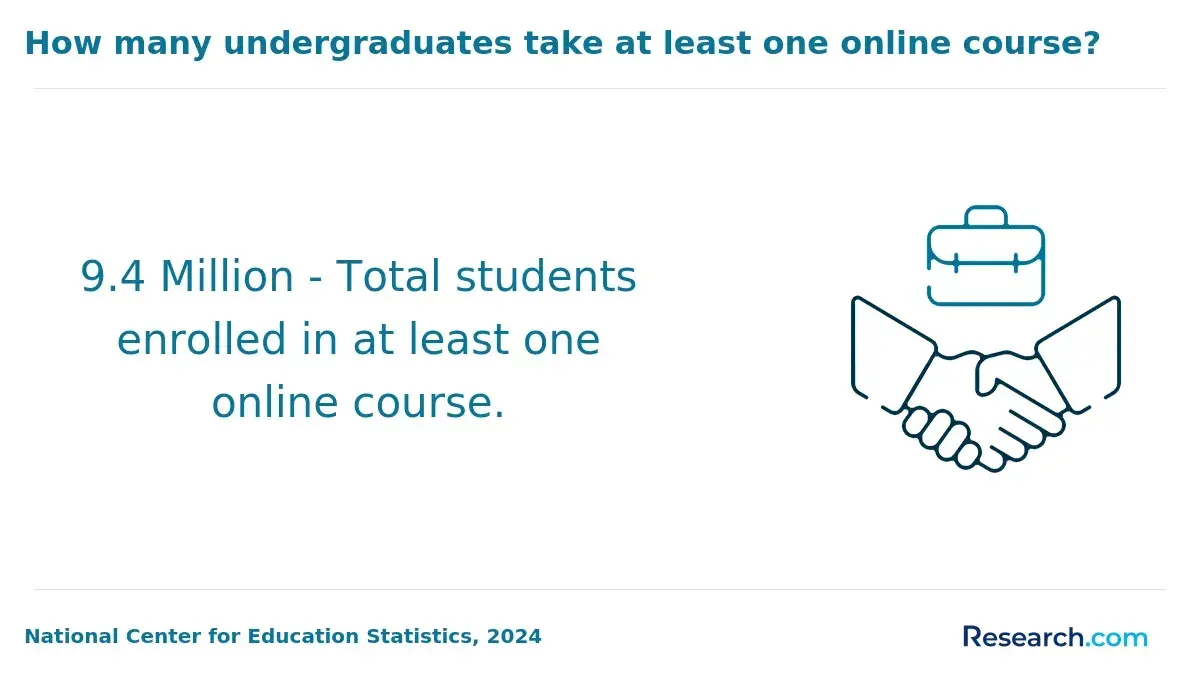
Financial aid packages can look similar on the surface while producing very different out-of-pocket costs. A strong comparison separates free aid from loans, checks whether scholarships renew, and calculates how many credits the student must complete at that institution.
Use the following steps when comparing aid offers from multiple online interdisciplinary studies associate degree programs. This sequence helps prevent the common mistake of choosing the largest advertised award instead of the lowest realistic net cost.
- Start with the full cost of attendance for the same enrollment level at each school.
- Subtract only grants and scholarships first to calculate the net price before loans.
- Identify loans separately and decide whether borrowing is necessary or optional.
- Check whether each grant or scholarship is renewable for every term needed to finish.
- Ask how part-time enrollment, course withdrawal, or a failed course would affect aid.
- Confirm whether accepted transfer credits reduce both time and tuition.
- Compare graduation, transfer, advising, and online support because poor fit can increase cost through delays.
The table below shows the type of comparison students should build before committing. The best choice is the program that balances low net price, transferability, completion support, and realistic scheduling.
| Comparison point | Program A: low tuition | Program B: higher aid | Why it matters |
| Published tuition and required fees | Lower | Higher | Advertised tuition is only the starting point |
| Grant and scholarship aid | Smaller award | Larger award | Larger aid does not always mean lower net cost |
| Loan amount in offer | Optional or lower | May be higher | Loans increase future repayment burden |
| Transfer credits accepted | Few accepted | More accepted | Fewer required credits can reduce total cost |
| Online fees and materials | Moderate | High | Fees can erase tuition savings |
| Transfer pathway | Clear state agreement | Case-by-case evaluation | Transfer uncertainty can increase bachelor's costs later |
Students should be cautious if a school emphasizes monthly payments but does not provide a clear total program cost. Payment plans can help with cash flow, but they do not make a program cheaper unless they reduce borrowing or avoid late fees.
Employer tuition assistance can be one of the best ways to reduce the net cost of an online interdisciplinary studies associate degree, especially for working adults. Many employers support broad associate degrees because the coursework can strengthen communication, critical thinking, computer literacy, customer service, supervision, and problem-solving skills.
Under federal tax rules, employers can generally provide up to $5,250 in educational assistance that may be excluded from taxable income when the benefit meets applicable requirements. For students, that amount can be significant at a low-cost college, but employer policies often include restrictions on eligible schools, grades, reimbursement timing, and job-related coursework.
Students should review the following employer-benefit details before enrolling because a reimbursement program may require the student to pay first and wait for repayment.
- Whether the employer pays the school directly or reimburses the employee after grades are posted.
- Whether online associate degree programs are eligible under the company policy.
- Whether the degree must relate to the employee's current job or an approved career path.
- Whether the student must earn a minimum grade to receive reimbursement.
- Whether the benefit can be combined with Pell Grants, scholarships, state grants, or military education benefits.
- Whether the employee must remain with the company for a certain period after receiving aid.
Interdisciplinary studies can be useful for workers who are still deciding between business, human services, education, public administration, or counseling-related pathways. Students who later want graduate-level counseling preparation can use early general education planning to compare future options such as online masters programs for counseling, though licensure-focused counseling careers usually require graduate education and state-specific requirements.
Other benefits can also reduce out-of-pocket costs. Military tuition assistance, GI Bill benefits, workforce development funding, union education benefits, public-assistance training funds, and local nonprofit grants may apply depending on the student's background and location.
Accreditation and enrollment status can determine whether a student receives financial aid and whether credits hold value after graduation. Students should verify both before applying because an inexpensive program can become costly if credits do not transfer or if the school is not eligible for federal aid.
For most students, institutional accreditation from an accreditor recognized by the U.S. Department of Education is the baseline requirement to check. Programmatic accreditation is less common for general interdisciplinary associate degrees, but it may matter later if the student transfers into a specialized field such as nursing, education, social work, counseling, or allied health.
Enrollment status matters because aid is commonly adjusted based on course load. Full-time students may receive a different aid amount than half-time students, and students enrolled below half time may lose access to certain aid types or receive reduced grant amounts.
The table below explains the main eligibility factors that affect online associate degree affordability. These items should be confirmed in writing with the admissions, registrar, transfer, and financial-aid offices.
| Factor | What to verify | Cost risk if ignored |
| Institutional accreditation | The school is accredited by a recognized accrediting agency | Credits may not transfer, and federal aid may be unavailable |
| Title IV participation | The institution participates in federal student aid | FAFSA may not produce usable aid for that school |
| Program eligibility | The online associate degree is an approved aid-eligible program | A non-degree or noncredit option may not qualify |
| Enrollment intensity | How many credits count as full time, half time, or less than half time | Grant amounts and loan eligibility may change |
| Satisfactory academic progress | Minimum GPA, completion rate, and maximum timeframe rules | Aid can be suspended after poor academic progress |
| Transfer pathway | How credits apply to a target bachelor's program | Lost credits can increase future tuition and time |
Students should be especially careful with interdisciplinary or individualized programs because flexibility can cut both ways. A well-planned degree can maximize transfer credit, but a loosely planned set of electives may not align with bachelor's requirements or employer expectations.
A low-cost online interdisciplinary studies associate degree with financial aid is most valuable for students who need flexibility, have varied academic interests, or want to complete general education requirements before choosing a bachelor's major. It can also work well for adults returning with previous credits because the degree may accept a broader mix of courses than a tightly sequenced technical program.
This pathway often fits students in the following situations. The key is to match the degree's flexibility with a clear next step, rather than treating it as a generic credential.
- Transfer-focused students who want to complete lower-division credits affordably before entering a bachelor's program.
- Working adults who need an online schedule and want to combine prior college credits, military learning, or professional training.
- Undecided students who want structured exploration across communication, social science, business, humanities, technology, or public service.
- Students seeking advancement in roles that value an associate degree but do not require a specific technical major.
- Budget-conscious students who can combine Pell Grants, state aid, institutional scholarships, and employer benefits to reduce borrowing.
The degree may be less suitable for students entering fields with strict prerequisites, licensure rules, or technical competencies. Nursing, radiography, teacher licensure, engineering technology, and many counseling or clinical roles usually require specific coursework beyond a general interdisciplinary associate degree.
Career value depends on how the degree is used. For entry-level office, customer support, sales, human services support, administrative, or public-service roles, an associate degree can help demonstrate college-level communication and problem-solving skills, but employers may still prioritize experience, software skills, certifications, and industry knowledge. The U.S. labor market also increasingly rewards adaptable digital skills, so students should choose electives that build spreadsheet, writing, data literacy, presentation, and AI-aware productivity skills.
Students considering long-term counseling careers should know that licensure typically requires graduate education, supervised experience, and state approval. An interdisciplinary associate degree can provide a lower-cost start, but it is not a substitute for specialized graduate preparation such as the cheapest online PhD in counseling for advanced academic or research-focused goals.
How Should Students Minimize the Total Cost of an Online Interdisciplinary Studies Associate Degree?
Students can minimize the total cost of an online interdisciplinary studies associate degree by treating financial aid, transfer credit, and completion planning as one decision. The cheapest program per credit may not be the cheapest degree if it delays graduation, rejects prior credits, or fails to transfer into the student's intended bachelor's pathway.
The most effective cost-control plan combines early verification with side-by-side comparison. Students should complete these steps before making a deposit or registering for classes.
- Choose a career or transfer goal first, even if it is broad, so electives support a real pathway.
- Confirm institutional accreditation, Title IV participation, and program-level financial-aid eligibility.
- Request a written transfer-credit evaluation before enrolling if you have prior college, military, AP, CLEP, or workplace learning.
- Compare full degree cost, including tuition, online fees, books, materials, technology, graduation fees, and transcript fees.
- File the FAFSA early and list every school under serious consideration.
- Apply for institutional, state, local, employer, and career-interest scholarships before borrowing.
- Calculate net price after grants and scholarships, then review loans separately.
- Ask whether aid changes for part-time enrollment, summer courses, repeated classes, withdrawals, or failed courses.
- Map every course to either associate degree completion, bachelor's transfer requirements, or career skill development.
- Recheck the plan every term with an advisor so schedule changes do not create excess credits.
Students should ask direct questions when speaking with schools. Useful questions include: "Is this exact online associate degree eligible for federal aid?", "What is the total cost to finish if I attend part time?", "Which fees are not included in advertised tuition?", "Will my scholarships renew?", "How many of my credits transfer?", and "Do you have a transfer agreement with my target bachelor's program?"
The best financial decision is usually the program with the lowest realistic net cost that also preserves future options. For many students, that means an accredited, FAFSA-eligible public college with strong transfer agreements; for others, it may be a higher-tuition program that accepts more prior credits, offers stronger institutional aid, or fits a work schedule well enough to prevent stop-outs.
Other Things You Should Know About Interdisciplinary Studies
Not always, but the programs often overlap. General studies usually emphasizes broad lower-division coursework, while interdisciplinary studies may let students intentionally combine areas such as business, psychology, communication, public service, or humanities. The exact meaning depends on the college catalog.
Often yes, especially if the degree is an AA or AS from an accredited public college with transfer agreements. Students should confirm whether courses transfer as general education, major prerequisites, or electives because that affects future cost and time to graduation.
Most associate degrees require about 60 credits. Full-time students commonly finish in about two academic years, while part-time students may take longer depending on course load, transfer credits, summer enrollment, and work or family obligations.
Employers may value the credential when it is paired with relevant skills, experience, and clear career direction. Students should use electives to build practical strengths such as writing, spreadsheets, communication, customer service, project coordination, data literacy, or field-specific introductory knowledge.
- FAFSA Eligibility: Requirements & Income Limits | Ascent Funding https://www.ascentfunding.com/blog/fafsa-eligibility/
- Financial Aid For Online Colleges https://www.affordablecollegesonline.org/financial-aid/financial-aid-for-online-colleges/
- Tuition & Fees https://www.amridgeuniversity.edu/financialaid/tuition/
- Private vs. Public Colleges: Differences, Pros & Cons https://collegewise.com/blog/private-vs.-public-colleges-differences
- Financial literacy education and college enrolment intentions https://riojournal.com/article/187936/
- International Scholarships Search | Financial Aid To Study Abroad https://www.internationalscholarships.com/
- 50+ Scholarships & Grants for Study Abroad in 2025 | Go Overseas https://www.gooverseas.com/blog/study-abroad-scholarships-grants
- Average Cost of College [2025]: Yearly Tuition + Expenses https://educationdata.org/average-cost-of-college
- Affordable Accredited Online Colleges https://www.onlineu.com/online-schools/low-tuition
- Why Choose Interdisciplinary Studies? https://www.lindsey.edu/academics/majors-and-programs/Interdisciplinary-Studies/Program-Links/Why.cfm


