2027 Low-Cost Online Christian Studies Associate Degree Programs with Financial Aid: FAFSA, Grants, and Scholarships

Co-Founder and Chief Data Scientist
Choosing an online Christian studies associate degree is often a faith, career, and cost decision at the same time. The College Board reports average published tuition and fees of $4,050 at public two-year colleges for 2024-25, but many Christian studies programs are offered by private religious institutions, where net price can vary widely after aid. This guide is for students comparing affordable online ministry, Bible, theology, or Christian studies associate programs and trying to understand FAFSA, grants, scholarships, transfer value, and realistic out-of-pocket cost before enrolling.
Key Things You Should Know
- FAFSA can make an online Christian studies associate degree much cheaper, but only if the school participates in federal student aid and the student meets eligibility, enrollment, and satisfactory academic progress rules.
- The maximum Federal Pell Grant is $7,395 for 2024-25 and 2025-26, so high-need students may be able to cover a large share of tuition at lower-priced associate programs before using loans.
- The lowest advertised tuition is not always the lowest real cost; compare net price after grants and scholarships, required fees, transfer-credit policies, and whether aid changes for part-time enrollment.
Which Low-Cost Online Christian Studies Associate Degree Programs Offer Financial Aid?
Low-cost online Christian studies associate degree programs that offer financial aid are typically housed at accredited colleges, Bible colleges, Christian universities, and some community colleges that participate in Title IV federal student aid.
Program titles vary, but common options include Associate of Arts in Christian Studies, Associate of Arts in Biblical Studies, Associate of Science in Ministry, Associate of Arts in Religion, and Associate of Applied Science in Christian Ministry.
The key distinction is not whether the program is online or Christian; it is whether the institution is accredited by an agency recognized for federal aid purposes and is approved to disburse federal aid. This table shows how common program types usually differ when students compare affordability and aid access.
| Program type | Best fit | Financial aid issue to verify | Cost and value consideration |
| AA in Christian Studies or Biblical Studies | Students planning to transfer into a bachelor's degree in theology, ministry, religion, counseling, or liberal arts | FAFSA participation, transfer pathway, and whether online students receive the same aid consideration as campus students | Often strongest when general education credits transfer cleanly into a four-year degree |
| AS in Christian Ministry or Religion | Students who want a mix of Bible, ministry, communication, and practical leadership coursework | Credit load required for Pell Grant proration and loan eligibility | Can be affordable if the curriculum avoids excess electives that do not transfer |
| AAS in Christian Ministry | Students seeking applied ministry preparation for church, nonprofit, or lay leadership roles | Whether credits transfer to a bachelor's degree or are mainly career-focused | May have practical value, but transfer limitations can raise long-term education costs |
| Certificate-to-associate pathway | Students testing interest in ministry studies before committing to a full degree | Whether certificate credits apply to a FAFSA-eligible associate program | Can reduce risk if credits stack into the degree without duplicated coursework |
Students should treat "low-cost" as a net-price question rather than a tuition-only label. A program with moderate tuition can become less expensive than a cheaper-looking option if it offers stronger institutional grants, accepts more transfer credits, or charges fewer online, technology, graduation, or course fees.
Students considering ministry-adjacent helping professions should also compare future education requirements early. For example, those who eventually want clinical counseling credentials will likely need graduate education, so reviewing online masters programs for counseling can help them understand the longer pathway before choosing an associate program.
How Does FAFSA Work for Online Christian Studies Associate Degree Programs?
FAFSA is the Free Application for Federal Student Aid. For an online Christian studies associate degree, the FAFSA determines eligibility for federal grants, federal loans, and federal work-study, and many states and colleges also use FAFSA information to award their own need-based aid.
For the 2024-25 aid cycle, the FAFSA uses the Student Aid Index rather than the older Expected Family Contribution. That change matters because schools now use the index, cost of attendance, enrollment intensity, and program eligibility to calculate aid offers. Completing the FAFSA does not guarantee free tuition, but it is the main gateway to federal need-based aid.
Students can use this sequence to avoid the most common FAFSA mistakes before they apply to an online Christian studies associate program.
- Confirm the school has a federal school code and participates in Title IV federal student aid for the associate degree you want.
- Ask whether the online version of the program is aid-eligible, because a school may offer both eligible and non-eligible credentials.
- Complete the FAFSA using the correct academic year and list every school you are seriously considering.
- Review each financial aid offer by grant, scholarship, work-study, and loan category instead of looking only at the total aid number.
- Ask the financial aid office how your aid changes if you enroll part time, take fewer credits, withdraw from a course, or pause enrollment.
- Keep documentation of scholarship conditions, satisfactory academic progress rules, and any ministry or denominational requirements attached to aid.
The biggest red flag is assuming that "online" and "accredited" automatically mean FAFSA-eligible. Some religious schools, training institutes, and ministry programs may be legitimate for church training but still may not participate in federal student aid or may offer non-degree certificates that do not qualify.
What Grants Can Help Pay for an Online Christian Studies Associate Degree?
Grants are usually the highest-value aid because they generally do not need to be repaid if students meet enrollment and academic requirements. For online Christian studies associate students, the most important grant sources are federal, state, institutional, and denomination-based awards.
The maximum Federal Pell Grant is $7,395 for 2024-25 and 2025-26, which is especially important for low-cost associate programs. If a student qualifies for a large Pell award and chooses a reasonably priced program, grants may cover a meaningful portion of tuition before scholarships or loans are considered.
The table below summarizes major grant categories and the affordability questions students should ask before relying on them.
| Grant source | Who may qualify | Why it matters for Christian studies students | Question to ask |
| Federal Pell Grant | Undergraduate students with financial need who have not earned a bachelor's degree | Can significantly reduce net price at low-cost associate programs | What Pell amount would apply at my planned credit load? |
| Federal Supplemental Educational Opportunity Grant | Undergraduates with exceptional financial need at participating schools | May add extra grant funding, but campus funds are limited | Does this school participate, and are online students considered? |
| State grant programs | Residents who meet state, income, enrollment, and school rules | Some state aid is limited to in-state or approved institutions | Can I use this state grant for an online religious college? |
| Institutional need-based grants | Students who meet the college's financial, academic, or mission-based criteria | Can make a private Christian college more affordable than advertised tuition suggests | Is the grant renewable, and what GPA or credit load is required? |
| Church or denominational grants | Members, ministry candidates, dependents of clergy, or students endorsed by a church | May align well with ministry or Christian education goals | Does the grant require service, membership, or a specific ministry track? |
Students should also distinguish grants from tuition discounts. A grant that appears on an official financial aid offer usually reduces the bill, while a promotional discount may apply only to certain terms, partners, or student groups. Before enrolling, ask whether the award will appear every term and what could cause it to be reduced or removed.
Scholarships can come from the college, a church, a denomination, a ministry association, a foundation, or a local community organization. Unlike grants, scholarships often depend on academic performance, service, leadership, essays, references, church involvement, or a specific ministry goal.
Scholarship searches work best when students match the award to their actual profile rather than applying randomly. These categories are especially relevant for online Christian studies associate degree students.
- Institutional Christian studies scholarships: Awards from the college for Bible, ministry, theology, religion, or church leadership students.
- Church and denominational scholarships: Awards for students endorsed by a congregation, pursuing ministry training, or affiliated with a specific tradition.
- Adult learner scholarships: Awards for working adults, parents, military-affiliated students, or students returning to college after a break.
- First-generation and need-based scholarships: Awards that can stack with Pell Grants when school policy allows it.
- Transfer pathway scholarships: Awards that support students who complete an associate degree and continue into a bachelor's program.
The main scholarship mistake is counting on awards before reading renewal rules. A scholarship that requires full-time enrollment, a minimum GPA, annual reapplication, or documented ministry service may not fit a student who needs to study part time while working.
Students who may later move from Christian studies into counseling should also plan scholarship searches around the full pathway. Comparing a cheapest online counseling degree option can help clarify whether an associate degree should be transfer-focused rather than purely ministry-focused.
Financial aid can reduce the cost of an online Christian studies associate degree substantially, but the impact depends on the school's cost of attendance, the student's financial need, credit load, scholarship eligibility, and whether loans are included in the aid package. The most useful number is net price: tuition, fees, books, and required expenses minus grants and scholarships.
A useful benchmark is the College Board's 2024-25 average published tuition and fees of $4,050 for public two-year in-district students. Many online Christian studies programs are not priced like local community colleges, but the benchmark helps students ask whether a private online religious program still makes financial sense after aid.
The table below shows how different aid types affect the bill. It separates aid that reduces cost from aid that delays cost, which is essential when comparing offers.
| Aid type | How it affects out-of-pocket cost | Repayment status | Decision value |
| Pell Grant | Reduces the bill if the student qualifies and remains eligible | Generally not repaid if requirements are met | Highest-value aid for eligible students |
| State or institutional grant | Reduces the bill under school or state rules | Generally not repaid if requirements are met | Can make a higher-priced school competitive on net price |
| Scholarship | Reduces the bill if awarded and renewable | Generally not repaid if conditions are met | Strong value, but renewal rules matter |
| Federal student loan | Covers current charges but creates future repayment obligation | Must be repaid with interest | Useful only after estimating total borrowing and repayment burden |
| Work-study or wages | Helps with indirect expenses if work is available | Earned income, not repaid | Helpful for books, technology, transportation, or living costs |
Students should not assume that a large aid offer is automatically affordable. If the offer includes loans, the immediate bill may look manageable while the total cost shifts into future repayment. For a lower-earning ministry or nonprofit pathway, minimizing loans can matter more than maximizing the total aid package.
Financial aid packages can look very different across online Christian studies associate programs because schools set different tuition rates, fees, scholarship policies, and budgets for institutional aid. A higher-cost private Christian college may offer more institutional aid, while a lower-cost school may offer little discounting because its tuition is already reduced.
When comparing programs, students should request the same information from each school so the offers can be evaluated side by side. The goal is to compare remaining cost, not the size of the aid award.
| Comparison factor | Why it matters | Better sign | Red flag |
| Net price after grants and scholarships | Shows the amount before loans and payment plans | Clear estimate by term and academic year | Only a tuition discount is shown, with fees missing |
| Online fees | Technology, course, proctoring, and graduation fees can raise total cost | Fees listed in the cost of attendance | Fees disclosed only after registration |
| Credit requirements | More credits usually mean more tuition and more time | Efficient degree plan with transferable general education courses | Extra required credits that do not transfer or support career goals |
| Transfer-credit policy | Accepted credits can reduce time and cost | Written transfer evaluation before enrollment | Vague promises that credits "may" transfer later |
| Scholarship renewal rules | A nonrenewable scholarship may lower only the first year | Renewal criteria are clear and realistic | GPA, service, or full-time rules are not explained |
A practical comparison method is to create a one-page cost worksheet for each school. Include tuition, mandatory fees, books, technology, transfer credits accepted, grants, scholarships, loans, and payment-plan fees. Then rank programs by estimated out-of-pocket cost and transfer value, not by the most generous-looking award letter.
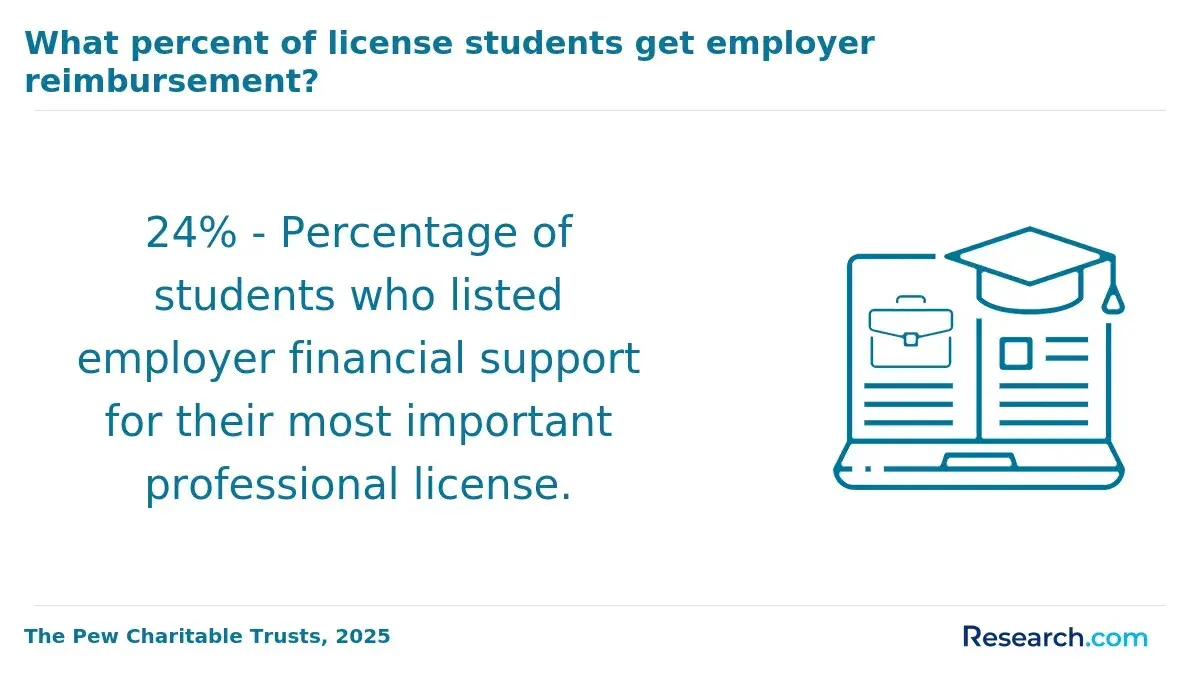
Employer tuition assistance, church support, military education benefits, AmeriCorps education awards, and nonprofit professional development funds can help pay for an online Christian studies associate degree. These benefits are especially useful for working adults already employed by churches, Christian schools, camps, missions agencies, social-service nonprofits, or faith-based community organizations.
Under current federal tax rules, employers can generally provide up to $5,250 in educational assistance to an employee on a tax-free basis when the plan meets applicable requirements.
That amount can be meaningful for a low-cost associate program, but students should verify whether their employer pays upfront, reimburses after grades are posted, or limits funding to job-related coursework.
Students should ask benefit providers specific questions before counting this money in a financial plan.
- Does the benefit apply to online associate degrees, or only to bachelor's and graduate programs?
- Will the employer, church, or organization pay the school directly, or will the student need to pay first and wait for reimbursement?
- Are Bible, ministry, theology, or Christian studies courses considered job-related under the benefit policy?
- Does the benefit require continued employment, service hours, ministry participation, or repayment if the student leaves?
- Can the benefit be combined with Pell Grants, institutional scholarships, or denominational awards without reducing other aid?
Students who work in church-based care, youth ministry, pastoral support, or nonprofit service should also think ahead about credential expectations. If the long-term goal involves professional counseling licensure, researching cheapest CACREP-accredited programs online can prevent students from spending associate-degree money on credits that do not support the later graduate path.
Accreditation affects both financial aid eligibility and long-term academic value. For federal student aid, the institution must be accredited by a recognized accrediting agency and approved for Title IV participation. For transfer, employment, and graduate admission, students should also consider how the receiving school, employer, denomination, or licensing body evaluates the degree.
Enrollment status matters because federal aid is tied to credit load, academic calendar, program length, and satisfactory academic progress. Students who begin full time and later drop to part time may see Pell Grant amounts prorated, loan eligibility change, or scholarship eligibility reduced.
These are the accreditation and enrollment checks students should complete before committing to an online Christian studies associate degree.
- Verify the institution's accreditation and federal aid participation through official federal and accreditor resources, not only the school's marketing pages.
- Ask whether the specific associate degree, online delivery format, and start date are eligible for federal aid.
- Request a written explanation of satisfactory academic progress, including GPA, completion-rate, and maximum-timeframe rules.
- Confirm the minimum credit load needed for Pell Grants, federal loans, institutional aid, and scholarships.
- Ask how withdrawing, repeating a course, changing majors, or stopping out affects aid and future eligibility.
- Check whether credits are designed for transfer into a bachelor's degree or mainly for applied ministry preparation.
The common mistake is treating accreditation as a single yes-or-no question. A school can be accredited and still have limited transfer acceptance at another institution, and an online program can be academically legitimate while not fitting a student's future ordination, bachelor's, counseling, or graduate-school plan.
A low-cost online Christian studies associate degree with financial aid can be a strong fit for students who need flexible ministry education, want to reduce debt, and are not ready to commit to a four-year degree immediately.
It is especially useful when the program includes transferable general education credits and clear pathways into bachelor's programs in ministry, theology, religion, psychology, communication, education, or human services.
The Bureau of Labor Statistics reported a May 2024 median annual wage of $60,300 for clergy. That figure is useful as broad labor-market context, but it should not be read as an associate-degree outcome because clergy roles often depend on denomination, ordination, experience, location, and additional education.
Students most likely to benefit usually fall into several groups.
- Cost-sensitive first-time college students: They can use grants and transfer planning to lower the price of the first two years of college.
- Adult learners already serving in ministry: They may gain biblical, leadership, and communication training while keeping work and church responsibilities.
- Students exploring vocation: An associate degree can be a lower-risk way to test interest in ministry, theology, Christian education, or nonprofit service.
- Future bachelor's students: They benefit when credits transfer cleanly and reduce the cost of a four-year degree.
- Church staff and volunteers: They may strengthen practical ministry skills without taking on the time or cost of graduate education.
Students may want a different path if their goal requires a bachelor's degree, a master's degree, ordination-specific seminary training, teacher certification, or counseling licensure.
For students who already know they want a faster graduate counseling route later, comparing accelerated mental health counseling programs online can help them decide whether Christian studies should be a transfer step or a secondary interest.
How Should Students Minimize the Total Cost of an Online Christian Studies Associate Degree?
Students minimize the total cost of an online Christian studies associate degree by combining financial aid strategy with academic planning. The cheapest option is not always the best value if credits do not transfer, required fees are high, or the program does not support the student's ministry, career, or bachelor's-degree goals.
The most effective cost-control strategy is to compare programs before applying and again after receiving aid offers. Use these steps to turn advertised tuition into a realistic estimate of what you will actually pay.
- Start with FAFSA-eligible schools if you may qualify for federal grants, loans, or work-study.
- Request the full cost of attendance, including tuition, mandatory fees, books, software, technology, proctoring, graduation fees, and any residency or intensive requirements.
- Ask for a preliminary transfer-credit review before enrolling, especially if you have prior college, military, dual-enrollment, or Bible institute credits.
- Compare net price after grants and scholarships, then separate loans into a different category so borrowed money does not look like a discount.
- Prioritize renewable scholarships over one-time awards when comparing a two-year plan.
- Choose the lowest credit path that still meets transfer, ministry, and career goals.
- Confirm whether part-time study changes your aid, scholarship renewal, or time to completion.
- Avoid borrowing the maximum federal loan amount unless you have calculated repayment and considered expected earnings in your intended field.
- Keep grades and completion rates high enough to maintain satisfactory academic progress.
- Recheck aid every year, because FAFSA information, household circumstances, enrollment status, and scholarship availability can change.
Students should also watch for red flags: unclear accreditation language, pressure to enroll before aid is finalized, missing fee disclosures, vague transfer promises, scholarships that disappear after the first term, and aid offers that rely heavily on loans. A genuinely affordable program should make the full cost, aid conditions, and academic pathway clear before the student commits.
Other Things You Should Know About Christian Studies
Most programs include Bible interpretation, Old and New Testament studies, theology, church history, ministry leadership, communication, ethics, and general education courses. Some programs add youth ministry, missions, pastoral care, worship, or nonprofit leadership electives.
Many associate degrees require about 60 credits. Full-time students often finish in about two years, while part-time students may take longer depending on course availability, transfer credits, work schedule, and financial aid requirements.
It can, but transfer is not automatic. Students should ask for written transfer agreements, confirm how Bible and ministry courses apply, and check whether the degree is transfer-oriented or applied before enrolling.
This degree may support entry-level or volunteer roles in church administration, ministry assistance, youth programs, Christian education support, missions organizations, camps, and faith-based nonprofits. Many pastoral, counseling, teaching, and leadership roles may require additional education, ordination, certification, or experience.
- Financial Aid Guide for Online College Students | Onlinedegrees.com https://www.onlinedegrees.com/degree360/student-loans-scholarships/
- Christian Scholarships for College https://accessscholarships.com/blog/christian-scholarships/
- Top 60 Christian Scholarships to Apply for in December 2025 https://bold.org/scholarships/by-type/christian-scholarships/
- Online Financial Aid - Grace Christian University https://gracechristian.edu/admissions-aid/financial-aid/online/
- Assemblies of God Theological Seminary Scholarships - Evangel University https://www.evangel.edu/future-students/office-of-admissions/financial-aid-and-scholarships/assemblies-of-god-theological-seminary-scholarships/
- Grants and Scholarships https://www.crcds.edu/grants-and-scholarships
- Financial Aid For Online Colleges https://www.affordablecollegesonline.org/financial-aid/financial-aid-for-online-colleges/
- Online Christian Colleges | The Best Faith-Based Universities https://www.onlinecolleges.net/rankings/best-online-christian-colleges/
- How Do Private Schools Determine Financial Aid? https://www.tads.com/blog/determining-financial-need/
- Financial Aid For Online College Students | LearnHowToBecome.org https://www.learnhowtobecome.org/career-resource-center/financial-aid-for-online-colleges/